저작자표시-비영리-변경금지 2.0 대한민국 이용자는 아래의 조건을 따르는 경우에 한하여 자유롭게 l 이 저작물을 복제, 배포, 전송, 전시, 공연 및 방송할 수 있습니다. 다음과 같은 조건을 따라야 합니다: l 귀하는, 이 저작물의 재이용이나 배포의 경우, 이 저작물에 적용된 이용허락조건 을 명확하게 나타내어야 합니다. l 저작권자로부터 별도의 허가를 받으면 이러한 조건들은 적용되지 않습니다. 저작권법에 따른 이용자의 권리는 위의 내용에 의하여 영향을 받지 않습니다. 이것은 이용허락규약(Legal Code)을 이해하기 쉽게 요약한 것입니다. Disclaimer 저작자표시. 귀하는 원저작자를 표시하여야 합니다. 비영리. 귀하는 이 저작물을 영리 목적으로 이용할 수 없습니다. 변경금지. 귀하는 이 저작물을 개작, 변형 또는 가공할 수 없습니다.
A Thesis
For the Degree of Master of Science
Effects of Dietary Trace Mineral Premix Levels on
Physiological Responses, Reproductive Performance,
Litter Performance, Blood Profiles,
Milk Composition and Feed Cost in Gestating Sows
임신돈 사료 내 미량광물질 수준이 모돈의
체형변화, 번식성적, 자돈성적, 혈액성상, 돈유성분
및 사료비에 미치는 영향
February, 2020
By
Kim, Hong Jun
College of Agriculture and Life Sciences
Seoul National University
2
Effects of Dietary Trace Mineral Premix Levels on
Physiological Responses, Reproductive Performance,
Blood Profiles, Milk Composition and
Feed Cost in Gestating Sows
임신돈 사료 내 미량광물질 수준이 모돈의 체형변화,
번식성적, 혈액성상, 돈유성분 및 경제성에 미치는 영향
지도교수 김 유 용
이 논문을 농학석사 학위논문으로 제출함
2020
년 2 월
서울대학교 대학원 농생명공학부
김 홍 준
김홍준의 농학석사 학위논문을 인준함
2019
년 12 월
위 원 장 (인)
부위원장 (인)
위 원 (인)
i
Summary
Most of swine feed are adding trace minerals as premix in order to meet nutritional requirement. Recently, several feed companies in Korea have added up to 10 times the trace mineral requirement of NRC (2012). In general, amount of trace minerals in the premix that are added to feed is set excessively higher than requirement of pig because the demand for trace minerals in pig can vary due to environmental factors and physiological conditions. In this context, NRC (2012) modified the trace mineral requirement to a higher or the same level compared to previous NRC requirement (1998). Although, standard of amount of trace minerals are suggested by NRC (2012), feed companies did not confirm the optimal mineral levels for swine feed in Korea. As the process of verifying whether trace mineral requirements of NRC (2012) is indeed appropriate for swine farms in Korea, this study was conducted to evaluate optimal trace mineral levels in gestating sow diet considering physiological responses, reproductive performance, litter performance, blood profiles, milk composition and feed cost. A total of 60 F1 multiparous sows (Yorkshire × Landrace) with average body weight (BW) of 231.5 ± 3.59 kg, backfat thickness of 23.3 ± 0.63 mm, and parity of 4.98 ± 0.240 were allotted to one of 4 treatments considering BW, backfat thickness, and parity in a complete randomized design (CRD) with 15 replicates. Treatments were 1) M1; experimental diet with trace mineral requirement in NRC (2012); 2) M3; experimental diet with 3 times of trace mineral requirement in NRC (2012); 3) M6; experimental diet with 6 times of trace mineral requirement in NRC (2012); 4) M9; experimental diet with 9 times of trace mineral requirement in NRC (2012). In
ii
lactation period, all sows were fed the same commercial lactation diet that was formulated by NRC requirement (2012). As a result, different levels of dietary trace mineral premix did not show any significant difference in BW, backfat thickness, reproductive performance, milk composition of sows and growth performance of piglets. Iron and copper concentration of sows in serum at 24 hour postpartum was linearly decreased (linear, P=0.01, P=0.05, respectively), but the concentration of zinc in blood of sows at 24 hour postpartum was not changed when sows were fed higher levels of trace mineral premix. When gestating sows were fed higher levels of trace mineral premix, the concentration of zinc in blood of their piglets was linearly decreased (linear, P<0.01). However, the serum concentration of iron and copper of piglets did not show any difference. Consequently, current trace mineral requirement of NRC (2012) is enough for gestating sows and additional supplementation of trace mineral premix in gestating diet did not result in positive response during lactation as well as gestation although feed cost was increased.
Keywords : Trace mineral premix, Blood profiles, Reproductive performance,
iii
Contents
Overall Summary
···iContents
··· iiiList of Tables
··· ⅴList of Abbreviations
··· ⅶI. General Introduction
II. Review of Literature
1. Introduction
··· 11.1. Recent situation of Korean livestock industry ··· 2
1.2. Situation of legal regulation in Korean swine industry··· 5
2. Requirements of trace mineral
··· 73. Characteristics and functions of trace mineral
··· 103.1. Zinc ···11
3.2. Copper···11
3.3. Iron··· 12
3.4. Iodine, selenium and manganese ··· 14
4. Deficiency and toxicity of trace mineral
··· 164.1. Zinc ··· 16
4.2. Copper··· 17
4.3. Iron··· 18
iv
5. Effects of supplementation of trace mineral in gestating sow
5.1. Physiological response of sow··· 21
5.2. Reproductive performance and litter performance ··· 22
5.3. Trace mineral concentration of blood··· 23
Ⅲ
. Effects of Dietary Trace Mineral Premix Levels on Physiological
Responses, Reproductive Performance, Litter Performance, Blood
Profiles, Milk Composition and Feed Cost in Gestating Sows
Abstract
··· 25Introduction
··· 27Materials and Methods
··· 29Results and Discussion
··· 36Conclusion
··· 44Ⅳ
. Literature Cited
··· 54. Summary in Korean
Ⅴ
··· 72v
List of Tables
II. Review of Literature
Table 1. Changes in total pig production cost and feed cost by year ··· 29 Table 2. Iron, zinc, manganese, copper, iodine and selenium contents of several
raw materials··· 29
Table 3. Acts related with mineral regulation to control livestock feed and manure29 Table 4. Dietary mineral requirements of gestating of sows (90% dry matter, NRC)29
. Experiment
Ⅲ
Table 1. The Formulas and chemical composition of the experimental gestation
diet ··· 45
Table 2. Effects of dietary trace mineral levels in gestation diet on body weight and
backfat thickness of sows during gestation ··· 46
Table 3. Effects of dietary trace mineral levels in gestation diet on body weight and
backfat thickness of sows during lactation ··· 47
Table 4. Effects of dietary trace mineral levels in gestation diet on reproductive
performance of sows and litter performance during lactation ··· 48
Table 5. Effects of dietary trace mineral levels in gestation diet on serum trace
mineral concentration of sows during gestation ··· 49
Table 6. Effects of dietary trace mineral levels in gestation diet on serum trace
mineral concentration of sows during lactation ··· 50
vi
mineral concentration of sows during lactation ··· 51
Table 8. Effects of dietary trace mineral levels in gestation diet on milk
composition of sows during lactation··· 52
Table 9. Effects of dietary trace mineral levels in gestation diet on economic
vii
List of Abbreviations
ADG
: Average daily gain
ADFI
: Average daily feed intake
AI
: Artificial insemination
ANOVA : Analysis of variation
ARC
: Agricultural Research Council
BF
: Backfat
BW
: Body weight
CRD
: Completely randomized design
DCP
: Dicalcium phospate
FCR
: Feed conversion ratio
GLM
: General linear model
IU
: International unit
LSD
: Least significance difference
ME
: Metabolic energy
MPB
: Menadione dimethylpyrimidinol bisulfite
NRC
: National Research Council
SAS
: Statistical analysis system
SBM
: Soybean meal
SEM
: Standard error of the mean
WEI
: Weaning to estrus interval
1
I. Introduction
Feed costs account for approximately 50 to 60 percent of pig production costs in Korea. Moreover, most of feed ingredients are imported from other countries subsequently feed cost is very sensitive to fluctuations of the price of international market. Because of recent global warming, unpredictable natural disasters are occurred very frequently. Unfortunately, cheap animal products from abroad are importing through trade agreement such as Korea-USA free trade agreement, posing a threat to the Korean livestock industry. Therefore, feed industry in Korea must lower feed costs, which account for the largest portion of production costs, in order to be price competitive.
In swine feed, minerals are generally adding as the form of premix in order to meet or exceed requirement of NRC. Recently, it is known that several feed companies in Korea are supplemented up to 10 times the trace mineral requirement of NRC (2012). The demand for minerals in pig can be varied by environmental factors and physiological conditions. In addition, the Korean government tighten regulations on excretion of trace mineral because livestock excrements cause environmental problems. According to ministry of agriculture food and rural affairs in Korea, zinc and copper concentrations in manure of livestock and fish feed should be lower than 1,200 ppm and 200 ppm, respectively. Therefore, this study was conducted to evaluate optimal trace mineral levels in gestating sow diet considering physiological responses, reproductive performance, litter performance, blood profiles, milk composition and feed cost.
2
II. Review of Literature
1. Introduction
1.1 Recent situation of Korean livestock industry
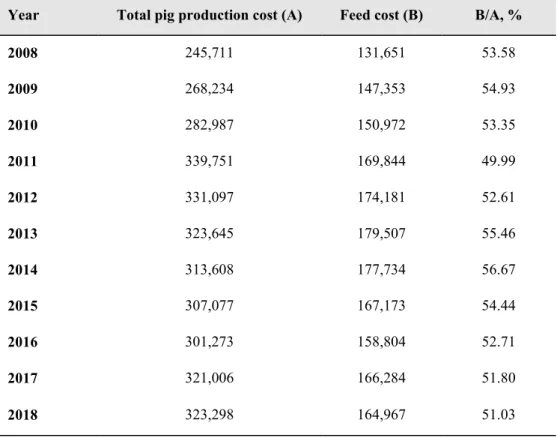
Korea imports more than 17 million tons of grain from abroad every year, about 70 percent of which is used for feed. Imports remain at a similar level each year, but the amount of imports have fluctuated sharply due to high volatility in international grain prices. Since production costs account for a large portion of the cost of manufacturing formula feed, the price of formula feed will rise when feed ingredient prices rise. Similarly, since feed costs account for a large portion of livestock production costs, the cost of livestock production also increases when formula feed prices rise. According to 2018 data, feed costs account for between 50 and 60 percent of the total costs (Table 1).
Trade agreements such as FTA have opened the livestock market. Under these situations, an efficient and stable supply structure of feed in livestock production costs is essential for securing competitiveness of domestic livestock products to counter imported livestock products. Therefore, securing competitiveness to supply high-quality feed in the domestic feed industry at an affordable and stable rate is the necessary and sufficient condition for domestic livestock products to secure competitiveness in the livestock market.
3
Since feed ingredient does not contain enough trace minerals, the trace mineral is added as a premix to meet the trace mineral requirements of NRC (Table 2). However, some of feed companies are adding trace minerals up to three to ten times of trace mineral requirements. This could be one of the reasons for raising the price of feed, which accounts for a lare portion of the cost of livestock production. Therefore, it is very important to supply the optimal level of trace minerals to meet the pig’s requirements.
4
Table 1. Changes in total pig production cost and feed cost by year
(unit: won)
Year Total pig production cost (A) Feed cost (B) B/A, %
2008 245,711 131,651 53.58 2009 268,234 147,353 54.93 2010 282,987 150,972 53.35 2011 339,751 169,844 49.99 2012 331,097 174,181 52.61 2013 323,645 179,507 55.46 2014 313,608 177,734 56.67 2015 307,077 167,173 54.44 2016 301,273 158,804 52.71 2017 321,006 166,284 51.80 2018 323,298 164,967 51.03
5
Table 2. Iron, zinc, manganese, copper, iodine and selenium contents of several
raw materials (unit: mg/kg)
Item Iron Zinc Manganese Copper Iodine Selenium
Wheat 47 27 34 5 0.06 0.12 Corn 32 19 8 2 0.09 0.10 Wheat bran 143 74 112 17 0.08 0.47 Soybean meal 283 47 38 18 0.15 0.20 Fish meal 351 85 13 7 2.00 0.40 (INRA-AFZ, 2004)
1.2 Situation of legal regulation in Korean swine industry
Recently, as growing interest and concern over the negative impact of the swine industry on the environment around the world, swine industry must establish itself as an environment-friendly industry for long-term growth and continuity. In the past, research on swine nutrition and feed was only focused on maximizing the productivity of pigs, while there was little interest in over-supply of nutrients such as amino acid and trace minerals, or the resulting environmental pollution problem. However, due to negative view of the recently deteriorating swine industry and stricker environmental regulations, nutritionists and producers should now pay attention to ways to efficiently reduce the excretion of nutrients as well as to improving productivity through the accumulation of ingested nutrients. Nutrients supplied through feed are absorbed in the digestive tract of livestock in a certain amount, and the rest are excreted through excrement and released into the
6
ecosystem and environment system. In the end, the level of nutrient availability is directly related to the load of environmental pollution caused by livestock production.
Among the nutrients emitted from pigs, the trace minerals that are problematic in the environment are copper and zinc, which are included in soil molecules, which flow into streams, lakes and rivers along with soil molecules to contaminate water quality and act as growth limiting factors for algae and aquatic plants. According to Control of Livestock and Fish Feed Act, concentration of zinc in gestating sows diet is regulated below 150 ppm and copper below 25 ppm. It also regulates zinc in the excrement to be less than 1,200 ppm and copper to be less than 500 ppm. Regulations of trace mineral concentration in feed and manure are expected to be strengthened more and more in the future (Table 3).
Table 3. Acts related with mineral regulation to control livestock feed and
manure
Item
Feed
Manure Liquid
manure
Gestating sow Lactating sow
Zinc 150 ppm 1,200 ppm 170 ppm
Copper 25 ppm 500 ppm 70 ppm
Selenium 4 ppm
7
2. Requirements of trace mineral
As the productivity of the sows has increased significantly over time, the nutrient requirements in the feed of the sows is increasing. Still, the culling rate of low-productivity sows remains high. Low-productivity caused by a combination of various nutritional and environmental factors. For example, it can be seen that the content of minerals in the body of the sows decreases, despite the increased productivity of the sows after three parities (Mahan and Newton, 1995). Inadequate mineral intake can affect hormone secretion, enzyme activity, muscle function, mineral content of bone and other functions of minerals. The requirements for minerals in pigs is usually determined by minerals in the form of inorganic matter. In the case of high-productivity sows, the addition of calcium and phosphorus in feed as well as higher levels of trace minerals should be added. When higher levels of minerals are paid, the chelation reaction may occur more clearly in the lumen of the digestive tract between macro minerals and micro minerals. It also affects the absorption and biological function of minerals (Morris and Ellis, 1980; O’Dell, 1997; Ammerman et al., 1998). It is reported that the body accumulation rate of trace minerals in feed is from 5% to 40% for copper (Combs et al., 1966; Apgar and Kornegay, 1996) and iron (Kornegay and Harper, 1997; Houdijk et al., 1999), less than 10% for manganese (Kornegay and Harper, 1997) and 5% to 40% for zinc (Houdijk et al., 1999; Rincker et al., 2005). After all, consumed large amounts of trace mineral are being released into the feces, only a small amount required would cause to environmental problem.
8
In conclusion, few studies have studied the effects of supplementation different levels of trace minerals. It is difficult to compare the results due to different conditions, such as formulation of feed, source of trace minerals, phytase etc. Further research is needed to determine the exact physiological trace mineral requirement of sows and how the trace mineral status of sow affects the trace mineral status of offspring.
9
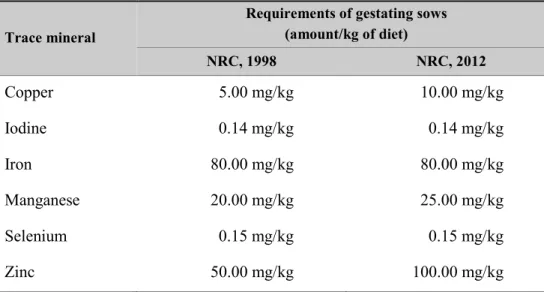
Table 4. Dietary mineral requirements of gestating of sows (90% dry
matter, NRC)
Trace mineral
Requirements of gestating sows (amount/kg of diet) NRC, 1998 NRC, 2012 Copper 5.00 mg/kg 10.00 mg/kg Iodine 0.14 mg/kg 0.14 mg/kg Iron 80.00 mg/kg 80.00 mg/kg Manganese 20.00 mg/kg 25.00 mg/kg Selenium 0.15 mg/kg 0.15 mg/kg Zinc 50.00 mg/kg 100.00 mg/kg
10
3. Characteristics and functions of trace mineral
Minerals are inorganic substance that consists of small amounts in animal body. Minerals are required by animals for homeostasis, lactation, growth, development, reproduction and immune function. so, it is significant to accurately meet the daily mineral requirements of animals. Lack of supplies of minerals can cause deficiencies that can impair the normal functioning of other minerals because of their interaction. On the other hand, excessive supply of minerals can reduce in growth, toxicity and the possibility of environmental pollution.
Pigs need the intake of minerals, including calcium (Ca), chlorine (Cl), copper (Cu), iodine (I), iron (Fe), magnesium(Mg), phosphorus (P), potassium (K), selenium (Se), sodium (Na), sulfur (S) and zinc (Zn) (NRC, 2012). Minerals can be divided into two groups macro-minerals or micro-minerals (commonly referred to as trace mineral), depending on the demand of the diets. Macro-minerals are usually specified as g/kg or percentage of the feed, while trace minerals are usually specified as mg/kg or part per million (ppm). The functions of mineral vary widely. It acts as a constituent of certain tissues, performs various adjustment functions, acts as a constituent of enzymes, or functions as a cofactor for enzyme action, increasing the digestive efficiency of proteins and energy. Minerals have physical or chemical functions within the feed and can have important effects in the swine industry, animal welfare, physiological and economic aspects.
11
3.1 Zinc
Zinc is a constituent of metallic enzymes in DNA and RNA such as enzymes for transcription and many digestive enzymes. Also, zinc is closely related to insulin and hormone (O’Halloran, 1993). For the absorption of zinc, in must be free from amino acids, phytates and simillar compound. This trace element plays an important role in the metabolism of proteins, carbohydrates and fats and are involved in the process of transmitting signals to the nucleus in and outside high levels of zinc intake increased the secretion of ghrelin in the stomach (Yin et al., 2009) and induced activations of various pancreatic enzymes, increased muscle staining in the colon, and changes in the state pattern of the small intestine (Li et al., 2001). When zinc was added th the weaning pig diet, diarrhea of piglets was reduced (Heo et al., 2010) and average daily gain of weaning pig was also improved (Hill et al., 2001).
3.2 Copper
Copper is usually bound to amino acids or proteins to prevent their participation, oxidation and reduction reaction. Although it mostly exists in the form of Cu2+in the feedstuff, it can also be found in the form of Cu1+. Copper plays a lot of role in the body and often acts as an enzyme activator, which is important for a change in state of valence. Pigs need copper for the synthesis of hemoglobin and oxidase needed for normal metabolism (Miller et al., 1991). There are many enzymes and proteins that need copper, including those involved in the transport of oxygen and electrons, protection against oxidative stress, oxidation and reduction
12
reactions. Most important of all are ceruloplasmin, cytochrome C oxidase, lysyl oxidase, dopamin-β-hydroxylase and superoxide dismutase (Hill et al., 1983). Ceruloplasmin is not only involved in the transport of copper, but it is a multisided oxidase such as copper transport and homeostasis, ferroxidase activity, amine oxidase activity and superoxide dismutase activity (Sang et al., 1995). Amine and diamine oxidases are Cu-containing enzymes found in plasma known to activate and catabolize active biogenic amines such as tyramine, serotonin, dopamine and histamine (Linder et al., 1991). Superoxide dismutase (SOD) is found in plasma and extracellular fluids. But, differ from superoxide dismutase (SOD) found in mitochondria. The activities of superoxide dismutase (SOD) in plasma are different based on the species and have not been quantified in swine (L’Abbé and Fischer, 1984). Supplementation of high levels of copper in feed can be increased by fat addition (Dove and Haydon, 1992) and copper concentration in liver and kidneys has greatly increased (Dove, 1993, 1995), but has no effect on reproduction (Cromwell et al., 1993). On the other hand, when copper was added, body weight and weaning weight were higher. In the case of continuous supplementation of copper for two years, total born, birth weight, litter weight and weaning to estrus interval were improved (Roos and Easter, 1986).
3.3 Iron
There are many ionic forms of iron, but only Fe2+ and Fe1+ are found in the animal body and feedstuff. Heme Fe is usually found in products derived from blood or muscle, such as red blood cells and myoglobin. Proteases in the stomach
13
and small intestine emits heme Fe from the globin portion of the molecule to help it absorbed intact across the border of the brush. Iron is used as a constituent of hemoglobin in red blood cells. It is also used in the synthesis of myoglobin in muscle, transferrin in serum, uteroferrin in placenta, lactoferrin in milk and ferritin and hemosiderin in liver (Zimmerman, 1980; Ducsay et al., 1984). Most of the iron in the animal’s body is contatined in hemoglobin for transport of oxygen and small amounts are contained in muscle cells, enzymes or storage. Iron plays an important role in the body as a component of several metabolic enzymes (Hill and Spears, 2001). Pigs have about 50mg of iron at birth, most of which are hemoglobin (Venn et al., 1947). Supplementation of iron improves the total number of red blood cells, hemoglobin concentration and iron concentration of plasma and liver, however excessive supplementation should be avoided as it can cause increased diarrhea and reduced growth rates (Lee et al., 2008)
14
3.4 Manganese
Manganese acts as a constituent of enzymes associated with carbohydrates, fat and protein metabolism. Manganese is a constituent of superoxide dismutase (SOD), essential for the synthesis of chondroitin sulfate, and a constituent of mucopolysaccharides in bone matrix (Leach and Muenster, 1962). Manganese is widely distributed in the animal body, and there are no major storage. But, the largest concentrations are found in the pancreas, kidneys, bones and liver. As with other trace elements, it is required by the body to become or be activated as a component of enzymes. The groups of enzymes that used manganese are lyases, transferases, synthetases, hydrolases, and oxidation-reduction reaction (Leach and Harris, 1997). The role of manganese superoxide dismutase (SOD) seems to be useful as a status indicator inside the mitochondria. Many other enzymes that use manganese can replace magnesium.
3.4 Iodine
Iodine acts as an essential component of the thyroid hormone thyroxin (T4) and triiodothyronine (T3), and triiodothyronine (T3) is three to five times more active than thyroxin (T4) in terms of thyroid activity (Underwood, 1971) Iodine is mostly on the thyroid gland in the body of a pig and is present as a component of mono-, di-, tri- and tetraiodothyronine (thyroxin) (Hart and Steenbock, 1918). These hormones play an important role in the control of metabolism. Thyroid hormone
15
regulates the rate of energy metabolism in the animal body (Underwood, 1977). Most of iodine is absorbed by the stomach and iodine absorbed by thyroid gland by an energy-dependent process that can be blocked by goitrogens (Underwood, 1977). In thyroid gland, iodine react with tyrosine residue to form thyroid hormone precursor monoiodotyrosine and diiodotyrosine. Thyroid hormones are stored in thyroid bound to thyroglobulin (Hetzel and Wellby, 1997).
3.4 Selenium
Selenium in the feed is most likely in the form of selenomethionine or selenocysteine. It is an amino acid containing selenium. Thus, in the process of absorption and utilization, the animal body treats it with amino acids, making the organic form of selenium more available to tissues. However, selenomethionine must be converted into selenocysteine for protein synthesis. Selenide, selenite and selenate are inorganic types of selenium in the feed. The transport of selenium in the blood is carried out by groups of selenium-containing in α- and β- globulin of lipoprotein and selenoprotein P density. The use of selenium in animal species, tissues, vary depending on the severity of the selenium. Selenium acts as a constituent of glutathione peroxidase. There are four enzymes of glutathione peroxidase (GPx) that promote essentially the same reaction and contain four selenium as selenocysteine. GPx1 enzymes are found in kidney, liver, red blood cell and other tissues, GPx2 is found in the stomach and liver, GPx3 is the extracellular membrane in plasma, kidney and thyroid, and GPx4 is associated with the cell membrane. GPx removes hydrogen peroxide but utilizes glutathione (GSH),
16
which must be regenerated with glutathione reducing enzyme that eliminates the toxicity of lipid peroxides and protects cells and organs from damage caused by peroxide (Rotruck et al., 1973). Selenium and vitamin E complement each other because they both act as antioxidants. However, high levels of vitamin E do not make selenium unnecessary (Ewan et al., 1969; Bengtsson et al., 1978; Hakkarainen et al., 1978). The discovery of Iodothyronine 5’ –deiodinase as selenoprotein further revealed that selenium was deeply involved in thyroid metabolism (Arthur, 1994).
4. Deficiency and toxicity of trace mineral
4.1 Zinc
Reduced appetite, poor growth, reproductive failure, hair loss, skin deseases, poor healing ability and damaged brain are the main characteristics of zinc deficiency (Kernkamp and Ferrin, 1953; Tucker and Salmon, 1955). Lack of zinc results in lower growth rates and concentration of zinc, alkaline phosphatase and albumin in serum (Hoekstra et al., 1956, 1967; Luecke et al., 1957; Theuer and Hoekstra, 1966; Miller et al., 1968; Prasad, 1971). Lack of zinc may induced when the concentration of one or more nutrients is excessive than the requirement (Shatzman and Henkin, 1981).
The toxic symptoms of zinc include depression, arthritis, gastritis and death (Brink et al., 1959). Toxic symptoms do not occur when zinc levels in feed are below 1,000 ppm, while ingesting feed containing 1,000 ppm of zinc lactate in pigs
17
resulted in lame and unthrifty within two months (Cox and Hale, 1962; Hill et al., 1983). High levels of calcium have also been found to help alleviate zinc poisoning (Hsu et al., 1975). Adding more than 5,000 ppm of zinc in the form of zinc oxide in gestating sow diets reduced weaning weight of piglets and caused osteochondrosis (Hill and Miller, 1983; Hill et al., 1983).
.
4.2 Copper
Lack of copper can cause problems in iron transport and hematopoiesis; and reduced keratinization and synthesis of elastine, collagen and myelin (Follis et al., 1955; Carnes et al., 1961; Hill et al., 1983). Deficiency symptoms of copper include microcytic anemia, hypochromic anemia and cardiovascular disorders (Elvehjem and Hart, 1932; Teague and Carpenter, 1951).
Copper may be toxic if ingested more than 250 ppm in feed over a long period of time such as collapse, salivation, vomiting and death (NRC, 1980). Toxic symptoms may result in low hemoglobin levels and jaundice due to excessive accumulation of copper in liver and other organs (Hedges and Kornegay, 1973; Prince et al, 1984). Adding 500 ppm of copper reduces weight gain and ultimately causes anemia, resulting in death (Comb et al., 1966; Suttle and Mills, 1966). On the other hand, adding 1,000 ppm of copper causes death quickly (Allcroft et al., 1961). The toxicity of copper becomes more pronounced if the levels of zinc and iron in the feed are low or the levels of calcium are high. In pigs, the maximum resistance level of copper in feed is 250 ppm (NRC, 2005).
18
4.3 Iron
After weaning, the iron requirement in pig diet was known to be about 80 ppm (Pickett et al., 1960). But, recent studies have redefined that 200 ppm is needed (Hill and Spears, 2001). Depending on the stage of growth, the requirement for iron will also decreases because of the growth rate of blood volume (Lee et al., 2008). The hemoglobin concentration of blood is known to be moderate at 10 g/dL, and if 8 g/dL is the borderline of anemia and less than 7 g/dL, anemia is reported (Zimmerman, 1980). Anemia caused by iron deficiency is a hypochromic anemia, in which pig with anemia is retarded in growth, wrinkled in the skin and became lethargic. Also, Pigs with anemia are more susceptible to disease infection (Osborne and Davis, 1968).
The addition of iron improves the total number of red blood cells, hemoglobin concentration and iron concentration in plasma and liver, but excessive addition should be avoided because it can cause increased diarrhea and reduced growth rates (Lee et al., 2008). In cases of oral administration of iron sulfate in piglets of 3 to 10 days, toxicity was present at about 600 mg per kg of body weight (Campbell, 1961), and clinical symptoms appeared within 1 to 3 hours after ingestion of iron . The addition of 5,000 ppm of iron in feed causes rachitis, which can be prevented by increasing the phosphorus content in feed (O’Donovan et al., 1963; Furugouri, 1972)
19
4.4 Manganese
In case of a lack of manganese in gestating sows, abnormal skeletal growth, irregular estrous cycles, anestrum and resorption of fetals (Plumlee et al., 1956). The levels of manganese in the body of sow affects the status of the manganese in the body of newborn piglets, because it can pass through the placenta of sow (Newland and Davis, 1961; Gamble et al., 1971).
So far, No clear results have been defined for the toxicity of manganese. For pigs, the addition of manganese of 4,000 ppm results in decrease of feed intake and weight gain (Leibholz et al., 1962). Concentration of hemoglobin decreased when the level of manganese in feed was 2,000 ppm (Matrone et al., 1959), and when the level of manganese was 500 ppm, weight gain of growing pigs decreased and the limb became firm (Grummer et al., 1950)
4.4 Iodine
Pigs fed soybean meal based diet are hard to lack of iodine. Also, corn-soybean meal based diet has enough iodine to prevent thyromegaly (Cromwell et al., 1975). In the case of sows, supplementation of iodine in feed can prevent deficiency of iodine (Andrews et al., 1948). In pigs, a severe lack of iodine results in lethargy, which can lead to thyroid disorder (Beeson et al., 1947; Braude and Cotchin, 1949). Gestating sows that ingested feed deficient in iodine give birth to weak or stillborn piglets and hairless (Slatter, 1955; Devilat and Skoknic, 1971).
20
When diet with excessive levels of iodine is fed, pigs showed reduction of growth rate, concentration of hemoglobin and the iron concentration in liver (Newton and Clawson, 1974). In gestating sows, supplementation high concentration of iodine resulted in harmful effects (Arrington et al., 1965).
4.4 Selenium
Even if addition of selenium, the concentration of selenium in tissues is more affected by the concentration of the feed ingredients (Mahan et al., 2005), and environmental stress can further increase the incidence and degree of selenium deficiency (Michel et al., 1969). Generally, additive effect of selenium is more pronounced than vitamin E (Mahan et al., 1975). Major biochemical change in selenium deficiency is the degradation of glutathione peroxidase activity (Thompson et al., 1976; Young et al., 1976; Fontaine and Valli, 1977). Therefore, glutathione peroxidase levels in plasma can be a reliable indicator of the selenium status of pigs (Chavez, 1979a, 1979b; Wegger et al., 1980; Adkins and Ewan, 1984). Symptom of selenium deficiency is sudden death (Ewan et al., 1969; Groce et al., 1971), and most of the symptoms are consistent with deficiency in vitamin E (Groce et al., 1973). Detailed symptoms of selenium deficiency include hepatosis deietetica, white muscle disease and mulberry heart disease (Spallholz, 1980; Larsen and Tollersrud, 1981; Simesen et al., 1982).
Toxicity of selenium varies depending on the type of selenium. Toxicity with selenite supplementation causes more severe symptoms and accute selenosis than selenium-enriched yeast (Kim and Mahan, 2001a, 2001b). Toxicity symptoms
21
include loss of appetite, fat accumulation in liver and adema (Miller, 1938; Miller and Williams, 1940; Herigstad et al., 1973). Supplementation of arsenicals in feed could help to alleviate symptoms of selenosis (Wahlstrom et al., 1955).
5. Effects of trace mineral supplementation in gestating sows
5.1 Physiological response of sow
Trace minerals such as zinc, copper and iron are widely used and essential for physiological response in pigs (Richards et al., 2010). Providing an adequate amount of trace minerals rather than supplying excessive or small amounts is necessary for optimal growth, metabolism maintenance and body functions maintenance.
Cromwell (1993) conducted an experiment to evaluate two dietary copper levels provided on physiological response of sows. Sows were fed dietary copper levels had no effect on weight change of sow in gestation period when sows supplemented diets with copper at 0 or 250 ppm per kg of diet during both gestation and lactation periods. but Weight gain of sow in lactation period was greater when the 250 ppm dietary copper was provided. According to Peter and Mahan (2008), sows were supplemented diets with 2 to 3 times the requirement of dietary trace mineral or NRC (1998) recommendations on physiological response of sow over a 6-parity period. They observed that no significant difference between 2 to 3 times the requirement of dietary trace mineral and NRC (1998) recommendations. There were no significant effect on body weight, backfat
22
thickness, body weight change and backfat thickness change. Lu et al. (2018) investigated the effect of nutritional benefits of dietary copper for sows with 3 copper levels which are 20 mg/kg, 120 mg/kg or 220 mg/kg of diet during gestation period. They observed that no difference between dietary copper levels was obtained in body weight of sows.
5.2 Reproductive performance and litter performance
Sow must be fed enough nutrients to meet the minimum nutritional requirements for body condition immediately after farrowing. After maximum feed intake of sow has been reached, lactating sow was fed ad libitum (Koketsu et al., 1996a, 1996c). According to Libal and Wahlstrom (1977), when feed intake of sow increased, newborn piglet weight was increased. Lactating sow must be required optimal nutrients for milk production (Boyd et al., 2000)
Cromwell et al. (1993) evaluated the indirect effects if 2 amounts of copper on growth performance of piglets, reproductive performance, and blood status in lactation period. They demonstrated that number of total born piglets, stillborn, and body weight at weaning did not show any negative effect. When sows supplemented diets with 250 ppm of copper in diet during lactation and end of gestating period, there was no significant difference in growth performance of piglets during lactation period (Dove, 1993b; Thacker, 1991; Roos and Easter, 1986).
23
5.3 Trace mineral concentration of blood
Trace minerals such as zinc, copper, iron and manganese are components of iron-containing enzymes and act as catalyst for biochemical reactions (Venn et al., 1947). Concentration of trace minerals in blood is indirectly an indicator of status of trace minerals in the animal body. When evaluating trace mineral concentration of organ such as zinc, copper, iron, manganese, iodine and selenium, it must be recalled that there is isotopic evidence which all trace minerals in organ should come from plasma (Linzell, 1968).
Cromwell et al. (1993) evaluated the indirect effects if 2 amounts of copper on growth performance of piglets, reproductive performance, and blood status in lactation period. Sows were supplemented 0 ppm or 250 ppm of copper with increasing levels of liver, kidney and plasma. However, Dove (1993) indicated no significant difference in both treatments during lactation period.
According to Leibholz et al. (1962), Feeding sows diets with 0.4 ppm of manganese did not show any significant difference on concentration of manganese in liver, heart and plasma. Also, Gamble et al. (1971) demonstrated that sows in late gestation period absorbed small amount of an oral dose of manganese that manganese is transferred to the placenta. Dietary supplementation of manganese in gestating sows diet did not affect the concentration of manganese in the blood.
Hill et al. (1983c) conducted an experiment to evaluate supplemented 0, 50 or 500 ppm of zinc on physiological response of sows, reproductive performance and blood concentration of zinc. They reported that zinc concentration of sows in plasma increased significantly when sows fed increasing level of zinc during end of
24
gestation period. Also, there was a greater concentration of zinc increase of sow in the liver, heart, kidney and plasma. However, sows supplemented 5,000 ppm of zinc decreased in aortic copper and hepatic iron.
25
Ⅲ
. Effects of Dietary Trace Mineral Premix Levels on
Physiological Responses, Reproductive Performance,
Litter Performance, Blood Profiles, Milk
Composition and Feed Cost in Gestating Sows
ABSTRACT: This study was conducted to evaluate optimal trace mineral levels
in gestating sow diet considering physiological responses, reproductive performance, litter performance, blood profiles, milk composition and feed cost. A total of 60 F1 multiparous sows (Yorkshire × Landrace) with average body weight (BW) of 231.5 ± 3.59 kg, backfat thickness of 23.3 ± 0.63 mm, and parity of 4.98 ± 0.240 were allotted to one of 4 treatments considering BW, backfat thickness, and parity in a complete randomized design (CRD) with 15 replicates. Treatments were 1) M1; experimental diet with trace mineral requirement in NRC (2012); 2) M3; experimental diet with 3 times of trace mineral requirement in NRC (2012); 3) M6; experimental diet with 6 times of trace mineral requirement in NRC (2012); 4) M9; experimental diet with 9 times of trace mineral requirement in NRC (2012). In lactation period, all sows were fed the same commercial lactation diet that was formulated by NRC requirement (2012). As a result, different levels of dietary trace mineral premix did not show any significant difference in BW, backfat thickness, reproductive performance, milk composition of sows and growth performance of piglets. Iron and copper concentration of sows in serum at 24 hour postpartum was linearly decreased (linear, P=0.01, P=0.05, respectively), but the concentration of zinc in blood of sows at 24 hour postpartum was not changed
26
when sows were fed higher levels of trace mineral premix. When gestating sows were fed higher levels of trace mineral premix, the concentration of zinc in blood of their piglets was linearly decreased (linear, P<0.01). However, the serum concentration of iron and copper of piglets did not show any difference. Consequently, current trace mineral requirement of NRC (2012) is enough for gestating sows and additional supplementation of trace mineral premix in gestating diet did not result in positive response during lactation as well as gestation although feed cost was increased.
Key words: Trace mineral premix, Blood profiles, Reproductive
performance, Piglets, Sow
27
Introduction
Macro- and micro-minerals should be consumed and ingested by pigs for their normal growth and physiological metabolism. In general, minerals such as calcium, phosphorus, sodium and chlorine belonging to macro-minerals and those are component of body structure. However, micro-minerals such as zinc, copper, iron and manganese are components of iron-containing enzymes and play a very important role as catalysts for biochemical reactions (Venn et al., 1947). Moreover, lack of zinc and copper damage the innate and acquired immune system because trace minerals such as zinc and copper are essential to maintain immune response (Failla, 2003).
However, it is very hard to observe positive responses when excessive amount of minerals are supplemented in livestock feed. Lee et al. (2008) reported that excessive supplementation of iron in feed should be avoided. Although the number of total red blood cells concentration of hemoglobin, iron concentration of liver and plasma are improved, it resulted in increased diarrhea frequency and reduced weight gain especially in weaning pigs. Contrary results are demonstrated among researchers in the field of animal nutrition. Kirchgessner et al. (1981) suggested the requirement of zinc for gestating sows at 25 ppm. Payne et al. (2006), however, demonstrated 100 ppm of organic zinc should be supplemented in sow’s diet for higher number of litter at weaning.
Generally, commercial feed companies are supplemented higher levels of trace minerals in pigs’ diet than the requirements of NRC (2012). Because trace mineral
28
requirements for pig might be varied by humidity (Coehlo, 1991), management methods, stress status, physiological conditions (Mahan et al, 1975) and temperature (Lucas and Calder, 1957). However, there are few studies for determining the optimal trace mineral requirements of sows during gestation and lactation have been reported. Excessive supplementation of trace mineral premix in sow diet is one of the reason for rising feed cost in Korea. It is necessary to determine optimal trace mineral requirements of sows for reducing feed cost
Therefore, this study was conducted to evaluate the effects of dietary trace mineral premix levels on physiological responses, blood profiles, reproductive performance and milk composition and feed cost in gestating sows.
29
Materials and Methods
Experimental animals and management
All experimental procedures involving animals were conducted in accordance with the Animal Experimental Guidelines provided by the Seoul National University Institutional Animal Care and Use Committee.
A total of 60 F1 multiparous sows (Yorkshire × Landrace) with average body weight (BW) of 231.5 ± 3.59 kg, backfat thickness of 23.3 ± 0.63 mm, and 4.98 ± 0.240 parity were housed in an individual gestation stall to be artificially inseminated. All sows were allotted to one of 4 treatments considering BW, backfat thickness, and parity in completely randomized design (CRD) with 15 replicates. Sows were contacted with boar twice daily. When signs of first estrus were detected, artificial insemination (AI) was served after 12 hours later and two times of AI conducted with fresh diluted semen (Darby A.I. center, Anseong, Korea). Pregnancy was checked at day 35 after mating by utrasound scanner (Donjin BLS, Korea).
Experimental design and diets
All experimental diets for gestating sows were formulated based on corn-soybean meal and trace mineral premix was supplemented by treatment levels.
30
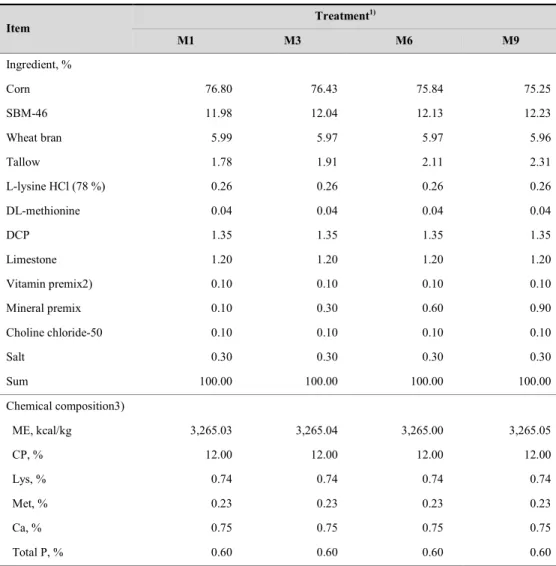
Treatments are as followed: 1) M1 : corn-SBM based diet + 0.1% of trace mineral premix (1 times of trace mineral requirement in NRC (2012)), 2) M3 : corn-SBM based diet + 0.3% of trace mineral premix (3 times of trace mineral requirement in NRC (2012)), 3) M6 : corn-SBM based diet + 0.6% of trace mineral premix (6 times of trace mineral requirement in NRC (2012)), 4) M9 : : corn-SBM based diet + 0.9% of trace mineral premix (9 times of trace mineral requirement in NRC (2012)). All other nutrients in experimental diets were formulated to meet or exceed the NRC requirements (2012).
The formulas of trace mineral premix in gestation diet was shown in Table 1. All experimental diets were supplemented with choline-chloride 0.1%. Formula and chemical composition of experimental diets were presented in Table 2, In lactation period, the same commercial diet was provided regardless of dietary treatments during gestation.
Animal management
All experimental sows were fed experimental diet once a day at 08:00 a.m. Each treatment diet was provided at 2.2 and 2.4 kg/d for 2nd parity and over 3rd parity during gestation, respectively. All sows were housed in individual gestation stall (2.20 × 0.65 ㎡) and ambient temperature was regulated by automatic ventilation system to maintain average 20℃. At day 110 of gestation, each pregnant sow was washed and moved into an individual farrowing crates (2.40 ×
31
1.80 ㎡). Each farrowing crate was equipped with a feeder and a nipple waterer for sows and heating lamps were prepared for newborn piglets. From 110 d of gestation, diet was decreased gradually 0.2kg per day until farrowing. Natural delivery without delivery inducer was used during farrowing and personal assistance was done when dystocia was happened. After farrowing, lactation diet was provided ad libitum during lactation. The temperature of lactating barn was kept 28 ± 2 and baby house under heating lamp was kept 32 ± 2 . Air ℃ ℃ conditioner was installed at lactating barn to regulate automatically. After farrowing, piglets were cross-fostered within treatment within 24 hrs postpartum to balance suckling intensity of sows with equalization of litter size, and thus to minimize any detrimental effect of initial litter size potentially affecting litter growth. Cutting umbilical cord, tail docking and castration were conducted 3 days after birth, at 150 ppm Fe-dextran (Gleptosil®, Alstoe, UK) was injected to each piglet. Creep feed was not provided during lactation and weaning was done at 28 d after farrowing.
32
Body weight, backfat thickness, lactation feed intake
Live body weight and backfat thickness of sows were measured at mating, 35d, 70d, 110d of gestation, 24 hrs postpartum, and 21 day of lactation, respectively. Body weight of sow was measured by electric scale (CAS Co. Ltd., Yangju-si, Gyeonggi-do, Korea) and backfat thickness was measured at P2 position (mean value from both sides of the last rib and 65 mm away from the back bone) by Ultra-sound device (Lean Meter®, Renco Corp., Minneapolis, MN, USA). Daily feed waste was recorded during lactation to identify physiological effects on sows.
Reproductive performance
The reproduction traits were recorded within 24 h postpartum, including the total born, the number of piglets born alive, stillbirth, and piglet losses. Individual piglet weight of total born, stillborn were measured at birth and 21 d of lactation by electric scale (CAS CO. Ltd., Yangju-si, Gyeonggi-do, Korea). At measuring the body weight of piglets, ear notching was practiced for experiment. Average daily gain of piglets was calculated to identify their growth performance and lactating performance after farrowing. The weaning to estrus interval (WEI) of sows was measured after weaning as one of important parameters for evaluating reproductive performance.
33
Blood profiles
Blood samples (n=4 for each treatment) were collected from jugular vein of sows using 10 ml disposable syringes at mating, day 35d, 70d and 110d of gestation, 24 hrs postpartum and 21 day of lactation. Also, blood samples were collected from anterior vena cava of piglets using 3 mL disposable syringes at 24 hrs postpartum and 5 mL disposable syringes 21 day of lactation. All serum from blood samples were moved in serum tube (SSTTMⅡ Advance, BD Vacutainer, Becton Dickinson, Plymouth, UK) and EDTA tube (BD Vacutainer K2E, Becton Dickinson, Plymouth, UK). Individual sample was centrifuged at 3,000 rpm, 4 ℃ for 15 minutes (Eppendorf centrifuge 5810R, Hamburg, Germany) and the supernatant serum was separated to a microtube (Axygen, UnionCity, CA, USA) and stored at –20 deep freezer until analysis.℃
The concentration of Fe in blood was measured by calorimetry using cobas 8000 (C702, Roche, Germany). Blood Cu and Zn was measured by ICP-MS (Inductively coupled plasma-mass spectrometry, ELAN DRCe, PerkinElmer, Germany).
Milk composition
Colostrum samples (n=4 for each treatment) were collected from functional mammary glands at 24 hrs postpartum and milk samples (n=4 for each treatment) were taken at 21 day of lactation. One mL of oxytocin (Komi oxytocin inj.,
34
Komipharm International Co., Ltd., Siheung-si, Gyeonggi-do, Korea) was injected into the blood vessels of the sow’s ear to collect colostrum and milk in a 50mL conical tubes (SPL Life Sciences Co., Ltd., Pocheon-si, Gyeonggi-do, Korea) from the first and second teats. Collected samples were stored in a freezer (−20 °C) until further analysis. Proximate analysis for fat, protein, lactose, and solids not fat of milk as well as colostrum was determined using a Milkoscan FT 120 (FOSS, Hillerod, Denmark).
Economic analysis
As pigs were reared in the same environmental condition, economical efficiency was calculated using feed cost based upon the price of ingredients without considering other factors. The total feed cost per sow and feed cost (won) per piglet production were calculated using amount of the total feed intake and feed price.
35
Statistical analysis
All collected data were analyzed as a completely randomized design using the General Linear Model (GLM) procedure in SAS (SAS Institute, 2004). Orthogonal polynomial contrasts were used to determine the linear and quadratic effects by increasing the vitamin premix levels in gestation for all measurements of sows and piglets. Individual sows and their litters were used as the experimental unit in physiological response, reproductive performance, blood profiles, milk composition. The differences among means were declared significant at P<0.05 and highly significant at P<0.01 and the determination of tendency for all analysis was P≥0.05 and P<0.10. When the significance was declared, fisher’s least significance difference (LSD) method was used to separate the means.
36
Results and Discussion
Physiological responses
The effect of dietary trace mineral premix levels in gestating sows on body weight, backfat thickness in gestation was presented in Table 2. There were no significant difference in body weight and backfat thickness of sows overall period of gestation (P>0.05). In addition, changes in body weight and backfat thickness during gestation were not affected by dietary trace mineral premix levels (P>0.05).
The effects of dietary trace mineral premix levels in gestating sow diet on body weight, backfat thickness, average daily feed intake and WEI during lactation shown in Table 3. There was no significant difference in body weight and backfat thickness in 24 hours postpartum and 21 day of lactation by dietary treatments (P>0.05). Moreover, there was no significant difference in changes of body weight and backfat thickness in 24 hours postpartum and 21 day of lactation among treatments (P>0.05). Average daily feed intake of sows in lactation was not changed by dietary treatment during gestation. Also, WEI of sows after weaning was not affected by dietary mineral treatments during gestation.
Cromwell et al. (1993) found that body weight in day 108 of gestation and 24 hours postpartum was increased when sows fed 250 ppm of copper during gestation and lactation. On the other hand, Peter and Mahan (2008) reported that body weight and backfat thickness of sows in day 110 of gestation were not
37
influenced by increasingly dietary copper levels when increasing levels of copper was supplemented. Lu et al. (2018) demonstrated that no differences were observed in body weight and backfat thickness of sows during gestation when sows were fed 3 different levels of copper (20, 120 or 220 mg/kg). In present study, body weight and backfat thickness of sows were not influenced although sows were fed different levels of mineral premix.
The feed intake of sows in lactation is closely related to the weight loss of sows. If sows were not fed adequate amount of feed during lactation, milk production will be decreased. Accumulated nutrients in the body of sows during gestation will be used for milk production (Reese et al, 1982; Trottier and Johnson, 2001). Several researchers demonstrated that trace mineral levels did not affect on ADFI in lactation from supplementing trace mineral. Peter and Mahan (2008) observed no difference with body weight and change of body weight at 24 hours postpartum and weaning when sows were fed diet supplied with 2 levels of selenium (0.15 or 0.30 mg/kg). In addition, Lu et al. (2018) demonstrated that no differences were observed in body weight and backfat thickness during lactation as increasing levels of copper supplemented. In this study, when sows were provided increasing levels of trace mineral premix, body weight, backfat thickness and ADFI of sows in lactation did not show any difference among treatments.
It is generally known that nutrition and metabolic conditions of sows during lactation affect WEI (Pettigrew, 1981; Forxcoft et al., 1995). Low feed intake of lactating sows may cause an increase of WEI, because of negative health condition of lactating sows after weaning (Reese et al., 1982; King and Williams, 1984;
38
Baidoo et al., 1992). It is also known that WEI is affected by lactation period (Poleze et al., 2006) and body weight loss during lactation (Thaker and Bilkei, 2005) and the number of piglets (Eissen et al., 2000). In agreement with the above results, the present study seemed to indicate that body weight, backfat thickness, ADFI and WEI of sows during lactation were no significant difference as increasing levels of trace mineral premix supplemented.
Consequently, addition of trace mineral premix in gestation diet with the level of trace mineral requirements in NRC (2012) had no negative effect on physiological responses, ADFI and WEI during gestation and lactation.
Reproductive performance and piglet growth performance
The effects of dietary trace mineral premix levels in gestating sow diet on reproductive performance of sows and litter performance were shown in Table 4. During lactation (0-21 days), there were no significant differences in the number of total born, born alive, stillbirth piglets at 24 hours postpartum and at 21 days of lactation when sows fed increasing levels of trace mineral premix (P>0.05). Moreover, there were no negative effect on total litter weight, litter birth weight and litter weight at 24 hours postpartum and at 21 days of lactation as increasing levels of dietary trace mineral premix (P>0.05).
Lactating sows need to consume adequate nutrients to meet minimum nutrients requirements for maintenance of body condition. After the maximum feed intake of lactating sows is reached, ad libitum method is performed (Koketsu et al., 1996a,
39
1996c). Libal and Washlstrom (1977) reported that litter weight at 24 hours postpartum improved when the feed intake of lactating sows was increased. Lactating sows need enough nutrients for milk production, and it is known that increased feed intake of lactating sows improved milk production during lactation (Boyd and Kensinger, 1998). In agreement with the above results, the present study did not find any significant effects on feed intake overall lactation periods by different levels of trace mineral premix during gestation. Thus, it seemed to indicate that litter performance of lactation did not show any significant differences among treatments as increasing levels of trace mineral premix supplemented.
According to Cromwell et al. (1993), no differences were observed in the number of total born, born alive, stillbirth piglets at 24 hours postpartum and at 21 days of lactation when 250 ppm of copper was added in the gestation diet with 9 ppm of copper. Moreover, there was no significant difference in litter performance during lactation when sows were fed supplemented 250 ppm of copper during late gestation (Thacker, 1991) and lactation (Dove, 1993b; Roos and Easter, 1986). In agreement with the above results, the present study could not observe any significant effects on litter performance.
Consequently, addition of trace mineral premix in gestation diet at the level of trace mineral requirements in NRC (2012) had no negative effect on reproductive of lactating sows and litter performance.
40
Blood profiles
The effects of dietary trace mineral premix levels in gestating sow diet on the concentration of serum zinc, copper and iron of sows in gestation period were shown in Table 5. The effects of dietary trace mineral premix levels in gestating sow diet on the concentration of serum zinc, copper and iron of sows and piglets in lactation period were shown in Table 6 and 7.
In blood profiles of gestating sows, there were no significant difference in concentration of serum copper and zinc at 35 day, 70 day, 110 day of gestation (P>0.05). Moreover, concentration of serum copper and zinc of sows did not show any significant difference at 24 hours postpartum and 21 day of lactation (P>0.05).
Hill et al. (1983c) demonstrated that concentration of zinc in the liver, kidney and plasma increased when additional 5,000 ppm of zinc was supplemented in gestation diet. In present study, concentration of zinc in serum of sows tended to be increased as increasing trace mineral premix at 35 day and 110 day of gestation, as increasing levels of trace mineral premix (linear, P=0.15, P=0.05, respectively). Although concentration of zinc in serum of sows fed 6 times of trace mineral requirement showed a quadratic response, significant difference was not observed among treatments (quadratic, P=0.01). Concentration of copper in serum did not show any significant differences among treatments overall gestation period. Iron concentration in serum of sows at 24 hours postpartum showed a linear response as dietary trace mineral levels increased (linear, P=0.01). Iron concentration in serum of sows fed 6 times of trace mineral requirement at 21 day of lactation, quadratic
41
response was observed. However, no significant difference was detected among treatments (quadratic, P=0.03). This experiment demonstrated negative effects in reproductivity of sows and growth performance of piglets were not detected although the concentrations of copper, iron and zinc in serum were increased during gestation. However, according to Hill et al. (1983c), 500 ppm of zinc concentration were added in feed.
In present study, zinc concentration of piglets in serum in 24 hours postpartum was linearly decreased when trace mineral premix level was increased in the diet of sow (linear, P<0.01). Also, concentration of copper in serum of piglets tended to be decreased as increasing trace mineral premix in 24 hours postpartum (linear, P=0.14). Iron concentration in serum of piglets fed 6 times of trace mineral requirement at 21 day of lactation showed quadratic response. But, they did not show any significant difference among treatments (quadratic, P=0.02).
Brady et al. (1978) reported that iron could not be delivered to the foetus through the placenta although sows fed high levels of iron in late gestation. According to Gleed and Samsom (1982), iron deficiency of piglets could be prevented through feces of sows because piglets might take iron by consuming dam’s feces. However, concentration of copper in serum of piglets decreased when sows were fed high levels of zinc (Hill et al., 1983c, 1983d). It is known that bioavailability of zinc is affected by type, level, term (Ritchie et al., 1963) and levels of other mineral (Kirchagessner and Grassman, 1970). In addition, when piglets fed low levels of copper, it might result in anemia easily (Venn et al., 1947). As expected from previous studies (Hill et al., 1983c, 1983d), this experiment
42
demonstrated that copper concentration of piglets in serum decreased when sows fed high levels of zinc because antagonism among minerals might be occurred.
Consequently, addition of trace mineral premix in gestation diet at the level of trace mineral requirements in NRC (2012) had no negative response on blood profiles of sows in gestation and piglets performance in lactation.
Milk composition
The effects of dietary trace mineral premix levels in gestating sow diet on milk composition were shown in Table 8. When sows were fed increasing levels of trace mineral premix, there had no significant differences in casein, protein, fat, total solid, solid not fat, lactose, free fatty acid contents both in colostrum and milk.
It is known that sow’s milk is more affected by gestation diet than lactation diet. According to Long et al. (2010) and Coffey et al. (1982), minerals were stored in muscles or bones rather than in fat subsequently sow’s milk had higher lipid content. Therefore, the present study demonstrated that milk composition was not affected by different levels of dietary mineral due to the fact that milk is not the major site for accumulation of minerals.
Consequently, additional trace mineral supplementation during gestation did not showed any significant effects on composition of colostrum and milk.
43
Economic analysis
The effects of dietary trace mineral premix levels in gestating sow’s diet on total feed cost per sow and feed cost per piglet production were shown in Table 9. No significant difference was observed in total feed cost per sow overall period. Also, no difference was found in feed cost per piglet production.
Feed cost per sow during gestation of M1 treatment was lower about 7 won per l kg of gestation diet. Also, the total feed cost per sow of M1 treatment was lower about 4,521 won than that of M9 treatment. If there are 500 sows in swine farm, total feed cost per sow of M1 treatment would be lower about 2,260,500 won than that of M9 treatment overall period. In addition, feed cost per piglet production of M9 treatment would be higher about 371,000 won than that of M1 treatment.
As a result, supplementing trace mineral resulted in numerically higher total feed cost per sow and feed cost per piglet production. Trace mineral requirements of NRC (2012) could reduce the total feed cost per sow and feed cost per piglet production compared to other dietary treatments.
44
Conclusion
There were no significant differences in body weight and backfat thickness of gestating sows by different levels of dietary mineral levels during overall periods. Increasing of trace minerals did not show any positive effect on feed intake in lactation and WEI. In addition, although sows were fed high levels of trace mineral premix had the number of total born, born alive, stillbirth piglets were not affected by dietary mineral levels in gestation. Additionally, milk composition of sows in lactation was not changed by dietary mineral levels. When gestating sows were fed much higher levels of dietary minerals the total feed cost per sow and feed cost per piglet production would be increased without any beneficial response both in sows and piglets.
Consequently, the present study demonstrated that mineral requirement of NRC (2012) is enough for gestating sows for their normal metabolism and subsequent piglets growth in lactation. Moreover, additional supplementation of trace mineral level resulted in increasing cost of feed without any benefical response both in sows and piglets.