잠복고환은 소아비뇨기과 분야에서 흔한 질환 중의 하나이며, 고환이 정상적인 음낭부위에 고정이 되지 않은 질환이다. 대부분 의 경우 고환이 있는 경우도 있지만 음낭이외의 부위에 존재하거 나 업는 경우도 발생된다. 유병률은 조산아의 경우 9.2-30.0%이 고 정상출산의 경우 3.4-5.5%, 1살 때에는 0.8%로 보고되어 태 아의 성숙정도와 많은 관련이 있으며 출생이후 체중과 관련되어 2.5Kg이하의 경우에는 더 높은 유병률을 나타낸다1-7). 이중 20% 정도는 신체검사에서 고환이 촉지되지 않는다8-9). 1993년부터 2002년까지 비뇨기과 다빈도 수술에 포함되면 누적 수술 건수는 14,939건이나 된다10). 잠복고환의 경우 대부분 신체검사만으로 진단이 가능하고 수술적 교정이 가능하여 의료진의 입장에서는 간단히 질환으로 생각이 되나 보호자의 입장에서는 많은 스트레 스를 가지게 된다. 잠복고환의 경우 불임, 암발생, 미용적인 측면 으로 인해 수술적인 치료를 권하고 있다11). 잠복고환의 원인은 정확하게 알 수 없지만 쌍쌩아에 대한 연 구에서 이란성의 경우 16,7%, 일란성의 경우에는 26.7%로 발생 되는 것으로 보아 잘 알수 없는 유전적인 요소와 환경적인 요소 가 작용하는 것이다. 동물모형에서는 leucine-rich repeat-containing G protein-coupled receptor 8 (LGR8)와 관련된 것 으로 알려진 insulin-like 3 (INSL3) 와 이와 관련된 receptor relaxin/insulin-like family peptide receptor 2 (RXFP2) 등이 잠복고환을 유발하는 인자로 알려져 있다12-14).
환경적인 요인으로는 남성의 생식기관에 영향을 줄 수 있는 즉 내분비기관의 호르몬 분비에 혼란을 일으킬 수 있는 화학약품 등이 한 원인일 수 있으며 특히 임신 초기에 diethylstilbestrol (DES)를 복용하였을 경우 많은 연관이 있다15,16). 이외 살충제와 polychlorinated biphenyls (PCBs), dioxins, flame retardants, phthalates 등이 관련되었다는 연구가 있으나 대상자 수가 저고 통계학적으로 의미가 없었다17-22). 산모와 관련되어 체지방지수가 높거나 흡연, 음주, 진통제 복용 등과도 연관이 있는 연구가 있 다23-26).
잠복고환의 진단과 치료에 관해 알아야 될 것
김수현
1, 김성대
1, 박경기
1, 김영주
1, 허정식
1 1제주대학교의학전문대학원비뇨기과학교실(Received December 1, 2015; Revised December 8, 2015; Accepted December 15, 2015)
What We Should Know For The Evaluation And Management Of Undescended Testis
Suhyeon Kim
1, Sung Dae Kim
1, Kyung Kgi Park
1, Young-Joo Kim
1, Jung-Sik Huh
11From Department of 1Urology, Jeju National University Graduate School of Medicine, Jeju, Korean
Undescended testis or cryptorchidism is one of the most common diseases in pediatric urology field, it is a disease that is not fixed in the normal scrotal site. Most of testicles are in normal scrotal site but sometimes they can be found another area or cannot be found. The prevalence are 9.2-30.0% in preterm infant, 3.4-5.5% in live birth and 0.8% in 1 year, it highly dependent on developmental stage of the fetus. If birth weight of neonate is lower than 2.5Kg, the prevalence will higher. Although testicles are not perceived by touch in physical examination in 20% of these, most case of undescended testicle is diagnosed by careful physical examination and corrected by surgery. The other diagnostic modalities of cryptorchidism are testicular sonography, testicular scan, angiography, and abdominal exploration. The causes of orchiopexy, is prevention of infertility and cancer, cosmetic aspects. The adequate age of orchiopexy is 6 months of baby. (J Med Life Sci 2015;12(2):78-82)
Key Words
: Undescended testicle, Cause, Diagnosis, Management서 론
Correspondence to : Jung-Sik Huh
Department of Medical Education, Urology, Jeju National University School of Medicine, 15, Aran 13gil, Jeju-si, Jeju Special self–governing province, 63241, Republic of Korea E-mail : [email protected]
Abstract
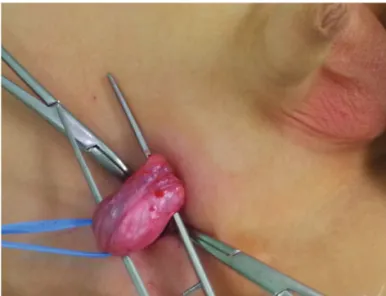
잠복고환의 진단은 신체검사가 기본적으로 신중하게 행해져야 하며 서헤부 중심과 회음부, 대퇴부 등에 대해서도 촉지를 해야 한다. 비촉지성 잠복고환의 경우에는 고환의 존재여부를 알기 위 해 영상의학검사를 시행하고 있으며 주로 초음파검사가 비침습적 인 검사로 주로 이용되며 정확한 검사를 위해 컴퓨터단층촬영과 자기공명영상이 이용이 되고 있다(fig 1). 초음파 검사에 대한 필 요성에 대하여서는 많은 논란이 아직 있으나 한 연구에 의하면 촉지되지 않는 잠복고환이 진단은 일차의료진의 82%, 비뇨기과 전문의 18%가 초음파검사를 시행하고 있다고 발표하였다27). 양측 고환이 촉지되지 않고 요도하열이 동반된 경우에는 남녀구분을 위해 염색체검사와 내분비검사가 필요하다28). 내분비검사에는 생 후 3개월이하에서 LH, FSH, testosterone을 측정하고 그 이상의 연령에서는 hCG자극검사를 시행한다. testosterone이 거의 없고 FSH, LH 가 증가된 경우 무고환증으로 진단이 가능하고 정상적 인 호르몬결과치의 경우에는 hCG자극검사의 결과와 관련없이 수 술적인 치료를 권하고 있다29). 잠복고환의 치료는 소아의 경우에는 최근 특히 6개월 이상의 신생아의 경우 고환고정술이 기본적인 수술방법으로 권하고 있다 (fig. 2)30). 수술시기에 대하여 많은 논란이 있었고 1970년대까지 는 학령기에 수술을 하자는 의견이 많았으나 1980년대 정조세포 와 세정관의 조직학적변화를 들어 2세 때 수술을 하는 것이 좋다 고 주장이 되었다31). 수술시기에 대하여 많은 지침서가 있으나 암 발생과 불임의 위험성이 높아 적어도 18개월 이전에 고환고정술 을 추천하고 있다32, 33). 그러나, 환아의 보호자에 대한 연구에서는 63%가 2세 전후가 적절한 수술시기로 생각하고 있어 비뇨기과 전문의와의 인식차이가 있다34). 소아의 경우에는 고환고정술이 우 선 고려되지만 늦게 발견되거나 보호자의 무관심으로 인해 고환 고정술을 하지 못하는 경우가 있어 성인의 경우에서는 고환적출 술이 시행되고 있다. 늦게 발견되는 경우의 원인으로는 후천적 잠복고환과 유주고환 등이 여기에 속한다35, 36). 우리나라의 한 연 구에서는 약 15%정도가 적절한 시기에 고환고정술을 받지 못하 다고 보고하였다37). 비뇨기과전문의를 대상으로 한 한 연구에서는 한쪽 잠복고환의 경우에는 96%에서 만 1세이전에 수술을 권하였 고 4세이후에는 수술을 권하는 전문의는 없었다. 사춘기 이후에 는 약 72%가 고환고정술을 시도할 수 있고 27%는 고환절제술을 시행한다고 하였다. 한쪽 비촉지성 잠복고환의 진단으로는 초음 파검사 혹은 전산화단층촬영이나 자기공명영상촬영까지 추가하거 나 혈관조영술을 시행하기도 하여 92%가 영상의학검사를 시행하 는 것으로 보고하였다29). 성인의 경우 암발생율이 높고 불임의 가 능성이 높아서 고환적출술을 시행하고 있지만 한 연구에서는 성 인의 경우에도 고환고정술을 먼저 시행한 이후 정기적으로 고환 의 변화를 보는 것을 추천하기도 하였다38). 또한 6-12개월에 수 술을 권하기도 한다39). 양측 비촉지성 잠복고환의 경우 진단의 경 우에는 초음파검사, 염색체검사고환이 촉지되지 않을 경우에는 복강경을 이용하면 진단과 치료를 동시에 겸할 수 있다. 한 연구 에 의하면 90%이상의 민감도와 특이도를 나타냈으며, 고환의 위 치로는 복강내에 위치하는 경우가 25.3%, 18.9%에서는 발견이 되지 않았으며 우리나라의 연구에서는 복강내에 고환이 위치한 경우가 21.3%로 보고되었다40-42). 2014년 AUA의 지침서에서 잠 복고환의 진단과 치료에 대한 정리를 하면 다음과 같다(fig. 3). 이외 호르몬 치료는 HCG, LHRH, GnRH에 대한 반응이 좋지 않고 장기간의 효과가 부족하여 추천하고 있지 않다43).
진 단
Figure 1. The testicular sonography of left empty
scrotum. The testis is located in inguinal canal.
Figure 2. Orchiopexy was done by right inguinal
approach. Right testis is located in inguinal canal.
치 료
잠복고환의 경우 정확한 원인을 알 수 없지만 세밀한 신체검사 를 통하여 고환의 위치를 파악하는 것이 좋으며 비촉지성 고환의 경우에는 환아에게 해가 없는 초음파검사를 통하여 실시하며 출 생 6-8개월이내에 고환고정술을 실시해야 한다.
1) Bloom DA. Two-step orchiopexy with pelviscopic clip ligation of the spermatic vessels. J Urol 1991;145:1030-3. 2) Chang B, Palmer LS, Franco I. Laparoscopic orchidopexy: a review of a large clinical series. BJU Int 2001;87:490-3.
3) Jordan GH. Will laparoscopic orchiopexy replace open surgery for the nonpalpable undescended testis? J Urol 1997;158:1956.
4) Kirsch AJ, Escala J, Duckett JW, Smith GH, Zderic SA, Canning DA, et al. Surgical management of the nonpalpable testis: the Children's Hospital of Philadelphia experience. J Urol 1998;159:1340-3. 5) Sweeney DD, Smaldone MC, Docimo SG. Minimally
invasive surgery for urologic disease in children. Nat Clin Pract Urol 2007;4:26-38.
6) El-Anany F, Gad El-Moula M, Abdel Moneim A,
Abdallah A, Takahashi M, Kanayama H, et al. Laparoscopy for impalpable testis: classification-based management. Surg Endosc 2007;21:449-54.
7) Sijstermans K, Hack WW, Meijer RW, van der Voort-Doedens LM. The frequency of undescended testis from birth to adulthood: a review. Int J Androl 2008;31:1-11. 8) Smolko MJ, Kaplan GW, Brock WA. Location and fate of
the nonpalpable testis in children. J Urol 1983;129:1204-6.
9) Esposito C, Garipoli V. The value of 2-step laparoscopic Fowler-Stephens orchiopexy for intra-abdominal testes. J Urol 1997;158:1952-4.
10) The Korean Urological Association. Data on statistics of management in resident training hospital in the Korean Urological Association:1984-2002. Seoul: Eui-Hak Publishing & Printing Co.;2004:84-96
11) Jensen MS, Toft G, Thulstrup AM, Bonde JP, Olsen J, Henriksen TB, Olsen J, Christensen K, et al. Cryptorchidism concordance in monozygotic and dizygotic twin brothers, full brothers, and half-brothers. Fertil Steril 2010;93:124-9.
12) Foresta C, Zuccarello D, Garolla A, Ferlin A. Role of hormones, genes, and environment in human cryptorchidism. Endocr Rev 2008;29:560-80.
13) Bogatcheva NV, Ferlin A, Feng S, Truong A, Gianesello
결 론
참고문헌
L, Foresta C, et al. T222P mutation of the insulin-like 3 hormone receptor LGR8 is associated with testicular maldescent and hinders receptor expression on the cell surface membrane. Am J Physiol Endocrinol Metab 2007;292:E138-44.
14) Ars E, Lo Giacco D, Bassas L, Nuti F, Rajmil O, Ruíz P, et al. Further insights into the role of T222P variant of RXFP2 in non-syndromic cryptorchidism in two Mediterranean populations. Int J Androl 2011;34:333-8. 15) Main KM, Skakkebaek NE, Toppari J. Cryptorchidism as
part of the testicular dysgenesis syndrome: the environmental connection. Endocr Dev 2009;14:167-73. 16) Sharpe RM, Skakkebaek NE. Testicular dysgenesis
syndrome: mechanistic insights and potential new downstream effects. Fertil Steril 2008;89:e33-8.
17) Virtanen HE, Adamsson A. Cryptorchidism and endocrine disrupting chemicals. Mol Cell Endocrinol 2012;355:208-20.
18) Damgaard IN, Skakkebaek NE, Toppari J, Virtanen HE, Shen H, Schramm KW, et al. Persistent pesticides in human breast milk and cryptorchidism. Environ Health Perspect 2006; 114: 1133-8.
19) Fernandez MF, Olmos B, Granada A, López-Espinosa MJ, Molina-Molina JM, Fernandez JM, et al. Human exposure to endocrine-disrupting chemicals and prenatal risk factors for cryptorchidism and hypospadias: a nested case-control study. Environ Health Perspect 2007;115:8-14.
20) Main KM, Mortensen GK, Kaleva MM, Boisen KA, Damgaard IN, Chellakooty M, et al. Human breast milk contamination with phthalates and alterations of endogenous reproductive hormones in infants three months of age. Environ Health Perspect 2006;114:270-6. 21) Pierik FH, Burdorf A, Deddens JA, Juttmann RE, Weber RF. Maternal and paternal risk factors for cryptorchidism and hypospadias: a case-control study in newborn boys. Environ Health Perspect 2004;112:570-6. 22) Weidner IS, Moller H, Jensen TK, Skakkebaek NE. Cryptorchidism and hypospadias in sons of gardeners and farmers. Environ Health Perspect 1998; 106: 793-6. 23) Adams SV, Hastert TA, Huang Y, Starr JR. No
association between maternal pre-pregnancy obesity and risk of hypospadias or cryptorchidism in male newborns. Birth Defects Res A Clin Mol Teratol 2011; 91:241-8. 24) Hackshaw A, Rodeck C and Boniface S. Maternal
smoking in pregnancy and birth defects: A systematic review based on 173 687 malformed cases and 11.7 million controls. Hum Reprod Update 2011;17:589-604.
25) Jensen MS, Rebordosa C, Thulstrup AM, Toft G, Sø rensen HT, Bonde JP, et al. Maternal use of acetaminophen, ibuprofen, and acetylsalicylic acid during pregnancy and risk of cryptorchidism. Epidemology 2010;21:779-85.
26) Martin O, Shialis T, Lester J, Scrimshaw M, Boobis A, Voulvoulis N. Testicular dysgenesis syndrome and the estrogen hypothesis: a quantitative meta-analysis. Cien Saude Colet 2008;13:1601-18.
27) Elder JS. Ultrasonography is unnecessary in evaluating boys with a nonpalpable testis. Pediatrics 2002;110:748-51.
28) Schneck FX, Bellinger MF. Abnormalities of the testes and scrotum and their surgical management. In: Wein AJ, Kavoussi LR, Novick AC, Partin AW, Peters CA, editors. Campbell-Walsh urology. 9th ed. Philadelphia: Saunders; 2007;3761-98.
29) Lee SW,Kim KS, Chang HS, Ryu DS. Comprehension and practice patterns toward cryptorchidism in Korean Urologists. Korean J Urol 2009;50:169-178.
30) Barthold JS. Abnormalities of the testis and scrotum and their surgical management. In: Wein AJ, Kavoussi LR, Novick AC, Partin AW, Peters CA, editors. Campbell-Walsh Urology. 10th ed. Philadelphia: Saunders; 2012;3560-74.
31) Mengel W, Wronecki K, Schroeder J, Zimmermann FA. Histopathology of the cryptorchid testis. Urol Clin North Am1982;9:331-8.
32) American Academy of Pediatrics. Timing of elective surgery on the genitalia of male children with particular reference to the risks, benefits, and psychological effects of surgery and anesthesia. Pediatrics 1996;97:590-4. 33) Ritzen EM, Bergh A, Bjerknes R, Christiansen P, Cortes
D, Haugen SE, et al. Nordic consensus on treatment of undescended testes. Acta Paediatr 2007;96:638-43. 34) Kim TK, Lee SD, Cho BM, Kim SY, Kim JS. Report on
the patient parents' understanding and the pediatricians' understanding of cryptorchidism: the optimal time for surgical correction. Korean J Urol 2005;46:1290-301. 35) Hack WW, Meijer RW, van der Voort-Doedens LM, Bos
SD, Haasnoot K. Natural course of acquired undescended testis in boys. Br J Surg 2003;90:728-31. 36. Stec AA, Thomas JC, DeMarco RT, Pope JC 4th, Brock JW 3rd, Adams MC. Incidence of testicular ascent in boys with retractile testes. J Urol 2007;178(4 Pt 2):1722-4.
37) Ahn H, Lee HE, PA가 K, Choi H. reasons for delayed orchiopexies in a Korean tertiary care hospital. Korean J
Urol 2014;55:69-73.
38) Jeong SC, Lee S, Ku JY, Lee SD. Clinical characteristics and treatment of cryptorchidism in adults: a single center experience. World J mens Health 2014;32:110-5. 39) Ritzen EM, Bergh A, Bjerknes R, Christiansen P, Cortes
D, Haugen SE, et al. Nordic consensus on treatment of undescended testes. Acta Paediatr 2007;96:638-43. 40) Siemer S, Humke U, Uder M, Hildebrandt U, Karadiakos
N, Ziegler M. Diagnosis of nonpalpable testes in childhood: comparison of magnetic resonance imaging and laparoscopy in a prospective study. Eur J Pediatr Surg 2000;10:114-8.
41) Ang CW, Forrest J. Diagnostic laparoscopy and management of the impalpable testis--a review of 10 years' practice at a nonpaediatric specialist centre. J Pediatr Urol 2008;4:214-7.
42) Park JH, Park YH, Park K, Choi H. Diagnostic laparoscopy for the management of impalpable testes. Korean J Urol 2011;52:355-8.
43) Wit JM, Delemarre-Van de Waal HA, Bax NM, Van den Brande JL. Effect of LHRH treatment on testicular descent and hormonal response in cryptorchidism. Clin Endocrinol (Oxf) 1986; 24: 539-48.
44) Job JC, Canlorbe P, Garagorri JM, Toublanc JE. Hormonal therapy of cryptorchidism with human chorionic gonadotropin. Urol Clin North Am 1982;9:405-11.
45) Waldschmidt J, Doede T, Vygen I. The results of 9 years of experience with a combined treatment with LH-RH and HCG for cryptorchidism. Eur J Pediatr 1993; 152(suppl 2): S34-6.