Open Access
Safety of Fertility-Sparing Surgery in Primary Mucinous Carcinoma
of the Ovary
Purpose
The aim of this study is to evaluate the safety of fertility-sparing surgery as the treatment for patients with primary mucinous epithelial ovarian cancer.
Materials and Methods
A retrospective study of patients with mucinous ovarian cancer between 1991 and 2010 was performed. The demographics and survival outcomes were compared between patients who underwent fertility-sparing surgery and those who underwent radical surgery. Results
A total of 110 patients underwent primary surgery. At the time of surgery, tumors appeared to be grossly confined to the ovaries in 90 patients, and evidence of metastasis was definite in 20 patients. Of the 90 patients with tumors that appeared to be grossly confined to the ovaries at surgical exploration, 35 (38.9%) underwent fertility-sparing surgery. The Kaplan-Meier curve and the log rank test showed no difference in either recurrence-free survival (p=0.792) or disease-specific survival (p=0.706) between the two groups. Furthermore, there was no significant difference in recurrence-free survival (p=0.126) or disease-specific survival (p=0.377) between the two groups, even when the analysis was limited to women below the age of 40. In a multivariate Cox model, fertility-sparing surgery had no effect on either recurrence-free survival (recurrence hazard ratio [HR], 1.20; 95% confidence interval [CI], 0.25 to 5.71) or disease-specific survival (death HR, 0.88; 95% CI, 0.17 to 4.60). Conclusion
Fertility-sparing surgery in primary mucinous cancer grossly confined to the ovaries may be a safe option and one not associated with an increase in recurrence or mortality.
Key words
Mucinous adenocarcinoma, Ovarian epithelial cancer, Fertility-sparing surgery, Survival
Introduction
Epithelial ovarian cancer is the most lethal of the gyneco-logic cancers. Approximately 20% of all epithelial ovarian cancer are diagnosed at an early stage, and thus high survival rates have been reported for patients whose disease was identified at this stage [1]. Moreover, approximately 10% of all epithelial ovarian cancer occurs in women under the age of 40 years [2]. The safety of fertility-sparing surgery for
women of childbearing age with early-stage disease has been evaluated over the past two decades [3-11]. The current guidelines recommend fertility-sparing surgery only in selected cases of early-stage ovarian cancer [12].
Primary mucinous carcinoma of the ovary accounts for 7% to 14% of all invasive epithelial ovarian cancers [13]. When compared to high-grade serous carcinoma, mucinous carci-noma has distinct presentation, clinical course, and response to therapy [14]. Moreover mucinous carcinoma is usually confined to the ovary at surgery, and the prognosis is
favor-+ favor-+ favor-+ favor-+ favor-+ favor-+ favor-+ favor-+ favor-+ favor-+ favor-+ favor-+ favor-+ favor-+ favor-+ favor-+ favor-+ favor-+ favor-+ favor-+ + + + + + + + + + + + + + + + + + + + + + + + + + + + + + + + + + + + + + + + + + + + + + + + + + + + + + + + + + + + + + + + + + + + + + + + + + + + + + + + + + + + + + + + + + + + + + + + + + + + + + + + + + + + + + + + + + + + + + + + + + + + + + + + + + + + + + + + + + + + + + + + + + + + + + + + + + + + + + + + + + + + + + + + + + + + + + + + + + + + + + + + + + + + + + + + + + + + + + + + + + + + + + + + + + + + + + + + + + + + + + + + + + + + + + + + + + + + + + + + +
Correspondence: Yong-Sang Song, MD, PhD Department of Obstetrics and Gynecology, Seoul National University College of Medicine, 101 Daehak-ro, Jongno-gu, Seoul 110-744, Korea Tel: 82-2-2072-2822
Fax: 82-2-762-3599 E-mail: [email protected] Received January 5, 2014 Accepted February 5, 2014 Published online August 29, 2014
Jung-Yun Lee,
MD1Yu Ri Jo,
MD1Tae Hun Kim,
MD1Hee Seung Kim,
MD1Min A Kim,
MD, PhD2Jae Weon Kim,
MD, PhD1Noh Hyun Park,
MD, PhD1Yong-Sang Song,
MD, PhD1,3,4Departments of 1Obstetrics and Gynecology and 2Pathology,Seoul National University College of Medicine, Seoul,
3Cancer Research Institute, Seoul National University College of Medicine, Seoul, 4Major in Biomodulation, World Class University,
Seoul National University, Seoul, Korea
able when found at an early stage [15]. For mucinous tumors apparently confined to the ovary, some studies have reported that complete surgical staging is unnecessary due to a low risk of upstaging [16,17]. Despite the infrequency of this subtype, previous studies have shown that about 27% of patients with stage I epithelial ovarian cancer have mucinous histology [18,19]. In Korea, mucinous carcinoma is the most common histologic subtype of stage I epithelial ovarian cancer [16]. Because early-stage mucinous carcinoma is usually found in young women [7-11], fertility preservation is a matter of great interest in considering mucinous tumors than for other histologic subtypes. However, the safety of fertility-sparing surgery in mucinous histology has not yet been determined.
In this study, we compare the long-term oncologic out-comes of fertility-sparing surgery with those of radical sur-gery in patients with apparent early-stage mucinous carcinoma.
Materials and Methods
1. Patients
After receiving approval from the Institutional Review Board, we reviewed all patients with primary mucinous carcinoma of the ovary diagnosed at Seoul National Univer-sity Hospital between January 1991 and December 2010. A gynecologic oncology pathologist evaluated all cases. Patients with borderline malignancies or with metastatic mucinous ovarian carcinomas from other primary sites were excluded. Histological diagnosis was established according to the World Health Organization (WHO) classification.
Clinical and pathologic variables, such as age, Interna-tional Federation of Gynecology and Obstetrics (FIGO) stage, year of diagnosis, grade, adjuvant chemotherapy, surgical procedure, and date of last contact or date of recurrence/ death, were collected. In addition, we gathered information on the cause and date of death from death certificates obtained from the Korean National Statistical Office. 2. Treatment methods
Fertility-sparing surgery was performed if patients of childbearing age had a strong desire to retain fertility. These women were informed of the possible risks and benefits of fertility-sparing surgery and signed a consent form during a preoperative counseling session. Patients in the fertility-spar-ing surgery group underwent unilateral salpfertility-spar-ingo-oophorec-
salpingo-oophorec-tomy on the side of the ovarian tumor with surgical explo-ration (cytology of peritoneal washing or ascites, careful palpation and inspection of the peritoneal cavity). Surgical staging procedures, such as peritoneal biopsy of suspicious lesions or random biopsy, appendectomy, omentectomy, and lymphadenectomy, were optional and conducted at the surgeon’s discretion. Otherwise, patients were categorized as being in the radical surgery group.
Adjuvant chemotherapy is based on the pathologic find-ings of the surgical specimen. Patients with stage IAG3 or IBG3, or any grades of IC, were treated with three to six courses of platinum-based chemotherapy. Two patients did not receive adjuvant chemotherapy despite indication. 3. Statistical analysis
Disease-specific survival was defined as the time from surgery to the date of death due to ovarian cancer. Recur-rence-free survival was defined as the time from surgery to the date of recurrence.
The differences between clinical and demographic charac-teristics of the fertility-sparing surgery and radical surgery groups were compared with Student’s t-test for continuous variables and chi-square test or Fisher’s exact test for cate-gorical variables. The recurrence-free and disease-specific survival curves were estimated using the Kaplan-Meier method, and the differences in survival between the groups were compared using the log rank test. Cox proportional hazards models were developed to examine the survival. In Cox proportional hazards analyses, the recurrence and death hazard ratios (HRs) were modeled and patients who under-went fertility preservation were compared with those who did not. All analyses were performed using STATA ver. 11.0 (StataCorp, College Station, TX). All p-values are two-sided.
Results
1. Patient characteristics
In total, 110 patients with mucinous epithelial ovarian cancer were identified in our cancer registry, all of which had undergone primary surgery. At the time of surgery, 90 patients (81.8%) had tumors grossly confined to the ovaries, and 20 patients (18.2%) had definite evidence of metastasis. Of the 90 patients with tumors grossly confined to the ovaries, 35 patients (38.9%) underwent fertility-sparing surgery based on the surgeon’s decision.
Table 1. Clinical and demographic characteristics Fertility-sparing surgery p-value Yes (n=35) No (n=55) Age (yr) 28.6±10.1 50.3±14.0 < 0.001 Stage 0.496 IA 21 (60) 34 (61.8) IB 0 (0) 1 (1.8) IC 13 (37.1) 17 (30.9) IIA 0 (0) 1 (1.8) IIB 0 (0) 2 (3.6) IIC 1 (2.9) 0 (0) Year of diagnosis 0.067 1991-2000 15 (42.9) 18 (32.7) 2001-2005 13 (37.1) 13 (23.6) 2006-2010 7 (20.0) 24 (43.6) Adjuvant chemotherapy 0.498 Yes 14 (40.0) 26 (47.3) Conventional platinum-based 5 (14.3) 9 (16.4)
Taxane plus platinum 9 (25.7) 17 (30.9)
No 21 (60.0) 29 (52.7) Grade 0.479 1 27 (77.1) 34 (61.8) 2 5 (14.3) 15 (27.3) 3 1 (2.9) 2 (3.6) NA 2 (5.7) 4 (7.3) Recurrence (%) 0.923 Yes 6 (17.1) 9 (16.4) No 29 (82.9) 46 (83.6)
Values are presented as mean±standard deviation or number (%). NA, not available.
Table 2. Procedures performed during surgical staging and cases of microscopic metastasis after surgery (cases of metastasis/cases of surgery performed)
Fertility-sparing surgery Yes (n=35) No (n=55) Hysterectomy 0/0 0/55 Contralateral oophorectomy 0/0 0/49a) Peritoneal biopsy 1/7 3/20 Appendectomy 0/9 0/41 Omentectomy 0/12 0/45 Lymphadenectomy 0/2 0/26 Cytology 6/35 2/55
mean age at diagnosis was 28.6 years in the fertility-sparing surgery group and 50.3 years in the radical surgery group (p < 0.001). With the exception of age, the clinical character-istics were similar for both groups, including stage, year of diagnosis, adjuvant chemotherapy, tumor grade, and recur-rence rate.
2. Upstaging after surgical staging
Table 2 shows the procedures performed at the time of surgical exploration and cases of microscopic metastasis after additional biopsies. Surgical staging led to upstaging for four patients who were identified as having invasive cancer following a peritoneal biopsy of a suspicious lesion or adhe-sion site. However, there were not any cases with upstaging occurrence based on random peritoneal biopsies without suspicious lesions. In addition, a positive peritoneal washing cytology was identified in eight patients. Among these patients, ovarian surface involvement or spontaneous rupture had already been identified in three cases, intraop-erative rupture occurred in two patients, and invasive cancer was found following peritoneal biopsy in one patient. There-fore, only two patients were upstaged based solely on wash-ing cytology, both of which were in the fertility-sparwash-ing
surgery group. There was no case of upstaging following lymphadenectomy, appendectomy, omentectomy, or hyster-ectomy. Moreover, of the 49 patients who had tumors that were unilateral and confined to the ovary at the time of surgery in the radical surgery group, no tumor was identi-fied on the opposite ovary following bilateral salpingo-oophorectomy.
3. Survival analysis
The median follow-up duration was 104 months (range, 8.0 to 231.6 months). The Kaplan-Meier curves and the log rank test showed no difference in either recurrence-free survival (p=0.792) or disease-specific survival (p=0.706) between patients who underwent fertility-sparing surgery and radical surgery (Fig. 1). Five-year disease-specific survival was 91.3% for those who had fertility-sparing surgery, compared with 86.4% for patients who underwent radical surgery. In addition, 10-year disease-specific survival was 81.4% for those who had fertility-sparing surgery, compared with 81.8% for patients who underwent radical surgery.
Of the 90 patients with tumors that appeared to be grossly confined to the ovaries upon surgical exploration, 15 (16.7%)
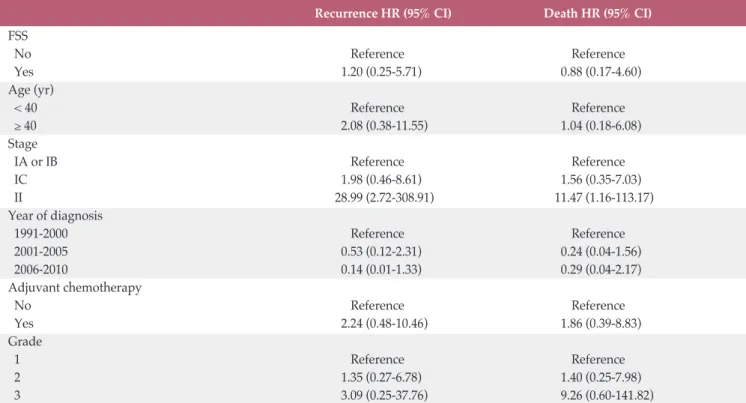
Table 3. Cox proportional hazards model of factors associated with recurrence and disease-specific survival for primary mucinous cancer grossly confined to the ovaries
Recurrence HR (95% CI) Death HR (95% CI) FSS No Reference Reference Yes 1.20 (0.25-5.71) 0.88 (0.17-4.60) Age (yr) < 40 Reference Reference ! 40 2.08 (0.38-11.55) 1.04 (0.18-6.08) Stage IA or IB Reference Reference IC 1.98 (0.46-8.61) 1.56 (0.35-7.03) II 28.99 (2.72-308.91) 11.47 (1.16-113.17) Year of diagnosis 1991-2000 Reference Reference 2001-2005 0.53 (0.12-2.31) 0.24 (0.04-1.56) 2006-2010 0.14 (0.01-1.33) 0.29 (0.04-2.17) Adjuvant chemotherapy No Reference Reference Yes 2.24 (0.48-10.46) 1.86 (0.39-8.83) Grade 1 Reference Reference 2 1.35 (0.27-6.78) 1.40 (0.25-7.98) 3 3.09 (0.25-37.76) 9.26 (0.60-141.82)
eventually experienced disease recurrence, including six of the 35 patients (17.1%) who underwent fertility-sparing surgery and nine of the 55 patients (16.4%) who underwent radical surgery (p=0.923). Contralateral adnexal recurrence was suspected in just one of the patients with recurrence in the fertility-sparing surgery group, based on imaging study findings. Only two of the 15 patients who experienced recur-rence went on to live without the disease.
A subgroup analysis was performed with women below the age of 40; there were 32 patients in the fertility-sparing surgery group and 11 in the radical surgery group. Even when the analysis was confined to women less than 40 years old, Kaplan-Meier curves and the log rank test showed no difference in either recurrence-free survival (p=0.126) or disease-specific survival (p=0.377) between the two groups (Fig. 2).
Fig. 2. Recurrence-free survival (A) and disease-specific survival (B) in all patients under the age of 40 with tumors grossly confined to the ovaries.
Fig. 1. Recurrence-free survival (A) and disease-specific survival (B) in all patients with tumors grossly confined to the ovaries.
A
B
Cu m ul at iv e su rv iv al 1.0 0.8 0.6 0.4 0.2 0.0 0 30 90 Time (mo) 60 120 150 180 210 240 Radical surgery Fertility-sparing surgery p=0.792 Radical surgery Fertility-sparing surgery p=0.706 Cu m ul at iv e su rv iv al 1.0 0.8 0.6 0.4 0.2 0.0 0 30 90 Time (mo) 60 120 150 180 210 240B
A
Cu m ul at iv e su rv iv al 1.0 0.8 0.6 0.4 0.2 0.0 0 30 90 Time (mo) 60 120 150 180 210 240 Radical surgery Fertility-sparing surgery p=0.126 Radical surgery Fertility-sparing surgery p=0.377 Cu m ul at iv e su rv iv al 1.0 0.8 0.6 0.4 0.2 0.0 0 30 90 Time (mo) 60 120 150 180 210 240Cox proportional hazards analysis was performed to adjust for the baseline characteristics (Table 3). Fertility-spar-ing surgery had no effect on either recurrence-free survival (HR, 1.20; 95% confidence interval [CI], 0.25 to 5.71) or disease-specific survival (HR, 0.88; 95% CI, 0.17 to 4.60). Stage was the most important prognostic factor for recur-rence and survival in our cohort. This finding did not change when the analysis was confined to women younger than 40. The surgical procedure was not an independent prognostic factor for either recurrence-free survival (HR, 0.22; 95% CI, 0.04 to 1.24) or disease-specific survival (HR, 0.52; 95% CI, 0.09 to 3.11) in patients below the age of 40.
Discussion
This study highlights the safety of fertility-sparing surgery in cases of mucinous epithelial ovarian cancer when tumors appear to be grossly confined to the ovaries. We compared the oncologic outcomes of patients who underwent fertility-sparing and radical surgery using long-term follow-up data. In addition, the risk of upstaging is minimal in patients with early-stage mucinous ovarian cancer when no suspicious lesions on the peritoneum are found during careful intraop-erative exploration.
Previous studies have reported the outcomes of fertility-sparing surgery in women with early-stage epithelial ovarian cancer [3-11]. The preservation of the female reproductive organ is one of the key issues for young women with epithe-lial ovarian cancer, and in particular for nulliparous women. However, the criteria for guaranteeing the safety of fertility-sparing surgery in early-stage ovarian cancer have not been identified thus far. Although the current guidelines recom-mend that fertility-sparing surgery may be considered in selected cases, it is not clear what these ‘selected cases’ are [12]. Most studies propose that fertility-sparing surgery can be performed on all young women with stage IA grade 1 ovarian cancer [20]. In many of the above-mentioned series, fertility-sparing surgery was also performed on invasive ovarian cancer patients with unfavorable grades, as well as on patients with disease not confined to one ovary [7,8,10,11,21]. Although the recurrence rate remains low even for these patients, the data has limitations due to the retro-spective nature of this study and the small sample size.
Recent studies have demonstrated that epithelial ovarian cancer is not a single disease but is composed of a diverse group of tumors. Based on distinctive morphologic and molecular genetic features, a dualistic model that classifies various types of ovarian cancer into two groups (type I and type II) was proposed by Kurman and Shih [22]. Type I
tumors are clinically indolent and usually present with low-grade carcinoma, including low-grade serous, low-grade endometrioid, and mucinous carcinoma. Mucinous carci-noma is indolent and has an excellent prognosis when iden-tified at an early stage [23]. By contrast, advanced-stage mucinous ovarian cancer has a poor prognosis due to its resistance to platinum-based chemotherapy [24]. In particu-lar, mucinous invasive ovarian cancer is a different disease entity and has distinct characteristics compared to high-grade serous carcinoma. Therefore, these favorable histologic subtypes should be distinguished from others.
In patients with mucinous ovarian cancer grossly confined to the ovaries, the risk of upstaging after surgical staging procedure has been reported to be minimal [16,17]. In addi-tion, these histological subtypes are commonly found in younger women. As a result, fertility preservation is an important consideration in this disease subset. Of the 90 patients in our cohort with tumors grossly confined to the ovaries, only six cases were upstaged following surgical stag-ing, and there were no cases of upstaging due to microscopic metastasis following omentectomy, appendectomy, or lymphadenectomy. This finding was in accordance to those of previous studies. Recently, a number of studies have reported that occult lymph node metastasis was not found in any patients with apparent early-stage mucinous epithelial ovarian cancer [16,17]. Cho et al. [16] reported that out of 85 patients with stage I mucinous epithelial ovarian cancers, only five were upstaged due to positive peritoneal cytology. Schmeler et al. [17] demonstrated that 13 out of 93 patients with mucinous tumors grossly confined to the ovary were upstaged based on additional biopsies at the time of surgery. Moreover, they reported no significant difference in survival between the group that underwent lymphadenectomy and the group that did not.
When considering previously described indolent aspects of early-stage mucinous adenocarcinoma, fertility-sparing surgery may be an acceptable option for younger women. However, concerns surrounding suboptimal surgery remain. One major concern with fertility-sparing surgery is the very small or microscopic foci involvement of the normal-looking uterus and contralateral ovary. Previous studies have shown that the risk of contralateral ovary involvement during surgery and recurrence in the contralateral residual ovary is low. Considering the 118 normal-appearing ovaries of epithelial ovarian cancer patients, Benjamin et al. [25] reported that only three patients (2.5%) had microscopic involvement in the contralateral ovary. Moreover, of the 209 patients treated conservatively, 14 patients (6.7%) experi-enced recurrence in the contralateral ovary [20]. Our results suggest more promising findings in mucinous histological subtypes. No cases of upstaging due to microscopic metas-tasis were identified in our cohort after hysterectomy. Of the
patients with tumors confined to one ovary at surgical explo-ration in the radical surgery group, 49 underwent bilateral salpingo-oophorectomy, where no tumor was identified on the contralateral ovary. Moreover, of the 35 patients who underwent fertility-sparing surgery, only one experienced recurrence in the contralateral ovary. As a result, preserva-tion of the uterus and contralateral ovary should be consid-ered in patients with mucinous tumors confined grossly to one ovary.
Our study is limited by retrospective data collection, a long study period, small sample size, and possible referral bias. Moreover, varying surgical treatment types were used at the clinician’s discretion. Finally, it is unclear whether the lack of significant differences in recurrence and survival between patients who underwent fertility-sparing surgery and those who had radical surgery is attributable to our small sample size. However, only a small proportion of patients with invasive epithelial ovarian cancer underwent fertility-spar-ing surgery. In addition, no prospective study on the fertil-ity-sparing issue in invasive epithelial ovarian cancer has been designed, and such a study is unlikely to perform a randomized controlled trial in the near future, due particu-larly to ethical problems and the anticipated difficulty in patient recruitment. Given these circumstances, our retro-spective analysis opens up a discussion of the possibility that fertility-sparing surgery may be safe in mucinous histology.
Conclusion
In conclusion, our findings demonstrate that fertility-spar-ing surgery does not appear to have an adverse impact on the recurrence and survival rates in patients with early-stage mucinous ovarian carcinoma. This study has useful implica-tions for physicians counseling patients who want to preserve their fertility. To validate our results, further large-scale studies considering a sufficient number of patients with mucinous histology are required.
Conflicts of Interest
Conflict of interest relevant to this article was not reported.
Acknowledgments
This work was supported by WCU (World Class Univer-sity) program (R31-10056) through the National Research Foundation of Korea (NRF) funded by the Ministry of Education, Science and Technology.
1. Young RC, Decker DG, Wharton JT, Piver MS, Sindelar WF, Edwards BK, et al. Staging laparotomy in early ovarian cancer. JAMA. 1983;250:3072-6.
2. Heintz AP, Odicino F, Maisonneuve P, Quinn MA, Benedet JL, Creasman WT, et al. Carcinoma of the ovary. FIGO 26th Annual Report on the Results of Treatment in Gynecological Cancer. Int J Gynaecol Obstet. 2006;95 Suppl 1:S161-92.
3. Borgfeldt C, Iosif C, Masback A. Fertility-sparing surgery and outcome in fertile women with ovarian borderline tumors and epithelial invasive ovarian cancer. Eur J Obstet Gynecol Reprod Biol. 2007;134:110-4.
4. Fruscio R, Corso S, Ceppi L, Garavaglia D, Garbi A, Floriani I, et al. Conservative management of early-stage epithelial ovar-ian cancer: results of a large retrospective series. Ann Oncol. 2013;24:138-44.
5. Kajiyama H, Shibata K, Mizuno M, Nawa A, Mizuno K, Matsuzawa K, et al. Fertility-sparing surgery in young women with mucinous adenocarcinoma of the ovary. Gynecol Oncol. 2011;122:334-8.
6. Kwon YS, Hahn HS, Kim TJ, Lee IH, Lim KT, Lee KH, et al. Fertility preservation in patients with early epithelial ovarian
cancer. J Gynecol Oncol. 2009;20:44-7.
7. Morice P, Leblanc E, Rey A, Baron M, Querleu D, Blanchot J, et al. Conservative treatment in epithelial ovarian cancer: results of a multicentre study of the GCCLCC (Groupe des Chirurgiens de Centre de Lutte Contre le Cancer) and SFOG (Societe Francaise d'Oncologie Gynecologique). Hum Reprod. 2005;20:1379-85.
8. Park JY, Kim DY, Suh DS, Kim JH, Kim YM, Kim YT, et al. Outcomes of fertility-sparing surgery for invasive epithelial ovarian cancer: oncologic safety and reproductive outcomes. Gynecol Oncol. 2008;110:345-53.
9. Satoh T, Hatae M, Watanabe Y, Yaegashi N, Ishiko O, Kodama S, et al. Outcomes of fertility-sparing surgery for stage I epithelial ovarian cancer: a proposal for patient selection. J Clin Oncol. 2010;28:1727-32.
10. Schilder JM, Thompson AM, DePriest PD, Ueland FR, Cibull ML, Kryscio RJ, et al. Outcome of reproductive age women with stage IA or IC invasive epithelial ovarian cancer treated with fertility-sparing therapy. Gynecol Oncol. 2002;87:1-7. 11. Zanetta G, Chiari S, Rota S, Bratina G, Maneo A, Torri V, et al.
Conservative surgery for stage I ovarian carcinoma in women
References
of childbearing age. Br J Obstet Gynaecol. 1997;104:1030-5. 12. National Comprehensive Cancer Center. Ovarian cancer
clin-ical practice guidelines in oncology (v.I.2010) [Internet]. Fort Washington: National Comprehensive Cancer Network; 2010 [cited 2013 Feb 4]. Available from: http://www.nccn.org. 13. McGuire V, Jesser CA, Whittemore AS. Survival among U.S.
women with invasive epithelial ovarian cancer. Gynecol Oncol. 2002;84:399-403.
14. Hess V, A'Hern R, Nasiri N, King DM, Blake PR, Barton DP, et al. Mucinous epithelial ovarian cancer: a separate entity requiring specific treatment. J Clin Oncol. 2004;22:1040-4. 15. Mizuno M, Kikkawa F, Shibata K, Kajiyama H, Suzuki T, Ino
K, et al. Long-term prognosis of stage I ovarian carcinoma. Prognostic importance of intraoperative rupture. Oncology. 2003;65:29-36.
16. Cho YH, Kim DY, Kim JH, Kim YM, Kim KR, Kim YT, et al. Is complete surgical staging necessary in patients with stage I mucinous epithelial ovarian tumors? Gynecol Oncol. 2006;103:878-82.
17. Schmeler KM, Tao X, Frumovitz M, Deavers MT, Sun CC, Sood AK, et al. Prevalence of lymph node metastasis in primary mucinous carcinoma of the ovary. Obstet Gynecol. 2010;116(2 Pt 1):269-73.
18. Kajiyama H, Shibata K, Mizuno M, Umezu T, Suzuki S, Nawa A, et al. Long-term survival of young women receiving fertil-ity-sparing surgery for ovarian cancer in comparison with
those undergoing radical surgery. Br J Cancer. 2011;105: 1288-94.
19. Vergote I, De Brabanter J, Fyles A, Bertelsen K, Einhorn N, Sevelda P, et al. Prognostic importance of degree of differen-tiation and cyst rupture in stage I invasive epithelial ovarian carcinoma. Lancet. 2001;357:176-82.
20. Menczer J. Conservative fertility-sparing surgical treatment of invasive epithelial ovarian cancer: when is it acceptable? Isr Med Assoc J. 2013;15:116-20.
21. Raspagliesi F, Fontanelli R, Paladini D, di Re EM. Conservative surgery in high-risk epithelial ovarian carcinoma. J Am Coll Surg. 1997;185:457-60.
22. Kurman RJ, Shih Ie M. The origin and pathogenesis of epithe-lial ovarian cancer: a proposed unifying theory. Am J Surg Pathol. 2010;34:433-43.
23. Harrison ML, Jameson C, Gore ME. Mucinous ovarian cancer. Int J Gynecol Cancer. 2008;18:209-14.
24. Karabuk E, Kose MF, Hizli D, Taskin S, Karadag B, Turan T, et al. Comparison of advanced stage mucinous epithelial ovarian cancer and serous epithelial ovarian cancer with regard to chemosensitivity and survival outcome: a matched case-control study. J Gynecol Oncol. 2013;24:160-6.
25. Benjamin I, Morgan MA, Rubin SC. Occult bilateral involve-ment in stage I epithelial ovarian cancer. Gynecol Oncol. 1999;72:288-91.