© Korean Powder Metallurgy Institute 1015
-1. Introduction
The high melting point, high-temperature strength, low thermal-expansion coefficient, and high thermal/electrical conductivity enable molybdenum to be widely used in many industry sections, such as metallurgy, electronics, machine and chemical engineering, etc. However, its further applications were limited by its brittleness at ambient temperature and high brittle-ductile transition temperature. Therefore many new molybdenum alloys were developed for improving ductility, among which the oxide dispersion strengthened molybdenum alloy (ODS Mo) attract especial interest. This paper studied the microstructures and properties of molybdenum wire doped with minim La2O3
(La content about 300±50), and pure molybdenum wires were also studied for contrasting.
2. Experimental and Results
Liquid-solid doping process was employed in this work.. Then the doped oxide powder was reduced into powder in dry hydrogen. The Mo-La powder was cold pressed into 48 mm diameter cylindrical compact, and then sintered in flowing dry hydrogen. Finally, the cylindrical compact was thermo mechanically processed into wires with a diameter of 0.75 mm, and those wires were annealed at different temperatures. Those wires were determined by scanning electron microscope (SEM). The chemical compositions of the Mo alloy wire were studied by spectrum. The tensile strength of wires was tested by WDW-20 tester.
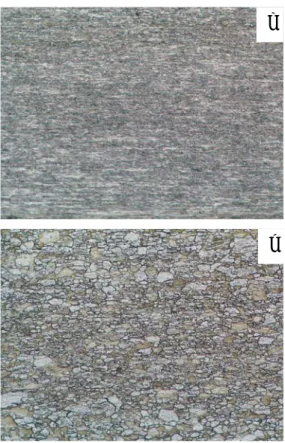
Fig. 1. SEM images of pure Mo wires annealed at different temperature a. 1100℃; b. 1500℃
As showed in Fig. 1, the details of microstructure of pure Mo wire were determined by SEM. It also can be observed the widening of the fibrous structure of pure Mo wire when temperature reaches to 1000℃. When temperature continues increased abnormal grain growth took place. The brittleness of pure Mo wire at ambient temperature became worse after been annealed at 1500℃.
2006 POWDER METALLURGY World Congress
PB07-W-09
a
b
Microstructures and Properties of
Molybdenum Wire Doped with Minim La
2O
3Li Dacheng,Bu Chunyang, Zhu Yong-an, Wang Jin
17th Floor of Jie Rui Mansion, No.208 West Section of The Second South Ring Road, Xi’an, China [email protected]
Abstract
The microstructures and properties of pure molybdenum wire and Mo-La2O3 alloy wire annealed at different temperatures
are investigated systematically in this paper. It is shown that the recrystallization temperature, toughness and strength at
room temperature of this wire was increased greatly by addition of La2O3. The room temperature embrittlement of this wire
annealed at high temperature is improved remarkably.
© Korean Powder Metallurgy Institute 1016 -The SEM images of doped Mo wire is shown in Fig. 2. As illustrated in Fig. 2), the fibrous structure of doped Mo wires became wide until temperature increase to 1300℃。Recrystallization took place at 1400℃, and fibrous structure in wires decreased rapidly when wires annealed at 1500℃, and abnormal grain growth also took place at this temperature[4,5].
Compared the microstructures of these two kinds wires, the result shows that recrystallization temperature of doped Mo wire more than that of pure Mo wire(about 300℃).
Fig. 2. SEM images of doped Mo wires annealed at different temperature a. 1100℃; b. 1500℃
The influence of temperature on the elongation and tensile strength of those two kinds wires is showed in Fig3, Fig4. As illustrated in Fig. 3, the elongation of those two kinds wires growth with the increase of temperature.
While at higher temperature, the elongation of doped Mo wire more than that of pure Mo wire. This result contribute to crystal boundaries were stablied by the pinning effect of La2O3 particles. As showed in Fig .4, tensile strengthen of
those two kinds wires decreased with the increase of temperature. This result owed to temperature cause dynamic recovery and therefore dislocation densities decreased.
500 600 700 800 900 1000 1100 1200 900 1000 1100 1200 1300 1400 1500 T(℃) Te ns il e s tr eng th ( MPa ) MLa290 CM
Fig. 3. The corresponding elongation-annealing temperature
5 0 0 6 0 0 7 0 0 8 0 0 9 0 0 1 0 0 0 1 1 0 0 1 2 0 0 9 0 0 1 0 0 0 1 1 0 0 1 2 0 0 1 3 0 0 1 4 0 0 1 5 0 0 T( ℃ ) Te ns il s tr en gt h( MPa ) ML a 2 9 0 CM T
Fig. 4. Relation between annealing Temperature and tensile
3. Summary
Recrystallization temperature of doped Mo wire more than that of pure Mo wire(about 300℃), and elongate grain been gained after recrystallization. The tensile strength of doped Mo wire more than that of pure Mo wire(about 110~200MPa) for the effect of La2O3 dispersion.
4. References
1. G. J. Zhang, Y. J. Sun, et al. Advanced Engineering Materials, 2004, Vol. 6, 943-948
2. T. Takebe, T. Akiyama, , International Journal of Refractory &Hard Metals. 1985, Vol.4, 182-185.
3. M. Endo, K. Kimura,. Tanabe and H. Seto, High Temperature and High pressure, 1990, Vol.22, 129-135 4. T. Takida, H. Kurishita, M. Mabuchi, et al. Materials Transactions.2004, Vol. 45, 143-148
a