REVIEW ARTICLE
OPEN
Membrane-based technologies for post-treatment of anaerobic
ef
fluents
Wichitpan Rongwong1, Jaewoo Lee 1, Kunli Goh1,2, H. Enis Karahan 1,2and Tae-Hyun Bae 1,2
Anaerobic digestion-based processes for converting wastewater into clean water and energy are attracting ever-growing industrial interest. However, apart from the microbial digestion step, current technologies require further progress from an integrated process
point of view, including post-treatment steps. Anaerobic effluents normally undergo extensive post-treatment steps to meet
stringent discharge standards, while valuable nutrients are rarely recovered. Additionally, a significant portion of the produced
methane remains inevitably dissolved in the effluent, which is eventually released into the environment, causing economic loss and
global warming concerns. To address these issues, several membrane-based technologies show significant promise. Here, we
review current progress in membrane-based recovery of dissolved methane and nutrients, highlighting opportunities where
membrane-based technologies can improve the post-treatment of anaerobic effluents. Lastly, we also share our perspectives for
promising research directions and how to secure the competitiveness of membrane-based technologies for anaerobic wastewater treatment processes, focusing on current challenges for membrane development, biofouling mitigation strategies, and small-scale to large-scale implementation.
npj Clean Water (2018) 1:21 ; doi:10.1038/s41545-018-0021-y
INTRODUCTION
The growing environmental concerns and impending global water crisis have changed the landscape of wastewater treatment
practices dramatically in the last couple of decades.1–3 In
particular, the anaerobic processes have driven a massive ongoing change owing to their appealing advantages, such as bypassing the need for energy-intensive aeration (of aerobic processes), producing valuable products (e.g., biofuels and biofertilizers), and
generating less and easier-to-handle sludges.2–5 At present,
anaerobic processes serve as the core technology behind several
wastewater treatment plants worldwide.2–5However, the
anaero-bic wastewater treatment practices are still far from being fully
mature, and there is a need for integrating them more efficiently
with both conventional and continually emerging separation methods. To our understanding, the membrane-based separation technologies deserve special attention in this regard, which is rationalized below after defining the problems of anaerobic digestion processes.
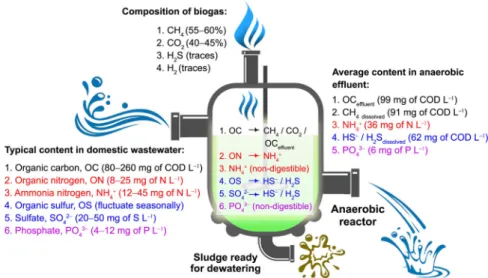
The anaerobic digestion processes suffer from two major issues. First, due to the metabolic constraints of involved microbial digester communities, nitrogen (N) and phosphorus (P) species are poorly eliminated by anaerobic processes and only break down
into ammonium (NH4+) and phosphate (PO43−) ions (Fig. 1).6,7
Being nutrients, the oversupply of N and P species may cause
eutrophication, if released to the aquatic systems.8As a result, the
anaerobic effluents rarely meet the discharge standards and
therefore require post-treatment processes to improve the water
quality further (Fig.2).5,9Second, a significant amount of produced
methane (CH4) remains dissolved in the effluents.10–12 Typically,
over 60–70% of the organic carbons in wastewater is converted
into CH4and carbon dioxide (CO2), which leads to the formation of
biogas generally consisting of ~55–60% CH4and ~40–45% CO2
(Fig. 1). However, a significant amount of produced CH4
(biomethane) remains dissolved in the liquid phase (effluent).
According to previous reports, dissolved CH4level may reach up
to ~45% of the total production even under conditions favoring
the gaseous form of CH4 (e.g., at 303 K and atmospheric
pressure).10,11,13 The loss can further increase if the effluents are
subjected to low-temperature operations, which increase the
solubility of CH4 in water, or low-mass-transfer conditions that
lead to oversaturation.11,13,14 From the economic standpoint,
discharging these effluents means a loss of valuable energy resource, which can otherwise be recovered and combined with
the biogas stream for increasing the overall energy efficiency of
the wastewater treatment processes.10–12Notably, the wastewater
industry also faces intense financial pressures and remains
partially dependent on government compensations and public
funds to run the anaerobic wastewater treatment plants.4,15
Besides, being a potent greenhouse gas, releasing undue CH4to
the environment exacerbates the global warming problem.16,17
Hence, it is essential to rethink the current processes used for
post-treating anaerobic effluents so as to move anaerobic
wastewater treatment toward a more sustainable future. Membrane-based technologies are attractive alternatives to
many of the conventional post-treatment processes (Fig.2), owing
to their advantages such as cost-effectiveness, energy-efficiency
as well as operational robustness and versatility. In the current status, the membrane-based post-treatment technologies
imple-mented in anaerobic processes are largely focused on final
polishing and nutrients (N and P) removal. Strategically speaking,
Received: 16 March 2018 Revised: 7 September 2018 Accepted: 10 September 2018
1
Singapore Membrane Technology Center (SMTC), Nanyang Environment and Water Research Institute, Nanyang Technological University, Singapore 637141, Singapore and
2
School of Chemical and Biomedical Engineering, Nanyang Technological University, Singapore 637459, Singapore Correspondence: T-H. Bae ([email protected])
we believe that membrane-based technologies can offer more
compelling opportunities for dissolved CH4 and nutrients
recov-eries to help address the challenges of the current anaerobic wastewater treatment processes mentioned above. As such, we focused our discussions on two topics: (1) New opportunities for
enhancing resources (i.e., dissolved CH4 and nutrients) recovery
using membrane-based processes, and (2) current state-of-the-art membrane-based processes for nutrients removal and polishing.
While a previous review dealing with a similar topic is coming from the perspective of the membrane-based processes for
wastewater nutirent recovery,20 we are more concerned with
the post-treatment needs point-of-view to evaluate the utility of
membrane-based processes for enhancing the process efficiency
of the anaerobic digestion. Also, our scope not only covers the effluents arising directly from anaerobic treatment of raw
waste-waters but is also relevant to the effluents of anaerobically
digested sludge centrates which are rich in recoverable nutrients
such as phosphorus.21 Lastly, we provided our perspectives to
help guide future research directions for improving the feasibility of membrane-based post-treatment technologies in more sustain-able anaerobic wastewater treatment processes.
RESOURCES RECOVERY
Methane (CH4) and nutrients (N and P) are valuable resources that
can be recovered to improve the overall cost-competitiveness of the anaerobic wastewater treatment processes. In particular, achieving net positive energy production from anaerobic
waste-water treatment processes is a longstanding vision,22which can
be potentially realized by recovering CH4 via a membrane
contacting process, for example. As for N and P recovery, a number of membrane-based processes have also been utilized. However, due to their low concentrations, it is economically less feasible to recover nutrients using membrane-based processes. Our discussion in this section is therefore galvanized toward the strategic use of membrane-based processes for concentrating nutrients.
Recovery of dissolved CH4
Produced CH4from anaerobic processes can be used to generate
electrical and thermal energies, which can be channeled back to
the anaerobic digestion processes to realize energy self-sufficient
wastewater treatment plants (Fig. 3). At present, conventional
physical processes such as spray aeration, jet tower, packed
Fig. 1 Conceptual layout of wastewater treatment technologies based on anaerobic digestion processes. Prepared based on the information obtained from refs.5,18,19
Fig. 2 Wastewater treatment based on anaerobic digestion and various post-treatment methods deployed for the processing of effluents. The highlighted post-treatment tasks (dashed red box) have compelling opportunities for membrane-based processes and thus elaborated in this review. Prepared based on the information obtained from refs.6,28(Note that this general outline also applies to the process designs where certain aerobic treatments are applied prior to the anaerobic digestion step.)
2
1234567
column, or diffused aeration have been applied for the recovery/
removal of dissolved CH4from the anaerobic effluents.12A critical
drawback of these techniques is that the stripping gas (usually air),
which directly contacts the anaerobic effluents, can cause foaming
and flooding. To prevent such operational problems, the use of
gas/liquid “membrane contactor” process was proposed.12 The
gas/liquid membrane contacting process uses a stripping gas (or vacuum) to establish a mass transfer driving force between the gas and liquid phases, which are isolated using polymeric
membranes as phase barriers.12,23 To reduce the mass transfer
resistance, membranes are commonly designed to have high
porosity and low wettability. Typically, small-diameter hollowfiber
membranes are used in membrane contactors to provide a much
higher mass transfer area per unit volume (Fig.3). As a result, it is
possible to lower the energy consumption of gas/liquid mem-brane contactor process as compared to that of the conventional
separation processes.12,23
Several groups have studied the influence of membranes and
operation modes on the CH4 recovery from anaerobic effluents
using membrane contactors. In 2011 and 2012, Bandara et al.24,25
reported two consecutive studies on the performance of degassing membranes (porous polyurethane layer sandwiched between dense polyethylene layers) for the treatment of a
bench-scale upflow anaerobic sludge blanket (UASB) reactor effluent. In
theirfirst study, they operated the UASB reactor for 170 days and
recovered dissolved CH4 from the effluents intermittently.24 As
they have studied different temperatures, hydraulic retention times (HRTs), and transmembrane pressure (TMP) conditions, their
CH4recovery efficiencies fluctuated widely, but typically reached
around 70 to 90%. In their follow-up work, Bandara et al. operated the UASB reactor for 18 months under ambient conditions and
found that the CH4recovery reached“57% ± 7%” and “66% ± 8%”
at warmer (20–31 °C) and colder (6–10 °C) seasons, respectively.25
In another study published in 2012, Cookney and coworkers have tested the potential of dense polydimethylsiloxane (PDMS)
membrane contactors for CH4recovery from expanded granular
sludge bed (EGSB) anaerobic reactors.26They found that ~45% of
the produced CH4remained in the effluents, and 72% of this can
be recovered by using a low liquid velocity (0.0025 m s−1) during
the membrane contacting process.
Membrane pore wetting is a severe limitation of the membrane contactors. Pore wetting phenomenon occurs when the liquid phase enters the pore of the membranes, leading to a tremendous
increase in mass transfer resistance. Henares et al.27 recently
investigated the performances of porous polypropylene (PP) and
dense PDMS membranes for dissolved CH4recovery and found
that thefluxes of porous PP membranes were much higher than
the dense PDMS membranes. Despite this, porous PP membranes
suffered from wetting problems with increased liquidflow rate. As
such, Cookney et al.29suggested that dense membranes are more
suitable as they have a higher capacity to obviate the pore wetting phenomenon. Pore wetting can also be prevented by enhancing the surface hydrophobicity of the membranes. For instance,
Wongchitphimon et al.30incorporatedfluorinated silica
nanopar-ticles on the surface of porous Matrimid® membranes. The
resulting composite membranes demonstrated a high contact angle of ~126°, which resulted in at least 1.75 times higher
performance than a commercial PP membrane for the CH4
recovery application. Later, Dilhara et al.31 evaluated the
performance of poly(vinylidene difluoride) (PVDF) membranes
that were surface-functionalized with a solution comprising 3 wt%
commercial perfluoropolyether, Fluorolink S10, and 2 wt%
tetra-ethoxysilane (TEOS). The surface-modified PVDF membrane
exhibited almost two times higher CH4 flux and had a stronger
resistance toward pore wetting (more than 10 days) as compared to the commercial PP membrane.
Apart from the membrane aspects, the operation mode of membrane contactors is also critical for achieving a high recovery
of dissolved CH4. Comparing the two operation modes, i.e.,
feeding the liquid phase in lumen or shell side of the membrane module, researchers have found that feeding the liquid in lumen
side gives better results, owing to more effective cross-flow
hydrodynamics which suppress the formation of dead zones.27,29
However, using the lumen side of the membrane modules
increases the risk of clogging when the effluents contain a high
solid content. In view of this potential disadvantage, processing
the effluents in the shell side of the membrane modules is still the
preferred operation mode unless the total soluble solids (TSS) is
sufficiently low.
To improve the quality of outlet gas from the membrane contactors, careful optimization of the operating parameters is
needed. For example, a trade-off between %CH4 removal
efficiency and concentration of CH4 in the gas outlet of the
membrane contactor can occur due to the additional stripping gas supplied to increase the mass transfer driving force. While this
approach can increase the %CH4removal efficiency, it dilutes the
CH4 concentration in the outlet gas inevitably.32To address this
problem, McLeod et al.32 deliberately lowered the stripping gas
Fig. 3 Illustration showing retrofitting of the membrane contactor unit within the anaerobic digestion and membrane separation processes
flow rate to obtain a gas that possessed a CH4 concentration
higher than the upper flammable limit and in a readily usable
form. Besides, as a highly versatile unit, the membrane contactors allow easy retrofitting to other sources of biogas to mix with the
outlet gas and afford a product gas that has on-demand CH4
concentration.12
Membrane fouling is another critical issue that results in compromised recovery of membrane contactors but not actively explored hitherto. Among the limited number of studies reported
on fouling of membrane contactors so far, only Bandara et al.24,25
noticed an insignificant level of membrane fouling after a
~5.5-and 18-month long investigation using one type of anaerobic
effluent. However, when another type of anaerobic effluent was
used, Henares et al.33 observed membrane fouling on PDMS
membrane contactors. The removal efficiency remained constant
for 120 h before suffering from a fouling-drivenflux decline, which
lowered the initialflux to ~40% after 175 h. Although the fouling
was reversible (the performance was restored after physical cleaning by water), we believe that a deeper understanding of membrane fouling and its mechanisms are essential for the future
application of membrane contactors in dissolved CH4recovery.
Nitrogen (N) and phosphorous (P) recovery
Ammonium nitrogen (NH4+-N) and phosphate phosphorus (PO43
−-P) do not break down completely during the anaerobic
processes and remain in the anaerobic effluents with average
values of 36 and 6 mg L−1, respectively.18In this age of depleting
natural resources, it is strategic to recycle valuable resources from
the effluents, especially in recovering N and P from anaerobic
effluents as high-value products such as fertilizers. To date, direct
N and P recovery using membrane-based processes are economic-ally less feasible due to low concentrations of nutrients in the
effluents.34 As such, recent focus is on concentrating nutrients
prior to their recovery. Several membrane-based processes have been utilized for this purpose and shown promising results. Their basic principles, reported performances, advantages/disadvan-tages as well as other membrane processes for direct recovery of
N and P are summarized in Table1.
Forward osmosis (FO),35 reverse osmosis (RO),36 nanofiltration
(NF), and membrane distillation (MD) are competitive candidates
for concentrating N and P compounds in the effluents while
producing clean water as a permeate. Among them, FO emerges
owing to its energy-efficiency since it operates under ambient
pressure, unlike RO.37,38 It was experimentally determined that a
seawater-driven FO process effectively concentrate PO4
3−-P
(2.3-fold) and NH4+-N (2.1-fold) from treated municipal wastewater.
Furthermore, the concentrated nutrients can theoretically reach more than tenfold concentration by using a draw-to-feed
solution-volume ratio of 2:1.8Although clean water is not thefinal product
in this case, the FO process can be coupled with another membrane-based process to realize hybrid FO-based process that has the capacity to produce clean water. For instance, an FO-MD hybrid process demonstrated the feasibility of recovering clean water from a draw solution that was diluted by water extracted
from the digested sludge centrate.39In addition, the FO process is
strategically appropriate for P recovery from the effluents of
digested sludge centrates which have high fouling propensity. A
study by Ansari et al.21revealed that although a 30% decline in
waterflux occurred as the digested sludge was concentrated by
threefold, the waterflux was almost recovered to the initial flux by
simply flushing the membrane with deionized water owing to
reversible fouling observed in the FO process. As a result of the
concentration of the effluent, P recovery by precipitation was able
to reach 92%. Such a high enrichment also offers the advantage of reducing the incidental expense in terms of storage and transport of the effluent. Moreover, the enriched solution suggests the possibility of using the FO process to facilitate existing methods to
recover nutrients, such as struvite (MgNH4PO4.6H2O) precipitation,
which are less viable when implemented alone. At present, struvite precipitation is known to be the most effective among current methods for P removal when the P concentration is over
100 mg L−1(higher than average value in anaerobic effluents).20In
this regard, membrane-based processes can be a cost-effective
solution to reduce the water content of the effluents for an
efficient nutrient recovery.
For direct recovery of NH4+-N from anaerobic effluents, the
membrane contactors and electrodialysis are the most commonly utilized techniques. Membrane contactors can recover ammonia
(NH3) from NH4+-N at high pH, which can then be used to
produce biofertilizers such as ammonium sulfate ((NH4)2SO4) by
separately reacting the recovered N with a sulfuric acid solution. It is noteworthy to mention that the membrane contacting process for producing such biofertilizers is a more cost-effective method compared to air stripping or chemical precipitation. Generally, the membrane contactors expand an operating cost (power and
chemicals) of USD 2.15 per m3feed,40,41whereas air stripping and
chemical precipitation demand a higher USD 3.80 and 13.0 per m3
feed,42respectively. On the other hand, electrodialysis using ion
exchange (IE) membranes is also a promising alternative owing to the following strengths. First, they show high treating capabilities
of nutrient streams of low concentrations.43 Second, they are
simple to operate and do not require the use of chemicals.44
Lastly, they have shown to be resistant toward a sudden spike in
the composition of the anaerobic effluents.44 Recently, Wang
et al.45coupled the IE resin with membrane capacitive
deioniza-tion (MCDI) to reduce the detrimental effect of prior cadeioniza-tions (Ca2+
and Mg2+) on the IE adsorption-desorption process. This hybrid
process improves the ion exchange capacity and can cover about
2.5 times more inflow than a single IE process after three MCDI
charge-discharge cycles, leading to an improved recovery of more
than 65% of NH4+-N.45 Despite these promises, membrane
contactors require both temperature and pH adjustments,46while
electrodialysis is impeded by a high energy consumption (e.g.,
3.25–3.60 kWh N-NH3 kg−1), resin regeneration, and membrane
fouling issues.43These challenges, if not resolved, will make direct
recovery of N and P via membrane-based processes economically less feasible.
ENHANCING WATER QUALITY OF ANAEROBIC EFFLUENTS Although nutrients recovery is highly promising as discussed
previously, N and P removals from anaerobic effluents, by means
of biological processes, remain the mainstream processes as their operating costs are relatively cheap and much less chemical
sludge is produced.47,48 Despite nutrients being recovered or
removed, the quality of the anaerobic effluents may not be high
enough to meet recycle or discharge standards. Thus, polishing is
often required as the final step. In this part, opportunities for
membrane processes in these two processes are reviewed.
Membrane-coupled bioprocesses for nutrients removal
Recently, a biological process known as the anaerobic ammonium oxidation (or anammox) and its related technologies, such as complete autotrophic nitrogen removal over nitrite (CANON, one stage anammox process), have emerged as powerful techniques for N removal. These biological processes are useful for the
treatment of anaerobic effluents with low organic carbon per
nitrogen mole ratio (OC/N),49,50 unlike the conventional nitri
fica-tion and denitrification processes which demand an additional
organic carbon source for the effective removal of N. However, due to the nature of the anammox microorganisms, the conventional bioreactors typically require several months to
start-up and have a huge footprint.51 These limitations can all
be addressed by membrane processes which can offer either a 4
Table 1. Memb rane-ba sed processe s for the rec ov er y o f N and P species Mem brane p rocesse s Basic prin ciples T arg et species Memb rane required Repor ted ef fi cien cy A d v ant ages Disad v anta ges Ref . FO W ater activity in the ef fl uen t is higher than in the d raw so lution, theref ore , wat er can diffuse fro m the ef fl uent across the semi-permea ble membra ne to the draw solution while rejecting other species , including N a n d P. W ater Dens e m embranes with high salt rejection properties. >98% N rejection >88% P rejection − High solute rejection − L o w fouling ten dency and en ergy sa ving due to the o peration under no h ydraulic p ressure − A d ditional treatm ent to separa te a draw solute from the d iluted draw solution − P ossibil ity o f salt leaking to feed so lutions 8 , 35 , 39 MD V apors from a hot feed ef fl uen t tran sf er across the poro us membr ane to a col d permea te side while N and P are rejected . W ater Hyd rophobi c porou s membr anes >89% N rejection P rejection: not repor ted − Suit able fo r e ffl uent o f the rmop hilic anaerobic p rocesse s − High solute rejection − C ontinui ng hea t loss lowers proce ss per form ance − L o w wat er fl ux 52 NF and RO F eed soluti ons are pressuri zed ,and sm all N and P comp ound molec ules we re fi ltered by membra nes. W ater Memb ranes with selectiv e la yers con taining subna nometer p o res >94% N rejection >97% P rejection − High solute rejection − Sim ple , and compact − F ouling could b e sev ere − Memb rane cleaning is requir ed − High energy requi red fo r pum ps 53 , 54 MCD I-IE Sev eral cations are adsorbed on a p orous electrode by applying a n ele ctric fi eld in the pre-treatm ent us ing the MCD I. After that, NH 4 + is recov ered by adso rptio n during an ion ex change p rocess. N in ionic forms (i.e ., NH 4 +) IE m embranes >65% N recov er y a − Am monium remov al ind epen dent of biolo gical trea tment -L ess detrimental eff ect of prior cat ions (Ca 2+ and Mg 2+ ) o n the IE proce ss − Limit ation of charg e ef fi ciency in CDI 55 , 56 − Sca ling possibly ca used by prec ipitation of soluble salts 57 45 MC b An alkali is put int o the anaerobi c diges tion ef fl uent to con v e rt N compoun ds to gase ous NH 3 which can b e diffused acr oss m embranes to dissolv e and react wi th H2 SO 4 solution feedi ng from the other side of the membra ne . NH 3 Hyd rophobi c porou s membr anes >70% P remov al − High ly sele ctive to NH 3 − C o m pact proce ss − C ost fo r alkali addition − Absor bent ne eded to be regene rated 58 a Combined with an IE resin process; b Membrane contac tor 5
separation unit to concentrate the anaerobic effluents (such as membrane bioreactors (MBR)) or form a support layer allowing
growth of desirable biofilms (such as in membrane biofilm
reactors). These membrane processes provide a better control over the cultivation of microorganisms as well as allow a higher
quality of effluent and a smaller bioreactor footprint.67
For P removal, MBR coupled with a biological process known as enhanced biological phosphorous (Bio-P) have demonstrated
good P removal efficiency for tertiary wastewater treatment.68
However, no direct work on the treatment of anaerobic effluents
has been reported for these processes so far to our knowledge.
Membrane-based processes for polishing step
Anaerobic effluents usually require polishing to further reduce
organic matters, suspended solids, and colorations remaining from the biological process before being discharged or subjected to disinfection to remove harmful bacteria and viruses. Being the last step, the process should deliver both high consistency and
superior separation performance. Thus, membrane-basedfiltration
techniques are of importance for modern polishing practices.
Membranefiltrations such as microfiltration (MF), ultrafiltration
(UF), NF, and RO are pressure-driven processes that use a membrane as a physical barrier to retain large-molecular-weight contaminants while allowing water and low-molecular-weight substances (lower than their cut-off) to pass through. Therefore, the water quality after post-treatment depends critically on the type of membrane-based processes used. As compared to the
conventional biological methods for polishing, membrane
filtra-tions have a clear advantage in terms of their simplicity. On the other hand, biological processes such as polishing ponds are
usually constrained by their large footprints while otherfiltration
techniques such as sand filtration are much more complex and
can be problematic when it comes to cleaning.72
Several studies have utilized membrane-based polishing for the
post-treatment of anaerobic effluents (Table 2). Particularly, MF
demonstrates an almost complete rejection of E. coli and
Streptococci bacteria from anaerobic effluents, making the treated
water suitable for non-potable reuse applications.59,63NF and UF
are also effective in removing emerging pollutants from anaerobic
effluents, which are not commonly monitored but can cause
adverse environmental effects. For instance, Wei et al.73removed
fifteen organic micropollutants from an AnMBR effluent using NF and UF, and the results showed that NF obtained an average removal efficiency of 87%. Five organic acids, which were found in
high concentrations in a range of 50–500 mg L−1 in the AnMBR
effluent, were treated by NF membranes.74Furthermore, through
pH adjustment of the feed solution, removal rates can reach 90%
and above.74
Membrane fouling remains the most pervasive issue to be
addressed before any membrane filtration process can be
practically implemented as the polishing step. In this context, a pre-treatment step to remove foulants is an effective way to mitigate fouling and prolong membrane lifetime. Addition of
coagulants66 and application of an acid treatment62 have been
successfully demonstrated to remove negatively charged
sub-stances (the main foulants) from the anaerobic effluents.
Alternatively, membranes with less fouling propensity have been
employed for pre-treatment followed by a downstream
membrane-based polishing. For example, Debik et al.65and Tam
et al.59authenticated the feasibility of hybrid systems consisting of
UF-NF and MF-RO, respectively, for the treatment of anaerobic
effluents. Both studies reported excellent qualities of the polished
anaerobic effluents as compared to a standalone membrane
filtration process.
CONCLUSIONS AND FUTURE PERSPECTIVES
The prevention of product losses and recovery of reusable resources, coupled with affordable removal of unwanted wastes,
may increase the overall profitability and further improve the
environmental friendliness of anaerobic processes. In this review, we argue that membrane-based post-treatments have the
potential to play a definitive role by leveraging their small carbon
footprint, competitive or superior separation performance, and
high design flexibility to help reduce both investment and
operation costs of post-treatment processes. Particularly,
membrane-based processes enable new opportunities in
resources recovery, which can drive the realization of energy self-sufficient anaerobic wastewater treatment processes as well as the production of high-value products such as biofertilizers. The state-of-the-art membrane-based post-treatment processes for nutrients removal and polishing have also been reviewed.
We found that, despite some promising results, most of the membrane processes for the treatment of anaerobic effluents are still in lab-scale operations and substantial works remain to be done before these processes can be scaled up into full-fledged
operations of which capacities are as large as several thousand m3
day−1. Herein, we focus on the strategies that can significantly
improve the membrane processes for the anaerobic effluent treatments, including (1) development of membranes, (2) strategies for biofouling mitigation, and (3) transition from the lab- to real-scale operations.
Membrane development
For all membrane-based processes, whether used for recovery or removal, the core of the technology lies in the membrane unit itself. Hence, we contend that continuous efforts ought to be put
into developing optimal membranes. For CH4 recovery using
membrane contactors, an ultimate goal is to develop hydrophobic
hollow fiber membranes with enhanced antifouling properties
and long-term resistance toward pore wetting. This is not easy to achieve since highly hydrophobic membranes capable of pre-venting pore wetting are at the same time vulnerable to membrane fouling. One potential solution is to develop composite membranes with a thin and dense hydrophilic layer over a hydrophobic membrane substrate. Materials such as poly(2-hydroxyethyl methacrylate) and poly(ether block amide) are
possible candidates for the preparation of a hydrophilic layer.75,76
First, such dense hydrophilic layers can prevent liquid water from entering the membrane pores by acting as a physical barrier.
Second, they are able to form thinfilms even on MF membranes,
which are generally difficult to achieve via dip- or
spin-coating.75,76Alternatively, introducing patterns on the surface of
hydrophobic membranes can induce turbulent hydrodynamics and high shear stress at the membrane surface to reduce the deposition of foulants. The key advantage here is that the antifouling properties are enhanced without the use of
hydro-philic surface modification (Fig.4a).69,77,78Interested readers can
refer to discussions on various fabrication methods (e.g., soft79or
nanoimprint lithography80) and several configurations (e.g.,
flat-sheet81or hollowfiber82type membranes).
Next-generation membrane development is also focused on membranes with high throughput, good rejection in a single pass, and antifouling properties against both organic and biological foulants. Among those characteristics, antifouling properties are highly demanded in membrane processes for biological N and P
removal and polishing because the anaerobic effluents contain
both dissolved and suspended solids, which are likely to cause
pore blocking or gel layer formation.83It is noted in this regard
that the surface modification using nanomaterials is one of the most promising approaches to impart antifouling properties. To date, surface-modified composite membranes have been pre-pared via various approaches such as direct coating, surface 6
grafting, plasma treatment, or simply adding nanomaterials into the dense rejection layer of the membranes (e.g., graphene oxide
(GO) in Fig. 4b).70,84 Further discussion on the strategies to
develop surface-modified composite membranes with antifouling
properties can be found elsewhere.85Key challenges to be solved
include feasibility issues regarding large-scale fabrications, higher investment costs, and environmental concerns arising from the use of nanomaterials as well as the long-term performance stability of such composite membranes.
Table 2. Membrane-assisted technologies employed for the polishing of anaerobic effluents
Ref. Anaerobic effluent
source
Membrane process Treated species and inlet concentration
Reported efficiency
(%)
Operating conditions
Tam et al.59 MBR RO COD 17.5 mg L−1 88.6 Pilot-scale study
Total nitrogen 3.7 mg L−1 91 ROflow rate 19
Total dissolved solid 337 mg
L−1
87.5 m3day−1
Apparent color 37 Hazen unit 97 MBRflow rate
Conductivity 0.57 mS cm−1 95.3 40 m3day−1
E. coli3.4 CFU per 100 mL 100 Pressure not
Viruses 1.2 PFU per 100 mL 100 reported
Estrogens 38.2 (μg L−1) 88
Andrade et al.60 MBR NF TOC 24.9 mg L−1 97.4 Feedflow rate
Total solid 1.482 mg L−1 64.8 5.6 L min−1
Color 36.8 Hazen unit 82.7 Pressure not reported
Conductivity 2.28 mS cm−1 89.3
Jacob et al.61 MBR RO TOC 7 mg L−1 96 Batch operation, size
500 mL
Conductivity 0.76 mS cm−1 97.5 Inlet pressure 8 bar
NF TOC 7 mg L−1 93.5
Conductivity 0.7 mS cm−1 93
Grundestam and
Hellstrom62
MBR RO TOC 17 mg L−1 88 Batch operation, size 1
m3
Kjeldahl-nitrogen 67 mg L−1 90.6 Pressure 40 bar
Total P 10 99.6
Al-Malack and
Anderson63 EGSB MF COD 120 mg L
−1 87.5 Permeateflow rate
0.27 L min−1
SS 35 mg L−1 91.4
PO42 mg L−1 86.5 Pressure not reported
E. coli1.9 × 103CFU mL−1 99.8
Streptococci1 × 103CFU mL−1 99.7
Fernández et al.64 EGSB UF COD 1978 mg L−1 70–75 Pressure 1.3 bar
Permeateflow rate
4.9 L min−1
Debik et al.65 SGBR UF COD 630 mg L−1 41 Pressure 3 bar
Color 400 Hazen unit 37.5
Conduct 9.87 mS cm−1 16
NF COD 630 mg L−1 85 Pressure 10 bar
Color 400 Hazen unit 87.3
Conduct 9.87 mS cm−1 45.8
Duan et al.66 ASBR UF COD 96.5 ppm 38 Constantflux at
Turbidity 16 NTU 94.4 30 L m−2h−1
Conductivity 1260 mS cm−1 91.2 Pressure between
VSS 16.2 ppm 99 1.1 to 1.2 bar
TSS 86 ppm 95.3
NF COD 96.5 ppm 97 Constant pressure at
12.4 bar
Turbidity 16 NTU 99
Conductivity 1260 mS cm−1 89.8
VSS 16.2 ppm 99
TSS 86 ppm 99
MBRmembrane bioreactor, EGSB expanded granular sludge bed, SGBR static granular bed reactor, ASBR anaerobic sequencing batch reactor, VSS volatile
suspended solid, TSS total suspended solid
Strategies for biofouling mitigation
The anaerobic effluents still contain microorganisms that can
reproduce and cause biofouling of membranes. Unlike organic
fouling, which could be alleviated through hydrophilic modi
fica-tion (see“Membrane development” section above), biofouling is
harder to tackle as the microorganisms can persistently foul even hydrophilic surfaces by secreting extracellular polymeric
sub-stances (EPS).71,86Thus, it is of importance to take into account the
fundamental mechanisms underlying biofilm formation. Indeed,
inhibiting the intercellular communication by quenching quorum sensing (a.k.a. quorum quenching) has been shown to be an
effective method of suppressing biofilm formation on the
membrane surfaces (Fig.4c).71For mitigating membrane
biofoul-ing in MBRs, diverse quorum quenchbiofoul-ing approaches rangbiofoul-ing from
enzymatic71 to bacterial87,88 methods are available in the
literature.
Improving membrane module designs is another proven
strategy to reduce biofouling. Particularly, feed spacers in flat
sheet membrane modules can effectively enhance mass transport properties by increasing local shear rates and velocities at the membrane surfaces, leading to less attachment and lower
accumulation of the bacteria on the membrane surfaces.89 For
hollowfiber membranes, baffles are typically installed in the shell
side of the modules to obtain turbulent hydrodynamic cross-flow
velocities.90 The 3D printing technology offers a fabrication
resolution of 0.1–1 μm, which can realize innovative spacers and
membrane module components, including turbulence promoters,
air diffusers, flow distributors, and membrane holders.91 The
components feature intricate and complex geometric designs that have a high potential to further improve the antibiofouling
performance.91However, at present, such designs are technically
challenging for conventional manufacturing approaches. For biofouling cleaning, the use of chemical solvents is an expensive and aggressive method although it is one of the most effective approaches. It should be minimally employed or used as a last resort only in the case that physical cleaning is no longer effective in recovering the membrane performances. Although not considered an ultimate mitigation measure, the use of scouring
agents is also deemed as a promising physical cleaning strategy.92
It requires less energy than gas sparing techniques and is more effective in cleaning the membrane surfaces. In addition, scouring technique is applicable for several membrane processes and can be coupled with the quorum quenching techniques by using scouring media that contain quorum quenching bacteria to obtain
a synergistic effect for reducing membrane biofouling.93–95
Transition from lab-scale to real-scale operations
Several membrane technologies, such as membrane contactors, FO, and MCDI, have demonstrated great potential for post-treatment of anaerobic effluents. However, they remain to date as lab-scale investigations. For successful implementation of these membrane processes in large-scale operations, we recommend three crucial steps, namely, optimization, scale-up, and develop-ment of membrane maintenance strategies.
First, both the membranes as well as process operating parameters need to be optimized for maximizing membrane performance and minimizing energy consumption. Membranes can be optimized by tuning the morphologies and choosing the right materials to obtain high-performing membranes with the
highestflux and rejection capacity. This will help to reduce the
unit sizes required and further enhance the energy-efficiency of
the membrane system. For process operating parameters, trade-offs are commonly observed. In a membrane contactor process for
dissolved CH4recovery, it is often found that increasing the liquid
flow rate in the system can improve the mass transfer rate, which may decrease the membrane area required and lower the investment cost. However, this also leads to a higher energy penalty and an increase in operating costs. Thus, it is important to optimize all involving operating parameters to achieve effective and more economically viable processes.
Second, process scale-up should be coupled with theoretical studies as well as mathematical modelling. It is challenging to directly scale-up the membrane-based post-treatment technolo-gies from lab- to real-scale applications due to the involvement of various parameters such as complex microbial consortia, variable
effluent quality, and different environmental conditions. Thus, it is
needed to optimize operating conditions in order tofind possible
solutions to the above variables prior to the actual implementa-tion. Scale-up modelling in this regard has advantages in that it makes us understand key areas of focus in the upscaled process without the need to carry out the actual implementation. Mathematical modelling can also be used as a tool for energy and cost-benefit analyses, and the data obtained can be
Fig. 4 a Confocal laser scanning microscopy (CLSM) images of a biofilm layer formed on the flat (left) and prism-patterned (right) membranes after 2 h filtration of the mixed liquor taken from an MBR at a cross-flow rate of 0.05 m s−1 (Reynolds number ≈1100–1200). Green and red colors indicate the cells and mem-branes, respectively. Image size: 1213 × 1213μm2. Adapted with permission from ref.69, copyright American Chemical Society 2012. b CLSM images of biofilm (green dots) formed on GO-free (left) or GO-incorporated (right) polysulfone membranes. Adapted with permission from ref. 70, copyright Elsevier 2013. c Schematic illustration showing the concept of quorum sensing-based biofoul-ing control in MBR. Adapted with permission from ref.71, copyright American Chemical Society 2009
compared with other competing technologies. In addition, it can
be used to define a suitable process configuration. Specifically, the
numbers of pumps per membrane modules96, numbers of
membrane modules connected in series, as well as sizes of each
module97can be optimized tofind the best configuration with the
lowest energy consumption. Through systematic theoretical studies and mathematical modelling, we can identify potential problems with the design for pilot-scale and actual-scale
implementation and troubleshoot them before they are
implemented.
Lastly, it is essential to develop membrane maintenance strategies to reduce the operating costs regarding membrane cleaning and replacement. It is important to identify major foulants in the anaerobic effluents for each membrane processes so that an effective cleaning protocol or necessary pre-treatment can be developed. Membrane cleaning is an unavoidable part of the membrane processes, and the cost could become over-whelming when the fouling is severe. In this regard, membrane autopsy by instrumental techniques, such as Fourier-transform infrared spectroscopy (FTIR), liquid chromatography organic carbon detection (LC-OCD) or scanning electron microscopy
(SEM),98,99might be powerful tools for foulant characterization.
ACKNOWLEDGEMENTS
This research grant is supported by the Singapore National Research Foundation under its Environmental & Water Research Programme (Project Ref No: 1301-IRIS-49) and administered by PUB, Singapore’s National Water Agency. This research was also supported by Basic Science Research Program through the National Research Foundation of Korea (NRF) funded by the Ministry of Education (2017R1A6A3A03008091).
AUTHOR CONTRIBUTIONS
T.H.B. conceived the concept and provided guidance for this work. W.R. and J.L. organized the materials and drafted the manuscript. K.G. and H.E.K. revised the manuscript and provided critical suggestions during the revision.
ADDITIONAL INFORMATION
Competing interests: The authors declare no competing interests.
Publisher's note: Springer Nature remains neutral with regard to jurisdictional claims in published maps and institutional affiliations.
REFERENCES
1. Lofrano, G. & Brown, J. Wastewater management through the ages: A history of mankind. Sci. Total Environ. 408, 5254–5264 (2010).
2. Puyol, D. et al. Resource recovery from wastewater by biological technologies: Opportunities, challenges, and prospects. Front. Microbiol. 7, 2106 (2016). 3. Connor, R. et al. TheUnited Nations World Water Development Report 2017.
Wastewater: The Untapped Resource (2017).
4. Grando, R. L. et al. Technology overview of biogas production in anaerobic digestion plants: A European evaluation of research and development. Renew. Sust. Energ. Rev. 80, 44–53 (2017).
5. Foresti, E., Zaiat, M. & Vallero, M. Anaerobic processes as the core technology for sustainable domestic wastewater treatment: consolidated applications, new trends, perspectives, and challenges. Rev. Environ. Sci. Bio/Technol. 5, 3–19 (2006). 6. Chernicharo, C. A. L. Post-treatment options for the anaerobic treatment of
domestic wastewater. Rev. Environ. Sci. Bio/Technol. 5, 73–92 (2006).
7. Gonzalez-Gil, L. et al. Is anaerobic digestion effective for the removal of organic micropollutants and biological activities from sewage sludge. Water Res. 102, 211–220 (2016).
8. Xue, W., Tobino, T., Nakajima, F. & Yamamoto, K. Seawater-driven forward osmosis for enriching nitrogen and phosphorous in treated municipal wastewater: Effect of membrane properties and feed solution chemistry. Water Res. 69, 120–130 (2015).
9. Tilche, A., Bortone, G., Garuti, G. & Malaspina, F. Post-treatments of anaerobic effluents. Antonie. Van. Leeuwenhoek 69, 47–59 (1996).
10. Liu, Z.-H., Yin, H., Dang, Z. & Liu, Y. Dissolved methane: a hurdle for anaerobic treatment of municipal wastewater. Environ. Sci. Technol. 48, 889–890 (2014). 11. Crone, B. C., Garland, J. L., Sorial, G. A. & Vane, L. M. Significance of dissolved
methane in effluents of anaerobically treated low strength wastewater and potential for recovery as an energy product: A review. Water Res. 104, 520–531 (2016).
12. Heile, S., Chernicharo, C. A. L., Brandt, E. M. F. & McAdam, E. J. Dissolved gas separation for engineered anaerobic wastewater systems. Sep. Purif. Technol. 189, 405–418 (2017).
13. Souza, C. L., Chernicharo, C. A. L. & Aquino, S. F. Quantification of dissolved methane in UASB reactors treating domestic wastewater under different oper-ating conditions. Water Sci. Technol. 64, 2259–2264 (2011).
14. Giménez, J. B., Martí, N., Ferrer, J. & Seco, A. Methane recovery efficiency in a submerged anaerobic membrane bioreactor (SAnMBR) treating sulphate-rich urban wastewater: evaluation of methane losses with the effluent. Bioresour. Technol. 118, 67–72 (2012).
15. Willeghems, G. & Buysse, J. Changing old habits: The case of feeding patterns in anaerobic digesters. Renew. Energ. 92, 212–221 (2016).
16. Daelman, M. R. J., van Voorthuizen, E. M., van Dongen, U. G. J. M., Volcke, E. I. P. & van Loosdrecht, M. C. M. Methane emission during municipal wastewater treat-ment. Water Res. 46, 3657–3670 (2012).
17. Cakir, F. Y. & Stenstrom, M. K. Greenhouse gas production: A comparison between aerobic and anaerobic wastewater treatment technology. Water Res. 39, 4197–4203 (2005).
18. Delgado Vela, J. et al. Prospects for biological nitrogen removal from anaerobic effluents during mainstream wastewater treatment. Environ. Sci. Technol. Lett. 2, 234–244 (2015).
19. Metcalf, Eddy, I., Tchobanoglous, G., Burton, F. & Stensel, H. D. Wastewater Engineering: Treatment and Reuse. (McGraw-Hill Education, Singapore, 2002). 20. Xie, M., Shon, H. K., Gray, S. R. & Elimelech, M. Membrane-based processes for
wastewater nutrient recovery: Technology, challenges, and future direction. Water Res. 89, 210–221 (2016).
21. Ansari, A. J., Hai, F. I., Price, W. E. & Nghiem, L. D. Phosphorus recovery from digested sludge centrate using seawater-driven forward osmosis. Sep. Purif. Technol. 163, 1–7 (2016).
22. McCarty, P. L., Bae, J. & Kim, J. Domestic wastewater treatment as a net energy producer-can this be achieved? Environ. Sci. Technol. 45, 7100–7106 (2011). 23. Gabelman, A. & Hwang, S. T. Hollowfiber membrane contactors. J. Membr. Sci.
159, 61–106 (1999).
24. Bandara, W. M. et al. Removal of residual dissolved methane gas in an upflow anaerobic sludge blanket reactor treating low-strength wastewater at low tem-perature with degassing membrane. Water Res. 45, 3533–3540 (2011). 25. Bandara, W. M. et al. Anaerobic treatment of municipal wastewater at ambient
temperature: Analysis of archaeal community structure and recovery of dissolved methane. Water Res. 46, 5756–5764 (2012).
26. Cookney, J., Cartmell, E., Jefferson, B. & McAdam, E. J. Recovery of methane from anaerobic process effluent using poly-di-methyl-siloxane membrane contactors. Water Sci. Technol. 65, 604–610 (2012).
27. Henares, M., Izquierdo, M., Penya-Roja, J. M. & Martínez-Soria, V. Comparative study of degassing membrane modules for the removal of methane from expanded granular sludge bed anaerobic reactor effluent. Sep. Purif. Technol. 170, 22–29 (2016).
28. Gu, Y. F. et al. The feasibility and challenges of energy self-sufficient wastewater treatment plants. Appl. Energ. 204, 1463–1475 (2017).
29. Cookney, J. et al. Dissolved methane recovery from anaerobic effluents using hollowfibre membrane contactors. J. Membr. Sci. 502, 141–150 (2016). 30. Wongchitphimon, S., Rongwong, W., Chuah, C. Y., Wang, R. & Bae, T. H.
Polymer-fluorinated silica composite hollow fiber membranes for the recovery of biogas dissolved in anaerobic effluent. J. Membr. Sci. 540, 146–154 (2017).
31. Sethunga, G., Rongwong, W., Wang, R. & Bae, T. H. Optimization of hydrophobic modification parameters of microporous polyvinylidene fluoride hollow-fiber membrane for biogas recovery from anaerobic membrane bioreactor effluent. J. Membr. Sci. 548, 510–518 (2018).
32. McLeod, A., Jefferson, B. & McAdam, E. J. Toward gas-phase controlled mass transfer in micro-porous membrane contactors for recovery and concentration of dissolved methane in the gas phase. J. Membr. Sci. 510, 466–471 (2016). 33. Henares, M., Izquierdo, M., Marzal, P. & Martínez-Soria, V. Demethanization of
aqueous anaerobic effluents using a polydimethylsiloxane membrane module: mass transfer, fouling and energy analysis. Sep. Purif. Technol. 186, 10–19 (2017). 34. Pronk, W., Biebow, M. & Boller, M. Electrodialysis for recovering salts from a urine solution containing micropollutants. Environ. Sci. Technol. 40, 2414–2420 (2006). 35. Ding, Y., Tian, Y., Li, Z., Liu, F. & You, H. Characterization of organic membrane foulants in a forward osmosis membrane bioreactor treating anaerobic mem-brane bioreactor effluent. Bioresour. Technol. 167, 137–143 (2014).
36. Bilstad, T., Madland, M., Espedal, E. & Hanssen, P. H. Membrane separation of raw and anaerobically digested pig manure. Water Sci. Technol. 25, 19–26 (1992). 37. Lee, J. et al. A facile route to enhance the waterflux of a thin-film composite
reverse osmosis membrane: Incorporating thickness-controlled graphene oxide into a highly porous support layer. J. Mater. Chem. A 3, 22053–22060 (2015). 38. Lee, J., Wang, R. & Bae, T. H. High-performance reverse osmosis membranes
fabricated on highly porous microstructured supports. Desalination 436, 48–55 (2018).
39. Xie, M., Nghiem, L. D., Price, W. E. & Elimelech, M. Toward resource recovery from wastewater: Extraction of phosphorus from digested sludge using a hybrid for-ward osmosis–membrane distillation process. Environ. Sci. Technol. Lett. 1, 191–195 (2014).
40. Dube, P. J., Vanotti, M. B., Szogi, A. A. & Garcia-Gonzalez, M. C. Enhancing recovery of ammonia from swine manure anaerobic digester effluent using gas-permeable membrane technology. Waste Manag. 49, 372–377 (2016).
41. Vanotti, M. B., Szogi, A. A., Millner, P. D. & Loughrin, J. H. Development of a second-generation environmentally superior technology for treatment of swine manure in the USA. Bioresour. Technol. 100, 5406–5416 (2009).
42. Zarebska, A., Nieto, D. R., Christensen, K. V., Sotoft, L. F. & Norddahl, B. Ammonium fertilizers production from manure: A critical review. Crit. Rev. Env Sci. Tec. 45, 1469–1521 (2015).
43. Mehta, C. M., Khunjar, W. O., Nguyen, V., Tait, S. & Batstone, D. J. Technologies to recover nutrients from waste streams: A critical review. Crit. Rev. Env Sci. Tec. 45, 385–427 (2015).
44. Acevedo-Morantes, M., Colón, G. & Realpe, A. Electrolytic removal of nitrate and potassium from wheat leachate using a four compartment electrolytic cell. Desalination 278, 354–364 (2011).
45. Wang, Z., Gong, H., Zhang, Y., Liang, P. & Wang, K. Nitrogen recovery from low-strength wastewater by combined membrane capacitive deionization (MCDI) and ion exchange (IE)process. Chem. Eng. J. 316, 1–6 (2017).
46. El-Bourawi, M. S. et al. Application of vacuum membrane distillation for ammonia removal. J. Membr. Sci. 301, 200–209 (2007).
47. Khan, A. A. et al. Sustainable options of post treatment of UASB effluent treating sewage: A review. Resour. Conserv Recy 55, 1232–1251 (2011).
48. Samer, M. Chapter 1: Biological and chemical wastewater treatment processes. (InTech 2015).
49. Magrí, A., Béline, F. & Dabert, P. Feasibility and interest of the anammox process as treatment alternative for anaerobic digester supernatants in manure proces-sing– an overview. J. Environ. Manag 131, 170–184 (2013).
50. Ruscalleda Beylier, M. et al. in Comprehensive Biotechnology, Second Edition (ed. Murray Moo-Young) 329–340 (Academic Press, Burlington, 2011).
51. Mao, N., Ren, H., Geng, J., Ding, L. & Xu, K. Engineering application of anaerobic ammonium oxidation process in wastewater treatment. World J. Microbiol. Bio-technol. 33, 153 (2017).
52. Jacob, P., Phungsai, P., Fukushi, K. & Visvanathan, C. Direct contact membrane distillation for anaerobic effluent treatment. J. Membr. Sci. 475, 330–339 (2015). 53. Bilstad, T. Nitrogen separation from domestic wastewater by reverse osmosis. J.
Membr. Sci. 102, 93–102 (1995).
54. Visvanathan, C. & Roy, P. K. Potential of nanofiltration for phosphate removal from wastewater. Environ. Technol. 18, 551–556 (1997).
55. Avraham, E., Bouhadana, Y., Soffer, A. & Aurbach, D. Limitation of charge effi-ciency in capacitive deionization I. On the behavior of single activated carbon. J. Electrochem. Soc. 156, P95–P99 (2009).
56. Avraham, E., Noked, M., Bouhadana, Y., Soffer, A. & Aurbach, D. Limitations of charge efficiency in capacitive deionization II. On the behavior of CDI cells comprising two activated carbon electrodes. J. Electrochem. Soc. 156, P157–P162 (2009).
57. Oren, Y. Capacitive deionization (CDI) for desalination and water treatment— past, present and future (a review). Desalination 228, 10–29 (2008).
58. Darestani, M., Haigh, V., Couperthwaite, S. J., Millar, G. J. & Nghiem, L. D. Hollow fibre membrane contactors for ammonia recovery: Current status and future developments. J. Environ. Chem. Eng. 5, 1349–1359 (2017).
59. Tam, L., Tang, T., Lau, G. N., Sharma, K. & Chen, G. A pilot study for wastewater reclamation and reuse with MBR/RO and MF/RO systems. Desalination 202, 106–113 (2007).
60. Andrade, L. H., Mendes, F. D. S., Espindola, J. C. & Amaral, M. C. S. Nanofiltration as tertiary treatment for the reuse of dairy wastewater treated by membrane bioreactor. Sep. Purif. Technol. 126, 21–29 (2014).
61. Jacob, M. et al. Performances of RO and NF processes for wastewater reuse: tertiary treatment after a conventional activated sludge or a membrane bior-eactor. Desalination 250, 833–839 (2010).
62. Grundestam, J. & Hellström, D. Wastewater treatment with anaerobic membrane bioreactor and reverse osmosis. Water Sci. Technol. 56, 211–217 (2007).
63. Al-Malack, M. H., Gomez, L. & Anderson, G. Treatment of anaerobic expanded‐bed reactor effluent using cross‐flow microfiltration. J. Environ. Sci. Health Part A 31, 2635–2649 (1996).
64. López-Fernández, R., Aristizábal, C. & Irusta, R. Ultrafiltration as an advanced tertiary treatment of anaerobically digested swine manure liquid fraction: A practical and theoretical study. J. Membr. Sci. 375, 268–275 (2011).
65. Debik, E., Kaykioglu, G., Coban, A. & Koyuncu, I. Reuse of anaerobically and aerobically pre-treated textile wastewater by UF and NF membranes. Desalination 256, 174–180 (2010).
66. Duan, W. et al. Treating anaerobic sequencing batch reactor effluent with elec-trically conducting ultrafiltration and nanofiltration membranes for fouling con-trol. J. Membr. Sci. 504, 104–112 (2016).
67. Xie, G. J., Cai, C., Hu, S. & Yuan, Z. Complete nitrogen removal from synthetic anaerobic sludge digestion liquor through integrating anammox and denitrifying anaerobic methane oxidation in a membrane biofilm reactor. Environ. Sci. Tech-nol. 51, 819–827 (2016).
68. Adam, C., Gnirss, R., Lesjean, B., Buisson, H. & Kraume, M. Enhanced biological phosphorus removal in membrane bioreactors. Water Sci. Technol. 46, 281–286 (2002).
69. Won, Y. J. et al. Preparation and application of patterned membranes for was-tewater treatment. Environ. Sci. Technol. 46, 11021–11027 (2012).
70. Lee, J. et al. Graphene oxide nanoplatelets composite membrane with hydro-philic and antifouling properties for wastewater treatment. J. Membr. Sci. 448, 223–230 (2013).
71. Yeon, K. M. et al. Quorum sensing: a new biofouling control paradigm in a membrane bioreactor for advanced wastewater treatment. Environ. Sci. Technol. 43, 380–385 (2008).
72. Khan, A. A., Gaur, R. Z., Kazmi, A. A. & Lew, B. in Biodegradation-Engineering and Technology (InTech 2013).
73. Wei, C. H., Hoppe-Jones, C., Amy, G. & Leiknes, T. Organic micro-pollutants' removal via anaerobic membrane bioreactor with ultrafiltration and nanofiltra-tion. J. Water Reuse Desalin. 6, 362–370 (2016).
74. Choi, J. H., Fukushi, K. & Yamamoto, K. A study on the removal of organic acids from wastewaters using nanofiltration membranes. Sep. Purif. Technol. 59, 17–25 (2008).
75. An, Q. et al. Multilayered poly(vinylidenefluoride) composite membranes with improved interfacial compatibility: Correlating pervaporation performance with free volume properties. Langmuir 27, 11062–11070 (2011).
76. Aburabie, J. & Peinemann, K. V. Crosslinked poly(ether block amide) composite membranes for organic solvent nanofiltration applications. J. Membr. Sci. 523, 264–272 (2017).
77. Choi, D. C. et al. Effect of pattern shape on the initial deposition of particles in aqueous phase on patterned membranes in Crossflow Filtration. Environ. Sci. Technol. Lett. 4, 66–70 (2017).
78. Won, Y. J. et al. Correlation of membrane fouling with topography of patterned membranes for water treatment. J. Membr. Sci. 498, 14–19 (2016).
79. Won, Y. J. et al. Factors affecting patternfidelity and performance of a patterned membrane. J. Membr. Sci. 462, 1–8 (2014).
80. Jang, J. H. et al. Correlation between particle deposition and the size ratio of particles to patterns in nanoand micro-patterned membranefiltration systems. Sep. Purif. Technol. 156, 608–616 (2015).
81. Choi, D. C. et al. Three-dimensional hydraulic modeling of particle deposition on the patterned isopore membrane in crossflow microfiltration. J. Membr. Sci. 492, 156–163 (2015).
82. Kim, I. et al. Preparation and application of patterned hollow-fiber membranes to membrane bioreactor for wastewater treatment. J. Membr. Sci. 490, 190–196 (2015).
83. Wu, B., An, Y., Li, Y. & Wong, F. S. Effect of adsorption/coagulation on membrane fouling in microfiltration process post-treating anaerobic digestion effluent. Desalination 242, 183–192 (2009).
84. Lin, H. et al. A review on anaerobic membrane bioreactors: Applications, mem-brane fouling and future perspectives. Desalination 314, 169–188 (2013). 85. Rana, D. & Matsuura, T. Surface modifications for antifouling membranes. Chem.
Rev. 110, 2448–2471 (2010).
86. Nahm, C. H. et al. Mitigation of membrane biofouling in MBR using a cellulolytic bacterium, undibacterium sp. DM-1, isolated from activated sludge. J. Microbiol. Biotechnol. 27, 573–583 (2017).
87. Lee, S. et al. Crossing the border between laboratory andfield: Bacterial quorum quenching for antibiofouling strategy in an MBR. Environ. Sci. Technol. 50, 1788–1795 (2016).
88. Oh, H. S. et al. Control of membrane biofouling in MBR for wastewater treatment by quorum quenching bacteria encapsulated in microporous membrane. Environ. Sci. Technol. 46, 4877–4884 (2012).
89. Bogler, A., Lin, S. & Bar-Zeev, E. Biofouling of membrane distillation, forward osmosis and pressure retarded osmosis: principles, impacts and future directions. J. Membr. Sci. 542, 378–398 (2017).
90. Estay, H., Troncoso, E., Ruby-Figueroa, R. & Romero, J. Performance evaluation of mass transfer correlations in the GFMA process: A review with perspectives to the design. J. Membr. Sci. 554, 140–155 (2018).
91. Lee, J. Y. et al. The potential to enhance membrane module design with 3D printing technology. J. Membr. Sci. 499, 480–490 (2016).
92. Aslam, M., Charfi, A., Lesage, G., Heran, M. & Kim, J. Membrane bioreactors for wastewater treatment: A review of mechanical cleaning by scouring agents to control membrane fouling. Chem. Eng. J. 307, 897–913 (2017).
93. Lee, S. et al. Effect of the shape and size of quorum-quenching media on bio-fouling control in membrane bioreactors for wastewater treatment. J. Microbiol. Biotechnol. 26, 1746–1754 (2016).
94. Lee, S. H. et al. More efficient media design for enhanced biofouling control in a membrane bioreactor: Quorum quenching bacteria entrapping hollow cylinder. Environ. Sci. Technol. 50, 8596–8604 (2016).
95. Lee, S. H. et al. Enhancing the physical properties and lifespan of bacterial quorum quenching media through combination of ionic cross-linking and dehydration. J. Microbiol. Biotechnol. 27, 552–560 (2017).
96. Lu, Y. Y., Hu, Y.-D., Zhang, X. L., Wu, L. Y. & Liu, Q. Z. Optimum design of reverse osmosis system under different feed concentration and product specification. J. Membr. Sci. 287, 219–229 (2007).
97. Boributh, S., Rongwong, W., Assabumrungrat, S., Laosiripojana, N. & Jirar-atananon, R. Mathematical modeling and cascade design of hollow fiber
membrane contactor for CO2 absorption by monoethanolamine. J. Membr. Sci. 401–402, 175–189 (2012).
98. Xu, P., Bellona, C. & Drewes, J. E. Fouling of nanofiltration and reverse osmosis membranes during municipal wastewater reclamation: Membrane autopsy results from pilot-scale investigations. J. Membr. Sci. 353, 111–121 (2010). 99. Fortunato, L., Jeong, S., Wang, Y., Behzad, A. R. & Leiknes, T. Integrated approach
to characterize fouling on aflat sheet membrane gravity driven submerged membrane bioreactor. Bioresour. Technol. 222, 335–343 (2016).
Open Access This article is licensed under a Creative Commons Attribution 4.0 International License, which permits use, sharing, adaptation, distribution and reproduction in any medium or format, as long as you give appropriate credit to the original author(s) and the source, provide a link to the Creative Commons license, and indicate if changes were made. The images or other third party material in this article are included in the article’s Creative Commons license, unless indicated otherwise in a credit line to the material. If material is not included in the article’s Creative Commons license and your intended use is not permitted by statutory regulation or exceeds the permitted use, you will need to obtain permission directly from the copyright holder. To view a copy of this license, visithttp://creativecommons. org/licenses/by/4.0/.
© The Author(s) 2018