climate change-based models
predict range shifts in the
distribution of the only Asian
plethodontid salamander: Karsenia
koreana
Amaël Borzée
1, Desiree Andersen
1,2, Jordy Groffen
1,3, Hyun-tae Kim
4, Yoonhyuk Bae
1,5&
Yikweon Jang
1,2Populations see their range fluctuate in relation to environmental variations, including climate change, and their survival is linked to the maintenance of large enough populations and broad enough distributions during these variations. Most amphibian populations are threatened by numerous ecological and anthropogenic variables acting in synergy with climate change. Accumulating basic ecological data such as range enables the development of population and range dynamics, themselves resulting on adequate conservation plans. Karsenia koreana is the only known Asian plethodontic salamander, occurring in a very restricted area only. Based on presence data, we created an ecological model using six bioclimatic factors with low multicollinearity to define the adequate habitat of the species, and we modelled the predicted suitability of the Korean landscape following four Representative Concentration Pathways (RCPs) predicting climate change scenarios based on CO2
concentrations in 2050 and 2070. The maximum entropy model for the current distribution produced a landscape suitability considerably wider than the current known distribution. The projected ranges for each Rcp indicated marked increases, decreases and shifts in areas with suitable landscapes due to climate change. The lowest RCP prediction resulted in an increase in suitable area, although potentially without connectivity with current populations, while the highest RCP predictions resulted in a decrease. Our results highlight the potential negative impact of climate change, thus requiring updates in conservation plans for K. koreana. The methods used here can be replicated with any land-dwelling species, and our results reflect expected range shifts for most amphibians of the northern hemisphere. Range variations due to climate change have been described in several species and tend to result in the shift of climate envelopes towards the poles and higher elevations1. For instance, a three degree Celsius increase matches with a 350 km shift in latitude, or a 500 m shift in altitude2. Patterns of range shifts resulting from climate change have been well documented in migratory species despite large yearly variations1,3,4, and a wide range of taxa displays such a range displacement (reviewed by Hughes, 20005). Several studies demonstrated a range shift for 22 species of non-migratory European butterflies6, Edith’s checkerspot butterfly7, mosquito species in equatorial areas8, birds, anoline lizards9, 59 British bird species10, 14 North American bird species11, 19 North American mammals12, the bacterium Pseudomonas syringae in China13 and benthic species in the Mediterranean sea14. This is also the case for amphibians, with species such as red-eyed stream frogs (Hyla uranochroa) predicted to shift distribution as a result of climate change9.
1Department of Life Science and Division of EcoScience, Ewha Womans University, Seoul, 03760, Republic of Korea. 2Interdisciplinary Program of EcoCreative, Ewha Womans University, Seoul, 03760, Republic of Korea. 3Department
of Fish and Wildlife Conservation, Virginia Tech, Blacksburg, Virginia, 24061, USA. 4Seosan Joongang High School,
Seosan, South Chungcheon Province, Republic of Korea. 5Department of Life Science, College of Natural Science,
Hallym University, Chuncheon, Republic of Korea. Amaël Borzée, Desiree Andersen and Jordy Groffen contributed equally. Correspondence and requests for materials should be addressed to Y.J. (email: [email protected]) Received: 29 November 2018
Accepted: 2 August 2019 Published: xx xx xxxx
Species distribution models (SDMs) are spatial representations of species presence probability or abundance. They are created using responses to environmental predictor variables, spatial relationships such as convex hulls or interpolation, or a combination of the two. SDMs are easily projected across landscapes, and can therefore be help-ful in circumstances where acquiring occurrence data on the distribution of species is not achievable, or when the ecological variables related to the distribution of the species have changed (reviewed by Guisan and Thuiller 200515). Figure 1. Map of the Korean peninsula showing habitat suitability for Karsenia koreana based on 19 bioclimatic variables. Red areas indicate higher suitability. Observation points and IUCN range are also shown. Map generated in ArcMap 10.6.
Bioclimatic
Variable Description
BIO2 Mean Diurnal Range (Mean of monthly (max temp-min temp) BIO3 Isothermality ((BIO2/BIO7)*100) BIO4 Temperature Seasonality (standard deviation*100) BIO6 Min Temperature of Coldest Month BIO14 Precipitation of Driest Month BIO16 Precipitation of Wettest Quarter
Table 1. Bioclimatic variables (Hijmans et al. 2005) used as Maxent environmental factors and in RCP projections to model the current and future habitat suitability for Karsenia koreana.
The change may result from long-term shifts in environmental variables, as illustrated by the range shift between the paleo and current distributions of the Japanese Treefrog, Dryophytes japonicus, in North East Asia16. SDMs can also be used to predict variations in the distribution of species due to future anomalies resulting from climate cha nge9,13,14,17–19. Ecological models thus allow determining the range of species in conditions where it would not be otherwise doable or when the range boundaries are not known20–22. For instance, eight new localities of Vipera
ursi-nii graeca were found through landscape and climate modelling, doubling the known range of the species23. Spatial modelling for some clades without clear geographic boundaries, such as fish or birds24 is inherently more complex. However, species like amphibians are perfect model species as they do not disperse over long distances25, nor do they migrate over numerous climatic zones, and thus have generally continuous distribution patterns26.
Amphibians are comparatively more endangered and less studied than their counterparts, be them flying or apex predator27, and the range of most species is not accurately defined, with many species classified as Data Deficient under the IUCN criteria28. This is especially true for geographic areas where ecological research is less widespread. For instance, the Suweon Treefrog (Dryophytes suweonensis) in the Republic of Korea saw its known range doubled between 201229 and 201730,31.
Figure 2. Projected suitable range for Karsenia koreana in RCP 2.6 (A), RCP 4.5 (B), RCP 6.0 (C), RCP 8.5 (D) for 2050 and 2070. Map generated in ArcMap 10.6.
Here we focus on the only plethodontid salamander in Asia, the Korean Crevice Salamander, Karsenia
kore-ana. It is considered one of the most elusive Korean amphibian species, and although it was first collected in
197132, it was only described in 200533. Accordingly, very little is known about its morphology34–37 and genet-ics38–41. In additions, K. koreana is not stringently bound to the aquatic environment as a result of the reacqui-sition of its larval stage42 and unusual breeding behaviour43,44. Little or no information is available about the potential range shift for K. koreana due to climate change45, but the latter is expected to have a negative impact on habitat suitability for plethodontids in general46–48. Climate change has likely caused body size reductions in other plethodontid salamander species49, which affects fecundity (reviewed by Wells, 200750) and rates of water loss51,52. In turn this may impact surface activity time53, and consequently affect foraging, dispersal, reproduction, and might change future species’ distributions54. As the climate on the Korean peninsula is getting warmer55,56 and dryer57, K. koreana is also going to be affected by climatic variations and related ecological changes. The aims of this study were (1) to define the potential current distribution of K. koreana through the development of a habitat suitability model and a set of bioclimatic and vegetation variables; (2) to investigate the potential impact of cli-mate change on the distribution of K. koreana in the Korean peninsula using four Representative Concentration Pathways (RCPs), which are climate change scenarios based on greenhouse gas concentration trajectories.
Material and Methods
Species and habitat.
Very little is known about Karsenia koreana. Its breeding behaviour was observed for the first time in 2016, but it still lacks any formal description in the wild44. The species is not as stringently bound to the aquatic environment as other amphibians due to the absence of a larval stage42, and to unusual breeding behaviour43,44. Like most plethodontids, K. koreana breeds and lays eggs on land and where they develop directly into adults without a larval stage34. Similarly, very little is known about the morphology34,35,37 or the genetics of the species38–41.Until recently, K. koreana had only been found at a few locations under rocks on moist hills of montane wood-lands with limestone soils33, while other plethodontid salamanders are described in a range of different habitats
e.g., aquatic, fossorial, arboreal, stream, terrestrial or cave58. The behaviour of K. koreana in relation to habitat use is not known, although Buckley, et al.34 suggested the use of shelters in tight spaces between rocks, based on the species’ skull morphology.
Field survey.
A total of 143 opportunistic field surveys were conducted between the first week of April 2007 and the last week of August 2017. Initial surveys were focused around Daejeon (Republic of Korea; Fig. 1), the area where the species was first found (2007–2008), and later expanded to similar types of habitat (2009–2016). Each observation was recorded with date, time and GPS coordinates (latitude and longitude).Spatial model, current suitability and field validation.
We used Maxent version 3.4.059, the maximum entropy approach (http://biodiversityinformatics.amnh.org/open_source/maxent/, accessed April 2018) to assess the potential distribution of K. koreana using species’ occurrences and environmental variables to develop habitat suitability maps. The reliability of the prediction depends on the variables selected and their resolutions. The 19 bioclimatic variables traditionally used for SDM60–63 were tested for multicollinearity using a Pearson’s correlationScenario
2050 2070
Area
(km2) Percentage Area (km2) Percentage
RCP 2.6 36.033 96.4 35.172 96.4 RCP 4.5 19.417 95.7 38.506 96.4 RCP 6.0 33.744 97.1 6.156 25.9 RCP 8.5 23.947 95.0 6.219 18.0
Table 3. Suitable area in km2 and percentage of current occurrences within suitable area for Karsenia koreana
in the Republic of Korea under four climate change scenarios in 2050 and 2070.
Figure 3. Comparison for the area of suitability (>0.1964) for Karsenia koreana based on four RCP scenarios. Suitable area in km2.
test, and the variables retained in model testing (Table 1) included Bio2 (mean diurnal range), Bio3 (isothermal-ity), Bio4 (temperature seasonal(isothermal-ity), Bio6 (minimum temperature of coldest month), Bio14 (precipitation of dri-est month), and Bio16 (precipitation of wettdri-est quarter). All variables were represented by rasters with resolutions of 30 arc seconds (~1 km) and had Pearson’s correlation coefficients less than 0.8. These variables were selected to represent climatic limitations, such as minimum and maximum temperature and precipitation, as such variables have been shown to have physiological implications for individual survival64,65.
To determine the current suitability range for K. koreana, Maxent was run with 82 occurrences, reduced from 139 by removing duplicate presence records within 1 km2 to reduced spatial autocorrelation caused by
sample bias21,66. Ten bootstrap runs with a 30 percent random test percentage were output as cloglog, which is considered appropriate for estimating presence probability59, with a threshold at 10-percentile training presence. The averages of all runs were used as final models, and jackknife analysis was used to determine the factors contributing the greatest amount to habitat suitability. The final model was evaluated by area under the curve (AUC), true skill statistic (TSS67) and percent of occurrences within the 10-percentile training presence area. Additionally, we verified the accuracy of our prediction by comparing predicted suitable areas with the species’ reported distribution68,69.
Projected suitability.
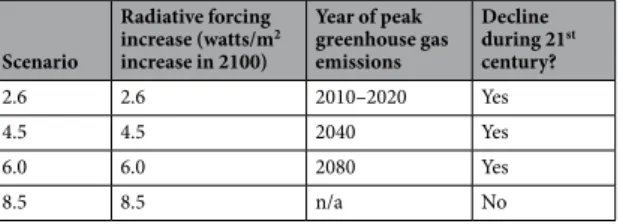
We predicted the potential future distribution of K. koreana using four climate change scenarios or Representative Concentration Pathways (RCPs) based on atmospheric CO2 trajectories. These fourRCPs correspond to increases of 2.6, 4.5, 6.0, and 8.5 watts/m2 by 2100, with wattage increasing with projected
CO2 concentrations (Table 2)70–73. SDMs were developed for two time-steps: 2050 (average for 2041–2060) and
2070 (average for 2061–2080) for all four RCPs. Among the global circulation models (GCMs) we used for all pro-jections the Community Climate System Model 4.0 (CCSM4) from the Coupled Model Intercomparison Project Phase 5 (CMIP5) developed by the Intergovernmental Panel on Climate Change (IPCC) at 30 arc seconds, or approximately 1 km2 resolution, a choice confirmed by the jackknife analysis74–76.
Results
Current suitable range.
The results of our SDMs (Fig. 1) showed a marked increase of potential suitable range for Karsenia koreana in respect to that described by previous studies45. The IUCN range did not include the areas with high suitability in the northwestern and southern regions of the country. The potential distribu-tion resulting from our models covered a large part of western Korea, situated between ca. 100 and 700 meters above sea level west of the Baekdudaegan Mountain Range (Fig. 1). There is also a disjunct area of high suitability located to the northeast in the Pyeongchang area, which matches with reports of the species in that region68.The Maxent modelling of current climate conditions (Fig. 1) produced a range of suitable habitat (cloglog out-put above the 10-percentile training presence threshold of 0.1964) was 10,261 km2. This model had an averaged
AUC of 0.984 ± 0.007 and TSS of 0.869 ± 0.017 and could therefore be accepted as a model for the species’ habitat suitability. Suitable area thresholded at the 10-percentile training presence covered 93.6% of total presence points including 14 of the 15 counties, cities, and districts reported in The Encyclopedia of Korean Amphibians68 and at most locations reported in the Arrow guide of amphibians and reptiles69.
Climate scenario projections and jackknife analysis.
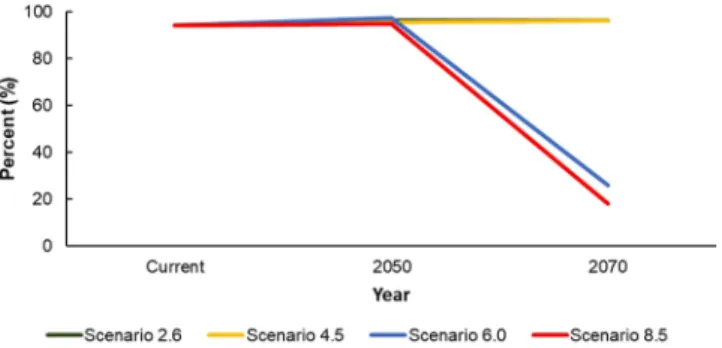
The climate projections showed a shift of the current suitability range for the species towards the northern and eastern regions, characterized by higher altitude (Fig. 2, Table 3). Following the RCP 2.6 and 4.5 predictions, the area of suitability will increase to the north and to higher elevations through 2070, while RCPs 6.0 and 8.5 show increases by 2050 but marked decreases by 2070 (Fig. 3). The two latter RCPs are clearly negative for the habitat suitability of K. koreana, highlighting a significant loss of suitable habitat by 2070.In all RCPs, suitable area is expected to increase by 2050. However, for RCPs 6.0 and 8.5, suitable area will decrease significantly by 2070. The most favorable scenarios for suitable habitat (RCPs 2.6 and 4.5) resulted in increases of 243% and 275%, respectively, in suitable habitat area by 2070, while the less favorable scenarios (RCPs 6.0 and 8.5) resulted in decreases of 40% and 39%, respectively, in suitable area by 2070 (Table 3, Fig. 3). Similarly, occurrence points located within suitable areas will be maintained through 2070 for RCPs 2.6 and 4.5 but will fall to 25.9% and 18.0% in RCPs 6.0 and 8.5, respectively (Table 3, Fig. 4). Here, higher percentages indicate a lower range shift for the species, while lower percentages indicate a higher range shift.
Figure 4. Percentage of current observation locations present in suitable areas (>0.1964) for Karsenia koreana under the four RCPs.
In jackknife analysis (Fig. 5), the three highest-contributing bioclimatic variables in order were Bio14 (precipi-tation of driest month), Bio4 (temperature seasonality), and Bio3 (isothermality). Similarly, Bio14 had the highest contribution and second highest permutation importance, the response to which was an increase in presence probability with precipitation in mm during the driest month. The variables with the lowest contributions were Bio2 (mean diurnal range), Bio6 (minimum temperature of coldest month), and Bio16 (precipitation of wettest quarter). However, Bio6 had the highest average permutation importance.
Discussion
Our results highlight a significantly larger habitat suitable for Karsenia koreana than is the current known dis-tribution of the species45,68. The fact that the model matches with the known presence in counties68 and five other data points77–81. highlights the accuracy of our prediction. Discrepancies are not impossible as precise spa-tial modelling from a low number of samples can result in large variations82. The range of the species may be restricted by additional factors that could not be included in the model, such as competition. As an example, within plethodontid salamander, spatial distributions can be influenced by interference competition to complete competitive exclusion83–85. Second, salamanders may have been extirpated from some parts of the range, for instance during the Korean War when logging was intensive. However, Plethodontids are lungless ectotherms, and it appears that their activity and geographic distribution is predominantly controlled by climate86–88. Finally, salamanders may exist in areas where they have not been discovered yet, which introduces a bias in the ecological preferences of the species, and on the SDM as a result. Additional field surveys are required to clearly record the occurrence of the species, and further observations would improve the precision of habitat suitability models.
Despite this potentially larger new range, the threat status of K. koreana is still unresolved, as species with a limited range have often larger projected habitat loss and are more prone to extinction48,89,90, and a present point of concern in the Republic of Korea91. The results of Maxent modelling identify areas that are potentially impor-tant habitats for K. koreana and provide researchers with new potential survey locations. These results can inform future conservation efforts for the species in terms of protecting important habitat areas; the ranges calculated for habitat suitability fall within different threat levels of the IUCN red list of endangered species92, and K. koreana would thus join the list of endangered species from the Korean Peninsula93. Additionally, acquiring the exact area of occupancy of the species would be important for ecological monitoring as K. koreana is likely to be sensitive to the newly emerged Chytrid fungus Batrachochytrium salamandrivorans94. This fungus may soon be present in the Republic of Korea because of the pet trade, the same way it found its way to Europe95, and the same way the anuran Chytrid fungus entered Korea96.
Studies evaluating the effect of climate change on amphibian populations are based on both breeding phenol-ogy97,98 and range shifts9. Furthermore, the impact of agriculture on amphibian assemblages is well-studied and has been found to have two main types of impacts: landscape fragmentation (reviewed by Cushman 200699) and chemical use (reviewed by Mann et al.100). The predicted range of suitability resulting from Maxent modelling is an increase of 80% from the current IUCN range of 5,687 km2 (or 1.8 times the IUCN range). This area contains
93.8% of the observed points, so it can be considered an improvement of the IUCN range, which only contains 51.4% of the observed points. Because some of the predicted areas are fragmented or too small, or because the Figure 5. Response curves of Karsenia koreana to bioclimatic variables used in Maxent modelling.
therefore, current maps of these factors could not be used in projections for this study.
Data Availability
All data used for the analyses will uploaded to an online data repository upon acceptation of the manuscript.
References
1. Walther, G.-R. et al. Ecological responses to recent climate change. Nature 416, 389–395 (2002).
2. Houghton, J. T. Climate change 1995: The science of climate change: contribution of working group I to the second assessment report of
the Intergovernmental Panel on Climate Change. Vol. 2 (Cambridge University Press, 1996).
3. Easterling, D. R. et al. Climate extremes: observations, modeling, and impacts. Science 289, 2068–2074 (2000). 4. McCarty, J. P. Ecological consequences of recent climate change. Conserv Biol 15, 320–331 (2001).
5. Hughes, L. Biological consequences of global warming: is the signal already apparent? Trends Ecol Evol 15, 56–61 (2000). 6. Parmesan, C. et al. Poleward shifts in geographical ranges of butterfly species associated with regional warming. Nature 399,
579–583 (1999).
7. Parmesan, C. Climate and species’ range. Nature 382, 765–766 (1996).
8. Epstein, P. R. et al. Biological and physical signs of climate change: focus on mosquito-borne diseases. Bull Amer Meteor 79, 409–417 (1998).
9. Pounds, J. A., Fogden, M. P. & Campbell, J. H. Biological response to climate change on a tropical mountain. Nature 398, 611–615 (1999).
10. Thomas, C. D. & Lennon, J. J. Birds extend their ranges northwards. Nature 399, 213 (1999).
11. Johnson, N. K. Pioneering and natural expansion of breeding distributions in western North American birds. Studies in Avian
Biology 15, 27–44 (1994).
12. Davis, R. & Callahan, J. Post-Pleistocene dispersal in the Mexican vole (Microtus mexicanus): an example of an apparent trend in the distribution of southwestern mammals. Great Basin nat 52, 262–268 (1992).
13. Wang, R. et al. Modeling and mapping the current and future distribution of Pseudomonas syringae pv. actinidiae under climate change in China. PloS one 13, e0192153 (2018).
14. Moraitis, M. L., Valavanis, V. D. & Karakassis, I. Modelling the effects of climate change on the distribution of benthic indicator species in the Eastern Mediterranean Sea. Science of The Total Environment 667, 16–24 (2019).
15. Guisan, A. & Thuiller, W. Predicting species distribution: offering more than simple habitat models. Ecol Lett 8, 993–1009 (2005). 16. Dufresnes, C. et al. Phylogeography reveals an ancient cryptic radiation in East-Asian tree frogs (Hyla japonica group) and complex
relationships between continental and island lineages. BMC Evol Biol 16, 253, https://doi.org/10.1186/s12862-016-0814-x (2016).
17. Pearson, R. G. & Dawson, T. P. Predicting the impacts of climate change on the distribution of species: are bioclimate envelope models useful? Global ecol biogeogr 12, 361–371 (2003).
18. Parmesan, C. & Yohe, G. A globally coherent fingerprint of climate change impacts across natural systems. Nature 421, 37 (2003). 19. Mohammadi, S., Ebrahimi, E., Moghadam, M. S. & Bosso, L. Modelling current and future potential distributions of two desert
jerboas under climate change in Iran. Ecol Inform 52, 7–13 (2019).
20. Franco, J. N. et al. The ‘golden kelp’ Laminaria ochroleuca under global change: Integrating multiple eco‐physiological responses with species distribution models. Journal of Ecology 106, 47–58 (2018).
21. Smeraldo, S. et al. Ignoring seasonal changes in the ecological niche of non-migratory species may lead to biases in potential distribution models: lessons from bats. Biodiver Conserv 27, 2425–2441 (2018).
22. Williams, P. H., Lobo, J. M. & Meseguer, A. S. Bumblebees take the high road: climatically integrative biogeography shows that escape from Tibet, not Tibetan uplift, is associated with divergences of present-day Mendacibombus. Ecography 41, 461–477 (2018).
23. Mizsei, E. et al. Species distribution modelling leads to the discovery of new populations of one of the least known European snakes, Vipera ursinii graeca, in Albania. Amphibia Reptilia 37, 55–68 (2016).
24. Planque, B., Loots, C., Petitgas, P., LindstrøM, U. & Vaz, S. Understanding what controls the spatial distribution of fish populations using a multi-model approach. Fisheries Oceanography 20, 1–17 (2011).
25. Smith, M. A. & Green, D. M. Dispersal and the metapopulation paradigm in amphibian ecology and conservation: are all amphibian populations metapopulations. Ecography 28, 110–128 (2005).
26. Duellman, W. E. Patterns of distribution of amphibians: a global perspective. (Johns Hopkins University Press, 1999).
27. Pimm, S. L. et al. The biodiversity of species and their rates of extinction, distribution, and protection. Science 344, 987–997,
https://doi.org/10.1126/science.1246752 (2014).
28. Howard, S. D. & Bickford, D. P. Amphibians over the edge: silent extinction risk of Data Deficient species. Divers Distrib 20, 837–846 (2014).
29. Kim, I.-H., Son, S.-H., Kang, S.-W. & Kim, J.-B. Distribution and habitat characteristics of the endangered Suweon-Tree Frog (Hyla
suweonensis). Kor J Herpetol 4, 15–22 (2012).
30. Borzée, A., Yu, S. H. & Jang, Y. Dryophytes suweonensis (Suweon Treefrog). Herpetol Rev 47, 418 (2016).
31. Borzée, A., Kim, K., Heo, K., Jablonski, P. G. & Jang, Y. Impact of land reclamation and agricultural water regime on the distribution
and conservation status of the endangered Dryophytes suweonensis. PeerJ 5, e3872, https://doi.org/10.7717/peerj.3872 (2017).
32. Nishikawa, K. The first specimen of Karsenia koreana (Caudata: Plethodontidae) collected 34 years before its description. Curr
Herpetol 28, 27–28 (2009).
33. Min, M. S. et al. Discovery of the first Asian plethodontid salamander. Nature 435, 87–90 (2005).
34. Buckley, D., Wake, M. H. & Wake, D. B. Comparative skull osteology of Karsenia koreana (Amphibia, Caudata, Plethodontidae).
Journal of morphology 271, 533–558 (2010).
35. Wake, D. B. Taxonomy of salamanders of the family Plethodontidae (Amphibia: Caudata). Zootaxa 3484, 75–82 (2012). 36. Wake, D. B. The enigmatic history of the European, Asian and American plethodontid salamanders. Amphibia Reptilia 34, 323–336
37. Sever, D. M., Pinsoneault, A. D., Mackenzie, B. W., Siegel, D. S. & Staub, N. L. A description of the skin glands and cloacal morphology of the plethodontid salamander Karsenia koreana. Copeia 104, 816–823 (2016).
38. Vieites, D. R., Min, M.-S. & Wake, D. B. Rapid diversification and dispersal during periods of global warming by plethodontid salamanders. Proc Natl Acad Sci 104, 19903–19907 (2007).
39. Sessions, S. K. et al. Cytogenetic analysis of the asian plethodontid salamander, Karsenia koreana: Evidence for karyotypic conservation, chromosome repatterning, and genome size evolution. Chromosome Research 16, 563–574 (2008).
40. Vieites, D. R., Román, S. N., Wake, M. H. & Wake, D. B. A multigenic perspective on phylogenetic relationships in the largest family of salamanders, the Plethodontidae. Mol Phylogenet Evol 59, 623–635 (2011).
41. Jeong, T. J. et al. DNA barcode reference data for the Korean herpetofauna and their applications. Mol Ecol Resour 13, 1019–1032,
https://doi.org/10.1111/1755-0998.12055 (2013).
42. Bonett, R. M., Mueller, R. L. & Wake, D. B. Why should reaquisition of larval stages by Desmognathine salamanders surprise us?
Herpetol Rev 36, 112 (2005).
43. Lee, J. Use of breeding habitats by different amphibian species in the Woraksan National Park. Journal of Environmental Research 2, 23–35 (2005).
44. Moon, K. Y. & Park, D. Report of Karsenia koreana eggs oviposited within a semi-natural terrarium constructed at natural habitat.
Kor J Herpetol 7, 1–5 (2016).
45. Vieites, D., Karsen, S., Mi-Sook, M., Yang, S. Y. & Wake, D. Karsenia koreana. Vol. e.T61903A12569677 (IUCN, 2006).
46. Struecker, B. & Milanovich, J. Predicted suitable habitat declines for midwestern United States amphibians under future climate and land-use change scenarios. Herpetological Conservation and Biology 12, 635–654 (2017).
47. Connette, G. M., Crawford, J. A. & Peterman, W. E. Climate change and shrinking salamanders: alternative mechanisms for changes in plethodontid salamander body size. Global Change Biol 21, 2834–2843 (2015).
48. Milanovich, J. R., Peterman, W. E., Nibbelink, N. P. & Maerz, J. C. Projected loss of a salamander diversity hotspot as a consequence of projected global climate change. PloS one 5, e12189 (2010).
49. Caruso, N. M., Sears, M. W., Adams, D. C. & Lips, K. R. Widespread rapid reductions in body size of adult salamanders in response to climate change. Global Change Biol 20, 1751–1759 (2014).
50. Wells, K. Complex life cycles and the ecology of amphibian metamorphosis. (University of Chicago Press, 2007).
51. Tracy, C. R., Christian, K. A. & Tracy, C. R. Not just small, wet, and cold: effects of body size and skin resistance on thermoregulation and arboreality of frogs. Ecology 91, 1477–1484 (2010).
52. Peterman, W., Locke, J. & Semlitsch, R. Spatial and temporal patterns of water loss in heterogeneous landscapes: using plaster models as amphibian analogues. Can J Zoolog 91, 135–140 (2013).
53. Peterman, W. & Semlitsch, R. D. Spatial variation in water loss predicts terrestrial salamander distribution and population dynamics. Oecologia 176, 357–369 (2014).
54. Gifford, M. E. & Kozak, K. H. Islands in the sky or squeezed at the top? Ecological causes of elevational range limits in montane salamanders. Ecography 35, 193–203 (2012).
55. Chung, Y. S., Yoon, M. B. & Kim, H. S. On climate variations and changes observed in South Korea. Clim Change 66, 151–161 (2004).
56. Choi, W. et al. Season-dependent warming characteristics observed at 12 stations in South Korea over the recent 100 years. Int J
Climatol 38, 4092–4101, https://doi.org/10.1002/joc.5554 (2018).
57. Azam, M., Park, H. K., Maeng, S. J. & Kim, H. S. Regionalization of drought across South Korea using multivariate methods. Water 10, 24 (2017).
58. Wake, D. B. Comparative osteology and evolution of the lungless salamanders, family Plethodontidae. Vol. 4 (Southern California Academy of Sciences, 1966).
59. Phillips, S. J., Dudík, M. & Schapire, R. E. Maxent software for modeling species niches and distributions (Version 3.4.1) (2017). 60. Hijmans, R. J., Cameron, S. E., Parra, J. L., Jones, P. G. & Jarvis, A. Very high resolution interpolated climate surfaces for global land
areas. Int J Climatol 25, 1965–1978 (2005).
61. Ray, D., Behera, M. D. & Jacob, J. Predicting the distribution of rubber trees (Hevea brasiliensis) through ecological niche modelling with climate, soil, topography and socioeconomic factors. Ecol Res 31, 75–91 (2016).
62. Kabir, M. et al. Habitat suitability and movement corridors of Grey wolf (Canis lupus) in Northern Pakistan. PloS one 12, e0187027 (2017).
63. Boria, R. A. & Blois, J. L. The effect of large sample sizes on ecological niche models: analysis using a North American rodent,
Peromyscus maniculatus. Ecol Model 386, 83–88 (2018).
64. Layne, J. R. Jr & Claussen, D. L. Seasonal variation in the thermal acclimation of critical thermal maxima (CTMax) and minima (CTMin) in the salamander Eurycea bislineata. J Therm Biol 7, 29–33 (1982).
65. Spotila, J. R. Role of temperature and water in the ecology of lungless salamanders. Ecological Monographs 42, 95–125 (1972). 66. Kwon, H., Kim, B. & Jang, G. Modelling the spatial distribution of wildlife animals using presence and absence data. Contemporary
Problems of Ecology 9, 515–518 (2016).
67. Allouche, O., Tsoar, A. & Kadmon, R. Assessing the accuracy of species distribution models: prevalence, kappa and the true skill statistic (TSS). J Appl Ecol 43, 1223–1232 (2006).
68. Lee, J.-H. & Park, D. The encyclopedia of Korean amphibians., Vol. 17 248 (Checklist of Organisms in Korea 17, 2016). 69. Kim, H.-T., Kim, H., Jeon, G. & Kim, D. Arrow guide of amphibians and reptiles. (Econature, 2019).
70. Moss, R. et al. Towards new scenarios for the analysis of emissions: climate change, impacts and response strategies. (Intergovernmental Panel on Climate Change Secretariat (IPCC), 2008).
71. Weyant, J. et al. In Towards New Scenarios for Analysis of Emissions, Climate Change, Impacts, and Response Strategies. (ed Intergovernmental Panel on Climate Change, 2009).
72. Meinshausen, M. et al. The RCP greenhouse gas concentrations and their extensions from 1765 to 2300. Clim Change 109, 213 (2011).
73. Stocker, B. D., Feissli, F., Strassmann, K. M., Spahni, R. & Joos, F. Past and future carbon fluxes from land use change, shifting cultivation and wood harvest. Tellus B: Chemical and Physical Meteorology 66, 23188 (2014).
74. Yuan, H. S., Wei, Y. L. & Wang, X. G. Maxent modeling for predicting the potential distribution of Sanghuang, an important group of medicinal fungi in China. Fungal. Ecology 17, 140–145 (2015).
75. Gholamrezaei, M., Mohebali, M., Hanafi-Bojd, A. A., Sedaghat, M. M. & Shirzadi, M. R. Ecological niche modeling of main reservoir hosts of zoonotic cutaneous leishmaniasis in Iran. Acta Tropica 160, 44–52 (2016).
76. Bosso, L., De Conno, C. & Russo, D. Modelling the risk posed by the zebra mussel Dreissena polymorpha: Italy as a case study.
Environmental Management 60, 304–313 (2017).
77. Song, J.-Y. et al. Roadkill of amphibians in the Korean National Parks. Korean J Environ Ecol 23, 187–193 (2009).
78. Song, J.-Y. Herpetofauna of the Korean National Parks in Baekdudaegan. Journal of National Park Research 1, 216–219 (2010). 79. Kim, J., Min, M., Park, D. & Song, J. Red data book of endangered amphibians and reptiles in Korea. (National Institute of Biological
Resources, 2011).
80. Ra, N., Ham, C., Lee, Y., Han, H. & Sung, H. In The Korean Society of Herpetologists, Vol. 2015 (ed The Korean Society of Herpetologists) (The Korean Society of Herpetologists, Wonju, 2015).
org/10.1126/science.aaw9023 (2019).
92. IUCN. The IUCN Red List of threatened species. Vol, http://www.iucnredlist.org, (IUCN, 2017).
93. Lee, S.-D. & Miller-Rushing, A. J. Degradation, urbanization, and restoration: a review of the challenges and future of conservation on the Korean Peninsula. Biol Cons 176, 262–276 (2014).
94. Martel, A. et al. Batrachochytrium salamandrivorans sp. nov. causes lethal chytridiomycosis in amphibians. Proc Natl Acad Sci 110, 15325–15329 (2013).
95. Nguyen, T. T., Van Nguyen, T., Ziegler, T., Pasmans, F. & Martel, A. Trade in wild anurans vectors the urodelan pathogen
Batrachochytrium salamandrivorans into. Europe. Amphibia Reptilia 38, 554–556, https://doi.org/10.1163/15685381-00003125
(2017).
96. Borzée, A., Kosch, T. A., Kim, M. & Jang, Y. Introduced bullfrogs are associated with increased Batrachochytrium dendrobatidis
prevalence and reduced occurrence of Korean treefrogs. PloS one 12, e0177860, https://doi.org/10.1371/journal.pone.0177860
(2017).
97. Beebee, T. J. C. Amphibian breeding and climate change. Nature 374, 219–220 (1995).
98. Forchhammer, M. C., Post, E. & Stenseth, N. C. Breeding phenology and climate…. Nature 391, 29–30 (1998).
99. Cushman, S. A. Effects of habitat loss and fragmentation on amphibians: a review and prospectus. Biol Cons 128, 231–240 (2006). 100. Mann, R. M., Hyne, R. V., Choung, C. B. & Wilson, S. P. Amphibians and agricultural chemicals: review of the risks in a complex
environment. Environ Pollut 157, 2903–2927 (2009).
Acknowledgements
This project was funded by the grant 2017R1A2B2003579 from the National Research Foundation of Korea and by the grant PJ012285 from the Rural Development Administration to J.Y.
Author contributions
A.B., H.K. and Y.B. collected data; A.B., D.A., J.G. conceived and designed the experiments and analysed the data; A.B., D.A., J.G., H.K., Y.B. and Y.J. wrote the manuscript. All authors provided editorial advice.
Additional information
Competing Interests: The authors declare no competing interests.
Publisher’s note: Springer Nature remains neutral with regard to jurisdictional claims in published maps and institutional affiliations.
Open Access This article is licensed under a Creative Commons Attribution 4.0 International License, which permits use, sharing, adaptation, distribution and reproduction in any medium or format, as long as you give appropriate credit to the original author(s) and the source, provide a link to the Cre-ative Commons license, and indicate if changes were made. The images or other third party material in this article are included in the article’s Creative Commons license, unless indicated otherwise in a credit line to the material. If material is not included in the article’s Creative Commons license and your intended use is not per-mitted by statutory regulation or exceeds the perper-mitted use, you will need to obtain permission directly from the copyright holder. To view a copy of this license, visit http://creativecommons.org/licenses/by/4.0/.