저작자표시-비영리-변경금지 2.0 대한민국 이용자는 아래의 조건을 따르는 경우에 한하여 자유롭게 l 이 저작물을 복제, 배포, 전송, 전시, 공연 및 방송할 수 있습니다. 다음과 같은 조건을 따라야 합니다: l 귀하는, 이 저작물의 재이용이나 배포의 경우, 이 저작물에 적용된 이용허락조건 을 명확하게 나타내어야 합니다. l 저작권자로부터 별도의 허가를 받으면 이러한 조건들은 적용되지 않습니다. 저작권법에 따른 이용자의 권리는 위의 내용에 의하여 영향을 받지 않습니다. 이것은 이용허락규약(Legal Code)을 이해하기 쉽게 요약한 것입니다. Disclaimer 저작자표시. 귀하는 원저작자를 표시하여야 합니다. 비영리. 귀하는 이 저작물을 영리 목적으로 이용할 수 없습니다. 변경금지. 귀하는 이 저작물을 개작, 변형 또는 가공할 수 없습니다.
Doctoral Thesis
Co-additive (Flue gas
desulphurization gypsum and
biochar) supplementation for the
reduction of odor (ammonia
volatilization) from the livestock
facilities
병합재(Flue gas desulphurization gypsum과
biochar) 바이오필터가 축산시설 악취(암모니아
휘산) 저감에 미치는 영향
February 2019
Graduate School of Agricultural Biotechnology
Seoul National University
Co-additive (Flue gas
desulphurization gypsum and
biochar) supplementation for the
reduction of odor (ammonia
volatilization) from the livestock
facilities
Thesis Advisor, Professor Cheol-Heui Yun
Submitting as Ph.D. Dissertation of Agricultural
Biotechnology
February 2019
Graduate School of Agricultural Biotechnology
Seoul National University
Andi Febrisiantosa
Confirming the doctoral dissertation written by
Andi Febrisiantosa
February 2019
Chairman Myunggi Baik __ (signature)
Vice Chairman Cheol-Heui Yun (signature)
Committee Member _ Cheorun Jo____ (signature)
Committee Member Hong-Lim Choi__ (signature)
Committee Member Dong-Yoon Choi _ (signature)
Abstract
Co-additive (Flue gas
desulphurization gypsum and
biochar) supplementation for the
reduction of odor (ammonia
volatilization) from the livestock
facilities
Andi Febrisiantosa
Department of Agricultural Biotechnology
The Graduate School
Seoul National University
Increased livestock population has led to the escalation of livestock waste generation. The waste from livestock industrial activities (manure and slaughter waste) are the major source of negative environmental impacts (i.e. the release of greenhouse gases or excess nutrients, salt accumulation, growth of pathogenic microorganisms, odor, and so on), which are capable of influencing both humans and animals. Indeed, it has been suggested that odor and gas emissions from livestock farming operations have become an important social problem due to their negative impacts on health and quality life of human being. Livestock manure generated from swine houses is a particularly serious problem compared to other animal species. Moreover, the emission of odors and volatile organic compounds (VOCs) from swine livestock facilities are
representative air pollution problems and are become a crucial public health concern. Accordingly, studies regarding the effort to reduce the pollution affected by the livestock activities were carried out.
In the first phase of the studies, the effectiveness of co-additives for improving livestock waste composting (reduction of air pollution and conservation of nutrients) was investigated. Biochar and Flue gas desulphurization gypsum (FGD gypsum) were used to supplement the composting of a mixture of slaughter waste, swine slurry, and sawdust. Different composition of additives (0% or 5% each, 10% biochar or FGD gypsum) was tested in triplicate on the laboratory scale. In addition, the effects of two different aeration schemes (continuous and intermittent) were also investigated. Ammonia volatilization, physicochemical characteristics, and compost maturity indices were investigated. The results indicated that the use of the co-additive (Biochar and FGD gypsum) during composting of livestock waste led to a reduction of ammonia volatilization by 26–59% and to a 6.7–7.9-fold increase of nitrate accumulation. The total ammonia volatilization of intermittent aeration treatment was lower than that of continuous aeration using co-additives treatment. It was concluded that co-additives (biochar and FGD gypsum) might be utilized in the livestock waste composting to reduce ammonia volatilization and improve nutrient conservation.
Subsequently, the performance of two different types of the integrated ventilation-biofilter system in an experimental pig house was investigated. The wall ventilation system integrated into vertical biofilter (W-VBF), and the pit ventilation system integrated into horizontal biofilter (P-HBF) were tested. The
experiment was conducted for 64 days. Water recycling was used in the biofilter system. Microclimatic variables, aerial pollutant (particulate matter and odorant) and wastewater (slurry and biofilter recycled water) characteristic were observed during the experiment. Results showed that ammonia concentration inside the W-VBF was about 41% higher than that of the P-HBF. Noise from the W-VBF was about 12.1% more than that of P-HBF. Particulate matter and total suspended particle inside the W-VBF house was about 62.2% and 69.9% respectively higher than that of P-HBF. It was concluded that the P-HBF emitted lower air pollution rather than W-VBF. In addition, it could maintain the optimum temperature condition for swine house during cold condition. These results suggested that an integrated ventilation-biofilter system for pig house could be used as an option to minimize the air pollution produced by the swine farming activity as well as to maintain optimum microclimate condition for the pig.
The third phase research investigated the odor emission and its treatment performed by the dual biofilter system supplemented by the co-additive (FGD gypsum and biochar) in the closed livestock confinement. The performance of dual biofilter system was investigated under experimental farm model. The eight weeks (56 days) of tested was performed on the experimental scale pig house. The dual (vertical and horizontal) biofilter system attached to the mechanical wall ventilation system was tested. Water recycling system was equipped in the biofilter system. Microclimatic variables, odor pollutant (ammonia and volatile organic acid), physicochemical of the biofilter pack and wastewater (biofilter recycled water) characteristics were observed during the
experiment. The ammonia removal efficiency of the dual biofilter system supplemented by the co-additive (5% FGD gypsum and 5% biochar) was about 65.28% to 98%. The co-additive supplementation in the biofilter media might increase the ammonia removal efficiency about 57.72% and potent to inhibit the emission of volatile organic odor from the pig house with the average removal efficiency of about 21.36%. The nitrification process, as well as microbial activities in the biofilter media, might be improved by co-additive supplementation. In addition, since it contains higher nitrite nitrate concentration and the macro micro-nutrient (total P, K, Ca, Mg, S, and Fe) availability, the biofilter media might also further be considered as a solid bio-fertilizer product source for the land application. Results indicated that dual biofilter system supplemented by the FGD gypsum and biochar emitted lower air pollution rather than the biofilter without co-additive supplementation. It was concluded that integration of dual biofilter system in the closed livestock house might be used as the option to minimize the air pollution produced by the livestock farming activity.
According to the overall resulted in these studies, it was concluded the co-additive supplementation could be an alternative option to reduce the odor emission from the livestock facilities. An amount of 10% co-additive (FGD gypsum 5% and biochar 5%) could be used as co-additives in livestock waste composting as well as in the biofilter packing material for mitigating the odor emission from the livestock facilities. Co-additive (FGD gypsum 5% and biochar 5%) in the livestock composting reduced ammonia volatilization during the composting process, increased the nitrate accumulation in compost product,
didn’t give an adverse effect to composting process, and environmentally save. Co-additive (FGD gypsum 5% and biochar 5%) in the biofilter material increased the ammonia removal efficiency, inhibit the volatile organic compounds emission, increased the macro and micronutrient of used biofilter material for the land application.
Keywords: livestock waste, composting additives combination, ammonia, volatilization, air pollution, odor, biofilter, swine house, volatile organic acid Student Number: 2014-31452
CONTENTS
Abstract ... i
List of Figures ... ix
List of Tables ... xiv
List of Abbreviations ... xvi
Units and Marks ... xviii
CHAPTER 1 . GENERAL INTRODUCTION ... 21
1.1. Background of research ... 21
1.1.1. Odor (Ammonia and Volatile Organic Acid) in Swine livestock facilities ... 23
1.1.2. Mitigation strategies to reduce odor pollution from swine livestock facilities (from on-farm and livestock waste treatment) ... 31
1.1.3. Flue Gas Desulfurization Gypsum ... 35
1.1.4. Biochar ... 38
1.2. Research objectives ... 41
1.3. References ... 42
. THE EFFECT OF CO-ADDITIVES (BIOCHAR AND FGD GYPSUM) ON AMMONIA VOLATILIZATION DURING THE COMPOSTING OF LIVESTOCK WASTE ... 55
2.1. Abstract ... 55
2.2. Introduction ... 56
2.3. Methods ... 59
2.3.1. Feedstock Preparation and Experimental Setup ... 59
2.3.2. Physicochemical Parameter Analysis ... 62
2.3.3. Statistical Analysis ... 64
2.4.1. The Effect on Temperature, pH, and EC ... 65
2.4.2. The Effect on Ammonia Volatilization ... 68
2.4.3. The Effect on Organic Matter and nitrogen fraction ... 73
2.4.4. The Effects on Macro-, Micronutrients and Maturity Indices ... 79
2.4.5. The Effect on Germination and Respiration Rate ... 82
2.5. Conclusion ... 84
2.6. References ... 85
CHAPTER 3 . EVALUATION OF DIFFERENT INTEGRATED VENTILATION-BIOFILTER SYSTEM FOR MITIGATING THE AIR POLLUTION FROM PIG HOUSE ... 95
3.1. Abstract ... 95
3.2. Introduction ... 96
3.3. Materials and Methods ... 98
3.3.1. Experimental pig house ... 98
3.3.2. Microclimatic variables measurement and odorant analysis ... 99
3.3.3. Wastewater analysis ... 101
3.3.4. Statistical analysis ... 101
3.4. Results and Discussion ... 102
3.4.1. House microclimate condition and ammonia concentration ... 102
3.4.2. Effect on volatile organic odor, particulate matter, and noise level ... 110
3.4.3. Biofilter condition and performance ... 114
3.4.4. Effect on Biofilter recycled water characteristic ... 116
3.4.5. Effect on the slurry characteristic ... 119
3.5. Conclusion ... 121
CHAPTER 4 . THE EVALUATION OF CO-ADDITIVE (FGD GYPSUM AND BIOCHAR) SUPPLEMENTATION IN THE LIVESTOCK HOUSE
AIR BIOFILTERING SYSTEM ... 127
4.1. Abstract ... 127
4.2. Introduction ... 128
4.3. Material and Methods... 132
4.3.1. Experimental house-biofilter facilities ... 132
4.3.2. Ammonia and volatile organic acid odorant analysis... 136
4.3.3. Biofilter media and recycled water characteristic analysis ... 139
4.3.4. Statistical analysis ... 140
4.4. Results and Discussion ... 141
4.4.1. Ammonia and Volatile Organic Acid odor ... 141
4.4.2. Biofilter media and recirculated water ... 155
4.5. Conclusion ... 170
4.6. References ... 173
CHAPTER 5 . CONCLUSION ... 183
5.1. General summary ... 183
5.2. Overall conclusion and implication ... 188
Abstract in Korean ... 190
Acknowledgment ... 195
List of Figures
Figure 1.1. Number of the livestock farm and the livestock waste in South Korea 2010 – 2016 (Ministry of Environment - Korea, 2018)... 21 Figure 1.2. Livestock manure treatment status in South Korea 2011 – 2016 (Ministry of Environment - Korea, 2018) ... 22 Figure 1.3. Possible ammonia odor volatilization during nitrogen flow in animal feeding operation (Arogo et al., 2003) ... 24 Figure 1.4. Flue gas desulphurization process (Srivastava and Jozewicz, 2011)
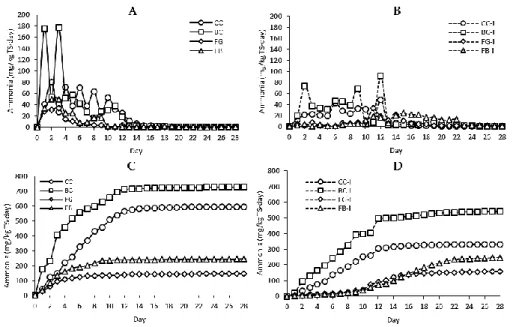
... 36 Figure 2.1. Reactor for composting experiment ... 63 Figure 2.2. Temperature (continuous (A), intermittent (B)), pH (C) and EC (D) profiles throughout composting process... 67 Figure 2.3. Daily and cumulative ammonia production throughout composting process (A) Daily, continuous aeration; (B) Daily, intermittent aeration; (C) Cumulative, continuous aeration; (D) Cumulative, intermittent aeration ... 70 Figure 2.4. TOC (A), TKN (B), C/N ratio (C), NH4+ (D), NO3-+NO2- 2 (E),
NH4+/NO3-; (F) throughout the composting process. ... 76
Figure 2.5. Change in (A) Germination index; (B) CO2 respiration rate during
composting. Values are expressed as mean ± standard deviation 83 Figure 3.1. The experimental pig house (a) The W-VBF (wall
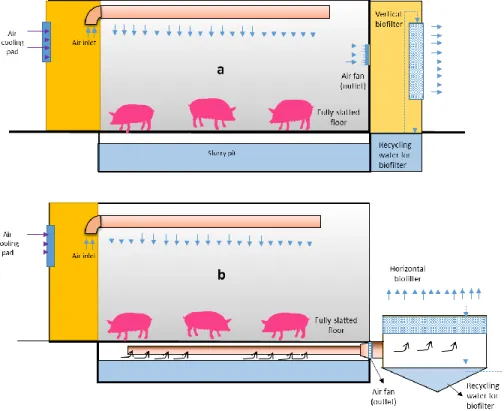
ventilation-vertical biofilter); (b) P-HBF (pit ventilation-horizontal biofilter) ... 100
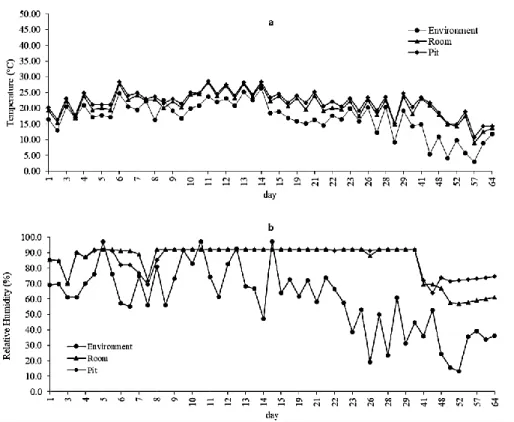
Figure 3.2. The average temperature, relative humidity in the wall ventilation-vertical biofilter (W-VBF) pilot pig house during the experiment (a) temperature; (b) humidity... 102 Figure 3.3. The average temperature, relative humidity in the P-HBF pilot pig house during the experiment (a) temperature; (b) humidity ... 106 Figure 3.4. The average ammonia concentration in the pilot pig house during the experiment (a) wall ventilation-vertical biofilter (W-VBF) house; (b) pit ventilation-horizontal biofilter (P-HBF). Values are expressed as mean ± standard deviation... 108 Figure 3.5. The average of the noise level in the wall ventilation-vertical biofilter (W-VBF) and pit ventilation-horizontal biofilter (P-HBF) pilot pig house during the experiment. Values are expressed as mean ± standard deviation. ... 114 Figure 3.6. Biofilter pad temperature of the wall ventilation-vertical biofilter (W-VBF) and pit ventilation-horizontal biofilter (P-HBF) pilot pig house during the experiment ... 115 Figure 3.7. Average ammonia reduction efficiency of the biofilter in the wall ventilation-vertical biofilter (W-VBF) and pit ventilation-horizontal biofilter (P-HBF) pilot pig house during the experiment. Values are expressed as mean ± standard deviation... 116 Figure 3.8. Physicochemical characteristics of recycled water for biofilter (a) pH; (b) Electrical conductivity (EC); (c) Oxidation Reduction Potential (ORP); (d) Dissolved Oxygen (DO); (e) Total Ammonia Nitrogen (TAN); (f) Nitrate; (g) Nitrite ... 118
Figure 3.9. Physicochemical characteristics of the slurry produced in the wall ventilation-vertical biofilter (W-VBF) and pit ventilation-horizontal biofilter (P-HBF) pilot pig house during the experiment. Values are expressed as mean ± standard deviation... 120 Figure 4.1. Experimental integrated pig house - biofilter system ... 134 Figure 4.2. The experimental of dual biofilter system (A) vertical biotrickling (B) horizontal biofilter ... 135 Figure 4.3. Biofilter packing material ... 135 Figure 4.4. Daily ammonia odor concentration before and after dual biofilter without co-additive treatment. Values are expressed as mean ± standard deviation ... 142 Figure 4.5. Daily ammonia odor concentration before and after dual biofilter with co-additive treatment. Values are expressed as mean ± standard deviation ... 143 Figure 4.6. Ammonia odor Removal efficiency of dual biofilter during the experiment. Values are expressed as mean ± standard deviation 145 Figure 4.7. Total VFA odor fluctuation of dual biofilter system without
co-additive treatment during the experiment. Values are expressed as mean ± standard deviation ... 147 Figure 4.8. Total VFA odor fluctuation before and after dual biofilter with
co-additive treatment during the experiment. Values are expressed as mean ± standard deviation ... 147
Figure 4.9. Total phenolic-indolic odor fluctuation before and after dual biofilter without co-additive treatment during the experiment. Values are expressed as mean ± standard deviation ... 149 Figure 4.10. Total phenolic-indolic odor fluctuation before and after dual biofilter with co-additive treatment during the experiment ... 149 Figure 4.11. Total Sulfuric odor fluctuation before and after dual biofilter without co-additive treatment during the experiment. Values are expressed as mean ± standard deviation... 150 Figure 4.12. Total Sulfuric odor fluctuation before and after dual biofilter with co-additive treatment during the experiment. Values are expressed as mean ± standard deviation ... 150 Figure 4.13. Total VOC odor fluctuation before and after dual biofilter without co-additive treatment during the experiment. Values are expressed as mean ± standard deviation ... 152 Figure 4.14. Total VOC odor fluctuation before and after dual biofilter without co-additive treatment during the experiment. Values are expressed as mean ± standard deviation ... 153 Figure 4.15. Physicochemical characteristic of biofilter media during the experiment (a) TS; (b) VS; (c) pH; (d) EC, (e) Bulk Density, (f) Particle Density, (g) porosity. Values are expressed as mean ± standard deviation ... 158 Figure 4.16. Nitrogen fraction of the biofilter media during the experiment (a) Total Ammonia Nitrogen (TAN); (b) NO3-+NO2-; (c) NH4+/NO3-.
Figure 4.17. The C/N ratio and minerals concentration of the biofilter media (a) TOC; (b) TKN; (c) C/N ratio; (d) Total P; (e) Total Na; (f) Total K; (g) Total Mg; (h) Total Ca; (i) Total S; (j) Total Fe. Values are expressed as mean ± standard deviation... 161 Figure 4.18. The microbial population in the biofilter media during the experiment (a) Total Bacterial Count (TBC); (b) Total yeast and molds count. Values are expressed as mean ± standard deviation ... 163 Figure 4.19. Biofilter recirculated water characteristic during the experiment (a) pH, (b) EC, (c) TDS, (d) DO. Values are expressed as mean ± standard deviation ... 167 Figure 4.20. Nitrogen fraction characteristics of biofilter recirculated water during the experiment (a) TAN, (b) NO3-+NO2-; (c) NH4+/NO3-.
Values are expressed as mean ± standard deviation ... 168 Figure 5.1. Scheme of each chapter in this thesis ... 183
List of Tables
Table 1.1. Average NH3 emissions for livestock categories (kg
NH3/animal·year) (percentages in brackets are portions of the total)
(Schade and Crutzen, 1995) ... 28
Table 1.2. Volatile organic odor and ammonia odor emitted from piggeries 30 Table 2.1. Properties of raw materials used for composting experiment ... 61
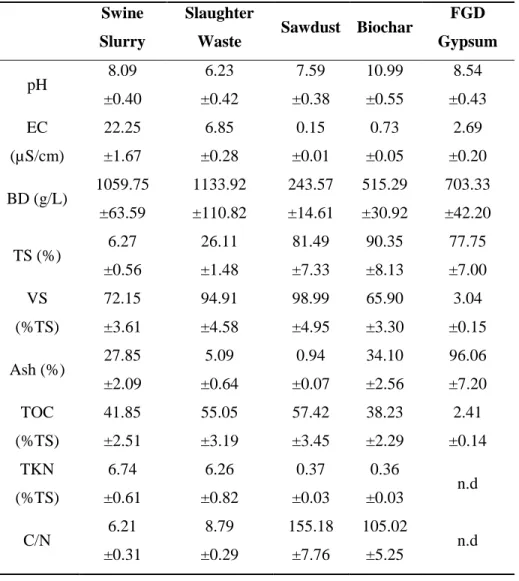
Table 2.2. The feedstock composition ratio of treatment compost ... 62
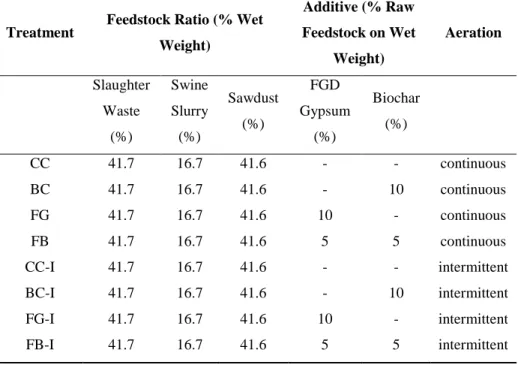
Table 2.3. The concentration of macronutrients after 28 days composting in this study ... 80
Table 2.4. The concentration of micronutrients after 28 days composting in this study ... 81
Table 2.5. Characteristics of maturity indices from the composting test ... 82
Table 3.1. The experimental ventilation-biofilter system type used in the present study ... 99
Table 3.2. The odor and particulate matter concentration in the experimental pig house-biofilter system ... 111
Table 3.3. Pearson correlation of measured odorant and microenvironment variables in the present study ... 112
Table 3.4. Pearson correlation of odorant variables in the present study ... 113
Table 4.1. Description of the treatment in this study ... 136
Table 4.2. Characteristic of the raw material for the biofilter media ... 136
Table 4.3. The physicochemical characteristics of the biofilter media mixture in this study ... 136
Table 4.4. Detection thresholds of the target odorous compounds (Yao, 2010) ... 138 Table 4.5. Pearson correlation of measured odorant during the experiment 155 Table 4.6. Pearson correlations of measured physicochemical characteristics of the biofilter media during the experiment ... 165 Table 4.7. Pearson correlations of measured recycled water physicochemical variables during the experiment ... 169
List of Abbreviations
AA : Acetic Acid BA : Butyric Acid BD : Bulk Density
C/N : Carbon and Nitrogen Ratio DO : Dissolved oxygen
EC : Electrical Conductivity FGD : Flue Gas Desulphurization IBA : Isobutyric Acid
IVA : Isovaleric Acid
ORP : Oxidation Reduction Potential PA : Propionic Acid
PD : Particle Density
P-HBF : Pit Ventilation Horizontal Biofilter PM : Particulate Matter
RE : Removal Efficiency TAN : Total Ammonia Nitrogen TDS : Total Dissolved Solid TKN : Total Kjeldahl Nitrogen TOC : Total Organic Carbon TS : Total Solid
TSP : Total Suspended Particle VA : Valeric Acid
VFA : Volatile Fatty Acid
VOC : Volatile Organic Compounds VS : Volatile Solid
W-VBF : Wall Ventilation Vertical Biofilter w/v : weight per volume
Units and Marks
°C : Celsius degree
µS/cm : Micro Siemens/centimeter
dB : Decibels
g : Gram
g/cm3 : Gram per cubic centimeter
g/L : Gram per Liter
kg : Kilogram
L : Liter
L/min : Liter per minute
CFU/mL : Colony Forming Unit per mililiter
m : Meter
m3/day : Cubic meter per day
m3/h : Cubic meter per hour
m3/pig head : Cubic meter per pig head
m3/pig·h : Cubic meter per pig per hour
mg CO2/g TS : Milligram carbon dioxide per gram dry solid
mg : Milligram
mg/kg : Milligram per kilogram mg/L : Milligram per Liter
Min : Minute
mL : Milliliter
mm : Millimeter
mol/L : Moles per liter
mS/cm : Milli Siemens per centimeter
g N/m3·h : Gram nitrogen per cubic meter per hour
ppb : parts per billion ppm : parts per million
Rpm : Revolutions per minute μg/m3 : Microgram per cubic meter
CHAPTER 1
.
GENERAL
INTRODUCTION
1.1. Background of research
The livestock industry in many Asian countries such as South Korea and China has rapidly grown during the last two decades (Guo et al., 2016a). Korean livestock industry reaches 17 trillion and 471.4 billion won, accounting for 40.2% of the total agro-forestry production (Kim et al., 2012). The high growth population of the livestock has led to the high livestock waste production (Figure 1). The waste from livestock industrial activities (manure and slaughter waste) are the major source of negative environmental impacts (the release of greenhouse gases or excess nutrients, salt accumulation, growth of pathogenic microorganisms, odor, and so on), which are capable of influencing both humans and animals (Franke-whittle and Insam, 2013; ten Hoeve et al., 2014).
Figure 1.1. Number of the livestock farm and the livestock waste in South Korea 2010 – 2016 (Ministry of Environment - Korea, 2018)
In South Korea, for about 70% of livestock manure is recycled by the composting process (Figure 2). Livestock manure generated from swine houses is a particularly serious problem compared to other animal species (Lee, 2017). Moreover, the emission of odors and volatile organic compounds (VOCs) from swine livestock facilities are representative air pollution problems and are become a crucial public health concern (Yang et al., 2010).
Figure 1.2. Livestock manure treatment status in South Korea 2011 – 2016 (Ministry of Environment - Korea, 2018)
The complaints due to livestock industries related odors increased along with the growth in the number of large livestock operations especially swine operations as well as increasing insensitivity and demand for a clean and pleasant environment of the general public (Rappert and Müller, 2005). About 30% of odor from livestock building and about 20% from manure storage facilities contributed to the emission from livestock production (Mielcarek and Rzeźnik, 2015). Hence the strategies to mitigate the odor problem arose can be focused on those two sectors.
1.1.1. Odor (Ammonia and Volatile Organic Acid) in Swine livestock facilities
The emission of offensive odorants in the livestock housing facilities has increased along with the development of livestock scale and density of operations (Casey and Gay, 2006; Trabue et al., 2011).Livestock facilities such as pig barns, cattle feedlots, and poultry buildings are known as a common source of unpleasant odors(Jo et al., 2015). The decomposition of excessive swine manure and feedcommonly caused the emission of volatile odorants on the swine livestock farm.The combined effects of several variables such as feed type, animal population number, and confinement structure regulated the odorant species composition. Waste slurries treatment facilities can also be a major emission source on a pig farm (Jeong et al., 2009; Song et al., 2013;Jo et al., 2015). In general, feed and body odors are not offensive, the considered offensive odor generated from manure and its decomposition during handling, collection, storage, and spreading (Lau et al., 2003; Rappert and Müller, 2005).
Malodorous compounds from livestock buildings and manure storage are mostly byproducts of incomplete anaerobic decomposition of organic matters, especially proteins and, carbohydrates (Rappert and Müller, 2005). The offensive odorous compounds can be divided into four different chemical classes: (1) volatile fatty acids (VFAs, i.e., branched and straight chain VFAs), (2) aromatic compounds (i.e., indoles and phenols), (3) nitrogen-containing compounds (i.e., ammonia and volatile amines), and (4) sulfur-containing compounds (i.e., hydrogen sulfide and mercaptans) (Zhu, 2000; Whitehead and Cotta, 2004; Rappert and Müller, 2005). Malodor generation from stored
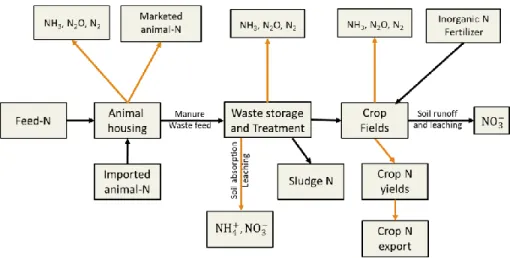
manure is considered as caused by the activities of many bacterial species which involves a complex biological process. The possible ammonia volatilization in livestock operation is illustrated in Figure 3.
Figure 1.3. Possible ammonia odor volatilization during nitrogen flow in animal feeding operation (Arogo et al., 2003)
The volatile solids to total solids ratio (VS/TS) and crude protein (CP) value of pig manure indicated the pig manure had a high potential for gas and odor emissions. The NH3, H2S, CO2, and VOC concentrations were measured
in the ranges of 1.0-13.3 ppm, 0.1-5.7 ppm, 1600-3000 ppm, and 0.0-1.83 ppm, respectively (Kafle and Chen, 2014). Reduced sulfur compounds, ammonia, volatile fatty acids, phenols, indoles, and amines have been generally identified as the dominant odorants on the pig farm (Cho et al., 2013; Parker et al., 2013). However, ammonia and hydrogen sulfide are often identified as the predominant components of all odorous compounds regarding their enormity of emission concentrations(Yang, 2013;Jo et al., 2015).
The major source of ammonia in the livestock and poultry production is the biological conversion of urea and uric acid to NH4+ or NH3(Arogo et al.,
2001;Yang, 2013).The volatilization of ammonia gas occurs when ammonium N contained in livestock manure is converted by the following reaction (Arogo et al., 2001; Lee, 2017). In the presence of water and urease, CO(NH2)2 (urea)
is converted to ammonium N via hydrolysis.
Reaction 1: CO(NH2)2+ H++ 2H2O → 2NH4++ HCO3−
Reaction 2: NH4+↔ NH3+ H+
The volatile organic acids with carbon numbers from 2 to 9 showed the highest potential for odor manure. VFAs with long carbon chain (C4-C9, such as butyric, valeric, caproic, and caprylic acids) and branching (such as iso-butyric, iso-valeric, iso-caproic, and iso-caprylic acids) have more offensive odor than those with short carbon chains (such as formic, acetic, and propionic acids) (Rappert and Müller, 2005). VFAs are normally produced as metabolic intermediates or end products from a range of different bacteria. The major contributors to the odorous volatile fatty acids are mostly Eubacterium and
Clostridium (Zhu, 2000).
Sugars are converted into pyruvate via glycolysis pathway in carbohydrate catabolism. Under anaerobic conditions, pyruvate will then go through different fermentation processes and serve as the substrate in the subsequent reactions in which various kinds of VFAs are generated. The sugar metabolism under anaerobic conditions is represented by the following equation (Rappert and Müller, 2005) :
Sugar fermentation usually yields short and straight chain fatty acids (acetic, propionic, lactic, succinic, formic, and butyric acids). However, in the presence of oxygen, pyruvate is oxidized to acetyl CoA and then entered the TCA cycle and the electron transport chain to produce energy. Because no fermentation process occurs under aerobic conditions, no organic acids, especially VFAs, are produced. This fact partially explains why aeration can effectively reduce malodor production (Zhu et al., 1999). Protein and amino acids catabolism are the major sources of microbial VFAs production. The degradation of proteins not only produce straight chain carboxylic acids but also branched chain fatty acids, sulfur compounds, amines, ammonia, phenols, and indoles (Mackie et al., 1998; Alkoaik, 2009). The fate of deaminated amino acids can be diverse. In general, they will be converted to pyruvate, acetyl- CoA, or TCA cycle intermediates and are eventually oxidized in the TCA cycle to release energy (Mackie et al., 1998). The first step in amino acid usage is deamination, the removal of the amino group from an amino acid. The general mechanism for oxidative deamination is as follows (Mackie et al., 1998; Rappert and Müller, 2005):
NH2
R-CH-COOH + 2H2O R-COOH + NH3 + 2H2 + CO2
Phenolic compounds such as phenol, p-cresol, 4-ethylphenol, and phenylpropionate are produced from microbial degradation of tyrosine (Rappert and Müller, 2005). The tryptophan metabolism resulted in the production of indole and indole acetate (Ebenau-Jehle et al., 2012). These two
compounds are subsequently converted into 3-methylindole (skatole) (Sasaki-Imamura et al., 2010). Significant further metabolism of these aromatic compounds only occurs under aerobic conditions or in the presence of an inorganic electron acceptor (Smith and Macfarlane, 1997).
Ammonia can be produced from urea and nitrates during deamination of amino acids in manure by anaerobic bacteria. Urea is hydrolyzed to ammonia by enzyme urease from ureolytic bacteria as follows:
NH2
C=O + 2H2O 2NH3+ + 3HCO3
-NH2
More than 50% of the nitrogen from animals could be excreted as urea by cattle, sheep, swine, and poultry. There were relatively large losses of volatilized ammonia converted from urea in urine (Van Horn et al., 1996). The urinary urea is the major source of ammonia in animal manure and wastes. Volatile amines are produced via decarboxylation of amino acids in the gastrointestinal tract and mainly during storage of fresh manure. These processes are induced at pH 5 to 6. The general mechanism for decarboxylation of amino acids is as follows(Chowdhury et al., 2014).
NH2
R – CH – COOH R – CH2 – NH2 + CO2
The NH3–N flux from livestock bio-solids (e.g. cattle feedlot, chicken,
trimethylamine (TMA) represented 0.1–1.9% of the total N flux (Schade and Crutzen, 1995; Rosenfeld et al., 2001; Barth et al., 2010). Bacterial genera involved in the activity to produce NH3 and amine from biosolids, including
Bacteroides, Bifidobacterium, Peptostreptococcus, Selenomonas,
Streptococcus, and the Enterobacteria (Zhu, 2000; Rappert and Müller, 2005).
The average NH3 emissions for livestock categories are presented in Table 1.
Table 1.1. Average NH3 emissions for livestock categories (kg
NH3/animal·year) (percentages in brackets are portions of the total) (Schade
and Crutzen, 1995) Livestock type (source
of manure)
NH3 emission from animal waste
Total Livestock house Spread manure Grazing animals Cattle 7.40 (32%) 12.24 (53%) 3.40 (15%) 23.04 Pigs 2.52 (47%) 2.84 (53%) 0.00 (0%) 5.36 Poultry 0.10 (38%) 0.15 (62%) 0.00 (0%) 0.25 Horses 3.90 (32%) 3.60 (30%) 4.70 (38%) 12.20 Sheep 0.38 (22%) 0.70 (41%) 0.62 (37%) 1.70
Sulfur-containing compounds are produced via sulfate reduction and metabolism of sulfur-containing amino acids (cysteine and methionine) by anaerobic bacteria (Arakawa et al., 2000). In the first process, bacteria produce reduced sulfur for cell biosynthesis of cysteine and methionine by transporting sulfate into the cell and activation to adenosine-50-phosphosulfate. In the dissimilatory process, sulfate is utilized as a terminal electron acceptor, and large quantities of sulfide are produced as follows (Higgins et al., 2003):
Sulfate can be supplied by dietary means or depolymerization and desulfation of endogenously produced sulfated glycoprotein such as mucins. Bacterial genera involved in sulfate reduction are Desulfovibrio desulfuricans, Veillonella, Megasphaera, and the Enterobacteria (Arakawa et al., 2000; Zhu, 2000). Deamination reactions of S-containing amino acids such as cysteine and methionine also give rise to sulfides and mercaptans, respectively (Rappert and Müller, 2005).
Dimethyl disulfide (DMDS) is produced by many bacteria and fungi found in wastewater (Sunesson et al., 1995; Schäfer et al., 2010). DMDS is an important odorant because it has the lowest odor threshold value (OTV, 0.1 μg/m3) of all odorous compound emissions from biosolids (Rosenfeld et al.,
2001) while dimethyl sulfide (DMS) have odor threshold values (OTV) of 2.5 μg/m3 (Ruth, 1986). DMS and DMDS are formed when the amino acids
cysteine and methionine decomposed. Methyl mercaptan and ethyl mercaptan are highly reactive and are easily converted to form disulfides (Hwang et al., 1994; Wang, 2014).
In a typical containment livestock building, ammonia concentration ranges from 0.1 ppm to 30 ppm in a typical livestock building depending on the type of building system and the ventilation rate (Arogo et al., 2003; Kim et al., 2008; Harper et al., 2010). In some extreme cases, ammonia can exceed 200 ppm (Demmers et al., 2003; Manuzon et al., 2007). The ammonia concentration in livestock buildings is usually higher in the cold weather than in the warm weather during to lower ventilation rate (Wheeler et al., 2006; Yang, 2013). Odor from swine operations has become a limiting factor for state and local
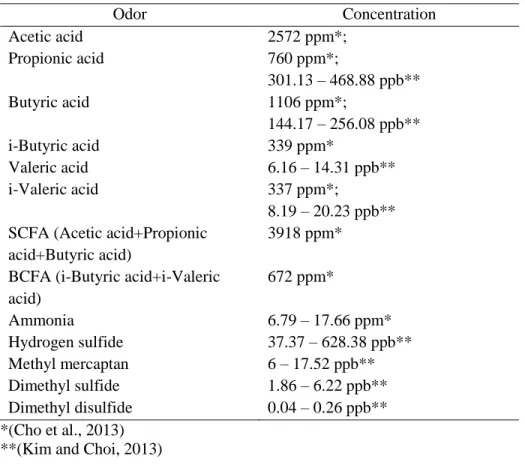
governments to permit expanding and new livestock facilities (Radon et al., 2004; Pan et al., 2007; Yang, 2013). Table 1.2 presents the volatile organic odor and ammonia odor emitted from the piggeries.
Table 1.2. Volatile organic odor and ammonia odor emitted from piggeries
Odor Concentration Acetic acid 2572 ppm*; Propionic acid 760 ppm*; 301.13 – 468.88 ppb** Butyric acid 1106 ppm*; 144.17 – 256.08 ppb** i-Butyric acid 339 ppm* Valeric acid 6.16 – 14.31 ppb** i-Valeric acid 337 ppm*; 8.19 – 20.23 ppb** SCFA (Acetic acid+Propionic
acid+Butyric acid)
3918 ppm* BCFA (i-Butyric acid+i-Valeric
acid) 672 ppm* Ammonia 6.79 – 17.66 ppm* Hydrogen sulfide 37.37 – 628.38 ppb** Methyl mercaptan 6 – 17.52 ppb** Dimethyl sulfide 1.86 – 6.22 ppb** Dimethyl disulfide 0.04 – 0.26 ppb** *(Cho et al., 2013) **(Kim and Choi, 2013)
1.1.2. Mitigation strategies to reduce odor pollution from swine livestock facilities (from on-farm and livestock waste treatment)
About 30% of odor from livestock building and about 20% from manure storage facilities contributed to the emission from livestock production (Mielcarek and Rzeźnik, 2015). Hence the strategies to mitigate the odor problem from livestock facilities can be focused on those two sectors. As livestock production have been intensified and becoming concentrated in fewer but larger farms over the last decades, interests about the higher risk of negative impacts and the unwillingness of surrounding communities to accept livestock odors have also increased, especially odor from swine facilities (Brisson, 2014; Kafle et al., 2015). Controlling airborne pollutants from livestock buildings is a technical challenge since it is usually composed of low concentration but mixed pollutants, including ammonia, hydrogen sulfide, odorous and potentially hazardous gases, greenhouse gases, particular matters, and microbes, with a large volume (Yang, 2013). These pollutants came from multiple sources and emitted as a mixture (Chen and Hoff, 2009).
Considerable efforts have already been made over the years to minimize malodorous and toxic gases emissions, such as by modifying proteins in pig diets (Kerr et al., 2006), introducing manure additives (Zhu, 2000; McCrory and Hobbs, 2001), and employing various swine manure handling and management strategies (Ndegwa et al., 2002). However, end-of-pipe odor reduction techniques are still necessary. Despite many technologies exist for odor control, for high-volume waste gases containing relatively low concentrations readily biodegradable contaminants such as those emitted from
livestock facilities, biofiltration, biotrickling filters, and bioscrubbers have been found to be the most cost-effective treatment (Sheridan et al., 2002; Raboni and Torretta, 2016; Liu et al., 2017). Water addition to controlling moisture content is commonly incorporated in the biofilters. Microbes are usually fixed to inorganic packing materials and suspended in the water phase of the biotrickling filters. In the bioscrubbers type, air contaminants are removed in a spray tower by water absorption. Biofiltration can be used to mitigate livestock air emissions due to its simplicity and low-cost investment (Nielsen et al., 2008; Chen and Hoff, 2012; Kafle et al., 2015).
By the airflow direction, biofilters can be categorized as vertical or horizontal, and by configuration, the biofilters can be categorized as open or closed type. There are several benefits to using biofilters, (1) low construction and operation costs, as the media are locally available and not expensive (2) capable of dealing with mixed pollutants, for example, both organic and inorganic pollutants can be absorbed or adsorbed and then degraded in biofilters; and (3) reliable for a long-term operation (Sheridan et al., 2003; Jones et al., 2005; Chen et al., 2012). Biofilter media can be operated for years without replacing. Although many technologies exist, biofiltration is still the most attractive method due to its low maintenance and operating costs (Rappert and Müller, 2005).
Livestock waste is a high-strength organic waste and also comprises non-biodegradable substances and highly-concentrated ammonia, and phosphate, and thereby the troublesome pollutant. Livestock waste is a potential reservoir of bacterial, viral, prion and parasitic pathogens, capable of infecting both
animals and humans. A quick, cost-effective and safe disposal method is thus essential to reduce such environmental effect.
As an effective technology for the utilization and minimization of solid organic wastes (Onwosi et al., 2017), composting can convert livestock manure, crop straw, and industrial by-products into a sanitary and marketable organic fertilizer. About 80% of livestock waste produced in South Korea are treated through the composting system (KOSIS, 2016). However, one drawback of composting is that 24–64% of the nitrogen in organic wastes is lost via ammonia volatilization, which reduces the agronomic value of compost as a fertilizer, and leads to air pollution and potential health problems (Gilhespy et al., 2009). For instance, as these impacts both the environment and human health, the European Union has limit their disposal through landfilling and incineration requires the reduction of gaseous emissions from composting.
Methane and nitrous oxide are greenhouse gases contributing to the earth warming trends. Ammonia emissions are responsible for acid rain and eutrophication (Colón et al., 2010). During incomplete nitrification, under the effect of ammonia mono-oxygenase, NH3 is oxidized sequentially to
hydroxylamine (NH2OH) and nitroxyl (NOH) by hydroxylamine
oxidoreductase, which can be converted to N2O by polymerization and
dehydration (Canfield et al., 2011). Thus, development of the alternative method to overcome the nuisance aroused from livestock waste composting is necessary.
The utilization of chemical and biological additives to mitigate ammonia volatilization and nitrogen loss during the composting process has been
extensively studied. These additives have included wood fly ash, lime, phosphor-gypsum, polyethylene glycol, jaggery (Gabhane et al., 2012), zeolite (Nissen et al., 2000), bentonite (Li et al., 2012), superphosphate (Huang et al., 2006), and microbial inoculants (Zhang et al., 2016). Among these additives, biochar was popular to be amended in the composting mixture. Biochar is a carbon-rich material produced by the thermal decomposition of biomass, was effective for reducing volatilization of ammonia during the composting of a mixture of sewage sludge and wood chips (Malińska et al., 2014). The faster decomposition process in the bio-oxidative phase led to lower greenhouse gas emissions being observed when biochar was added at the beginning of the composting process (Vandecasteele et al., 2016; Huang and Xue, 2014). Reduction in readily available P was observed when biochar was applied during compost storage (Vandecasteele et al., 2016). Biochar addition at 3% could reduce the composting time by 20% (Sánchez-García et al., 2015). As a composting additive, biochar favored microbial activity (Jindo et al., 2012; Yoshizawa et al., 2006). Jindo et al., (2012) reported a higher diversity of fungi in biochar-amended compost. Biochar materials strongly sorb polycyclic aromatic hydrocarbons (PAHs) and are thus characterized by very high sorption coefficients (KD) for PAHs (Mayer et al., 2016).
It was also reported that the N loss was mitigated by adding FGD gypsum to composting materials (Guo et al., 2016b; Tubail et al., 2008). Flue gas desulphurization gypsum (FGD gypsum) is a by-product of wet gas desulphurization in coal-fired power stations and generally has a high purity, low heavy metal content, and is rich in essential mineral nutrients for plants
such as S, Si and Ca (Guo et al., 2016a; Chen et al., 2015). The volatilization of ammonia and N loss were reduced by combining organic N-rich organic waste with FGD gypsum during the composting process (Tubail et al., 2008). The nitrogen compounds of humic substance in compost with FGD gypsum was higher than that in compost without FGD gypsum (Guo et al., 2016a). Gypsum has been known as an effective product used in the remediation of sodic soils, by greatly reducing the exchangeable Na, K, and Mg cation concentrations in the sodic soils (Presley, 2016; Ahn et al., 2007). Approximately 1–2 wt % of FGD gypsum was used to reclaim the sodic soil which resulted in no obvious heavy metal contamination (Chen et al., 2015). Guo et al. (Guo et al., 2016a) suggested adding 10% FGD gypsum to compost material to reduce nitrogen loss during composting. Information is still limited to the co-additive means of more than one additive supplemented together when applied with different aeration methods during the composting of livestock waste.
1.1.3. Flue Gas Desulfurization Gypsum
Coal-fired electric utilities use scrubbing technologies to reduce sulfur dioxide (SO2) emissions during or after coal combustion. The term Flue Gas
Desulphurization (FGD) system has traditionally referred to wet scrubbers that remove SO2 emissions from large electric utility boilers. The FGD systems
emerged in the industrial field of the coal-fired power plants and on some industrial processes in the early 1970s in United States (US) and Japan and expanded rapidly in the 1980s in Europe (Córdoba, 2014). In the FGD process, the flue gas interacts with an absorbent medium in either an absorber or a
scrubber vessel to produce high solid S slurry. The flue gasses in such system are usually passed through a suspension of alkaline absorbent in a contact chamber (Figure 3). The reaction of SO2 with alkaline absorbent yields a solid
product such as Ca-sulfite as per reaction [1] (Laperche and Bigham, 2002): SO2+CaCO3+H2O→CaSO3∙0.5H2O+CO2+0.5H2O [1]
The Ca-sulfite so produced may be partially or fully oxidized to some form of Ca-sulfate as per Reaction [2]:
CaSO3∙ 0.5H2O + 0.5O2+ 1.5H2O → CaSO4∙ 2H2O [2]
Figure 1.4. Flue gas desulphurization process (Srivastava and Jozewicz, 2011)
Wet flue gas desulfurization gas (FGD) processes often generate large amounts of calcium sulfite (CaSO3·0.5H2O) that must be stockpiled and
(CaSO3·0.5H2O), a common by-product of coal combustion and flue gas
desulphurization (FGD), spontaneously converts to gypsum (CaSO4·2H2O)
with exposure to air and water (Lee et al., 2008). FGD-CaSO3 is sometimes an
intermediate product in forced oxidation units that generate agricultural-quality or wallboard-quality gypsum (CaSO4·2H2O) as a value-added material. More
commonly, it is treated as an end waste product and is stockpiled in lagoons or mixed with fly ash for storage in landfills or service as mine by-product (Laperche and Bigham, 2002; Lee et al., 2007)
Flue gas desulphurization gypsum generally has high purity, low heavy metal content, and is rich in essential of beneficial mineral nutrients for plants such as S, Si, and Ca (Guo et al., 2016a). FGD gypsum is a unique synthetic product derived from flue gas desulfurization (FGD) systems at electric power plants. The sulfur dioxide emission control systems used by coal-fired power plants remove sulfur from combustion gases using "scrubbers." One particular type of scrubber that uses lime or limestone reagent (i.e., a substance used in a chemical reaction to produce another substance) and a forced oxidation (i.e., a chemical combination with oxygen) system produces "FGD gypsum," which is chemically nearly identical to mined natural gypsum and provides a wide range of environmentally friendly applications (Lee et al., 2008).
The term "synthetic gypsum" has been used widely to encompass materials produced by a variety of industrial processes. In addition to FGD gypsum, synthetic gypsum includes materials such as phosphogypsum, (a byproduct of processing phosphate ore to make phosphoric acid), Titanogypsum (a byproduct from the production of titanium dioxide),
fluorogypsum (a byproduct from the production of hydrofluoric acid from fluorspar) and citrogyspum (a byproduct of citric acid production) (Laperche and Bigham, 2002).
There are many application uses of FGD gypsum, including in agriculture, gypsum panel products, highway construction, mining applications, cement production, water treatment, and glass making. Gypsum has been shown to reduce runoff on soils prone to crust formation. Increased infiltration from gypsum applications could help reduce runoff P and other nutrient losses from the application of broiler litter (BL), a nutrient-rich fertilizer (Endale et al., 2014; Torbert and Watts, 2014). The addition of FGD gypsum increases the strength of cement and concrete (Jiang et al., 2011). FGD gypsum has the potential to be used as a Ca or S fertilizer, as an acid soil ameliorant, and for reclaiming or mitigating sodium-affected soils (Sakai et al., 2004; DeSutter and Cihacek, 2009).
1.1.4. Biochar
Biochar is the carbon-rich product obtain when biomass, such as wood, manure or leaves, is heated in a closed container with little or no available air. Biochar is produced by the so-called thermal decomposition of organic material under a limited supply of oxygen (O2), and relatively low temperatures (<700°C)
(Lehmann and Joseph, 2009)
In contrast to the organic C-rich biochar, burning biomass in a fire creates ash, which mainly contains minerals such as calcium (Ca) or magnesium (Mg) and inorganic carbonates. Also, in most fires, a small portion of the vegetation
is only partially burned in areas of limited O2 supply, with a portion remaining
as char (Kuhlbusch and Crutzen, 1995) in (Lehmann and Joseph, 2009). ‘Char’ is a term that is often used interchangeably with charcoal, but is sometimes applied to refer to a material that is charred to a lesser extent than charcoal, typically as a product of fire (Schmidt and Noack, 2000) in (Lehmann and Joseph, 2009). ‘Activated carbon’ is a term used for biochar-type substances, as well as for coal, that has been ‘activated’ in various ways using, for example, steam or chemicals, often at high temperature (>700°C). This process is intended to increase the surface area for use in industrial processes such as filtration (Boehm, 1994) in (Lehmann and Joseph, 2009). Depending on biomass type and process parameters of thermal conversion of biomass, biochar can consist of 50-90% of organic carbon, 1-15% of moisture content, 0-40% of volatile substances and 0.5-5% of mineral ash. C/N ratio can range from 7 to 500 or more. Biochar has neutral or alkali pH. The contents of P and K in various biochars are different and the content of P and K in biochars in 2.7-480 g/kg and 1.0-58 g/kg, respectively (Verheijen et al., 2009).
Four complementary and often synergistic objectives may motivate biochar applications for environmental management: soil improvement (for improved productivity as well as reduced pollution); waste management; climate change mitigation; and energy production, which individually or in combination must have either a social or a financial benefit or both (Lehmann and Joseph, 2009). Anderson et al., (2011) examined biochar induced soil microbial community changes from the soil where biochar had been incorporated during pasture renewal, and found that compared to control soils
the abundance of the bacterial families Bradyrhizobiaceae and
Hyphomicrobiaceae increased. Anderson et al. (2011) concluded that adding
biochar to the soil potentially increased microbial N cycling, especially the abundance of those organisms that may decrease N2O fluxes and NH4+
concentrations. Noguera et al., (2010) hypothesized that earthworms and biochar would have a synergistic effect on nutrient availability and plant growth. Biochar can improve nutrient availability (Steiner et al., 2017), cation exchange capacity (Liang et al., 2006), bulk density, and water-holding capacity (Tyron, 1948). The metabolizable source of C may stimulate microbial activity and lead to utilization of soil mineral N (immobilization) or release of additional N (mineralization) (Schomberg et al., 2012). The mineralizable N fraction would increase with the addition of biochar with higher volatile matter (%), aliphatic C contents, or high O/C ratios because this biochar might increase C availability to the microbial (Schomberg et al., 2012).
Incorporating biochar into the soil can significantly decrease NH3
volatilization from ruminant urine and that the NH3-N adsorbed onto the
biochar is bioavailable (Taghizadeh-toosi et al., 2012). Biochar manufactured from wood at low temperature can adsorb NH3, reducing volatilization losses
from ruminant urine affected the soil. The urine-N adsorbed by the biochar under a urine patch is plant available. Biochar has the potential for use in intensively grazed pastures to decrease NH3 volatilization and act as a transient
store of plant available N (Taghizadeh-toosi et al., 2012). The addition of biochar reduced volatilization of ammonia significantly during the first week of the process. Also, the addition of biochar increased temperature and organic
matter decomposition (Malińska et al., 2014). Biochar accelerated the humification progress of sludge organics. Biochar increased oxygen uptake rates of sewage sludge during aerobic degradation. SEM showed the porosity of the sludge surface increased with 12-18% biochar amended (Zhang et al., 2014). The use of biochar as a bulking agent can result in decreasing bulk density and increasing aeration conditions (Steiner et al., 2010), improving microbial growth and microbial respiration rates (Jindo et al., 2012a), as well as enhancing the absorption of gaseous NH3 and water-soluble NH4+ (Hua et
al., 2009; Steiner et al., 2011).
1.2. Research objectives
While much has been done to monitor ammonia and VOA odor in the swine livestock facilities (Harper et al., 2010; Kalantarifard et al., 2013; Cho et al., 2013; Kim and Choi, 2013), relatively less is known about the co-additive application rule to mitigate the ammonia and VOC emission in the swine livestock facilities. Therefore the objectives of this study were:
1) To investigate the effect of additive (Flue Gas Desulphurization Gypsum (FGDG) combined with Biochar) to the performance of livestock waste composting process and its product;
2) To evaluate the effect of two different ventilation type (wall ventilation and pit ventilation) attached to different biofilter system on odor emissions, aerial environments and microclimate conditions of the pig house.
3) To evaluate the performance of dual biofiltering system supplemented by the co-additive FGD-gypsum and biochar in the integrated pilot pig house-biofilter system.
1.3. References
Ahn, H.K., Richard, T.L., Choi, H.L., 2007. Mass and thermal balance during composting of a poultry manure—wood shavings mixture at different
aeration rates. Process Biochem. 42, 215–223.
doi:10.1016/j.procbio.2006.08.005
Alkoaik, F.N., 2009. Ozone Treatment of Animal Manure for Odor Control. Am. J. Environ. Sci. 5, 765–771.
Arakawa, T., Ishikawa, Y., Ushida, K., 2000. Volatile Sulfur Production by Pig Cecal Bacteria in Batch Culture and Screening Inhibitors of Sulfate Reducing Bacteria, Journal of nutritional science and vitaminology. doi:10.3177/jnsv.46.193
Arogo, J., Westerman, P.., Heber, A.J., Roberge, W.P., Classen, J.J., 2001. Ammonia in Animal Production – A Review, in: ASAE Annual International Meeting. doi:10.13031/2013.4136
Arogo, J., Westerman, P.W., Heber, A.J., 2003. A review of ammonia emissions from confined swine feeding operation. Trans. ASAE 46, 805– 817.
Barth, E.F., Forbes, R., Clark, P., Foote, E., McConnel, L.L., 2010. Evaluation of odors associated with land application of biosolids. J. Residuals Sci. Technol. 7, 73–80.
Brisson, Y., 2014. The changing face of the Canada hog industry. Stat. Canada 96-325-X, 11. doi:96-325-X — No. 005
Canfield, D.E., Glazer, A.N., Falkowski, P.G., 2011. The evolution and future of earth’s nitrogen cycle. Science (80-. ). 330, 190–196. doi:10.1126/science.1186120
Casey, K.D., Gay, S.W., 2006. Air Quality and Emissions from Livestock and Poultry Production / Waste Management Systems.
mitigate odors from a deep-pit swine building. Appl. Eng. Agric. 28, 893– 901. doi:10.3155/1047-3289.59.5.520
Chen, L., Hoff, S.J., 2009. Mitigating odors from agricultural facilities: A review of literature concerning biofilters. Appl. Eng. Agric. 25, 751–766. doi:10.13031/2013.28854
Chen, L., Hoff, S.J., Cai, L., Koziel, J., Zelle, B., 2012. Evaluation of wood chip-based biofilters to reduce odor, hydrogen sulfide, and ammonia from swine barn ventilation air. J. Air Waste Manage. Assoc. 28, 893–901. doi:10.3155/1047-3289.59.5.520
Chen, Q., Wang, S., Li, Y., Zhang, N., Zhao, B., Zhuo, Y., Chen, C., 2015. Influence of Flue Gas Desulfurization Gypsum Amendments on Heavy Metal Distribution in Reclaimed Sodic Soils. Environ. Eng. Sci. 32, 470– 478. doi:10.1089/ees.2014.0129
Cho, S.B., Yang, S.H., Lee, J.Y., Kim, J.K., Jeon, J.H., Han, M.H., Han, D.W., Jeong, G.H., Kwag, J.H., Choi, D.Y., Hwang, O.H., 2013. The comparison of concentration of volatile fatty acids, ammonia, and volatile organic compounds in pig slurry. J. Anim. Environ. Sci. 19, 25–32. Chowdhury, A., Rong, L., Feilberg, A., Adamsen, A.P.S., 2014. Review of
ammonia emissions from a pig house slurry pit and outside storage: Effects of emitting surface and slurry depth, The Danish Environmental Protection Agency.
Colón, J., Martínez-blanco, J., Gabarrell, X., Artola, A., Sánchez, A., Rieradevall, J., Font, X., 2010. Environmental assessment of home composting. Resour. , Conserv. Recycl. 54, 893–904. doi:10.1016/j.resconrec.2010.01.008
Córdoba, P., 2014. Status of Flue Gas Desulphurisation (FGD) systems from coal-fired power plants: Overview of the physic-chemical control processes of wet limestone FGDs. Fuel 144, 274–286. doi:http://dx.doi.org/10.1016/j.fuel.2014.12.065
Demmers, T.G.M., Wathes, C.M., Richards, P.A., Teer, N., Taylor, L.L., Bland, V., Goodman, J., Armstrong, D., Chennells, D., Done, S.H., Hartung, J., 2003. A facility for controlled exposure of pigs to airborne dusts and gases. Biosyst. Eng. 84, 217–230. doi:10.1016/S1537-5110(02)00243-X
DeSutter, T.M., Cihacek, L.J., 2009. Potential Agricultural Uses of Flue Gas Desulfurization Gypsum in the Northern Great Plains. Agron. J. 101, 817– 825. doi:10.2134/agronj2008.0212Rx
Dick, W.A., YueLi, H., Stehouwer, R.C., Bigham, J.M., Wolfe, W.E., Adriano, D., Beeghly, J.H., Haefner, R.J., 2000. Beneficial uses of flue gas desulfurization by-products: examples and case studies of land application., in: Land Application of Agricultural, Industrial, and Municipal by-Products. Soil Science Society of America Inc., Madison, pp. 505–536.
Ebenau-Jehle, C., Thomas, M., Scharf, G., Kockelkorn, D., Knapp, B., Schühle, K., Heider, J., Fuchs, G., 2012. Anaerobic metabolism of indoleacetate. J. Bacteriol. 194, 2894–2903. doi:10.1128/JB.00250-12
Endale, D.M., Schomberg, H.H., Fisher, D.S., Franklin, D.H., Jenkins, M.B., 2014. Flue Gas Desulfurization Gypsum: Implication for Runoff and Nutrient Losses Associated with Broiler Litter Use on Pastures on Ultisols. J. Environ. Qual. 43, 281–289. doi:10.2134/jeq2012.0259
Franke-whittle, I.H., Insam, H., 2013. Treatment alternatives of slaughterhouse wastes , and their effect on the inactivation of different pathogens : A
review. Crit. Rev. Microbiol. 39, 139–151.
doi:10.3109/1040841X.2012.694410
Gabhane, J., Prince, S.P.M., Bidyadhar, R., Bhilawe, P., Anand, D., Vaidya, A.N., Wate, S.R., 2012. Additives aided composting of green waste : Effects on organic matter degradation , compost maturity , and quality of the finished compost. Bioresour. Technol. 114, 382–388. doi:10.1016/j.biortech.2012.02.040
Gilhespy, S.L., Webb, J., Chadwick, D.R., Misselbrook, T.H., Kay, R., Camp, V., Retter, A.L., Bason, A., 2009. Will additional straw bedding in buildings housing cattle and pigs reduce ammonia emissions? Biosyst. Eng. 102, 180–189. doi:10.1016/j.biosystemseng.2008.10.005
Guo, X., Huang, J., Lu, Y., Shan, G., Li, Q., 2016a. The influence of flue gas desulphurization gypsum additive on characteristics and evolution of humic substance during co-composting of dairy manure and sugarcane
pressmud. Bioresour. Technol. 219, 169–174.
doi:10.1016/j.biortech.2016.07.125
Guo, X., Lu, Y., Li, Q., 2016b. Effect of adding flue gas desulphurization gypsum on the transformation and fate of nitrogen during composting. Compost Sci. Util. 24, 230–237. doi:10.1080/1065657X.2015.1135767 Harper, L.A., Flesch, T.K., Wilson, J.D., 2010. Ammonia emissions from
broiler production in the San Joaquin Valley. Poult. Sci. 89, 1802–1814. doi:10.3382/ps.2010-00718
Higgins, M.J., Yarosz, D.P., Chen, Y.-C., Murthy, S.N., Mass, N.A., Cooney, J.R., 2003. Mechanisms of Volatile Sulfur Compound and Odor Production in Digested Biosolids. Proc. Water Environ. Fed. 2003, 993. doi:10.2175/193864703784292926
Huang, G.F., Wu, Q.T., Wong, J.W.C., Nagar, B.B., 2006. Transformation of organic matter during co-composting of pig manure with sawdust. Bioresour. Technol. 97, 1834–42. doi:10.1016/j.biortech.2005.08.024 Huang, X.-D., Xue, D., 2014. Effects of bamboo biochar addition on
temperature rising, dehydration and nitrogen loss during pig manure composting. Chinese J. Appl. Ecol. 25, 1057–1062.
Hwang, Y., Matsuo, T., Hanaki, K., Suzuki, N., 1994. Removal of odorous compounds in wastewater by using activated carbon, ozonation and
aerated biofilter. Water Res. 28, 2309–2319.
Jeong, J.W., Park, K.H., Heu, M.Y., Choi, D.Y., Lee, M.J., Gang, H.S., 2009. Study on odor from gestating sow barns and boundary area. J. Livest. Hous. Environ. 15, 107–114.
Jiang, T., Schuchardt, F., Li, G., Guo, R., Zhao, Y., 2011. Effect of C/N ratio, aeration rate and moisture content on ammonia and greenhouse gas emission during the composting. J. Environ. Sci. 23, 1754–1760. doi:10.1016/S1001-0742(10)60591-8
Jindo, K., Suto, K., Matsumoto, K., García, C., Sonoki, T., Sanchez-Monedero, M.A., 2012. Chemical and biochemical characterisation of biochar-blended composts prepared from poultry manure. Bioresour. Technol. 110, 396–404. doi:10.1016/j.biortech.2012.01.120
Jo, S.-H., Kim, K.-H., Jeon, B.-H., Lee, M.-H., Kim, Y.-H., Kim, B.-W., Cho, S.-B., Hwang, O.-H., Bhattacharya, S.S., 2015. Odor characterization from barns and slurry treatment facilities at a commercial swine facility in South Korea. Atmos. Environ. 119, 339–347. doi:10.1016/j.atmosenv.2015.08.064
Jones, K., Martinez, A., Rizwan, M., Boswell, J., 2005. Sulfur toxicity and media capacity for H2S removal in biofilters packed with a natural or a commercial granular medium. J. Air Waste Manag. Assoc. 55, 415–420. doi:10.1080/10473289.2005.10464636
Kafle, G.K., Chen, L., 2014. Emissions of Odor, Ammonia, Hydrogen Sulfide, and Volatile Organic Compounds from Shallow-Pit Pig Nursery Rooms. J. Biosyst. Eng. 39, 76–86. doi:10.5307/JBE.2014.39.2.076
Kafle, G.K., Chen, L., Neibling, H., Brian He, B., 2015. Field evaluation of wood bark-based down-flow biofilters for mitigation of odor, ammonia, and hydrogen sulfide emissions from confined swine nursery barns. J. Environ. Manage. 147, 164–174. doi:10.1016/j.jenvman.2014.09.004 Kalantarifard, A., Byeon, E., Ki, Y., Yang, G.S., 2013. Monitoring of emission
pig house 1, 78–83. doi:10.11648/j.ijema.20130103.11
Kerr, B.J., Ziemer, C.J., Trabue, S.L., Crouse, J.D., Parkin, T.B., 2006. Manure composition of swine as affected by dietary protein and cellulose concentrations. J. Anim. Sci. 84, 1584–1592. doi:10.2527/2006.8461584x Kim, K.Y., Choi, J., 2013. Distribution characteristics of odorous compounds concentrations according to type of pig buildings. J. Korean Soc. Odor Res. Eng. 12, 27–37.
Kim, K.Y., Ko, H.J., Kim, H.T., Kim, C.N., Byeon, S.H., 2008. Association between pig activity and environmental factors in pig confinement buildings. Aust. J. Exp. Agric. 48, 680–686. doi:10.1071/EA06110 Kim, S.-R., Jeong, S.-J., Hong, I.-G., Kim, D., Lee, M.-G., 2012. A Case Study
on the Effective Liquid Manure Treatment System in Pig Farms. J. Livest. Hous. Environ. 18, 99–110.
Laperche, V., Bigham, J.M., 2002. Quantitative, Chemical, and Mineralogical Characterization of Flue Gas Desulfurization By-Products. J. Environ. Qual. 31, 979–988. doi:10.2134/jeq2002.9790
Lau, A., Bittman, S., Lemus, G., 2003. Odor Measurements for Manure Spreading Using a Subsurface Deposition Applicator, Journal of environmental science and health. Part. B, Pesticides, food contaminants, and agricultural wastes. doi:10.1081/PFC-120018452
Lee, J., 2017. Flow of Manure Nutrient , Floor Space Allowance and Nitrogen Fertilization Practice (Rice Farming) in Integrated Crop- Animal Farming System. Seoul National University.
Lee, Y.B., Bigham, J.M., Dick, W.A., Jones, F.S., Ramsier, C., 2007. Influence of Soil pH and Application Rate on the Oxidation of Calcium Sulfite Derived from Flue Gas Desulfurization. J. Environ. Qual. 36, 298–304. doi:10.2134/jeq2006.0050
Desulfurization-Calcium Sulfite and Gypsum on Soil Microbial Activity
and Wheat Growth. Soil Sci. 173, 534–543.
doi:10.1097/SS.0b013e318182b049
Lehmann, J., Joseph, S., 2009. Biochar for Environmental Management: An Introduction, in: Biochar for Environmental Management Science and Technology. Earthscan, New York, NY, pp. 1–9.
Li, R., Wang, J.J., Zhang, Z., Shen, F., Zhang, G., Qin, R., Li, X., Xiao, R., 2012. Nutrient transformations during composting of pig manure with
bentonite. Bioresour. Technol. 121, 362–368.
doi:10.1016/j.biortech.2012.06.065
Liu, F., Fiencke, C., Guo, J., Rieth, R., Cuhls, C., Dong, R., Pfeiffer, E.M., 2017. Bioscrubber treatment of exhaust air from intensive pig production: Case study in northern Germany at mild climate condition. Eng. Life Sci. 17, 458–466. doi:10.1002/elsc.201600169
Mackie, R.I., Stroot, P.G., Varel, V.H., 1998. Biochemical Identification and Biological Origin of Key Odor Components in Livestock Waste. J. Anim. Sci. 76, 1331–1342. doi:/1998.7651331x
Malińska, K., Zabochnicka-Świątek, M., Dach, J., 2014. Effects of biochar amendment on ammonia emission during composting of sewage sludge. Ecol. Eng. 71, 474–478. doi:10.1016/j.ecoleng.2014.07.012
Manuzon, R., Y. Zhao, L., M. Keener, H., J. Darr, M., 2007. A Prototype Acid Spray Scrubber for Absorbing Ammonia Emissions from Exhaust Fans of
Animal Buildings, Transactions of the ASABE.
doi:10.13031/2013.23628
Mayer, P., Hilber, I., Gouliarmou, V., Hale, S.E., Cornelissen, G., Bucheli, T.D., 2016. How to Determine the Environmental Exposure of PAHs Originating from Biochar. Environ. Sci. Technol. 50, 1941–1948. doi:10.1021/acs.est.5b05603
emissions from livestock wastes. J. Environ. Qual. 3, 345–355. doi:10.2134/jeq2001.302345x
Mielcarek, P., Rzeźnik, W., 2015. Odor emission factors from livestock production. Polish J. Environ. Stud. 24, 27–35. doi:10.15244/pjoes/29944 Ministry of Environment (MOE) - Korea, 2018. Statistics on livestock manure
disposal.
Ndegwa, P.M., Zhu, J., Luo, A., 2002. Stratification of solids, nitrogen and phosphorus in swine manure in deep pits under slatted floors. Bioresour. Technol. 83, 203–211. doi:10.1016/S0960-8524(02)00002-0
Nielsen, L.P., Juhler, S., Revsbech, N.P., Guldberg, L.B., Soerensen, K., Ottosen, L.D.M., 2008. Function of biofilters removing ammonia from pig house ventilation air. Livest. Environ. VIII - Proc. 8th Int. Symp. 63– 66.
Nissen, L.R., Lepp, N.W., Edwards, R., 2000. Synthetic zeolites as amendments for sewage sludge-based compost 41, 265–269.
Onwosi, C.O., Igbokwe, V.C., Odimba, J.N., Eke, I.E., Nwankwoala, M.O., Iroh, I.N., Ezeogu, L.I., 2017. Composting technology in waste stabilization: On the methods, challenges and future prospects. J. Environ. Manage. 190, 140–157. doi:10.1016/j.jenvman.2016.12.051
Pan, L., Yang, S.X., DeBruyn, J., 2007. Factor Analysis of Downwind Odours from Livestock Farms. Biosyst. Eng. 96, 387–397. doi:10.1016/j.biosystemseng.2006.10.017
Parker, D.B., Gilley, J., Woodbury, B., Kim, K.-H., Galvin, G., Bartelt-Hunt, S.L., Li, X., Snow, D.D., 2013. Odorous VOC emission following land application of swine manure slurry. Atmos. Environ. 66, 91–100. doi:https://doi.org/10.1016/j.atmosenv.2012.01.001
Presley, D., 2016. Effects of Flue Gas Desulfurization Gypsum on Crop Yield and Soil Properties in Kansas. Kansas F. Res. 2.