N A N O C O M M E N T A R Y
Open Access
Ferromagnetism and Ru-Ru distance in SrRuO
3
thin film grown on SrTiO
3
(111) substrate
Bowha Lee
1, O-Ung Kwon
1, Ran Hee Shin
1,2, William Jo
2and Chang Uk Jung
1*Abstract
Epitaxial SrRuO3thin films were grown on both (100) and (111) SrTiO3substrates with atomically flat surfaces that are required to grow high-quality films of materials under debate. The following notable differences were observed in the (111)-oriented SrRuO3films: (1) slightly different growth mode, (2) approximately 10 K higher ferromagnetic transition temperature, and (3) better conducting behavior with higher relative resistivity ratio, than (100)c-oriented SrRuO3films. Together with the reported results on SrRuO3thin films grown on (110) SrTiO3substrate, the different physical properties were discussed newly in terms of the Ru-Ru nearest neighbor distance instead of the famous tolerance factor.
Keywords: SrRuO3; Ferromagnetic transition temperature; Ru-Ru nearest neighbor distance; Tolerance factor PACS: 75.70.Ak; 75.60.Ej; 81.15.Fg
Background
Due to its low resistivity and good chemical stability, SrRuO3(SRO) is frequently used as metallic electrodes
in epitaxial perovskite-heterostructure capacitors [1,2]. Film thickness, the amount of lattice mismatch, oxygen vacancy, and Ru vacancy are found to change its physical properties.
Fundamental thickness limit of itinerant ferromag-netism was observed [3]. In addition to thickness being smaller than the critical thickness (t < 10 unit cells), a significant amount of oxygen vacancy was also found to deteriorate its ferromagnetic properties for thicker films (t > > 10 unit cells). Aside from these two factors, the ferromagnetic properties of SRO, especially the ferro-magnetic transition temperature, Tc, have been known to
be rather robust. While transport properties such as re-sidual resistivity ratio (varying order of magnitude) are very sensitive to a tiny amount of Ru vacancy in SRO thin films grown on (100) SrTiO3(STO) substrates, the
ferromagnetic properties are rather immune to this tiny amount of Ru vacancy [1]. A peculiar orthorhombic-to-tetragonal structural transition with variation of the Ru-O-Ru bond angle was observed depending on the
thickness and temperature of the SRO film on STO (001) substrate but this structural transition temperature was not associated with the ferromagnetic transition temperature [4].
While many previous studies have focused on (100)c
-oriented SRO films, the in-plane magnetization of thin films on top of STO (001) substrates was smaller than out-of-plane magnetization and Tcwas smaller than that
of bulk SRO [5,6]. The observed small change of ferromag-netic properties in SRO films has been mostly explained simply in terms of lattice mismatch. A free-standing film made by lifting the film off its growth substrate recovered its bulk Tcand bulk saturated magnetic moment [5,6]. An
SRO film having a structure most similar to the bulk SRO was made using a buffer layer and STO (110) substrate, and its magnetic anisotropy was maximum [7-9]. The observed changes in SRO films on STO (110) was ex-plained based on the inherently lower lattice mismatch of the orthorhombic crystal along the cubic substrate’s [1-10] in-plane direction than along the cubic sub-strate’s [001] in-plane direction [9]. So, the lattice mis-match of orthorhombic crystal can always be smaller by choosing a cubic (110) substrate instead of a cubic (001) substrate. (In this report, we use pseudocubic notation for SRO films. (110)orthorhombicis equivalent to (100)cin
the pseudocubic notation).
* Correspondence:[email protected] 1
Department of Physics, Hankuk University of Foreign Studies, Yongin 449-791, South Korea
Full list of author information is available at the end of the article
© 2014 Lee et al.; licensee Springer. This is an Open Access article distributed under the terms of the Creative Commons Attribution License (http://creativecommons.org/licenses/by/2.0), which permits unrestricted use, distribution, and reproduction in any medium, provided the original work is properly cited.
Up to now, the tolerance factor, t = (rA+ rO)/√2(rB+ rO),
was widely regarded as the most dominant factor to determine the structural transition from cubic to lower symmetries and accompanying huge changes in magne-tic and electrical properties of many perovskite oxides [10-12]. Smaller t < 1.0 results in a more distorted struc-ture having a smaller Ru-O-Ru bond angle [4]. This factor is but a simple geometrical factor which cares the optimal radius of a sphere inside eight octahedra arranged at right angles and has been quite useful to explain major physical properties such as transport and magnetic properties in cubic, tetragonal, and orthorhombic colossal magneto-resistance. Recently, the structure modification effect on magnetic properties was reported in SrTi1-xFexO3-δ thin
films on STO (001), (110), and (111) substrates [13]. The authors tried to interpret the change of magnetostriction in terms of lattice parameter.
In this paper, we discussed the physical property changes in terms of the nearest neighbor distance of B-site ion instead of the tolerance factor. We found that STO (001) and (111) substrates are ideal to study the change of physical properties of SRO films with Ru-Ru nearest neighbor distance (Ru nn-distance) which changes in order to accommodate the Sr2+ ion. This is because the Ru nn-distance can be differently changed by using different surface directions of the substrates. In the rhombohedral structure of the SRO film on STO (111) substrate, the Ru nn-distance does not change much to accommodate the Sr2+ ion, which might be able to explain the better transport and magnetic prop-erties in this film.
Main text
The SRO thin films were grown on STO (001) and STO (111) substrates with a pulsed laser deposition method using a KrF excimer laser [7-9,14,15]. For simplicity, we will use ‘the SRO100film’ and ‘the SRO111film,’
respect-ively. Both substrates were initially prepared by etching and heat treatment to create step-and-terrace structures. Laser pulses of 140 to 170 mJ at 2 to 5 Hz were focused on a stoichiometric ceramic target. The substrate temp-erature and the oxygen partial pressure during deposition were 700°C to 760°C and approximately 100 mTorr, re-spectively. The thickness of the SRO film was 37 to 38 nm. We used an atomic force microscope (AFM) to check the surface morphology of the treated STO substrate and the SRO films. We performed structural analyses using a high-resolution X-ray diffractometer (HRXRD). The magnetic properties were measured with a supercon-ducting quantum interference device (MPMSXL, Quantum Design, San Diego, CA, USA).
As the STO (111) surface consists of two highly polar layers of SrO34−and Ti4+, thermodynamic mixed
termin-ation is preferred to minimize the surface dipole [16].
However, atomically well-defined SrTiO3 (111)
sub-strates with a strong polar interface were recently devel-oped using a rather difficult and selective etching of SrO34− and thermal annealing process [12]. Chang et al.
reported that simple annealing of as-polished STO (111) substrates yielded a step-and-terrace surface structure characterized by many bumps with step heights in multi-ples of 1/2 × d111, indicating mixed termination [16,17].
To obtain atomically flat SrTiO3 (111) substrates with
good step-and-terrace structures with Ti termination, they reported that harsh etching is required; both an ultrasonically agitated buffered hydrofluoric acid (BHF) solution and high-temperature ultrasonic agitation of an STO (111) substrate in deionized water were needed in-stead of mere soaking in etchants at room temperature. The harsh etching was followed by subsequent thermal annealing in a tube furnace at 1,050°C under an O2
atmosphere for 1 h.
Here, we report the simple preparation of atomically well-defined SrTiO3 (111) substrates and subsequent
growth of SRO thin films. The surface roughness, rock-ing curve width, and transport properties showed that the SRO film grown on the SrTiO3(111) substrates was
of high quality. We compared basically the growth mode, transport properties, surface morphology, and magnetic properties of these films with the SRO film grown on the SrTiO3 (001) substrate with different
structure deformation. Due to the additional danger ac-companying the use of the ultrasonic agitator with BHF, we etched the STO (111) substrate using two different soaking times at room temperature, followed by annealing the etched substrate in a tube furnace at approximately 1,000°C under an O2atmosphere for approximately 5 h.
(For the STO (001) substrate, the typical soaking time was 15 to 30 s.) We found that simply increasing the BHF soak time worked very well for the STO (111) substrate without resorting to a more complicated method [17,18]. (Connell et al. found that atomically flat STO (001) substrate can be prepared even without the use of dangerous BHF [19]).
Discussion
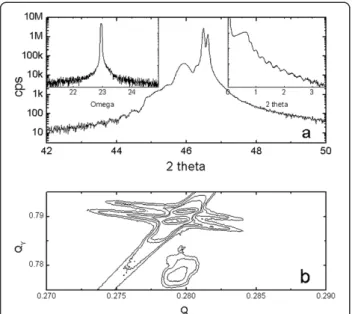
Figure 1 shows HRXRD results for the SRO100film. There
was a strong SRO film peak on the left side of two large substrate peaks near 2θ = 46.46°. (The two strongest and well-separated substrate peaks corresponded to Cu Kα1
and Kα2sources in the X-ray tube.) The calculated lattice
constant of the SRO, d200c= 1.975 Å = 3.950 Å/2,
indi-cated a high-quality filma[20,21]. Oxygen vacancies usu-ally induce lattice expansion resulting in a much larger 2 × d200cthan 3.950 Å. The high crystallinity was also
con-firmed by the value of the full width at half maximum (FWHM) rocking curve of the SRO (200)c peak. The
value was as small as 0.057°, which is consistent with the value of 0.06° reported previously [22]. The right
Leeet al. Nanoscale Research Letters 2014, 9:8 Page 2 of 9
inset of Figure 1 shows good oscillations at low angles due to the uniform thickness (t ~ 38 nm) of the SRO100
film. X-ray reciprocal space mapping around the STO (114) plane in Figure 1b showed well-developed peaks for SrRuO3in the lower region and two strong substrate
peaks in the upper region. The strong peaks for SRO were well centered and the obtained d400c was
consist-ent with the value of d200cin theθ to 2θ scan. The
pos-ition of the film peak along the horizontal Qx axis was
the same as that of the substrate peak, indicating that the SRO100 film was grown coherently on the STO
(001) substrate, with the same in-plane lattice constant. This indicated that the SRO100film was under
compres-sive strain.
Figure 2 shows HRXRD results for the SRO111 film.
There was a strong SRO film peak near 2θ = 85.03° to-gether with the strongest substrate peak near 2θ = 86.21°. (The peak near 2θ = 85.80° was not due to impurities but to spurious light from the X-ray source.) The calculated lattice constant of the SRO was d222= 1.140 Å = 3.949
Å/2√3, again indicating a high-quality film. The high crys-tallinity of the SRO111 film was also confirmed by the
value of the full width at half maximum of the SRO (222) peak. This value was as small as 0.052°, smaller than that of the SRO100film. The right inset of Figure 2 shows good
oscillations at low angles due to the uniform thickness of about 37 nm. X-ray reciprocal space mapping around the STO (312) plane shown in Figure 2b contains
well-developed peaks for the SRO111film in the lower region
and two strong substrate peaks in the upper region. The strong peaks for SRO were well centered and the obtained d111was consistent with the d222 obtained in theθ to 2θ
scan. The position of the film peak along the horizontal Qxaxis was the same as that of the substrate peak,
indicat-ing that the SRO111 film was grown coherently on the
STO (111) substrate, with the same in-plane lattice con-stant. This indicated that the SRO111 film was under
compressive strain. When we compared the HRXRD data of the two films, we found that the unit cell volume of the SRO111 film was nearly equal to that of the
SRO100 film (Vpseudocubic= 3.9052× 3.949 Å3) and with
comparable thicknesses.
We used AFM to observe the surface of the STO (111) substrate, which was used for the growth of the SRO thin film, as shown in Figure 3a. A step-and-terrace structure comparable to that reported previously by harsh etching could be clearly seen [17]. Figures 3b,c shows the surface morphologies of the SRO100film and
the SRO111 film, respectively. The SRO100film had the
well-known step-and-terrace structure consistent with its step-flow growth mode, but the SRO111film showed
a rather different surface morphology. With a back-ground of step-and-terrace, there appeared many small islands within a height of one unit cell. The existence of the islands indicated a different growth mode from the step-flow growth mode typically observed in
high-Figure 1 HRXRD results for the SrRuO3/SrTiO3(001) substrate.
(a) XRDθ to 2θ scan patterns. The left inset shows the rocking curve of the SrRuO3(200)cpeak. FWHM was as small as 0.057°. The right
inset shows good oscillations at low angles due to the uniform thickness of about 38 nm. (b) X-ray reciprocal space mapping around the STO (114) plane showed well-developed peaks for SrRuO3in the lower region and two strong substrate peaks in the
upper region.
Figure 2 HRXRD results for the SrRuO3/SrTiO3(111) substrate.
(a) XRDθ to 2θ scan patterns. The left inset shows the rocking curve of the SrRuO3(222) peak. FWHM was as small as 0.052°. The right
inset shows good oscillations at low angles due to the uniform thickness of about 38 nm. (b) X-ray reciprocal space mapping around the STO (312) plane showed well-developed peaks for SrRuO3in the lower region and two strong substrate peaks in the
quality SRO films grown on STO (001) substrates. While there was a model that attempted to rationalize the di-verse growth modes observed in pulsed laser deposition of SRO on SrTiO3 (001) substrates, the existence of a
highly polar surface of a Ti4+-terminated STO (111) sur-face may be another factor to avoid step flow mode [23,24]. The RMS roughness measured was 0.25 nm, which was much smaller than the value of 0.6 to 4.0 nm reported previouslyb[22].
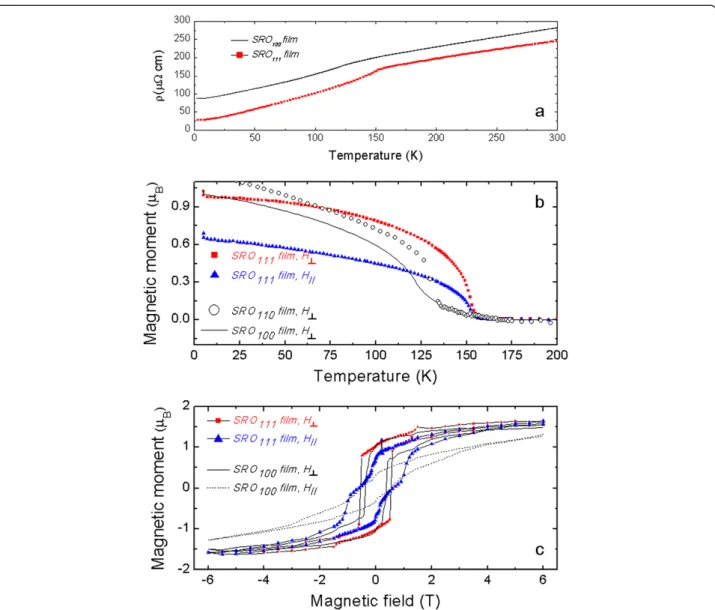
Figure 4a shows the temperature dependence of the resistivity of the two films. For the SRO100 film, the
room temperature resistivity wasρ(300 K) ~ 280 μΩ · cm and the resistivity at 4 K was approximately 87 μΩ · cm with a residual resistivity ratio (RRR) of 3.2. While the resistivity at low temperatures was higher than expected, the upturn of resistivity at low temperatures observed for other group's SRO films was not observed in our SRO100film [25]. The kink in the resistivity near 150 K
is known to be caused by the ferromagnetic transition temperature. All these features are consistent with those reported by other groups [5,6]. The resistivity of the SRO111film showed three different features in
compari-son to that of the SRO100film. First, the location of the
resistivity kink on the temperature axis was also shifted to a higher temperature, implying a high ferromagnetic transition temperature. Second, the overall resistivity value for the SRO111film was smaller than that for the
SRO100film, especially at low temperatures. Finally, the
RRR (approximately 9) is higher.
There are many reasons that affect the different RRR values in epitaxially grown SrRuO3thin films. Chemical
doping like (Ca,Sr)RuO3 or epitaxial strain caused by
using different substrates can change the bandwidth (thus transport properties) probably due to different Ru-O-Ru bond angles [1]. If we use the same substrate for thin film growth, there are other factors that affect RRR.
Oxygen vacancy and/or Ru vacancy can cause low RRR values and these accompany with expansion of the lat-tice. For example, a recent review paper correlated the unit cell volume with RRR [1]. According to the review paper, an SRO with an orthorhombic unit cell volume of 240.9 Å3 ((=3.9052× 3.950 × 4) should have RRR ~ 20. However, in our case, RRRs were 3 and 9 for the SRO100
film and the SRO111film, respectively. A single-crystalline
SRO thin film on STO (110) substrate having an ortho-rhombic unit cell volume of 240.9 Å3was reported to have RRR ~ 8 [26]. So, a simple explanation in terms of struc-tural factor such as volume expansion is not enough to ex-plain the different RRR values even though we accept that PLD-grown SRO films have more tendency to have larger lattice volumes and have lower RRR values.
Siemons et al. estimated that the Ru vacancy concen-tration causing drastic change of RRR is much smaller than a few percent for the range of samples they studied, from the fact that the decrease of the Curie temperature is as small as approximately 10 K [27]. Thus, the effect of a very small amount of Ru vacancy in SRO thin films seems to be critical for RRR but should be much smaller than the effect of strain on the ferromagnetic properties [27]. This is consistent with the observation of robust low-spin configuration for nearly all thin films of SrRuO3.
Figure 4b shows the temperature dependence of the magnetization at 500 Oe after high field cooling at 7 T. [The same specimen was used for these measurements by only changing the field direction with respect to the crys-tallographic axis - one along the in-plane direction, H//
and the other along the surface normal direction, H⊥.] For
the SRO111 film, the magnitude of magnetization along
the surface normal direction was larger than that along the in-plane direction. This was similar to the observa-tions for the SRO100film and was interpreted in terms of
compressive strain [5,6]. To estimate the changes in the
Figure 3 Surface images taken with an atomic force microscope. (a) SrTiO3(111) substrate prepared by etching and subsequent annealing,
(b) SrRuO3/SrTiO3(001), and (c) SrRuO3/SrTiO3(111).
Leeet al. Nanoscale Research Letters 2014, 9:8 Page 4 of 9
ferromagnetic transition temperature, we plotted magne-tization of the SRO100 film and the SRO film grown on
STO (110) substrate on the same plot [7]. From Fig. 4(b), it can be seen that the ferromagnetic transition temperature of the SRO111film is about 10 K higher than those of the
SRO100film and SRO film grown on STO (110) substrate.
These increased ferromagnetic transition temperatures of films grown on a cubic (111) substrate were also reported for manganese oxide [28-30].
Figure 4c shows magnetic hysteresis curves at 5 K for applied fields along two directions. Here, we found that magnetization along the surface normal direction in-creased more rapidly than that along the in-plane direc-tion. For fields along the surface normal direction, the coercive field was very well defined for both films. The coercive field for the SRO111 film was approximately
0.7 T, which was slightly larger than the value of ap-proximately 0.5 T for the SRO100film. Finally, we found
that the saturated magnetic moments with a 6-T applied field were smaller than 2μB/Ru. This was in contrast to
the observed approximately 3.5 μB/Ru in the SRO film
grown on STO (111) substrate [22]. Note that we grew a very high-quality film on top of the STO (111) sub-strates with step-and-terrace structures.
Similarly, it has not been reported that volume change due to a small amount of Ru vacancy causing subtle change of the Ru-O-Ru bond angle can induce a signifi-cant change of spin configuration in SRO [1,26]. The orthorhombic-to-tetragonal structural transition tempe-rature TOTas a function of the SRO film thickness did not
show a correlation with the ferromagnetic transition temperature [31].
Figure 4 Transport and magnetic properties of SrRuO3/SrTiO3(001) and SrRuO3/SrTiO3(111). For SrRuO3/SrTiO3(111), magnetization was
measured in two field directions with respect to the substrate: surface normal and in-plane directions. (a) Resistivity curves. (b) Magnetization curves together with those of SrRuO3films on SrTiO3(001) and STO (110) substrates reported by Jung et al. [7]. (c) Magnetic hysteresis curves at 5 K.
Previously, the difference of RRR and Tchas been
ex-plained by oxygen vacancy, Ru vacancy, and surface dif-ference. However, the SRO100film and the SRO111 film
have nearly the same lattice parameters and unit cell vol-umes because the volume difference between the two films is within the error bar of HRXRD. So, the vacan-cies could not explain the different RRR and Tcbetween
the two films. Since the films are as thick as approxi-mately 100 unit cells, which is enough to neglect surface dependence, surface effects on its physical properties must be excluded.
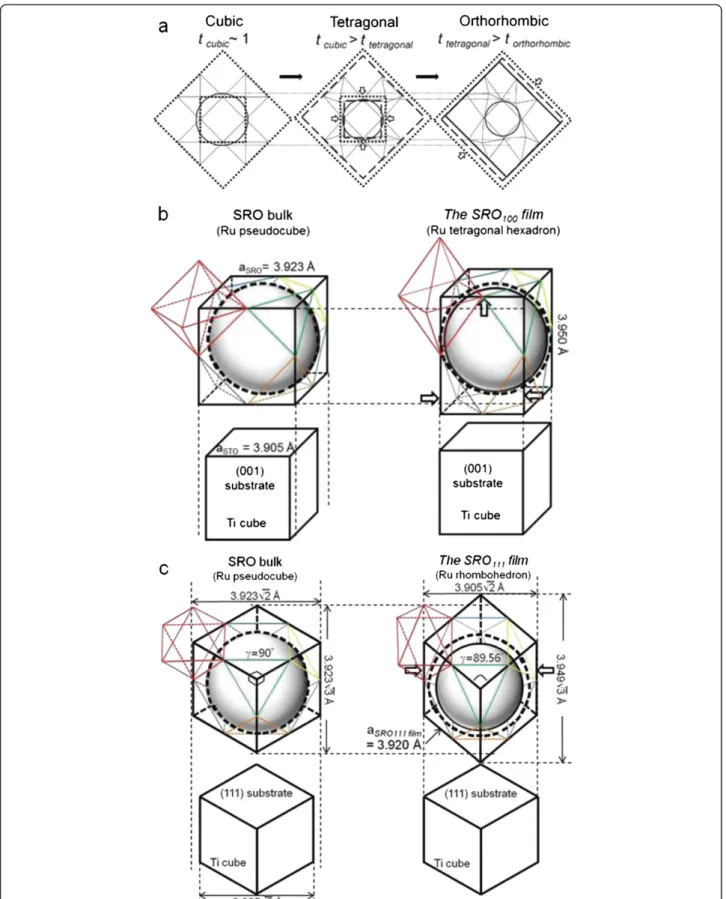
Figure 5a shows the structural change of perovskite oxide as the tolerance factor decreases from 1.0. As t = (rA+ rO)/√2(rB+ rO) decreases due to the insufficient
radius of the A site ion inside the cube consisting of eight BO6 octahedra, the octahedra rotate and tilt to
prepare more suitable (smaller) space for smaller A site ions. The tolerance factor has a direct relation with the B-O-B buckling angle and thus electron transfer inter-action between d electron in the B site and O 2p states. Thus, the tolerance factor in the perovskite was the most dominant factor to determine electric and/or magnetic properties in most manganese oxides and nickelates [10-12].
Figure 5b,c shows the different effects of strain on the nearest neighbor distance between the adjacent Ru ions (≡Ru nn-distance) depending on the substrate surface orientation. The lattice of the SRO100 film is simply
elongated along the c-axis direction while those along the two in-plane lattices shrank. The result is that the Ru nn-distance along the c-axis becomes larger than that of the bulk SRO (3.950 Å > 3.923 Å, approximately 0.69%) and that along two in-plane axes becomes smaller (3.905 Å < 3.923 Å, approximately−0.46%) due to the co-herent growth through the epitaxial strain.
If we grow SRO on top of STO (111) substrate, SRO will receive compressive strain. The deformation of SRO oc-curs in the following way: A Ru pseudocube of SRO consisting of eight Ru ions at each corner will transform to a rhombohedron. By using the in-plane lattice con-stant and out-of plane lattice concon-stant data in Figure 2, we could get the shape of the rhombus of the rhombo-hedron: side length of approximately 3.920 Å and angle of approximately 89.56°. In summary, through the rhom-bohedral distortion, the Ru nn-distance does change very little (approximately 0.003 Å) from its bulk value of 3.923 Å by reducing the Ru-Ru-Ru angle γ from 90° to only approximately 0.44°. Another point is that the ‘Ru cube’ could hold ions larger than the Sr ion at its center since Ru is larger than Ti. (SrTiO3is cubic. The‘Ti cube’
has a lattice constant of 3.905 Å.) Thus, the bulk SRO structure was made by decreasing the inner hollow space of the cube by having a buckling angle and thus has an orthorhombic structure. In the SRO111 film, the Ru cube
changed to a rhombohedron and its inner hollow volume is closer to the optimum value to have the Sr ion at its center which is a little bit smaller to fill the inner space of the undistorted Ru cube having a lattice constant of approximately 3.923 Åc.
When the SRO film is grown with different strain direc-tions, there are three categories that we might consider as key parameters: (1) Ru-O distance, (2) Ru-O-Ru buckling angle, (3) Ru nn-distance. Previous reports have mainly fo-cused on Ru-O distance and Ru-O-Ru buckling angle, which are in the scheme of the tolerance factor. However, the tolerance factor mostly covers cubic, tetragonal, and orthorhombic structures. In the SRO111 film, we could
keep nearly the bulk SRO value of the Ru nn-distance more easily while the Ru nn-distance of the SRO100 film
was quite reduced along the in-plane direction. The ability of keeping the Ru nn-distance closer to the bulk value seems to be one of the main factors to obtain higher RRR and Tcin the SRO111 film compared to the SRO100 film.
This scenario can be generalized to other cases. The smaller lattice mismatch in SRO/STO (110) compared to SRO/STO (001) means the a smaller disturbance to the original Ru nn-distance [7,9]. With d1-10= 3.905 Å/√2 and
d110= 3.905 Å/√2, the Ru nn-distance and Ru-Ru-Ru
angle are approximately 3.928 Å and approximately 89.34° along the rhombus side and 3.905 Å and 90° along the rectangular side of SRO (110) film, repectively [7-9]. In summary, the major change of Ru nn-distance from the pseudocubic bulk SRO value of 3.923 Å is approximately −0.018 Å for the SRO (100) film, approximately −0.006 Å and approximately−0.017 Å for the SRO (110) film, and approximately−0.003 Å for the SRO (111) film. Thus, the nearest neighbor distance between B-site ions seems to be as good as the tolerance factor in perovskite thin films and even better if the strain pushes lower symmetry like in rhombohedral structures.
Conclusions
We made high-quality SrRuO3 thin films on SrTiO3
(111) and SrTiO3 (001) substrates with atomically flat
surfaces. The SrRuO3 thin films on SrTiO3 (111)
sub-strate showed (1) a slightly different growth mode, (2) approximately 10 K higher ferromagnetic transition temperature, and (3) better conducting behavior with a higher relative resistivity ratio, than (100)c-oriented
SrRuO3 films. The oxygen and Ru vacancies are not
dominant factors for the difference because of the same unit cell volume for both films. The differences in the magnetic and electrical properties should be interpreted in terms of other factors, probably different structural deformation of the SrRuO3unit cell. In the SRO111film,
we could nearly keep the bulk SRO value of the Ru nn-distance more easily while the Ru nn-nn-distances of the SRO100film and of the SRO110film were quite changed
Leeet al. Nanoscale Research Letters 2014, 9:8 Page 6 of 9
Figure 5 Schematic diagram of structural change in terms of octahedral distortion, hollow inscribed sphere, and its surrounding eight octahedra. (a) Perovskite oxide as the tolerance factor decreases from approximately 1, (b) the SRO100film, and (c) the SRO111film with bulk
along the in-plane direction. We propose Ru nearest neighbor distance as a new concept, for explaining strain effects in perovskite oxide thin films grown on different surfaces of cubic substrates. Finally, (111)c-oriented SrRuO3
films revealed no signatures of high-spin states of Ru.
Endnotes a
Recent studies on the detailed crystal structure of SRO thin films showed that the crystal structure of the film depended on the thickness, temperature, and type of in-plane strain. A thicker SRO film on a SrTiO3(001)
substrate has a very slight distortion from tetragonal to monoclinic at room temperature.
b
We found that the optimal growth conditions for the SRO111film in terms of surface morphology were much
narrower than those for the SRO100film. c
The ideal Ru cube should have a lattice constant larger than 3.923 Å. One may have to make BaxSr1−xRuO3 in
cubic phase and measure its lattice constant.
Competing interests
The authors declare that they have no competing interests.
Authors’ contributions
O-UK and RHS made Figure 5, found good references, and contributed to the introduction of the key concept. CUJ managed the whole experimental results and organized the manuscript as the corresponding author. BL and WJ joined the discussion. All authors read and approved the final manuscript.
Acknowledgements
The authors thank C. B. Eom, H. N. Lee, and S. S. A. Seo for the critical reading of the manuscript. This research was supported by the Basic Science Research Program through the National Research Foundation of Korea (NRF) funded by the Ministry of Education, Science and Technology
(2012R1A1A2008595 and 2012R1A1A2008845) and by the National Research Foundation of Korea (NRF) grant funded by the Korea government (MEST) (NRF-2013-0031010).
Author details 1
Department of Physics, Hankuk University of Foreign Studies, Yongin 449-791, South Korea.2Department of Physics, Ewha Womans University,
Seoul 120-750, South Korea.
Received: 30 September 2013 Accepted: 1 December 2013 Published: 7 January 2014
References
1. Koster G, Klein L, Siemons W, Rijnders G, Dodge JS, Eom CB, Blank DHA, Beasley MR: Structure, physical properties, and applications of SrRuO3
thin films. Rev Mod Phys 2012, 84:253–298.
2. Auciello O, Foster CM, Ramesh R: Processing technologies for ferroelectric thin films and heterostructures. Annu Rev Mater Sci 1998, 28:501–531.
3. Chang YJ, Kim CH, Phark S-H, Kim YS, Yu J, Noh TW: Fundamental thickness limit of itinerant ferromagnetic SrRuO3thin films. Phys Rev Lett 2009,
103:057201.
4. Vailionis A, Siemons W, Koster G: Room temperature epitaxial stabilization of a tetragonal phase in ARuO3(A = Ca and Sr) thin films. Appl Phys Lett
2008, 93:051909.
5. Gan Q, Rao RA, Eom CB, Garrett JL, Lee M: Direct measurement of strain effects on magnetic and electrical properties of epitaxial SrRuO3thin
films. Appl Phys Lett 1998, 72:978–980.
6. Gan Q, Rao RA, Eom CB: Control of the growth and domain structure of epitaxial SrRuO3thin films by vicinal (001) SrTiO3substrates. Appl Phys
Lett 1997, 70:1962–1964.
7. Jung CU, Yamada H, Kawasaki M, Tokura Y: Magnetic anisotropy control of SrRuO3films by tunable epitaxial strain. Appl Phys Lett 2004,
84:2590–2592.
8. Lee BW, Jung CU: Modification of magnetic properties through the control of growth orientation and epitaxial strain in SrRuO3thin films.
Appl Phys Lett 2010, 96:102507.
9. Lee BW, Jung CU: Coherent growth behavior of an orthorhombic (Ca, Sr) SnO3thin films on a cubic SrTiO3(110) substrate. J Korean Phys Soc 2012,
61:795–798.
10. Tokura Y, Tomioka Y: Colossal magnetoresistive manganites. J Magn Magn Mater 1999, 200:1.
11. Salamon MB, Jaime M: The physics of manganites: structure and transport. Rev Mod Phys 2001, 73:583.
12. Imada M, Fujimori A, Tokura Y: Metal-insulator transition. Rev Mod Phys 1998, 70:1039.
13. Kim DH, Aimon NM, Bi L, Florez JM, Dionne GF, Ross CA: Magnetostriction in epitaxial SrTi1−xFexO3−δperovskite films withx = 0.13 and 0.35. J Phys Condens Matter 2013, 25:026002.
14. Lee BW, Jung CU, Kawasaki M, Tokura Y: Tuning of magnetism in SrRuO3
thin films on SrTiO3(001) substrate by control of the twin and strain
amount in the buffer layer. J Appl Phys 2008, 104:103909. 15. Kim NG, Kumar N, Park YA, Hur N, Jung CU, Jung JH: Application of
magnetic fields for a low temperature growth of high-quality SrRuO3
thin films. J Phys D Appl Phys 2008, 41:125005.
16. Sekigughi S, Fujimoto M, Nomura M, Cho S-B, Tanaka J, Nishihara T, Kang M-G, Park H-H: Atomic force microscopy observation of SrTiO3polar surface.
Solid State Ion 1998, 108:73–79.
17. Chang J, Park Y-S, Kim S-K: Atomically flat single-terminated SrTiO3(111)
surface. Appl Phys Lett 2008, 92:152910.
18. Biswas A, Rossen PB, Yang C-H, Siemons W, Jung M-H, Yang IK, Ramesh R, Jeong YH: Universal Ti-rich termination of atomically flat SrTiO3(001),
(110), (111) surfaces. Appl Phys Lett 2011, 98:051904.
19. Connell JG, Isaac BJ, Ekanayake GB, Strachan DR, Seo SSA: Preparation of atomically flat SrTiO3surfaces using a deionized-water leaching and
thermal annealing procedure. Appl Phys Lett 2012, 101:251607. 20. Vailionis A, Siemons W, Koster G: Strained-induced single-domain growth
of epitaxial SrRuO3layers on SrTiO3: a high-temperature X-ray diffraction
study. Appl Phys Lett 2007, 91:071907.
21. Choi KJ, Baek SH, Jang HW, Belenky LJ, Lyubchenko M, Eom C-B: Phase-transition temperature of strained single-crystal SrRuO3thin films. Adv Mater 2010,
22:759–762.
22. Grutter A, Wong F, Arenholz E, Liberati M, Vailionis A, Suzuki Y: Enhanced magnetism in epitaxial SrRuO3thin films. Appl Phys Lett
2010, 96:082509.
23. Hong W, Lee HN, Yoon M, Christen HM, Lowndes DH, Suo Z, Zhang Z: Persistent step-flow growth of strained films on vicinal substrates. Phys Rev Lett 2005, 95:095501.
24. Yoon M, Lee HN, Hong W, Christen HM, Zhang Z, Suo Z: Dynamic of step bunching in heteroepitaxial growth on vicinal substrates. Phys Rev Lett 2007, 99:055503.
25. Lopez de la Torre MA, Sefroui Z, Arias D, Varela M, Villegas JE, Ballesteros C, Leon C, Santamaria J: Electron–electron interaction and weak localization effects in badly metallic SrRuO3. Phys Rev B 2001,
63:052403.
26. Mathieu R, Jung CU, Yamada H, Asamitsu A, Kawasaki M, Tokura Y: Determination of the intrinsic anomalous Hall effect of SrRuO3. Phys Rev
B 2005, 72:064436.
27. Siemons W, Koster G, Vailionis A, Yamamoto H, Blank DHA, Beasley MR: Dependence of the electronic structure of SrRuO3and its
degree of correlation on cation off-stoichiometry. Phys Rev B 2007, 76:075126.
28. Lee J-H, Murugavel P, Ryu H, Lee D, Jo JY, Kim JW, Kim HJ, Kim KH, Jo Y, Jung M-H, Oh YH, Kim Y-W, Yoon J-G, Chung J-S, Noh TW: Epitaxial stabilization of a new multiferroic hexagonal phase of TbMnO3thin
films. Adv Mater 2006, 18:3125–3129.
29. Lee J-H, Murugavel P, Lee D, Noh TW, Jo Y, Jung M-H, Jang KH, Park J-G: Multiferroic properties of epitaxially stabilized hexagonal DyMnO3thin
films. Appl Phys Lett 2007, 90:012903.
Leeet al. Nanoscale Research Letters 2014, 9:8 Page 8 of 9
30. Lee D, Lee J-H, Murugavel P, Jang SY, Noh TW, Jo Y, Jung M-H, Ko Y-D, Chung J-S: Epitaxial stabilization of artificial hexagonal GdMnO3thin films and their magnetic properties. Appl Phys Lett
2007, 90:182504.
31. Chang SH, Chang YJ, Jang SY, Jeong DW, Jung CU, Kim Y-J, Chung J-S, Noh TW: Thickness-dependent structural phase transition of strained SrRuO3
ultrathin films: the role of octahedral tilt. Phys Rev B 2011, 84:104101.
doi:10.1186/1556-276X-9-8
Cite this article as: Lee et al.: Ferromagnetism and Ru-Ru distance in SrRuO3thin film grown on SrTiO3(111) substrate. Nanoscale Research
Let-ters 2014 9:8.
Submit your manuscript to a
journal and benefi t from:
7 Convenient online submission 7 Rigorous peer review7 Immediate publication on acceptance 7 Open access: articles freely available online 7 High visibility within the fi eld
7 Retaining the copyright to your article