저작자표시-비영리-변경금지 2.0 대한민국 이용자는 아래의 조건을 따르는 경우에 한하여 자유롭게 l 이 저작물을 복제, 배포, 전송, 전시, 공연 및 방송할 수 있습니다. 다음과 같은 조건을 따라야 합니다: l 귀하는, 이 저작물의 재이용이나 배포의 경우, 이 저작물에 적용된 이용허락조건 을 명확하게 나타내어야 합니다. l 저작권자로부터 별도의 허가를 받으면 이러한 조건들은 적용되지 않습니다. 저작권법에 따른 이용자의 권리는 위의 내용에 의하여 영향을 받지 않습니다. 이것은 이용허락규약(Legal Code)을 이해하기 쉽게 요약한 것입니다. Disclaimer 저작자표시. 귀하는 원저작자를 표시하여야 합니다. 비영리. 귀하는 이 저작물을 영리 목적으로 이용할 수 없습니다. 변경금지. 귀하는 이 저작물을 개작, 변형 또는 가공할 수 없습니다.
A THESIS
FOR THE DEGREE OF MASTER OF SCIENCE
Behavioral regulation of nutrient intake in the mealworm beetle,
Tenebrio molitor (Coleoptera : Tenebrionidae)
갈색거저리의 영양섭식행동조절에 관한 연구
By
Myung Suk Rho
Major in Entomology
Department of Agricultural Biotechnology Seoul National University
A THESIS
FOR THE DEGREE OF MASTER OF SCIENCE
Behavioral regulation of nutrient intake in the mealworm beetle,
Tenebrio molitor (Coleoptera : Tenebrionidae)
갈색거저리의 영양섭식행동조절에 관한 연구
By
Myung Suk Rho
Major in Entomology
Department of Agricultural Biotechnology Seoul National University
Behavioral Regulation of Nutrient Intake in the Mealworm Beetle, Tenebrio molitor (Coleoptera : Tenebrionidae)
갈색거저리의 영양섭식행동조절에 관한 연구
UNDER THE DIRECTION OF ADVISER KWANG PUM LEE SUBMITTED TO THE FACULTY OF THE GRADUATE SCHOOL OF
SEOUL NATIONAL UNIVERSITY By
Myung Suk Rho Major in Entomology
Department of Agricultural Biotechnology Seoul National University
February, 2018
APPROVED AS A QUALIFIED THESIS OF MYUNG SUK RHO FOR THE DEGREE OF MASTER OF SCIENCE
BY THE COMMITTEE MEMBERS
CHAIRMAN Si Hyeok Lee ____________________ VICE CHAIRMAN Kwang Pum Lee ____________________ MEMBER Yeon Ho Je ____________________
Behavioral regulation of nutrient intake in the mealworm beetle,
Tenebrio molitor (Coleoptera : Tenebrionidae)
Major in Entomology
Department of Agricultural Biotechnology Seoul National University
February, 2018
Myung Suk Rho
ABSTRACT
Mealworm beetle, Tenebrio molitor L. (Coleoptera: Tenebrionidae), is an important model organism widely used for studying physiology and behaviour in entomological researches. In recent years, there is also a growing interest in the possibility of using T. molitor for animal feed and human consumption. However, little research has been conducted on the nutritional biology of this potentially important insect.
In Chapter 1, the nutritional regulatory behaviour and post-ingestive nutrient utilisation efficiencies were described from adult T. molitor under controlled laboratory conditions. The beetles actively regulated their intake of protein and carbohydrate to a ratio of 1:1. When confined to a range of single suboptimal diets, they exhibited a strategy of nutrient balancing similar to that
of other omnivorous insects with a broad range of diets.
Chapter 2 tested whether T. molitor can fully recover from the negative consequences of ingesting nutritionally imbalanced diets by adjusting their nutrient preferences. When offered a choice between two nutritionally complementary diets after being exposed to an extreme nutritional imbalance, the beetles that had been previously deprived of protein preferentially selected a protein-rich diet and this compensatory feeding led them to quickly reinstate their optimal nutritional state.
Chapter 3 investigated the effect of dietary protein:carbohydrate balance on the two important components of fitness (longevity and reproduction) in T. molitor. Both longevity and lifetime fecundity were maximized on a diet with equal ratio of protein to carbohydrate (1:1), a ratio which was preferentially selected by T. molitor when given a food choice.
Collectively, these results provide experimental support to the prevailing notion that the optimal foraging has evolved in insects to maximize the Darwinian fitness through balancing the intake of multiple nutrients.
Key words : Diet selection, Fitness, Nutrient regulation, Post-ingestive nutrient utilization, Tenebrio molitor
TABLE OF CONTENTS
ABSTRACT---ⅰ TABLE OF CONTENTS---ⅲ LIST OF TABLES---ⅵ LIST OF FIGURES---ⅷ GENERAL INTRODUCTION---1 CHAPTER 1.Geometric analysis of nutrient balancing in the mealworm beetle, Tenebrio
molitor
Abstract---7 1.
Introduction---8
2. Material and
methods---12
2.1 Experimental insects---12
12 2.3 Experimental protocol---13 2.4 Data analysis---16 3. Results---17 3.1 Choice experiment---17 3.1.1 Nutrient intake---17 3.1.2 Body composition---21 3.2. No-choice experiment---23 3.2.1 Nutrient intake---23 3.2.2 Retention efficiency---24 3.2.3 Body composition---28 3.2.4 Starvation resistance---28 4. Discussion---30
CHAPTER 2.
Nutrient-specific food selection buffers the effect of nutritional imbalance in the mealworm beetle, Tenebrio molitor
Abstract---39
1. Introduction---41
2. Material and methods---44
2.1 Experimental foods---44 2.2 Experimental procedures---44 2.3 Data analysis---47 3. Results---48 3.1 Performance---48 3.2 Food preference---49 3.3 Macronutrient consumption---53 3.4 Body composition---57 4. Discussion---60
CHAPTER 3.
Balanced intake of protein and carbohydrate maximizes lifetime reproductive success in the mealworm beetle, Tenebrio molitor
Abstract---67 1. Introduction---68 2. Material and methods---73
2.1 Experimental insects---73
2.2 Synthetic foods---73
2.3 Experimental 1 : lifespan and reproduction---74
2.4 Experimental 2 : nutrient self-selection---76
2.5 Data analysis ---77
3.
Results---79
3.1 Experimental 1 : lifespan and reproduction---79
3.2 Experimental 2 : nutrient self-selection---85
4. Discussion---87 CONCLUSION---93 LITERATURE CITED---96 ABSTRACT IN KOREAN---113
LIST OF TABLES
CHAPTER 1.Geometric analysis of nutrient balancing in the mealworm beetle, Tenebrio
molitor
Table 1. Summary of ANOVA testing the significance of the effects of diet,
sex,
and their interaction on the total quantity of protein plus carbohydrate eaten by T. molitor beetles---25
CHAPTER 2.
Nutrient-specific food selection buffers the effect of nutritional imbalance in the mealworm beetle, Tenebrio molitor
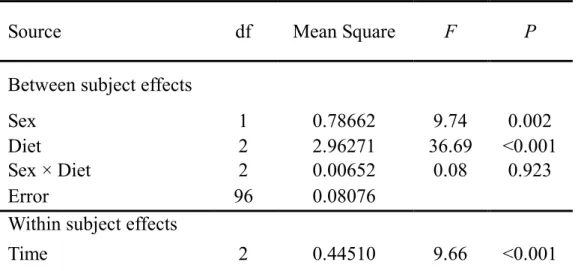
Table 1. Results of repeated measures ANOVA of the food preference indices
Table 2. Results recorded for the MANOVAs of the protein-carbohydrate
intake by (A) male and (B) female T. molitor beetles---56
CHAPTER 3.
Balanced intake of protein and carbohydrate maximizes lifetime reproductive success in the mealworm beetle, Tenebrio molitor
Table 1. Partial correlations among lifespan, lifetime fecundity, and egg
production rate for mated female T. molitor---82
LIST OF FIGURES
CHAPTER 1.
Geometric analysis of nutrient balancing in the mealworm beetle,
Tenebrio molitor
Figure 1. Bivariate means (±SE) of cumulative protein and carbohydrate
intake by Tenebrio molitor beetles (A, male; B, female) in four food pairings. The solid lines represent the intake trajectories for beetles in four food pairings
---19 Figure 2. Means (+SE) of total amount of protein-biased and
carbohydrate-biased diet eaten by Tenebrio molitor beetles over the 24 days post-eclosion in four food
pairings.---20
Figure 3. Bivariate means (±SE) of body protein and lipid content of Tenebrio
molitor .beetles measured at 24 days post-infection in four food pairings ---22
Figure 4. Means (±SE) of cumulative protein and carbohydrate intake by
Tenebrio molitor beetles in seven no-choice diets differing in protein: carbohydrate ratio (p0:c42, p7:c35, p14:c28, p21:c21, p28:c14, p35:c7 and p42:c0). The dotted lines are the nutritional rails of the seven diets as given in the margin. Seven cumulative intake points are connected with solid lines to demonstrate the pattern of the intake array at 12 and 24 days post-eclosion ---26
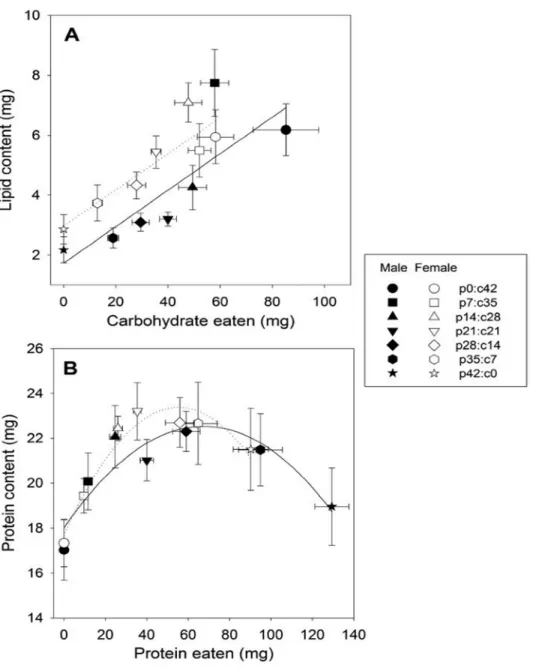
Fig 5. Bivariate means (±SE) of (A) carbohydrate intake and body lipid content
and of (B) protein intake and body protein content of Tenebrio molitor beetles measured at 24 days post-infection in seven no-choice diets differing in protein: carbohydrate ratio (p0:c42, p7:c35, p14:c28, p21:c21, p28:c14, p35:c7 and p42:c0). ---27
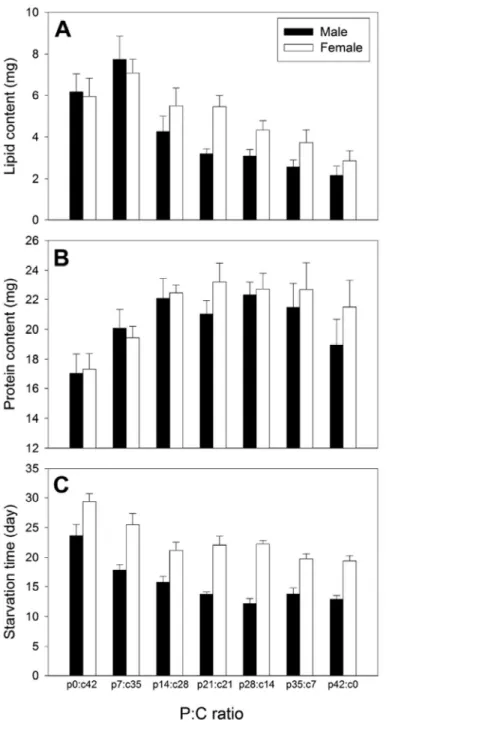
Figure 6. Means (+SE) of (A) body lipid content, (B) body protein content,
and (C) starvation time of Tenebrio molitor beetles in seven no-choice diets differing in protein: carbohydrate ratio (p0:c42, p7:c35, p14:c28, p21:c21, p28:c14, p35:c7 and p42:c0)---29
in the mealworm beetle, Tenebrio molitor
Figure 1. Trends recorded in the food preference indices of (A) male and (B)
female Tenebrio molitor beetles allowed to select between two nutritionally complementary diets (p42:c0 vs. p0:c42) during three successive 6-day periods (days 16–22, 22–28 and 28–34) after initially being fed one of three diets (p0:c42, p21:c21 or p42:c0) for 16 days. ---52
Figure 2. Means (+SE) of Cumulative protein and carbohydrate eaten by (A)
male and (B) female Tenebrio molitor beetles allowed to select between two nutritionally complementary diets (p42:c0 vs. p0:c42) during three successive 6-day periods (days 16–22, 22–28 and 28–34) after initially being fed one of three diets (p0:c42, p21:c21 or p42:c0) for 16 days. ---55
Figure 3. Bivariate means (±SE) of body lipid and protein content of (A) male
and (B) female Tenebrio molitor beetles in the three pretreatment groups (p0:c42, p21:c21 or p42:c0) measured at the end of the no -choice (days 0– 16) and choice feeding periods (days 0–34). ---59
CHAPTER 3.
Balanced intake of protein and carbohydrate maximizes lifetime reproductive success in the mealworm beetle, Tenebrio molitor
Figure 1. Mean (±SE) lifespan for male and female Tenebrio molitor fed on
one of three synthetic foods differing in P:C ratio. For each sex, mated and unmated beetles are represented by open and filled circle, respectively.
---81
Figure 2. Mean (±SE) (A) lifetime fecundity and (B) egg production rate for
mated female Tenebrio molitor fed on one of three synthetic foods differing in P:C ratio.---83
Figure 3. The pattern of age-specific egg laying by mated female Tenebrio
molitor fed on one of three synthetic foods differing in P:C ratio from adult emergence until the 18th week of adulthood. ---84
Figure 4. Bivariate mean (±SE) amount of protein-carbohydrate consumed by
male and female Tenebrio molitor given a food choice between two nutritionally unbalanced P:C foods (p7:c35 and p35:c7) over the two 6-day feeding periods (days 9–15 and 16– 22). ---86
GENERAL INTRODUCTION
Experimental evidence collected over the past decades has demonstrated that insects are highly capable of regulating their intake of macronutrients to a species-specific mixture that supports optimal performance (reviewed by Simpson and Simpson, 1990; Waldbauer and Friedman, 1991; Simpson and Raubenheimer, 2012). The current understanding of nutrient balancing in insects has been greatly advanced by the use of the Geometric Framework (GF) for nutrition, an integrative state-space modelling platform that was designed by Stephen Simpson and David Raubenheimer (Simpson and Raubenheimer, 1993a, 2012; Raubenheimer and Simpson, 1993, 1997, 1999). The GF has been proved as a powerful tool for identifying the behavioural and physiological mechanisms underlying the nutritional regulatory responses in insects. There is a wealth of studies that used the GF to identify the nutrient balancing in a wide range of insects, including grasshoppers (Raubenheimer and Simpson, 1993, 2003; Simpson et al., 2002; Behmer and Joern, 2008), caterpillars (Lee et al., 2002, 2003, 2004, 2006, 2010), crickets and katydids (Simpson et al., 2006; Maklakov et al., 2008; Goeriz Pearson et al., 2011), cockroaches (Jones and Raubenheimer, 2001; Raubenheimer and Jones, 2006; South et al., 2011), carnivorous beetles (Mayntz et al., 2005; Raubenheimer et al., 2007; Jensen et al., 2012), flies (Lee et al., 2008; Jensen et al., 2015) and ants (Dussutour and
Simpson, 2009; Cook et al., 2010).
The main theme of this thesis is to explore the nutritional regulatory responses of the mealworm beetle, Tenebrio molitor L. (Coleoptera : Tenebrionoidea), using the GF. T. molitor is a cosmopolitan pest scavenging on a variety of post-harvest grains. This species has long been used as a popular model organism for studying behaviour, physiology, and immunology in insects. In recent years, there has been an increasing interest of commercially using this species as animal feed and edible insect for human consumption. Despite its emerging importance, few studies have explicitly addressed the fundamental questions of nutritional biology in this species: 1) what is the balance of macronutrients optimally required by this insect? ; 2) what is the nutrient balancing strategy adopted by this species when forced to deal with nutritional imbalances?; and 3) Does this insect regulate their macronutrient intake and, if it does, what is the adaptive significance of doing so?
As a first step in understanding the basic nutritional biology of this species, in Chapter 1, I first performed a comprehensive geometric analysis on the nutritional regulatory responses of T. molitor using both choice and no-choice feeding assays. In order to test whether this beetle had the capacity to regulate the intake of protein and carbohydrate independently, I conducted food choice assay where beetles of both sexes were allowed to mix their diet from two nutritionally imbalanced but complementary foods (protein-biased food:
regulated position of the target protein and carbohydrate intake was established, a no-choice feeding assay was subsequently carried out to identify the pattern of ingestive trade-off employed by T. molitor when forced to balance the costs of over-ingesting one nutrient and those of under-ingesting the other. This no-choice assay was carried out by confining the beetles to one of seven nutritionally imbalanced foods (p0:c42, p7:c35, p14:c28, p21:c21, p28:c14, p35:c7 or p42:c0). Since the adults of T. molitor are known to feed on a wide range of animal- and plant-derived materials (Ramos-Elorduy et al., 2002), I anticipate that T. molitor beetles will follow a nutrient balancing strategy that is normally adopted by many species experiencing a high degree of nutritional heterogeneity in the natural conditions (Simpson and Raubenheimer, 2012). In this chapter, the patterns of post-ingestive nutrient utilization efficiencies were also examined by plotting two-dimension utilization plots.
It is well established that insects suffer significant performance losses when ingesting protein and carbohydrate in imbalanced quantities and ratios (Simpson et al., 2004). The detrimental consequences of nutritionally imbalanced diets can be reduced by insects using a variety of post-ingestive mechanisms (Zanotto et al., 1994, 1997; Clissold et al., 2010), but insects can easily overcome this nutritional stress by selectively consuming a diet that redresses the previous nutritional imbalance (Waldbauer and Friedman, 1991; Behmer, 2009; Simpson and Raubenheimer, 2012). In Chapter 2, I addressed the question of whether T. molitor beetles had the capacity to redress the
adverse effects of ingesting nutritionally imbalanced diets by actively adjusting the patterns of their nutrient selection. To this end, I experimentally manipulated the nutritional state of T. molitor beetles by feeding them for 16 days on one of three synthetic diets that varied in protein and carbohydrate content (p0:c42, p21:c21, or p42:c0). Thereafter, I allowed these beetles to self-compose their preferred protein and carbohydrate intake by freely mixing two nutritionally complementary diets (p0:c42 vs. p42:c0) over the next 18 days. I predicted that beetles that had been previously deprived of a specific nutrient (protein or carbohydrate) would exhibit a preference for a diet rich in that deficient nutrient. To confirm whether the nutritional conditions of the beetles really recovered from the previous nutrient imbalance through this compensatory feeding, I compared the body composition of beetles that were allowed to select between the diets with that of those that were fed only the imbalanced ones.
Recent advances in insect gerontological research suggested that the dietary P:C balance is the most critical determinant of lifespan and reproduction in many insects, but most studies investigating the dietary intervention to lifespan have been carried out using dipterans and orthopterans (e.g., Lee et al., 2008; Maklakov et al., 2008; Fanson et al., 2009). The aim of Chapter 3 was thus to examine the effects of dietary protein: carbohydrate (P:C) balance on longevity and fecundity in T. molitor beetles. In this chapter, I measured the longevity
consequence of feeding on one of three synthetic foods differing in P:C ratio (p7:c35, p21:c21, or p35:c7). In addition to lifetime fecundity, the age-specific egg laying at each 7-day age interval was also quantified to test how dietary P:C ratio influenced the pattern of reproductive ageing in this insect. Having established the nutritional optima for lifespan and fecundity, I then conducted a food choice assay to test the long-held hypothesis that T. molitor beetles select protein and carbohydrate to a ratio that maximizes their Darwinian fitness (Simpson et al., 2004; Simpson and Raubenheimer, 2012; Jensen et al., 2012). To the best of my knowledge, this study is the first to report the effects of macronutrients on the expression of lifespan and reproduction in any coleopteran species.
CHAPTER 1.
Geometric analysis of nutrient balancing in the mealworm
beetle, Tenebrio molitor
Abstract
Geometric analysis of the nutritional regulatory responses was performed
on an omnivorous mealworm beetle, Tenebrio molitor L. (Coleoptera: Tenebrionidae) to test whether this beetle had the capacity to balance the intake
of protein and carbohydrate. I also identified the pattern of ingestive trade-off employed when the insect was forced to balance the costs of over- and
under-ingesting macronutrients. When allowed to mix their diet from two nutritionally imbalanced but complementary foods (protein-biased food:
p35:c7 or p28:c5.6; carbohydrate-biased food: p7:c35 or p5.6:c28), beetles of both sexes actively regulated their intake of protein and carbohydrate to a ratio
of 1:1. When confined to one of seven nutritionally imbalanced foods (p0:c42, p7:c35, p14:c28, p21:c21, p28:c14, p35:c7 or p42:c0), beetles over-ingested
the excessive nutrient from these foods to such an extent that all the points of protein–carbohydrate intake aligned linearly in the nutrient space, a pattern that
is characteristic of generalist feeders and omnivores. Under the restricted feeding conditions, males ate more nutrients but were less efficient at retaining their body lipids than females. Body lipid content was higher on
carbohydrate-rich foods and was positively correlated with starvation resistance. These results are consistent with the prediction based on the nutritional heterogeneity
their diet breadth and feeding ecology.
1. Introduction
Protein and carbohydrate are the two major macronutrients essential for survival, growth and reproduction in insects (Chapman et al., 2013). Self-selection of foods that provide an optimal amount and blend of these nutrients is an ultimate aim of foraging insects (Simpson et al., 2004; Lee et al., 2008). There has been a growing body of evidence that insects use a variety of behavioural and physiological mechanisms to balance the acquisition of multiple nutrients (Simpson and Simpson, 1990; Waldbauerand Friedman, 1991; Behmer, 2009; Clissold et al., 2010; Simpson and Raubenheimer, 2012). Much of these current knowledge about nutrient balancing in insects owes substantially to the development of the Geometric Framework (Simpson and Raubenheimer, 1993a, 2012; Raubenheimer and Simpson, 1993, 1997, 1999). The Geometric Framework is an integrative, state-space modelling program that has provided a powerful analytical method for identifying the key variables in nutritional regulatory responses in insects, including the self-regulated position of nutrient intake (the intake target) and the rule of compromise employed when insects are forced to trade-off between macronutrient excesses and deficits.
Until recently, the Geometric Framework has been used to explore the nutritional regulatory responses of taxonomically and functionally diverse
groups of insects, including herbivores (Raubenheimer and Simpson, 1993, 2003; Simpson et al., 2002; Lee et al., 2002, 2003, 2004, 2006; Telang et al., 2001; Behmer and Joern, 2008; Warbrick-Smith et al., 2009; Lee, 2010), omnivores (Jones and Raubenheimer, 2001; Raubenheimer and Jones, 2006; Simpson et al., 2006; Maklakov et al., 2008; South et al., 2011; Goeriz Pearson et al., 2011), carnivores (Mayntz et al., 2005; Raubenheimer et al., 2007; Jensen et al., 2012), liquid feeders (Abisgold et al., 1994; Lee et al., 2008, 2013; Fanson et al., 2012) and social insects (Dussutour and Simpson, 2009; Cook et al., 2010).
The main objective of this chapter is to conduct a geometric analysis on the
nutritional regulatory responses of the mealworm beetle, Tenebrio molitor L. (Coleoptera: Tenebrionidae), an important model organism used for a wide
range of research in insects. The larvae of T. molitor are commercially available as one of the most common protein sources for pets and captive animals worldwide (Ramos-Elorduy et al., 2002) and there has been a growing
interest in the use of T. molitor as a novel protein source for aquaculture (Ng et
al., 2001), aviculture (Ramos-Elorduy et al., 2002) and even human consumption (Ghaly and Alkoaik, 2009). So far, several studies have documented the nutrient balancing in T. molitor beetles (Ponton et al., 2011;
Catalan et al., 2011; Morales-Ramos et al., 2011). These studies have shown that the larvae and adults of T. molitor actively regulate their food intake. T.
molitor beetles have also shown to regulate the nutrient utilisation efficiency post-ingestively (Ponton et al., 2011).
The ingestive responses of insects to macronutrient imbalance are known
to correlate with the degree of nutritional heterogeneity to which they have evolved to adapt in natural conditions (Raubenheimer and Simpson, 1997,
1999, 2003; Lee et al., 2002, 2003, 2004; Simpson et al., 2002). For example, when restricted to single nutritionally imbalanced foods, insects with broader
diet breadth (e.g., generalist herbivores and omnivores) tended to over-ingest excessive nutrients in the food to a greater extent than did those with narrower
diet breadth (e.g., specialist herbivores). The nutritional heterogeneity hypothesis posits that this difference between the generalist and the specialist
species in their responses to macronutrient imbalance arises from the fact that the generalist species have evolved to adapt to an environment where the
probability of encountering nutritionally complementary foods is high (Raubenheimer and Simpson, 1997, 1999, 2003). Both the adults and larvae of
T. molitor scavenge on a wide range of animal- and plant-derived materials, including dead plant and animal tissues, feces and grains (Ramos-Elorduy et al., 2002), indicating a high degree of nutritional heterogeneity. Based on this
nutritional heterogeneity hypothesis, I predict that T. molitor beetles will balance the costs of over- and under-ingesting the two nutrients following the
herbivores (Lee et al., 2002; Raubenheimer and Simpson, 1999, 2003;
Raubenheimer and Jones, 2006). Since nutrient balancing is relatively understudied in omnivorous insects compared with their herbivorous and
carnivorous counterparts, this chapter can provide a valuable basis for understanding the physiological and behavioural responses of omnivores to
nutritional imbalances.
The first tested whether the adults of T. molitor could balance their intake
of protein and carbohydrate through complementary food selection. To do so, I offered beetles to select between two nutritionally complementary foods and
identified the regulated target of protein and carbohydrate intake defended by beetles from different food pairings. This chapter then investigated the nutrient
balancing responses of beetles restricted to single foods that were nutritionally imbalanced with respect to protein and carbohydrate. I also examined the
consequences of the different macronutrient intake for body composition and other proxies of fitness in T. molitor beetles, such as body mass and survival
under starvation. An additional aim of this chapter is to compare the nutritional regulatory responses of male and female T. molitor beetles, an aspect that has never been investigated in this species before. Compared with the previous
studies on T. molitor (Ponton et al., 2011; Catalan et al., 2011; Morales-Ramos et al., 2011), the novel results of chapter are the demonstration of the way that
starvation resistance via energy retention and sex-specific differences in
nutritional responses.
2. Materials and methods
2.1. Experimental insects
T. molitor beetles were derived from a laboratory culture maintained at Seoul National University and were reared on wheat bran in an incubator set at
25℃ under a L:D 12 h:12 h photoregime. Larvae were kept in groups of 300–
400 individuals per clear plastic container (40 × 18 × 8 cm3 , L × W × H) where water-soaked cotton was provided as a water source thrice a week.
Pupae were collected from the stock colony and sexed by inspecting the morphology of the eighth abdominal segment (Bhattacharya et al., 1970).
Collected pupae were kept in a Petri dish (90 mm diameter) and allowed to complete their pupal stage in the same incubator used for culturing larvae as
described above.
2.2. Synthetic foods
outlined by Simpson and Abisgold (1985). A total of nine foods differing in
protein (p) and digestible carbohydrate (c) content were prepared: 0% protein with 42% digestible carbohydrate (p0:c42), p5.6: c28, p7:c35, p14:c28,
p21:c21, p28:c5.6, p28:c14, p35:c7 and p42:c0 (% dry mass). Proteins consisted of a 3:1:1 mixture of casein, peptone and albumen and the sucrose
was the digestible carbohydrate. All foods contained a fixed content of Wesson’s salt (2.4%), cholesterol (0.5%), linoleic acid (0.5%), ascorbic acid
(0.3%) and a vitamin mix (0.2%). The remainder of the food was filled with the non-nutritive bulking agent, indigestible cellulose.
2.3. Experimental protocol
On the day of eclosion into adulthood (day 0), a total of 220 newly emerged beetles (110 males and 110 females) were weighed to the nearest 0.1 mg using a microbalance (Ohaus Co., Parsippany, NJ, USA) and randomly allocated to one of 11 diet treatments. Four of them were the choice treatments, in which one of two protein-biased foods (P:C = 5:1; p35:c7 or p28:c5.6) was paired with one of two carbohydrate-biased foods (P:C = 1:5; p7:c35 or p5.6:c28). These two foods were individually imbalanced but were complementary to one another. The rest were the seven no-choice treatments, each with differing ratio of protein to carbohydrate (p0:c42, p7:c35, p14:c28, p21:c21, p28:c14, p35:c7 and p42:c0). These seven no-choice foods comprised
the same concentration of protein plus carbohydrate (P + C = 42% dry mass) and were near isocaloric because protein and carbohydrate are similar in caloric density (4 kcal per gram). During the entire experimental period (days 0–24), each individual was confined to its own feeding arena (90 mm diameter Petri dish) with ad libitum access to water (a water-filled 1.5 mL Eppendorf tube each capped with a cotton plug) and food. Before being introduced to insects, food dishes (the upturned lid of 1.5 mL Eppendorf tube, 9 mm diameter, 5 mm depth) were filled with dry granular foods, dried to constant mass at 40 C for 24 h and weighed to the nearest 0.1 mg. Food dishes were removed and replaced by new ones every two days. To minimise any measurement error in food intake, each food dish was placed in a Petri dish (diameter 40 mm) and any food that was spilled over this platform during feeding was added back to the food dish. Removed food dishes containing uneaten foods were dried at 40℃ for 24 h to remove moisture before being
weighed. Food consumption was determined as the difference in dry mass before and after the two days of feeding. Protein and carbohydrate intakes were calculated as the product of food consumption and the known concentrations of respective nutrients in the foods. At the end of the experiment (day 24), beetles
were freeze-killed at 80℃, dried to constant mass at 50 ℃ for 72 h and weighed to the nearest 0.1 mg. Lipids were extracted from dried carcasses by individually soaking them in 15 mL of pure chloroform for three days. During
this chloroform wash, the chloroform was refreshed every 24 h. Lipid-extracted carcasses were re-dried and re-weighed. Total extractable lipid content was calculated as the mass change before and after the three 24-h chloroform washes. Following lipid-extraction, the proteinaceous component of lean carcasses was digested and removed by individually immersing them in 15 mL
of sodium hydroxide solution (NaOH, 0.35 M) at 33 ℃ for three days (Marden, 1987). The samples went through three successive, sodium hydroxide solution 24-h washes, after which they were re-dried and re-weighed. Body protein content was estimated as the difference in dry mass before and after the three days of sodium hydroxide wash.
To quantify the body composition of beetles at adult emergence (day 0), newly enclosed beetles of both sexes (N = 20 per sex) were weighed, killed and subjected to lipid and protein extraction following the identical protocol as described above. I found that the dry body mass of the newly emerged beetles (day 0) was similar between the two sexes (ANOVA: F1,57 = 0.09, P = 0.767).
Nor was there any significant sex difference in the body lipid (F1,57= 0.96, P =
0.332) and protein (F1,57 = 0.03, P = 0.858) content of this beetles at adult
emergence (day 0). To investigate the effect of dietary P:C ratio on the ability of T. molitor beetles to survive prolonged periods of food deprivation, I conducted an additional experiment using 280 freshly emerged beetles (140 males and 140 females). Experimental insects were weighed, individually
confined in their feeding arena and then apportioned randomly among seven no-choice foods differing in their P:C ratio (p0:c42, p7:c35, p14:c28, p21:c21, p28:c14, p35:c7 and p42:c0) as previously described. Over the first 14 days post-eclosion, individual insects had ad libitum access to food and water and thereafter were subjected to a complete food depriving condition, receiving only water for the rest of their lives. Starvation- induced death was tallied twice a day and starvation resistance was determined as the number of days that insects remained alive under food deprivation. Throughout the experiment, all
experimental insects were maintained in an incubator set at 25 ℃ under a L:D 12 h:12 h photoregime.
2.4. Data analysis
Various aspects of nutrient consumption, body composition and starvation
resistance were analysed using univariate and multivariate analysis of variance (ANOVA or MANOVA). For multivariate analysis, Pillai’s trace statistic was
used because it was considered the most robust to the violations of assumptions (Scheiner, 1993). When analysing the patterns of food selection by beetles in the food choice experiment, we used paired t tests to test for differences in
consumption between the two choice foods. Utilisation plots and analysis of
analyses, the data were checked for their conformity to the underlying
assumptions of these parametric statistical tests (the normal and homoscedasticity of the data). All statistical analyses were performed using
SAS version 9.12 (SAS Institute, Cary, NC, USA).
3. Results
3.1. Choice experiment 3.1.1. Nutrient intake
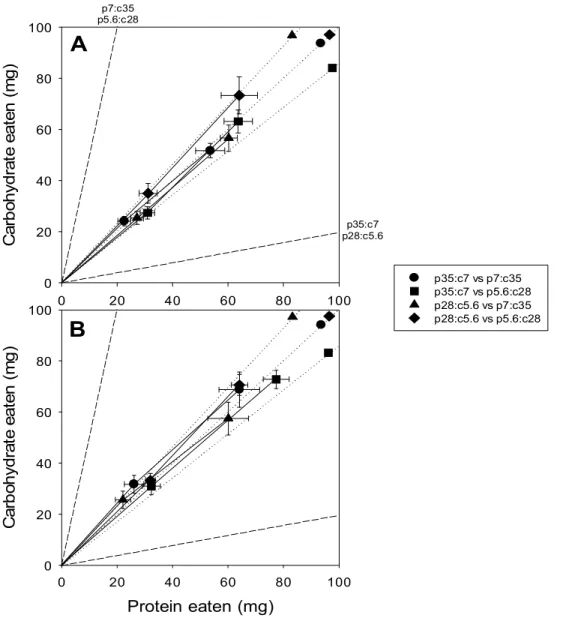
Cumulative protein and carbohydrate intake over the first 12 and 24 days post-eclosion (days 0–12 and 0–24) are presented in Fig. 1 for male and female
beetles that were allowed to mix their diet from two nutritionally complementary foods in four choice treatments. Results from a two-way
factorial MANOVA revealed that sex had little effect on the overall pattern of macronutrient intake (days 0–12: F2,68 = 1.11, P = 0.335; days 0–24: F2,68 =
1.36, P = 0.264), indicating that the two sexes consumed similar quantity of protein and carbohydrate. Further analyses using one-way MANOVA performed for each sex found that the effect of food pairing on the overall
macronutrient intake over days 0–24 was not significant for both sexes (male: F6,66 = 2.14, P = 0.060; female: F6,72 = 1.77, P = 0.118). Hence, the intake
pooled over the four converging food pairings, which was 60.6 mg protein and
61.7 mg carbohydrate for males and 66.4 mg protein and 67.4 mg carbohydrate for females (Fig. 1). The mean self-selected ratio of protein to carbohydrate
(P:C) was 0.999 for males and 0.997 for females. These ratios were not significantly different from 1 (one sample t-test, male: t36 = 0.033, P = 0.974;
female: t39 = 0.097, P = 0.923) and from one another (unpaired t-test: t75 =
0.050, P = 0.960).
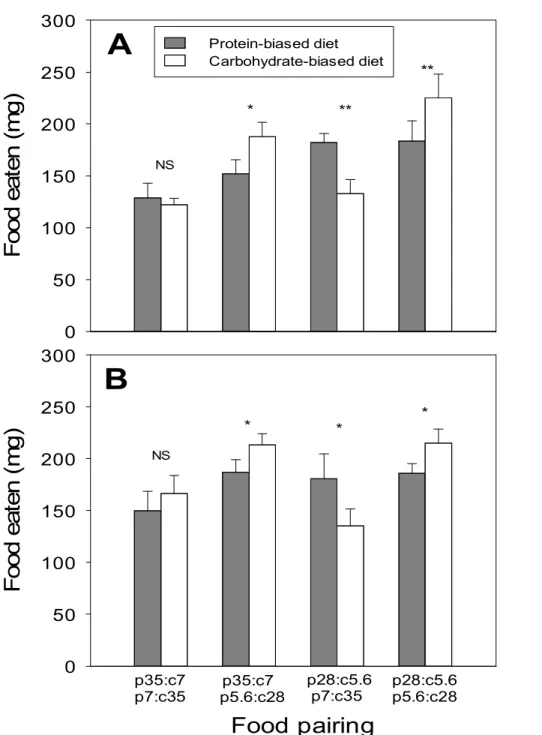
When p35:c7 was paired with p7:c35 food, beetles did not exhibit any significant difference in consumption between the two foods (paired t-test,
males: t8 = 0.503, P = 0.629; females: t9 = -1.015, P = 0.337), but they
consumed significantly more of carbohydrate-biased food when the two dilute
foods were paired (p28:c5.6 vs. p5.6:c28) in the choice treatment (males: t9=
Protein eaten (mg) 0 20 40 60 80 100 C ar b oh yd ra te e at en ( m g ) 0 20 40 60 80 100
A
0 20 40 60 80 100 C ar b oh yd ra te e at en ( m g ) 0 20 40 60 80 100 p35:c7 vs p7:c35 p35:c7 vs p5.6:c28 p28:c5.6 vs p7:c35 p28:c5.6 vs p5.6:c28B
p35:c7 p28:c5.6 p7:c35 p5.6:c28Figure 1. Bivariate means (±SE) of cumulative protein and carbohydrate
intake by Tenebrio molitor beetles (A, male; B, female) in four food pairings. The solid lines represent the intake trajectories for beetles in four food pairings. The first and second sets of points along each trajectory represent the cumulative nutrient intake reached over the first 12 and 24 days post-eclosion, respectively. The two dashed lines are the nutritional rails of the two nutritionally complementary diets that were paired: protein-biased (p35:c7 or p28:c5.6) and carbohydrate-biased (p7:c35 or p5.6:c28) diets. The dotted lines are the hypothetic intake trajectories expected to be followed by beetles if they had fed indiscriminately between the two diets in four food pairings as indicated by symbols presented at the top right of the plot.
A
F
oo
d
e
at
en
(
m
g
)
0 50 100 150 200 250 300B
Food pairing
F
oo
d
e
at
en
(
m
g
)
0 50 100 150 200 250 300 Protein-biased diet Carbohydrate-biased diet p35:c7 p7:c35 p5.6:c28p35:c7 p28:c5.6 p7:c35 p28:c5.6 p5.6:c28 * ** * * * ** NS NSFigure 2. Means (+SE) of total amount of protein-biased and
carbohydrate-biased diet eaten by Tenebrio molitor beetles (A, male; B, female) over the 24 days post-eclosion in four food pairings. Pair t-tests are performed to test for significant food preference (NS P>0.05, * P<0.05, ** P<0.01)
When a concentrated food (p35:c7 or p7:c35) was paired with a dilute one that was oppositely-balanced (p5.6:c28 or p28:c5.6), beetles consumed significantly more of the dilute food regardless of the balance (p35:c7 vs. p5.6:c28, male: t9 = -2.415, P = 0.039; females: t9 = -2.884, P = 0.018)
(p28:c5.6 vs. p7:c35, male: t7 = 3.904, P = 0.006; females: t9 = 2.281, P =
0.048), indicating that foods were selected by beetles in a non-random manner (Fig. 2).
3.1.2. Body composition
A bicoordinate plot for body protein and lipid content is presented n Fig. 3
for male and female beetles in four food pairings. Results from a two-way factorial MANOVA demonstrated that the overall pattern of body nutrient
composition was significantly affected by sex (F2,68 = 9.86, P < 0.001), but
neither by food pairing (F6,138= 0.37, P = 0.897) nor by the interaction between
sex and food pairing (F6,138= 0.83, P = 0.551). Further analyses using one-way
MANOVA performed for each sex confirmed that the protein–lipid points of all four food pairings converged on a sex specific growth target where they
were statistically indistinguishable from one another (male: F6,66 = 0.75, P =
0.611; female: F6,72= 0.65, P = 0.689). Both the mean protein and lipid content
pooled over all these converging choice treatments were significantly greater for females (protein: 23.0 mg; lipid: 7.5 mg) than for males (protein: 21.4 mg;
lipid: 4.8 mg) (unpaired t-test, protein: t75 = -2.136, P = 0.036; lipid: t75 = -4.473, P < 0.001).
Protein content (mg)
16 18 20 22 24 26 28Li
p
id
c
on
te
n
t
(m
g
)
2 4 6 8 10 12 Male Female p35:c7 vs. p7:c35 p35:c7 vs. p5.6:c28 p28:c5.6 vs. p7:c35 p28:c5.6 vs. p5.6:c28Figure 3. Bivariate means (±SE) of body protein and lipid content of Tenebrio
molitor beetles measured at 24 days post-eclosion in four diet choice treatments.
3.2. No-choice experiment
3.2.1. Nutrient intake
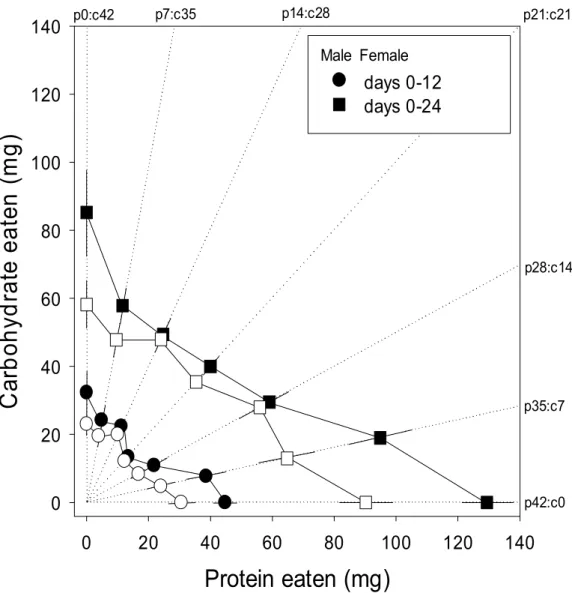
Cumulative protein and carbohydrate intake over the first 12 and 24 days
post-eclosion (days 0–12 and 0–24) are presented in Fig. 4 for male and female beetles restricted to one of seven isocaloric foods differing in their P:C ratio
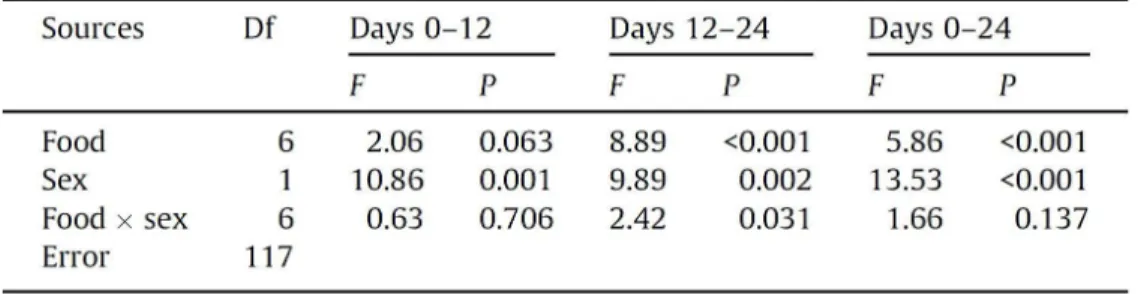
(p0:c42, p7:c35, p14:c28, p21:c21, p28:c14, p35:c7 and p42:c0). Results from a two-way factorial ANOVA indicated that the sum of protein plus
carbohydrate eaten over the first 12 days (days 0–12) was not affected by food (Table 1), with all seven intake points aligning to form a linear intake array
with a slope of 1 (Fig. 4). However, during the latter 12-day period of the experiment (days 12–24), beetles on the two protein-rich foods (p42:c0 and
p35:c7) consumed significantly more macronutrients than did those on the others (Table 1; Tukey multiple comparison test: P < 0.001), causing the final
intake points of these two protein-rich foods to move farther from the position expected if they would align along a slope of 1. The slope of the intake array over the experiment (days 0–24) was significantly shallower than 1 for both
sexes (male: F6,59 = 4.46, P < 0.001; female: F6,58 = 2.44, P = 0.036). Males
ingested significantly greater quantities of macronutrients than did females
difference in nutrient intake was greatly pronounced on the two protein-rich
foods as indicated by a significant interaction between sex and food during the latter half of the experiment (days 12–24; Table 1).
3.2.2. Retention efficiency
Utilisation plots were plotted in Fig. 5 to demonstrate the relationship
between the quantity of nutrients ingested and that of those retained in the body of insects at 24 days post-eclosion. In these utilisation plots, the mean of body
lipid or protein content was plotted against that of carbohydrate or protein intake over days 0–24, respectively, for male and female beetles confined to
one of seven isocaloric foods differing in their P:C ratio. ANCOVA with lipid content as the dependent variable and the carbohydrate intake as the covariate
indicated that body lipid content increased significantly with carbohydrate intake in a linear fashion (covariate: F1,128 = 103.31, P < 0.001; Fig. 5A).
Marginal mean of lipid content generated from this ANCOVA by adjusting for carbohydrate intake was significantly higher in females (5.32 mg) than n males
(3.95 mg) (sex effect: F1,128 = 16.92, P < 0.001; Fig. 5A), suggesting that
females were more efficient at retaining lipids than males. Body protein content exhibited a significant convex relationship with protein intake
(quadratic effect of protein intake: F1,127 = 3.92, P = 0.050), with protein
the covariates in ANCOVA for body protein content, I did not detect any
significant sex effects on the retention efficiency of body protein (F1,127 = 2.34,
P = 0.129).
Table 1. Summary of ANOVA testing the significance of the effects of diet, sex,
and their interaction on the total quantity of protein plus carbohydrate eaten by Tenebrio molitor beetles over the two successive 12-day periods (days 0-12, 12-24) and over the whole 24 days (days 0-24).
Male Female days 0-12 days 0-24
Protein eaten (mg)
0 20 40 60 80 100 120 140C
ar
b
oh
yd
ra
te
e
at
en
(
m
g
)
0 20 40 60 80 100 120 140 p42:c0 p35:c7 p28:c14 p21:c21 p14:c28 p7:c35 p0:c42Figure 4. Means (±SE) of cumulative protein and carbohydrate intake by
p14:c28, p21:c21, p28:c14, p35:c7 and p42:c0). The dotted lines are the nutritional rails of the seven diets as given in the margin. Seven cumulative intake points are connected with solid lines to demonstrate the pattern of the intake array at 12 and 24 days post-eclosion.
content and of (B) protein intake and body protein content of Tenebrio molitor beetles (males: filled symbols; females: open symbols) measured at 24 days post-infection in seven no-choice diets differing in protein: carbohydrate ratio (p0:c42, p7:c35, p14:c28, p21:c21, p28:c14, p35:c7 and p42:c0). Linear and quadratic regressions are used to fit the relationships between carbohydrate intake and lipid content and between protein intake and protein content, respectively (males: solid line; females: dotted line).
3.2.3. Body composition
The dry body mass of beetles at 24 days post-eclosion was neither affected
by food (ANOVA: F6,118 = 1.61, P = 0.151) nor by sex (F1,118 = 0.40, P =
0.527). Body lipid content was significantly higher on low P:C foods (food effect: F6,118 = 12.86, P < 0.001; Fig. 6A). Females retained a significantly
greater body lipid content than did males (sex effect: F1,118 = 5.21, P = 0.024).
Body protein content was not affected by sex (sex effect: F1,118 = 1.74, P =
0.190; Fig. 6B), but was significantly low on protein-deficient food (p0:c42)
(food effect: F6,118 = 4.69, P < 0.001). For all measured parameters of body
composition, the interaction between sex and food was not significant (body
mass: F6,118 = 0.52, P = 0.789; protein: F6,118 = 0.37, P = 0.894; lipid: F6,118 =
1.11, P = 0.360).
3.2.4. Starvation resistance
Starvation resistance, which is measured as the number of days that beetles survived under food deprivation, was significantly affected by food (ANOVA:
F6,208 = 21.95, P < 0.001) and sex (F1,208 = 152.10, P < 0.001). Starvation
period before death was prolonged for beetles previously fed on carbohydrate-biased foods (p0:c42 and p7:c35; Fig. 6). Females lived significantly longer (ca.
7.1 days) than did males. The interaction between sex and food was not significant for starvation resistance (F6,208 = 1.33, P = 0.245), indicating that
Figure 6. Means (+SE) of (A) body lipid content, (B) body protein content,
and (C) starvation time of Tenebrio molitor beetles in seven no-choice diets differing in protein: carbohydrate ratio (p0:c42, p7:c35, p14:c28, p21:c21, p28:c14, p35:c7 and p42:c0).
4. Discussion
Much of the pioneering research on the nutritional regulatory responses of insects has been conducted on Lepidoptera and Orthoptera (reviewed in
Behmer, 2009; Simpson and Raubenheimer, 2012). Despite some early investigations on dietary self-selection in Coleoptera (Waldbauer and
Bhattacharya, 1973; Morales-Ramos et al., 2011; Catalan et al., 2011), it was not until recently that the nutrient balancing of some predatory beetles was
analysed in such detail comparable to that of caterpillars and grasshoppers (Mayntz et al., 2005; Raubenheimer et al., 2007; Jensen et al., 2012). This
chapter investigated various aspects of nutritional regulatory responses in an omnivorous beetle, T. molitor.
It is well established that many insects have the capacity to balance the intake of protein and carbohydrate by selectively mixing nutritionally
complementary foods (Waldbauer and Friedman, 1991; Simpson et al., 2004; Behmer, 2009; Simpson and Raubenheimer, 2012). These data from the choice
experiment showed that T. molitor beetles actively regulated their macronutrient intake, with the protein–carbohydrate intake points of all food pairings converging on a specific target position in the two dimensional
nutrient space. When a concentrated food was paired with a dilute one that was imbalanced in an opposite direction (choice treatment: p35:c7 vs. p5.6:c28 and
quantities than the concentrated one, confirming that foods were selected
non-randomly by beetles to compensate for food dilution. Physiological processes underlying such regulatory responses remain to be addressed in beetles, but
may include the direct modulation of taste receptor responsiveness through blood-borne nutrient feedbacks, possible role of neuromodulators in the central
nervous system and associative learning (Cohen et al., 1988; Simpson and Simpson, 1990; Simpson and White, 1990; Simpson and Raubenheimer,
1993b).
Comparative analyses over a range of insect groups have shown that the
optimal balance of protein:carbohydrate (P:C) that maximises the insect performance correlates with various physiological, ecological and evolutionary
characteristics of insects, such as diets, phylogeny, life-history and their evolutionary associations with symbiotic microbes (Simpson and
Raubenheimer, 1993a). For example, the optimal diets of the larvae of many holometabolous insects (e.g., Lepidoptera and Diptera) are generally biased in
favour of protein, reflecting their high protein requirement to support rapid tissue growth. By contrast, the slow-growing larvae of hemimetabolous insects (e.g., Orthoptera) prefer slightly carbohydrate- biased foods to meet high
energy requirement for activity (reviewed in Waldbauer and Friedman, 1991; Behmer, 2009; Simpson and Raubenheimer, 1993a, 2012). Since T. molitor
were expected to prefer a food relatively high in carbohydrates. However, these
data showed that both male and female beetles of T. molitor selected protein and carbohydrate in a 1:1 ratio, which is not very different from the slightly
carbohydrate-biased P:C ratio of 1:1.27 (44%:56%) self-selected by mated females of this species in an earlier study by Ponton et al. (2011). These
selected P:C ratios reported from the past and present T. molitor studies are higher than those of cockroaches that accommodate nutritional endosymbionts
(Jones and Raubenheimer, 2001; Raubenheimer and Jones, 2006; South et al., 2011), but are lower than those of omnivorous katydids that frequently
consume animal prey (Simpson et al., 2006; Goeriz Pearson et al., 2011). Although relatively little is known about the nutrient balancing in omnivores, it
appears that the self-selected P:C ratios of omnivorous insects vary among phylogenetically distinct groups.
Mainly driven by high protein demand for producing eggs, females are generally expected to be more protein-limited than males (Wheeler, 1996;
Morehouse et al., 2010; Lee, 2010) and have an intake target that is often more biased toward protein than that of males. An alternative but not mutually exclusive possibility is that females may also require larger amounts of lipids
than males because insect eggs consist of ca. 30–40% lipids (Ziegler and van Antwerpen, 2006). However, this chapter showed that there was no significant
Such a lack of sex difference in macronutrient intake may be attributed to the
fact that the experimental beetles used in this chapter were not mated. Previous studies have shown that the egg production and other reproductive activities
are stimulated by mating in many insects, largely mediated by male seminal fluid peptides transferred to the female reproductive tract during mating (Chen
et al., 1988). Studies addressing the effects of mating on macronutrient preferences have been performed in greatest detail in Drosophila melanogaster
(Ribeiro and Dickson, 2010; Lee et al., 2013). For example, sex-specific divergence in macronutrient intake is observed only when males are compared
with mated females but not with virgin females (Lee et al., 2013), with mated females showing a considerably higher intake of macronutrients as well as
preference for protein than males and virgin females. It has been reported that the fecundity of T. molitor females increases with mating frequencies and
polyandry (Drnevich et al., 2001; Worden and Parker, 2001), raising the possibility that the intake for specific nutrients required for producing eggs can
rise after mating in this species. A recent study from crickets indicated that the lack of difference in nutrient intake between male and female insects could be the result of intralocus sexual conflict (Maklakov et al., 2008).
When confined to nutritionally imbalanced foods in the no-choice experiment, beetles were prevented from achieving a state of nutritional
compromise between the cost of over-ingesting the excessive nutrient in the
food and that of under-ingesting the deficient one. The patterns of this ingestive trade-off are known to correlate with diet breadth or the degree of
nutritional heterogeneity in insect herbivores (Raubenheimer and Simpson,1999, 2003; Simpson et al., 2002). For example, generalist
grasshoppers (the gregarious phase of Schistocera gregaria) and caterpillars (Spodoptera littoralis, Heliothis virescens) tend to over-ingest the surplus
nutrient to a greater extent than do their specialist counterparts (grasshoppers: the solitarious phase of S. gregaria, Locusta migratoria; caterpillars:
Spodoptera exempta, Heliothis subflexa; Raubenheimer and Simpson, 2003; Lee et al., 2002, 2003, 2006; Simpson et al., 2002), forming a linear intake
array (termed as, the ‘equal distance rule’ of compromise). A similar pattern of nutrient balancing between the excessive and deficit nutrients has been
demonstrated from an omnivore and a generalist predator (Raubenheimer and Jones, 2006; Raubenheimer et al., 2007). By contrast, when restricted to
imbalanced foods, the specialists are more prone to regulate their macronutrient intake in a way as to minimise the nutritional error relative to the intake target, exhibiting an arc-shaped intake array (the ‘closest distance rule’
of compromise). The nutritional heterogeneity hypothesis predicts that the tendency of the generalists to tolerate greater quantities of nutrient excesses is
complementary foods, which will act as the nutritional antidotes for
ameliorating the accrued nutritional imbalances (for further details, see Raubenheimer and Simpson, 1999, 2003; Lee et al., 2002, 2003, 2006;
Simpson et al., 2002). T. molitor beetles are omnivorous scavengers that have adapted to high nutritional heterogeneity. Thus, they are expected to follow the
nutrient balancing rule that is characteristic of the generalists. These results strongly agreed with the nutritional heterogeneity hypothesis, showing that the
intake array of T. molitor beetles was apparently linear with negative slope, closely resembling that of generalist herbivores and omnivores. The slope of
the intake array was close to 1 over the first 12 days post-eclosion, but became shallower as beetles on the high-protein diets ate more than those on the other
diets during days 12–24, demonstrating the tendency of T. molitor beetles to prioritize the regulation of carbohydrate intake over that of protein intake. The
slope of the intake array shallower than 1 may indicate that these omnivorous T. molitor beetles are highly capable of deaminating protein excesses and using the protein-derived carbon skeleton in energy metabolism to overcome carbohydrate limitation (Raubenheimer and Simpson, 2003; Thompson and Redak, 2000). Consistent with an earlier study from predatory beetles
(Raubenheimer et al., 2007), the beetles in this experiment ingested more nutrients when given choice to self-select their preferred diet from two
foods. If nutrients were ingested in imbalanced quantities and ratios from one
of the choice foods, beetles would be stimulated to eat the food nutritionally complementary to the most recently encountered food to redress the nutritional
imbalances (Mayntz et al., 2005; Raubenheimer and Jones, 2006). Since the nutritional heterogeneity hypothesis predicts that the generalists have a
propensity to over-eat when encountered with nutritionally imbalanced foods, continuously encountering the two nutritionally imbalanced but
complementary foods would lead self-selecting beetles to eat more than those restricted to single foods. Previous studies from other insects have shown that
males are more adept at laying down fats from ingested carbohydrates than females, reflecting their greater energy requirement to fuel their activities
related to dispersal and courtship (Kolluru et al., 2004; Maklakov et al., 2008). However, the pattern was reversed for T. molitor beetles in this study, showing
that females retained a higher level of body lipid reserves than males. Males in many species of beetles are expected to be metabolically more active than
females, being predisposed to allocating more energy to activities like mate-searching and male-male fighting (Rogowitz and Chappell, 2000). Allocation of energy to these energetically costly premating activities is likely to divert
energy away from storage in males, perhaps explaining why males were less efficient at retaining body lipid content than females. However, it remains to be
females in T. molitor. The ability to withstand prolonged periods of acute food
deprivation is determined primarily by the quantity of lipid reserves in insects (Rion and Kawecki, 2007; Lee and Jang, 2014). These data showed that
females of T. molitor deposited more body fat and thus were more resistant to starvation than males. At low dietary P:C ratios, beetles may resist starvation
well despite facing potential fitness costs associated with protein limitation. At high ratios, however, any benefits to be gained from eating sufficient protein is
likely to be traded-off with the low probability of survival under food deprivation (Lee and Jang, 2014). This chapter provides the most
comprehensive analysis of the nutritional regulatory responses of the two sexes of T. molitor beetles to a range of nutritional imbalances to date. These results
agree with the idea that the heterogeneity of macronutrients encountered in the environment is a powerful factor shaping the behavioural and physiological
mechanisms of nutrient regulation in insects (Raubenheimer and Simpson, 1999, 2003; Simpson et al., 2002). Given the importance of T. molitor beetle as
a key model organism for studying both proximate and ultimate mechanisms of insect immunology (Siva-Jothy et al., 2005), demonstrating the detailed aspects of nutrition in this species will provide a solid platform for future studies
addressing the interactions between nutrition and immune defence in the burgeoning field of nutritional immunology (Ponton et al., 2013).
CHAPTER 2.
Nutrient-specific food selection buffers the effect of
nutritional imbalance in the mealworm beetle,
Abstract
Ingesting nutritionally imbalanced food can cause a significant reduction in
fitness in insects. Insects can avoid the negative consequences of nutritional imbalances by selectively foraging for nutritionally complementary foods. This
chapter investigated the ability of the omnivorous beetle, Tenebrio molitor (Coleoptera: Tenebrionidae), to redress nutritional imbalances by selecting
complementary foods. Beetles were fed one of three synthetic diets that varied in their protein: carbohydrate balance (p0:c42, p21:c21 or p42:c0) for 16 days
and then allowed to select between two nutritionally imbalanced but complementary diets (p0:c42 vs. p42:c0) for 18 days. During the initial period,
beetle survival was high on all three experimental diets, but their body composition was considerably skewed as a result of eating nutritionally imbalanced diets. Over the first 6 days of food choice (days 16–22), beetles
previously fed a protein-rich, carbohydrate-deficient diet (p42:c0) preferred carbohydrate to protein, whereas those previously fed a carbohydrate-rich,
the food choice period continued for longer than 6 days, the selection of diets
by previously carbohydrate-deprived beetles (p42:c0) was similar to that of the control beetles previously fed an optimal food (p21:c21). However, beetles that
were previously fed on the protein-deficient diet (p0:c42) selected protein and carbohydrate equally throughout the remaining period of food choice and the
cumulative protein-carbohydrate intake of these protein-deprived beetles was similar to that of those fed the optimal diet (p21:c21). At the end of the
experiment, the body composition of all beetles was similar, indicating that the effects of nutritional imbalance on body composition were buffered by the
subsequent selection of complementary foods. This chapter results demonstrate that T. molitor beetles are capable of redressing nutritional imbalances and
indicate that the way in which the nutritional balance of beetles is restored depends on the nutrient that is initially deficient in their food.
1. Introduction
Insects can maximize their Darwinian fitness when they acquire an optimal
amount and blend of nutrients (Simpson et al., 2004; Lee et al., 2008; Jensen et al., 2012; Roeder and Behmer, 2014). Protein and carbohydrate are the two
major macronutrients that are extensively used to investigate the effects of macronutrient balance on various aspects of physiology, behaviour and
life-history performance in insects (Behmer, 2009; Simpson and Raubenheimer, 2012). When protein and carbohydrate are ingested in imbalanced quantities
and ratios, insects suffer significant performance costs arising from ingesting not only too little of one nutrient (Mattson, 1980; White, 1993), but also too
much of a nutrient that occurs in excess of their requirements (Simpson et al., 2004; Raubenheimer et al., 2005; Boersma and Elser, 2006; Zehnder and Hunter, 2009). For example, eating a diet containing excess protein relative to
carbohydrate shortens lifespan in many insects (Lee et al., 2008, 2013; Fanson et al., 2012; Dussutour and Simpson, 2012).
ameliorated by insects using a variety of post-ingestive mechanisms (Zanotto et
al., 1994, 1997; Raubenheimer and Bassil, 2007; Clissold et al., 2010), but probably the most effective way to correct nutritional imbalances is to forage
for nutritionally complementary foods (Waldbauer and Friedman, 1991; Behmer, 2009; Simpson and Raubenheimer, 2012). Insects have a
well-developed capacity to assess their current nutritional state and adjust their food preferences in order to counterbalance the nutritional imbalances accrued over
a wide range of timescales (Simpson et al., 1988, 1990, 1991; Simmonds et al., 1992; Mayntz et al., 2005; Raubenheimer and Jones, 2006; Lee et al., 2012).
The accuracy and efficiency with which insects restore their nutritional state are likely to depend on the extent and nature of the nutritional imbalance faced
by insects, but little empirical work has been done to test this possibility in insects (but see Raubenheimer and Jones, 2006; Lee et al., 2012).
In this chapter, I investigate how protein:carbohydrate imbalances influence the pattern of complementary food selection in the mealworm beetle,
Tenebrio molitor L. (Coleoptera: Tenebrionidae). To accomplish this, I experimentally manipulated the nutritional state of T. molitor beetles by feeding them for 16 days on one of three foods that differed in terms of their
protein and carbohydrate content and then determining the patterns in their selection of different nutritionally complementary diets over the next 18 days.
diets with identical caloric contents: (1) protein-rich, carbohydrate-deficient
diet, (2) equal protein: carbohydrate balanced diet or (3) carbohydrate-rich, protein-deficient diet. Recent work has shown that both male and female
beetles of T. molitor are capable of regulating their protein and carbohydrate intake independently, resulting in an intake ratio of protein : carbohydrate close
to 1 : 1 (Rho and Lee, 2014). This lead us to assume that a diet with an equal protein : carbohydrate (1 : 1) ratio is the optimal one for T. molitor beetles
while the others are nutritionally imbalanced with one nutrient in excess and an insufficient quantity of the other. I hypothesized that beetles that were initially
fed a diet devoid of a specific nutrient (protein or carbohydrate) would show a preference for a diet rich in the deficient nutrient. I also predicted that beetles
would rely exclusively on controlling their food intake to compensate for protein-deficiency because nitrogen is only obtained by eating protein. When
compensating for carbohydrate-deficiency, beetles are expected to be less reliant on their food intake because protein can be metabolized into
carbohydrate by the process of gluconeogenesis (Thompson and Redak, 2000). To test these predictions, I examined the food preference patterns of beetles previously fed diets differing in the protein : carbohydrate balance. I also
compared the body composition of beetles that were allowed to select between the diets with that of those that were fed only one of three diets in order to
of being able to select a particular diet.
2. Material and methods
2.1. Experimental foods
Dry, granular, chemically-defined synthetic diets were prepared based on
the established protocol outlined by Simpson and Abisgold (1985). In total, I made three diets differing in protein (p) and digestible carbohydrate (c) content:
0% protein with 42% digestible carbohydrate (p0:c42), p21:c21 and p42:c0 (% dry mass). The total concentration of protein plus carbohydrate was fixed at 42%
for all three diets. Since protein and carbohydrate are similar in caloric density (4 calories per gram), all three foods used in this study are near isocaloric. The
protein component of all diets was a 3 : 1 : 1 mixture of casein, peptone and albumen, and sucrose was the digestible carbohydrate. All diets contained a fixed content of Wesson's salt (2.4%), cholesterol (0.5%), linoleic acid (0.5%),
ascorbic acid (0.3%), a vitamin mix (0.2%) and indigestible cellulose (54%). 2.2. Experimental procedures