Pushing and pulling tasks are one of the manual material handling tasks of consumer products and upper extremity muscle rehabilitation as well as industries. However, dynamic pushing and pulling movements at submaximal levels are enough to cause muscle fatigue and physical discomfort, even if it does not require maximal force or strength effort. The primary objective of this laboratory study was to quantitatively evaluate the level of upper extremity muscle activation during cyclic pushing and pulling tasks.
During each task, muscle activity of seven upper limb muscles, push and pull movements and grip force were observed. Most upper extremity and shoulder muscles tested in the current study generated greater activation levels with increased external loads (both horizontal and vertical load) during dynamic pushing and pulling movements in general. The results of this study provided insight into the design of consumer products or rehabilitation programs that include submaximal load levels of cyclic push and pull.
Also, some considerations for expanding the understanding of this study were proposed for future research in dynamic push and pull tasks at the submaximal level of exertion.
INTRODUCTION
Research Background
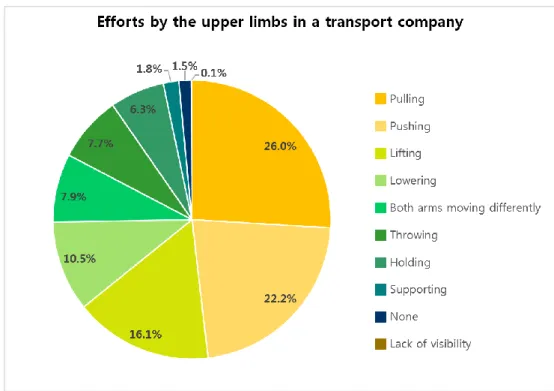
- Pushing and pulling tasks in industries
- Pushing and pulling tasks in non-industrial environments
- Reasons for investigating sub-maximum level of dynamic pushing and pulling tasks
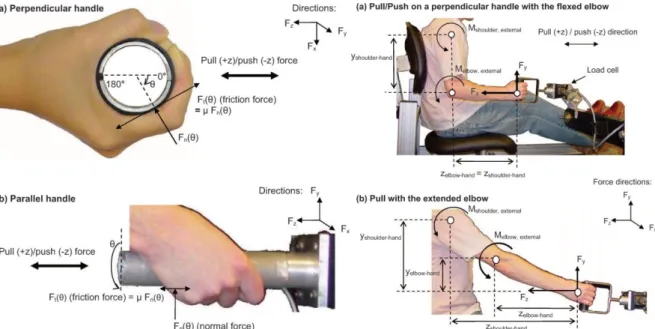
- Previous studies on pushing and pulling tasks
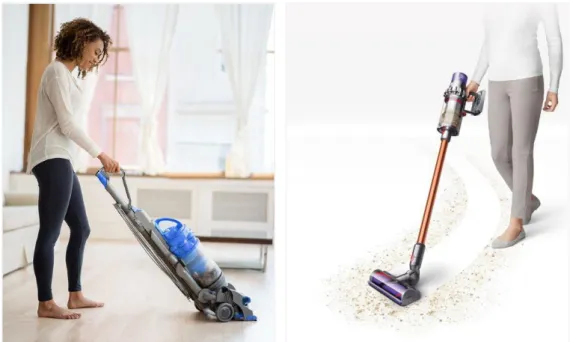
Some consumer products such as vacuum cleaners and irons require cyclical manual push and pull movements. For rehabilitation of the upper limb and shoulder muscles and joints, pushing and pulling movements are also commonly seen. Therefore, cyclic pushing and pulling movements at low levels of exertion can induce fatigue in upper extremity muscles.
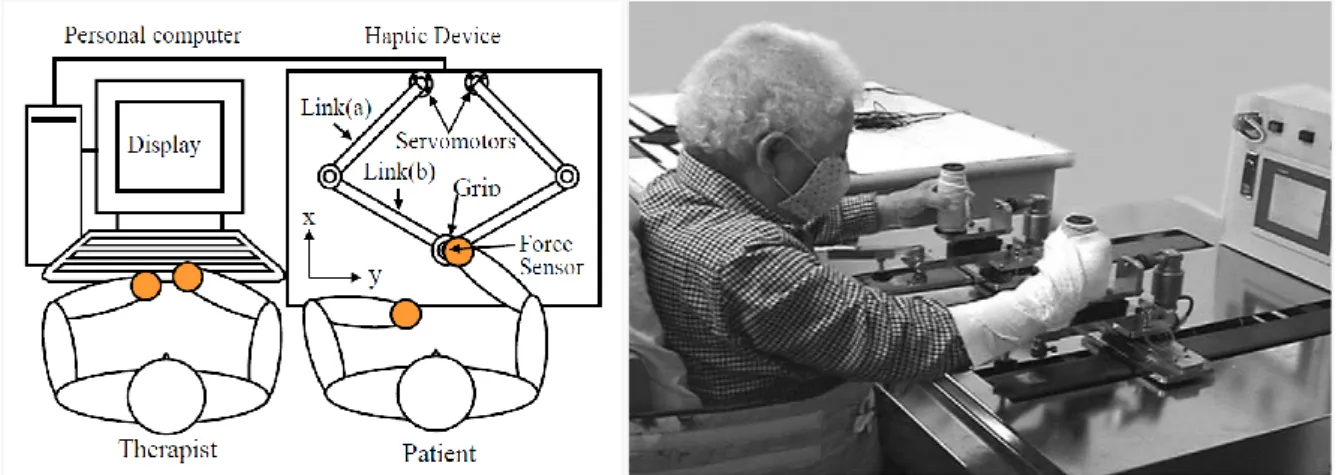
Pushing and pulling movements in the rehabilitation area are usually performed by the elderly and patients who have problems with the upper limb. Previous studies have investigated individual and combined effects of various factors on push and pull tasks. The studies on push and pull tasks have concentrated on measuring maximal force, in general.
Consumer products require push and pull movements, and the developers and users are interested in ergonomic aspects of the consumer products.
Research Objectives
METHOD
- Participants
- Instruments
- Electromyography (EMG) measurement system
- Motion capture system
- Grip force measurement system
- Experiment design
- Experimental variables
- Overall procedure of the experiment
- Electromyography (EMG) recording preparation
- Motion measurement preparation
- Grip force measurement preparation
- Main task
- Data processing and analysis
- Movement tracking
- Muscle activities
- Grip force
- Subjective rating
- Statistical analysis
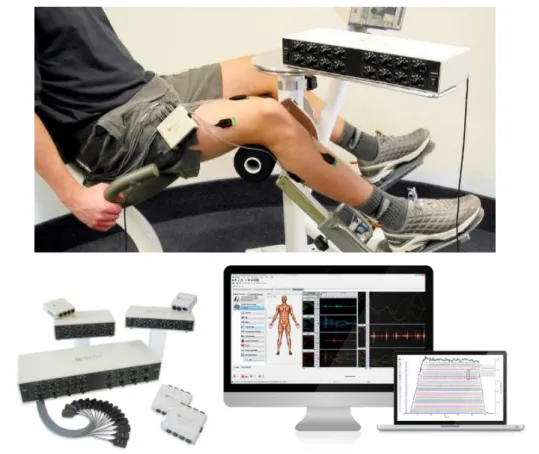
In session 1, the experimenter measured the height and weight of the participant and the attached sensors. Myoelectric activity (EMG) of seven upper extremity muscles, grip movement, and grip strength were collected during the tasks. To normalize the EMG data during the tasks, the EMG values of the maximal voluntary contraction (MVC) of all muscles were measured.
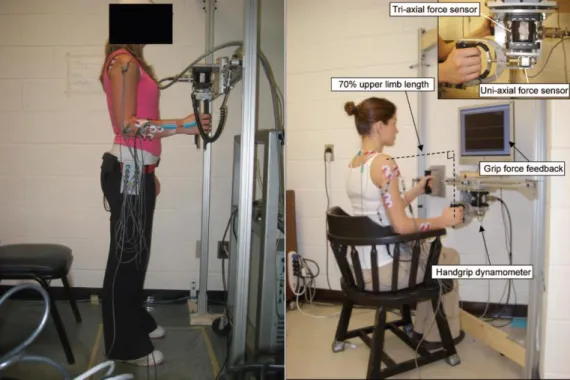
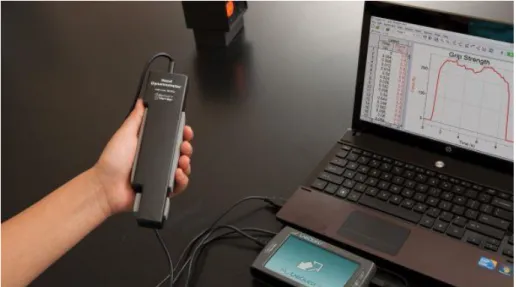
MVC EMG of the flexor carpi ulnaris muscle was measured when the participant gripped the hand dynamometer maximally and held for a 10-second trial with the wrist in the neutral position (Figure 18A). MVC EMG of the upper trapezius muscle was recorded when the participant sat in a chair and pulled a stationary bar by raising both shoulders with arms straight down (Figure 18G). The MVC EMG data of each muscle were collected twice, and the highest mean amplitude of the two trials was selected as the maximum muscle amplitude.
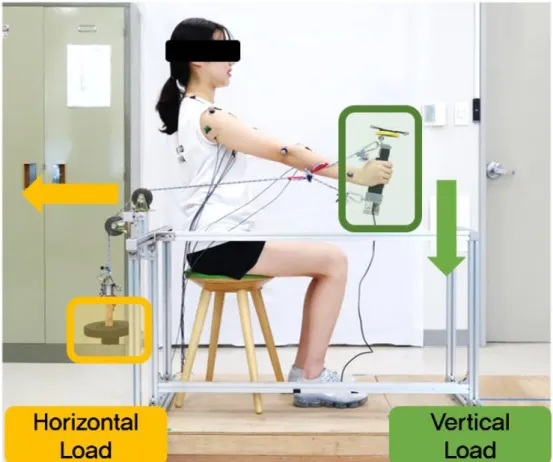
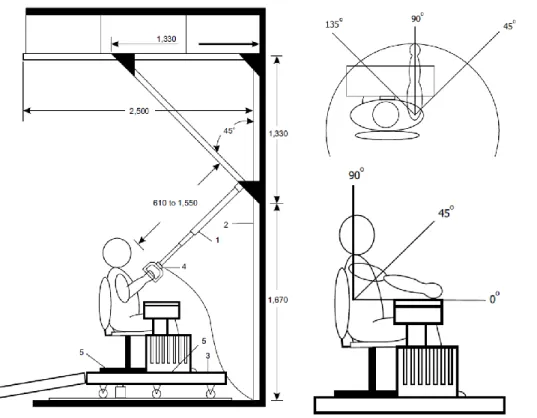
Four reflective markers were attached to the upper part of the handle (Figure 19), and the rigid body was made from the set of reflective markers. The runway size is designed to fit the average height of 1.62 m for Korean women in their 20s, based on Size Korea data (Korea Technology and Standards Agency, 2015). The pulling task was performed in the same protocol as the pushing task, but only the effort and direction of movement were reversed.
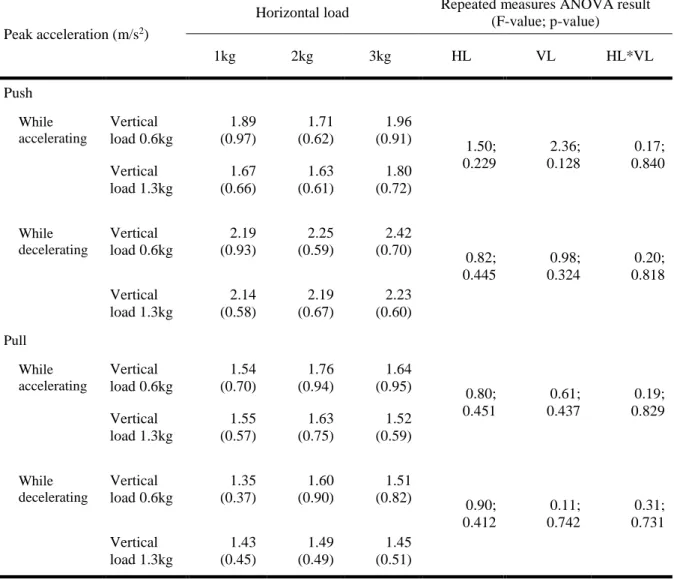
To prove that the participant performed the experimental condition constantly, the acceleration of the lever movement was analyzed. All variables were calculated from the exertion phase of the middle five cycles in each condition. The data from the middle five cycles of each condition were extracted for more stable data.
For each condition, the values of the 50th percentile and 90th percentile of the amplitude probability distribution of the normalized EMG (NEMG) data for each muscle were calculated to estimate the median and peak levels of the muscle activation during the tasks. The data from the middle five cycles of each condition were extracted for stable data.
RESULTS
- Movement tracking
- Muscle activities
- Grip force
- Subjective rating
Subsequent post hoc Tukey tests revealed that mean and peak NEMG of all muscles except brachioradialis were significantly greater for heavier horizontal load. Pushing with a heavier vertical load elicited significantly greater whole muscle activity than performing the push movement with a lighter vertical load. Performing the push-up task with heavier horizontal load and vertical load produced significantly greater levels of muscle activation in a linear fashion (Figure 26).
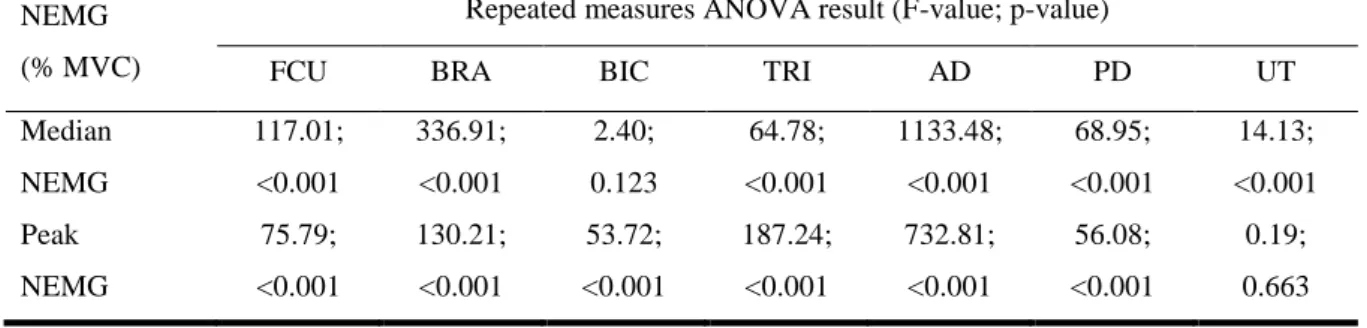
Significant main effects of horizontal load were found for all muscles except biceps brachii muscle (p<0.05) (Table 5). Between two vertical load conditions, pushing with the heavier vertical load resulted in the greater activity of all muscles except posterior deltoid muscle. Participants generated much greater muscle activation levels of anterior deltoid and triceps muscles when performing pulling tasks with 1 kg horizontal load and 1.3 kg vertical load (Figure 27).
During push tasks, the effect size of horizontal load was greater than vertical load for flexor carpi ulnaris, triceps brachii, anterior and posterior deltoid muscles. On the contrary, brachioradialis, biceps, and upper trapezius muscles had greater effect sizes of vertical loading than horizontal loading (Table 6). Similar to pushing tasks, the effect size of vertical loading was greater than that of horizontal loading for the brachioradialis, biceps and triceps brachii, anterior deltoid, and upper trapezius muscles (Table 7).
The normalized grip force in push tasks ranged from 6.21% MVG to 38.84% MVG, and it differed significantly (p < 0.05) between horizontal loading conditions and vertical loading conditions (Table 8). Leading with heavier horizontal load resulted in significantly greater normalized grip force in both pushing and pulling tasks. Similarly, the normalized grip force was significantly higher as the vertical load increases in both pushing and pulling tasks (Figure 28).
In both push and pull tasks, participants reported feeling less fatigue and lighter hand weight with lighter horizontal load. Performing experimental conditions with lighter vertical load also allows participants to respond less to fatigue and hand weight (Figures 29 & 30).
DISCUSSION
- Movement tracking
- Muscle activities
- The horizontal and vertical load effects on the muscle activities
- The interaction effects on the muscle activities
- The direction of exertion effects on the muscle activities
- Overall explanation and potential application
- Grip force
- Subjective rating
- Limitation
- Future study
In the push tasks, the normalized muscle activation levels were significantly affected by the horizontal load. Vertical load effects on muscle activities were also significant for all muscles while performing both push and pull tasks. For both push and pull tasks, brachioradialis and biceps brachii responded more evidently to the change of vertical load compared to horizontal load.
In summary, the muscles near the shoulder, which play a primary role in every push and pull, were more affected by horizontal loading than vertical loading. The anterior deltoid and triceps brachii muscles were more affected by changes in vertical load than horizontal load. The main roles of each muscle caused the difference between pushing and pulling tasks.
Therefore, in future studies, it is necessary to consider in detail the difference in muscle activation levels between pushing and pulling, while varying horizontal and vertical load conditions. Findings from muscle activation can be applied to the design of consumer products that include repetitive pushing and pulling tasks at submaximal load. Participants exerted greater grip strength when performing push and pull tasks with heavier horizontal load, consistent with the previous study.
Thus, participants can generate greater grip strength to perform stable pushing and pulling tasks without touching the aluminum frame. When performing real-world push and pull tasks, fatigue can be generated even if submaximal push and pull tasks do not induce high muscle activation levels. It should also be studied to compare the muscle activation levels by adjusting the constraints for other body parts during push and pull tasks.
In this study, the physical demands of pushing and pulling tasks were evaluated by examining the amplitude of muscle activities. Findings from such research can be used to create a biomechanical model that predicts individual loading of the upper limb and shoulder muscles during dynamic push and pull tasks at submaximal loads.
CONCLUSION
Most upper limb and shoulder muscles generated greater effort forces with increased external load both in horizontal and vertical directions during push and pull tasks, in general. Study findings and test protocols from this study can be applied to the design and evaluation of consumer products and rehabilitation programs that include dynamic pushing and pulling movements at submaximal load levels. Co-activation of the shoulder and arm muscles during closed kinetic chain exercises on an unstable surface.
Human body mechanics of pushing and pulling: analysis of the factors of task-related loading on the musculoskeletal system. Effects of robot-assisted bilateral force-induced isokinetic arm training combined with conventional rehabilitation on arm motor function in patients with chronic stroke. Determinants and magnitudes of manual force strengths and joint moments during two-handed standing, maximum horizontal pushing and pulling.
The effects of shoulder abduction angle and wrist angle on upper limb muscle activity in unilateral right-handed push/pull tasks. Dynamic one-handed pulling with special attention to speed, handle height and pulling angles. The effects of distance and height on the maximum isometric push and pull forces with respect to truck drivers with manual transmissions.
The effects of arm height, direction of pull and speed of pull on isokinetic pull strength. Rapid communication Effects of posture, weight and frequency on trunk muscle activity and fatigue during repetitive lifting tasks. Torso push-pull force of normal young adults in sagittal plane at three heights.
Interfering effects of the task demands of grip strength and mental processing on isometric shoulder strength and muscle activity. Association between work limitations and the development of musculoskeletal disorders of the wrist: a prospective study. Effects of sitting and standing, reaching distance and arm orientation on isokinetic tensile strengths in the horizontal plane.
Effects of handle orientation, gloves, handle friction and elbow position on maximum horizontal pulling and pushing forces.