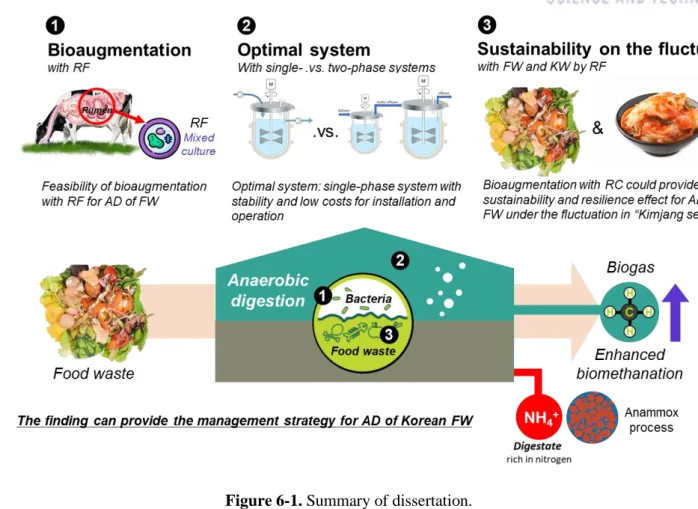
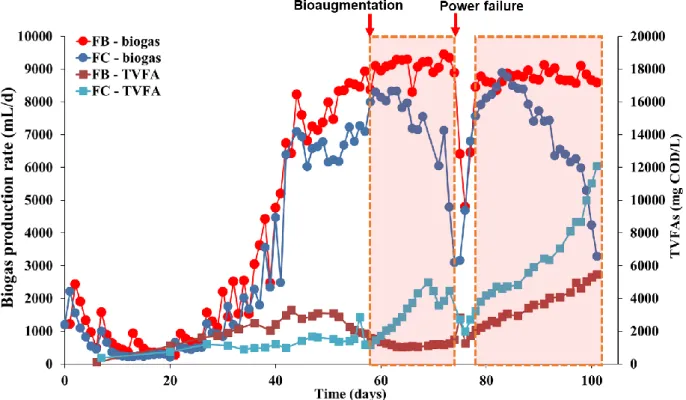
Then, bioaugmentation with RC was investigated in the continuous experiment with fluctuations by adding KW to FW (0–20% of the total substrate VS). Furthermore, long-term efficacy of the bioaugmentation strategy was demonstrated in the continuous mode with varying fractions of KW (i.e.
Background
Challenges faced in food waste management
Therefore, the resilience and stability of the AD process for treating FW should be considered in light of compositional fluctuations. Although these approaches have been applied to the AD process, the understanding of the AD process remains limited to some extent.
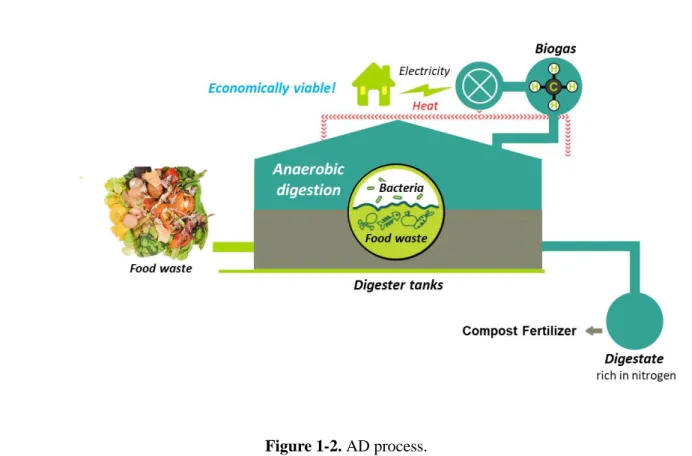
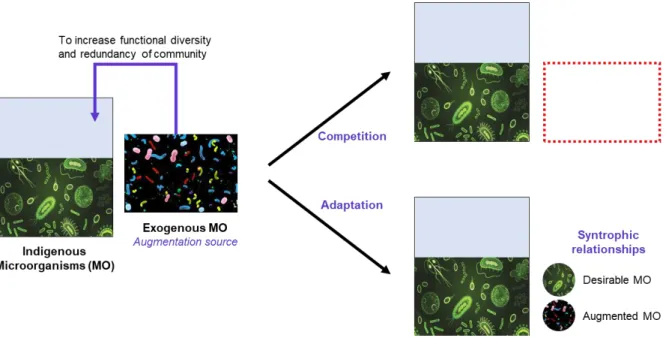
Bioaugmentation for enhancement of AD
To understand AD at the fundamental level, microbial techniques have been developed and applied to study microbial community structures. These techniques help to gain a deeper understanding of the dimensions of microbial community structures at the molecular level.
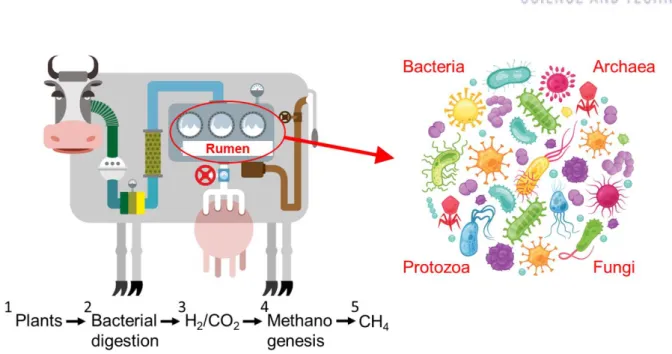
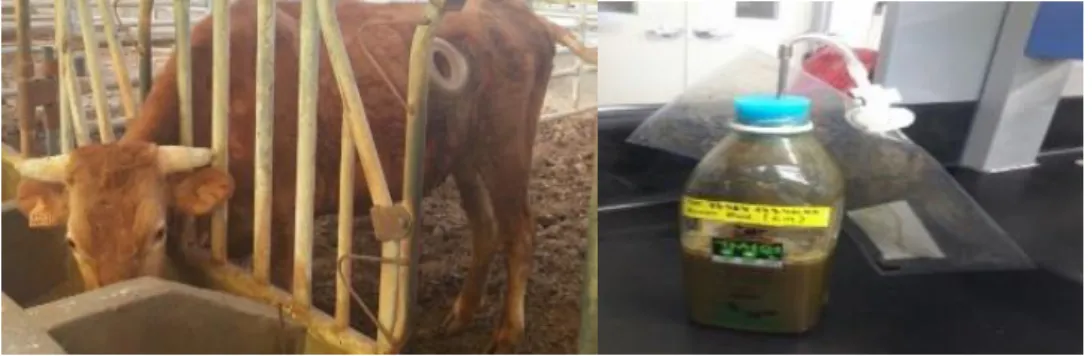
Rumen microorganisms
Therefore, rumen microorganisms can potentially serve as the inoculum source for increasing methane production in the AD of lignocellulosic biomass. This indicated that co-digestion can improve the biogas production and RF as the inoculum can play a role in the AD of organic waste.

Objectives
Introduction
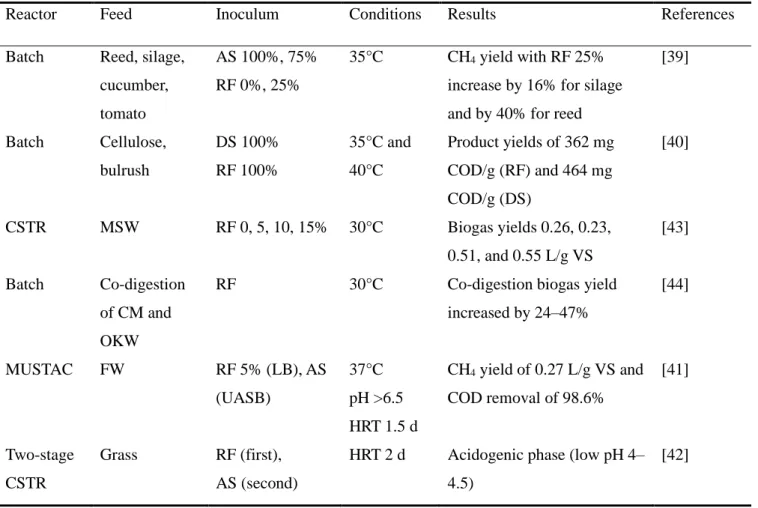
In particular, most previous studies have been carried out to introduce one or a few specialized species. In addition, some research has been applied to inoculum source in AD system because RF-entrained methanogens can contribute to the methanogenesis of the products of hydrolysis and acidogenesis (Table 1-2).
Materials & methods
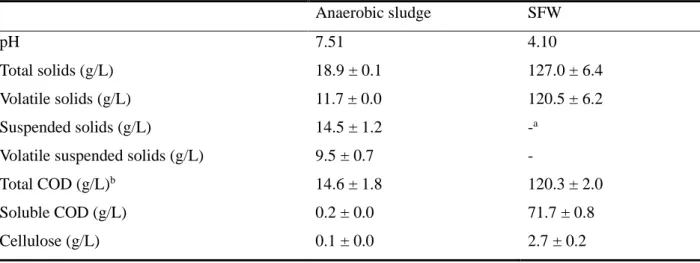
- Substrate and inocula preparation
- Batch tests
- Continuous tests using CSTR
- Molecular fingerprinting and sequencing
- Cluster analysis
- Analytical methods
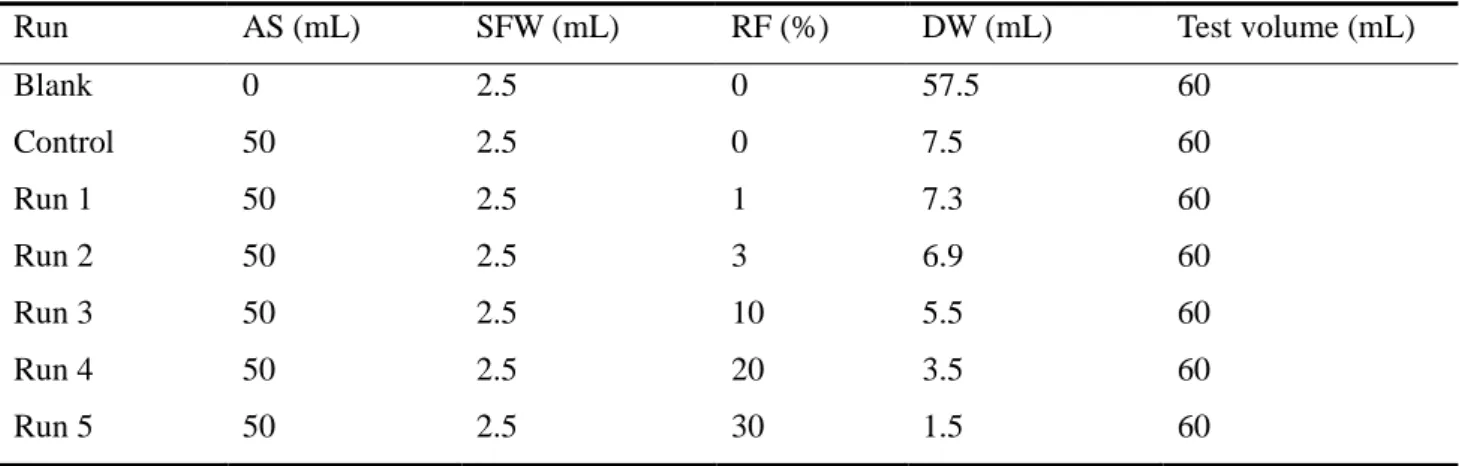
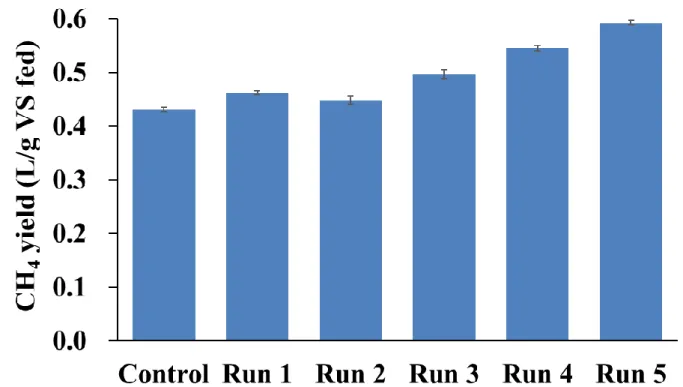
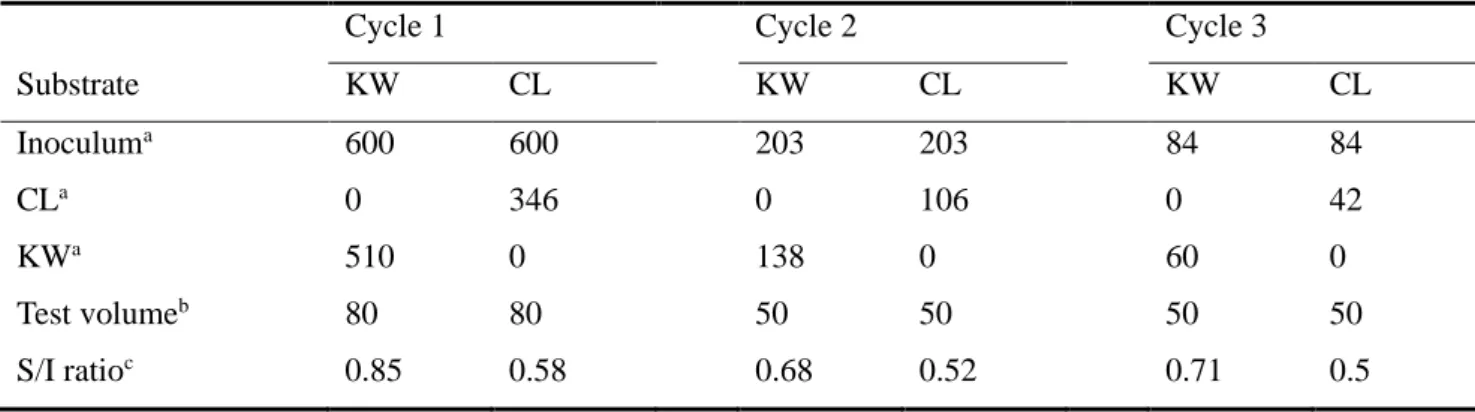
Second batch testing. Five different augmentation ratios with RF (i.e. 30% of the inoculated digestate on a volatile suspended solids (VSS) basis) were tested in parallel with the non-augmented control (Table 2-3). RF biomass, prepared in the same manner as for the batch tests, was added to the reactor at a ratio of 10% to the VSS-based reactor mixing fluid on day 56.
Results & discussion
- batch tests
- Continuous tests with bioaugmentation
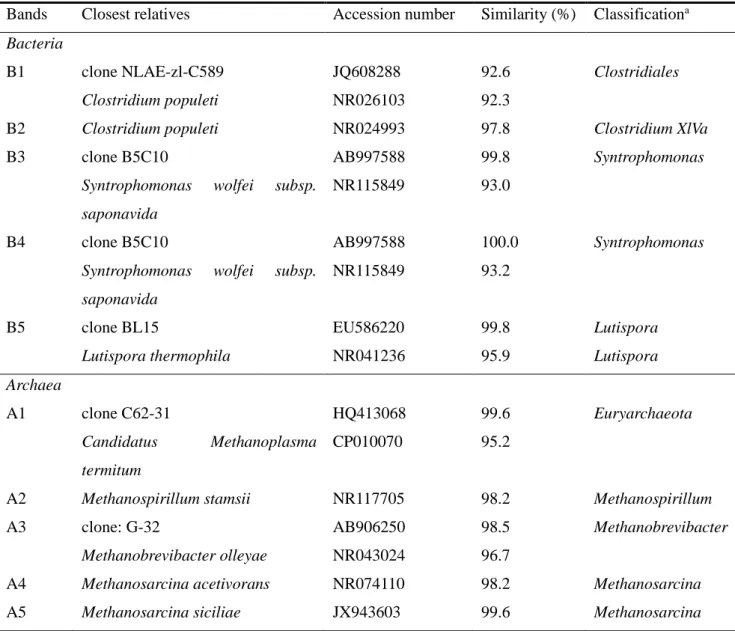
- Microbial community structure
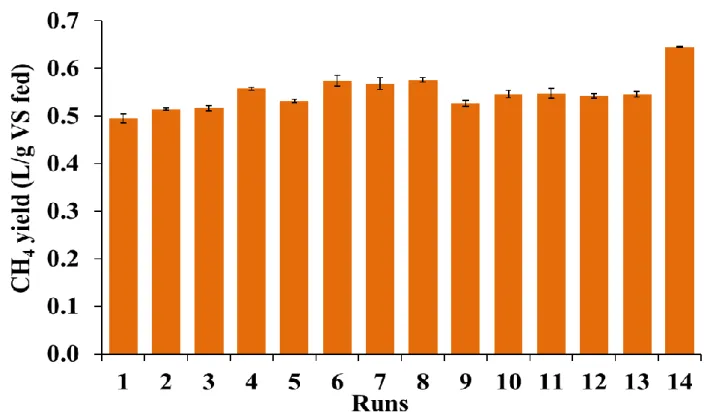
This implies that the bacterial community structure in the reactor was significantly affected by the addition of RF. The change in bacterial community structure due to the introduction of rumen bacteria was likely related to the improved methanation performance (Figs. 2-4 and 2-5).
Summary
The molecular analysis results in general indicate that the bioaugmentation with RF significantly influenced the structure of the bacterial community rather than of the archaeal community. The change of structure and activity of the bacterial community by the introduction of rumen bacteria was potentially beneficial for the improved methanation of FW.
Introduction
Two-phase system with specialized acidogenic phase can be considered as an optimal process for improving the effect of bioaugmentation with RF. However, it is not reported to compare the biomethanation efficiency for single and two-phase CSTR with bioaugmentation of RF under uncontrolled pH.
Materials & methods
- Substrate and inocula preparation
- Single- and two-phase processes operation
- Analytical methods
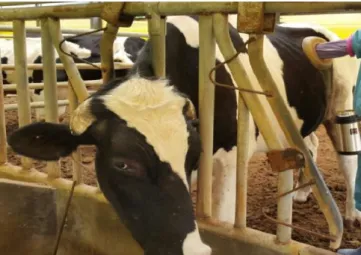
Anaerobic sludge from a large-scale anaerobic co-digester processing sewage sludge and FW was used as inoculum for AD experiments. Anaerobic sludge and RF were sieved (mesh size, 860 μm) to remove coarse particles just before their addition to the cultures. The two-phase process consisted of an acidogenic (Ra) and a methanogenic (Rm) CSTR with a working volume of 0.5 and 2 L, respectively.
Rs and Rm were initially filled with anaerobic sludge while Ra was with 0.4 L anaerobic sludge (80%, v/v) and 0.1 L FW. In the two-phase process, the overall OLR was changed by changing the HRT of Rm accordingly while Ra was operated at a fixed HRT of 4 days throughout the experiment.
Results & discussion
- Performance of the single-phase process
- Performance of the two-phase processes
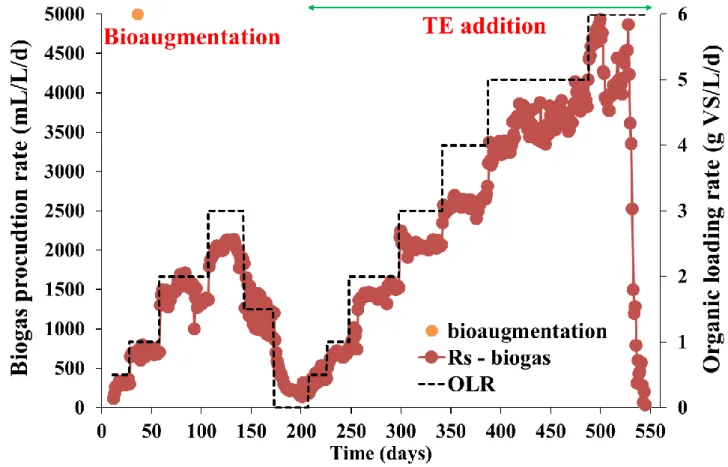
Continuous feeding was then resumed at a low OLR of 0.5 g VS/L∙d, as at start-up. Interestingly, the reactors did not experience any process degradation after the addition of trace elements and showed stable performance until failure at an OLR of 6.0 g VS/L∙d. This means that the process imbalance in Phase 3 was likely due to the lack of trace elements and that additional trace elements were required for the stable operation of Rs at an OLR of 3.0 g VS/L∙d or higher.
However, a further increase in OLR to 6.0 g VS/L∙d (phase 9) resulted in an immediate decrease in methane yield, followed by a rapid drop in the methane production rate and a drastic increase in FA concentration to a highly toxic level (>200 mg NH3-N /L). This is consistent with the observation of reactor failure in Rs at an OLR of 6.0 g VS/L∙d, corresponding to an HRT of 16.7 days (Figure 3-5).
Summary
Introduction
This increase in FW production causes overload of the AD process for treating excess waste. Therefore, it is crucial for the AD of Korean FW to maintain the process stability and resilience to fluctuations in the composition and production of FW and to improve the hydrolysis efficiency of the complex organic substances in FW. This allows maintaining a low hydrogen partial pressure in the rumen for efficient AD of the feed [27].
However, the feasibility of using RF for bioaugmentation of the overall performance of AD when treating FW or. Therefore, the culture system can provide one-time or sustainable supplementation of the bioaugmentation source to increase efficiency or resilience.
Materials & methods
- Subculture batch tests
- Substrates, inoculum, and rumen culture in continuous tests
- Continuous test operation
- Molecular fingerprinting and sequencing
- Statistical analyses of microbial community data
- Analytical methods
In studies 1 and 2, the feasibility of bioaugmentation with RF for AD FW was confirmed with improved short-term biomethanation. In the AD experiments, anaerobic sludge from a large-scale AD plant co-degrading sewage sludge and FW was inoculated. Anaerobic sludge and RC were screened (mesh size, 860 μm) to remove coarse particles and used in the experiments.
A CSTR with a working volume of 2 L was used in the following four configurations: co-digestion reactor without bioaugmentation (CR), co-digestion reactor with RC bioaugmentation (CB), FW digestion reactor without bioaugmentation (FR), and FW digestion reactor with RC bioaugmentation ( FB). Non-metric multidimensional scaling (NMS) was performed on the obtained matrices to visualize the direction and magnitude of changes in the archaeal and bacterial community structures.
Results & discussion
- Subculture batch results
- Microbial community structure of subculture tests
- Results of process performance with various parameters in continuous test
- Biogas production performance
- Process stability
- Microbial community structure in continuous tests
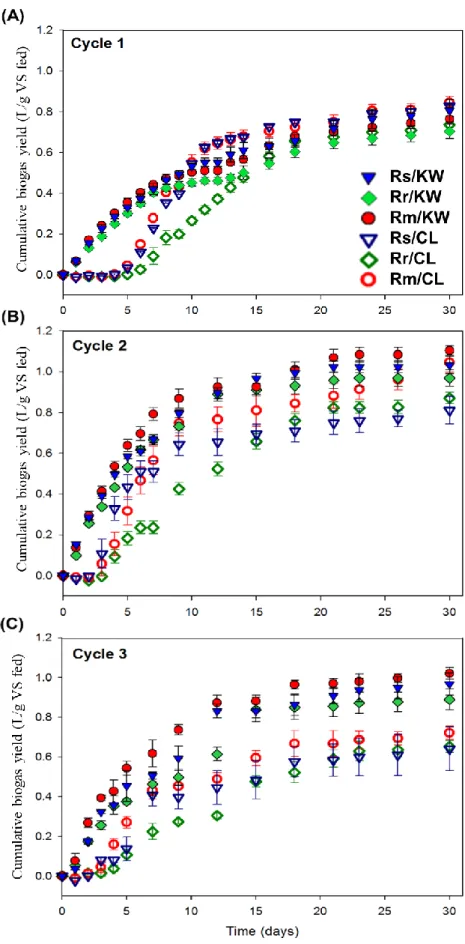
The estimated layer length decreased greatly in the subsequent subcultures compared to the original culture. Both archaeal and bacterial community structures in the subcultures were significantly influenced by the properties of the substrate and the inoculum source. This implies that the effect of bioaugmentation in CB with co-degradation of KW is durable despite fluctuations in the substrates with co-degradation and FW alone.
In addition, OTU B1 was dominant in RC, indicating that the OTU was retained in the bioprocess. The differences in the microbial community could be attributed to the process efficiency of CR and CB, maintaining a higher level of methane production in CB compared to that in CR. The microbial profiles in the FB were closely related to the changes in environmental factors, that is, FA, CH4 production and CODr in the NMS plots.
In addition, changes in the structures of the microbial community had a significant impact on reactor performance in terms of stability and resistance to fluctuations in substrate composition.
Summary
Even when ammonia inhibition on low C/N ratio substrates affected process performance, leading to decreased methane production and VFA accumulation, CB with RC bioaugmentation exhibited superior performance and rapid recovery compared to CR. Furthermore, FB with RC bioaugmentation exhibited more stable performance without VFA accumulation compared to FR. The process at CB was performed stably over a long period (over 3 years) even though the substrate composition varied seasonally.
This indicates that KW co-digestion under RC bioaugmentation can be improved and operate stably with significant structural changes in the underlying microbial community despite changes in substrate composition. Therefore, bioaugmentation with RC has the potential to increase the durability and resilience of AD for the long-term treatment of Korean FW with seasonal fluctuations.
Introduction
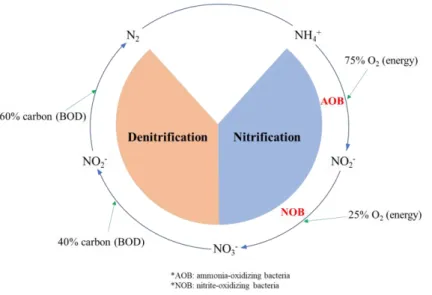
The different making methods of PVA gel have been introduced in previous studies, that is, PVA-alginate, PVA-boric acid, and PVA cryogel formation. Among these methods, PVA cryogel formation is to produce hydrophobic hydrogel method by using freezing and thawing, while other methods use chemical cross-linking (Fig. 5-3). Previous studies have reported on the enrichment of anammox bacteria with PVA-alginate and PVA cryogel.
Therefore, immobilization of anammox bacteria using PVA cryogel is considered as a successful startup method to solve the problem of low growth rate. For enrichment of anammox bacteria, PVA cryogel was used as capture method due to higher stability of biomass retention in the bioreactor.
Materials & methods
- Experimental design for preliminary tests
- High-throughput 16S rRNA gene sequencing
- Analytical methods
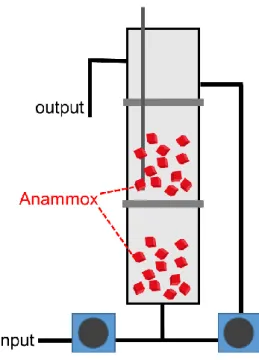
In this study, to investigate the potential of the anammox process for treating anaerobic digester liquor, anammox bacteria were first cultured from the activated sludge treating anaerobic digester. From the preliminary test, modified UDGR system will be used to treat wastewater with high nitrogen content using synthetic wastewater. The gel-immobilized activated sludge was cultured in two identical UDGRs, namely Ra1 and Ra2, for the enrichment of anammox bacteria.
16S rRNA gene libraries for HTS were prepared from PCR-purified DNA samples with prokaryotic universal primers 515F and 806R [ 108 ]. Solids were measured according to the protocols in Standard Methods for the Examination of Water and Wastewater [52].
Results & discussion
- ANAMMOX enrichment reactors
- Microbial community characterization
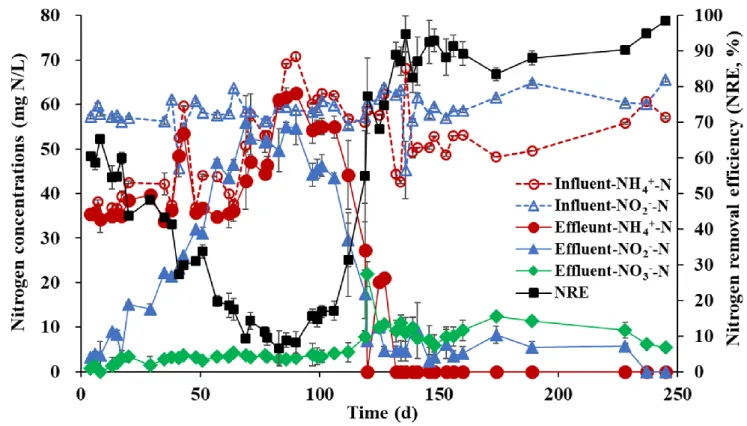
According to the study, the lag period was significantly higher as thickness increased from 1 to 3 mm (lag phase 94 days at 3 mm thickness). Low DO in substrate deposition may affect the conversion from ammonium to nitrite by AOB. However, it would be a low fraction from the stoichiometric ratio calculation due to the low DO in the anaerobic system [157].
Thus, low NO3––N/NH4+–N ratio indicates that coexistence and cell lysis of diverse microbial cells from activated sludge can contribute to the TN removal efficiency. Previous studies also represent the observation of an extremely low NO3––N/NH4+–N ratio using conventional sludge [157, 163].
Plan for further study
CONCLUSIONS
Ye et al., “Improving the Stability and Efficiency of Anaerobic Digestion of Food Waste Using Additives: A Critical Review,” Journal of Cleaner Production, vol. Wagner, “Improving the anaerobic digestion of cellulosic waste via routine bioaugmentation with cellulolytic microorganisms,” Bioresource technology, vol. Chang, “Biochemical methane potential and solid-state anaerobic digestion of Korean food waste,” Bioresource Technology, vol.
Hwang, "A comprehensive microbial insight into two-stage anaerobic digestion of wastewater recycling food waste," Water Research, vol. Li, "Solid-state anaerobic digestion of lignocellulosic biomass: Recent progress and perspectives," Bioresource Technology, vol.