Korean Journal of Microbiology (2020) Vol. 56, No. 1, pp. 83-85 pISSN 0440-2413
DOI https://doi.org/10.7845/kjm.2020.0010 eISSN 2383-9902
Copyright ⓒ 2020, The Microbiological Society of Korea
Complete genome sequence of probiotic Lactobacillus helveticus IDCC3801 isolated from infant feces
Tae-Yoon Kim, Su-Hyeon Eun, Jin Seok Moon* , Hyuk-Sang Kwon, and SungKu Choi Research Laboratories, ILDONG Pharmaceutical Co., Ltd., Hwaseong 18449, Republic of Korea
유아분변에서 분리한 프로바이오틱 Lactobacillus helveticus IDCC3801의 유전체 염기서열 해독
김태윤 ・ 은수현 ・ 문진석* ・ 권혁상 ・ 최성구 일동제약 중앙연구소
(Received February 13, 2020; Revised March 4, 2020; Accepted March 5, 2020)
*For correspondence. E-mail: [email protected];
Tel.: +82-31-371-2896; Fax: +82-31-371-2900
Fermented milk containing Lactobacillus helveticus IDCC3801 (= KCTC 11332BP, isolated from infant feces) had improved amyloid precursor protein (APP) metabolism in scopolamine- treated mice. Herein, we report the complete genome of L.
helveticus IDCC3801 consists of a circular chromosome (2,133,343 bp), with 36.80% G + C content, 2,155 coding sequences (CDSs), 63 rRNAs, 12 tRNAs, and a circular plasmid (23,910 bp) with 38.50% G + C content, 27 CDSs. The present study helps us understand the ability of L. helveticus IDCC3801 probiotic properties and safety assessments, respectively.
Keywords: Lactobacillus helveticus, genome sequence, probiotic properties
In our previous study, fermented milk containing Lactobacillus helveticus (L. helveticus) IDCC3801(isolated from infant feces) has been reported to improve amyloid precursor protein (APP) metabolism in cell-based assays that used wild type APP and β- secretase over-expressing cells, and memory deficits in scopolamine- treated mice (Yeon et al., 2010). Despite the above biotech- nological applications of IDCC3801, the genome sequence of this strain is not yet available. To gain a better insight into the
functional properties on intestinal health in the host, the complete genome of L. helveticus IDCC3801 was sequenced. For whole genome sequencing, genomic DNA was isolated from strain IDCC3801 grown in MRS broth (Difco) at 37°C, using a Wizard Genomic DNA Purification Kit (Promega) and the DNA con- centration and quality were checked using a spectrophotometer UV-1601PC (Shimadzu).
The complete genome sequence of strain IDCC3801 was obtained from 1.5 Gb PacBio RS II platform data (Pacific Biosciences) and 1.4 Gb Illumina HiSeq platform data (Illumina) at the Macrogen Inc. Firstly, PacBio RS II sequencing was used to generate a 20-kb SMRTbell library. Assembly of the library using the HGAP3 (the subreads were extracted using the following parameters: min. subread length: 500 bp; min. poly- merase read quality: 0.80; min. read length: 100 bp) pipeline yielded one larger contig and one smaller fragment. Subsequently, Illumina sequencing was performed using an Illumina HiSeq sequencer, and the Canu software (http://canu.readthedocs.io/
en/stable/tutorial.html) was used to assemble the Illumina
library. After assembly, HiSeq reads were subjected to a final
polishing step to ensure genome sequence accuracy using a tool
called Pilon (v.1.21) (Walker et al., 2014). The consensus
sequence with depth of coverage was generated by mapping the
84
∙Kim et al.미생물학회지 제56권 제1호
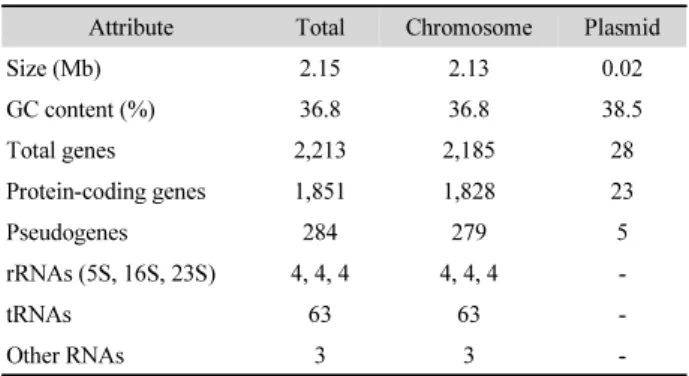
Table 1. Genome features of L. helveticus IDCC3801
Attribute Total Chromosome Plasmid
Size (Mb) 2.15 2.13 0.02
GC content (%) 36.8 36.8 38.5
Total genes 2,213 2,185 28
Protein-coding genes 1,851 1,828 23
Pseudogenes 284 279 5
rRNAs (5S, 16S, 23S) 4, 4, 4 4, 4, 4 -
tRNAs 63 63 -
Other RNAs 3 3 -
subreads against assembled contigs. Errors in the single contig were manually corrected. IDCC3801 genome was annotated using the NCBI Prokaryotic Genome Annotation Pipeline using the best-placed reference protein set (GeneMarkS v4.7) (Tatusov et al., 2016). Finally, curated virulence factors genes were estimated using IslandViewer3 against the Virulence Factor Database (VFDB) (Chen et al., 2012). Antibiotic resistance genes were predicted using Comprehensive Antibiotic Resistance Database (CARD) (McArthur et al., 2013).
A total of 121,578 high-quality reads and 1,070,497,451 bp were generated with an average read length of 8,805 bp.
Assembly of the PacBio library using the HGAP3 pipeline yielded one larger contig of 2.1 Mb (contig 1) and one smaller fragment 2.3 kb (contig 2). The assembly results from HiSeq reads obtained by Canu were mapped against the assembled PacBio contigs and errors in the single contig, which likely arose from the higher error rate of PacBio, were manually corrected. As a result, this strain was found one circular chromosome of 2,133,343 bp with a GC content of 36.80% and one plasmid (23,910 bp with 38.50% GC content). A total of 2,213 predicted genes, 1,851 protein coding genes, 63 transfer RNA (tRNA), 12 ribosomal RNA (rRNA), 3 ncRNA, and 284 pseudo genes were annotated (Table 1). The complete sequences of chromosome and plasmid of L. helveticus IDCC3801 were deposited in GenBank (accession numbers: CP035307.1 and CP035308.1). Consequently, we compared the average nucleotide identity (ANI) value between strain IDCC3801 and L. heveticus DSM 20075
Tand L. gallinarum DSM 10532
Twhich were the most closely related species on the basis of high 16S rRNA similarities (99.30 and 98.10%, respectively). The OrthoANI value was calculated using EZbiocloud (http://www.ezbiocloud.
net/tools/ani) (Yoon et al., 2017). Strain IDCC3801 was the
highest OrthoANI value of 97.89% with L. helveticus DSM 20075
Tand a value of 89.26% with L. gallinarum DSM 10532
T.
IDCC3801 strain harbored gene (ESP49_03740) that codes for choloylglycine hydrolase and nhac gene that codes for the Na
+: H
+antiporter (ESP49_01970). These proteins are associated with tolerance to low pH and bile salts in the human intestine.
IDCC3801 contained genes to encode a few involved in transcriptional regulation, including 48 transcriptional regulators and the sigma factor (ESP49_05600). Additionally, genes involved in cell adhesion, such as fibronectin binding protein (ESP49_05390) and GroEL (ESP49_08100) were identified (Zhang et al., 2019). They also carried diverse genes encoding heat shock protein HtpX (ESP49_09680), molecular chaperones DnaJ (ESP49_05790), DnaK (ESP49_05795), GrpE (ESP49_
05800), and Hsp33 (ESP49_08850). These proteins are associated with tolerance of the freezing-dry process for production of probiotics. A BLASTN program was used for the analysis and a specific parameter was used to search for sequences that are likely to be toxic genes. As a result, the virulence-associated and antibiotic resistance genes were not detected in the IDCC3801 genome. The genomic sequence onto IDCC3801 strain provides a genetic basis to further elucidate it helps us understand the ability of probiotic properties and safety assessments, respectively.
적 요
Lactobacillus helveticus IDCC3801 균주를 포함한 유발효 배양물은 스코폴라민 처리된 마우스의 아밀로이드 전구 단백 질(APP) 대사를 향상시켰다. IDCC3801 균주의 전체 크기는 2,133,343 bp이고 G + C 함량은 36.80%였으며(플라스미드 23,910 bp, G + C 38.50%) 2,155개의 단백질 암호화 유전자 및 78개의 RNA 유전자를 보유하고 있었다. 이 결과를 기초로 본 균주 유전체의 프로바이오틱 및 안전성 관련 유전자를 확인할 수 있었다.
References
Chen L, Xiong Z, Sun L, Yang J, and Jin Q. 2012. VFDB 2012 update:
toward the genetic diversity and molecular evolution of bacterial
Genome sequence of L. helveticus IDCC3801 ∙
85
Korean Journal of Microbiology, Vol. 56, No. 1
virulence factors. Nucleic Acids Res. 40, 641–645.McArthur AG, Waglechner N, Nizam F, Yan A, Azad MA, Baylay AJ, Bhullar K, Canova MJ, De Pascale G, Ejim L, et al. 2013. The comprehensive antibiotic resistance database. Antimicrob. Agents Chemother. 57, 3348–3357.
Tatusova T, DiCuccio M, Badretdin A, Chetvernin V, Nawrocki EP, Zaslavsky L, Lomsadze A, Pruitt KD, Borodovsky M, and Ostell J. 2016. NCBI prokaryotic genome annotation pipeline.
NucleicAcids Res. 44, 6614–6624.
Walker BJ, Abeel T, Shea T, Priest M, Abouelliel A, Sakthikumar S, Cuomo CA, Zeng Q, Wortman J, Young SK, et al. 2014. Pilon:
An integrated tool for comprehensive microbial variant detection and genome assembly improvement. PLoS One 9, e112963.
Yeon SW, You YS, Kwon HS, Yang EH, Ryu JS, Kang BH, and Kang JH. 2010. Fermented milk of Lactobacillus helveticus IDCC3801 reduces beta-amyloid and attenuates memory deficit. J. Funct.
Foods 2, 143–152.
Yoon SH, Ha SM, Kwon S, Lim J, Kim Y, Seo H, and Chun J. 2017.
Introducing EzBioCloud:A taxonomically united database of 16S rRNA and whole genome assemblies. Int. J. Syst. Evol.
Microbiol. 67, 1613–1617.
Zhang W, Wang J, Zhang D, Liu H, Wang S, Wang Y, and Ji H.
2019. Complete genome sequencing and comparative genome characterization of Lactobacillus johnsonii ZLJ010, a potential probiotic with health-promoting properties. Front. Genet. 10, 1–13.