• 검색 결과가 없습니다.

Ethanol Elicits Inhibitory Effect on the Growth and Proliferation of Tongue Carcinoma Cells by Inducing Cell Cycle Arrest

N/A
N/A
Protected

Academic year: 2022

Share "Ethanol Elicits Inhibitory Effect on the Growth and Proliferation of Tongue Carcinoma Cells by Inducing Cell Cycle Arrest"

Copied!
6
0
0

로드 중.... (전체 텍스트 보기)

전체 글

(1)

153 http://dx.doi.org/10.4196/kjpp.2012.16.3.153

ABBREVIATIONS: MTT, 3-(4,5-Dimethylthizol-2-yl)-2,5-diphenylte- trazolium bromide; BCA, bicinchoninic acid; FACS, fluorescence activated cell sorter; PARP, Poly (ADP-ribose) polymerase; PMSF, phenylmethanesulfonylfluoride or phenylmethylsulfonyl fluoride;

PBS, phosphate buffered saline.

Received November 17, 2011, Revised May 1, 2012, Accepted May 11, 2012

Corresponding to: Hoon Yoo, Department of Pharmacology and Dental Therapeutics, School of Dentistry, Chosun University, 375, Seosuk-dong, Dong-gu, Gwangju 501-759, Korea. (Tel) 82-62-230- 6894, (Fax) 82-62-230-6894, (E-mail) [email protected]

This is an Open Access article distributed under the terms of the Creative Commons Attribution Non-Commercial License (http://

creativecommons.org/licenses/by-nc/3.0) which permits unrestricted non-commercial use, distribution, and reproduction in any medium, provided the original work is properly cited.

Ethanol Elicits Inhibitory Effect on the Growth and Proliferation of Tongue Carcinoma Cells by Inducing Cell Cycle Arrest

Thanh-Do Le

1

, Thi Anh Thu Do

1

, Rina Yu

2

, and Hoon Yoo

1

1

Department of Pharmacology and Dental Therapeutics, School of Dentistry, Chosun University, Gwangju 501-759,

2

Department of Food Science and Nutrition, University of Ulsan, Ulsan 680-749, Korea

Cellular effects of ethanol in YD-15 tongue carcinoma cells were assessed by MTT assay, caspase activity assay, W estern blotting and flow cytometry. Ethanol inhibited the growth and proliferation of YD-15 cells in a dose- and time-dependent manner in an MTT assay. The effects of ethanol on cell cycle control at low percent range of ethanol concentration (0 to 1.5%), the condition not inducing YD-15 cell death, was investigated after exposing cells to alcohol for a certain period of time. Western blotting on the expression of cell cycle inhibitors showed that p21 and p27 was up-regulated as ethanol concentration increases from 0 to 1.5% whilst the cell cycle regulators, cdk1, cdk2, and cdk4 as well as Cyclin A, Cyclin B1 and Cyclin E1, were gradually down-regulated. Flow cytometric analysis of cell cycle distribution revealed that YD-15 cells exposed to 1.5% ethanol for 24 h was mainly arrested at G2/M phase. However, ethanol induced apoptosis in YD-15 cells exposed to 2.5% or higher percent of ethanol. The cleaved PARP, a marker of caspase-3 mediated apoptosis, and the activation of caspase-3 and -7 were detected by caspase activity assay or Western blotting. Our results suggest that ethanol elicits inhibitory effect on the growth and proliferation of YD-15 tongue carcinoma cells by mediating cell cycle arrest at G2/M at low concentration range and ultimately induces apoptosis under the condition of high concentration.

Key Words: Cell cycle arrest, Cell growth, Ethanol, Tongue carcinoma cell

INTRODUCTION

Cancer of the oral cavity is an aggressive disease with a high mortality rate when arising in the lip, tongue, floor of the mouth, gingivae, palate, buccal mucosa/vestibule and salivary glands [1,2]. It is generally believed that ethanol (alcohol or ethyl alcohol) and tobacco are the main risk fac- tors in the development of the oral cancer [3,4]. However, despite the potential association between ethanol and oral cancer, no evidence exists to convince ethanol as a promoter of tumorigenesis and ethanol itself is not mutagenic or clas- togenic [3,5]. Diverse cellular effects of ethanol in oral cav- ity region have been reported. Chronic exposure of the oral mucosa to ethanol increased the penetration of carcinogens across the oral mucosa either by enhancing their solubility or the permeability of the oral mucosa [6-9]. Morphological changes in the oral mucosa and the decrease in basal cell

size of the esophageal mucosa were observed after exposure to ethanol [10]. In addition, ethanol induced cellular death via apoptosis in certain cell types such as macrophages, hu- man mast cells and the HL-60 promyelocytic leukemia cells [11-13]. Thus, apparently ethanol effects are cell-type de- pendent and tumor cells are not exceptional. In this con- text, it is surprising to find that few studies have been un- dertaken on the effects of ethanol against various tumors originating in oral cavity. Recently, our preliminary study with ethanol showed that tumor cell-types have different sensitivities of cell growth and proliferation to acute etha- nol treatment, intriguing us to study further on the ethanol effects in molecular basis. In this study, we investigated the cellular effects of ethanol on YD-15 tongue carcinoma cells, mucoepidermoid carcinoma cells originating in the or- al tongue, by exposing cells to various concentrations of ethanol. YD-15 cells showed a high sensitivity to ethanol which was distinct from other cell lines of oral cavity.

Further investigation on ethanol effects to YD-15 cells re-

vealed that ethanol elicits inhibitory effect on the growth

and proliferation of YD-15 tongue carcinoma cells by media-

ting cell cycle arrest at low concentration range and induces

the cellular death via apoptosis at high concentration.

(2)

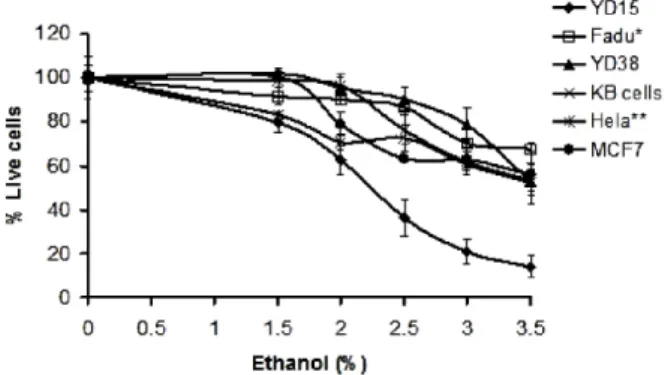
Fig. 1. Ethanol effects on the growth of cancer cells. Different types of cancer cells were treated with various concentrations of ethanol for 24 h and cell growth was evaluated by MTT assay. The growth of YD-15 cells showed the highest sensitivity to ethanol among the investigated cell types. Vertical bars indicate means and standard errors (n=3). *p<0.01, versus FaDu; **p<0.05, versus HeLa cells.

METHODS Chemicals

The grade of ethanol used in this study was 99.9% purity and was purchased from Burdick & Jackson (Burdick &

Jackson, Muskegon, MI). The ethanol concentration was de- termined as the percentage volume in culture medium (v/v).

Antibodies were purchased from the following sources: p21, cleaved form of caspase-7 (Cell Signaling, Danvers, MA);

cdk1, cdk4, cyclin A, cyclin B1, Bcl-2, Bad and Bax and all secondary antibodies (Santa Cruz Biotechnology, Santa Cruz, CA); cdk2, cyclin E1 and PARP

p85

(Epitomics, Burlin- game, CA). Lysis buffer (1 x solution: 20 mM Tris-HCl (pH 7.5), 150 mM NaCl, 1 mM Na

2

EDTA, 1 mM EGTA, 1%

Triton, 2.5 mM sodium pyrophosphate, 1 mM β-glycerophos- phate, 1 mM Na

3

VO

4

, 1 μg/ml leupeptin) was obtained from Cell Signaling. All other chemicals were purchased from Sigma (St Louis, MO).

Cell preparation

YD-15 cells were purchased from the Korean cell line bank (KCLB No 60504, Seoul, Korea) and maintained in RPMI 1,640 media which was supplemented with 10% FBS and antibiotics in a 37

o

C incubator at 5% CO

2

[14]. Other cell lines used in this study include YD-38 (gingival carcino- ma), KB (mouth epidermal carcinoma), FaDu (pharyngeal carcinoma), MCF-7 (breast cancer) and HeLa (cervical can- cer). All cell lines were obtained from the Korean cell line bank.

MTT assay

To investigate the effects of ethanol on different human cancer cell lines, cells (4×10

4

/well) in 96-well plates were treated with various concentrations of ethanol and in- cubated for 24 h. The cells were placed in medium contain- ing 0.5 mg/ml of MTT-1 (Sigma, St Louis, MO). After fur- ther incubating for 3 h, media containing MTT-1 were re- placed with MTT-2 solution (10% SDS in 0.1 N HCl) by adding 200 μl into each well, and the plates were further incubated for 2 h. The UV absorbance of each sample was then measured at 540 nm. The data were analyzed by Anova single factor. The negative control was the ethanol untreated and used for the determination of percent of live cells.

Cell growth and proliferation assay

Cells in growth phase were transferred into 24-well plates with 3×10

4

cells/well. After incubation for 24 h, cells were treated with various quantities of ethanol (0, 0.25, 0.5, 0.75, 1.0 and 1.5%) in the culture medium. Cell growth and proliferation were evaluated by an MTT assay and medium replacements contained the same concentrations of ethanol.

The OD value of the initial measurement was used as the control.

Western blotting

Cells were treated with various concentrations of ethanol for 24 h and then lysed in a buffer containing freshly added PMSF (1 mM). The cell lysate was homogenized by pipet- ting for 15 minutes on ice and sonicated for 1 minute. The

supernatant of each lysate was collected into new tubes af- ter centrifugation at 20,000 g for 15 minutes at 4

o

C and the total protein concentration was measured using a BCA kit (Pierce, Rockford, IL). Antibodies were used in accordance with the manufacturer’s instructions. The protein bands were normalized to the beta actin expression level using the Bio-Rad Image Master Program (Bio-Rad, Hercules, CA).

Caspase activity assay

Activated caspase-3 and -7 were detected by using Caspase- Glo

3/7 Assay kit (Promega, Madison, WI). Cells in 24-well plate (10

4

cells/well) were exposed to 0, 1.5 or 2.5% of etha- nol in medium for 24 h. After ethanol treatment, cells were harvested by using Reporter Lysis buffer (Promega, Madison, WI). Cell lysate was centrifuged at 20,000 g and the super- natant was used for the detection of caspase activities in duplicate. Total protein concentration was measured by us- ing BCA assay kit. Activities of caspases in 1 μg of total protein were normalized with the one of control samples.

DNA content analysis by Fluorescence Activated Cell Sorting (FACS)

Cells were treated with 1.5% or 2.5% ethanol in medium for 24 h. The cells were then harvested by trypsinization and centrifugation at 300 g. After washing of the cell pellets with cold PBS, the cells were fixed in 70% ethanol for 2 h at -20

o

C, washed again in ice cold PBS and stained with PI solution (20 μg/ml propidium iodide, 200 μg/ml DNase- free RNase-A in PBS) for 15 minutes at 37

o

C. DNA contents were analyzed by using a Beckman Coulter system.

RESULTS

Comparison of the effects of ethanol on different cell types within the oral cavity

The effects of ethanol on epithelial cancer cells were in-

vestigated using cell types originating from different re-

gions of the oral cavity and also in HeLa and MCF7 cells.

(3)

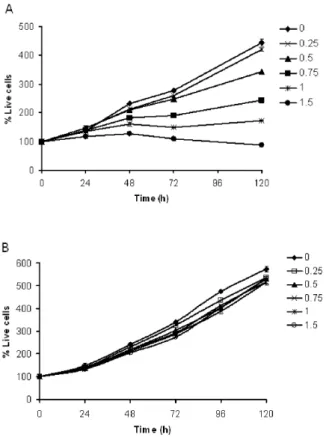
Fig. 2. Ethanol dependence of cancer cell proliferation. Cell proliferation of two types of oral cancer cells (YD-15 cells and FaDu cells) were determined by an MTT assay. Cells were treated for a given incubation periods at a fixed ethanol concentration prior to the assay. (A) YD-15 cells. (B) FaDu cells. Vertical bars indicate means and standard errors (n=3).

Fig. 4. Ethanol effects on the expression of cell cycle regulators.

YD-15 cells were exposed with various ethanol concentrations for 24 h. (A) Cyclin expression. (B) Cyclin dependent kinase expression.

Fig. 3. The expression of cell cycle inhibitors, p21 and p27, increased after ethanol treatment of YD-15 cells at different concentrations for 24 h.

Oral carcinoma cell lines such as YD-15 (tongue carcinoma), YD-38 (gingival carcinoma), KB cell (mouth epidermal car- cinoma), and FaDu (pharyngeal carcinoma) were selected and the effects of ethanol on cell viability were analyzed.

YD-15 cells showed the highest growth sensitivity to acute ethanol treatment among this panel (Fig. 1) and the growth inhibition of these cells was even stronger.

Ethanol effects on YD-15 cell proliferation

The effects of ethanol on proliferation were investigated by treating YD-15 cells for 24, 48, 72, 96 and 120 h with various quantities of ethanol (0, 0.25, 0.5, 0.75, 1.0 and 1.5%) in the culture medium. Ethanol was found to inhibit YD-15 cell growth in both a dose- and time-dependent man- ner (Fig. 2A). A substantial reduction in YD-15 cell survival was observed at ethanol concentrations of above 0.75% but no effects were evident at exposures to less than 0.5%

ethanol. In contrast, FaDu squamous carcinoma cells were unaffected by the same alcohol concentrations (Fig. 2B).

Ethanol effects on cell cycle protein inhibitors To further understand the molecular basis of ethanol ef- fects on cell cycle control, we investigated the expression of cell cycle inhibitors at the lower percent range of ethanol,

the condition that ethanol affects on cell cycle without in- ducing cell death, by treating YD-15 cells with a series of ethanol concentrations for 24 h. The cell cycle inhibitor pro- teins, p21 and p27, were found to be induced in a dose de- pendent manner (Fig. 3) and significantly enhanced as the ethanol concentration increased from 0% to 1.5%. The larg- est induction of p27 and p21 in YD-15 cells was observed at 0.75% and 1.0% ethanol exposures, respectively.

Ethanol effects on cell cycle regulators

Since cell division is strictly regulated by cell cycle regu-

lators, we further investigated the effects of ethanol on cell

cycle regulators such as cyclins and cyclin-dependent pro-

tein kinases. The cells were treated with various doses of

ethanol (0, 0.25, 0.5, 0.75, 1.0 and 1.5%) for 24 h and lysated

for Western blotting. Cylin A, Cyclin E1 and Cyclin B1 were

suppressed as the dose of ethanol in the medium increased

(Fig. 4A). Band intensities of Cyclin A, Cyclin E1 and Cyclin

B1 were gradually decreased in the concentration range of

ethanol up to 1.5%. Similarly, ethanol treatment sup-

pressed the expression of cdk-1, -2 and -4 (Fig. 4B). The

band intensities of cdk-1 and cdk-2 were gradually de-

creased as ethanol concentration in the medium increased

from 0.25% to 1.5%. Interestingly, the band intensity of

cdk-4 was rapidly decreased up to 0.5% ethanol exposure

(4)

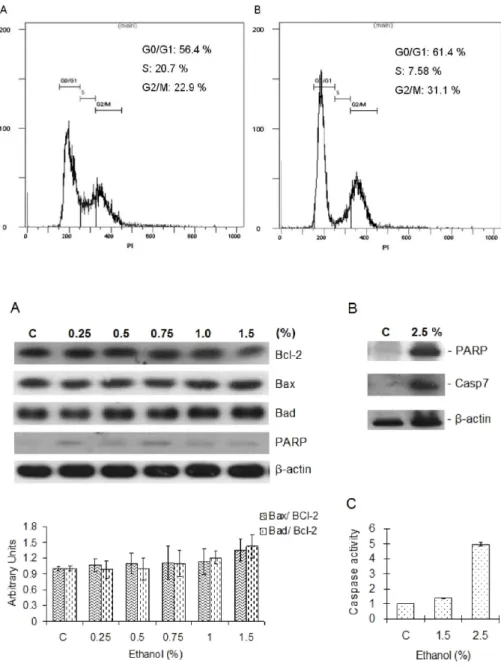
Fig. 5. Cell cycle profiles by flow cytometry analysis. YD-15 cells were treated with ethanol in culture me- dium for 24 h. (A) Without ethanol treatment. (B) With 1.5% ethanol treatment.

Fig. 6. The expression of apoptosis associated proteins in YD-15 cells.

Bcl-2, Bad, Bax, inactivated PARP (85 kDa) and activated caspase-7 (20 kDa) were detected by Western blotting after treating YD-15 cells with ethanol for 24 h. (A) Expression of Bcl-2, Bax, Bad and PARP after exposing cells in the range of 0.25%

to 1.5% ethanol. (B) PARP and caspase-7 expression after treating cells with 2.5% ethanol. (C) Caspase activity in arbitrary units. Activated caspase-3 and -7 were detected by using Caspase-Glo

3/7 Assay kit (Promega, Madison, WI). Vertical bars indicate means and standard errors (n=3).

and remained without further decrease at higher ethanol concentrations. This may indicate that cdk-4 is more sensi- tive to ethanol than cdk-1 or -2, and associated with cell cycle inhibition at an early stage.

Flow cytometry analysis

To further evaluate the nature of the cell cycle arrest caused by ethanol, FACS analysis was carried out. As shown in Fig. 5, the ethanol-exposed YD-15 cells for 24 h resulted in the accumulation of cells at the G2/M phases.

Cells treated with a 1.5% dose of ethanol showed a margin- al increase in cell distribution at G1/S phase (61.4%) com- pared to the ethanol untreated cells (56.4%). In contrast, moderate increase, 22.9% to 31.1%, in the cell distribution of ethanol-treated cells at G2/M phase was observed with simultaneous decrease in S phase.

Ethanol effects on the apoptotic response

To determine whether the cell loss caused by ethanol treatment was due to apoptosis or not, we further analyzed the expression of apoptosis related proteins (Bcl-2, Bad and Bax) by western blot, after exposing cells to ethanol at low concentration range of ethanol for 24 h. Ethanol effects on apoptosis associated proteins were minimal at the ethanol range of less than 1.5%. Ratios of Bax/Bcl-2 and Bad/Bcl-2 were relatively constant and the cleaved form of PARP (p85), a major hydrolysis product of executor caspases, was only weakly detected, suggesting that ethanol did not affect cell death at this range of ethanol concentration (Fig. 6A).

However, at 2.5% ethanol, ethanol induced YD-15 cell death

via apoptosis. Strong bands of the cleaved form of PARP

(p85) and the activated form of caspase 7 (20 kDa) were

detected in Western blotting (Fig. 6B). In addition, dramat-

(5)

ic increase of caspase-3 and -7 activities were detected in caspase activity assay (Fig. 6C). The results indicate that ethanol suppressed cell cycle progress in the low range of ethanol concentration without inducing apoptosis.

DISCUSSION

In this study we investigated the cellular effects of etha- nol on YD-15 tongue carcinoma cells [15] by exposing cells to various concentrations of ethanol. YD-15 cells showed a high sensitivity to ethanol which was clearly distingui- shed from other cell lines of oral cavity (Fig. 1, 2). Further investigation on ethanol effects to YD-15 cells revealed that ethanol elicits inhibitory effect on the growth and pro- liferation of YD-15 tongue carcinoma cells by mediating cell cycle arrest at G2/M at low concentration range and induces the cellular death via apoptosis at high concentration. The inhibitory ethanol effects on the growth and proliferation of YD-15 cells was confirmed by altered expression of both cell cycle inhibitors and cell cycle regulators. P27 and p21 cell cycle inhibitors were up-regulated dose-dependently by ethanol (Fig. 3) whilst the expression of cell cycle regu- lators, cdks and cyclins, was down-regulated (Fig. 4). P27 blocks G1 progression by binding and inactivating the cy- clin E/cdk2 and cyclin D/cdk4 complexes [16-18] and p21 is also known to inhibit a broad range of the cell cycle pro- teins, including G1 cyclin/cdk complexes and cyclin B1/cdk1 complexes [19-22]. Thus, the up-regulation of p27 and p21 by ethanol in YD-15 cells may cause the reduced expression of cdk2 and cdk4. In addition, the expression of both cyclin B1 and cdk1 was suppressed by ethanol treatment, limiting the supply of the cdk1/cyclin B complex required for the G

2

to M phase transition and thereby delaying the phase transition. FACS analysis further confirmed the cell cycle arrest at G

2

/M phase in cells exposed with 1.5% ethanol (Fig. 5). Despite the suppression of cell cycle arrest at a low percentage of ethanol, ethanol did not promote the apoptosis of YD-15 cells, suggesting that the cell cycle in- hibition by ethanol was not sufficient to induce apoptosis at a low percentage of ethanol (less than 1.5%) (Fig. 6).

Conversely, YD-15 cells exposed to a high percentage of ethanol (2.5%) for 24 h induced significant programmed cell death with the appearance of the cleaved PARP (the mark- er of caspase-3 mediated apoptosis) and the activated form of caspase-3 and -7.

The lateral border of the tongue, one of the non-kerati- nized tissues, is known to be more permeable than kerati- nized tissues such as the palate and gingivae [23]. Thus the unusual sensitivity of YD-15 cells to ethanol could be due to the enhanced cellular uptake of ethanol by the in- creased lipid membrane permeability. The fast passage cy- cle of tongue carcinoma cells may also contribute to the ethanol sensitivity of YD-15 cells. Interestingly, previous reports also showed the inhibitory effect by ethanol on the proliferation of cancer or non-cancer cells such as fibroblast growth factor 1-induced human smooth muscle cells and smooth muscle cell in the postprandial state [11,24-28]. In addition, a recent study by Clemens et al demonstrated that ethanol treatment in recombinant Hep-G

2

cancer cells caused a G

2

/M cell-cycle arrest [29]. To our best knowledge, this is the first report that ethanol specifically suppresses the growth and proliferation of tongue carcinoma cells among various tumor cell-types originating in oral cavity.

The question how ethanol induces the cell cycle arrest and

what is the signal transition mechanism underlying the cell cycle arrests remain to be answered in future study.

Overall, our results suggest that the cellular inhibitory ef- fects by ethanol may function as a tumor suppressor in the oral tongue cancer.

ACKNOWLEDGEMENTS

This research was supported by the National Research Foundation of Korea funded by the Ministry of Education, Science and Technology (Grant No. R13-2008-010-00000-0).

REFERENCES

1. Figuero Ruiz E, Carretero Peláez MA, Cerero Lapiedra R, Esparza Gómez G, Moreno López LA. Effects of the consump- tion of alcohol in the oral cavity: relationship with oral cancer.

Med Oral. 2004;9:14-23.

2. Chen AY, Myers JN. Cancer of the oral cavity. Curr Probl Surg.

2000;37:633-731.

3. Stewart BW, Kleihues P. World cancer report. Lion: IARC;

c2003. 22-32 p.

4. Silverman S Jr. Demographics and occurrence of oral and pharyngeal cancers. The outcomes, the trends, the challenge.

J Am Dent Assoc. 2001;132 Suppl:7S-11S.

5. Wight AJ, Ogden GR. Possible mechanisms by which alcohol may influence the development of oral cancer--a review. Oral Oncol. 1998;34:441-447.

6. Aroor AR, Shukla SD. MAP kinase signaling in diverse effects of ethanol. Life Sci. 2004;74:2339-2364.

7. Casey CA, Lee SM, Aziz-Seible R, McVicker BL. Impaired receptor-mediated endocytosis: its role in alcohol-induced apoptosis. J Gastroenterol Hepatol. 2008;23 Suppl 1:S46-49.

8. Morrow AL, Ferrani-Kile K, Davis MI, Shumilla JA, Kumar S, Maldve R, Pandey SC. Ethanol effects on cell signaling mechanisms. Alcohol Clin Exp Res. 2004;28:217-227.

9. Cho JH, Park SY, Lee HS, Whang WK, Sohn UD. The protective effect of Quercetin-3-O-beta-D-Glucuronopyranoside on ethanol-induced damage in culture feline esophageal epithelial cells. Korean J Physiol Pharmacol. 2011;15:319-326.

10. Mascrès C, Ming-Wen F, Joly JG. Morphologic changes of the esophageal mucosa in the rat after chronic alcohol ingestion.

Exp Pathol. 1984;25:147-153.

11. Aroor AR, Baker RC. Ethanol-induced apoptosis in human HL-60 cells. Life Sci. 1997;61:2345-2350.

12. Singhal PC, Reddy K, Ding G, Kapasi A, Franki N, Ranjan R, Nwakoby IE, Gibbons N. Ethanol-induced macrophage apop- tosis: the role of TGF-beta. J Immunol. 1999;162:3031-3036.

13. Nurmi K, Methuen T, Mäki T, Lindstedt KA, Kovanen PT, Sandler C, Eklund KK. Ethanol induces apoptosis in human mast cells. Life Sci. 2009;85:678-684.

14. Lee EJ, Kim J, Lee SA, Kim EJ, Chun YC, Ryu MH, Yook JI.

Characterization of newly established oral cancer cell lines derived from six squamous cell carcinoma and two mucoe- pidermoid carcinoma cells. Exp Mol Med. 2005;37:379-390.

15. Sol Silverman J. Oral cancer. 5th ed. New York: BC Decker;

c2003. 2-3 p.

16. Philipp J, Vo K, Gurley KE, Seidel K, Kemp CJ. Tumor suppression by p27Kip1 and p21Cip1 during chemically induced skin carcinogenesis. Oncogene. 1999;18:4689-4698.

17. Soos TJ, Kiyokawa H, Yan JS, Rubin MS, Giordano A, DeBlasio A, Bottega S, Wong B, Mendelsohn J, Koff A. Formation of p27-CDK complexes during the human mitotic cell cycle. Cell Growth Differ. 1996;7:135-146.

18. Toyoshima H, Hunter T. p27, a novel inhibitor of G1 cyclin-Cdk protein kinase activity, is related to p21. Cell. 1994;78:67-74.

19. Gartel AL, Tyner AL. The role of the cyclin-dependent kinase

inhibitor p21 in apoptosis. Mol Cancer Ther. 2002;1:639-649.

(6)

20. Xiong Y, Hannon GJ, Zhang H, Casso D, Kobayashi R, Beach D. p21 is a universal inhibitor of cyclin kinases. Nature.

1993;366:701-704.

21. Giordano A, Soprano KJ. Cell Cycle Inhibitors in Cancer Therapy: Current Strategies. 1st ed. Totowa: Humana Press;

c2002 Nov. 1-10 p.

22. Guo W, Baluda MA, Park NH. Ethanol upregulates the expression of p21 WAF1/CIP1 and prolongs G1 transition via a p53-independent pathway in human epithelial cells. Oncogene.

1997;15:1143-1149.

23. Wertz PW, Squier CA. Cellular and molecular basis of barrier function in oral epithelium. Crit Rev Ther Drug Carrier Syst.

1991;8:237-269.

24. Luo J, Miller MW. Ethanol inhibits basic fibroblast growth factor-mediated proliferation of C6 astrocytoma cells. J Neurochem. 1996;67:1448-1456.

25. Segawa K, Minami K, Uezono Y, Shiraishi M, Shigematsu A.

Inhibitory effects of ethanol on rat mesangial cell proliferation

via protein kinase C pathway. Alcohol Clin Exp Res. 2002;26:

358-362.

26. Li Z, Lin H, Zhu Y, Wang M, Luo J. Disruption of cell cycle kinetics and cyclin-dependent kinase system by ethanol in cultured cerebellar granule progenitors. Brain Res Dev Brain Res. 2001;132:47-58.

27. Ghiselli G, Chen J, Kaou M, Hallak H, Rubin R. Ethanol inhibits fibroblast growth factor-induced proliferation of aortic smooth muscle cells. Arterioscler Thromb Vasc Biol. 2003;23:

1808-1813.

28. Locher R, Suter PM, Vetter W. Ethanol suppresses smooth muscle cell proliferation in the postprandial state: a new antiatherosclerotic mechanism of ethanol? Am J Clin Nutr.

1998;67:338-341.

29. Clemens DL, Calisto LE, Sorrell MF, Tuma DJ. Ethanol

metabolism results in a G2/M cell-cycle arrest in recombinant

Hep G2 cells. Hepatology. 2003;38:385-393.

수치

Fig. 1. Ethanol effects on the growth of cancer cells. Different types  of cancer cells were treated with various concentrations of ethanol  for 24 h and cell growth was evaluated by MTT assay
Fig. 4. Ethanol effects on the expression of cell cycle regulators.
Fig. 5. Cell cycle profiles by flow  cytometry analysis. YD-15 cells were  treated with ethanol in culture  me-dium for 24 h

참조

관련 문서

 Often found connected to other molecules on the outsides of cells --- cellular recognition, cell signaling, cell

Fig 4 : Inhibitory effects of classified methanol extracts of Acalypha australis the COX-2 protein expression of the human oral cavity carcinoma KB cells....

PI3K inhibition decreased antioxidants/GD-induced apoptosis in A549 cells, and PI3K inhibitor LY294002 had inhibitory effect on antioxidants/GD-induced caspase-3

In the present study we investigated the proliferation effect of human oral cancer KB cell treated with pulsatilla koreana extract.. We analyzed the effects of this

Taken together, this present study show that VSMC proliferation is blocked by CPP343 treatment, and this anti-proliferative effect is correlated with cell-cycle

Taken together, these results suggested that latex containing the ficin inhibited the cell growth and induced apoptosis by caspase and Bcl-2 family signaling pathway in

Effect of amino acid addition in culture media on the mycelial growth and g-aminobutyric acid (GABA) production of Sparassis latifolia..

tricuspidata on the production of proinflammatory cytokines in TNFα+IFNγ-stimulated HaCaT cells ...15 Fig.5: The cell viability of sub-fractions from 70% EtOH