• 검색 결과가 없습니다.

A Qualitative Study on Job Satisfaction of Dental Hygienists with Low Experience

N/A
N/A
Protected

Academic year: 2021

Share "A Qualitative Study on Job Satisfaction of Dental Hygienists with Low Experience"

Copied!
8
0
0

로드 중.... (전체 텍스트 보기)

전체 글

(1)

RESEARCH ARTICLE

Received: August 10, 2020, Revised: August 27, 2020, Accepted: September 1, 2020 eISSN 2233-7679

Correspondence to: Soon-Ryun Lim, https://orcid.org/0000-0002-5654-1995

Department of Dental Hygiene, Namseoul University, 91 Daehak-ro, Seonghwan-eup, Seobuk-gu, Cheonan 31020, Korea Tel: +82-41-580-2560, Fax: +82-580-2927, E-mail: [email protected]

Copyright © The Korean Society of Dental Hygiene Science.

A Qualitative Study on Job Satisfaction of Dental Hygienists with Low Experience

Ji-Hyeon Park

1

and Soon-Ryun Lim

2,†

1

Department of Dental Hygiene, Graduate School, Namseoul University, Cheonan 31020,

2

Department of Dental Hygiene, Namseoul University, Cheonan 31020, Korea

Background: Job satisfaction of dental hygienists has been discussed continuously in dental hygiene research. It has been the

most representative performance variable in dental and human resource management. However, in quantitative research, most of the studies have analyzed the causal relationship with variables related to dental hygienists’ job satisfaction. The existing qualitative research contains only the studies that targeted dental hygienists with an experience of more than 10 years. The present study aimed to understand and to characterize the job satisfaction of dental hygienists with an experience of 2 to 10 years and to compare it with the qualitative research on dental hygienists with an experience of 10 or more years.

Methods: An in-depth interview of dental hygienists with 2 to 10 years of experience working in 10 dental clinics was conducted.

For data analysis, Giorgi’s analysis method was used.

Results:

After analyzing the meaning of job satisfaction of dental hygienists, 180 semantic words and 19 subcategories were derived. The results of the interview were categorized into for central meanings: recognition and rewards, work experience and ability improvement, occupational characteristics, and work characteristics. Recognition and rewards included workplace recognition, patient recognition, self-effort and recognition, and the feeling of being rewarded. Work experience and ability improvement included various work experiences and factors relates to improving the work ability. Occupational characteristics included professional job, interest and persistence, job extensibility, and no burden of employment. Work characteristics included working conditions and separation of work and private life.

Conclusion: The development of tools to measure the level of dental hygienists’ job satisfaction after long-term service and to

conduct follow-up research regarding ways and effects to improve job satisfaction is needed.

Key Words: Dental hygienists, Job satisfaction, Qualitative research

Introduction

Clinical dental hygienists spend a considerable amount of time in dental institutions and their duties are important parts of their daily lives. Therefore, job satisfaction has a wide impact on life beyond the job

1)

.

Job satisfaction is a positive or negative state of emotion that each individual feels in his or her professional activities and the degree to which he or she obtains or experiences the feeling that his/her needs are being met through professional activities

2)

. When members are

satisfied with their job environment, they feel rewarded

while working for the organization and are expected to

devote themselves to the organization and to increase its

performance, which in turn affects the organization

3)

. If

environmental factors such as remuneration and working

conditions are unsatisfactory, the efficiency of work is

reduced. However, with a sense of responsibility and

accomplishment, members of an organization will perceive

the work itself to be rewarding, joyful, and fulfilling

4)

. In

addition, smooth relationships among various occupational

groups and positive communication with the patients

(2)

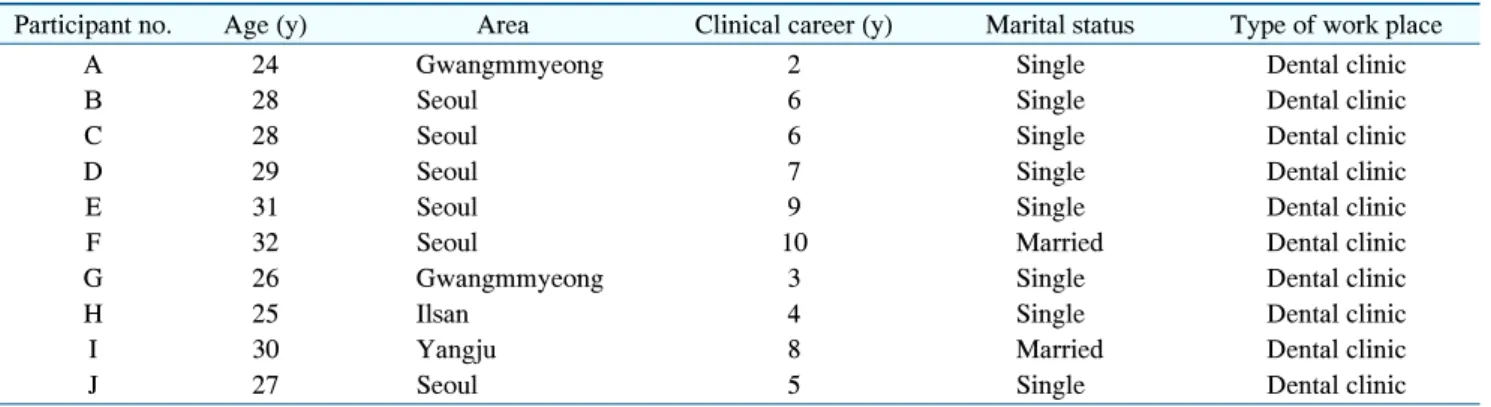
Table 1. Characteristics of Participants
Participant no. Age (y) Area Clinical career (y) Marital status Type of work place

A 24 Gwangmmyeong 2 Single Dental clinic

B 28 Seoul 6 Single Dental clinic

C 28 Seoul 6 Single Dental clinic

D 29 Seoul 7 Single Dental clinic

E 31 Seoul 9 Single Dental clinic

F 32 Seoul 10 Married Dental clinic

G 26 Gwangmmyeong 3 Single Dental clinic

H 25 Ilsan 4 Single Dental clinic

I 30 Yangju 8 Married Dental clinic

J 27 Seoul 5 Single Dental clinic

result in increased job satisfaction. This process leads to improvement in the quality of medical services in dental institutions and positive effects in terms of management.

To date, job satisfaction has been continuously discussed in dental hygiene research as a representative performance variable for dental human resource management. Higher job satisfaction leads to higher organizational commitment, lower turnover intention, and lower burnout

5,6)

. Higher professionalism leads to lower interpersonal stress, higher organizational communication and higher job satisfaction

7,8)

. However, most or the previous studies have quantitative studies that identified the relationship using predetermined variables expected to be relevant to job satisfaction. In addition, most of the measuring tools were developed in foreign countries or were tools used for other occupations that were modified to suit dental hygienists

9)

. Measuring tools for dental hygienists in Korea do not reflect the differences in personal, organizational, and cultural attributes.

A qualitative study on job satisfaction and the meaning of work among hygienists with more than 10 years of experience in clinical practice focused on five central meanings: Recognition and trust, growth, professional pride, reward and the meaning of life provided by work

10)

. However, the study was inadequate to explain the job satisfaction among dental hygienists in depth, since it targeted hygienists with an experience of more than 10 years. A study comparing job satisfaction between senior hygienists and younger hygienists seems to be necessary through the analysis of job satisfaction focused on dental hygienists with a lower amount of experience.

Therefore, the present study aimed to analyze the job satisfaction experienced by dental hygienists with 2 to 10 years of clinical experience. Based on the results, a tool for measuring job satisfaction among dental hygienists with long-term service will be developed. The results might also provide basic data for effective job management and human resource management.

Materials and Methods

1. Participants

In previous studies

10)

, dental hygienists with more than 10 years of experience were included. However, in the present study, dental hygienists with 2 to 10 years of experience in dental hospitals and clinics were selected as participants. The purpose of the research was explained to the research subjects before the in-depth interview.

Altogether 10 dental hygienists participated in the study until the data needed for the study were saturated by snowballs samplings. The average age of participants was 28 years, the average clinical career was 6 years and the workplaces of the participants were situated in the Seoul metropolitan area (Seoul, Gwangmyeong, Ilsan, and Yangju). The participants included eight unmarried and two married dental hygienists form ten dental clinics (Table 1).

All interviews were recorded and notes were taken. The

research subjects were notified in advance and a written

informed consents were obtained. Participants were

informed that the data would be treated anonymously and

would not be used for purpose other than research.

(3)

2. Data collection

The data were collected from September 13, 2019 to September 23, 2019. The interview time was set by the participants and the interview lasted 30 to 60 minutes.

Interview were conducted at cafes, counseling rooms in hospitals and conference rooms where research participants felt comfortable. The researchers started the interview with self-introduction and casual conversation.

The in-depth interview consisted of questions based on previous studies and started with semi-structured questions

10)

. The main questions was “Would you like to talk about your job experience as a dental hygienist?”. The supple- mentary questions were “What specific cases did you experience satisfaction during your dental work?”, “What are the cases wherein you were satisfied with your job as a dental hygienist while working in a dental clinic?” and

“What do you think is the reason for your satisfaction with your job while working in a dental clinic?”.

All in-depth interviews were recorded using voice recorders. The researchers transferred and documented the data exactly as expressed by the participants.

3. Analysis

The files recorded through in-depth interviews were transferred directly by the researchers. Giorgi’s method of analysis was used for data analysis

11)

. Initially, the researcher read the transcripts of interviews several times to understand the experiences of the participants. Subse- quently, the meaningful unit for the phenomenon was found and was converted into academic language. Finally, the meaningful units were structured and integrated by finding common factors.

This researcher is a clinical dental hygienist with a work experience of 20 years in a dental clinic. Qualitative research was prepared for seminars on qualitative research and related books and papers. In addition, the researcher received comments on the qualitative research analysis process and categorization process from a professor of dental hygiene with extensive experience in qualitative research to enhance the feasibility and reliability of the research.

Results

An analysis of the meaning of job satisfaction among dental hygienists resulted 180 semantic words and 19 subcategories. The meaning was categorized into four central categories: recognition and rewards, work experience and ability improvement, occupational characteristics, and work characteristics.

1. Recognition & rewards

1) Workplace recognition

It includes the occasions when the hygienists felt that they were partners with the director, or when they were recognized by their juniors, bosses, and colleagues.

Participant A: “The director informed me that we were in the process of annual salary negotiation again this year. However, the director informed that we have been working for a year and that I had learned a lot, I was communicating with the patients and I was been doing a great job for a year. I am so proud to hear this.”

Participant G: “Whenever the director asks for medical advice or consults with me while I am in the hospital, I believe that I am doing a very helpful job at the hospital.”

Participant J: “When I started working at this dental clinic, it was hard to match the director. I thought I was not good enough and initially, wanted to check my performance every time. However, currently, I am satisfied with the medical treatment I am performing and I feel more.”

2) Patient recognition

It includes patients finding dental hygienist, believing in him/her and expressing gratitude.

Participant E: “When the patient thanked him to thank me, I thought I could hear this only because I chose this job.”

Participant F: “I did not treat him like a special patient, but I could feel that he was grateful. I think I was satisfied with my job when I felt that.”

Participant C: “I seem to be doing a good job comfortably

when the patients are looking for me specifically when

they are getting treatment.”

(4)

3) Self-effort and recognition

It includes the occasions when the result of work was good or when the patient care was helping for the dental job.

Participant F: “It was my first time here with a pediatrician. I learned about child behavior control and it helped me with my work.”

Participant C: “I am very fond of having conversations while educating patients. I love the process of talking to patients rather than doing it with my hands in the clinical setting.”

Participant I: “I think I am doing a job that helps the dentist.”

4) Feeling rewarded

It includes the feeling of being a person who helps someone; who you can help a patient, family, or an acquaintance; and who contribute to the patient’s oral health recovery.

Participant C: “I like teaching patients. I like it when they answer correctly on asked questions. I corrected the perception when the patients came with the wrong information. We recognized it together, and changed the process.”

Participant G: “I think it is rewarding to see the results of periodontal care, tooth brushing instruction, and training to use an interdental toothbrush.”

2. Work experience and ability improvement

1) Various work experiences

It includes the occasions when they work experience of the dental hygienists helped them expand their work or when they could work independently.

Participant C: “Early in the career as a dental hygienist, I believed that the work was all about medical care.

However, some part of work include counseling and work related to processing the system. When I performed various tasks, I was extremely satisfied when I experienced something different from the medical treatment.”

Participant J: “I was satisfied that I could coordinate the tasks that I could do well. In the coming years, we will educate our juniors. I think I should learn a lot right now

for me as well as for my juniors.”

Participant G: “I could not tell my juniors what I did not know.”

2) Improving work ability

It includes the occasions when the hygienists felt that they had grown up on their own with improvements in their ability, when they felt good, or when they were helping with dental care.

Participant G: “When I think about the past, I realize that I did not do this well in the beginning when I was in the implant or crown garden. However, when I do it now, I feel a sense of achievement after solving the issues one after the other.”

Participant F: “We are learning to work during our first and second years. When I become good at something that I was no good at, I think I look good or I feel like I have become really good at it.”

3. Occupational characteristics

1) Professional job

It includes having a professional sense of duty or being proud.

Participant C: “I think it is a job where I can take pride in being an expert.”

Participant G: “Since I am a licensed dental hygienist...”

Participant F: “Dental hygienist is a professional.

Hence, I am think really satisfied.”

2) Interest and persistence

It includes the feeling that the hygienist could continue working his/her job and the feeling that he/she was well suited to work in dentistry.

Participant A: “I have been choosing my own job considering my personality and professional characteristics.

I think that is the biggest reason. Since I chose this job myself, I like it and I am interested in it. I think I can do it even if my salary is low. I think I can do it without getting tired of it.”

Participant E: “I think that my job as a dental hygienist

is becoming the driving force of my life.”

(5)

3) Job extensibility

It includes a variety of occupational connections or a variety of occupations derived from dentistry.

Participant H: “Dental hygienists are free to change jobs and I think I have a wider range of choices than other jobs.”

Participant E: “I am at the dental clinic, but I am not merely doing the medical work. Since there are many jobs derived the current job, I feel that I can find a job that suits my aptitude. There are a variety of things related to this jobs than I thought.”

4) No burden of employment

Compared to other occupational groups, it is not difficult to prepare for employment. There is no burden a turnover. The choice of work is wide and re-employment is easier.

Participant B: “It is difficult to quit when I see friends around me approach small and medium-sized companies.

Even if I quit, it seems difficult to find a job.”

Participant C: “I see many friends getting married and there are many part-timers around me. There are many dentists looking for part-timers. It is easy to find a job.”

Participant D: “I think it is realistic that there is no pressure of changing jobs compared to other jobs. I think that is the best part.”

4. Work characteristics

1) Working conditions

It includes lower job insecurity, choice of working conditions and good allowance.

Participant G: “In a typical company, there are overtimes and flexible working hours. I liked the fact that exact working hours were followed at the dental clinic. I think that the areas that need to be protected such as overtime pay, holiday allowance, and legal allowance, are well protected in other jobs.”

Participant J: “I take a day off during the week and take the weekends off when I work five days a week. I have an annual leave. If I want to take a vacation or a day off, I can adjust my duties in advance, which makes it easier to have my time.”

Participant H: “It is good that you do not ask for passion when compared with other jobs.”

2) Separation of work and private life

It includes the dental hygienists’ life after work and the balance between work and family.

Participant F: “Now that I am married, I have a family.

Hence, I am satisfied that I have to work only during the working hours and I am able to and spend time with my family after work.”

Participant G: “I have to work only during the working hours. I can enjoy my leisure time without thinking about my work.”

Participant B: “I do not have to worry about dental work after working hours or when I am on vacation.”

Discussion

After analyzing the in-depth interviews, data regarding job satisfaction of clinical dental hygienists were categorized into to four central categories: recognition and rewards, work experience and ability improvement, occupational characteristics, and work characteristics.

Recognition and rewards were categorized into four subcategories: workplace recognition, patient recognition, self-effort and recognition, and feeling rewarded. Work experience and ability improvement were categorized into two subcategories: various work experiences and improving work ability. The occupational characteristics were categorized into four subcategories: professional job, interest and persistence, job extensibility, and no burden of employment. Work characteristics were categorized into two subcategories: working conditions and separation of work and private life.

In recognition and rewards, dental hygienist experienced workplace and patient recognition, self-effort and recogni- tion and a feeling of being rewarded. In the study by Park and Cho

12)

, the scores of factors associated with co-worker and patient relationships were high. Particular, statements such as “I am satisfied with my relationships with patients” and “The office co-worker works well together”

exhibited high scores. In a qualitive study involving dental

hygienists with high amount of experience. Park and

(6)

Lim

10)

discussed the trust of superiors or patients in the hospital in terms of recognition and trust. Dental hygienists with low as well as high amount of experience reported similar experiences in qualitative studies regarding job satisfaction. Dental hygienists work long hours in the dental clinic. Hence, so the feeling that they are recognized in social relationships leads to satisfaction with their jobs.

In terms of work experience and ability improvement the role of dental hygienists has expanded to include management support and not just assistance. Areas that contribute to dental organizations are gradually growing.

In other words, the dental hygienist’s expanded work area and steady efforts to adapt and work in the clinic would have a considerable influence work. When the results of these effort have a positive effect on dental management, the hygienist might feel that they have grown up. A study by Park and Lim

10)

suggested improvement in job growth and problem-solving skills. Dental hygienists with lower amount of experience might be able to improve their abilities in various tasks by trying to improve the job or to prove influence on the job activities. I believe that this experience is connected to job satisfaction.

Occupational characteristics include professional job, interest and persistence, job extensibility and no burden of employment. As professionals, dental hygienists should possess the expertise and knowledge of the profession.

They should have the expertise to adhere to the values and ethics of the profession. Lee

7)

found that professional occupations had a significant correlation with job satisfaction and stronger professional occupations were associated with a greater amount of work satisfaction.

Feeling of pride in a professional job is considered a factor related to increased job satisfaction. A study by Lee et al.

13)

regarding the job satisfaction experience of clinical nurses indicated that while nursing is difficult, professional pride and calling result in increased job satisfaction, providing the meaning of virtue by helping and serving others. Park and Lim

10)

reported that they felt satisfied when they worked as professionals in the field of dental hygienists. In the present study, similar results were observed and the feeling of job satisfaction among dental hygienists was related to the feeling of being a professional. Kyung et al.

14)

interviewed 15 dental hygienists

and reported that they were working at public offices such as corporations, university positions, government-funded institutions, related associations and organizations and health promotion centers. The results of the present study were consistent with these observations. A qualitative research reported that dental hygienists worked as public health officers, employees of public institutions (Health Insurance Review and Assessment Service), civil servants, noncommissioned officers, research workers, and teaching professions

15)

. It is believed that the choice of dental hygienists’ workplace is expanding from clinical field to a variety of other fields.

Work characteristics include work conditions and separation of work and private life. Sim and Lee

16)

showed that the number of working days, working hours, salaries and vacation days affect the working environment. In the present study, well-maintained working conditions and allowances were associated with job satisfaction. Thus, the results were consistent with the findings reported by Sim and Lee

16)

. Dental hygienists work at dental clinics.

However, since they are office workers, working conditions are thought to affect job satisfaction. This may be explained by the fact that working conditions are objectively presented when looking for a job. Thus, it is possible to compare the working conditions with those in other dental clinics.

In qualitative studies comparing job satisfaction between dental hygienists with high amount of experience

10)

and those with lower amount of experience, recognition and rewarding, problem-solving ability and various work experiences were found to be similar. In the occupational aspect, dental hygienists with higher amount of experience showed similarities in terms of professional pride and those with lower amount of experience showed similarities in terms of job satisfaction. On the other hand, differences were observed in compensation for the older years, in the working conditions and in the separation of work and private life among hygienists with lower amount of experience.

The research on the job satisfaction of dental hygienists

has mostly been quantitative research focused on revealing

the relationship among the variables related to job

satisfaction

9)

. Identifying the need for job satisfaction is

(7)

based on job understanding and characteristics of dental hygienists. In the present study, we tried to understand the job satisfaction experience of dental hygienists through in-depth interviews and analyzed various experiences that are difficult to grasp in quantitative research. However, it will be difficult to generalize the results of the present study, as the number of people studied is subject to low annuals leave. A limited number of participants cannot represent dental hygienists and the subjective experiences of individuals. The present study is meaningful, as it compares the job satisfaction experience with annual experience based on the results of more than 10 years of research on dental hygienists. A follow-up study is required for the development of tools to measure the level of dental hygienists’ job satisfaction after long-term service and to conduct follow-up research regarding ways and effects to improve job satisfaction.

Notes

Conflict of interest

No potential conflict of interest relevant to this article was reported.

Ethical approval

This study was approved by the institutional review board of Namseoul University (IRB No. 201906-005).

Author contributions

Conceptualization: Ji-Hyeon Park, Soon-Ryun Lim.

Data acquisition: Ji-Hyeon Park. Formal analysis: Ji-Hyeon Park. Supervision: Soon-Ryun Lim. Writing-original draft:

Ji-Hyeon Park. Writing-review & editing: Ji-Hyeon Park.

ORCID

Ji-Hyeon Park, https://orcid.org/0000-0002-3654-8911 Soon-Ryun Lim, https://orcid.org/0000-0002-5654-1995

References

1. Yea GE, Jin H, Seo EJ, Kim MJ, Ryu GS: A study on the well-being of worker. Samsung Economic Research Institute, Seoul, pp.20-31, 2013.

2. Locke EA: What is job satisfaction? Organ Behav Hum Perform 4: 309-396, 1969.

https://doi.org/10.1016/0030-5073(69)90013-0

3. Kim JH, Han SJ: The effect of self-leadership on organizational effectiveness and job performance in dental hygienist. J Korean Soc Dent Hyg 16: 1079-1092, 2016.

https://doi.org/10.13065/jksdh.2016.16.06.1079

4. Herzberg F, Mausner B, Snyderman BB: The motivation to work. 2nd ed. John Wiley & Sons Inc., New York, pp.1-180.

1959.

5. Min HH, Kim YS: Factors influencing turnover intention in new dental hygienists. J Korean Soc Dent Hyg 16: 1047- 1055, 2016.

https://doi.org/10.13065/jksdh.2016.16.06.1047

6. Lee BH, Kim JS: Analysis of the correlation of burnout, job satisfaction and turnover of dental hygienists. J Korea Contents Assoc 10: 217-227, 2010.

https://doi.org/10.5392/JKCA.2010.10.11.217

7. Lee SS: Professionalism and job satisfaction in dental hygienists. J Korean Soc Dent Hyg 13: 535-542, 2013.

https://doi.org/10.13065/iksdh.2013.13.4.535

8. Park YN, Choi YK, Ryu DY: Influence of organizational communication satisfaction on job satisfaction, organizational commitment, and turnover intention: focused on the mediated effects of interpersonal stress. J Korean Soc Dent Hyg 15:

797-804, 2015.

https://doi.org/10.13065/jksdh.2015.15.05.797

9. Lim SR, Park JH: A systematic literature review on job satisfaction of dental hygienist. J Converg Inf Technol 9:

123-135, 2019.

https://doi.org/10.22156/CS4SMB.2019.9.1.123

10. Park JH, Lim SR: A qualitative study on experiences of job satisfaction and meaning of work among clinical dental hygienists. J Korean Soc Dent Hyg 19: 615-624, 2019.

https://doi.org/10.13065/jksdh.20190053

11. Giorgi A: The theory, practice, and evaluation of the phenomenological method as a qualitative research procedure. J Phenomenol Psychol 28: 235-260, 1997.

https://doi.org/10.1163/156916297X00103

12. Park JH, Cho YS: Effect of job satisfaction on turnover intention and intention to stay in dental hygienists. J Korean Soc Dent Hyg 20: 95-106, 2020.

https://doi.org/10.13065/jksdh.20200010

(8)

13. Lee BY, Kang SR, Kim HO: Experience of job satisfaction in clinical nurses: application of focus group methodology. J Korean Acad Nurs 37: 114-124, 2007.

https://doi.org/10.4040/jkan.2007.37.1.114

14. Kyung HI, Kim YW, Eom JH, et al.: In-depth interview of senior dental hygienists regarding various career paths for future dental hygienists. J Dent Hyg Sci 2: 153-158, 2015.

https://doi.org/10.17135/jdhs.2015.15.2.153

15. Jeong SH, Nam SH, Park JH, et al.: A study on career competency, task and job satisfaction of dental hygienists- focusing on public officials, public institution workers, and researchers. J Korean Soc Dent Hyg 4: 477-488, 2018.

https://doi.org/10.13065/jksdh.20180043

16. Shim HS, Lee HN: A study on the working environment of

dental hygienists residing in the Gwangju area. J Dent Hyg

Sci 3: 131-137, 2008.

수치

Table  1.  Characteristics  of  Participants

참조

관련 문서

OM images of porcelain fused to Ni-Cr alloy composite extracted from a dental patient after about four years usage (shown only metal portion which was

In this study, surface characterization of Mg-doped hydroxyapatite coatings on Ti-25Ta-xHf alloys after plasma electrolytic oxidation(PEO) for dental implants

Objectives: The present study was conducted to determine the relationship between degree of work performance and job satisfaction in NICU nurses.. Methods: The subjects of

Objective: The purpose of this study was to investigate the effect of clinical practice satisfaction on professional self-concept among dental hygiene students.. Methods:

Measurement of proximal contact tightness between the left first molar and second molar(dental implant) in the mandible... Clinical dental anatomy, histology,

Long-term outcomes of short dental implants supporting single crowns in posterior region: a clinical retrospective study of 5-10 years.. Osteotome sinus

Evaluating parameters of osseointegrated dental implants using finite element analysis-a two- dimentional comparative study examining the effects of implant

A clinical and radiographic evaluation of fixed partial dentures (FPDs) prepared by dental school students: a retrospective study.. A retrospective analysis