Received May 11, 2015, Accepted for publication May 12, 2015 Corresponding author: Dong-Ho Nahm, Department of Allergy and Clinical Immunology, Ajou University School of Medicine, 164 World cup-ro, Yeongtong-gu, Suwon 443-721, Korea. Tel: 82-31-219-5152, Fax: 82-31-219-5154, E-mail: [email protected]
This is an Open Access article distributed under the terms of the Creative Commons Attribution Non-Commercial License (http://
creativecommons.org/licenses/by-nc/4.0) which permits unrestricted non-commercial use, distribution, and reproduction in any medium, provided the original work is properly cited.
REVIEW ARTICLE
Personalized Immunomodulatory Therapy for Atopic Dermatitis: An Allergist’s View
Dong-Ho Nahm
Department of Allergy and Clinical Immunology, Ajou University School of Medicine, Suwon, Korea
The current standard medical therapy for atopic dermatitis (AD) mainly focuses on symptomatic relief by controlling skin inflammation with topical corticosteroids and/or topical calcineurin inhibitors. However, the clinical efficacy of phar- macological therapy is often disappointing to both patients and physicians. The terminology of AD contains a historical meaning of eczematous dermatitis caused by hypersen- sitivity reaction to environmental inhalant or food allergen.
Complex interrelationships among genetic abnormalities, environmental triggers, skin barrier defects, and immune dysfunction resulting in a vicious domino-circle seem to be involved in the development and maintenance of AD. In the viewpoint of AD as an allergic disease, complete avoidance of clinically relevant allergen or induction of specific im- mune tolerance through administrations of allergen (allergen immunotherapy) can provide clinical remission by breaking the vicious domino-circle maintaining a chronic disease state. In recent clinical studies, monoclonal antibodies in- cluding the anti-interleukin-4 receptor antibody and anti-B cell antibody induced significant clinical improvements in patients with AD. The detailed characteristics of immune dysfunction are heterogeneous among patients with AD.
Therefore, a personalized combination of immunomodu- latory therapies to reduce hypersensitivity (allergen immu- notherapy) and correct immune dysfunction (monoclonal antibody therapy) could be a reasonable therapeutic ap- proach for patients with AD. Future immunomodulatory
therapies for AD should be developed to achieve long-term treatment-free clinical remission by induction of immune tolerance. (Ann Dermatol 27(4) 355∼363, 2015)
-Keywords-
Atopic dermatitis, Hypersensitivity, Immunomodulation, Allergens, Therapeutics
INTRODUCTION
Atopic dermatitis (AD) is a common chronic relapsing in- flammatory skin disease characterized by itching, dry skin, inflammation, and exudation and is frequently associated with a personal or familial history of allergic diseases1. Hypersensitivity reaction to environmental agent has been suggested to be the pathogenetic mechanism responsible for the development and maintenance of chronic skin in- flammation in AD patients2. However, the pathogenetic mechanism of AD seems to be more complexly associated with genetic abnormalities, environmental triggering fac- tors, skin barrier defects, and immune dysfunction. In ad- dition, the precise pathogenetic mechanism of AD is not yet completely understood2,3.
The current standard medical therapies for AD, including the use of topical corticosteroids and/or topical calcineur- in inhibitors, are focused mainly on symptomatic relief, and their clinical efficacies are often disappointing to both patients and physicians1. Although the condition of a con- siderable number of AD patients can be improved by sys- temic treatment with corticosteroid, cyclosporine, or my- cophenolate mofetil, there is a possibility of toxicity from long-term treatment with these compounds1. Various ap- proaches to modulate immune system using monoclonal antibodies have been attempted in patients with severe AD4-7. Recent clinical trials with monoclonal antibodies showed conflicting results in terms of clinical efficacies4-7.
Positive clinical efficacy results have been reported in clinical trials with anti-interleukin (IL)-4 receptor antibody and anti-B cell antibody in AD patients4,5. Negative clin- ical efficacy results have been reported in clinical trials with anti-IgE antibody and anti-activated T cell antibody6,7. Further studies on the long-term clinical efficacy and safe- ty of monoclonal antibody-based immunomodulatory thera- pies for AD are needed. Additionally, development of a new therapeutic modality for AD patients is required.
In this review, the rationale for a personalized immuno- modulatory therapy as a therapeutic approach for AD will be discussed.
HISTORY OF THE TERMINOLOGY OF
“ATOPIC DERMATITIS”
The term “atopy” was first coined by Coca and Cooke8 in 1923 to describe a genetic predisposition toward the de- velopment of immediate-type hypersensitivity reaction (allergic reaction) against common environmental antigen, frequently manifested as hay fever (allergic rhinitis), bron- chial asthma, eczematoid dermatitis, or food allergy. In 1933, Wise and Sulzberger proposed the name “atopic dermatitis” in place of the older traditional terms “neuro- dermatitis,” “prurigo Besnier,” and “allergic eczema” on the basis of their belief that hypersensitivity to food and airborne antigens was important in the development of ec- zematous skin lesions in a certain group of patients9,10. They also proposed the following 9 diagnostic criteria for AD: (1) atopic family history; (2) antecedent infantile ecze- ma; (3) flexural localization; (4) gray-brown discoloration of the skin; (5) absence of vesicles; (6) vasomotor in- stability; (7) negative patch test reactions to contact irri- tants; (8) positive skin test reactions to various environ- mental and food antigens; and (9) the presence of reagins in the serum (presence of specific IgE antibodies to com- mon allergens in the serum)10. Wise and Sulzberger stated that the logical therapy for AD was the avoidance of all foods and inhalants giving positive skin reactions, and they also advocated desensitization therapy with the most suspected substance10,11. Therefore, the term of AD origi- nally referred to eczematous dermatitis caused by allergic reaction to inhalant or food allergens. In contrast to the belief of the earlier researchers who coined the term of AD, the pathogenetic significance of hypersensitivity re- action (allergic reaction) in the development of AD seems be currently underestimated, and therapy for AD tends to be focused on skin inflammation and skin barrier de- fect11-13.
INCOMPLETENESS OF CURRENT
PHARMACOLOGICAL THERAPIES FOR AD AND COMPLEMENTATION BY SYSTEMIC IMMUNOMODULATORY THERAPY
TARGETING HYPERSENSITIVITY REACTION AND IMMUNE DYSFUNCTION
The majority of AD patients want a cure or long-term treat- ment-free clinical remission of AD. However, currently, AD patients and their families are generally informed that there is no curative treatment for AD and that this disease should be controlled by continuous medical manage- ment14. This mismatch between demand and supply in AD treatment seems to be the main reason for the current abundance of unconventional or alternative treatment ap- proaches for AD by patients and their families seeking a cure for AD. This “AD problem” is resulting in substantial medicosocial problems and economical burdens in many developed countries15.
The present author suggests that the incompleteness or in- efficacy of the current standard medical therapies for AD and the overwhelming “AD problem” might partly be a re- sult of the under-diagnosis and under-treatment of AD in the viewpoint of AD as an allergic disease (the absence of the “allergy concept” in the current treatment approaches).
Besides pharmacological therapy, allergen-specific thera- pies including the avoidance of sensitized allergen and al- lergen immunotherapy are clinically effective in AD pa- tients16,17. This review proposes that the active clinical ap- plication of the concept of AD as an allergic disease and the introduction of allergen-specific therapies could pro- duce additional clinical improvements in AD patients and contribute to the resolution of the current “AD problem.”
Clinically relevant allergens should be screened by an al- lergy skin test or a serum allergen-specific IgE assay, and the clinical relevance of the sensitized allergen should be confirmed either by a careful history on the relationship between exposure to the allergen and triggering of clinical symptoms or by objective provocation tests (including the atopy patch test) in AD patients. Moreover, AD patients should be advised and educated about the methods for avoiding clinically relevant sensitized allergens (e.g., house dust mites, skin-colonizing fungi, and food aller- gens). However, avoidance of environmental triggering factors including allergens and irritants is often technically difficult and insufficient in AD patients. In these cases, al- lergen immunotherapy could be helpful17. Allergen im- munotherapy is a treatment in which small amounts of sensitized allergens are repeatedly administered either subcutaneously or sublingually to induce allergen-specific immune tolerance in patients with allergic diseases18.
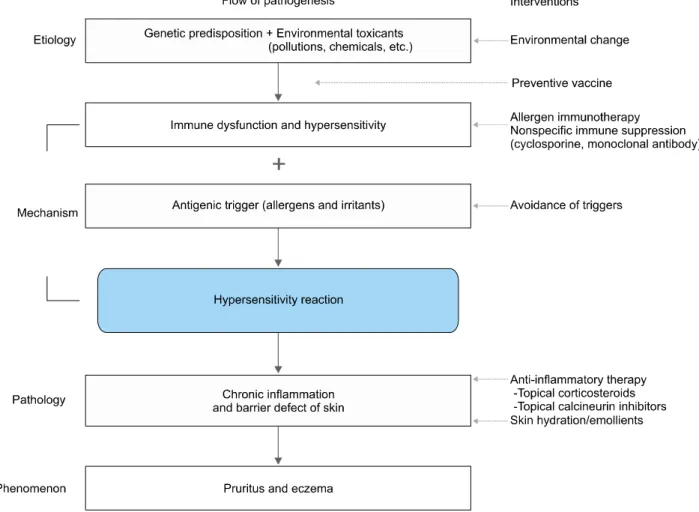
Fig. 1. One-way vertical flow pathogenesis model of atopic dermatitis. This vertical model suggests that (1) environmental toxicants (e.g., volatile inorganic chemicals, air pollution, and food additives) induce immune dysfunction and hypersensitivity in genetically susceptible human subjects by decreasing the threshold for developing hypersensitivity reaction to environmental allergens and irritants;
and (2) exposure to the allergens and/or irritants induces hypersensitivity reaction, chronic skin inflammation, skin barrier defect, and clinical manifestations of atopic dermatitis (pruritus and eczema). In this model, multiple modalities could be introduced to block multiple elements in the pathogenetic pathway for the treatment of atopic dermatitis. In addition, blocking the upper stream of the pathogenetic pathway of this model might be a more effective and fundamental therapeutic approach than blocking the lower stream of the pathogenetic pathway.
Allergen immunotherapy has been shown to be clinically beneficial in AD patients sensitized to inhalant allergens such as house dust mites in a meta-analysis of multiple randomized clinical trials19.
ONE-WAY VERTICAL FLOW PATHOGENESIS MODEL OF AD
AD is currently regarded as a multifactorial disorder cau- sed by multiple pathogenetic elements including genetic predisposition, environmental trigger, immune dysfunc- tion including hypersensitivity reaction, chronic skin in- flammation, and skin barrier defect2,3. However, the pre- cise inter-relationships between multiple pathogenetic ele- ments involved in the development and maintenance of
AD are not yet completely understood. Many complex models have described the interactions between the multi- ple pathogenetic elements in the development of AD11-13,20. The main controversy is regarding which event between skin barrier defect and immune dysfunction occurs first and is more important in AD development13. The present author proposes a one-way vertical flow pathogenesis model of AD showing the associations among multiple pathogenetic elements (Fig. 1). In this model, (1) environ- mental toxicants (e.g., volatile inorganic chemicals, air pollution, and food additives) absorbed through the respi- ratory mucosa, gastrointestinal mucosa, or skin induce im- mune dysfunction in genetically susceptible human sub- jects; (2) immune dysfunction induced by the toxicants produces hypersensitivity to environmental allergens and
irritants by decreasing the threshold for developing hyper- sensitivity reaction; and (3) exposure to the allergens and/or irritants induces hypersensitivity reaction, chronic inflammation, skin barrier defect, and the clinical manifes- tations of AD (pruritus and eczema), as suggested by an environmental scientist (“toxicant-induced loss of toler- ance” theory)21,22. The present author proposes that multi- ple modalities could be introduced to stop the functioning of the pathogenetic pathway to prevent or treat AD in this one-way vertical flow pathogenesis model of AD (Fig. 1).
In addition, blocking the upper stream of the pathogenetic pathway of this model might be a more effective and fun- damental therapeutic approach than blocking the lower stream of the pathogenetic pathway (Fig. 1).
EVIDENCES SUPPORTING THE KEY ROLE OF HYPERSENSITIVITY REACTION
(ALLERGIC REACTION) IN THE PATHOGENESIS OF AD
Hypersensitivity reaction (allergic reaction) to environ- mental allergen play a critical role in the development and maintenance of AD according to the following evidences.
1) Exposure to sensitized allergen (e.g., skin contact, in- halation) aggravates preexisting eczematous skin le- sions or induces new eczematous skin lesions in AD patients23,24.
2) Avoidance of sensitized allergen induces clinical im- provement in AD patients16,25.
3) Allergen immunotherapy including the repeated ad- ministrations of small amounts of sensitized allergen to induce allergen-specific immune tolerance results in clinical improvement in AD patients sensitized to in- halant allergen17-19.
4) The majority of AD patients (80%∼90%) show allergic sensitization to common inhalants or food allergens26. 5) Serum IgE concentrations are increased in the majority
of AD patients27.
6) AD patients frequently have coexisting other allergic diseases (e.g., allergic rhinitis, allergic keratoconjuncti- vitis, and bronchial asthma)28.
7) Children with AD frequently outgrow AD before pub- erty and progress to bronchial asthma and/or allergic rhinitis (allergic march)28.
These evidences support that hypersensitivity reaction play a key role in the pathogenesis of AD, and aller- gen-specific therapies including the avoidance of sensi- tized allergen and allergen immunotherapy should be in- troduced for the treatment of AD patients.
EVIDENCES SUPPORTING THE IMMUNE DYSFUNCTION AS A MAJOR THERAPEUTIC TARGET FOR AD
Immune dysfunction could be an ideal therapeutic target to induce long-term treatment-free clinical remission in AD patients according to the following evidences4,5,29-33. 1) Significant clinical improvement of AD can be induced
by immunosuppressive drugs (e.g., cyclosporine, my- cophenolate)29,30.
2) Significant clinical improvement of AD can be induced by monoclonal antibodies to specific immune compo- nents (anti-IL-4 receptor antibody or anti-B cell anti- body)4,5.
3) Immunoadsorption to remove circulating immunoglob- ulins (IgG, IgA, IgM, and IgE) from plasma by using an anti-immunoglobulin antibody column induced sig- nificant clinical improvements in severe AD patients31. 4) The majority of children with AD experience natural
clinical remission before puberty32.
5) Passive transfer of food allergy and subsequent devel- opment of AD occurred in a recipient following bone marrow transplantation from a donor with food al- lergy33.
These evidences suggest that immune dysfunction plays a key role in the pathogenesis of AD and is a useful ther- apeutic target. Clinical remission might be achieved by the correction of immune dysfunction in AD patients. The present author believes that an increased exposure to en- vironmental toxicants is the most important factor respon- sible for the recent substantial increase in the prevalence of AD in developed countries as suggested (Fig. 1)21. Current medical therapies focus on controlling skin in- flammation by using topical corticosteroids and/or topical calcineurin inhibitors1. However, immune dysfunction and hypersensitivity reaction in the upstream of the pathoge- netic pathway might be more useful therapeutic targets than control of skin inflammation for long-term clinical re- mission in AD patients (Fig. 1).
PREVIOUS REPORTS ON THERAPEUTIC INTERVENTIONS INDUCING LONG-TERM TREATMENT-FREE CLINICAL
REMISSION OF AD
Previous reports suggest that long-term treatment-free clin- ical remission of AD could be achieved by a complete change in the living environment, allergen immunothera- py, or natural remission in children with AD (Table 1).
Climatotherapy or heliotherapy involving complete changes in the living environment of AD patients has been re-
Table 1. Treatment methods that have been reported to produce long-term clinical remission in patients with atopic dermatitis 1. Complete change in living environment (climatotherapy or
heliotherapy)
2. Allergen immunotherapy with house dust mite allergen 3. Allergen and allergen-specific antibody immune complex
therapy
4. Natural remission in children with atopic dermatitis
ported to produce long-term treatment-free clinical re- mission of AD in the majority of severe AD patients34,35. However, the clinical remission usually disappeared after the patients returned to their previous living environ- ments34,35. These findings suggest that environmental fac- tors are critical in the development and maintenance of AD. However, it is also suggested that the endogenous tendency of AD patients (immune dysfunction and hyper- sensitivity) prone to develop a chronic skin inflammation is not completely corrected by substantial change in the environmental factor alone.
Another important treatment modality that has been re- ported to produce long-term treatment-free clinical remi- ssion in AD patients is an allergen immunotherapy36. Observational studies reported long-term treatment-free clinical remission in AD patients after allergen immuno- therapy or treatment by allergen-antibody complexes36-38. An interesting puzzle on the nature of AD is that a sig- nificant number of children with AD (up to 70%) experi- ence natural remission of their disease before puberty26. The remission of AD in children seems to be due to a nat- ural induction of immune tolerance. However, the exact mechanism inducing natural remission of AD in children has not yet been determined. If the mechanism is identi- fied, then its application in the treatment of AD might be the most promising therapeutic approach in the future.
EVIDENCES AGAINST THE CRITICAL ROLE OF SKIN BARRIER DEFECT IN THE
PATHOGENESIS OF AD
The evidences supporting the importance of immune dys- function and hypersensitivity in the pathogenesis of AD ar- gue against the hypothesis that defect in the gene for the skin barrier protein (i.e., filaggrin) is a primary cause of AD12,13,39,40. If the mutation of the filaggrin gene is a crit- ical and essential pathogenetic component responsible for the development of AD, how can we explain the marked clinical improvements of AD frequently observed by com- plete changes in the environment (climatotherapy), aller- gen immunotherapy, or the interesting finding of natural remission observed in children with AD?
CRITICISM AGAINST THE CRITICAL ROLE OF HYPERSENSITIVITY REACTION TO ENVIRONMENTAL ANTIGEN IN THE PATHOGENESIS OF AD
There has been criticism regarding the importance of hy- persensitivity reaction to environmental antigen in the pathogenesis of AD. The rationales supporting this criti- cism are as follows.
1) A certain number of AD patients have no evidence of allergic sensitization to environmental antigen, known as the “intrinsic type of AD” (about 10%∼20% of adult AD patients)41-43.
2) Avoidance of the sensitized house dust mite allergen was effective in children with AD but not in adult AD patients in randomized controlled studies25,44.
3) The autoreactivity to self-protein (auto-allergy) seems to play a role in the development of chronicity of AD45. 4) Although a systematic review on allergen immuno-
therapy for AD showed a positive evidence of clinical efficacy, relatively few well-designed clinical trials have studied the clinical efficacy of allergen immuno- therapy, and further clinical trials are needed to obtain a strong evidence19,46.
The relative importance of hypersensitivity reaction to en- vironmental antigen in the pathogenesis of AD could be variable among patients43. In addition, a chemical or met- al, rather than a protein, could act as an antigen causing chronic skin inflammation, as suggested in the intrinsic type of AD42. However, the importance of immune dys- function and hypersensitivity reaction (not confined to IgE-mediated type I hypersensitivity reaction) in the patho- genesis of AD could be supported by the above men- tioned evidences.
REASONS FOR THE CLINICAL EFFICACY OF MULTIPLE DIFFERENT THERAPEUTIC
APPROACHES FOR AD (“DOMINO THEORY”)
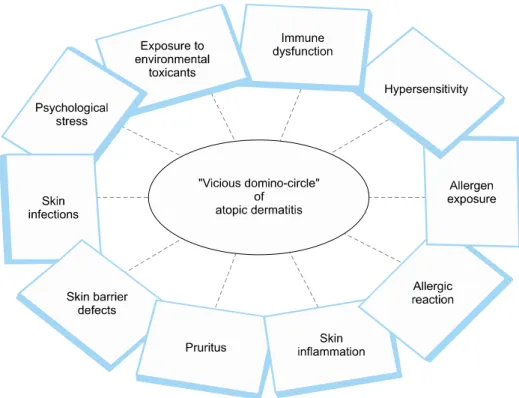
It is unclear how both climatotherapy and allergen im- munotherapy can induce long-term clinical remission in AD patients although these 2 approaches target different pathogenetic elements of AD. The present author suggests that a vicious domino-circle formed from the negative in- teractions among multiple pathogenetic elements is essen- tial for the development and maintenance of AD based on the personal clinical experiences obtained during the treatment of AD patients (“domino theory”). If one specific pathogenetic factor (e.g., environmental trigger, immune dysfunction, skin inflammation, or skin barrier defect) can be sufficiently controlled to break the vicious domino-cir-
Fig. 2. “Domino theory”.
A vicious domino-circle formed from negative interactions among multiple pathogenetic elements is essential for the development and maintenance of atopic dermatitis, and if one of the pathogenetic ele- ments (e.g., environmental triggers, immune dysfunction, skin inflam- mation, or skin barrier defects) can be sufficiently controlled to break the vicious domino-circle, then cli- nical remission of atopic derma- titis could be possible.
cle, clinical remission of AD could be possible (Fig. 2).
This theory can also explain the long-term clinical remis- sion observed in AD patients induced by various types of therapeutic interventions including climatotherapy, aller- gen immunotherapy, diet change, nutritional supplemen- tation, and lifestyle change. Therefore, the “domino theo- ry” of AD supports a therapeutic concept that multiple dif- ferent therapeutic approaches can produce clinical im- provements and even induce long-term treatment-free clin- ical remission in AD patients. In addition, this concept supports that a multidisciplinary therapeutic approach in- cluding environmental control, psychological support, and patient education should be attempted to achieve max- imal clinical improvements in AD patients.
REGULATORY T CELL AS A CRITICAL TARGET FOR THE TREATMENT OF AD
Regulatory T cell plays a critical role in maintaining im- mune tolerance including the suppression of autoimmu- nity (immune tolerance to self antigens) and hypersensi- tivity (immune tolerance to non-self antigens)47. Deficiency of regulatory T cell function has been suggested to be a key immune dysfunction responsible for the development of autoimmune and allergic diseases, as observed in ani- mal experiments48. Allergen immunotherapy decreases al- lergic inflammation (T helper type2 cell activation and IgE-mediated reaction) and induces clinical improvement
in patients with allergic diseases possibly through an acti- vation of regulatory T cell49. Lactobacillus or vitamin D supplementation has also been shown to activate regu- latory T cell in animal models50,51. There have been re- ports on the positive clinical efficacy of lactobacillus or vi- tamin D supplementation in AD patients52-55. Therefore, combinations of various approaches to activate regulatory T cell, including allergen immunotherapy, vitamin D sup- plementation, and lactobacillus supplementation, might provide maximal clinical improvements in AD patients by the induction of immune tolerance51.
RATIONALE FOR A PERSONALIZED
COMBINATION OF MULTIPLE THERAPIES TARGETING DIFFERENT STEPS IN THE PATHOGENETIC PATHWAY OF AD
The pathogenetic mechanisms involved in the develop- ment of AD seem to be variable among AD patients. Be- cause of this heterogeneity in the pathogenetic mecha- nism, the clinical efficacy of a single type of therapy can be insufficient and unpredictable in AD patients. In real clinical practice, many physicians apply various combina- tions of pharmacological therapies targeting skin infla- mmation (use of topical corticosteroid and/or topical calci- neurin) and immune dysfunction (use of immunosuppress- ant drugs including cyclosporine) and provide advices re- garding the avoidance of environmental triggers (allergens
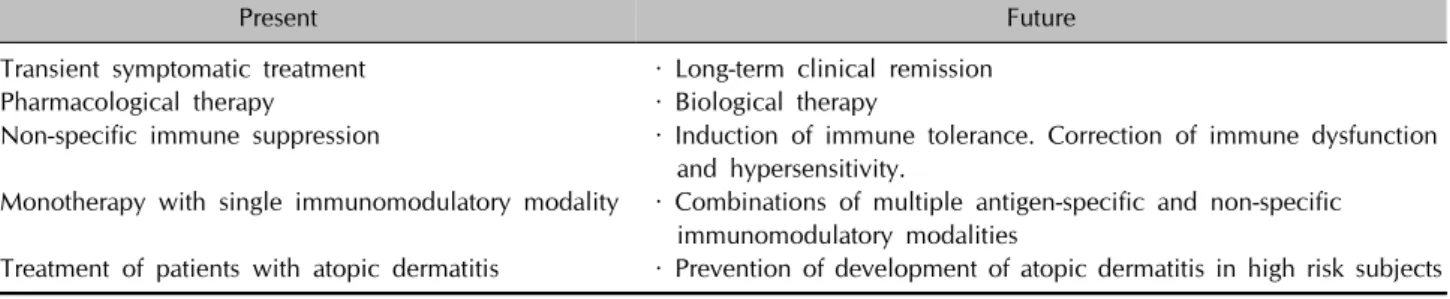
Table 2. Present and future of immunomodulatory therapy for atopic dermatitis
Present Future
· Transient symptomatic treatment
· Pharmacological therapy
· Non-specific immune suppression
· Monotherapy with single immunomodulatory modality
· Treatment of patients with atopic dermatitis
· Long-term clinical remission
· Biological therapy
· Induction of immune tolerance. Correction of immune dysfunction and hypersensitivity.
· Combinations of multiple antigen-specific and non-specific immunomodulatory modalities
· Prevention of development of atopic dermatitis in high risk subjects and irritants) in the treatment of AD patients. For the ach-
ievement of maximal clinical improvement, a personal- ized combination of immunomodulatory therapies includ- ing allergen immunotherapy and monoclonal antibody therapy (e.g., anti-IgE or anti-IL4 receptor antibody) should be tried and personalized according to the characteristics of immune dysfunction and hypersensitivity in individual AD patients in order to achieve a maximal clinical im- provement.
PRESENT AND FUTURE OF
IMMUNOMODULATORY THERAPY FOR AD
Current immunomodulatory therapies for AD using im- munosuppressive drugs and monoclonal antibodies are di- rected to a nonspecific suppression of immune function, and this approach could be harmful in AD patients be- cause of the possible increase in the risk of infection and/or malignancy. Therefore, future development of im- munomodulatory therapy for AD should be directed to the normalization of immune dysfunction without immune suppression. The duration of the clinical efficacy of the current immunomodulatory therapies for AD is relatively short, and regular maintenance therapy is essential for long-term clinical improvement. Future immunomodula- tory therapy for AD should aim for long-term clinical re- mission without the need for maintenance therapy (Table 2). Currently, none of the available immunomodulatory therapies has proven to modify the disease course of AD.
Future immunomodulatory therapies should aim for the modification of the long-term disease course and ulti- mately the long-term treatment-free clinical remission and cure of AD. Unfortunately, no definite tool is currently available for the primary prevention of AD. Future studies should also focus on the development of preventive vac- cines for AD.
Induction of immune tolerance mimicking the immuno- logical mechanism responsible for the natural remission of AD in children would be an ideal method to achieve clin- ical remission in AD patients. Induction of an anti-idiot-
ypic immune response (immune response to the anti- gen-binding site of an antibody) has been suggested as a mechanism responsible for the development of immune tolerance in animal studies56. However, limited clinical data supporting anti-idiotypic immunomodulatory therapy in human subjects with allergic diseases are available.
Recently, the clinical efficacy of recombinant idiotype vaccines resulting in the prolongation of disease-free sur- vival was demonstrated in patients with B-cell lymphoma in a randomized placebo-controlled clinical trial57. This re- sult suggests that anti-idiotypic immunomodulatory ther- apy could be also clinically effective in patients with aller- gic diseases. The present author hypothesized that repeated intramuscular injections of autologous immunoglobulin could induce clinical improvements in AD patients by stimulating active immune responses to the antigen-bind- ing sites of pathogenic antibodies, thereby correcting im- mune dysfunction. Repeated intramuscular injections of autologous immunoglobulin (mainly IgG) purified from autologous plasma using Protein A (autologous im- munoglobulin therapy) induced significant long-term clin- ical improvements in 2 of 3 patients with severe recalci- trant AD58. Autologous immunoglobulin therapy also sig- nificantly decreased the clinical severity scores and serum IgE concentrations in 17 adult patients with severe AD59. Future immunomodulatory therapies for AD should be personalized to specifically correct the immune dysfunc- tion and hypersensitivity in individual patients.
CONCLUSION
Immune dysfunction and hypersensitivity reaction play key roles in the pathogenesis of AD. Systemic immuno- modulatory therapies with allergen immunotherapy or monoclonal antibodies to specific immune components could be effective in AD patients. However, the clinical efficacy of current immunomodulatory therapy is often un- predictable or insufficient in some AD patients due to the heterogeneity of the pathogenetic mechanisms among AD patients. Therefore, a personalized combination of im- munomodulatory therapies to reduce hypersensitivity
(allergen immunotherapy) and correct immune dysfunc- tion (monoclonal antibody therapy) could be a reasonable therapeutic approach for patients with AD. Future im- munomodulatory therapies for AD should be developed to achieve long-term treatment-free clinical remission by induction of immune tolerance.
ACKNOWLEDGMENT
This work was supported by the National Research Foun- dation of Korea (NRF) grant funded by the Korea govern- ment (MSIP) (No. 2014R1A2A1A11049386).
REFERENCES
1. Akdis CA, Akdis M, Bieber T, Bindslev-Jensen C, Boguniewicz M, Eigenmann P, et al; European Academy of Allergology and Clinical Immunology/American Academy of Allergy, Asthma and Immunology. Diagnosis and treatment of atopic dermatitis in children and adults: European Academy of Allergology and Clinical Immunology/ American Academy of Allergy, Asthma and Immunology/ PRACTALL Consensus Report. J Allergy Clin Immunol 2006;118:152-169.
2. Novak N, Bieber T, Leung DY. Immune mechanisms lea- ding to atopic dermatitis. J Allergy Clin Immunol 2003;
112(6 Suppl):S128-S139.
3. Bieber T. Atopic dermatitis. Ann Dermatol 2010;22:125- 137.
4. Beck LA, Thaçi D, Hamilton JD, Graham NM, Bieber T, Rocklin R, et al. Dupilumab treatment in adults with mo- derate-to-severe atopic dermatitis. N Engl J Med 2014;
371:130-139.
5. Simon D, Hösli S, Kostylina G, Yawalkar N, Simon HU.
Anti-CD20 (rituximab) treatment improves atopic eczema. J Allergy Clin Immunol 2008;121:122-128.
6. Krathen RA, Hsu S. Failure of omalizumab for treatment of severe adult atopic dermatitis. J Am Acad Dermatol 2005;
53:338-340.
7. Takiguchi R, Tofte S, Simpson B, Harper E, Blauvelt A, Hanifin J, et al. Efalizumab for severe atopic dermatitis: a pilot study in adults. J Am Acad Dermatol 2007;56:222- 227.
8. Coca AF, Cooke RA. On the classification of the pheno- mena of hypersensitiveness. J Immunol 1923;8:163-182.
9. Sulzberger MB. Historical notes on atopic dermatitis: its names and nature. Semin Dermatol 1983;2:1-4.
10. Furue M, Chiba T, Takeuchi S. Current status of atopic dermatitis in Japan. Asia Pac Allergy 2011;1:64-72.
11. Halbert AR, Weston WL, Morelli JG. Atopic dermatitis: is it an allergic disease? J Am Acad Dermatol 1995;33:1008- 1018.
12. Lee HJ, Lee SH. Epidermal permeability barrier defects and barrier repair therapy in atopic dermatitis. Allergy Asthma Immunol Res 2014;6:276-287.
13. Leung DY. New insights into atopic dermatitis: role of skin barrier and immune dysregulation. Allergol Int 2013;62:
151-161.
14. Raimer SS. Managing pediatric atopic dermatitis. Clin Pediatr (Phila) 2000;39:1-14.
15. Carroll CL, Balkrishnan R, Feldman SR, Fleischer AB Jr, Manuel JC. The burden of atopic dermatitis: impact on the patient, family, and society. Pediatr Dermatol 2005;22:192- 199.
16. Sanda T, Yasue T, Oohashi M, Yasue A. Effectiveness of house dust-mite allergen avoidance through clean room therapy in patients with atopic dermatitis. J Allergy Clin Immunol 1992;89:653-657.
17. Werfel T, Breuer K, Ruéff F, Przybilla B, Worm M, Grewe M, et al. Usefulness of specific immunotherapy in patients with atopic dermatitis and allergic sensitization to house dust mites: a multi-centre, randomized, dose-response study. Allergy 2006;61:202-205.
18. Bousquet J, Lockey R, Malling HJ. Allergen immunotherapy:
therapeutic vaccines for allergic diseases. A WHO position paper. J Allergy Clin Immunol 1998;102:558-562.
19. Bae JM, Choi YY, Park CO, Chung KY, Lee KH. Efficacy of allergen-specific immunotherapy for atopic dermatitis: a systematic review and meta-analysis of randomized cont- rolled trials. J Allergy Clin Immunol 2013;132:110-117.
20. Novak N, Simon D. Atopic dermatitis-from new pathophy- siologic insights to individualized therapy. Allergy 2011;
66:830-839.
21. Genuis SJ. Sensitivity-related illness: the escalating pande- mic of allergy, food intolerance and chemical sensitivity.
Sci Total Environ 2010;408:6047-6061.
22. Lee JH, Lee HS, Park MR, Lee SW, Kim EH, Cho JB, et al.
Relationship between indoor air pollutant levels and residential environment in children with atopic dermatitis.
Allergy Asthma Immunol Res 2014;6:517-524.
23. Darsow U, Laifaoui J, Kerschenlohr K, Wollenberg A, Przybilla B, Wüthrich B, et al. The prevalence of positive reactions in the atopy patch test with aeroallergens and food allergens in subjects with atopic eczema: a European multicenter study. Allergy 2004;59:1318-1325.
24. Tupker RA, De Monchy JG, Coenraads PJ, Homan A, van der Meer JB. Induction of atopic dermatitis by inhalation of house dust mite. J Allergy Clin Immunol 1996;97:1064-1070.
25. Tan BB, Weald D, Strickland I, Friedmann PS. Double-blind controlled trial of effect of housedust-mite allergen avoid- ance on atopic dermatitis. Lancet 1996;347:15-18.
26. Hua TC, Hwang CY, Chen YJ, Chu SY, Chen CC, Lee DD, et al. The natural course of early-onset atopic dermatitis in Taiwan: a population-based cohort study. Br J Dermatol 2014;170:130-135.
27. Johnson EE, Irons JS, Patterson R, Roberts M. Serum IgE concentration in atopic dermatitis. Relationship to severity of disease and presence of atopic respiratory disease. J Allergy Clin Immunol 1974;54:94-99.
28. Zheng T, Yu J, Oh MH, Zhu Z. The atopic march: progres- sion from atopic dermatitis to allergic rhinitis and asthma.
Allergy Asthma Immunol Res 2011;3:67-73.
29. Schmitt J, Schmitt N, Meurer M. Cyclosporin in the treat- ment of patients with atopic eczema-a systematic review and meta-analysis. J Eur Acad Dermatol Venereol 2007;21:
606-619.
30. Weatherhead SC, Wahie S, Reynolds NJ, Meggitt SJ. An open-label, dose-ranging study of methotrexate for mode- rate-to-severe adult atopic eczema. Br J Dermatol 2007;156:
346-351.
31. Kasperkiewicz M, Schmidt E, Frambach Y, Rose C, Meier M, Nitschke M, et al. Improvement of treatment-refractory atopic dermatitis by immunoadsorption: a pilot study. J Allergy Clin Immunol 2011;127:267-270.
32. Gustafsson D, Sjöberg O, Foucard T. Sensitization to food and airborne allergens in children with atopic dermatitis followed up to 7 years of age. Pediatr Allergy Immunol 2003;14:448-452.
33. Bellou A, Kanny G, Fremont S, Moneret-Vautrin DA.
Transfer of atopy following bone marrow transplantation.
Ann Allergy Asthma Immunol 1997;78:513-516.
34. Byremo G, Rød G, Carlsen KH. Effect of climatic change in children with atopic eczema. Allergy 2006;61:1403-1410.
35. Vähävihu K, Ylianttila L, Salmelin R, Lamberg-Allardt C, Viljakainen H, Tuohimaa P, et al. Heliotherapy improves vitamin D balance and atopic dermatitis. Br J Dermatol 2008;158:1323-1328.
36. Chait I, Allkins V. Remission of life-long atopic dermatitis after hyposensitisation to house dust mite. Practitioner 1985;229:609, 612.
37. Leroy BP, Lachapelle JM, Somville MM, Jacquemin MG, Saint-Remy JM. Injection of allergen-antibody complexes is an effective treatment of atopic dermatitis. Dermatologica 1991;182:98-106.
38. Tuft L. Studies in atopic dermatitis. V. Problems in inhalant hyposensitization and results of treatment. J Allergy 1960;
31:1-11.
39. Elias PM, Hatano Y, Williams ML. Basis for the barrier abnormality in atopic dermatitis: outside-inside-outside pathogenic mechanisms. J Allergy Clin Immunol 2008;121:
1337-1343.
40. Yu HS, Kang MJ, Jung YH, Kim HY, Seo JH, Kim YJ, et al.
Mutations in the filaggrin are predisposing factor in korean children with atopic dermatitis. Allergy Asthma Immunol Res 2013;5:211-215.
41. Suárez-Fariñas M, Dhingra N, Gittler J, Shemer A, Cardinale I, de Guzman Strong C, et al. Intrinsic atopic dermatitis shows similar TH2 and higher TH17 immune activation compared with extrinsic atopic dermatitis. J Allergy Clin Immunol 2013;132:361-370.
42. Tokura Y. Extrinsic and intrinsic types of atopic dermatitis. J Dermatol Sci 2010;58:1-7.
43. Flohr C, Johansson SG, Wahlgren CF, Williams H. How atopic is atopic dermatitis? J Allergy Clin Immunol 2004;
114:150-158.
44. Oosting AJ, de Bruin-Weller MS, Terreehorst I, Tempels- Pavlica Z, Aalberse RC, de Monchy JG, et al. Effect of ma- ttress encasings on atopic dermatitis outcome measures in a double-blind, placebo-controlled study: the Dutch mite av- oidance study. J Allergy Clin Immunol 2002;110:500-506.
45. Tang TS, Bieber T, Williams HC. Does "autoreactivity" play a role in atopic dermatitis? J Allergy Clin Immunol 2012;
129:1209-1215.
46. Gendelman SR, Lang DM. Specific immunotherapy in the treatment of atopic dermatitis: a systematic review using the GRADE system. Ann Allergy Asthma Immunol 2013;111:
555-561.
47. Nouri-Aria KT. Foxp3 expressing regulatory T-cells in aller- gic disease. Adv Exp Med Biol 2009;665:180-194.
48. Miyara M, Wing K, Sakaguchi S. Therapeutic approaches to allergy and autoimmunity based on FoxP3+ regulatory T-cell activation and expansion. J Allergy Clin Immunol 2009;123:749-755.
49. Akdis CA, Akdis M. Mechanisms of allergen-specific immunotherapy. J Allergy Clin Immunol 2011;127:18-27.
50. Kim HJ, Kim YJ, Lee SH, Yu J, Jeong SK, Hong SJ. Effects of Lactobacillus rhamnosus on allergic march model by suppressing Th2, Th17, and TSLP responses via CD4(+) CD25(+)Foxp3(+) Tregs. Clin Immunol 2014;153:178-186.
51. Weiss ST. Bacterial components plus vitamin D: the ulti- mate solution to the asthma (autoimmune disease) epide- mic? J Allergy Clin Immunol 2011;127:1128-1130.
52. Torii S, Torii A, Itoh K, Urisu A, Terada A, Fujisawa T, et al.
Effects of oral administration of Lactobacillus acidophilus L-92 on the symptoms and serum markers of atopic dermatitis in children. Int Arch Allergy Immunol 2011;
154:236-245.
53. Yang HJ, Min TK, Lee HW, Pyun BY. Efficacy of probiotic therapy on atopic dermatitis in children: a randomized, double-blind, placebo-controlled trial. Allergy Asthma Immunol Res 2014;6:208-215.
54. Sidbury R, Sullivan AF, Thadhani RI, Camargo CA Jr.
Randomized controlled trial of vitamin D supplementation for winter-related atopic dermatitis in Boston: a pilot study.
Br J Dermatol 2008;159:245-247.
55. Lee SA, Hong S, Kim HJ, Lee SH, Yum HY. Correlation between serum vitamin d level and the severity of atopic dermatitis associated with food sensitization. Allergy Asthma Immunol Res 2013;5:207-210.
56. Shoenfeld Y. The idiotypic network in autoimmunity:
antibodies that bind antibodies that bind antibodies. Nat Med 2004;10:17-18.
57. Schuster SJ, Neelapu SS, Gause BL, Janik JE, Muggia FM, Gockerman JP, et al. Vaccination with patient-specific tumor-derived antigen in first remission improves disease- free survival in follicular lymphoma. J Clin Oncol 2011;29:
2787-2794.
58. Nahm DH, Cho SM, Kim ME, Kim YJ, Jeon SY. Autologous immunoglobulin therapy in patients with severe recalcitrant atopic dermatitis: a preliminary report. Allergy Asthma Immunol Res 2014;6:89-94.
59. Nahm DH, Kim ME, Cho SM. The effects of intramuscular injection of autologous immunoglobulin on clinical severity and serum IgE concentration in patients with atopic dermatitis. Dermatology 2015;231:145-151.