Print ISSN: 2288-4637 / Online ISSN 2288-4645 doi:10.13106/jafeb.2020.vol7.no11.689
Factors Affecting Capital Structure of Listed Construction Companies on Hanoi Stock Exchange
Nguyet Minh NGUYEN
1, Kien Trung TRAN
2Received: August 01, 2020 Revised: September 30, 2020 Accepted: October 15, 2020
Abstract
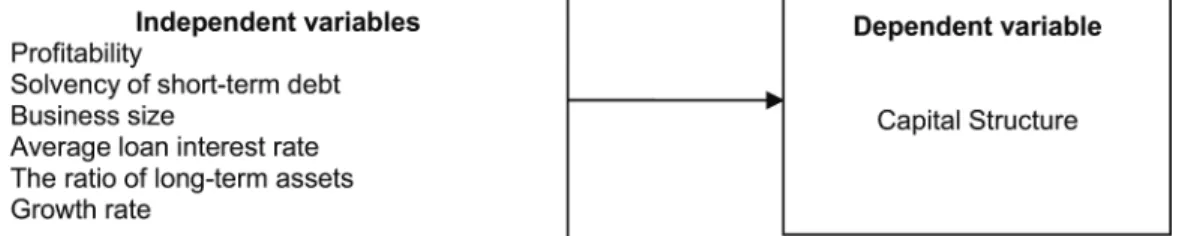
The aim of this article is to determine the influence of factors on the capital structure of construction companies listed on the Hanoi Stock Exchange. The data of the article were collected and calculated from the financial statements of 54 construction companies listed on Hanoi Stock Exchange from 2012 to 2019. With the application of E-view software in quantitative analysis to build panel data regression model (panel data), the article has built a regression model to determine the relationship of intrinsic factors affecting the capital structure of construction companies listed on Hanoi Stock Exchange. In the study, dependent variable is capital structure, determined by the debt-to- equity ratio. Profitability, coefficient of solvency, size, loan interest rate, structure of tangible assets, and growth are independent variables.
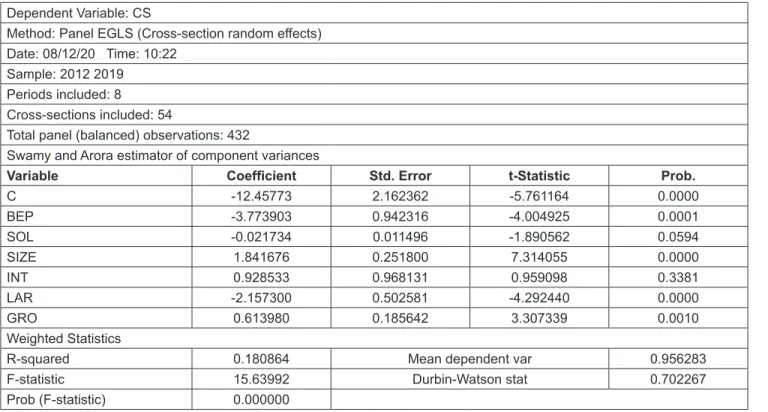
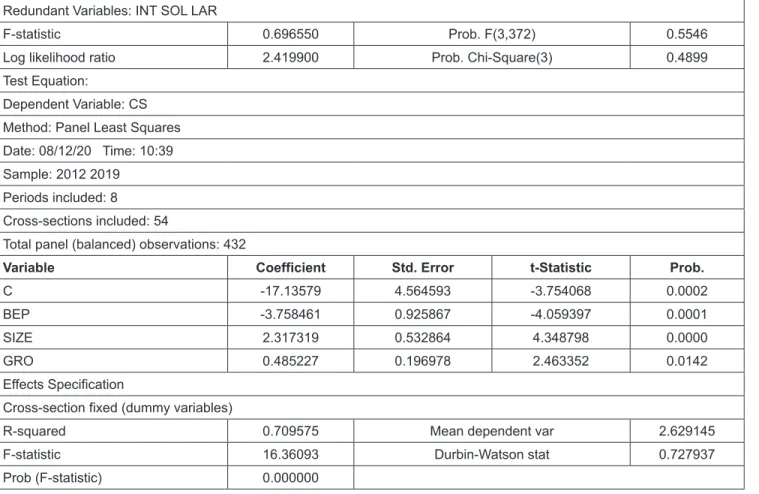
The results showed that the two factors of growth and firm size positively affect the capital structure, the profitability factor has the opposite effect on capital structure. Factors of short-term debt solvency, average loan interest rate and tangible asset structure have no correlation with capital structure. The findings of this article are useful for business administrators, helping business managers make the right financial decisions to make capital structure decisions in their own conditions.
Keywords: Capital Structure, Construction Companies, Growth Rate, Profitability, Firm Size JEL Classification Code: C01, G30, G32, L74
has not been good, there have been many shortcomings in financial management. One of the primary causes leading to the above situation is the existence of an unreasonable, unsafe and risky capital structure mainly arising from the needs of enterprises.
Capital structure are related to corporate financing decisions. Firms can finance their operations using debts, equity or a combination of these two sources (Ross et al., 2001; Abor, 2005; Brealey et al., 2009).
Capital structure of construction enterprises often has a high debt ratio, a common situation in many countries around the world (Mohammad et al., 2019). In Vietnam, the capital structure of construction enterprises has a higher debt ratio, averaging 70%-80% of the total capital, even some enterprises have a debt ratio of over 90%. While enterprises are operating inefficiently, the capital structure that leans too much on such debts puts more pressure on enterprises, both creating more difficulties for enterprises and containing potential risks. Using too much debt financing can increase financial exhaustion and reduce the firm’s ability of to borrow (Addae et al., 2013). Therefore, in order to develop stably and sustainably, construction enterprises need to set up a reasonable capital structure to promote the efficiency
1. Introduction
Over the past years, along with the efforts to stabilize the macro-economy, the Government has made great attempts in improving the business environment. These efforts have contributed to the recovery of the economy.
Although there have been many positive changes in the economy, the operation of businesses still faces difficulties.
The impact from the economic crisis and recession is still a threat to the viability of the majority of businesses including construction businesses. In recent years, it can be seen that the performance of enterprises in the construction industry
1
First Author and Corresponding Author. Lecturer, Faculty of Transport Economics, University of Transport Technology, Vietnam [Postal Address: 54 Trieu Khuc Road, Thanh Xuan District, Hanoi, 120418, Vietnam] Email: [email protected]
2
Lecturer, Faculty of Transport Economics, University of Transport Technology, Vietnam. Email: [email protected]
© Copyright: The Author(s)
This is an Open Access article distributed under the terms of the Creative Commons Attribution Non-Commercial License (https://creativecommons.org/licenses/by-nc/4.0/) which permits unrestricted non-commercial use, distribution, and reproduction in any medium, provided the original work is properly cited.