Print ISSN: 2288-4637 / Online ISSN 2288-4645 doi:10.13106/jafeb.2021.vol8.no8.0421
The Effect of Institutional Quality on Financial Inclusion in ASEAN Countries
Yen Hai Dang NGUYEN1, Dao Thieu Thi HA2
Received: April 20, 2021 Revised: July 04, 2021 Accepted: July 15, 2021
Abstract
This study investigates the empirical linkages between ASEAN countries’ institutional quality and financial inclusion using country data from 2008–2019. In this paper, six governance indicators from the World Governance index are used to measure the impact of institutions on financial inclusion. The PCA method’s financial inclusion index is constructed from 3 indicators: penetration, access, and usage: penetration, access, and usage with six indices respectively as the number of ATMs per 1000 km2, the number of bank branches per 1000 km2, the number of ATMs per 100,000 people and the number of bank branches for 100,000 adults, the ratio of credit to private to GDP, and the ratio of deposit to private to GDP. Regression analysis with the Generalized Moments method shows the positive impact of institutions and other control variables like GDP per capita, inflation, bank concentration, and human development index on financial inclusion. Therefore, this study recommends that the government and policymakers in countries pursue the financial inclusion agenda to pay attention to the financial and economic indicators and institutional factors. This is because many savers, borrowers, and investors may not be protected when financial contracts are enforced or breaches occur in an environment where economic, legal, judicial, and political institutions are weak, such as in ASEAN countries.
Keywords: Financial Inclusion, Institutions, ASEAN, GMM JEL Classification Code: D02, E02, G02, G21, G32
and use of formal financial services’. It is a state in which all members of society have full access to financial services at affordable prices and convenience. In general, financial inclusion boosts economic growth, indirectly reducing poverty and inequality, affordability and improves the population’s well-being.
Many factors hinder access to and use of financial services, such as personal characteristics, social charac- teristics, macroeconomic and infrastructure, institu tional weakness, and obstacles arising from banking activities.
The financial inclusion literature has also identified two major factors that affect financial inclusion across countries: (1) structural factors, which stem from the cost of providing financial services to citizens; and (2) policy- related factors, which are related to creating an enabling environment for developing financial inclusion. Akudugu et al. (2009) emphasized the rules and regulations governing the operation of the formal financial markets that greatly influence financial inclusion. This effect can slow financial inclusion in a country due to inappropriate policies in accessing finance. This can pose a risk to the public, especially those in rural areas, from participating
1 First Author and Corresponding Author. Lecturer, Faculty of Finance, Banking University of Ho Chi Minh City, Vietnam [Postal Address: 56 Hoang Dieu 2, Linh Chieu, Thu Duc, Ho Chi Minh City, Vietnam] Email: [email protected]
2 Lecturer, Faculty of Finance, Banking University of Ho Chi Minh City, Vietnam. Email: [email protected]
© Copyright: The Author(s)
This is an Open Access article distributed under the terms of the Creative Commons Attribution Non-Commercial License (https://creativecommons.org/licenses/by-nc/4.0/) which permits unrestricted non-commercial use, distribution, and reproduction in any medium, provided the original work is properly cited.
1. Introduction
Financial inclusion is an important solution to tackling poverty and inequality and achieving sustainable development goals (SDGs). Financial inclusion is the process of ensuring access to appropriate financial products and services needed by vulnerable groups such as weaker sections and low-income groups at an affordable cost in a fair and transparent manner by mainstream institutional players. Sarma and Pais (2008) defined financial inclusion
‘as a process that ensures the ease of access, availability,
in the formal financial sector (Akudugu et al., 2009).
Moreover, at the macro level, the important significance of institutional quality for financial inclusion was found by Nkoa and Song (2020), and trust in financial institutions is also a driver of financial inclusion (Xu, 2020).
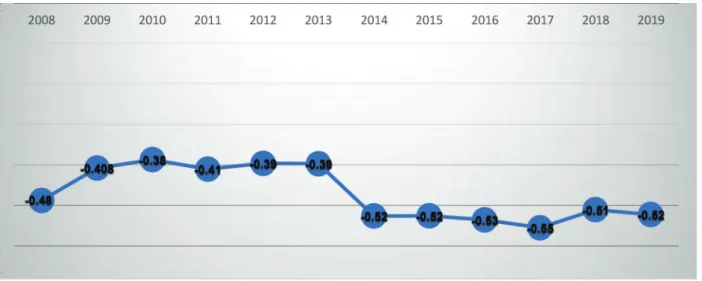
ASEAN countries can accelerate financial inclusion by innovating financial infrastructure development and improving the quality of institutions. Loo (2019) suggested that the availability of banking infrastructure, controlling corruption, and monitoring financial access for vulnerable communities can be strategic policies. However, countries in ASEAN are still facing low institutional quality (Figure 1).
It may also be why the level of financial inclusion in these countries is still not high.
This study examines the impact of institutions on financial inclusion in ASEAN countries over 2008–2019.
The PCA method’s financial inclusion index is constructed from 3 indicators: penetration, indicator, and usage.
Previous empirical studies widely use these indicators.
Meanwhile, six institutional indicators are selected based on World Governance Indicators (WGIs) published by the World Bank to construct a composite index that reflects the institutional index.
This study has the following contributions: First, the financial inclusion index in this study has an advantage over previous studies. Specifically, the study uses the IMF’s Financial Access Survey (FAS) data to construct a composite index consisting of three dimensions: penetration, availability, and usage. Meanwhile, previous studies reflect financial inclusion on one or two aspects. Second, we add to recent contributions in the literature in identifying the factors that influence financial inclusion. Third, in addition to gender, income, infrastructure, etc., the research has found
that institutions’ quality greatly impacts financial inclusion.
A previous study by Pandhit and Cahyadin (2020) was done on a sample of ASEAN countries. However, the study looked at each aspect of the institution that affects financial inclusion separately, not as a whole. And the authors have not shown the link between institutions and financial inclusion in impact with other variables related to country or institution.
Therefore, this study has a contribution when considering the impact on the aspect (overall edge and consider adding the remaining variables in the model).
The remainder of the paper is structured as follows.
Section 2 introduces the theoretical framework of financial inclusion and financial stability. Section 3 presents data and methods, followed by Section 4, which gives the results.
Finally, section 5 is the conclusion of the study.
2. Literature Review and Hypotheses 2.1. Conceptualizing Financial
Inclusion and Institutions
Discussion about financial inclusion: There are various definitions of financial inclusion (IFI), depending on national objectives. Still, it is commonly understood to provide financial services to those who do not have them.
Hannig and Jansen (2010) have defined IFI as “a state in which all working-age adults have effective access to credit saving, payments, and insurance from formal service providers.” From a practical viewpoint, Siddik et al.
(2018) discussed several indicators of financial inclusion and argued that financial inclusion should be a composite index based on three aspects such as penetration indicators, availability indicators as well as usage indicators, which
Figure 1: The Development of Institutional Indicators in ASEAN During 2008–2019
will ensure financial inclusion is more fully reflected. Thus, IFI embraces three core elements: access, usage, and quality of financial service.
Financial inclusion allows the unbanked and under- banked of society to join the formal financial system, which ultimately helps to alleviate poverty, promote job security, and improve livelihoods and advance social empowerment (Demirgüç-Kunt et al., 2017; Hannig & Jansen, 2010;
Sarma & Pais, 2011).
Similarly, there are many different views on the institution offered by the authors. According to Schmid (1972), an institution is a set of regulations on the relationship of rights and responsibilities between people, and these regulations are binding on each other. North (1990) defined institutions as constraints imposed by the state, such as constitutions, laws, and regulations, to guide the activities of people in society. It has two types: formal institutions and informal institutions. The formal institution is codified in the law, including the constitution, codes, laws, charters, etc. Informal institutions are based on social values and other enforcement mechanisms such as trust.
The distinction between formal and informal institutions is based on considering the level of enforcement, not on the forms of rules.
Acemoglu et al. (2012) expanded the concept of institutions in expressing the power and executive ability of the state for economic growth and better social management.
Institutions are distinguished into economic institutions and political institutions. Broadly, institutions that have been associated with economic performance commonly relate to measures of government risk of expropriation, the rule of law, bureaucratic quality, and corruption, government repudiation of contracts, civil liberties, and openness to trade.
2.2. Previous Empirical Studies
The literature on financial inclusion considers three perspectives. First, constructing indicators to measure financial inclusion (Amidžic et al., 2014; Demirgüç-Kunt et al., 2017; Gupte et al., 2012; Sarma, 2012); Second examining the determinants of financial inclusion (Kumar, 2013; Park & Mercado, 2015; Zins & Weill, 2016) and examining the nexus between financial inclusion and macroeconomic and microeconomic variables such as economic growth (Hannig & Jansen, 2010), reducing poverty and inequality (Park & Mercado, 2015), financial stability (Alam Siddik & Kabiraj, 2018; Ratnawati, 2020), and banking stability (Ahamed & Mallick, 2019; Alvi et al., 2020; Pham & Doan, 2020).
Regarding the factors affecting financial inclusion, previous studies have focused on these factors (1) supply- side (financial institutions) such as as the geographical location of financial services, bank fees (Kumar, 2013;
Tuesta et al., 2015); lack of suitable financial products for people, especially low-income people, banking stability, and banking concentration (Ajide, 2017; Sousa, 2015);
(2) demand-side (consumer), personal characteristics such as education level, gender, income, household consumption, education (Demirgüç-Kunt et al., 2017; Devlin, 2005;
Tuesta et al., 2015; Zins & Weill, 2016) (3) socioeconomic environment such as degree of macroeconomic stability, the gross domestic product per capita, population structure, telecommunications infrastructure and financial market size (Fu et al., 2014; Owen & Pereira, 2018; Park & Mercado, 2015; Sousa, 2015).
Institutional factors have attracted the attention of many authors in recent years (Ali et al., 2016; Allen et al., 2016; Anthony-Orji et al., 2019; Bongomin et al., 2018;
Dwumfour & Ntow-Gyamfi, 2018; Nkoa & Song, 2020).
Most studies showed the influence of institutions on financial inclusion in both its overall and individual aspects.
Allen et al. (2016) emphasized that regulations related to law, institutions, and political stability are factors that promote better financial inclusion. This was confirmed by Bongomin et al. (2018) in their study in Uganda. Financial sector clients in rural Uganda depend on the law to be more inclusive in financial transactions. Dwumfour and Ntow- Gyamfi (2018) found that the quality of institutions can promote financial development in some African countries.
Research at the micro-and macro-economic levels showed that greater financial inclusion is related to institutional characteristics, such as a strong legal system, the rule of law, and political stability (Anthony-Orji et al., 2019).
Park and Mercado (2015) examined the determinants of financial inclusion in 37 developing economies in Asia between 2004 and 2012. The authors argued that per capita income, legal regulation, and population size have significant positive effects on financial inclusion. In particular, the escalation of law through the enforcement of financial contracts will reduce voluntary financial exclusion.
Ali et al. (2016) examined the interplay between the quality of institutions and financial inclusion in 52 developing countries during 2004–2010 using the GMM model.
Research showed that institutional quality for developing countries promotes financial inclusion. Furthermore, their results showed that financial openness and economic growth positively and significantly affect financial inclusion in the above countries.
Zulkhibri and Ghazal (2017) considered the impact of governance and institutions on financial inclusion across 69 developing and emerging economies across different regions, namely Sub-Saharan Africa, the Middle East, North Africa, South Asia, East Asia, the Pacific, Eastern Europe, and Central Asia in 2011 and 2013. The study suggested that removing corruption, increasing transparent legal framework, fair judicial proceedings, and good
administration are essential for development and raising financial inclusiveness. They further explained that while the results show significant variation across the studied regions, that strong economic governance and institutions are important elements in improving financial inclusion especially for the poor segment of the society because markets, economic activity, and transactions more generally, cannot function well in their absence.
Kwenda and Chinoda (2019) using the GMM model with data for 49 African countries for 2004-2016 found a positive effect of governance and institutional quality on financial inclusion. At the same time, the study also showed that economic freedom and the size of the banking sector also have a significant influence on the financial inclusion of African countries.
Anthony-Orji et al. (2019) investigated the impact between financial inclusion, financial stability, and institutional quality in Nigeria using the autoregressive distributed lag model based on the unrestricted error correction model (ARDL-UECM). Using quarterly data from 1986 to 2013, the results showed a significant short- and long-term positive impact of institutional quality on financial inclusion. The study recommended that policymakers need to pay attention to institutional factors in performing financial inclusion. Because when the political, economic, judicial, and legal institutions are weak, households and businesses may not be protected, leading to unexpected results when implementing financial inclusion.
Eldomiaty et al. (2020) examined the impact of world governance indicators (WGIs) on the improvement of financial inclusion across world economies. The empirical results revealed that control of corruption, government effectiveness, political stability, and voice and accountability are the significant WGIs that influence financial inclusion significantly. Nurudeen et al. (2015) supported this finding, arguing that lower corruption leads to higher savings rates in the Economic Community of West African States. In addition, controlling corruption and increasing public trust in financial institutions also greatly influenced the decision to use cards for payment of EU citizens in the period 2000–2012 (Goczek &
Witkowski, 2016). Second, the political stability element has a positive effect significantly on all four dimensions of financial inclusion. This result is supported by Herrala and Ariss (2013). However, an opposite result was found in the research of Aaberge et al. (2017) in China. They presented evidence that a surge in political uncertainty resulted in significant temporary increases in savings among urban households in China. Households responded mainly by reducing semi-durable expenditure and frequency of major durable adjustment. The uncertainty
effect is more pronounced among older, wealthier, and more socially advantaged households. Finally, the government efficiency factor significantly affects borrowing, saving, and debit card ownership. This result is consistent with the results reported by Ajide (2017) and Zulkhibri and Ghazal (2017). In a similar context, voice and accountability have positive implications for savings, debit, and credit card ownership.
In this study, institutional quality includes process and institutional arrangements such as governance, the rule of law, etc., to support consumer protection and ensure that the financial system is run efficiently with adequate oversight and regulation. A weak institutional situation will affect a country’s economic development policies such as financial inclusion. Hence, this study examined the effect of institutional on financial inclusion, which is based on the following hypothesis:
H1: Institutions are significantly and positively related to financial inclusion.
3. Research Methods and Materials 3.1. Measurement
3.1.1. Financial Inclusion
The financial inclusion index for ASEAN countries in the sample for the period 2008 to 2017 is constructed using data from the IMF along three dimensions, each representing one aspect of financial inclusion integration. In this paper, six indicators are used. They are divided into three groups:
In the first dimension (penetration), two indices are used:
the number of ATMs per 1000 km2 and the number of bank branches per 1000 km2. The second dimension (availability) is measured by two indices to account for the penetration level of financial inclusion: the number of ATMs per 100,000 people and the number of bank branches for 100,000 adults.
In the third dimension (usage), we use the ratio of credit to private to GDP and the ratio of deposit to private to GDP as proxies. These indices were sued in many previous studies (Ahamed & Mallick, 2019; Amidžic et al., 2014; Gupte et al., 2012; Lenka et al., 2016; Sarma, 2016).
To construct a composite index of financial inclusion, this study uses the principal component analysis (PCA) method with the following formula:
IFIi = β1BBKMi + β2ATMKMi + δ1BBPoPi + δ2ATMPopi + γ1ODCi + γ2OLCi
The indexes were calculated using the PCA method, the results were presented in Table 1.
Table 1 present the financial inclusion index for ASEAN countries, where Singapore and Malaysia have the highest degree of financial inclusion compared with the other countries in our sample. In contrast, Myanmar and Laos have the lowest degree.
3.1.2. Institutional Quality
Variables for institution quality are introduced through PCA to examine the overall impact of financial institution on financial inclusion. These include the voice and accountability, political stability, government
effectiveness, regulatory quality, the rule of law, and control of corruption indicators from the Worldwide Governance Indicators (WGI) of the World Bank, which are presented in Table 2. Many studies in related literature also used the same approach to obtain a single, broader index (Al-Marhubi, 2004; Bjørnskov, 2006; Easterly, 2002; Ngo & Nguyen, 2020).
The reason this study uses these six indicators is that according to the construction of Kaufmann et al. (2011), these indexes cover three aspects that quite fully reflect the institutional quality of a country according to the concepts of North (1990) and Acemoglu et al. (2012).
Table 1: Financial Inclusion Index of ASEAN Countries
Year Vietnam Thailand Malaysia Singapore Indonesia Philippines Cambodia Myanmar Laos Brunei
2008 97.81 108.06 111.43 1896.64 40.95 47.92 25.65 4.42 15.9 85.53
2009 117.31 112.69 131.34 2036.25 41.66 50.59 29.30 4.87 22.12 90.72
2010 132.77 115.74 127.08 2272.65 40.93 52.44 33.43 5.76 27.02 74.76
2011 123.23 123.09 130.87 2342.13 48.30 55.47 38.14 7.46 31.36 71.21
2012 121.48 188.89 133.96 2383.88 63.27 58.88 45.77 9.93 36.02 75.56
2013 130.07 143.18 136.46 2388.11 69.73 67.61 48.31 15.22 40.68 75.53
2014 136.73 236.74 134.73 2392.27 74.97 71.82 58.96 19.06 43.78 77.54
2015 148.78 155.88 133.89 2435.28 77.60 76.76 66.35 21.68 47.63 86.54
2016 161.73 155.25 130.19 2387.86 79.18 83.29 75.34 26.17 50.86 90.00
2017 168.07 153.76 124.82 2626.29 79.74 87.63 83.23 28.33 52.49 83.20
2018 171.79 154.07 126.53 2681.08 79.48 87.63 94.20 30.59 51.44 82.97
2019 179.35 152.50 78.13 2497.85 79.05 89.40 103.73 30.22 51.44 84.96
Table 2: The Composite Index of Institutional in ASEAN Countries During 2008–2019
Year Brunei Cambodia Indonesia Laos Malaysia Myanmar Philippines Singapore Thailand Vietnam
2008 −1.46 −0.49 0.69 −1.32 −0.46 −1.05 1.09 −1.10 0.46 −1.24
2009 −1.42 −0.28 0.52 −1.19 −0.33 −0.90 1.14 −0.93 0.61 −1.31
2010 −1.28 −0.33 0.55 −1.09 −0.42 −0.82 1.07 −0.90 0.59 −1.23
2011 −1.13 −0.45 0.52 −1.23 −0.36 −0.76 0.92 −0.83 0.46 −1.23
2012 −0.92 −0.61 0.46 −1.27 −0.23 −0.70 0.79 −0.82 0.58 −1.26
2013 −1.02 −0.60 0.40 −1.30 −0.26 −0.44 0.73 −0.83 0.56 −1.21
2014 −1.22 −0.80 0.42 −1.64 −0.40 −0.38 0.62 −0.79 −0.03 −1.04
2015 −1.32 −0.85 0.55 −1.67 −0.41 −0.22 0.70 −0.92 −0.04 −1.08
2016 −1.40 −0.91 0.39 −1.66 −0.35 −0.12 1.05 −1.03 −0.11 −1.21
2017 −1.44 −0.87 0.44 −1.56 −0.32 0.01 0.86 −1.13 −0.28 −1.25
2018 −1.42 −0.93 0.50 −1.58 −0.19 0.12 0.77 −0.97 −0.23 −1.18
2019 −1.46 −0.81 0.46 −1.68 −0.06 0.16 0.64 −1.09 −0.25 −1.13
3.2. Research Model
According to literature reviews, and hypotheses in section 2, the research model is formulated as follow:
IFIi,t = α0 + α1IFIi,t−1 + α2INQi,t + βjXi,t + βj′Zi,t + μi + ϑt + εi,t
Where IFIi,t refers to financial inclusion of country i at time t, IFIi,t−1 is the lag value of financial inclusion of country i at time t, and INQi,t is institution quality index of the country I at time t. Xi,t and Zi,t represent banking and country control variables, respectively. The other parameters—β, µi, νt, and εi,t—are the coefficient, country effects, time effects, and residual. The choice of this set of explanatory variables is based on previous literature.
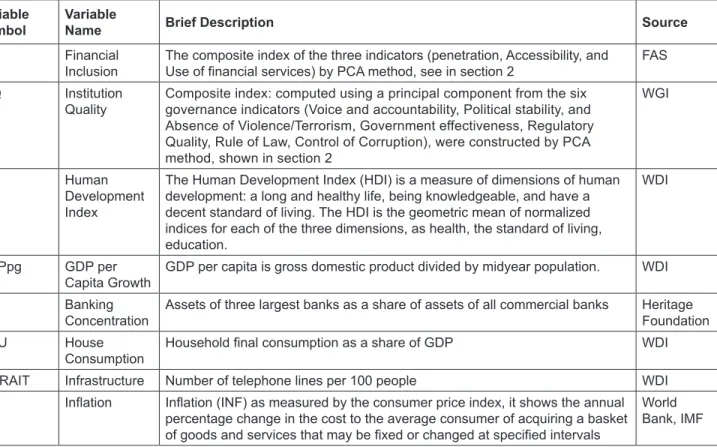
All the variables are listed in Table 3.
3.3. Data and Methodology
The data in the study are collected from reliable sources such as the International Monetary Fund (IMF) Database to determine the financial inclusion index, and World
governance indicators (WGI) to determine the institutional index. In addition, this paper also uses other instrumental variables such as inflation, per capita growth rate, human development index, banking concentration, and household consumption, which are collected from the IMF, the Heritage Foundation Database (HFD), and the World Development Index (WDI), respectively. The study will be carried out from 2008 during the period of the financial crisis. Besides, ASEAN countries include Indonesia, Malaysia, Thailand, Cambodia, Philippines, Vietnam, Lao PDR, and Myanmar.
Throughout the study period, all countries still faced low institutional quality.
With the lagged variable of the dependent variable in the model, the study was conducted to test the regression model by the test method of Durbin Wu-Hausman and found that the model has an endogenous phenomenon. To overcome the endogenous phenomenon, the study employs a System GMM method of Arellano and Bover (1995) and Blundell and Bond (1998). This is the method used by many studies to provide stable estimation results (Arellano & Bond, 1991;
Lee et al., 2014; Mensi & Labidi, 2015).
Accordingly, the author uses the Sargan - Hansen test to check the validity of the instrumental variable.
Table 3: Description Variables in the Model Variable
Symbol Variable
Name Brief Description Source
IFI Financial
Inclusion The composite index of the three indicators (penetration, Accessibility, and
Use of financial services) by PCA method, see in section 2 FAS
INQ Institution
Quality Composite index: computed using a principal component from the six governance indicators (Voice and accountability, Political stability, and Absence of Violence/Terrorism, Government effectiveness, Regulatory Quality, Rule of Law, Control of Corruption), were constructed by PCA method, shown in section 2
WGI
HD Human
Development Index
The Human Development Index (HDI) is a measure of dimensions of human development: a long and healthy life, being knowledgeable, and have a decent standard of living. The HDI is the geometric mean of normalized indices for each of the three dimensions, as health, the standard of living, education.
WDI
GDPpg GDP per
Capita Growth GDP per capita is gross domestic product divided by midyear population. WDI
BCI Banking
Concentration Assets of three largest banks as a share of assets of all commercial banks Heritage Foundation
HOU House
Consumption Household final consumption as a share of GDP WDI
INFRAIT Infrastructure Number of telephone lines per 100 people WDI
INF Inflation Inflation (INF) as measured by the consumer price index, it shows the annual percentage change in the cost to the average consumer of acquiring a basket of goods and services that may be fixed or changed at specified intervals
World Bank, IMF
The instrumental variable that is determined to be good must satisfy the requirements of fit and validity, that is, the correlation with the regressors is endogenous as well as orthogonal to the residual. Besides the Sargan - Hansen test, the study continues to test the suitability of the limit for the instrumental variable by AR test. Regression results show that there is no higher-order series correlation in the residuals, and the p-value indicates that the hypothesis of the first difference is not rejected in the research model.
4. Results and Discussion 4.1. Descriptive Statistics
Table 4 presents the descriptive statistics of the variables used in this study. Again, we find that the mean of all variables (except institutions) is positive.
According to Table 4, the volatility of financial inclusion is from 1.4858 to 7.8939 and its mean is 4.5434, which indicates that IFI tends to be low on average within the sample countries.
4.2. Correlation Analysis
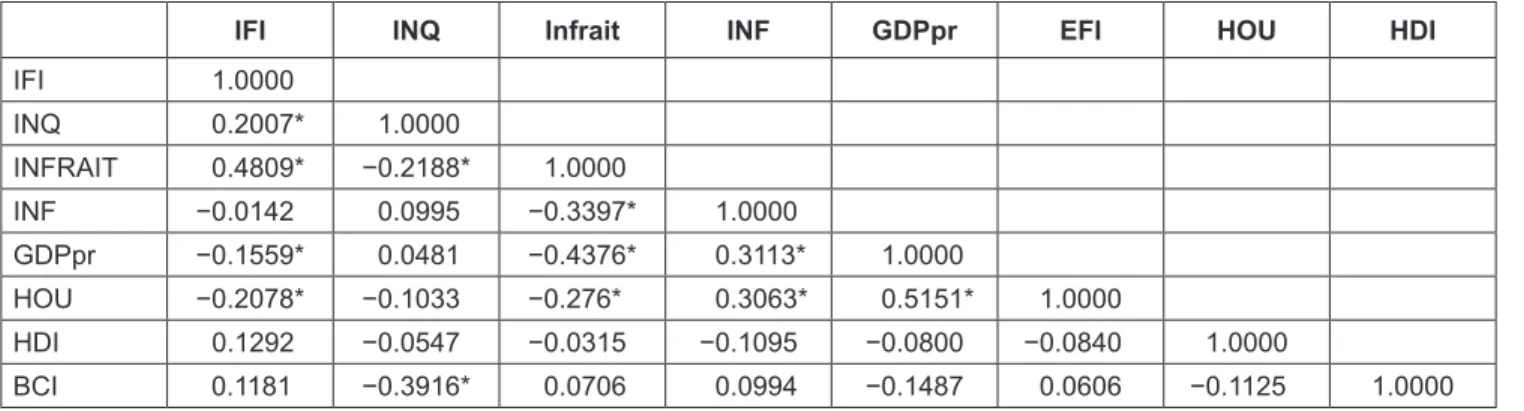
Table 5 shows the correlation matrix of the variables and variance inflation factor (VIF).
In addition, the correlation coefficients of independent variables and control variables are less than 0.8, so there is no serious problem with multicollinearity.
4.3. Regression Analysis
This section reports and discusses the empirical results from the basic model and the robustness analyses.
Table 6 displays the estimated results from using sys-GMM, which shows that the variables in the model are statistically significant for financial inclusion. According to that, the institutional variable has a positive impact on financial inclusion. This result is in line with the view of Kwenda and Chinoda (2019) and Zulkhibri (2016).
This is explained that when greater institutional quality increases direct access to banks and microfinance for households. Furthermore, Ali et al. (2016) and Kwenda
Table 4: Descriptive Statistics
Variables Observations Means Standard Deviation Minimum Maximum
IFI 120 4.5434 1.3140 1.4858 7.8939
INQ 120 −0.4719699 0.7888076 −1.682711 1.138488
INFRAIT 120 11.95003 10.666667 0.310433 39.28134
HOU 120 0.535575 0.03143 −0.0371 0.1738
BCI 120 3.58 12.00446 3.25364 7.89398
HDI 120 0.7481667 0.4886992 0.49 5.9
GDPgr 120 0.0375206 0.0291093 −0.0378074 0.1251431
INF 120 0.0330631 0.0382512 −0.0126851 0.2679954
Table 5: Correlation Matrix
IFI INQ Infrait INF GDPpr EFI HOU HDI
IFI 1.0000
INQ 0.2007* 1.0000
INFRAIT 0.4809* −0.2188* 1.0000
INF −0.0142 0.0995 −0.3397* 1.0000
GDPpr −0.1559* 0.0481 −0.4376* 0.3113* 1.0000
HOU −0.2078* −0.1033 −0.276* 0.3063* 0.5151* 1.0000
HDI 0.1292 −0.0547 −0.0315 −0.1095 −0.0800 −0.0840 1.0000
BCI 0.1181 −0.3916* 0.0706 0.0994 −0.1487 0.0606 −0.1125 1.0000
Notes: The asterisk *Denotes statistical significance at the 10 percent level.
and Chinoda (2019) emphasized the confidence generated by the quality of institutions allows financial institutions to diversify their customers, leading to more growth in their business. Obviously, when politics is unstable, people lack trust in financial institutions, which leads to a low ability to use financial services. Thus, an enhanced institutional quality contributes substantially to financial inclusion, particularly for the poor segments of society.
For country variables, infrastructure has a positive impact on financial inclusion in ASEAN countries. Full and modern infrastructure such as fintech, blockchain, and artificial intelligence will serve as the foundation for speedy, safe, and at a low-cost financial inclusion. This improves people’s ability to access and use financial services (Ali et al., 2016). However, balance is needed between financial technologies, risk management, and low-income consumers’ protection. Similarly, a positive impact of the human development index on financial inclusion was found. This result is also explained by the study of Tuesta et al. (2015), who asserted that people’s awareness of financial products is one of the core factors that prevent them from looking for financial products, especially for people with low income. For low-income people, the perceived barrier to accessing these services is about 15% higher than that of high-income people.
This makes them hesitate when there is a need to use financial services. This observation is shared in the study
of Ajide (2017). Therefore, the human development index plays an important role when developing financial inclusion.
For banking variables, a positive relationship is found between banking concentration and financial inclusion.
This result is in line with Cetorelli and Gambera (2001), who showed that more concentrated banking systems increase firms’ access to finance.
For macroeconomic variables, inflation and GDP per capita growth increase financial inclusion in ASEAN.
GDP per capita has positive and statistically significant effects on financial inclusion in ASEAN countries. This result is confirmed by the fact that the high level of GDP per capita contributes more to the survival of economic actors and, to a greater extent, to their resilience, increasing their propensity for product and process innovations by banks, thereby widening the accessibility and use of financial services. This result is in line with those obtained by Kim (2016), Nanda & Kaur (2016), and Sarma and Pais (2011).
5. Conclusion
The quality level of institutions in all ASEAN countries is low. This raises concerns when implementing financial inclusion. Therefore, this study aims to examine the impact of institutions on financial inclusion in ASEAN countries during 2008–2019. The results show that institution has a significant impact on financial inclusion. This argument indicates that well-established governance is a prerequisite for financial inclusion. In addition, the adoption of global regulatory standards related to dynamic terms, macro-security regulation, capital adequacy, and information disclosure is critical to supporting a safe financial environment. Conversely, enforced financial inclusion combined with a weak regulatory environment creates a high risk of excessive borrowing, and lack of consumer protection threatens financial stability (Čihák et al., 2016). In addition to the institutional factor, the study also shows that different factors: human development, infrastructure, banking concentration, inflation, and per capita income growth have a significant impact on financial inclusion.
References
Aaberge, R., Liu, K., & Zhu, Y. (2017). Political uncertainty and household savings. Journal of Comparative Economics, 45(1), 154–170. https://doi.org/10.1016/j.jce.2015.12.011
Acemoglu, D., Johnson, S., & Robinson, J. A. (2012). The colonial origins of comparative development: An empirical investigation. American Economic Review, 102(6), 3077–3110.
https://doi.org/10.1257/aer.91.5.1369 Table 6: Regression Output of GMM
Estimation Technique Sys−GMM Financial Inclusion
IFIi,t−1 0.45516824** (0.024)
INQ 0.066331811* (0.086)
INFRAIT 0.1094618* (0.083)
HOU −0.062369352 (0.796)
HDI 1.3454613*** (0.013)
BCI 0.00259029** (0.03)
INF 1.1152404** (0.018)
GDPgr 2.0933868*** (0.04)
constant −1.3177048*** (0.005)
Observations 120
Number of countries 10
AR (2) test 0.483
Sargan test 0.810
Notes: *p < 0.1; **p < 0.05; ***p < 0.01; Standard deviations robust to heteroskedasticity in parentheses.
Cetorelli, N., & Gambera, M. (2001). Banking market structure, financial dependence, and growth: International evidence from industry data. The Journal of Finance, 56(2), 617–648. https://
doi.org/10.1111/0022-1082.00339
Čihák, M., Mare, D. S., & Melecky, M. (2016). The nexus of financial inclusion and financial stability: A study of trade-offs and synergies (Working Paper No.7722). Washington DC: World Bank Policy Research. https://ssrn.com/abstract=2811371 Demirgüç-Kunt, A., Klapper, L., & Singer, D. (2017). Financial
inclusion and inclusive growth: A review of recent empirical evidence. Washington DC: World Bank. https://doi.org/
10.1596/1813-9450-8040
Devlin, J. F. (2005). A detailed study of financial exclusion in the UK. Journal of Consumer Policy, 28(1), 75–108. https://doi.
org/10.1007/s10603-004-7313-y
Dwumfour, R. A., & Ntow-Gyamfi, M. (2018). Natural resources, financial development and institutional quality in Africa: is there a resource curse? Resources Policy, 59, 411–426. https://
doi.org/10.1016/j.resourpol.2018.08.012
Easterly, W. (2002). The cartel of good intentions: The problem of bureaucracy in foreign aid. The Journal of Policy Reform, 5(4), 223–250. https://doi.org/
10.1080/1384128032000096823
Eldomiaty, T., Hammam, R., & El Bakry, R. (2020). Institutional determinants of financial inclusion: Evidence from world economies. International Journal of Development Issues.
https://doi.org/10.1108/IJDI-08-2019-0147
Fu, X. M., Lin, Y. R., & Molyneux, P. (2014). Bank competition and financial stability in the Asia Pacific. Journal of Banking Finance, 38, 64–77. https://doi.org/10.1016/
j.jbankfin.2013.09.012
Goczek, Ł., & Witkowski, B. (2016). Determinants of card pay- ments. Applied Economics, 48(16), 1530–1543. https://doi.org/
10.1080/00036846.2015.1102846
Gupte, R., Venkataramani, B., & Gupta, D. (2012). Computation of financial inclusion index for India. Procedia-Social Behavioral Sciences, 37, 133–149. https://doi.org/10.1016/
j.sbspro.2012.03.281
Hannig, A., & Jansen, S. (2010). Financial inclusion and financial stability: Current policy issues. (Working Paper No. 259).
Tokyo, Japan: Asian Development Bank Institute. https://doi.
org/10.2139/ssrn.1729122
Herrala, R., & Ariss, R. T. (2013). Credit constraints, political instability, and capital accumulation: Washington DC:
International Monetary Fund.
Kaufmann, D., Kraay, A., & Mastruzzi, M. (2011). The worldwide governance indicators: methodology and analytical issues.
Hague Journal on the Rule of Law, 3(2), 220–246. https://doi.
org/10.1017/S1876404511200046
Kim, J. H. (2016). A study on the effect of financial inclusion on the relationship between income inequality and economic growth. Emerging Markets Finance Trade, 52(2), 498–512.
https://doi.org/10.1080/1540496X.2016.1110467 Ahamed, M. M., & Mallick, S. K. (2019). Is financial inclusion
good for bank stability? International evidence. 157, 403–427.
https://doi.org/10.1016/j.jebo.2017.07.027
Akudugu, M. A., Egyir, I. S., & Mensah-Bonsu, A. (2009).
Women farmers’ access to credit from rural banks in Ghana.
Agricultural Finance Review, 69(3), 284-299. https://doi.org/
10.1108/00021460911002671
Al-Marhubi, F. (2004). The determinants of governance: A cross- country analysis. Contemporary Economic Policy, 22(3), 394–406. https://doi.org/10.1093/cep/byh029
Alam Siddik, M. N., & Kabiraj, S. (2018). Does financial inclusion induce financial stability? Evidence from a cross-country analysis. Australasian Accounting, Business and Finance Journal, 12(1), 33–46. https://doi.org/10.14453/aabfj.v12i1.3 Ali, H. S., Law, S. H., Yusop, Z., & Chin, L. (2016). Institutional
quality and financial inclusion nexus in developing countries:
A dynamic panel GMM estimation analysis. Malaysia: IBAF.
Allen, F., Demirguc-Kunt, A., Klapper, L., & Peria, M. S. M.
(2016). The foundations of financial inclusion: Understanding owner ship and use of formal accounts. Journal of Financial Intermediation, 27, 1–30. https://doi.org/10.1016/j.jfi.2015.12.003 Alvi, M. A., Rafique, A., & Shehzad, K. (2020). Financial inclusion and bank stability controversy: Evidence from South Asian region. International Journal of Financial Engineering, 20(5), 38–59. https://doi.org/10.1142/S2424786320500383
Amidžic, G., Massara, M. A., & Mialou, A. (2014). Assessing countries’ financial inclusion standing-A new composite index.
Washington DC: International Monetary Fund.
Anthony-Orji, O. I., Orji, A., Ogbuabor, J. E., & Nwosu, E. O. (2019).
Do financial stability and institutional quality have an impact on financial inclusion in developing economies? New evidence from Nigeria. International Journal of Sustainable Economy, 11(1), 18–40. https://doi.org/10.1504/IJSE.2019.096541 Arellano, M., & Bond, S. (1991). Some tests of specification
for panel data: Monte Carlo evidence and an application to employment equations. The Review of Economic Studies, 58(2), 277–297. https://doi.org/10.2307/2297968
Arellano, M., & Bover, O. (1995). Another look at the instrumental variable estimation of error components models. Journal of Econometrics, 68(1), 29–51. https://doi.org/10.1016/0304- 4076(94)01642-D
Bjørnskov, C. (2006). The multiple facets of social capital.
European Journal of Political Economy, 22(1), 22–40. https://
doi.org/10.1016/j.ejpoleco.2005.05.006
Blundell, R., & Bond, S. (1998). Initial conditions and moment restrictions in dynamic panel data models. Journal of Econometrics, 87(1), 115–143. https://doi.org/10.1016/S0304- 4076(98)00009-8
Bongomin, G. O. C., Munene, J. C., Ntayi, J. M., & Malinga, C. A.
(2018). Analyzing the relationship between institutional framework and financial inclusion in rural Uganda.
International Journal of Emerging Markets, 13(4), 606–630.
https://doi.org/10.1108/IJoEM-02-2017-0057
Kumar, N. (2013). Financial inclusion and its determinants:
Evidence from India. Journal of Financial Economic Policy, 6(9), 56–89. https://doi.org/10.1108/175763813113 17754
Kwenda, F., & Chinoda, T. (2019). The impact of institutional quality and governance on financial inclusion in Africa:
A two-step system generalized method of moments approach.
Journal of Economic and Financial Sciences, 12(1), 1–9.
https://doi.org/10.4102/jef.v12i1.441
Lee, C. C., Hsieh, M. F., & Yang, S. J. (2014). The relationship between revenue diversification and bank performance:
Do financial structures and financial reforms matter? Japan and the World Economy, 29, 18–35. https://doi.org/10.1016/
j.japwor.2013.11.002
Lenka, S. K., Bairwa, A. K., & McMillan, D. (2016). Does financial inclusion affect monetary policy in SAARC countries? Cogent Economics & Finance, 4(1), 1127011.
10.1080/23322039.2015.1127011
Loo, M. K. L. (2019). Enhancing financial inclusion in ASEAN:
Identifying the best growth markets for Fintech. Journal of Risk and Financial Management, 12(4), 181. https://doi.org/
10.3390/jrfm12040181
Mensi, S., & Labidi, W. (2015). The effect of diversification of banking products on the relationship between market power and financial stability. American Journal of Economics and Business Administration, 7(4), 185. https://doi.org/10.3844/
ajebasp.2015.185.193
Nanda, K., & Kaur, M. (2016). Financial inclusion and human development: A cross-country evidence. Management and Labour Studies, 41(2), 127–153. https://doi.org/
10.1177%2F0258042X16658734
Ngo, M. N., & Nguyen, L. D. (2020). Economic growth, total factor productivity, and institution quality in low-middle income countries in Asia. The Journal of Asian Finance, Economics, and Business, 7(7), 251–260. https://doi.org/10.13106/
jafeb.2020.vol7.no7.251
Nkoa, B. E. O., & Song, J. S. (2020). Does institutional quality affect financial inclusion in Africa? A panel data analysis.
Economic Systems, 44(4), 100836. https://doi.org/10.1016/
j.ecosys.2020.100836
North, D. C. (1990). Institutions, institutional change and economic performance: Cambridge, UK: Cambridge University Press.
Nurudeen, A., Abd Karim, M. Z., & Aziz, M. I. (2015).
Corruption, political instability, and economic development in the Economic Community of West African States (ECOWAS): Is there a causal relationship? Contemporary Economics, 9(1), 45-60. https://www.econstor.eu/bitstream/
10419/141897/1/825963125.pdf
Owen, A. L., & Pereira, J. M. (2018). Bank concentration, competition, and financial inclusion. Review of Develop- ment Finance, 8(1), 1–17. https://doi.org/10.1016/j.rdf.
2018.05.001
Pandhit, T. S. L., & Cahyadin, M. (2020). Linkages between dynamic financial inclusion and institutions in ASEAN 8. Jurnal Ekonomi Pembangunan: Kajian Masalah Ekonomi dan Pembangunan, 21(2), 174–186. https://doi.org/10.23917/jep.v21i2.11146
Park, C. Y., & Mercado, R. (2015). Financial inclusion, poverty, and income inequality in developing Asia (Economics Working Paper Series No. 426). Tokyo, Japan: Asian Development Bank. https://doi.org/10.2139/ssrn.2558936 Pham, M. H., & Doan, T. P. L. (2020). The impact of financial
inclusion on financial stability in Asian countries. The Journal of Asian Finance, Economics, and Business, 7(6), 47–59.
https://doi.org/10.13106/jafeb.2020.vol7.no6.047
Ratnawati, K. (2020). The impact of financial inclusion on economic growth, poverty, income inequality, and financial stability in Asia. The Journal of Asian Finance, Economics, and Business, 7(10), 73–85. https://doi.org/10.13106/jafeb.2020.
vol7.no10.073
Sarma, M., & Pais, J (2008). Financial inclusion and develop- ment: A cross-country analysis. India: Madras School of Economics.
Sarma, M. (2012). Index of financial inclusion: A measure of financial sector inclusiveness (Working Paper 07/2012).
Delhi, India: Centre for International Trade and Development.
https://finance-and-trade.htw-berlin.de/fileadmin/HTW/
Forschung/Money_Finance_Trade_Development/working_
paper_series/wp_07_2012_Sarma_Index-of-Financial- Inclusion.pdf
Sarma, M. (2016). Measuring financial inclusion for Asian economies. UK: Palgrave MacMillan. https://doi.org/
10.1057/978-1-137-58337-6_1
Sarma, M., & Pais, J. (2011). Financial inclusion and development.
Journal of International Development, 23(5), 613–628. https://
doi.org/10.1002/jid.1698
Schmid, A. A. (1972). Analytical institutional economics:
Challenging problems in the economics of resources for a new environment. American Journal of Agricultural Economics, 54(5), 893–901. https://doi.org/10.2307/1239236
Siddik, M., Alam, N., & Kabiraj, S. (2018). Does financial inclusion induce financial stability? Evidence from a cross-country analysis. Australasian Accounting, Business Finance Journal, 12(1), 34–46. http://doi.org/10.14453/
aabfj.v12i1.3
Sousa, M. M. D. (2015). Financial inclusion and global regulatory standards: An empirical study across developing economies (New G20 Working Paper No. 7). Waterloo, Ontario: Centre for International Governance Innovation.
https://www.cigionline.org/sites/default/files/new_thinking_
g20_no7.pdf
Tuesta, D., Sorensen, G., Haring, A., & Camara, N. (2015).
Financial inclusion and its determinants: the case of Argentina (Working Paper No 15.03). Madrid: BBVA Research. https://
www.bbvaresearch.com/wp-content/uploads/2015/01/WP_15- 03_Financial-Inclusion-in-Argentina.pdf
Xu, X. (2020). Trust and financial inclusion: A cross-country study. Finance Research Letters, 35, 101310. https://doi.org/
10.1016/j.frl.2019.101310
Zins, A., & Weill, L. (2016). The determinants of financial inclusion in Africa. Review of Development Finance, 6(1), 46–57. https://doi.org/10.1016/j.rdf.2016.05.001
Zulkhibri, M. (2016). Financial inclusion, governance, and institution: Evidence from developing economies (Working
Paper No 2016-3). Jeddah, Saudi Arabia: The Islamic Research and Teaching Institute (IRTI). https://doi.org/10.2139/
ssrn.2721251
Zulkhibri, M., & Ghazal, R. (2017). The impacts of governance and institution on financial inclusion: Evidence from Muslim countries and developing economies. Journal of King Abdulaziz University: Islamic Economics, 30, 37–60. https://
doi.org/10.4197/Islec.30-SI.3