DVB-S2 LDPC 복호 알고리즘의 새로운 신드롬 체크 기반의 Early Stopping 방식
장관석*, 장대익**, 오덕길** 정회원
A New Syndrome Check based Early Stopping Method for DVB-S2 LDPC Decoding Algorithm
Gwan-Seok Jang*, Dae-Ig Chang**, Deock-Gil Oh** Regular Members
요 약
본 논문에서는 DVB-S2 기반 LDPC 부호의 반복 복호횟수를 줄이기 위한 계산 복잡도가 줄어든 early stopping 방식을 제안한다.
DVB-S2 기반 LDPC 복호기는 최대 64800 비트의 부호를 처리해야 되기 때문에 그 자체로 매우 높은 계산 복잡도를 가진다. 기존 early stopping 방식은 64800 비트의 DVB-S2 LDPC 코드를 이용하여 early stopping 기준치를 계산하는데 있어 높은 계산 복잡도를 가진다. 따 라서 제안 방식은 LDPC 부호의 계층적 복호방식중 하나인 Horizontal Shuffling Scheduling 복호 방식에 early stopping 방식을 간단하 게 적용함으로써 기존 방식 대비 최대 70%의 계산량 감소를 달성하였다. 실험 결과는 제안 방식을 적용한 LDPC 복호 알고리즘이 기존 방식 대비 Bit Error Rate 성능이 더 우수하다는 것을 보여준다.
Key Words:Early Stopping, LDPC, Layered Decoding, Horizontal Shuffling Schedule, HSS, DVB-S2.
ABSTRACT
In this paper, we propose a computationally efficient early stopping method to reduce the average number of iterations. The conventional early stopping methods have too much computational complexity to compute the stopping criterion. Thus, only the hard decision based early stopping method is suitable to realize the hardware of LDPC decoder. However, this method also can increase the computational complexity of LDPC decoder. The proposed method can effectively reduce the computational complexity of stopping criterion as we do not compute hard decision, and we combine the stopping criterion with horizontal shuffling scheduling decoding scheme. The simulation results show that a new early stopping method achieves acceptable bit error rate performance also reduces the average number of iterations.
*과학기술연합대학원 이동통신 및 방송통신 공학과 ([email protected]),
**한국전자통신연구원 위성무선연구부 위성방송통신융합팀 ([email protected], [email protected]), 교신저자 : 오덕길
※ 이 논문은 한국전자통신연구원의 지원을 받아 수행된 연구 결과임
접수일자 : 2011년 10월 14일, 수정완료일자 : 2011년 10월 28일, 최종게재확정일자 : 2011년 12월 2일
I. Introduction
Most of the satellite broadcasting systems use DVB-S2 LDPC code because of its powerful performance [1]. In the future, Ka band satellite broadcasting system requires very high speed transmission rates up to a few Mbits per second. In this case, the decoding speed of LDPC is critical factor to increase the bit rate of satellite
transmission [2].
Generally, the decoding speed of LDPC codes depends on the number of iterative message passing process in decoders. To increase the decoding speed of LDPC code, it has been issued to reduce the number of iterations of LDPC decoding algorithm.
For this purpose, several early stopping methods have been proposed to find undecodable blocks and to terminate the iterative process in the early stage in [3]-[7]. Since Frank Kienle and Norbert Wehn
first proposed an iteration control criterion for the LDPC code in 2005 [3], The convergence of mean magnitude (CMM) based on the evolution of variable node messages in [4]; and convergence of the summation of the sign products computed in the check-to-variable messages in [5] has been monitored to check the stopping criterion. Also, an early stopping method based on the density evolution of the log-likelihood ratio (LLR) messages of the check node has been proposed in [6]. In addition, the channel adaptive early termination method has been proposed in [7].
However, these methods have relatively high computational complexity to detect undecodable blocks and to make the stopping criterion. To make the hardware implementation of early stopping criterion simple, this method uses the hard decision values to detect the undecodable blocks. Even though the channel adaptive early termination method uses the hard decision values to make hardware simple, the computational complexity and memory occupations of the early stopping method itself still can be inherent problems for simple hardware realization.
In this paper, we propose a computationally efficient early stopping method based on the sign change rates of syndrome values of LDPC code.
This method can reduce the computational complexity of early stopping method with relatively good bit error rates (BER) performance.
Ⅱ. Conventional Eraly Stopping Method In this section, we briefly review the latest hard decision based early stopping method which is the channel adaptive early termination (CAET) method.
In addition, we calculate the computational complexity of this method, because there has been no consideration about the computational complexity for early stopping method itself.
The hard decision based early stopping method divides a sign change rate region into two blocks.
One is decodable block and the other one is undecodable block. If the calculated sign change rate is in the decodable block, the LDPC decoder continues to decode. Otherwise, the decoding procedure is terminated.
The channel adaptive early termination method set
the threshold which divides the sign change rate region according to channel characteristics. Let Imax and N be the predefined maximum number of decoding iterations and the code word length, respectively. The decoding procedure of hard decision HD based early stopping method is as follows:
• STEP 1:Initialize
Set It and Th which is represent initial iteration number and threshold of Sign Change Rate (SCR).
• STEP 2:Decide Hard Decision (HD) of LLR At the end of kth iteration (k>1) of ith bit,
compute the HD and its sign value denoted as Sik.
• STEP 3:Calculate SCR
Calculate the amount of HDs that Sik≠Si(k-1) for all i’s, denoted as Numi
• STEP 4:Check the stopping parameters.
a) Check if Numi =0.
b) Check if k>It and Numi/N ≥Th
• STEP 5:Stopping decision
If the conditions in either or both 4a) and 4b) are true or k≥Imax, then terminate the decoding process; otherwise, continue to the next iteration.
As we described above, the hard decision based early stopping method also has additional computations for because this method computes the hard decision values as the amount of N. Also, this method occupies additional memories for saving the (k-1)th hard decision values as the amount of N. In addition, this method also has to compare the hard decision value as the amount of N and count to calculate the sign change rate as the amount of error bits averagely. All of these computations are performed at the end of every iteration.
Table 1 shows the additional computations and memory occupations of channel adaptive early termination method, where α is the bit error rate, N is code word length and K is information length.
Because the LDPC decoder of DVB-S2 has massive computations and memory size, this additional computation and memory occupations still can inherent problems to realize the early stopping method in hardware.
Table 1. The number of computations and memory occupations of the CAET method
Addition for Counting × ×
Hard Decision ×
Comparison ×
Memory occupations
Ⅲ. Proposed Early Stopping Method
To solve the inherent problems, we propose a soft syndrome based early stopping method which uses soft values of syndrome instead of hard decision value. This proposed method uses the initial iteration number (It) and the threshold (Th) value of the sign change rate decided by the channel adaptive early termination method.
The conventional method should compute a hard decision value at the end of every iteration.
However, the proposed method computes soft values of syndrome obtained in the course of message updating from check node to variable node. This process can be easily implemented in horizontal shuffling scheduling (HSS) decoding scheme [8]. In other words, the proposed method does not require an additional computation of a hard decision for calculating the sign change rate.
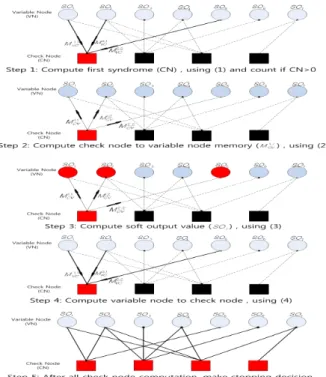
Figure 1. Soft Syndrome check based early stopping method
In the following, The proposed method is described based on the HSS decoding procedure. As in is as follows:
As illustrated in Fig.1 and following steps, we can compute the syndrome value (CN) before computing Mcv(j,i), where Mcv(j,i) are message values from check node to variable node. If the syndrome value based on a hard decision is not zero, then there must be error bits in the transmitted code word.
Similarly if the soft value of syndrome is greater than zero, that is positive value, then there also must be error bits among the variable node (VN) values connected to the check node. So we can simply count the case of which soft value of syndrome is greater than zero and save the counting value. The further procedure from step 2 to step 4 is exactly same as the horizontal shuffling scheduling decoding scheme. If this procedure is applied to all the check nodes, we make a decision whether the further iteration is needed or not. At step 5, we check if the value of (Numjk)/(N-K) is greater than the threshold (Th), where Numjk represents the counting value of which the syndrome value is greater than zero. If this ratio is greater than specific threshold (Th) or all the syndrome values are less than a zero, we stop the decoding procedure, otherwise continue to decode where, dc is check node degree.
• STEP1:Compute CNj, where CNj represents the syndrome value as follows:
min∈
∈
(1) If CNj > 0, Numjk=Numjk+1.
• S TEP 2 : Compute Mcv(j,i)values Mcv(j,i)
Mcv(j,i)=CNj/Mvc(i,j) (2)
• STEP 3 : Compute the SOi
∈
(3)
• STEP 4:Compute Mvc(i,j), where Mvc(i,j) is a message value from variable node to check node values Mvc(i,j) as follows:
Mvc(i,j)=SOi - Mcv(j,i) (4)
• STEP 5 : Check the Stopping criterion
If the all syndromes are less than a zero or Numjk=0 or Numjk⁄Numjk-1>Th, then stop the decoding.
Else, continue to decode.
As illustrated in Fig.1, we compute the syndrome value(CN) before computing the check node to variable node value (Mcv(j,i)) at step 1. If the syndrome value is not a zero, it means that there exists error
Conventional Proposed Additions for
counting ×× × ×
Hard Decision × 0
Comparison × × ×
Total for early
stopping only ×× ×
×
Check node process (1)
×
× ×
Division (2) 0 ×
×
Additions for soft output (3)
×
×
×
×
Abstractions for variable node 4)
×
×
×
×
Total for entire Decoder/Iter
× ×
×
× ×
×
Additional memory size
for early stopping
0
bits among the variable node (VN) values connected to the check node. In this case, we count the non-zero syndrome and save it. The further procedure from step 2 to step 4 is exactly same as horizontal shuffling scheduling decoding scheme. After computing all the check nodes, we make a decision if the further iteration is needed or not. At step 5, we compute the non-zero syndrome counter ratio (Numjk⁄(Numj(k-1)). If this ratio is greater than specific threshold, we stop the decoding procedure, otherwise continue to decode.
This new method does not need to neither compute the hard decision values nor save them.
Because the proposed early stopping method is based on the HSS decoding scheme, we compute the additions for calculating sign change rate as the amount of α×(N-K) averagely and compare the sign value as the amount of (N-K), where α is bit error rate, N is code word and K is information length. On the other hand, the conventional hard decision based early stopping methods compute the additions for counting the sign change rate as the amount of α×N and compare the sign value as an the amount of N.
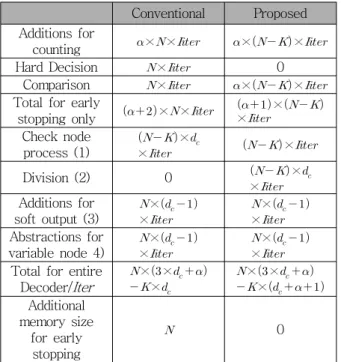
Table 2 compares the complexity of computations for early stopping criterion. To compare the computational complexity, we define the proposed to conventional complexity ratio as follows:
×
×
× (5) Table 2. Comparison for the number of computations and memory occupations between conventional and proposed case where Iter is the number of Iteration
When the code rate is 1/2 (N=64800), EbN0 is 0 dB, the BER is about 0.5 at QPSK modulation scheme and dc is 8, we verify that the computational complexity of proposed method is 70% less than the conventional method. In this case, the number of computations for conventional early stopping method occupies 12% of total computations for entire HSS LDPC decoder, evaluated as follows:
× × ×
×
× (6)
When the proposed method reduces the number of computations for early stopping method as much as 70%, the total number of computations for entire LDPC decoder is reduced as much as 8%, evaluated as follows:
× × × × × ×
× (7)Furthermore, the proposed early stopping method does not occupy additional memory size for early stopping. However the conventional channel adaptive early termination method occupies additional memory size as the amount of N.
Ⅳ. Simulation Result
Under (64800, 32400) LDPC codes of DVB-S2 standard and a maximum of 15 iterations, we set the It and Th values as 9 and 18%, respectively. Figure 2 illustrates that the bit error rate performance is better than the conventional channel adaptive early termination (CAET) method [7]. Compared to the CAET method, the BER curve of the proposed method is closer to the HSS decoding scheme without any early stopping method.
Figure2. Comparison of bit error rate performance
We also compare the average number of iterations of the proposed early stopping method and the conventional CAET method. Figure 3 illustrates that the number of iterations of proposed early stopping method is about 1.2 greater than the conventional early stopping method. The additional number of iterations results in the better bit error rate performance compared to the conventional CAET method.
Figure 3. Comparison of average number of iterations
Ⅴ. Conclusion
In this paper, we proposed a new soft syndrome check based early stopping method. The conventional hard decision based early stopping method computes the hard decision values and the stopping criterion at the end of every iteration. This additional implementations of early stopping also can be a burden of hardware implementation of LDPC decoder.
However, the new early stopping method removes the hard decision computation and simplified the stopping criterion by combining with HSS decoding scheme.
In this manner, we verified that the computational complexity is 70 % fewer than the conventional hard decision based early stopping method. In addition, the proposed method does not require the memory occupations for early stopping method. Moreover, the simulation results showed that the proposed early stopping method achieves acceptable bit error rate performance and reduces the average number of iterations.
By these facts, we conclude that the proposed method is the best method for early stopping method
to be realized in hardware of LDPC decoder.'
Reference
[1] ETSI EN 302 307 v1.1.2 Std. 19-23, Channel Coding and Modulation System, ETSI, DVB-S2, 2006.
[2] E. A Choi, J. W. Jung. N. S. Kim et al,
"Complexity-Reduced Algorithms for LDPC Decoder for DVB-S2 Systems," ETRI Journal, vol.
27, no. 5, Oct. 2005, pp. 639-642.
[3] F. Kienle and N. Wehn "Low Complexity Stopping Criterion for LDPC Code Decoders," IEEE Conference on Vehicular Technology, vol. 1, June.
2005, pp. 606-609.
[4] J. Li, X. hu and J. Li "Early Stopping for LDPC Decoding:Convergence of Mean Magnitude (CMM)," IEEE Communications Letter, vol. 10, no.
9, Sep. 2006, pp. 667- 669.
[5] Z. Cui, L. Chen and Z. Wang, "An Efficient Early Stopping Scheme for LDPC Decoding," 13th NASA Symposium on VLSI Design, Idaho, June. 2006.
[6] Z. H. Cai, J. Hao and L.Wang, "An Efficient Early Stopping Scheme for LDPC Decoding based on Check-node Messages," IEEE Singapore International Conference on ICCS, Nov. 2008, pp.
1325-1329.
[7] Y. H. Chen, Y. Chen, X. Shih et al, "A Channel- Adaptive Early Termination Strategy For LDPC Decoders," IEEE workshop on SiPS, Oct. 2009, pp. 226-231.
[8] F. Guilloud, J. Tousch, "Generic description and synthesis of LDPC decoders," IEEE transactions on Communications, vol. 55, no. 11, Nov. 2007, pp. 2084-2091.
저 자 장 관 석 (Gwan Seok Jang) 정회원
2010년 2월:경북대학교 전자전기 컴퓨터학부졸엄(공학사) 2010년 3월~현재:과학기술연합대학원 이동통신 및 방송통신 공학 석사과정
<관심분야> 위성통신, 디지털 통신, 오류정정부호
장 대 익(Dae Ig Chang) 정회원 1986년 2월:한양대학교 전자통신 공 학사
1989년 2월:한양대학교 전자통신 공 학 석사
1999년 2월:충남대학교 전자공학 박사
1990년 2월~현재:한국전자통신연구원 책임연구원 2005년 3월~현재:과학기술연합 대학원 이동통신 및 디지털 방송공학과 전공 겸임교수
1991년 6월~1993년 7월:Canada MPR Tech. 연구소 연구원
<관심분야> 위성통신 및 방송시스템, 광대역 변복조, 오 류정정부호 등
오 덕 길(Deock gil Oh) 정회원 1980년 2월:서울대학교 전자공학과 (공학사)
1984년 2월:서울대학교 전자공학과 (석사)
1996년 2월:서울대학교 전자공학과 (박사)
1982년~현재:한국전자통신연구원 위성무선융합부 위성방송통신융합팀장
2005년 3월~현재:과학기술연합 대학원 이동통신 및 디지털 방송공학과 전공 겸임교수
<관심분야> 위성통신 및 방송시스템, 광대역 변복조, 오 류정정부호 등