Comparative Evaluation of Antioxidant Activities of Ethanol Extracts and Their Solvent Fractions Obtained from Selected Miscellaneous Cereal Grains
Dong Hwa Park
1, Seung Tae Lee
1, Do Youn Jun
1, Ji Young Lee
1, Mi Hee Woo
2, Ki Young Kim
3, Myung Chul Seo
4, Jee Yeon Ko
3, Koan Sik Woo
3, Tae Wook Jung
3, Do Yeon Kwak
3, Min Hee Nam
3and Young Ho Kim
1*
1
Laboratory of Immunobiology, School of Life Science and Biotechnology, College of Natural Sciences, Kyungpook National University, Daegu 702-701, Korea
2
Department of Pharmacology, College of Pharmacology, Daegu Catholic University, Daegu 712-702, Korea
3
Functional Cereal Crop Research Division, NICS, RDA, Miryang 627-803, Korea
4
Crop Environment Division, NICS, RDA, Suwon 441-857, Korea
Received December 8, 2013 /Revised January 8, 2014 /Accepted January 14, 2014
To examine the antioxidant activities of 11n selected miscellaneous cereal grains (proso millet, yellow glutinous proso millet, hwanggeumchal sorghum, glutinous sorghum, white glutinous sorghum, yel- low glutinous foxtail millet, nonglutinous foxtail millet, green glutinous foxtail millet, golden foxtail millet, barnyard millet, and adlay), the free radical-scavenging activities of 80% ethanol extracts of the individual grains were investigated using 1,1-diphenyl-2-picryl-hydrazl (DPPH) and 2,2'-azino-bis (3-ethylbenzothiazoline-6-sulfonic acid) (ABTS) methods. The ethanol extracts of hwanggeumchal sor- ghum, glutinous sorghum, and barnyard millet grains exhibited more potent free radical-scavenging activities as compared to the other grains. When these three ethanol extracts were sequentially fractio- nated with n-hexane, methylene chloride, ethyl acetate, and n-butanol, the majority of the antioxidant activities were detected in the ethyl acetate and butanol fractions in which phenolic ingredients were abundant. The ethyl acetate and butanol fractions of hwanggeumchal sorghum and the ethyl acetate fraction of glutinous sorghum showed higher antioxidant activity than that of α-tocopherol. Both ferric thiocyanate (FTC) and thiobarbituric acid (TBA) methods demonstrated that these organic solvent frac- tions could inhibit lipid peroxidation. The ethyl acetate fractions from hwanggeumchal sorghum, gluti- nous sorghum, and barnyard millet grains could suppress tertiary-butyl hydroperoxide (TBHP)-induced apoptotic events, including sub-G
1peaks, Δψm loss, activation of caspase-9 and cas- pase-3, and cleavage of PARP and lamin B, in human HL-60 cells. These results show that the grains of hwanggeumchal sorghum (Sorghum bicolor L. Moench cv. Hwanggeumchalsusu), glutinous sorghum (Sorghum bicolor L. Moench cv. Chalsusu), and barnyard millet (Echinochloa esculenta) possess efficient antioxidant activity, which could protect cells from oxidative stress-mediated cytotoxicity.
Key words : Antioxidant activity, barnyard millet (Echinochloa esculenta) grains, cytoprotection, oxidative stress-induced apoptosis, sorghum (Sorghum bicolor) grains
*Corresponding author
*Tel : +82-53-950-5378, Fax : +82-53-955-5522.
*E-mail : [email protected]
This is an Open-Access article distributed under the terms of the Creative Commons Attribution Non-Commercial License (http://creativecommons.org/licenses/by-nc/3.0) which permits unrestricted non-commercial use, distribution, and reproduction in any medium, provided the original work is properly cited.
The online version of this article (doi 10.5352/JLS.2014.24.1.26) contains supplementary material, which is available to authorized users.
Journal of Life Science 2014 Vol. 24. No. 1. 26~38 DOI : http://dx.doi.org/10.5352/JLS.2014.24.1.26
Introduction
In living cells under normal conditions, many physio- logical and biochemical processes are known to generate re- active oxygen species (ROS) as the by-product. For example,
mitochondria consume O
2to make energy and eventually
produce H
2O. However, in this process, O
2-, H
2O
2, and OH
-are generated [5]. In inflammatory conditions, when phag-
ocytic cells destroy the bacteria or virus, they use an oxida-
tive burst of nitric oxide (NO), O
2-, H
2O
2, and OCl
-. During
fatty acid degradation in peroxisome, H
2O
2is known to be
generated as a by-product [20]. An excessive production of
ROS has been implicated in oxidative damage to bio-
molecules such as carbohydrates, lipids, proteins, nucleic
acids, which would lead to the damage of membranes and
cellular organelles, and cause cancer [11, 21], cardiovascular
diseases [36, 45], inflammatory disorders [4], aging and other
diseases in humans [9, 10]. For protection from the oxidative
damage, human body is known to take advantage of not
only endogenous antioxidant enzymes, such as superoxide dismutase (SOD), catalase, peroxidase, but also exogenous low molecular weight compounds such as tocopherol, ascor- bic acid, and polyphenols.
Recently, much attention has been paid to the physio- logical functionality of foods, due to the increasing interest in human health, and research into the health benefits of foods has been increasing last years. One of the important beneficial functions of foods, beyond the provision of basic nutritional requirements, is mediated by antioxidant action that is supposed to reduce the risk of oxidative stress-related chronic diseases [2, 12]. Since plants have a defense system to come up against the ROS conditions, which is manifested by free radical-scavenging components, such as vitamins, phenolic compounds, and some other intracellular metabo- lites, plant foods have been considered as an excellent source of antioxidants for human body [6, 27, 44]. While fruits, veg- etables, and grains among plants are rich sources of anti- oxidant substances, the antioxidants found in these plants are mostly phenolic compounds. The grains-derived phe- nolic compounds are known to be very advantageous in that stability in dry conditions and storage conveniences com- pared with the fruit- or vegetable-derived compounds.
Agriculture in Korea has traditionally focused on the pro- duction of the major grains such as rice, barley and wheat, whereas the cultivation and harvesting of other miscella- neous cereals has remained in a low level. In recent years, however, due to increased demand for well-being foods, the interest in miscellaneous cereal grains as crude fibers and bioactive phytochemical sources that benefit human health and thus the consumption of miscellaneous cereal grains are also increasing in the country. Although several studies have been performed to extend our understanding on nutritional importance, antioxidant, antimicrobial, antimutagenic and anticarcinogenic, and antidiabetic properties of miscella- neous cereal grains harvested in Korea [13, 22, 25, 26, 32], the systematic study on their bioactive components asso- ciated with the antioxidant efficacy is still rare. If miscella- neous cereal grains are proven as a proper source of anti- oxidant phytochemicals, it is likely that these grains become highly effective in preventing oxidative stress-oriented chronic diseases by consuming as diet [28, 38, 40].
Furthermore, it is generally accepted that natural antioxidant components derived from edible plants may be more safely applicable for human health, as compared to synthetic antioxidants.
As an attempt to examine antioxidant activities of eleven selected miscellaneous cereal grains (proso millet, yellow glutinous proso millet, hwanggeumchal sorghum, glutinous sorghum, white glutinous sorghum, yellow glutinous foxtail millet, non-glutinous foxtail millet, green glutinous foxtail millet, golden foxtail millet, barnyard millet, and adlay) har- vested in Korea, in the present study, we intended to com- pare the free radical-scavenging activities of 80% ethanol ex- tracts of the individual grains using 1,1-diphenyl-2-picryl- hydrazl (DPPH) and 2,2'-azino-bis (3-ethylbenzothiazoline- 6-sulfonic acid) (ABTS). The 80% ethanol extracts of hwang- geumchal sorghum, glutinous sorghum and barnyard millet grains, which appeared to possess more potent free radi- cal-scavenging activities compared with those of other grains, were sequentially fractionated by n-hexane, methyl- ene chloride, ethyl acetate and n-butanol. Since the DPPH radical- and ABTS radical-scavenging activities were mainly detected in the ethyl acetate fraction followed by the butanol fraction, the antioxidant activity of the ethyl acetate fractions have been examined further by investigating not only their inhibitory effect on lipid peroxidation using ferric thio- cyanate (FTC) and thiobarbituric acid (TBA) methods, but also their cytoprotective effect on tertiary-butyl hydro- peroxide (TBHP)-induced apoptotic cell death in human HL-60 cells.
Materials and Methods Chemicals, reagents, cells and culture medium
Dimethyl sulfoxide (DMSO), Folin-ciocaleau reagent,
1,1-diphenyl-2-picryl-hydrazl (DPPH), 2,2'-Azino-bis (3-eth-
ylbenzothiazoline-6-sulfonic acid) diammonium salt (ABTS),
tertiary-butyl hydroperoxide (TBHP), ferric thiocyanate
(FTC), thiobarbituric acid (TBA), α-tocopherol, linoleic acid,
ammonium thiocynate, thiobarbituric acid, and tannic acid
were purchased from Sigma (St, Louis, MO, USA). Tannic
acid was obtained from Avondale Laboratories (Oxon,
England). The anti-caspase-3 antibody was purchased from
Pharmingen (San Diego, CA, USA). Anti-poly (ADP-ribose)
polymerase (PARP), Lamin B and β-actin were obtained
from Santa Cruz Biotechnology (Santa Cruz, CA, USA). The
anti-caspase-9 was purchased from Cell signaling
Technology (Beverly, MA, USA). An ECL Western blotting
kit was obtained from Amersham (Arlington Heights, IL,
USA) and Immobilon-P membrane was purchased from
Millipore (Bedford, MA, USA). Human promyelocytic leuke-
mia cell line HL-60 was obtained from ATCC (Manassas, VA, USA) and maintained in RPMI 1640 (Hyclone, Gaithers- burg, MD, USA) containing 10% fetal bovine serum, 20 mM HEPES (pH 7.2), 5×10
-5 Mβ -mercaptoethanol, and 100 μg/ml gentamycin. All other chemicals and organic solvents (ethanol, n-hexane, methylene chloride, ethyl acetate, and n-butanol) were of analytical grade.
Sample extraction
Eleven miscellaneous cereal grains, including proso millet (polished grains), yellow glutinous proso millet (unpolished grains), hwanggeumchal sorghum (unpolished grains), gluti- nous sorghum (polished grains), white glutinous sorghum (unpolished grains), yellow glutinous foxtail millet (polished grains), non-glutinous foxtail millet (polished grains), green glutinous foxtail millet (polished grains), golden foxtail mil- let (unpolished grains), barnyard millet (unpolished grains), and adlay (polished grains), harvested in Korea were pro- vided by National Institute of Crop Science, Rural Develop- ment Administration, Miryang, Gyeongnam 627-803, Korea.
Individual dried grains were milled on a Blender 7012 (Dynamics Corporation, USA), and then extracted with 80%
ethanol for 3 h at 80°C. The ethanol extract was evaporated, dissolved in water, and then sequentially extracted with n-hexane, methylene chloride, ethyl acetate, and n-butanol.
Each organic solvent fractionation was repeated three times.
The organic solvent fraction was concentrated by rotary vac- uum evaporator (Heidolph LR 4000, Germany). The dry weights of the 80% ethanol extracts and organic solvent frac- tionations were described in Supplement 1 [23].
1,1-Diphenyl-2-picryl-hydrazl (DPPH) radical- scavenging activity assay
The 1,1-diphenyl-2-picryl-hydrazl (DPPH) radical-scav- enging activity was carried out by modifying the method of Blois [3]. DPPH stock solution (0.2 mM) was prepared in ethanol. To 800 μl of DPPH stock solution, 50 μl of sample dissolved in dimethyl sulfoxide (DMSO) was added. After the mixture was incubated in 37°C for 30 min, the absorb- ance was measured at 517 nm. The DPPH-radical-scaveng- ing activity (%) = [(Absorbance of control – Absorbance of sample)/Absorbance of control]×100 [8]. Lower absorbance values of the mixtures indicate higher free radical scaveng- ing activity. The EC
50values denote the effective concen- tration of sample that is required to scavenge 50% of the DPPH free radicals [17]. All determinations were conducted
in triplicates.
2,2'-Azino-bis(3-ethylbenzothiazoline-6-sulfonic acid) (ABTS) radical-scavenging activity assay
The 2,2'-azino-bis(3-ethylbenzothiazoline-6-sulfonic acid) (ABTS) solution was prepared by reaction of 1 ml of 7 mM ABTS stock solution dissolved in d'H
2O and 17.6 μl of 140 mM K
2S
2O
8dissolved in d'H
2O. After incubation in the dark for 16 h, ABTS radical solution was diluted in 50 ml of abso- lute ethanol. And then 50 μl of sample stock (1 mg/ml) was added to 1 ml of ABTS radical solution. After incubation at room temperature for 20 min, Absorbance value was measured at 734 nm. The ABTS radical-scavenging activity (%) = (Absorbance of control – Absorbance of sample)×100/
(Absorbance of control). The EC
50values denote the effective concentration of sample that is required to scavenge 50%
of the ABTS free radicals [30]. All determinations were con- ducted in triplicates.
Ferric thiocyanate (FTC) assay
The FTC method was performed as previously described [31]. Briefly, a mixture of 1.2 ml of sample (1 mg/ml in DMSO), 1.2 ml of linoleic acid (25 mg/ml in EtOH), 2.4 ml of 0.2 M phosphate buffer (pH 7.0), and 1.2 ml of distilled water was placed at 40°C in the dark for indicated time periods. Twenty five microliters of the mixture were mixed with 25 μl of ammonium thiocyanate (0.3 μg/ml in H
2O), 25 μl of ferrous chloride (2.45 mg/ml in 3.5% hydrochloric acid), and 750 μl of 70% EtOH, and then incubated for 3 min. The optical density (OD) of the reaction of mixture was measured at 500 nm. A mixture without added sample was used as a negative control. The percent of inhibition of lipid peroxidation = 100–(A
1–A
0)×100, where A
0is the absorb- ance of the negative control and A
1is the absorbance of the extract samples [8]. The experiment was performed in triplicates.
Thiobarbituric acid (TBA) assay
The TBA assay was performed as described elsewhere
[37]. Briefly, 300 μl of 20% trichloroacetic acid (TCA) and
150 μl of 0.67% thiobarbituric acid (TBA) were added to 300
μ l of sample solution or standard solution. The mixture was
placed in a boiling water bath for 10 min. After cooling, the
mixture was centrifuged at 3,000 rpm for 20 min. Absorb-
ance of supernatant was measured at 532 nm. The percent-
age of inhibition of lipid peroxidation = (Absorbance of con-
trol – Absorbance of sample)×100/Absorbance of control.
The experiment was performed in triplicates.
Flow cytometric analysis
Flow cytometric analysis for the cell cycle of HL-60 cells was carried out as previously described [46]. Changes in the Δψ
mwere measured after staining with 3,3'-dihexylox- acarbocyanine iodide (DiOC
6) [19]. The cells were harvested and incubated with PBS containing 50 nM DiOC
6for 15 min at 37°C prior to flow cytometric analysis.
The cytoprotective effect of the 80% ethanol extracts and their ethyl acetate fractions obtained from hwanggeumchal sorghum, glutinous sorghum, and barnyard millet grains against tertiary-butyl hydroperoxide (TBHP)-induced cyto- toxicity in HL-60 cells was also measured by flow cytometry.
Briefly, the cells (0.5×10
6/ml) were preincubated with a proper dilution of individual samples for 1 h, and then ex- posed to 100 μM TBHP for indicated time periods. After the cells were harvested, equivalent number of cells were fixed with cold ethanol (67%), stained with propidium iodide, and subjected to flow cytometric analysis to quantify apoptotic sub-G
1cells. Following flow cytometric analysis for apop- totic sub-G
1cells, the protective activity against TBHP-in- duced apoptosis was determined according to the equation:
Cytoprotection ratio (%) = (sub-G
1cell ratio for 100 μM TBHP – sub-G
1cell ratio for 100 μM TBHP plus sample)
×100 / sub-G
1cell ratio for 100 μM TBHP.
Quantification of total phenolic compounds
Total phenolic contents in the 80% ethanol extracts and organic solvent fractions of selected miscellaneous cereal grains were measured by Folin-Ciocalteau method using tannic acid as a standard phenolic compound as previously described [39]. The 80% EtOH extracts and organic solvent fractions were split 100 μl to each test tubes, then 500 μl of Folin-Ciocalteau reagent was added. The mixture was in- cubated at RT for 5 min and added 400 μl 7.5% Na
2CO
3. This mixture was incubated at 50°C for 5 min, and centri- fuged at 13,000 rpm for 2 min to remove insoluble precipitation. The absorbance was then measured at 760 nm.
Total phenolic content was indicated in μg of tannic acid (TAE) equivalents per milligram of extract (μg TAE/mg ex- tract). All determinations were conducted in triplicates.
Preparation of cell lysates and Western blot analysis Cellular lysates were prepared by suspending HL-60 cells
(5×10
6cells) in 250 μl of lysis buffer (137 mM NaCl, 15 mM EGTA, 1 mM sodium orthovanadate, 15 mM MgCl
2, 0.1%
Triton X-100, 25 mM MOPS, and 5.0 μg/ml proteinase in- hibitor E-64, pH 7.2). The cells were disrupted by sonication and extracted at 4°C for 30 min. An equivalent amount of protein lysate (20∼25 μg) was electrophoresed on a 4-12%
NuPAGE gradient gel (Invitrogen/Novex, Carlsbad, CA, USA) with MOPS buffer, and then electrotransferred to Immobilon-P membranes. Detection of individual proteins was performed using an ECL Western blotting kit according to the manufacturer’s instructions.
Statistical analysis
Unless otherwise indicated, each result in this paper is representative of at least three separate experiments. Values represent the mean ± standard deviation (SD) of these experiments. The statistical significance was calculated with Student’s t-test. P values less than 0.05 were considered significant.
Results and Discussion
DPPH radical- and ABTS radical-scavenging activ- ities of the 80% ethanol extracts and their solvent fractions obtained from eleven selected miscellaneous cereal grains
To evaluate antioxidant properties of miscellaneous cereal grains, which were harvested in Korea, including proso mil- let, yellow glutinous proso millet, hwanggeumchal sorghum, glutinous sorghum, white glutinous sorghum, yellow gluti- nous foxtail millet, non-glutinous foxtail millet, green gluti- nous foxtail millet, golden foxtail millet, barnyard millet and adlay, the free radical-scavenging activities of 80% ethanol extracts prepared from the individual grains were measured using DPPH and ABTS methods, both of which have widely been employed to evaluate free radical-scavenging activities of natural compounds in foods and biological systems [34, 43]. As shown in Table 1, the 80% ethanol extract of hwang- geumchal sorghum grains exhibited the highest DPPH radi- cal-scavenging activity followed by those of glutinous sor- ghum and barnyard millet grains. The EC
50values of the 80% ethanol extracts of hwanggeumchal sorghum, glutinous sorghum, and barnyard millet grains for DPPH radical-scav- enging activity appeared to be 33.82, 131.10 and 141.70 μg/
ml, respectively. The ABTS radical-scavenging activity assay
also showed that the 80% ethanol extract of hwanggeumchal
Table 1. EC50values of the 80% ethanol extracts of eleven mis- cellaneous cereal grains for DPPH and ABTS radi- cal-scavenging activity
Miscellaneous cereal grains 80% EtOH extract DPPH EC50
(μg/ml) ABTS EC50
(μg/ml) Proso millet
Yellow proso millet Hwanggeumchal sorghum Glutinous sorghum White glutinous sorghum Yellow glutinous foxtail millet Non-glutinous foxtail millet Green glutinous foxtail millet Golden foxtail millet Barnyard millet Adlay
α-tocopherol
>235.3
>235.3 33.82±0.06 131.10±0.20
>235.3
>235.3
>235.3
>235.3
>235.3 141.70±0.60
>235.3 19.84
>190.5 175.30±1.50
8.41±0.88 29.59±0.02 105.90±0.60 161.50±1.50
>190.5 95.00±3.00 134.70±1.40 25.95±0.75
>190.5 9.81
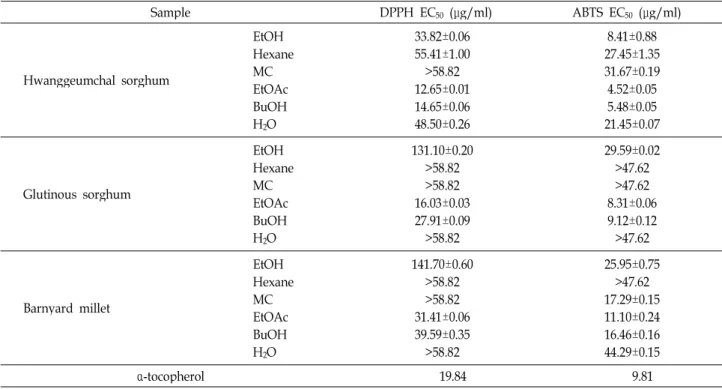
Table 2. EC50values of the 80% ethanol extracts and their organic solvent fractions of glutinous sorghum, hwanggeumchal sorghum, and barnyard millet for DPPH and ABTS radical-scavenging activity
Sample DPPH EC50 (μg/ml) ABTS EC50 (μg/ml)
Hwanggeumchal sorghum
EtOHHexane MC EtOAc BuOH H2O
33.82±0.06 55.41±1.00
>58.82 12.65±0.01 14.65±0.06 48.50±0.26
8.41±0.88 27.45±1.35 31.67±0.19 4.52±0.05 5.48±0.05 21.45±0.07
Glutinous sorghum
EtOHHexane MC EtOAc BuOH H2O
131.10±0.20
>58.82
>58.82 16.03±0.03 27.91±0.09
>58.82
29.59±0.02
>47.62
>47.62 8.31±0.06 9.12±0.12
>47.62
Barnyard millet
EtOHHexane MC EtOAc BuOH H2O
141.70±0.60
>58.82
>58.82 31.41±0.06 39.59±0.35
>58.82
25.95±0.75
>47.62 17.29±0.15 11.10±0.24 16.46±0.16 44.29±0.15
α-tocopherol 19.84 9.81
sorghum grains had the highest ABTS radical-scavenging ac- tivity followed by those of barnyard millet and glutinous sorghum grains. The EC
50values of the ethanol extracts of hwanggeumchal sorghum, glutinous sorghum, and barn- yard millet grains for ABTS radical-scavenging activity were 8.41, 25.95 and 29.59 μg/ml, respectively.
In order to examine further the antioxidant properties of hwanggeumchal sorghum, glutinous sorghum, and barn-
yard millet grains, the 80% ethanol extracts of the three mis- cellaneous cereal grains were sequentially fractionated with n-hexane, methylene chloride, ethyl acetate and n-butanol, and th
en individual organic solvent fractions were tested for the DPPH and ABTS radical scavenging activities. As shown in Table 2, the ethyl acetate and butanol fractions exhibited more potent DPPH radical- and ABTS radical-scavenging ac- tivities as compared to other organic solvent fractions of hwanggeumchal sorghum, glutinous sorghum, and barn- yard millet. The EC
50values of the ethyl acetate fractions of hwanggeumchal sorghum, glutinous sorghum, and barn- yard millet grains were 12.65, 16.03 and 31.41 μg/ml for DPPH radical-scavenging activity, and 4.52, 8.31 and 11.10 μ g/ml for ABTS radical-scavenging activity. In addition, the EC
50values of the butanol fractions of hwanggeumchal sor- ghum, glutinous sorghum, and barnyard millet grains were 14.65, 27.91 and 39.59 μg/ml for DPPH radical-scavenging activities, and 5.48, 9.12 and 16.46 μg/ml for ABTS radi- cal-scavenging activities. On the other hands, the EC
50values of α-tocopherol, which is a well-known natural antioxidant [16], for DPPH radical- and ABTS radical-scavenging activ- ities were 19.84 and 9.81 μg/ml, respectively.
Consequently, these results showed that the ethyl acetate
fraction of glutinous sorghum grains as well as both the eth-
yl acetate and butanol fractions of hwanggeumchal sorghum grains possessed higher DPPH radical- and ABTS radi- cal-scavenging activities than those of α-tocopherol. In addi- tion, these results raised the possibility that the free-radical scavenging activity-related component(s) in the ethyl acetate fraction of glutinous sorghum grains, and the ethyl acetate and butanol fractions of hwanggeumchal sorghum grains might have more potent antioxidant activity than α-toco- pherol.
Inhibitory effect of the 80% ethanol extracts, ethyl acetate fractions, and butanol fractions from hwang- geumchal sorghum, glutinous sorghum and barnyard millet grains on linoleic acid peroxidation
Lipids undergo oxidative degradation (lipid peroxidation) in the presence of reactive oxygen species (ROS) [30]. As a basic mechanism underlying lipid peroxidation, ROS are known to abstract a hydrogen atom from a methylene group of unsaturated fatty acids, such as linoleic acid, linolenic acid and arachidonic acid, and subsequently form free radicals such as peroxyl radicals. Once the free radicals are formed, lipid peroxidation progresses to produce various secondary oxidation products. Ferric thiocyanate (FTC) assay and thio- barbituric acid (TBA) assay, which are frequently used as antioxidant tests for plant and food components, are known to specifically monitor hydroperoxide and malonaldehyde (MA) as the products of lipid peroxidation, respectively. In order to examine whether the antioxidant properties of gluti- nous sorghum, hwanggeumchal sorghum and barnyard mil- let grains, which were detectable by DPPH radical- and ABTS radical-scavenging activities, could also prevent lipid peroxidation, we decided to investigate the effects of the 80%
ethanol extracts, ethyl acetate fractions, and butanol fractions from hwanggeumchal sorghum, glutinous sorghum and barnyard millet grains on linoleic acid peroxidation by em- ploying both FTC and TBA methods.
In FTC assay, the amount of linoleic acid peroxidation is determined by measuring ferrous oxidation to ferric iron, because the oxidized linoleic acid reacts with ferrous to form ferric ion which then reacts with ammonium thiocyanate to generate ferric thiocyanate possessing red color [30]. As shown in Fig. 1A, the absorbance values of the FTC reaction mixture containing linoleic acid solutions which were ob- tained after treatment for the indicated time periods ap- peared to increase in a time-dependent manner and ex- hibited 3.5-fold elevation after linoleic acid solution was
treated at 40
oC for 5 days. This indicated a continuous en- hancement in linoleic acid peroxidation during the 5-day treatment. However, the linoleic acid solution treated in the presence of the individual organic solvent fractions of hwanggeumchal sorghum, glutinous sorghum and barnyard millet grains, failed to elevate the absorbance value of the reaction mixtures with the percentage inhibition of 86%-91%.
These inhibitory effects of hwanggeumchal sorghum, gluti- nous sorghum and barnyard millet grains, which lowered the absorbance values of the FTC reaction mixture, were comparable to those of α-tocopherol. These results showed that antioxidant properties of the organic solvent fractions of glutinous sorghum, hwanggeumchal sorghum, and barn- yard millet grains could commonly inhibit linoleic acid peroxidation. In TBA assay, the level of malonaldehyde (MA) among lipid peroxidation products is measured to evaluate the antioxidant activity of chemical(s) in linoleic acid peroxidation system, because MA is known to bind TBA to form a red compound MA-TBA adduct. When the TBA reaction mixtures containing the linoleic acid sample pre- pared in the FTC method was tested, a similar trend was observed with all tested extracts exhibiting low absorbance values corresponding to the percentage inhibition of 38.0-56.1% (Fig. 1B). Under the same conditions, the controls, α -tocopherol showed a slightly lower inhibition of 48.5%, when compared with the inhibition values observed in the FTC assay. These results showed that the data of the TBA assay correlated well with those of the FTC assay.
Consequently, current data demonstrated that glutinous sor- ghum, hwanggeumchal sorghum and barnyard millet grains commonly possessed the antioxidant properties which could inhibit ROS-mediated lipid peroxidation.
Quantification of phenolic compounds in the 80%
ethanol extracts and organic solvent fractions
Phenolic compounds are known as very important anti-
oxidant constituents of plants and their radical scavenging
ability is due to their redox properties, hydrogen donors,
free radical quenchers and metal-chelators [15]. Previously
many studies have demonstrated a high correlation between
the contents of total phenolic compounds in plants and their
antioxidant capacity [7, 18, 33, 35, 47]. To investigate the cor-
relation between antioxidant activities and total phenolic
contents, the ethanol extracts and their organic solvent frac-
tions were analyzed for total phenolic contents using
Folin-Ciocalteau method.
A
B Fig. 1. Evaluation of lipid peroxidation in-
hibitory activity of the 80% EtOH ex- tracts, and their ethyl acetate and bu- tanol fractions of hwanggeumchal sorghum, glutinous sorghum, and barnyard millet grains by ferric thio- cyanate (FTC) method (A) and thio- barbituric acid (TBA) method (B). The experiment was performed in tripli- cates. Results are expressed as mean
± standard error of the mean (n=3).
The concentrations of phenolic compounds in the in- dividual extracts expressed as μg of tannic acid (TAE) equiv- alents per mg of the extract (μg TAE/mg extract) are shown in Table 3. The 80% ethanol extracts of hwanggeumchal sor- ghum, glutinous sorghum and barnyard millet grains ap- peared to contain higher level of total phenolic compounds than other ethanol extracts tested, with exhibiting 121.1 μg TAE/mg, 55.0 μg TAE/mg, and 66.8 μg TAE/mg, re- spectively. When the phenolic contents in the individual or- ganic solvent fractions of hwanggeumchal sorghum, gluti- nous sorghum, and barnyard millet grains were compared, most phenolic components of hwanggeumchal sorghum, glutinous sorghum, and barnyard millet grains were dis- tributed in both ethyl acetate and butanol fractions. The con- tents of phenolic compounds in the ethyl acetate and butanol fractions of hwanggeumchal sorghum grains were 255.2 μg TAE/mg and 244.1 μg TAE/mg, whereas the phenolic con- tents in the ethyl acetate and butanol fractions of glutinous sorghum grains were 248.4 μg TAE/mg and 159.5 μg TAE/
mg, respectively. At the same time, the phenolic contents in the ethyl acetate and butanol fractions of barnyard millet were 198.7 μg TAE/mg and 137.9 μg TAE/mg, respectively.
These quantitative levels of total phenolic compounds ap- peared to be consistent with the antioxidant activity profiles measured in this study. Consequently, current results sug- gested that the antioxidant activities of the hwanggeumchal sorghum, glutinous sorghum and barnyard millet grains were mainly attributable to the presence of phenolic components.
Inhibitory effect of the ethyl acetate fractions of hwanggeumchal sorghum, glutinous sorghum, and barnyard millet grains on TBHP-induced apoptotic sig- naling and cell death in human HL-60 cells
Since the ethyl acetate fractions of hwanggeumchal sor-
ghum, glutinous sorghum and barnyard millet grains ex-
hibited higher level of DPPH radical- and ABTS radical-scav-
enging activities and phenolic ingredients than those of the
Table 3. Total phenolic contents in the 80% ethanol extracts of individual miscellaneous cereal grains, and their organic solvent fractions from the grains of glutinous sorghum, hwanggeumchal sorghum, and barnyard millet
Miscellaneous cereal grains
(80% EtOH extract) Total phenolic contents
(μg/mg)* Sample Total phenolic contents
(μg/mg)*
Proso millet Yellow proso millet Hwanggeumchal sorghum Glutinous sorghum White glutinous sorghum Yellow glutinous foxtail millet Non-glutinous foxtail millet Green glutinous foxtail millet Golden foxtail millet Barnyard millet Adlay
2.5 121.17.6 55.0 16.54.8 1.84.0 66.88.9 5.7
Hwang-geumchal sorghum
Hexane MC EtOAc BuOH H2O
56.260.1 255.2 244.1 10.9
Glutinous sorghum
Hexane MCEtOAc BuOHH2O
7.6 248.414.6 159.5 32.0
Barnyard millet
Hexane MC EtOAc BuOH H2O
81.7 117.8 198.7 137.9 34.9
*The concentrations of phenolic compounds in the individual extracts were expressed as μg of tannic acid (TAE) equivalents per mg of the extract (μg TAE/mg extract).
other organic solvent fractions, we decided to examine whether the ethyl acetate fractions could prevent the oxida- tive stress-mediated apoptotic cell death in human cells. In this context, the effect of the ethyl acetate fractions on TBHP-induced apoptotic sub-G
1peak at concentrations of 12.5 and 25 μg/ml in human HL-60 cells was analyzed by flow cytometry. Previously, it has been reported that TBHP is a potent free radical generating toxin to mimic the oxida- tive stress and thus can provoke oxidative stress-mediated apoptotic cell death [1, 14].
As shown in Fig. 2, the ethyl acetate fractions of hwang- geumchal sorghum, glutinous sorghum and barnyard millet grains at a concentration of 25 μg/ml could inhibit the TBHP-induced sub-G
1peak to the levels of 51.9%, 65.9%, and 72.2%, respectively. At the same time, the ethyl acetate fractions at a concentration of 12.5 μg/ml could inhibit the TBHP-induced sub-G
1peak to the levels of 25.4%, 48.5%, and 31.1%, respectively. The 80% EtOH extracts (25 μg/ml and 50 μg/ml) of hwanggeumchal sorghum and glutinous sorghum grains appeared to reduce the TBHP-induced sub-G
1peak slightly with the percentage inhibition of < 10%, whereas the 80% EtOH extract of barnyard millet grains at the same dose failed to reduce the level of TBHP-induced apoptotic sub-G
1peak. In addition, the control α-tocopherol (100 μM) was able to inhibit the TBHP-induced sub-G
1peak to the level of 23.7%. It is noteworthy that the presence of
α -tocopherol at concentrations of > 100 μM appeared to exert cytotoxicity toward HL-60 cells. Consequently, these results demonstrated that the cytoprotective effect of the ethyl ace- tate fractions of hwanggeumchal sorghum, glutinous sor- ghum and barnyard millet grains on TBHP-induced apopto- sis was exerted in a dose-dependent manner. These results also suggested that the cytoprotection of the ethyl acetate fractions against oxidative damage might be more potent than that of α-tocopherol.
To elucidate the biochemical mechanism underlying the cytoprotective effect of the ethyl acetate fractions of hwang- geumchal sorghum, glutinous sorghum, and barnyard millet grains on the TBHP-induced apoptosis, we investigate the effect of the ethyl acetate extracts on the TBHP-induced apoptotic signaling pathway using flow cytometry and west- ern blot analyses. After HL-60 cells were treated with the individual ethyl acetate fractions (25 μg/ml) for 1 h, the cells were exposed to 100 μM TBHP for 5 h. As shown in Fig.
3A, although HL-60 cells following treatment with TBHP ex-
hibited 65.5% of apoptotic sub-G
1cells, the sub-G
1cells de-
clined to the levels of 35.0%, 28.2%, and 30.9% in the pres-
ence of the ethyl acetate fractions of hwanggeumchal sor-
ghum, glutinous sorghum, and barnyard millet grains, re-
spectively, indicating a significant reduction in the level of
TBHP-induced apoptotic cell death by the ethyl acetate
fractions. Under these conditions, the effect of the ethyl ace-
A
B
Fig. 2. Cytoprotective effect of the 80% EtOH extracts and ethyl acetate fractions of hwanggeumchal sorghum, glutinous sorghum, and barnyard millet grains on tertiary-butyl hydroperoxide (TBHP)-induced apoptotic cell death (sub-G1peak) in human HL-60 cells. The cells were incubated at a density of 5×10⁵/ml with the indicated concentrations of the 80% EtOH extracts and their ethyl acetate fractions for 5 h. Flow cytometric analysis of the cell cycle distribution was performed as described in Materials and Methods. The experiment was performed in triplicates. Results are expressed as mean ± standard error of the mean (n=3).
tate fractions on TBHP-induced mitochondrial membrane potential (Δψm) loss was also measured by flow cytometry using DiOC
6staining. Although there was barely detectable Δψ m loss in continuously growing HL-60 cells, 58.3% cells exhibited Δψm loss following exposed to TBHP (Fig. 3B).
However, the presence of the ethyl acetate fractions of hwanggeumchal sorghum, glutinous sorghum, and barn- yard millet grains could reduce the TBHP-induced Δψm loss to the levels of 35.7%, 29.8%, and 36.8%, respectively. This indicated that the oxidative stress-mediated mitochondrial damage in HL-60 cells treated with TBHP could be protected by the ethyl acetate fractions of hwanggeumchal sorghum, glutinous sorghum, and barnyard millet grains. The control α -tocopherol (100 μM) appeared to reduce the TBHP-in- duced Δψm loss to the level of 42.4%. Because Δψm loss is known to be one of the initial intracellular changes that are accompanied by apoptotic cell death [42], these results suggested that Δψm loss being involved in TBHP-induced apoptosis was prevented by the ethyl acetate fractions of hwanggeumchal sorghum, glutinous sorghum, and barn-
yard millet grains. These results indicated that the ethyl ace- tate fractions of hwanggeumchal sorghum, glutinous sor- ghum, and barnyard millet grains could suppress the oxida- tive stress-mediated Δψm loss more efficiently than the anti- oxidant control, α-tocopherol.
Since it was reported that Δψ
mloss precedes the release of cytochrome c into the cytosol, followed by caspase cas- cade activation [24, 41], it was likely that the suppression of TBHP-induced Δψ
mloss by the ethyl acetate fractions might be reflected by a reduction in mitochondria-depend- ent activation of caspase-9 and -3, leading to degradation of PARP and lamin B, in HL-60 cells. To test this prediction, it was investigated in HL-60 cells, by western blot analysis, whether TBHP-induced activation of caspase-9 and -3 could be suppressed by pretreatment with the ethyl acetate fractions. In accordance with the Δψ
mloss, the cleavage of procaspase-9 (47 kDa) to active forms (37/35 kDa) as well as the cleavage of procaspase-3 (32 kDa) into active form (17 kDa) was detected in HL-60 cells treated with TBHP (Fig.
4). At the same time, the degradation of PARP and lamin
A
B
Fig. 3. Cytoprotective effect of the ethyl acetate fractions of hwanggeumchal sorghum, glutinous sorghum, and barnyard millet grains on TBHP (100 μM)-induced apoptotic cell death (sub-G1peak) (A) and mitochondria membrane potential (Δ
ψ
m) loss (B) in human HL-60 cells. The cells were incubated at a density of 5×10⁵/ml with the indicated concentrations of the ethyl acetate fractions for 5 h. Flow cytometric analysis of the cell cycle distribution and Δψ
mloss was performed as described in Materials and Methods. A representative study is shown and two additional experiments yielded similar results.B was detected along with the activation of caspase-3 in HL-60 cells treated with TBHP. However, these apoptotic events were significantly reduced in the presence of the ethyl acetate fractions of hwanggeumchal sorghum, glutinous sor- ghum, and barnyard millet grains. In addition, although these apoptotic events were attenuated by α-tocopherol, the attenuation potency appeared to be much lesser extent as
compared to the ethyl acetate fractions. Consequently, these
results demonstrated that the antioxidant activities of the
ethyl acetate fractions obtained from the grains of hwang-
geumchal sorghum, glutinous sorghum, and barnyard millet
could inhibit the oxidative stress-mediated mitochondrial
damage and thus subsequent activation of mitochon-
dria-dependent caspase cascade in HL-60 cells treated with
Fig. 4. Inhibitory effect of the ethyl acetate fractions of hwang- geumchal sorghum, glutinous sorghum, and barnyard millet grains on TBHP (100 μM)-induced activation of caspase-9 and caspase-3, and cleavage of PARP and Lamin B in human HL-60 cells. The cells were incubated at a density of 5×10⁵/ml with the indicated concen- trations of the ethyl acetate fractions for 5 h. Western bot analysis was performed as described in Materials and Methods. A representative study is shown and two additional experiments yielded similar results.
TBHP.
In conclusion, these results show that the 80% ethanol ex- tracts of hwanggeumchal sorghum (Sorghum bicolor L.
Moench cv. Hwanggeumchalsusu), glutinous sorghum (Sorghum bicolor L. Moench cv. Chalsusu), and barnyard mil- let (Echinochloa esculenta) grains are rich in phenolic compo- nents and can exert potent DPPH radical- and ABTS radi- cal-scavenging activities as well as inhibitory activity on lip- id peroxidation. In addition, current results indicate that the ethyl acetate fractions prepared from the 80% ethanol ex- tracts of hwanggeumchal sorghum, glutinous sorghum, and barnyard millet grains can protect human HL-60 cells from oxidative damage-induced apoptotic cell death, and their ef- ficacies are more potent than that of a natural antioxidant α -tocopherol.
Acknowledgements
This work was carried out with the support of Bio-in- dustry Technology Development Program, Ministry of
Agriculture, Food and Rural Affairs (Grant No. 110133-3), and the support of “Cooperative Research Program for Agriculture Science & Technology Development (Project No.
PJ009865)” Rural Development Administration, Republic of Korea.
References
1. Adams, J. D., Wang, B., Klaidman, L. K., LeBel, C. P., Odunze, I. N. and Shah, D. 1993. New aspects of brain oxi- dative stress induced by tert-butylhydroperoxide.
Free Radic Biol Med
15, 195-202.2. Ames, B. N., Shigenaga, M. K. and Hagen, T. M. 1993.
Oxidants, antioxidants, and the degenerative diseases of aging.
Proc Natl Acad Sci USA
90, 7915-7922.3. Blois, M. S. 2000. Antioxidant determination by the use of a stable radical.
Nature
26, 1199-1200.4. Bodamyali, T., Stevens, C. R., Blake, D. R. and Winyard, P. G. 2000. Reactive oxygen/nitrogen species and acute in- flammation: a physiological process, pp11-16. In: Winyard, P. G., Blake, D. R. and Evans, C. H. (eds.),
Free radicals and inflammation
. Birkhauser Verlag Basel: Switzerland.5. Chance, B., Sies, H. and Boveris, A. 1979. Hydroperoxide metabolism in mammalian organs.
Physiol Rev
59, 527-605.6. Cotelle, N., Bernier, J. L., Catteau, J. P., Pommery, J., Wallet, J. C., Gaydou, E. M. 1996. Antioxidant properties of hydroxyflavones.
Free Radic Biol Med
20, 35-43.7. De Beer, D., Joubert, E., Gelderblom, W. C. and Manley, M. 2003. Antioxidant activity of South African red and white cultivar wines: free radical scavenging.
J Agric Food Chem
51, 902-909.8. Elmastas, M., Isildak, O., Turkekul, I. and Temur, N. 2007.
Determination of antioxidant activity and antioxidant com- pounds in wild edible mushrooms.
J Food Compos Anal
20, 337-345.9. Ferreira, I. L., Resende, R., Ferreiro, E., Rego, A. C. and Pereira, C. F. 2010. Multiple defects in energy metabolism in Alzheimer's disease.
Curr Drug Targets
11, 1193-1206.10. Fletcher, A. E. 2010. Free radicals, antioxidants and eye dis- eases: evidence from epidemiological studies on cataract and age-related macular degeneration.
Ophthalmic Res
44, 191-198.11. Gibson, S. B. 2010. A matter of balance between life and death: Targeting reactive oxygen species (ROS)-induced au- tophagy for cancer therapy.
Autophagy
6, 835-837.12. Gutteridge, J. M. C. and Halliwell, B. 1994.
Antioxidants in nutrition, health, and disease
. Oxford University Press:Oxford, New York, Tokyo.
13. Ha, Y. D. and Lee, S. P. 2001. Characteristics of proteins in Italian millet, sorghum and common millet.
Korean J Postharvest Sci Technol
8, 187-192.14. Haidara, K., Morel, I., Abalea, V., Gascon Barre, M., Denizeau, F. 2002. Mechanism of tert-butylhydroperoxide induced apoptosis in rat hepatocytes: involvement of mi-
tochondria and endoplasmic reticulum.
Biochim Biophys Acta
1542, 173-185.15. Hatano, T., Edamatsu, R., Hiramatsu, M., Mori, A., Fujita, Y. and Yasuhara, E. 1989. Effects of the interaction of tannins with co-existing substances. VI: Effects of tannins and re- lated polyphenols on superoxide anion radical and on 1,1-diphenyl-2-picrylhydrazyl radical.
Chem Pharma Bull
37, 2016-2021.16. Ingold, K. U., Webb, A. C., Witter, D., Burton, G. W., Metcalfe, T. A. and Muller, D. P. 1987. Vitamin E remains the major lipid-soluble, chain-breaking antioxidant in hu- man plasma even in individuals suffering severe vitamin E deficiency.
Arch Biochem Biophys
259, 224-225.17. Jain, A., Soni, M., Deb, L., Jain, A., Rout, S., Gupta, V. and Krishna, K. 2008. Antioxidant and hepatoprotective activity of ethanolic and aqueous extracts of
Momordica dioica
Roxb.leaves.
J Ethnopharmacol
115, 61-66.18. Javanraedi, J., Stushnoff, C., Locke, E. and Vivanco, J. M.
2003. Antioxidant activity and total phenolic content of Iranian Ocimum accessions.
Food Chem
83, 547-550.19. Jun, D. Y., Kim, J. S., Park, H. S., Han, C. R., Fang, Z., Woo, M. H., Rhee, I. K. and Kim, Y. H. 2007. Apoptogenic activity of auraptene of
Zanthoxylum schinifolium
toward human acute leukemia Jurkat T cells is associated with ER stress- mediated caspase-8 activation that stimulates mitochon- dria-dependent or -independent caspase cascade.Carcino- genesis
28, 1303-1313.20. Kasai, H., Okada, Y., Nishimura, S., Rao, M. S. and Reddy, J. K. 1989. Formation of hydroxydeoxyguanosine in liver DNA of rats following long-term exposure to a peroxisome proliferator.
Cancer Res
49, 2603-2605.21. Kawanishi, S., Hiraku, Y., Murata, M. and Oikawa, S. 2002.
The role of metals in site-specific DNA damage with refer- ence to carcinogenesis.
Free Radic Biol Med
32, 822-832.22. Kil, H. Y., Seong, E. S., Ghimire, B. K., Chung, I. M., Kwon, S. S., Goh, E. J., Heo, K., Kim, M. J., Lim, J. D., Lee, D.
and Yu, C. Y. 2009. Antioxidant and antimicrobial activities of crude sorghum extract.
Food Chem
115, 1234-1239.23. Kim, M. S., Oh, I. T., Jun D. Y., Lee, J. Y., Sohn, H. Y., Kwak, D. Y., Seo, M. C., Woo, K. S., Ko, J. Y., Jung, T. W., Nam, M. H., Woo, M. H. and Kim, Y. H. 2013. Anticoagulant and fibrinolytic activities of hwanggeumchal sorghum grains
in vitro
.J Life Sci
23, 1460-1470.24. Kroemer, G. and Reed, J. C. 2000. Mitochondrial control of cell death.
Nat Med
6, 513-519.25. Kwak, C. S., Lim, S. J., Kim, S. A., Park, S. C. and Lee, M.
S. 2004. Antioxidative and antimutagenicity effects of Korean buckwheat, sorghum, millet, and Job's tears.
J Korean Soc Food Sci Nutr
33, 921-929.26. Kweon, Y. M. and Park, K. Y. 1998. Antimutagenic and anti- carcinogenic effect of sorghum.
Korean Association Cancer Prev
3, 128-135.27. Larson, R. A. 1998. The antioxidants of higher plants.
Phytochemistry
27, 969-978.28. Marquart, L., Jacobs, D. R. Jr. and Slavin, J. L. 2000. Whole grains and health.
J Am Coll Nutr
19, 289S-290S.29. Michalak, A. 2006. Phenolic compounds and their anti- oxidant activity in plants growing under heavy metal stress.
Polish J Environ Stud
15, 523-530.30. Moon, J. K. and Shibamoto, T. 2009. Antioxidant assays for plant and food components.
J Agric Food Chem
57, 1655-1666.31. Osawa, T. A. 1981. Novel type of antioxidant isolated from leaf wax of
Eucalytus
leaves.Agric Biol Chem
45, 735-739.32. Park, M. Y., Kim, J. H. and Park, D. S. 2011. Anti-in- flammatory activities of hog millet (
Panicum miliaceum
L.) in murine macrophages through IRAK-4 signaling.Korean J Food Nutr
24, 268-272.33. Pellegrini, N., Simonetti, P., Gardana, C., Brenna, O., Brighenti, F. and Pietta, P. 2000. Polyphenol content and to- tal antioxidant activity of vini novelli (young red wines):
J Agric Food Chem
48, 732-735.34. Pino, J. A., Regalado, E. L., Rodríguez, J. L, Fernandez, M.
D. 2010. Phytochemical analysis and in vitro free-radi- cal-scavenging activities of the essential oils from leaf and fruit of Melaleuca leucadendra L.
Chem Biodivers
7, 2281- 2288.35. Proteggente, A. R., Pannala, A. S., Paganga, G., Van Buren, L., Wagner, E., Wiseman, S., Van De Put, F., Dacombe, C.
and Rice-Evans, C. A. 2002. The antioxidant activity of regu- larly consumed fruit and vegetables reflects their phenolic and vitamin C composition
. Free Radic Res
36, 217-233.36. Sachidanandame, K., Fagan, S. C. and Ergul, A. 2005.
Oxidative stress and cardiovascular disease: antioxidants and unresolved issues.
Cardiovasc Drug Rev
23, 115-132.37. Saha, K., Lajis, N. H., Israf, D. A., Hamzah, A. S., Khozirah, S., Khamis, S. and Syahida, A. 2004. Evaluation of anti- oxidant and nitric oxide inhibitory activities of selected Malaysian medicinal plants.
J Ethnopharmacol
92, 263-267.38. Sahyoun, N. R., Jacques, P. F., Zhang, X. L., Juan, W. and McKeown, N. M. 2006. Whole-grain intake is inversely asso- ciated with the metabolic syndrome and mortality in older adults.
Am J Clin Nutr
83, 124-131.39. Singleton, V. L. and Rossi, J. A. 1965. Colorimetry of total phenolics with phosphomolybdic-phosphotungstic acid reagents.
Am J Enol Vitic
16, 144-158.40. Slavin, J. L., Martini, M. C., Jacobs, D. R. Jr. and Marquart, L. 1999. Plausible mechanisms for the protectiveness of whole grains.
Am J Clin Nutr
70, 459S-463S.41. Tada-Oikawa, S, Oikawa, S. and Kawanishi, S. 1998. Role of ultraviolet A-induced oxidative DNA damage in apopto- sis via loss of mitochondrial membrane potential and cas- pase-3 activation.
Biochem Biophys Res Commun
247, 693-696.42. Tait, S. W. and Green, D. R. 2010. Mitochondria and cell death: outer membrane permeabilization and beyond.
Nat Rev Mol Cell Biol
11, 621-632.43. Tirzitis, G. and Bartosz, G. 2010. Determination of anti- radical and antioxidant activity: basic principles and new insights.
Acta Biochim Pol
57, 139-142.44. Velioglu, Y. S., Mazza, G., Gao, L. and Oomah, B. D. 1998.
Antioxidant activity and total phenolics in selected fruits, vegetables, and grain products.
J Agri Food Chem
46, 4113- 4117.초록:잡곡 유래 에탄올 추출물 및 이의 유기용매 분획들의 항산화 활성 비교평가
박동화
1․이승태
1․전도연
1․이지영
1․우미희
2․김기영
3․서명철
4․고지연
3․우관식
3․정태욱
3․곽도연
3․남민희
3․ 김영호
1*
(
1경북대학교 자연과학대학 생명과학부,
2대구가톨릭대학교 약학대학 약학과,
3농촌진흥청 식량과학원 기능
성작물부,
4농촌진흥청 식량과학원 작물환경과)
잡곡류의 항산화활성을 조사하기 위해 국내산 11종의 잡곡으로부터 80% 에탄올 추출물을 얻어 DPPH- 및 ABTS-라디칼 소거활성을 측정한 결과, 황금찰수수(Sorghum bicolor L. Moench cv. Hwanggeumchalsusu), 찰수수 (Sorghum bicolor L. Moench cv. Chalsusu) 및 식용피(Echinochloa esculenta)의 에탄올 추출물이 다른 잡곡류의 에탄 올 추출물에 비해 높은 라디칼 소거활성을 나타내었다. 이들 황금찰수수, 찰수수 및 식용피의 에탄올 추출물을 n-hexane, methylene chloride, ethyl acetate 및 n-butanol로 분획하였을 때, 대부분의 라디칼 소거활성은 페놀성 화합물이 주로 함유되어 있는 것으로 나타난 ethyl acetate 분획과 butanol 분획에서 집중적으로 확인되었다. 특히, 황금찰수수의 ethyl acetate 분획과 butanol 분획의 라디칼 소거활성은 천연 항산화제인 α-tocopherol에 비해 더 높게 나타났다. 황금찰수수, 찰수수 및 식용피 유래의 ethyl acetate 분획과 butanol 분획은 지질 과산화를 저해하 는 것으로 ferric thiocyanate (FTC)와 thiobarbituric acid (TBA) 방법에 의해 확인되었다. 황금찰수수, 찰수수 및 식용피 유래의 ethyl acetate 분획의 경우, tertiary-butyl hydroperoxide (TBHP) 처리에 의해 HL-60 세포에서 유도 되는 에폽토시스 현상들 즉, sub-G
1세포 등장, Δψ
m소실, caspase-9과 caspase-3의 활성화, 그리고 PARP와 lamin B의 분해 등을 저해하는 것으로 나타났다. 이러한 결과들은 황금찰수수, 찰수수 및 식용피가 효율적인 항산화 활 성을 지니고 있으며 산화적 손상에 의해 매개되는 에폽토시스를 억제할 수 있음을 보여준다. 아울러 이러한 연구 결과들은, 황금찰수수, 찰수수 및 식용피가 산화적 스트레스로부터 세포를 보호하는 항산화 식이소재가 될 수 있 음을 시사한다.
45. Victor, V. M., Apostolova, N., Herance, R., Hernandez- Mijares, A. and Rocha, M. 2009. Oxidative stress and mi- tochondrial dysfunction in atherosclerosis: mitochondria- targeted antioxidants as potential therapy.
Curr Med Chem
16, 4654-4667.46. Woo, H. J., Oh, I. T., Lee, J. Y., Jun D. Y., Seu, M. C., Woo, K. S., Nam, M. H. and Kim, Y. H. 2012. Apigeninidin in
duces apoptosis through activation of Bak and Bax and sub- sequent mediation of mitochondrial damage in human pro- myelocytic leukemia HL-60 cells.
Proc Biochem
47, 1861-1871.47. Zhou, S. H., Fang, Z. X., Lu, Y., Chen, J. C., Liu, D. H. and Ye, X. Q. 2009. Phenolics and antioxidant properties of bay- berry (