−
75
−Electrocatalysis of Oxygen Reduction by Au Nanoparticles Electrodeposited on Polyoxometalate-Modified Electrode Surfaces
Kyung Min Choi, Suhee Choi, and Jongwon Kim*
Department of Chemistry, Chung Buk National University, Cheongju, Chungbuk 361-763, Korea (Received January 21, 2009 : Accepted February 12, 2009)
Abstract :
The effect of polyoxometalate monolayers on the electrodeposition of Au nanoparticles (AuNPs) on glassy carbon (GC) surfaces was examined by electrochemical and scanning electron microscope techniques. The presence of SiMo
12O
440−-layers resulted in average particle sizes of ca. 60 nm, which is larger than AuNPs deposited on bare GC surfaces. AuNPs electrodeposited on SiMo
12O
4−40-modified GC surfaces for 20s exhibited the best electrocatalytic activity for oxygen reduction. This system exhibited similar or slightly better efficiency for oxygen reduction than a bare Au electrode. Rotating disk electrode experiments were also performed and revealed that the catalytic reduction of oxygen on AuNPs deposited on SiMo
12O
440−-modified GC electrodes is a two-electron process.
Keywords :
Electrocatalysis, Oxygen reduction, Au nanoparticle, Polyoxometalate.
1. Introduction
Electroreduction of oxygen has been a subject of intensive research since it plays a central role in fuel cell cathodes.
1)Oxygen is electroreduced on most electrode surfaces at more negative potentials than the thermodynamically reversible potential of 1.23 V (SHE).
2)Even on Pt catalysts which are currently regarded as the best oxygen reduction cathode mate- rials, the oxygen reduction occurs at around 1.0 V.
Additionally the high cost of Pt-based materials prohibits the common use of fuel cell in everyday life. For these reasons, there have been several different approaches to develop non-Pt based electrode materials for fuel cell cathodes. These include 1) modification of electrode surfaces with functional organometallic compounds such as di-facial porphyrins,
3,4)2) use of bio-inspired catalysts,
5)use of multi-copper complexes,
6,7)foreign ad-atoms underpotentially deposited on metal surfaces,
8)and decoration of electrodes with nanoparticles.
9-13)Among these approaches, electrocatalysis of oxygen by electrodeposited nanoparticles has been widely investigated along with the recent progress of nano- material science.
Nanoparticles have shown many unique physical and chemical properties originating from their small size in nanometers. Applications of nanoparticles on electrocatalysis for fuel cell technology have been reported.
14,15)Recently Ohsaka and co-workers intensively investigated the electrocatalysis of Au nanoparticles (AuNPs) electrodeposited on electrode surfaces such as Au
12,13)and glassy carbon (GC).
9-11)Electrochemically deposited AuNPs on GC surfaces were first characterized by electrochemical and scanning electron microscope (SEM) techniques.
16)Ohsaka and co-workers showed that a positive shift of the oxygen reduction peaks was observed upon loading of a very small amount of AuNPs on GC. Electrodeposited AuNPs on GC with an equivalent Au film thickness of 10 nm exhibited almost the same catalytic activity for oxygen reduction as a bulk Au electrode.
9)The authors also investigated the effect of additives such as cysteins and iodide ions on the morphology of electrodeposited AuNPs as well as the accompanying oxygen reduction activity.
10,11)In the presence of additives, the monolayers affected the formation of AuNPs which resulted in different particle size and density compared to those found on a bare electrode surface. The AuNPs formed in the presence of cystein showed high current densities for oxygen electrore-
*E-mail: [email protected]
76 J. Korean Electrochem. Soc., Vol. 12, No. 1, 2009 duction, which can be ascribed to the higher specific
area of AuNPs. These results suggest a simple way to control the size as well as the catalytic activity of AuNPs.
In this report, we investigate the effect of polyoxo- metalates (POMs) on the electrodeposition of AuNPs on glassy carbon electrode surfaces and their electrocatalytic activity for oxygen reduction. POMs, constituting a large class of metal oxide molecules, have a variety of structures, sizes, chemical reactivities, and electro- chemical properties. The modification of electrode surfaces with POMs has been widely investigated since they have many practical applications.
17)Recently we reported adsorption properties of Keggin- type POMs on carbon based electrode surfaces, where it was shown that silicomolybdic anions, SiMo
12O
4−40, strongly adsorbed on GC surfaces.
18)Here we utilized SiMo
12O
4−40molecules as additives and the AuNPs electrodeposited on SiMo
12O
4−40-modified GC electrode were characterized by electrochemical and scanning electron microscope (SEM) techniques. The electro- catalytic activities for oxygen reduction of AuNPs in the presence and absence of SiMo
12O
−40were examined and compared to each other.
2. Experimental
All solutions were prepared using purified water (Milli-Q Academic, 18.2 M
Ω·cm). The supporting electrolyte was 0.1 M H
2SO
4(Merck). H
4SiMo
12O
40and KAuCl
4were purchased from Aldrich and used as received. A commercially available GC electrode (3 mm diameter, CH instrument) was employed as the working electrode. The surface was mechanically polished with alumina powder from a lager particle size down to a smallest one (ca. 0.3
μm) on a Microcloth pad (Buehler).
Between each polishing step the electrode was sonicated for 5 min in Milli-Q water. AuNPs were electrodeposited on bare or POM modified GC electrodes from a solution containing 0.1 M H
2SO
4+ 1 mM KAuCl
4at a constant potential of 0.0 V. To modify GC electrodes with SiMo
12O
−40, bare GC electrodes were dipped in a solution containing 1 mM H
4SiMo
12O
40+ 0.1 M H
2SO
4for 1 hour. The amount of Au electrodeposited on electrode surfaces was controlled by the time for electrodeposition. Electrochemical measurements were conducted using either a BAS 50 W (Bioanalytical Systems) or a CHI 660C potentiostat (CH Instrument) and the solution was purged with nitrogen prior to use.
Pt wire and Ag/AgCl electrodes were used as counter
and reference electrodes, respectively. All potentials are reported relative to the Ag/AgCl reference electrode (+0.20 V vs. the NHE). For kinetic measurements, the working electrode was rotated using a Pine Model MSRX rotator. SEM characterization of the films was performed using a LEO 1530 Field Emission SEM (Carl Zeiss) with an acceleration voltage of 5 kV.
Image analysis was accomplished using Scion Image for Windows (Scion Corporation) and WSxM software (Nanotec).
3. Results and Discussion
3.1. Characterization of electrodeposited AuNPs on SiMo
12O
4−40-modified GC electrodes
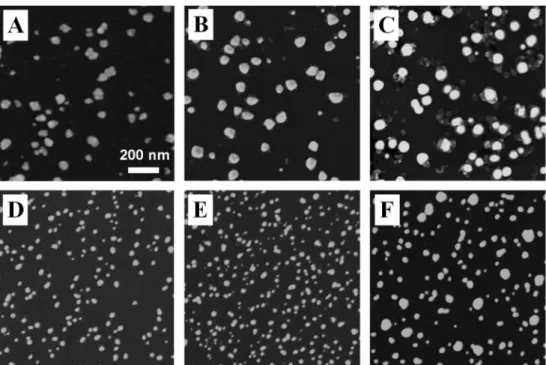
Fig. 1(A), (B) and (C) show SEM images of AuNPs electrodeposited on GC electrode surfaces in the presence of SiMo
12O
4−40layers. The formation of SiMo
12O
4−40monolayers was verified with cyclic vol- tammetry in a pure supporting electrolyte solution.
AuNPs were then electrodeposited by applying a constant potential of 0.0 V for 5, 20, and 40 s. For more quantitative information, average particle sizes, standard deviations, and surface coverage for each system were analyzed from the SEM images and listed in Table 1.
For comparison purposes we also deposited AuNPs on bare GC electrode surfaces and the SEM images are shown in Fig. 1(D), (E), and (F). In the absence of SiMo
12O
4−40monolayers, AuNPs exhibits an average diameter of 28.8 nm and a surface coverage of 8.4%
with a deposition time of 5s. As the deposition time increases, average size and surface coverage of AuNPs increases. With a deposition time of 40 s, AuNPs have an average diameter of 40.4 nm which is ca.
40% larger than that with a deposition time of 5 s.
A similar result has been reported that the average particle size of AuNP increases as the deposition time on bare GC electrodes.
9)In the presence of SiMo
12O
4−40monolayers, elec- trodeposited AuNPs have larger particles sizes. An average particle size was measured to be 50.9 nm with a deposition time of 5 s, while 40 s of deposition time resulted in an average particle size of 62.1 nm.
Although the particle size increases with deposition
time, it should be noted that the relative increment
of particle size is ca. 22%. This is smaller than the
relative increment of particle size of AuNPs deposited
in the absence of SiMo
12O
4−40monolayers(40%). It
has been reported that AuNPs electrodeposited in the
presence of iodide ions were smaller than those deposited on bare GC surfaces.
10)The authors suggested that the adsorption of iodide ions on AuNPs may carry negative charges on the AuNP surfaces and the coa- lescence of the adjacent AuNPs can be effectively prohibited. In our case, SiMo
12O
4−40monolayers carry negatively charges on electrode surfaces thus may suppress the start of new AuNP formation; instead expedite the growth of existing AuNPs. As a result AuNPs have larger sizes and smaller particle densities.
Regardless of the presence of SiMo
12O
4−40monolayers, the surface coverages are similar in both cases and increase gradually with the deposition time. AuNPs
deposited in the presence of SiMo
12O
4−40monolayers
have a lower particle density with a higher average particle
size, which may result in a similar surface coverage.
3.2 Electroscatalysis of oxygen on AuNPs on SiMo
12O
4−40-modified GC electrodes
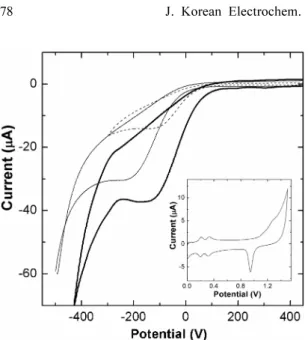
Fig. 2 compares the electrocatalysis for oxygen reduction of AuNPs deposited on bare GC electrodes and on SiMo
12O
4−40-modified GC electrodes in 0.1 M H
2SO
4saturated with oxygen. The electrocatalysis on a bare Au electrode was also compared as a dashed line. The inset of Fig. 2 shows the cyclic voltammogram of AuNPs deposited on SiMo
12O
4−40-modified GC Fig. 1. SEM images of AuNPs electrodeposited on GC electrode surfaces in the presence (A, B, and C) and absence (D, E, and F) of SiMo
12O
404−layers by applying a constant potential of 0.0 V for (A and D) 5 s, (B and E) 20 s, and (C and F) 40 s. The solution for electrdeposition was 1 mM KAuCl
4+ 0.1 M H
2SO
4. Scale bar applies to all images.
Table 1. Particle size and surface coverage
SEM Image Deposition Time (s) Average Diameter
a(nm) Surface coverage (%)
A 5 50.9 (± 37.7) 8.2
B 20 58.1 (± 41.8) 9.7
C 40 62.1 (± 48.0) 14.1
D 5 28.8 (± 18.7) 8.4
E 20 29.6 (± 20.8) 10.9
F 40 40.4 (± 37.5) 13.0
a. As calculated from the average particle area assuming particles are circular shape.
78 J. Korean Electrochem. Soc., Vol. 12, No. 1, 2009
electrodes in 0.1 M H
2SO
4saturated nitrogen. The two redox waves found between 0.2 V and 0.4 V indicate the formation of SiMo
12O
4−40monolayers as reported in our recent study.
18)The Au oxide formation and dissolution waves at positive potential regions confirm the existence of Au particles on GC surfaces. Fig. 2 exhibits that the electrocatalytic activity of AuNPs deposited on SiMo
12O
4−40-modified GC electrodes is better than that of AuNPs deposited on bare GC electrodes. The onset of oxygen reduction on AuNPs deposited on SiMo
12O
4−40-modified GC is 100 mV more positive than that on bare Au electrodes. Fig. 3 shows the effect of deposition time on electrocatalytic activity for oxygen reduction. AuNPs deposited for 5 s (thin solid line) exhibited a reduction peak at around
−
0.2 V, slightly more negative than that observed on a bare Au electrode. If the deposition time increased to 20 s (thick solid line), the reduction peak for oxygen reduction was observed at around
−0.1 V, which is almost same as that on a bare Au electrode. However, the onset of oxygen reduction on AuNPs deposited on SiMo
12O
4−40-modified GC electrodes commenced at ca.
100 mV more positive potential than that on a bare Au electrode. Further increase of deposition time to 40 s (thin dashed line) resulted in a decrease of oxygen
reduction activity similar to the case of 5 s deposition time. We also examined the electrocatalytic activity of AuNPs deposited on bare GC electrode with different deposition times. The effect of deposition time on electrocatalytic activity for oxygen reduction followed the similar trend as that found on AuNPs deposited on SiMo
12O
4−40-modified GC electrodes. The maximum electrocatalysis was observed with a deposition time of 20 s, while 5 s or 40 s deposition time resulted in less efficient electrocatalytic activities. This result is well agreement with that previously reported by Ohsaka and co-workers.
9)It should be noted that the maximum catalytic activity observed on AuNPs deposited on bare GC electrodes is less efficient than that found on AuNPs deposited on SiMo
12O
4−40-modified GC electrodes. These results suggest that the presence of SiMo
12O
4−40layers on GC surfaces produces more active AuNPs for oxygen reduction electrocatalysis.
To investigate the kinetics of oxygen electroreduction on AuNPs deposited on SiMo
12O
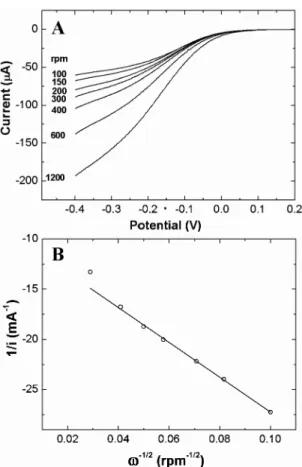
4−40-modified GC electrodes, we performed rotating disk electrode (RDE) measurements. Fig. 4(A) shows the RDE voltam- mograms of AuNPs deposited for 20 s. The currents associated with oxygen reduction begin to flow around 0.0 V and exhibit plateaus after ca. 0.2 V. For electrode Fig. 2. Cyclic voltammograms of AuNPs deposited on bare
GC electrodes (thin solid line) and on SiMo
12O
404−-modified GC electrodes (thick solid line) in 0.1 M H
2SO
4saturated with oxygen. The deposition time was 20 s. The dashed line was obtained on a bare Au electrode in the same solution.
Scan rate = 50 mV·s
−1.
Fig. 3. Cyclic voltammograms of AuNPs deposited on SiMo
12O
440−-modified GC electrodes in 0.1M H
2SO
4saturated with oxygen. Time for electrodepositon was 5s (thin solid line), 20 s (thick solid line), and 40 s (dashed line). Scan rate
= 50 mV·s
−1.
processes with slow kinetics, the Koutechy-Levich equation applies, and the current (
i) can be expressed as follow;
(1) where
iKis the kinetic current in the absence of mass transfer effect;
nis the number of electrons for oxygen reduction;
Fis the Faraday constant;
Ais electrode area;
Dois the diffusion coefficient of oxygen (1.9 × 10
5cm
1s
1);
19)ωis the rotation rate;
vis the kinematic viscosity (9.97 × 10
5cm
2s
1);
19)and
Cois the bulk concentration of oxygen (1.38 × 10
6mol cm
3).
20)Fig. 4(B) shows the Koutechy-Levich plot obtained from the RDE voltammograms shown in Fig. 4(A). From this plot the number of electrons exchanged in the oxygen reduction reaction,
nis calculated to be 2.3,
which indicates the catalytic reduction of oxygen on AuNPs deposited on SiMo
12O
4−40-modified GC elec- trodes is a two-electron process. In a previous study, it was reported that oxygen reduction reaction on AuNPs electrodeposited on GC surfaces is a two electron process.
9)Since the number of electrons exchanged for oxygen reduction on Au electrodes in acidic media is usually two, AuNPs deposited on GC surfaces is assumed to follow the same reduction mechanism as found for bulk Au surfaces, which is two-electron reduction of oxygen to hydrogen peroxide. The extrapolated Koutechy-Levich plot for
ω1/2= 0 has an intercept other than zero, which indicates a mixed kinetic-diffusion controlled mechanism.
4. Conclusions
We investigate the effect of SiMo
12O
4−40-monolayers on the electrodeposition of AuNPs on GC surfaces.
The presence of SiMo
12O
4−40-layers resulted in larger particle sizes compared to those found on bare GC surfaces. AuNPs electrodeposited for 20 s exhibited the best electrocatalytic activity for oxygen reduction, which was similar or slightly better efficient than a bare Au electrode. From the Koutechy-Levich plot obtained from RDE measurements, the catalytic reduction of oxygen on AuNPs deposited on SiMo
12O
4−40-modified GC electrodes was revealed to be a two-electron process.
Further study to increase the number electrons exchanged during the electroreduction of oxygen on modified electrode systems is needed. However, considering that AuNPs electrodepositied on GC electrodes require small amount of Au loadings, this system may find useful applications in developing economic fuel cell cathodes.
Acknowledgements
This work was supported by the research grant of the Chungbuk National University in 2007.
References
1. L. Carrette, K. A. Friedrich, and U. Stimming, 'Fuel cells:
Principles, types, fuels, and applications' Chem Phys Chem,
1,162 (2000).
2. R. Adzic, in: R. E. White, J. O. M. Bockris, and B. E.
Conway (Eds.), Modern aspects of electrochemistry, Plenum Press, New York, 1990, pp. 163.
1
i--- 1
ik