• 검색 결과가 없습니다.

양극산화 기법으로 제조한 TiO2 나노튜브의 촉매 도핑 연구 동향

N/A
N/A
Protected

Academic year: 2021

Share "양극산화 기법으로 제조한 TiO2 나노튜브의 촉매 도핑 연구 동향"

Copied!
7
0
0

로드 중.... (전체 텍스트 보기)

전체 글

(1)

Review http://dx.doi.org/10.14478/ace.2015.1033

양극산화 기법으로 제조한 TiO 2 나노튜브의 촉매 도핑 연구 동향

유현석⋅최진섭

인하대학교 화학공학과 (2015년 3월 10일 접수)

Research Trends in Doping Methods on TiO 2 Nanotube Arrays Prepared by Electrochemical Anodization

Hyeonseok Yoo and Jinsub Choi

Department of Chemistry and Chemical Engineering, Inha University, Incheon 402-751, Korea (Received March 10, 2015)

초 록

전기화학적 양극산화 기법으로 제조한 타이타늄 나노튜브는 타이타늄 특유의 강한 화학내구성 및 나노튜브의 높은 종횡비로 인하여 넓은 범위에 응용된 소재이다. 전해질의 구성 성분과 종류, pH, 전압, 온도 그리고 양극산화 시간이 타이타늄 나노튜브의 성상을 결정짓는 요소들이며 도핑을 통해 촉매능을 부여할 수 있다. 비금속 및 금속 원소 모두 도핑 가능하며 도핑 방법 역시 다양하다. 도핑 방법에는 합금 양극산화, 열처리법, 함침법, 전기도금법 등 다양한 방법 들이 이용되며 점차 간단하고 빠른 도핑 방법을 찾는 방향으로 연구가 진행되고 있다. 본 총설에서는 타이타늄 나노 튜브의 생성 원리와 상용된 제법들에 관하여 기술하고 도핑과 그 응용 및 최근의 도핑 연구 동향을 다루도록 하겠다.

Abstract

Nanotubular TiO

2

prepared by electrochemical anodization has been significantly used for various applications due to high aspect ratio structures showing a high chemical stability. Morphological properties of nanotubular titanium oxide are easily tailored by adjusting types and compositions of electrolyte, pH value, applied voltage, temperature and anodization time. Since their catalytic properties can be enhanced by doping foreign elements into TiO

2

, metal as well as non-metal elements are doped into TiO

2

nanotubes using different methods. For example, single anodization, thermal annealing, precipitation, and electrochemical deposition have been applied to simplify the doping process. In this review, anodization of Ti to produce TiO

2

and doping methods will be discussed in detail.

Keywords: TiO

2

nanotubes, Anodization, Doping, Catalysts

1. Introduction 1)

Anodization has been used for a long time to surface finishing of aluminum in industry, producing a chemically and mechanically stable oxide film from natural oxide on aluminum through electrochemical re- action[1]. Based on successful application of anodic aluminum oxide in various applications, other valve metals such as Ti, Nb, W, Hf have been intensively studied for the last decade[2-7]. Especially, due to unique chemical and physical properties of TiO

2

such as bio- compatibility, semiconductor, and catalytic effects, anodization techni- que of Ti has been developed to produce various morphological fea- tures according to expansion of applications. After TiO

2

nanotubular

† Corresponding Author: Inha University,

Department of Chemistry and Chemical Engineering, Incheon 402-751, Korea Tel: +82-32-860-7476 e-mail: [email protected]

pISSN: 1225-0112 eISSN: 2288-4505 @ 2014 The Korean Society of Industrial and Engineering Chemistry. All rights reserved.

structures with a thickness of less than 500 nm have been successfully produced in HF based electrolyte in 1984[8], there have been many ef- forts to develop advanced recipes for producing stable long thickness of nanotubular oxide films. Nowaday, oxide thickness of more than 1000 µm has been reported[3]. Typically, the electrolyte containing F

-

is used in the anodization of Ti, which allows a relatively low applied voltage to produce homogeneous oxide film with high-aspect-ratio and well-aligned structure at low cost. Because of large surface area, verti- cally aligned long nanotubular structure, chemical stability, bandgap of 3.0∼3.2 eV, reliable biocompatibility, catalytic properties and photo- catalytic properties, anodic TiO

2

has attracted much attentions in vari- ous applications such as solar cell electrodes, chemical/bio sensors, functional separator membranes, implants and so on[2,9-13]. It is clear that anodic TiO

2

itself is very useful materials for various applications.

However, the bandgap is high, which is not able to absorb a visible

light and conductivity of oxide is low, which require high overpotential

during electrochemical reaction. Doping of foreign elements into TiO

2

(2)

(a) (b) (c)

(d) (e) (f)

Figure 1. Mechanism of TiO

2

nanotubes formation by potentiostatic method.

has been studied recently in order to reduce the bandgap and over- potential in electrochemical reaction[11-13]. In this review, recently de- veloped methods for the preparation of anodic TiO

2

and foreign ele- ment doping will be discussed. More detailed review for the fabrication and applications of anodic Al

2

O

3

and TiO

2

can be found in other liter- atures[14,15].

2. Anodization of Ti

In 1999, Zwilling reopened the stable oxide formation on Ti by anod- ization in HF based electrolyte[16], which allows the production of ver- tically-aligned nanotubular TiO

2

with a thickness of less than 500 nm.

Afterwards, various electrochemical conditions were reported to in- crease the thickness of oxide by many research groups[9-13,15,17-19].

Unlike thickness of porous aluminum oxide is mainly determined by anodization time, the thickness of TiO

2

is limited not by the anodiza- tion time but by electrolyte bath. It is due to that the formed oxide structure is dissolved in the electrolyte containing F. When dissolution rate equals to the formation rate at a certain time, the length of nano- tubes is determined in the case of anodization of Ti. Based on Grimes’

book, anodization of Ti can be classified to four generations based on the morphology and thickness of nanotubes[13]. In the first generation, electrolyte of HF with a small amount of acid was used for anodization of Ti, which allowed the formation of nanotubes with a thickness of less than 500 nm. The applied potential was optimized to 20∼30V de- pending on the electrolyte. In the second generation, it was found that pH value is the very important factor to determine the length of nanotubes. Acidic condition led to produce short nanotubes and longer nanotubes were formed when the pH valve reached to neutral. Thus, in the second generation, acidic HF was substituted by neutral salts such as NaF and NH

4

F, which allowed formation of nanotubes with the maximum thickness of 7 µm. In order to remove H

+

effects from water, non-aqueous electrolytes such as glycerol and ethylene glycol (EG) was used instead of aqueous electrolyte (the third generation). In this generation, the thickness of nanotubes was dramatically increased.

For example, more than 1000 µm thick nanotubes were reported in EG containing NH

4

F and small amount of water. In the fourth generation, F

-

based electrolyte was substituted by non-fluoride electrolyte such as HCl and H

2

O

2

since fluoride electrolyte is very corrosive and toxic.

However, the obtained results showed that the nanotubes are not homo- geneously formed overall the surface of Ti. Instead, clump and bundle of nanotubes at very local areas were formed. In this review, we dis- cussed the doping of foreign element to TiO

2

nanotubes, which is pre- pared in fluoride based electrolyte.

2.1. Mechanism of formation of TiO

2

nanotubes and important factors

Anodic oxide can be produced by either potentiostatic or galvano- static method. From industrial point of view, the galvanostatic method is frequently used since it is easy to exactly control the thickness of oxides via anodization time. On the other hands, the cell size, pore (or nanotube) size, pore-pore (nanotube-nanotube) distance are strongly in-

fluenced by applied voltage. More highly-arranged nanotubular struc- tures can be obtained by a constant voltage mode (potentiostatic meth- od)[13]. It is due to that the formation mechanism relies on the field-assisted oxide dissolution mechanism. Thus, constant applied volt- age is very important factor to prepare homogenous nanotubular TiO

2

. In the formation of TiO

2

nanotubes, the following stages were roughly suggested :

(1) Growth of the barrier-type oxide from natural oxide at initial stage (Figure 1 (a) and (b)).

(2) Formation of nano-pits on oxide surface by attack of F

-

ions (Figure 1 (c)).

(3) The growth of nanotubes from the nano-pits through the electric field concentrated at nano-pits (Figure 1 (d)-(f)).

In the more detailed mechanism;

(a) O

2-

and/or OH

-

in electrolyte are attracted to positively-biased Ti electrode, and react with metal ions (Ti

4+

) at the interface of metal and electrolyte, which forms the metal oxide layer such as TiO

2

(the barrier oxide formation).

(b) Ti

4+

in TiO

2

is dissolved into electrolyte by electric field, con- tinuously being supplied from the Ti metal.

(c) TiO

2

reacts with F

-

in acidic environmental to form [TiF

6

]

2-

, which is very easily dissolved in water. This allows the formation of nanotubular structures[9-13,15].

TiO

2

→ O

2

+ 4H

+

+ 4e

-

(1)

Ti + O

2

→ TiO

2

(2)

TiO

2

(s) + 6F

-

+ 4H

+

→ [TiF

6

]

2-

+ 2H

2

O(l) (3)

The growth mechanism of TiO

2

nanotubes is depicted in Figure 1.

The applied potential influences on the thickness of wall of nano-

tubes[9-13,15]. As the applied potential increases, thickness of the bar-

rier oxide increases, which allows the thick wall of nanotubes (Figure

(3)

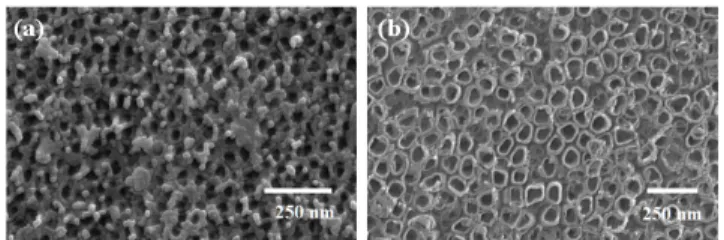
Figure 2. SEM images of titanium nanotubes prepared in (a) H

2

SO

4

/HF solution at 20 V for 1 h and (b) H

3

PO

4

/NaOH/HF electrolyte at 20 V for 4 h.

1 (a) and (b)). In addition, nanotube-nanotube distance typically in- creases as the applied potential increases up to 60 V. At applied poten- tial higher than 60 V, there is no more linear relationship. The max- imum nanotube-nanotube distance was reported to less than 150 nm.

As mentioned earlier, type and composition of electrolyte are the very important factor to determine the length of nanotubes. In the re- action 3, suppression of evolution of H

+

is the critical step to avoid the formation of [TiF

6

]

2-

, which is the key factor to determine the length of nanotubes. If concentration of F

-

is too low, reaction for the formation of nanotubes is too slow, reducing the diameters of nano- tubes as well as voids between nanotubes. Thus, the finial morphology is more-likely nanoporous structure instead of nanotubes. It was re- ported that the length of structure prepared at a low concentration of F

-

is higher than that prepared at a higher concentration. On the other hand, large diameter and thin wall of nanotubes are formed in a high concentration of F

-

ions. If the concentration is too high, the anodic oxide film is completely dissolved.

The length of nanotubes is strongly influenced by pH value. In gen- eral, nanotubes can be formed at weak acid or less than 7. It was be- lieved that nanotubular structure is not formed at a basic pH value.

If the pH is less than 1, nanotubes with a thickness of less than 500 nm is prepared even though anodization time is elongated. Until pH value of 2, the thickness does not increase significantly. However, length of nanotubes linearly increases in terms of anodization time above pH value of 2. Up to pH value of 6, the maximum obtainable length of nanotubes is linearly proportional to pH valve[9,11,19].

2.2. Electrochemical conditions for the preparation of TiO

2

nanotubes

In 1999, Zwilling et al. showed the anodic oxide formation of pure Ti and Ti6V substrates in mixture electrolyte of H

2

CrO

4

and HF at 5 V and 10 V[16]. They did not claim that the prepared structure is nanotubular morphology. However, it clearly showed initial stage of nanotubes, which is generally produced by anodization for a short time. In 2001, Grimes’s group reported TiO

2

nanotubes by anodization at 0.5 wt% HF at 3, 5, 10 V, and 20 V, respectively, for 45 min, showing that oxide film consisting of granular structure is obtained at less than 10V whereas nanotubes with a thickness of 500 nm is ob- tained at higher than 10V. The diameters of nanotubes prepared at 10 V and 20 V were measured as 50 nm and 100 nm, respectively, in- dicating that diameter of TiO

2

nanotube is significantly influenced by the applied voltage. It was well known that the anodic TiO

2

nanotubes

prepared at the same voltage show a similar diameter and wall thick- ness[17,18]. Longer length of nanotubes is obtained in the mixture of HF and H

3

PO

4

(or H

2

SO

4

), compared to that prepared at a single HF electrolyte since H

3

PO

4

(or H

2

SO

4

) helps maintaining a local pH in nanotubes and suppress the dissolution of the formed oxide through anion-competition reaction[13,20]. Figure 2 (a) shows nanotubes pre- pared in the mixture of H

2

SO

4

and HF.

As mentioned, longer length of nanotubes can be produced by in- creasing the pH value up to pH of 5∼6 through neutralization reaction by the addition of NaOH. Figure 2 (b) shows TiO

2

nanotubes with a thickness of 1 µm, which is prepared by anodization at 20 V for 4 h in the mixture of 1M H

3

PO

4

, 1 M NaOH, and 0.5 mL HF (pH = 4.5).

If the pH increases up to 5.6∼6, nanotubes with a thickness of more than 4.4 µm are prepared by anodization for 20 h[11,13]. Diameter of nanotubes is not changed as anodization time increases, unless the ap- plied voltage is not changed[6]. Table 1 shows the mostly-used electro- chemical conditions for anodization in aqueous electrolyte. Instead of HF, NH

4

F is mostly used in non-aqueous electrolyte. Non-aqueous electrolyte allows the formation of nanotubes with significant long length. Even though there were several attempts to anodize Ti in the mixture of ethylene glycol containing H

3

PO

4

and NH

4

F, the maximum obtainable length was 2.4 µm[21]. In 2006, Grimes’s group showed that anodic nanotubes with a length of 70 µm can be produced in for- mamide containing a small amount of water, triggering study on for- mation of anodic the high-aspect-ratio nanotubes. Later on, TiO

2

nano- tubes with a thickness of 93 µm was successfully produced in DMSO (dimethyl sulfoxide) containing 2 wt% HF at 60 V for 70 h[18]. Based on the suppression of reaction 3, TiO

2

nanotubes with a length of 1000 µm was prepared in the mixture of ethylene glycol and NH

4

F by Grimes’s group[22]. Schmuki’s group showed the nanotubes with high-aspect-ratio of 150 in the same electrolyte[23]. There are two main problems in the formation of anodic TiO

2

when non-aqueous electrolyte is used. The first, adhesion of Ti nanotubes on a Ti sub- strate is not good enough. The second, the top of TiO

2

nanotubes, where is exposed in the aggressive electrolyte for the longest time, is dissolved during anodization. It leads to destroy the nanotubular mor- phology on the top (so-called bamboo-splitting mode). In the bam- boo-splitting mode, several parameters such as a high voltage, long anodization time, and small amount of water, enhance the dissolution of the top surface of TiO

2

nanotubes, leading to split the nanotubes to nanowires[24,25]. Figure 3 shows the bamboo-splitting mode and nor- mal TiO

2

nanotubes, respectively. There are several methods to avoid the bamboo-splitting mode. The most frequently used way is to employ ultrasonic immediately after anodization.

3. Catalysts Introducing on TiO

2

Nanotube Arrays

TiO

2

nanotubes are very favorable material to be used for catalysts because of its very high aspect-ratio and chemical stability.

Nevertheless, because of a low conductivity of the metal oxide, un-

necessary overpotential is required in electrochemical and photo-

electrochemical reactions. Uniformly doping of catalysts in TiO

2

nano

(4)

No. Electrolyte

pH V t D L

Results

SO

42-

PO

43-

Citric acid (V) (h) (nm) (µm)

1 1.0 - - < 1 5 1 10 ± 2 - No NT

2 1.0 - - < 1 10 1 40 ± 5 0.28 ± 0.02 NT

3 1.0 - - < 1 15 1 80 ± 9 - NT

4 1.0 - - < 1 20 1 100 ± 11 0.48 ± 0.03 NT

5 1.0 - - < 1 25 1 110 ± 12 0.56 ± 0.04 NT

6 1.0 - - < 1 30 1 - - No NT

7 1.0 - 0.2 1.3 10 20 30 ± 5 0.32 ± 0.03 NT

8 1.0 - 0.2 2.8 15 20 50 ± 5 1.00 ± 0.05 NT

9 1.0 - 0.2 2.8 25 20 115 ± 10 1.50 ± 0.04 NT

10 1.0 - 0.2 3.8 10 20 30 ± 5 0.80 ± 0.06 NT

11 1.0 - 0.2 3.8 10 90 30 ± 5 2.30 ± 0.08 NT

12 1.0 - 0.2 4.5 25 20 115 ± 5 4.40 ± 0.10 NT

13 1.0 - 0.2 5.0 10 20 30 ± 5 1.40 ± 0.06 NT

14 1.0 - 0.2 5.0 25 20 115 ± 5 6.00 ± 0.40 NT

15 1.0 0.1 0.2 6.4 10 24 - - No NT

16 2.0 - - < 1 10 24 - - No NT

Table 1. The Results of Size of Nanotubes Depending on Electrolyte pH, Composition, Anodization Condition[13]

Figure 3. Pore-closed TiO

2

nanotubes by bamboo-splitting mode, which is prepared in EG (ethylene glycol)/NH

4

F at 40 V for 19 h (a) and (b) mechanically stable TiO

2

nanotubes containing RuO

2

, which is prepared in EG/NH

4

F/KRuO

4

for 19 h.

tube arrays has been intensively studied to solve the problems. In gen- eral, complicate and delicate processes consisting of several steps are involved to incorporate foreign elements to the TiO

2

because uniform doping is the most difficult task in the high-aspect-ratio structure.

3.1. Conventional doping method and application

Dopants consisting of non-metal elements like N, P, F, B and S are mainly employed for tailoring the bandgap of TiO

2

in the application for photocatalysts[26-31]. Nobel metals such as Ag and Au are fre- quently doped into TiO

2

in order to increase the sensitivity of gas/bio sensing[32,33] and the others such as Si, CdS, Zr, Cr, Ni, Ru, W, etc.

are classified as the catalysts for electrochemical or photo- electrochemical activator[25,34-46].

For example, Wei and co-workers prepared (Ru

0.3

Ti

0.34

Sn

0.3

Sb

0.06

)O

2

catalyst based on RuO

2

on TiO

2

nanotubes for achieving ion selectivity of CER(Chlorine Evolution Reaction)[47,48]. As a precursor, RuCl

3

, C

16

H

36

O

4

Ti, SnCl

4

and SbCl

3

were dissolved in iso-propanol with a proper ratio and subsequently it was brushed on as-prepared TiO

2

nanotube electrodes evenly. Solvent was perfectly evaporated in 100℃

and the samples were annealed in 500 ℃ during 10 minutes. These procedures were conducted 10 times repeatedly. After the procedure is completed, final single annealing for 1 h at 550 ℃ was followed[35].

The electrodes showed very high sensitivity and selectivity for CER.

However, the main problem was too inconvenient and time-consuming processes required for doping.

Non-metallic elements such as C, B, N and S can be easily in- troduced by annealing in furnace, which shows an enhanced photo- catalytic activity. Schmuki and co-workers prepared TiO

2

nanotubes at Na

2

HPO

4

/HF electrolyte, which was doped with C in furnace under C

2

H

2

/N

2

gaseous stream. It led to decrease bandgap of TiO

2

, increasing photocatalytic activity[28]. B and N could be employed from the mole- cules of BF

3

and NH

3

. These elements were doped based on mod- ification of the method of Schmuki’s group by Tsuchiya and co-workers. Doping of B and N allowed the activation of TiO

2

under light source with a range from 420 to 430 nm. Even though individual dopant could show sufficient performance of photocatalytic properties in UV-VIS, the dramatic performance enhancement was achieved when both of dopants were doped[29]. Li conducted doping experiment on TiO

2

nanotubes by annealing under H

2

S gaseous stream to obtain the activation of TiO

2

in the whole range of UV-VIS[30]. Metal element such as Cr could be introduced by a dry process such as ion im- plantation[39]. The most representative method on wet process was electroplating. Zhang and co-workers showed photoelectrochemically doped Au nano particles in TiO

2

nanotube arrays for the application of immunosensor devices to detect antigen of Parkinson`s disease[32].

Zr could be deposited on TiO

2

nanotubes by electroplating for achiev- ing activation in visible light[38].

The single-step anodization was able to incorporate a dopant into Ti

(5)

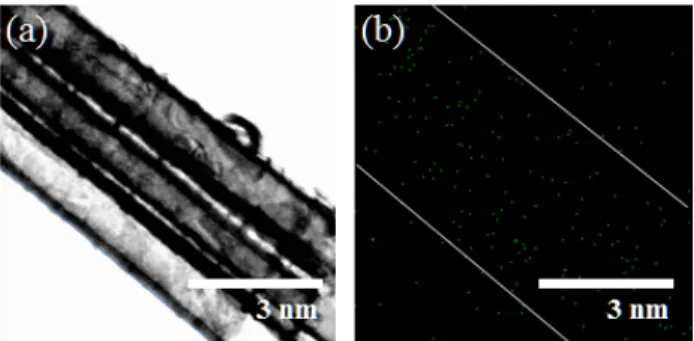
Figure 4. (a) FE-TEM images and (b) EDS mapping result of TiO

2

nanotubes prepared at 40 V for 19 h in 0.25 wt% NH

4

F with 0.02M KRuO

4

electrolyte. The green spots demonstrated Ru atoms incorpo- rated in TiO

2

nanotubes. Average atomic percent of Ru was 0.12%.

Figure 5. (a) Ru oxide particles doped by potential shock was observed at the surface of nanotubes. Compared to the nanotubes prepared by single-step doping method, Ru oxide phases were clearly observed as spot shape. EDS mapping results of TiO

2

nanotubes prepared by potential shock method were shown in (b) and (c). Ru element entirely and uniformly existed on nanotubes.

alloy substrates. For the doping of Ni

2

O

3

into TiO

2

, Tang and co-work- er employed the cast method on NiTi alloy substrates. As a result, Ni

2

O

3

-TiO

2

nanotubes were successfully prepared, showing bio- compatibility and bioactivity[36]. Nb-Ti-O nanotubes were fabricated from NbTi alloy substrates by single-step anodization for the growth of stem cells by Mao and co-workers[37].

3.2. Research trends of doping methods recently

In the techniques of single-step anodization of alloy substrates con- taining dopants, Cr or CuAl were added in Ti as impurity. By anodiz- ing the alloy substrate, nanotubes with a dopant were successfully prepared. Cr in TiO

2

structure took a role as a activator in UV region under 400 nm wavelength[40]. When Cu and Al were incorporated with TiO

2

, antibacterial and human-friendly surface properties were activated. Therefore, the Cu(or Al)-doped TiO

2

was suggested to be used in a novel non-toxic biological material[41].

CdSe or Ag was easily and uniformly doped by immerging method.

First, CdSe nanoparticles (NPs) were prepared and then it was de- posited on the surface of TiO

2

nanotubes by immerging TiO

2

substrate in the solution containing CdSe NPs. CdSe-TiO

2

interface had the acti- vation in the range from 200 nm to 600 nm wavelength, which is an important light range for solar cell operation[42]. Ag also shows the same effect in visible light region, demonstrating highly-increased per- formances in solar cells[33].

CdS photoelectrochemical catalysts could be doped by electro- chemical deposition. CdS catalysts unusually exhibited the extension of activation region as the doping amount increased. Moshfegh et. al. in- sisted that it is due to energy trap phenomenon occurred by each CdS particles[43].

The outstanding changes in single-step anodization have reported recently. Although P and C can be introduced in the electrolyte of H

3

PO

4

and EG[27], it was not agreed widely. In 2012, Cui and co-workers demonstrated that anodization and doping simultaneously occurred when metal anion complex was used as precursor and sup- porting electrolyte[34].

Our group reported that TiO

2

MAO (micro-arc oxidation) thin film with a doping of IrO

2

and RuO

2

can be prepared by single anodization [44,45]. In addition, we demonstrated that fabrication of RuO

2

doped

TiO

2

nanotubes for DSA (dimensionally stable anode) applications is possible by the same method[25]. EG/NH

4

F medium was selected to produce enlarged aspect-ratio of nanotubes and KRuO

4

was dissolved in the electrolyte as a precursor and supporting electrolyte for Ru source. Ru was successfully incorporated in titanium oxide crystal phases as the form of RuO

2

evenly via the potentiostatic anodization at 40 V (Figure 4), showing the dramatic enhanced performance of wa- ter splitting with a maximum current density of 85 mA/cm

2

(at 2 V with Ag/AgCl 3M KCl). Figure 4 demonstrates that the thickness of the walls of nanotubes increase up to around twice when RuO

2

is in- corporated into the wall. Thus, the typical nanopore closing problem and bamboo-splitting mode is suppressed[24,25,49].

Because of the minus net charge of RuO

4-

in the electrolyte, RuO

4-

can be attracted to anode, where is positively biased. Thus, if a high positive potential is imposed on the TiO

2

(so-called potential shock), the RuO

4-

can be incorporated into TiO

2

without significant damage of structure. Thus, the 2-step of potential shock is useful method for the doping: the first is fabrication of nanotubes and the second is the dop- ing step by potential shock. Potential shock method was originally de- veloped for the fabrication of through-hole membrane of TiO

2

nano- tubes immediately after the fabrication of nanotubes [50]. We found that when the channels of nanotubes at top side is opened clearly, RuO

4-

can be introduced into TiO

2

nanotube arrays and be converted to RuO

2

phase evenly (Figure 5)[46]. RuO

2

phase originated from KRuO

4

was doped in TiO

2

nanotubes at 140V of potential shock volt- age for 10 s.

4. Concluding Remarks

Recently, the fabrication of TiO

2

nanotubes with high-aspect-ratio

has attracted great attention due to unique chemical and physical prop-

erties of TiO

2

and cost-effective process on a large scale for various

applications. However, because of low conductivity and relative high

bandgap, its catalytic and photocatalytic properties are limited to some

applications. To increase the conductivity and to reduce bandgap, dop-

ing of foreign elements into TiO

2

nanotubes is one of important techni-

ques in anodization of Ti. Various types of catalysts and doping meth-

ods can be employed for the proper purposes. In this review, we dis-

cussed the fabrication of anodic TiO

2

nanotubes in acid, neutral, and

(6)

non-aqueous electrolyte based on the anodic oxide formation mechanism. In addition, various doping elements such as metallic and non-metallic were discussed with their potential applications. Finally, we introduced recently-developed doping protocols: single-step anod- ization and potential shock.

References

1. J. Choi, Fabrication of monodomain porous alumina using nano- imprint lithography and its applications, PhD Dissertation, Martin-Luther-Universitat, Halle-Wittenberg, Germany (2004).

2. P. Roy, S. Berger, and P. Schmuki, TiO2 nanotubes: synthesis and applications, Angew. Chem. Int. Edit., 50, 2904-2939 (2011).

3. I. Sieber, H. Hildebrand, A. Friedrich, and P. Schmuki, Formation of self-organized niobium porous oxide on niobium, Electrochem.

Commun., 7, 97-100 (2005).

4. S. Berger, F. Jakubka, and P. Schmuki, Formation of hexagonally ordered nanoporous anodic zirconia, Electrochem. Commun., 10, 1916-1919 (2008).

5. J. M. Macak, H. Tsuchiya, A. Ghicov, K. Yasuda, R. Hahn, S.

Bauer, and P. Schmuki, TiO

2

nanotubes: Self-organized electro- chemical formation, properties and applications, Curr. Opin. Solid St. M., 11, 3-18 (2007).

6. R. Hahn, J. M. Macak, and P. Schmuki, Rapid anodic growth of TiO

2

and WO

3

nanotubes in fluoride free electrolytes, Electrochem.

Commun., 9, 947-952 (2007).

7. S. Berger, F. Jakubka, and P. Schmuki, Self-ordered hexagonal nanoporous hafnium oxide and transition to aligned HfO

2

nanotube layers, Electrochem. Solid St., 12, K45 (2009).

8. M. Assefpour-Dezfuly, C. Vlachos, and E. H. Andrews, Oxide morphology and adhesive bonding on titanium surfaces J. Mater.

Sci., 19, 3626-3639 (1984).

9. J. Choi, J. K. Lee, J. H. Lim, and S. J. Kim, Technology trends in fabrication of nanostructures of metal oxides by anodization and their applications, J. Korean Ind. Eng. Chem., 249-258, 19 (2008).

10. Karla S. Brammer, Seunghan Oh, Christine J. Frandsen, and Sungho Jin (2011). Biomaterials and biotechnology schemes utiliz- ing TiO2 nanotube arrays, Biomaterials science and engineering, Prof. Rosario (Ed.), ISBN: 978-953-307-609-6.

11. A. E. R. Mohamed and S. Rohani, Modified TiO

2

nanotube arrays (TNTAs): progressive strategies towards visible light responsive photoanode, a review, Energy Environ. Sci., 4, 1065-1086 (2011).

12. V. Galstyan, E. Comini, G. Faglia, and G. Sberveglieri, TiO

2

nano- tubes: Recent advances in synthesis and gas sensing properties, Sensors, 13, 14813-14838 (2013).

13. Craig A. Grimes and Copal K. Mor, TiO2 nanotube arrays:

Synthesis, properties and applications, 1-60, Springer, USA (2009).

14. W. Lee and S. J. Park, Porous anodic aluminum oxide: anodization and templated synthesis of functional nanostructures, Chem. Rev., 114, 7487-7556 (2014).

15. K. Lee, A. Mazare, and P. Schmuki, One-dimensional titanium di- oxide nanomaterials: nanotubes, Chem. Rev., 114, 9385-9454 (2014).

16. V. Zwilling, E. Darque-Ceretti, A. Boutry-Forveille, D. David, M.

Y. Perrin, and M. Aucouturier, Structure and physicochemistry of anodic oxide films on titanium and TA6V alloys, Surf. Interface Anal., 27, 62-637 (1999).

17. D. Gong, C. A. Grimes, O. K. Varghese, W. C. Hu, R. S. Singh, Z. Chen, and E. C. Dickey, Titanium oxide nanotube arrays pre- pared by anodic oxidation, J. Mater. Res., 16, 3331-3334 (2001).

18. J. Bai, B. Zhou, L. Li, Y. Liu, Q. Zheng, J. Shao, X. Zhu, W. Cai, J. Liao, and L. Zou, The formation mechanism of titania nanotube arrays in hydrofluoric acid electrolyte, J. Mater. Sci., 43, 1880-1884 (2008).

19. D. Kowalski, D. Kim, and P. Schmuki, TiO

2

nanotubes, nano- channels and mesosponge: Self-organized formation and applica- tions, Nano Today, 8, 235-264 (2013).

20. R. Beranek, H. Hildebrand, and P. Schmuki, Self-organized porous titanium oxide prepared in H

2

SO

4

/HF electrolytes, Electrochem.

Solid. St., 6, B12-B14 (2003).

21. N. K. Allam and C. A. Grimes, Effect of cathode material on the morphology and photoelectrochemical properties of vertically ori- ented TiO

2

nanotube arrays, Sol. Energ. Mat. Sol. C., 92, 1468-1475 (2008).

22. M. Paulose, H. E. Prakasam, O. K. Varghese, L. Peng, K. C.

Popat, G. K. Mor, T. A, Desai, and C. A. Grimes, J. Phys. Chem.

C, 111, 14992-14997 (2007).

23. J. M. Macak and P. Schmuki, Anodic growth of self-organized anodic TiO

2

nanotubes in viscous electrolytes, Electrochim. Acta, 52, 1258-1264 (2006).

24. J. H. Lim and J. Choi, Titanium oxide nanowires originating from anodically grown nanotubes: the bamboo-splitting model, Small, 3, 1504-1507 (2007).

25. H. Yoo, Y.-W. Choi, and J. Choi, Ruthenium oxide-doped TiO

2

nanotubes by single-step anodization for water-oxidation applica- tions, Chem. Cat. Chem., 7, 643-647 (2015).

26. D. Kim, S. Fujimoto, and P. Schmuki, H. Tsuchiya, Nitrogen dop- ed anodic TiO

2

nanotubes grown from nitrogen-containing Ti al- loys, Electrochem. Commun., 10, 910-913 (2008).

27. P. Kar, K. S. Raja, M. Misra, and B. N. Agasanapur, Formation and stability of anatase phase of phosphate incorporated and carbon doped titania nanotubes, Mater. Res. Bull., 44, 398-402 (2009).

28. R. Hahn, A. Ghicov, J. Salonen, V.-P. Lehto, and P. Schmuki, Carbon doping of self-organized TiO

2

nanotube layers by thermal acetylene treatment, Nanotechnology, 18, 1-4 (2007).

29. X. Zhou, F. Peng, H. Wang, H. Yu, and J. Yang, Preparation of B, N-codoped nanotube arrays and their enhanced visible light photoelectrochemical performances, Electrochem. Commun., 13, 121-124 (2011).

30. X. Tang and D. Li, Sulfur-doped highly ordered TiO

2

nanotubular arrays with visible light response, J. Phys. Chem. C, 112, 5405-5409 (2008).

31. R. P. Vitiello, J. M. Macak, A. Ghicov, H. Tsuchiya, L. F. P.

Dick, and P. Schmuki, N-Doping of anodic TiO

2

nanotubes using heat treatment in ammonia, Electrochem. Commun., 8, 544-548 (2006).

32. Y. An, L. Tang, X. Jiang, H. Chen, M. Yang, L. Jin, S. Zhang, C. Wang, and W. Zhang, A photoelectrochemical immunosensor based on Au-doped TiO

2

nanotube arrays for the detection of al- pha-synuclein, Chem. -Eur. J., 16, 14439-14446 (2010).

33. Y. Wang, Z. Li, Y. Tian, W. Zhao, X. Liu, and J. Yang, Facile method for fabricating silver-doped TiO

2

nanotube arrays with en- hanced photoelectrochemical property, Mater. Lett., 122, 248-251 (2014).

34. M. Sun and X. Cui, Anodically grown Si–W codoped TiO

2

nano-

(7)

tubes and its enhanced visible light photoelectrochemical response, Electrochem. Commun., 20, 133-136, (2012).

35. K. Xiong, Z. Deng, L. Li, S. Chen, M. Xia, L. Zhang, X. Qi, W.

Ding, S. Tan, and Z. Wei, Sn and Sb co-doped RuTi oxides sup- ported on TiO

2

nanotubes anode for selectivity toward electro- catalytic chlorine evolution, J. Appl. Electrochem., 43, 847-854 (2013).

36. R. Hang, X. Huang, L. Tian, Z. He, and B. Tang, Preparation, characterization, corrosion behavior and bioactivity of Ni

2

O

3

-doped TiO

2

nanotubes on NiTi alloy, Electrochim. Acta, 70, 382-393 (2012).

37. D. Ding, C. Ning, L. Huang, F. Jin, Y. Hao, S. Bai, Y. Li, M.

Li, and D. Mao, Anodic fabrication and bioactivity of Nb-doped TiO

2

nanotubes, Nanotechnology, 20, 1-6 (2009).

38. H. Liu, G. Liu, and Q. Zhou, Preparation and characterization of Zr doped TiO

2

nanotube arrays on the titanium sheet and their en- hanced photocatalytic activity, J. Solid State Chem., 182, 3238-3242 (2009).

39. A. Ghicov, B. Schmidt, J. Kunze, and P. Schmuki, Photoresponse in the visible range from Cr doped TiO

2

nanotubes, Chem. Phys.

Lett., 433, 323-326 (2007).

40. T. Mishra, L. Wang, R. Hahn, and P. Schmuki, In-situ Cr doped anodized TiO

2

nanotubes with increased photocurrent response, Electrochim. Acta, 132, 410-415 (2014).

41. X. Wang, J. Qiao, F. Yuan, R. Hang, X. Huang, and B. Tang, In situ growth of self-organized Cu-containing nano-tubes and nano-pores on Ti90-xCu10Alx (x = 0, 45) alloys by one-pot anod- ization and evaluation of their antimicrobial activity and cytotox- icity, Surf. Coat. Tech., 240, 167-178 (2014).

42. S. Ananthakumar, J. Ramkumar, and S. Moorthy Babu, Effect of

co-sensitization of CdSe nanoparticles with N3 dye on TiO

2

nano- tubes, Sol. Energy, 106, 136-142 (2014).

43. M. Qorbani, N. Naseri, O. Moradlou, R. Azimirad, and A. Z.

Moshfegh, How CdS nanoparticles can influence TiO

2

nanotube arrays in solar energy applications?, Appl. Catal. B-Environ., 162, 210-216 (2015).

44. S. Shin, K. Kim, and J. Choi, Fabrication of ruthenium-doped TiO

2

electrodes by one-step anodization for electrolysis applications, Electrochem. Commun., 36, 88-91 (2013).

45. S. Shin, Y.-W. Choi, and J. Choi, Water splitting by dimensionally stable anode prepared through micro-arc oxidation, Mater. Lett., 105, 117-119 (2013).

46. Y. Gim, M. Seong, Y.-W. Choi, and J. Choi, RuO

2

-doping into high-aspect-ratio anodic TiO

2

nanotubes by electrochemical poten- tial shock for water oxidation, Electrochem. Commun., 52, 37-40 (2015).

47. N. Papastefanakis, D. Mantzavinos, and A. Katsaounis, DSA elec- trochemical treatment of olive mill wastewater on Ti/RuO

2

anode, J. Appl. Electrochem., 40, 729-737 (2009)

48. N. Perkas, Z. Zhong, L. Chen, M. Besson, and A. Gedanken, Sonochemically prepared high dispersed Ru/TiO

2

mesoporous cata- lyst for partial oxidation of methane to syngas, Catal. Lett., 103, 9-14 (2005).

49. F. Ferrara, New materials for eco-sustainable electrochemical proc- esses: Oxygen evolution reaction at different electrode materials, PhD Dissertation, University of Cagliari, Cagliari, France (2008).

50. Y. Jo, I. Jung, I. Lee, J. Choi, and Y. Tak, Fabrication of through-hole TiO

2

nanotubes by potential shock, Electrochem.

Commun., 12, 616-619 (2010).

수치

Figure 1. Mechanism of TiO 2  nanotubes formation by potentiostatic  method.
Figure 2. SEM images of titanium nanotubes prepared in (a) H 2 SO 4 /HF solution at 20 V for 1 h and (b) H 3 PO 4 /NaOH/HF electrolyte at 20 V for 4 h
Table 1. The Results of Size of Nanotubes Depending on Electrolyte pH, Composition, Anodization Condition[13]
Figure 5. (a) Ru oxide particles doped by potential shock was observed at the surface of nanotubes

참조

관련 문서