Pharmacological Properties of CDBT in Hypoxia-induced Neuronal Cell Injury and Their Underlying Mechanisms
Sang-kyu Park, Eun-sun Jung, Ji-yoon Cha, Hyun-kyoung Cho, Ho-ryong Yoo, Yoon-sik Kim, In-chan Seol Dept. of Internal Korean Medicine, Dunsan Korean Medicine Hospital of Dae-Jeon University
Pharmacological Properties of CDBT in Hypoxia-induced Neuronal Cell Injury and Their Underlying Mechanisms
Sang-kyu Park, Eun-sun Jung, Ji-yoon Cha, Hyun-kyoung Cho, Ho-ryong Yoo, Yoon-sik Kim, In-chan Seol Dept. of Internal Korean Medicine, Dunsan Korean Medicine Hospital of Dae-Jeon University
ABSTRACT
Objectives:
This study aimed to reveal the pharmacological properties of the newly prescribed herbal mixture,Chenmadansam-
gamibokhap-tang(CDBT), against hypoxia-induced neuronal cell injury (especially mouse hippocampal neuronal cell line,
HT-22 cells) and their corresponding mechanisms.
Methods:
A cell-based in vitro experiment, in which a hypoxia condition induced neuronal cell death, was performed. Various
concentrations of the CDBT were pre-treated to the HT-22 cells for 4 h before 18 h in the hypoxia chamber. The glial cell BV-2
cells were stimulated with IFNγ and LSP to produce inflammatory cytokines and reactive oxygen species. When the neuronal
HT-22 cells were treated with this culture solution, the drug efficacy against neuronal cell death was examined.
Results:
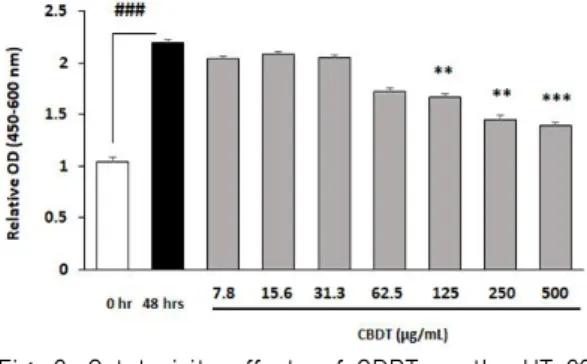
CDBT showed cytotoxicity in the normal condition of HT-22 cells at a dose of 125μg/mL and showed a protective
effect against hypoxia-induced neuronal cell death at a dose of 31.3 μg/mL. CDBT prevented hypoxia-induced neuronal cell
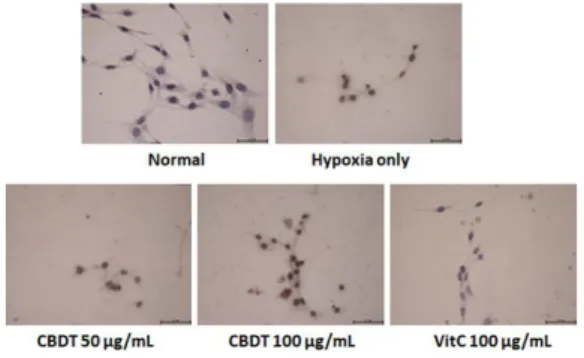
death in a dose-dependent manner in the HT-22 cells by regulating HIF1α and cell death signaling. CDBT prevented neuronal
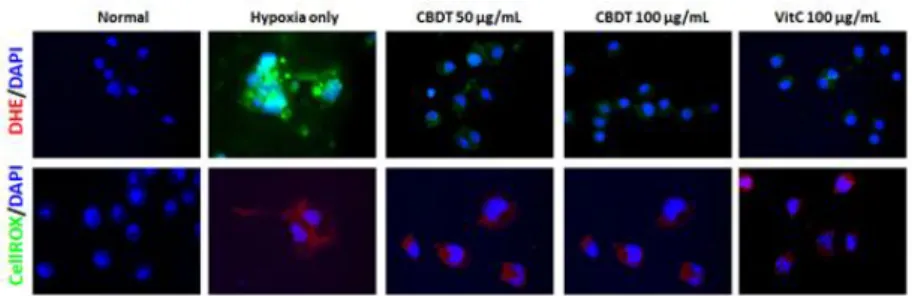
cell death signals and DNA fragmentation due to the hypoxia condition. CDBT significantly reduced cellular oxidation, cell
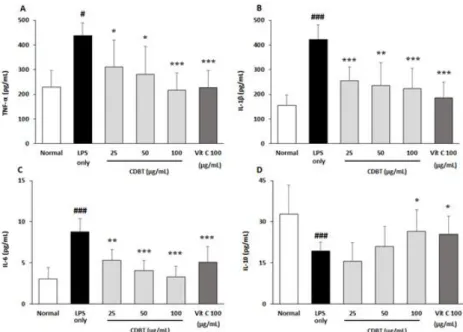
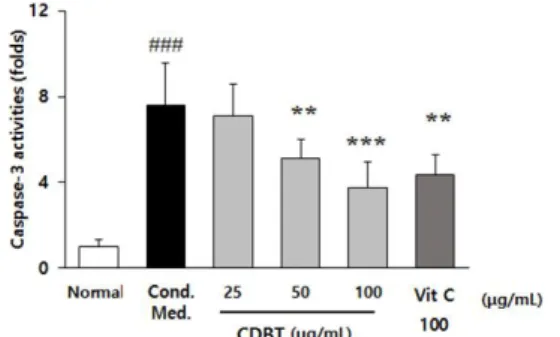
death signals, and caspase-3 activities due to microglial cell activations. Moreover, CDBT significantly ameliorated LPS-induced
BV-2 cell activation and evoked cellular oxidation through the recovery of redox homeostasis.
Conclusions:
CDBT cam be considered as a vital therapeutic agent against neuronal cell deaths. Further studies are required
to reveal the other functions of CDBT in vivo or in the clinical field.
Key words:
herbal medicine, hypoxia, cell death, neuronal oxidation, HT-22 cells
Ⅰ. Introduction
The neuronal cell damages cause variety spectrums
of brain tissue damage related diseases. As a result of abnormal neuron injuries, brain tissue has been considerably gotten chances to incidence of variety diseases; represented by acute type of stroke, and neurodegenerations including Alzheimer’ disease, Parkinson’ disease, or Huntington’ diseases as well.
Among the above them stroke is one of the most considerable disease in global public health. In addition, the rates of incidence of stroke also has
․투고일: 2019.05.31 심사일: 2019.07.05, 게재확정일: 2019.07.06
․Corresponding author: In-chan Seol Dept. of Internal Korean Medicine, Dunsan Korean Medicine Hospital of Daejeon University, 75, Daedeok-daero 176beon-gil, Seo-gu, Daejeon, Korea TEL: 82-42-470-9130