Early Risk Factors for Depressive Symptoms among Korean Adolescents: A 6-to-8 Year Follow-up Study
Depression during adolescence is critical to the individual’s own development. Hence, identifying individuals with high-risk depression at an early stage is necessary. This study aimed to identify childhood emotional and behavioral risk factors related to depressive symptoms in Korean adolescents through a longitudinal study. The first survey took place from 1998 to 2000, and a follow-up assessment conducted in 2006, as the original participants reached 13-15 yr of age. The first assessment used the Korean version of Child Behavior Checklist and a general questionnaire on family structure, parental education, and economic status to evaluate the participants. The follow-up assessment administered the Korean Children’s Depression Inventory. Multiple regression analysis revealed that childhood attention problems predicted depressive symptoms during adolescence for both boys and girls. For boys, family structure also predicted adolescent depressive symptoms.
This study suggests that adolescents with attention problems during childhood are more likely to experience depressive symptoms.
Key Words: Adolescent; Depression; Risk Factors; Longitudinal Studies Kyoung Min Shin,1 Sun-Mi Cho,1
Yun Mi Shin,1 and Kyung Soon Park2
1Department of Psychiatry & Behavioral Science, Ajou University School of Medicine, Suwon; 2Seoul Women’s University Graduate School of Professional Therapeutic Technology, Seoul, Korea
Received: 20 June 2013 Accepted: 17 September 2013 Address for Correspondence:
Sun-Mi Cho, MD
Department of Psychiatry & Behavioral Science, Ajou University School of Medicine, 164 Worldcup-ro, Yeongtong-gu, Suwon 443-721, Korea
Tel: +82.31-219-4035, Fax: +82.31-219-5179 E-mail: [email protected]
http://dx.doi.org/10.3346/jkms.2013.28.11.1667 • J Korean Med Sci 2013; 28: 1667-1671
INTRODUCTION
Depression, as one of the most common psychiatric problems in adolescence, has a lifetime prevalence rate of around 15%- 20% (1). The prevalence rate of depression jumps from less than 3% to 9%, aging from prepubertal childhood (aged 6-11 yr) to ages 12-16 yr (2, 3). According to various studies, by ages 15-18 yr, the rate sharply increases (4): an implication that adolescence is a vulnerable stage correlated to depression. Many studies have shown that adolescents with depression have co-occur- ring anxiety disorders, conduct disorders, and eating disorders (5-6). Several studies show that depression during adolescence is a risk factor of academic failures, marriage struggles, suicide attempts, interpersonal conflicts, unemployment, drug abuse, and delinquency; it is also a strong predictor of adulthood de- pression (1, 5, 7). Subdiagnostic depression during adolescence also has been linked to an onset of psychiatric disorders, drug abuse, academic problems, social skills, and suicide attempts (8). Adolescent depression and depressive symptoms can inter- fere with shaping individual’s developments.
Research on risk factors presents an effective standard for identifying individuals at high-risk of depression. It is further studied due to its potent prevention of depression through an early-stage intervention. Gender, stressful life events (9, 10), ne- gative affectivity (11), deficits in social support (9, 10), and ex- ternalizing behaviors (12) are risk factors usually presented in studies regarding adolescent depression. Gender, in particular,
is a crucial factor to consider as the prevalence of depression in adolescent girls is 1.5-3 times higher than that of adolescent boys (13).
Although researchers have conducted a number of studies of risk factors for adolescent depression, the findings are quite in- consistent and the prospective association between psycholog- ical problems in childhood and depression is still under debate.
Moreover, most studies of adolescent depression use Caucasian samples (14); therefore, data regarding risk factors of depres- sion among adolescents in Asia are notably scarce. However, several studies on the depression of Asian adolescents suggest- ed the existence of cultural differences on adolescent depres- sion. Some studies represented that Asians demonstrated more persistent symptoms of depression compared to European Amer- icans (15), whereas others found lower depression rates in Asian adolescents (16). Some researchers suggested that low rates of depression among Asian adolescents may be related to the so- matization tendency of emotional problems (17, 18). A recent cross-sectional study showed that Asian adolescents had higher prevalence of depressed symptoms, yet, similar risk factors as Caucasians; i.e., female gender, perceived low parental interest in feelings, failing grades, worry about failing grades, and ciga- rette smoking (19). As few have carried out longitudinal studies on the developmental associations between emotional, behav- ioral, and environmental problems in early childhood and ado- lescent delinquency in Asia, recognizing the risk factors associ- ated with depressive symptoms in Asian youth is necessary to
provide a culture-specific mental health service.
In this study, we used data from a longitudinal sample, fol- lowed from childhood (age 7) to adolescence (ages 13-15), in order to identify early childhood risk factors correlated with ad- olescent depressive symptoms. We investigated in detail wheth- er there were any significant gender differences among such adolescents.
MATERIALS AND METHODS Sample and procedures
This study was based on the data derived from a longitudinal study on child psychiatric disorders in Osan, a small city locat- ed 50 kilometers (about 30 miles) southeast of Seoul, and hav- ing similar socioeconomic profile to the national average. Dur- ing a periodic health examination, a survey was performed by the Child Mental Health Care Center. The data were collected in two separate instances (1998-2000 and 2006). The first as- sessment was conducted with teachers’ and parents’ approval from the years 1998 to 2000. All of the first grade children at eight primary schools were recruited for the study, resulting in a study group of 3,808 pupils. A follow-up assessment was per- formed in 2006 when the original subjects became middle school students. The center performed the follow-up assessment, com- prising of two stages. In the first stage, all 14- to 16-yr old ado- lescents who were living in Osan city were requested to com- plete the questionnaire with parental consent. The total num- ber of subjects was 5,670. After the adolescents completed the questionnaire, their personal information was compared to the data obtained in 1998-2000. Among the students, 1,821 had par- ticipated in the first assessment. The retention rate was 47.8%, and the mean age of the children at the first assessment was 6.85 yr (SD = 0.41); at the second assessment, the mean age was 13.75 yr (SD = 1.0). Omitted answers were excluded from anal- yses, and thus, a total of 1,659 data were used for the analyses of the study. The dropout analyses showed no significant differ- ences with gender.
Measures
At baseline, the children’s parents completed questionnaires, including the Korean version of the Child Behavior Checklist (K-CBCL) (20), regarding their own children and demographic information: age, gender, family structure, and economic sta- tus. The K-CBCL is a parent-report questionnaire consisting of 119 items with the total problem scale divided into eight syn- drome scales: withdrawn, somatic complaints, anxious/depress- ed, social problems, thought problems, attention problems, de- linquent behavior, and aggressive behavior. This instrument has been frequently used to evaluate social adjustment and emo- tional and behavioral problems of children. Each child was sent home with a K-CBCL to be completed by the parents and was
collected after 3 to 5 days.
At the 6- to 8-yr follow-up, researchers requested participants to complete the Korean version of Children’s Depression Inven- tory (K-CDI), which is a 27-item self-rated depression symptom oriented scale. This instrument was developed based on the Beck Depression Inventory (BDI) in order to identify adoles- cents with diagnoses of major depressive or dysthymic disorder (21).
Statistical analysis
First, we used the chi-square test to examine differences in the economic status by gender; while the non-parametric Fisher’s exact test was used to analyze the family structure and K-CDI score by gender. Second, we selected independent variables for multiple regression from the correlations of K-CDI score and K- CBCL’s syndrome scale (less than P values < 0.2 chosen as the independent variables) (22). Lastly, we measured the child- hood risk factor, an effective predictor of adolescent depressive symptoms, through multiple regression analysis. All statistical tests were two-sided. Statistical analysis PASW statistics soft- ware version 18.0 (SPSS Inc., Chicago, IL, USA) was used for data entry and statistical analyses.
Ethics statement
The study protocol was approved by the institutional review board of Ajou University Medical Center (IRB No. 11-381). Writ- ten informed consent was obtained from all participants and their parents.
RESULTS
Of the 1,659 participants, 782 were boys (47.1%), and 877 were girls (52.9%). Comparisons revealed that family economic status (χ2= 2.535, df = 2, P = 0.282), family structure (P = 1.000), and frequency, which scored K-CDI above the cut-off (P = 0.226), showed no statistically significant differences between genders (Table 1).
Following the correlation analysis, the variables among the K-CBCL syndrome scale, which showed correlation with K-CDI
Table 1. Sociodemographic characteristics of subjects
Category Male
No. (%) Female
No. (%) χ² P
Economic status Low Middle High
296 (37.9) 438 (56.0) 48 (6.1)
304 (34.7) 525 (59.9) 48 (5.5)
2.535 0.282
Family structure Living with both parents
Else 756 (96.7)
26 (3.3) 848 (96.7) 29 (3.3)
Fisher’s exact test
1.000
CDI group
< 22 scores
≥ 22 scores 709 (90.7)
73 (9.3) 779 (88.8) 98 (11.2)
Fisher’s exact test
0.226
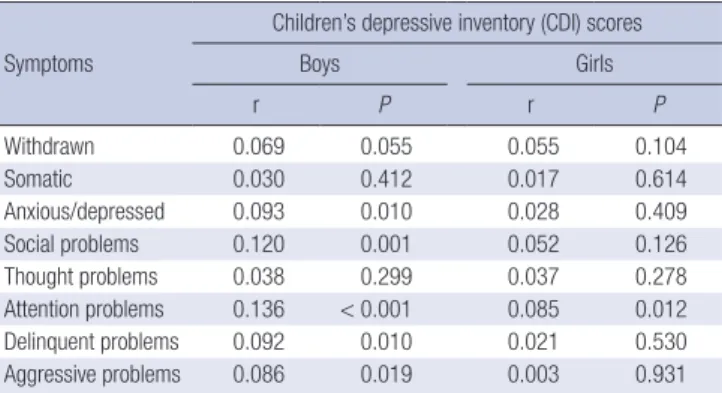
Table 2. Correlation between depressive symptoms and K-CBCL syndrome scales Symptoms
Children’s depressive inventory (CDI) scores
Boys Girls
r P r P
Withdrawn 0.069 0.055 0.055 0.104
Somatic 0.030 0.412 0.017 0.614
Anxious/depressed 0.093 0.010 0.028 0.409
Social problems 0.120 0.001 0.052 0.126
Thought problems 0.038 0.299 0.037 0.278
Attention problems 0.136 < 0.001 0.085 0.012
Delinquent problems 0.092 0.010 0.021 0.530
Aggressive problems 0.086 0.019 0.003 0.931
Table 3. Variables identified by multiple regression analysis as predicting depressive symptoms of Korean youth
Gender Predictors β F R2 Adjusted R2
Boys Family structure Economic status Withdrawn Anxious/Depressed Social problems Attention problems Delinquent problems Aggressive problems
0.080*
0.014 -0.071 0.000 0.038 0.130† 0.008 -0.057
9.244† 0.025 0.022
Girls Family structure Economic status Withdrawn Social problems Attention problems
0.010 0.057 -0.032 -0.040 0.084*
6.086* 0.007 0.006
*P < 0.05; †P < 0.01.
at the P < 0.2 level, were chosen as the independent variables of the multiple regression (Table 2). Withdrawn (r = 0.069, P = 0.055), anxious/depressed (r = 0.093, P = 0.010), social prob- lems (r = 0.120, P = 0.001), attention problems (r = 0.136, P <
0.001), delinquent problems (r = 0.092, P = 0.010), and aggres- sive problems syndrome scale (r = 0.086, P = 0.019) were in- cluded as the independent variables for boys, whereas with- drawn (r = 0.055, P = 0.104), social problems (r = 0.052, P = 0.126), and attention problems syndrome scale (r = 0.085, P = 0.012) were chosen for girls. Additionally, family structure and family economic status were selected as the predicting factors of the multiple regression analysis.
We investigated childhood factors associated with adolescent depressive symptoms. Analysis showed that attention problems (β = 0.130, P < 0.001) and family structure (β = 0.080, P = 0.030) at age 7 yr predicted depressive symptoms of boys 6-8 yr later.
The regression model, factoring in attention problems and fam- ily structure, showed a 2.5% explanatory power regarding the K- CDI scores in boys (R2= 0.025, P < 0.001). For girls, only atten- tion problems (β = 0.084, P = 0.014) at age 7 yr predicted the depressive symptoms of girls with a 0.7% explanatory power (Table 3).
DISCUSSION
This study attempted to examine childhood emotional and be- havior factor related to adolescents’ depressive symptoms by gender via a longitudinal study. The summary is as follows. First, applying the CDI cut off score of 22, 10.3% of all subjects scored above the cut off, displaying possibilities of depression. This re- sult complies with the previous studies’ outcome of 9% in ado- lescents between the ages of 12-16 (2, 3). On the other hand, there was no difference in K-CDI scores by gender. In adults, one of the most common and reliable findings in psychiatric epidemiology is that depression is twice more likely and severe in females than in males. These findings did not apply until mid-adolescence; moreover, the period when gender differ- ence begins to emerge was not definite (23). Several studies
have investigated about the gender gap of adolescent depres- sion. Angold and Rutter (24) represented that depression rate was similar between genders under age 11 yr; however, between ages 14 to 16, girls were twice as likely to have symptoms of de- pression as boys. Likewise, a study in New Zealand found that the small gender gap in the rates of depressive disorders be- came evident between the ages of 13 to 15, and the greatest dif- ferences emerged between ages 15 and 18 (4). Previous studies in Korea also showed that the gender difference of depression began to emerge in middle school ages with continuity into high school ages (25, 26). On the other hand, some studies in Korea represented that gender differences in depression started to appear in grades 7 and 8; however, gender gaps were not sta- tistically significant in high school students (27, 28). The partici- pants’ ages of this study ranged from ages 12 to 15 with an aver- age age of 13.75: this age group is within the spectrum of emer- gence in gender difference in previous studies. Our study also did not reveal any gender difference in the K-CDI score, indi- cating that the gender difference of depressive symptoms in Korean adolescents may be dissimilar to that of other regions and cultures.
Second, attention problem at age 7 predicted the depressive symptoms 6-8 yr later regardless of gender. A total of 16%-37%
of adults with attention deficit/hyperactivity disorders (ADHD), who are referred to a clinical setting, experience major depres- sive disorder or dysthymia (29). Many studies, investigating the association between depression and ADHD history, have been undertaken, yet, there are inconsistent findings. Several longi- tudinal studies showed that childhood ADHD had no observ- able influence on the onset of major depressive disorder in ad- olescence or early-adulthood (30, 31). Nonetheless, few studies stated differently. Hinshaw et al. (32) reported that girls with ADHD more often displayed depressive symptoms. A 13-yr lon- gitudinal study showed that children with ADHD were more likely to meet the criteria for major depressive disorder during adolescence or early adulthood (33). Similarly, a recent study
showed that more children with ADHD reported suicidal ide- ation and attempts during high school than controls (34). As di- agnostic criteria for depressive episode include ‘diminished ability to think or concentrate’, attention problem could be re- garded as one of depressive symptoms. However, we controlled anxious/depressed symptoms using K-CBCL, a tool assess com- prehensively child’s psychological problems. In this study, among various emotional and behavioral problems during childhood, only the attention problems significantly predicted depressive symptoms in adolescence. Children who have trouble paying attention and controlling impulsive behaviors are often hyper- active. This can cause poor performance in school, negative feedback from teacher or parents, difficulties in peer relation- ship, and low self-esteem. This result suggests that children with attention problems need close attention to their experience and its consequences to prevent possible long-term problems.
Third, depressive symptoms in male adolescents were affect- ed not only by attention problems, but also by the family struc- ture during childhood. Notably, juvenile depressive symptoms risk factors in girls contained only the individual factors. Socio- demographic factors, including family structure and economic status, did not significantly predict depression in girls. On the other hand, boys were more sensitive to environmental factors than girls were. The fact that boys who did not live with both parents were likely to show depressive symptoms 6-8 yr later, implying that boys respond more to the environmental support than girls do. This result is not consistent with that of previous reports in which the environment has a higher influence on girls than on boys (35). However, considering a study regarding social phobia in girls, such phobia was affected by struggles with parents during the developmental phase while for boys, the absence of a close relationship with a parent or other adult figure during childhood was correlated with social phobia (36).
Family structure shaping psychiatric disorder development de- pends on both quantitative and qualitative characteristics as well as gender. Another possible explanation is that for boys, emotional distress was manifested as an attention problem. As depressed children display irritability and inattention rather than sadness, accurately identifying childhood attention prob- lems and emotional problems is difficult (37). Therefore, de- pression of children may be misdiagnosed as ADHD, which corresponds with the study that depressed children are more likely to be diagnosed with ADHD than non-depressed chil- dren (38). Moreover, considering that boys with ADHD have higher comorbidity with depression than do girls (39), emo- tional distress arising from an unstable family structure might be expressed as an attention problem.
Although attention problem and family structure during child- hood were predicted as the depressive symptoms in adolescence, their explanatory powers are quite low (girls, 0.7%; boys, 2.5%).
The implication of this result is that other traditional factors,
such as stressful life events, deficits in social support, and attri- bution style, must be considered along with childhood emotion- al and behavioral factors in order to predict depressive symp- toms during adolescence (9, 10).
The present study has several limitations. First, only 47.8% of the original subjects participated in the follow-up assessment.
Second, the intervals between the first assessment and the fol- low-up assessments were not consistent: 6 to 8 yr. Third, the findings regarding depressive symptoms, socio-demographic factors, and childhood behavioral and emotional problems re- lied on self-reported information. In addition, the information source differed between assessments: parents completed the first survey, while participants completed the follow-up survey themselves. Thus, person-to-person interviews with structured formats should be featured in a future study in order to insure objective and consistent data.
Despite these limitations, the strength of this study is that it is a community-based longitudinal study with a large sample size for investigating the risk factors of depressive symptoms of ado- lescents in Korea. In addition, the comprehensive measure, in- cluding various emotional and behavioral factors in childhood, was used to identify factors that were related to depressive symp- toms of adolescents. In conclusion, this study suggests that at- tention problem is the most important risk factor among vari- ous emotional and behavioral problems during childhood, pre- dicting depressive symptoms among adolescents regardless of gender.
DISCLOSURE
The authors have no conflicts of interest to disclose.
REFERENCES
1. Birmaher B, Ryan ND, Williamson DE, Brent DA, Kaufman J, Dahl RE, Perel J, Nelson B. Childhood and adolescent depression: a review of the past 10 years: part I. J Am Acad Child Adolesc Psychiatry 1996; 35: 1427- 39.
2. Fleming JE, Offord DR. Epidemiology of childhood depressive disorders:
a critical review. J Am Acad Child Adolesc Psychiatry 1990; 29: 571-80.
3. Kaltiala-Heino R, Rimpelä M, Rantanen P, Laippala P. Adolescent de- pression: the role of discontinuities in life course and social support. J Af- fect Disord 2001; 64: 155-66.
4. Hankin BL, Abramson LY, Moffitt TE, Silva PA, McGee R, Angell KE.
Development of depression from preadolescence to young adulthood:
emerging gender differences in a 10-year longitudinal study. J Abnorm Psychol 1998; 107: 128-40.
5. Fergusson DM, Woodward LJ. Mental health, educational, and social role outcomes of adolescents with depression. Arch Gen Psychiatry 2002;
59: 225-31.
6. Lewinsohn PM, Rohde P, Klein DN, Seeley JR. Natural course of adoles- cent major depressive disorder: I. continuity into young adulthood. J Am
Acad Child Adolesc Psychiatry 1999; 38: 56-63.
7. Ge X, Conger RD, Elder GH Jr. Pubertal transition, stressful life events, and the emergence of gender differences in adolescent depressive symp- toms. Dev Psychol 2001; 37: 404-17.
8. Capaldi DM, Stoolmiller M. Co-occurrence of conduct problems and de- pressive symptoms in early adolescent boys: III. prediction to young-adult adjustment. Dev Psychopathol 1999; 11: 59-84.
9. Lewinsohn PM, Hops H, Roberts RE, Seeley JR, Andrews JA. Adolescent psychopathology: I. prevalence and incidence of depression and other DSM-III-R disorders in high school students. J Abnorm Psychol 1993; 102:
133-44.
10. Windle M. A longitudinal study of stress buffering for adolescent prob- lem behaviors. Dev Psychol 1992; 28: 522-30.
11. Gjone H, Stevenson J. A longitudinal twin study of temperament and behavior problems: common genetic or environmental influences? J Am Acad Child Adolesc Psychiatry 1997; 36: 1448-56.
12. Fergusson DM, Wanner B, Vitaro F, Horwood LJ, Swain-Campbell N.
Deviant peer affiliations and depression: confounding or causation? J Abnorm Child Psychol 2003; 31: 605-18.
13. Ge X, Lorenz FO, Conger RD, Elder GH, Simons RL. Trajectories of stress- ful life events and depressive symptoms during adolescence. Dev Psychol 1994; 30: 467-83.
14. Stewart SM. Methods in cross-cultural psychopathology. In: McKay D, editor. Handbook of research methods in abnormal and clinical psychol- ogy. New York: SAGE, 2008, p447-67.
15. Brown JS, Meadows SO, Elder GH Jr. Race-ethnic inequality and psy- chological distress: depressive symptoms from adolescence to young adult- hood. Dev Psychol 2007; 43: 1295-311.
16. Saluja G, Iachan R, Scheidt PC, Overpeck MD, Sun W, Giedd JN. Preva- lence of and risk factors for depressive symptoms among young adoles- cents. Arch Pediatr Adolesc Med 2004; 158: 760-5.
17. Anderson ER, Mayes LC. Race/ethnicity and internalizing disorders in youth: a review. Clin Psychol Rev 2010; 30: 338-48.
18. Karasz A. Cultural differences in conceptual models of depression. Soc Sci Med 2005; 60: 1625-35.
19. Song SJ, Ziegler R, Arsenault L, Fried LE, Hacker K. Asian student de- pression in American high schools: differences in risk factors. J Sch Nurs 2011; 27: 455-62.
20. Oh K, Lee H, Hong K, Ha E. Korean version of the Child behavior Check- list (K-CBCL). Seoul: Chung Ang Aptitude Publishing Co., 1997.
21. Kovacs M. The Children’s Depression Inventory (CDI). New York: Multi- Health Systems, 1992.
22. Katz MH. Multivariable analysis: a practical guide for clinicians. Cam- bridge: Cambridge University Press, 1999.
23. Nolen-Hoeksema S, Girgus JS. The emergence of gender differences in depression during adolescence. Psychol Bull 1994; 115: 424-43.
24. Angold A, Rutter M. Effects of age and pubertal status on depression in a large clinical sample. Dev Psychopathol 1992; 4: 5-28.
25. Choi IJ. The effects of parent-adolescent communication on adolescent’s self-differentiation, depression and anxiety. Korean J Clin Psychol 2007;
26: 611-28.
26. Ha EH, Oh KJ, Song DH. Psychosocial risk factors for comorbid adoles- cents with depression and anxiety. Korean J Psychol Gen 2003; 22: 127- 44.
27. Kim MY, Kang YJ. Depression and related factors for adolescents. J Kore- an Soc Sch Health 2000; 13: 261-70.
28. Shin M, Chung KM, Kim ES. Gender differences in depression and anxi- ety among Korean adolescents: onset and developmental change. Kore- an J Clin Psychol 2012; 31: 93-114.
29. Murphy KR, Barkley RA, Bush T. Young adults with attention deficit hy- peractivity disorder: subtype differences in comorbidity, educational, and clinical history. J Nerv Ment Dis 2002; 190: 147-57.
30. Bagwell CL, Molina BSG, Kashdan TB, Pelham WE, Hoza B. Anxiety and mood disorders in adolescents with childhood attention-deficit hy- peractivity disorder. J Emot Behav Disord 2006; 14: 178-87.
31. Claude D, Firestone P. The development of ADHD boys: a 12-year fol- low-up. Can J Behav Sci 1995; 27: 226-49.
32. Hinshaw SP, Owens EB, Sami N, Fargeon S. Prospective follow-up of girls with attention-deficit/hyperactivity disorder into adolescence: evi- dence for continuing cross-domain impairment. J Consult Clin Psychol 2006; 74: 489-99.
33. Fischer M, Barkley RA, Smallish L, Fletcher K. Young adult follow-up of hyperactive children: self-reported psychiatric disorders, comorbidity, and the role of childhood conduct problems and teen CD. J Abnorm Child Psychol 2002; 30: 463-75.
34. Chronis-Tuscano A, Molina BS, Pelham WE, Applegate B, Dahlke A, Overmyer M, Lahey BB. Very early predictors of adolescent depression and suicide attempts in children with attention-deficit/hyperactivity dis- order. Arch Gen Psychiatry 2010; 67: 1044-51.
35. Cyranowski JM, Frank E, Young E, Shear MK. Adolescent onset of the gender difference in lifetime rates of major depression: a theoretical mod- el. Arch Gen Psychiatry 2000; 57: 21-7.
36. DeWit DJ, Chandler-Coutts M, Offord DR, King G, McDougall J, Specht J, Stewart S. Gender differences in the effects of family adversity on the risk of onset of DSM-III-R social phobia. J Anxiety Disord 2005; 19: 479-502.
37. De Mesquita PB, Gilliam WS. Differential diagnosis of childhood de- pression: using comorbidity and symptom overlap to generate multiple hypotheses. Child Psychiatry Hum Dev 1994; 24: 157-72.
38. McClellan JM, Rupert MP, Reichler RJ, Sylvester CE. Attention deficit disorder in children at risk for anxiety and depression. J Am Acad Child Adolesc Psychiatry 1990; 29: 534-9.
39. Biederman J, Mick E, Faraone SV, Braaten E, Doyle A, Spencer T, Wilens TE, Frazier E, Johnson MA. Influence of gender on attention deficit hy- peractivity disorder in children referred to a psychiatric clinic. Am J Psy- chiatry 2002; 159: 36-42.