Investigation on Al-Si Coating Layer of Hot Stamped High-Strength Steel Plate
Dong-Gyu Kim
1, Jong-Hoi Woo
2, Young-Min Son
3, Ki-Woo Nam
2*<Abstract>
In this study, Al–Si coating layer of hot stamped high-strength steel plate investigated. The coating layer in hot stamped high-strength steel plate was composed of a diffusion layer and a compound layer. As the hot stamping temperature and holding time for forming increased, the thickness of the coating layer in the Al–Si coated high-strength steel plate increased. The thickness of coating layer after hot stamping with holding time of 500 sec at 890, 910 and 950℃ was obtained 8.9, 11.8, and 20.6 µm, respectively. The thickness of coating layer after hot stamping with holding time of 180, 500 and 850 sec at 910℃ was obtained 5.7, 11.8, and 17.8 µm, respectively. The compound layer consists of Al
5.4Fe
2and Fe
2Si phases.
Keywords : Hot stamping, Coating layer, High-strength steel, Heating temperature, Holding time
1 Dept. of Mechanical & Shipbuilding Convergence Engineering, Pukyong National U niversity E-mail: [email protected]
2* Deptment of Materials Science and Engineering, Pukyong National U niversity E-mail: [email protected]
3 Dept. of Metallugical Engineering, Pukyong National U niversity E-mail: [email protected]
1. Introduction
Recently, transportation equipment related industries are trying to solve problems such as the regulation of fossil fuel use as an environmental problem, and resource saving due to fuel exhaustion.[1,2] The most efficient method to solve this problem is to improve fuel efficiency by lowering the weight of transportation equipment.
To date, strategies to improve fuel efficiency in the transportation equipment industry are to improve the durability of components, reduce rolling resistance, and lower the weight.
[3-5] But the improvement by the reduction of rolling resistance have reached their limit.
[6] Therefore, the lightweight is the best goal.
Currently, the makers are trying to reduce the weight. That is, they are replaced by materials with higher strength and toughness than conventional materials, or ferrous alloys with high specific gravity are replaced by non-ferrous alloys with high specific strength.
There are many studies being conducted for this purpose, including those devoted to hot stamped steels. Hot stamping is a technology that manufactures by hot press forming and simultaneously quenching. Hot stamping is to manufacture a high-strength product of about 1300∼1600 MPa by heat treatment of a steel plate having a strength of 500∼800 MPa before forming.[7,8] Auto parts manufacturers are making the various product using hot stamping. That is, bumper beam, center pillar, roof bow, cross and side members.
Therefore, research on hot stamping steel is important. Gui et al[9] obtained that the Al-Si coating gave an unignorable influence on the thermo-mechanical properties of the boron steels. If the desired conversion is to a high-strength material or a material having a high specific strength, material development having such properties is also important.
However, various optimal process technologies must be developed according to manufacturing the components of transportation equipment using the developed materials. In addition, to improve the product reliability and achieve the reduction of cost, development of technology is urgently required.
Lee et al[10] investigated the surface alloying of 55 wt.%Al–Zn coated press hardening steel during a press hardening heat treatment. The increasing of heating rate during the austenitization cycle showed in a high-volume fraction of Zn at FeAl grain boundaries, and the presence of Zn islands in Fe
2Al
5grains.
Alléy et al[11] compared the corrosion resistance of aluminized press hardened steel Usibor® AlSi and untreated 22MnB5 steel.
Dosdat et al[12] investigated the corrosion
resistance using aluminized, galvanized or
galvannealed boron steels. Therefore, the hot
stamping method overcomes this problem,
and prevents cracks occurring during the
forming of coated high-strength steel plate,
thereby ensuring high-strength and formability
at the same time. Lee et al[13] investigated
the thermo-mechanical behavior of hot press
formed plate by finite element analysis, which
considers transformation induced plasticity during phase transformations. Hayashi et al[14] examined the decarburization behavior in the hot stam ping using a Fe – 0.21 wt.%C – 1.3 wt.%Mn – 0.2 wt.%Si steel. Hamamoto et al[15] developed the steel plate in order to overcome low press productivity and limitation in the shapes of parts by hot stamping. However, there are few studies[16]
on the thickness of the coating layer depending on the temperature and time of hot stamping. Ji et al.[16] were carried out wear test two kinds of Al-Si coated 22MnB5 with∼19.6 (AlSi-A) and∼29.3 (AlSi-B) µm coating thicknesses. Al-Si coated 22MnB3 had heat treatment at 900℃ for 6 minutes. After the friction test the coated layer of AlSi-A was found to be worn up to the diffusion layer, while for AlSi-B, the coating layer mostly remained after the friction test.
Therefore, it is necessary to examine the influence of temperature and time on the thickness of the coating layer.
In this study, it was examined the influence of various temperature and holding time on the thickness of the coating layer. After the SABC1470 steel plate with Al-Si coating were
manufactured by the hot stamping, the thickness and microstructural change of the coating layer (compound layer and diffusion layer) were investigated.
2. Samples and Experimental Methods
2.1 Samples and hot stamping
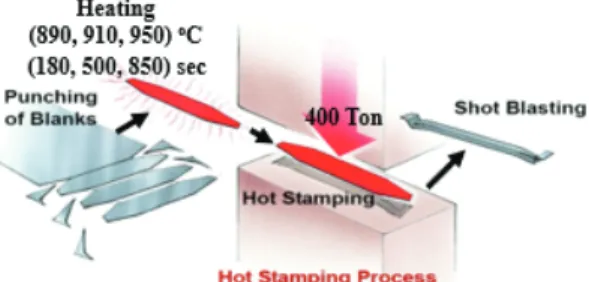
In this study, the hot stamped SABC1470 steel plate with Al-Si coating was studied, because this steel is commonly used for automotive parts. The SABC1470 steel plate is applied to bumper beam and center pillar in Sungwoo Hitech Co. Ltd., Korea. Al-Si coating was used to prevent oxidation during heating for hot stamping. Table 1 shows chemical compositions (wt.%) and mechanical properties of the SABC1470 steel used in the hot stamping test. The hot stamping was performed at heating temperatures of 890, 910, and 950℃ with the coated steel plate, and the holding time at each temperature was 180, 500, and 850 sec. This temperature range is to find the best conditions for hot
C Si Mn P S Cr Al B Fe
0.21 0.26 1.27 0.17 0.02 0.20 0.30 0.0028 Bal.
Yiel d Tensil e El ongation strength strength
(MPa) (MPa) (%) 509 672 18 Table 1. Chemical compositions (wt.%) and mechanical
properties of the SABC1470 steel used in the hot stamping test
Fig. 1 Schematic of hot stamping process
stamping of the SAB1470. Figure 1 shows schematic of hot stamping process.
2.2 Microstructure observation
The microstructure changes of the base metal and the coating layer according to the heating temperature and the holding time for hot stamping were observed by optical microscopy (Olympus; AX70-32HO2, Japan) and scanning electron microscopy (SEM, Tescan (Vega II LSU), Czech).
2.3 Thickness measurement of coating layer
The thickness change of the coating layer according to the changes of heating temperature and holding time was measured by line profile analysis of Electron Probe Micro Analyzer (EPMA, S-2400, JEOL, Japan). The thickness was measured 5 times, and averaged. In addition, the concentration of Al, Si, C, and Fe was measured by EPMA line analysis.
2.4 Microstructure observation of the coating layer
The phases in the coating layer of the hot stamped samples were observed using X-ray diffraction and transmission electron microscopy (TEM). X-ray diffraction (Rigaku, D/Max-IIA, Japan) was analyzed at 0.04° intervals in the
Bragg angle range 2θ = (20–100)°using Mo–
Kα characteristic X-ray. The compound analysis was conducted using the peak corresponding to each phase from the diffraction curve.
TEM (Hitachi, H-7500, Japan) observation was carried out by polishing the hot stamped samples, and making a thin film by jet polishing.
3. Experimental results and Discussion
3.1 Microstructure observation
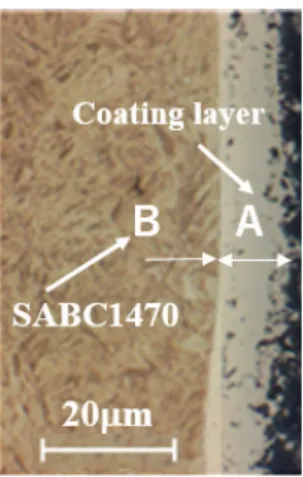
Figure 2 shows the m icrostructure of SABC1470 steel plate with coating layer before hot stamping observed by optical microscopy, in which A is the coating layer, and B is a SABC1470 steel plate. The thickness of coating layer before hot stamping was average 8.1 mm.
Fig. 2. Optical micrograph of the SABC1470 steel
plate with coating layer before hot
stamping.
3.2 Effect of hot stamping on the microstructure of the coating layer
Figure 3 shows the m icrostructure of the samples subjected to hot stamping after heating the coated SABC1470 steel plate at 910℃ for 500 sec. The microstructure is composed of (a) a compound layer, (b) a diffusion layer, and (c) a SABC1470 steel plate having martensite structure. The thickness of coating layer is 11.8 µm. From this result, it can be seen that when the coated steel plate is hot stamped, the coating layer is composed of a compound layer and a diffusion layer.
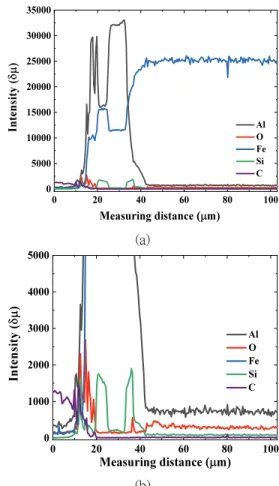
Figure 4 shows the distribution of m ain elements in the compound layer and the diffusion layer by EPMA after the coated SABC1470 steel plate had been hot stamped.
The samples were hot stamped after heating at 890℃ for 500 sec. Line profile was performed from the surface to the inner side.
In the compound layer of a), Al and Si are irregularly distributed, and a very thin diffusion layer was formed, while (b) shows the enlarged vertical axis of (a). This was expanded to understand in detail the distribution of major elements in the compound layer and the diffusion layer. The diffusion layer shows that Si, which was present in the coating layer before hot stamping, hardly diffuses, and the diffusion layer is mainly made by the diffusion of Al.
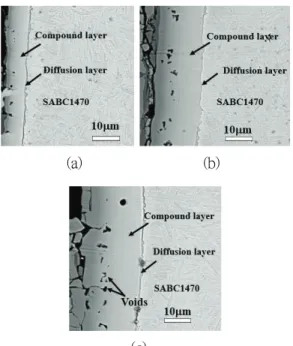
Figure 5 shows the coating layer thickness Fig. 3 SEM micrographs of the hot stamped steel
plate at 890℃ for 500 sec
0 20 40 60 80 100
0 5000 10000 15000 20000 25000 30000 35000
Intensity (dm)
Measuring distance (mm) Al O Fe SiC
(a)
0 20 40 60 80 100
0 1000 2000 3000 4000 5000
Intensity (dm)
OAl Fe Si
C
Measuring distance (mm)
(b)
Fig. 4 (a) EPMA line profile of the hot stamped
sample, (b) enlarged vertical axis of (a)
according to the hot stamping temperature.
The coated SABC1470 steel plate was heated for 500 sec at different temperatures.
Research results can confirm the formation of the compound layer and the diffusion layer, regardless of the hot stamping temperature.
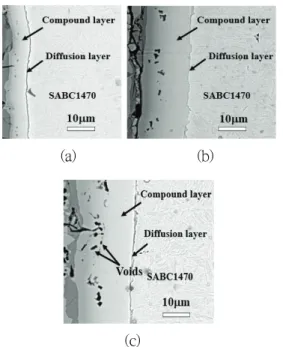
In addition, it can be seen that as the temperature increases, the thicknesses of the compound layer and the diffusion layer increase. The reason is that as the temperature increases, Al, which was present in the coating layer before hot stamping, diffuses more rapidly into the base metal.
The thickness of coating layer after hot stamping with holding time of 500 sec at 890, 910 and 950℃ was obtained 8.9, 11.8, and 20.6 µm, respectively. The cooling rate
was 25℃/sec. Samples hot stamped at 890℃
had a martensite microstructure with a small amount of pearlite and ferrite. On the other hand, both samples hot stamped at 910 and 950℃ had a martensite microstructure. In addition, it is evident that the size of the martensitic lath is slightly larger in the case of 950℃ than 910℃. The temperature of 89 0℃ is higher than the A3 (766℃) transformation point of SABC1470 steel plate, so during heating, it has a single-phase austenite. In order to know the austenite phase transformation after hot stamping, the A3 temperature was determined by differential thermal analysis. The austenite transforms into martensite when heat-treated and quenched at A3 temperature or higher. However, the transfer to form after heating and the form temperature decreasing during hot stamping made small amounts of pearlite and ferrite.
Therefore, during forming and cooling, only the austenite is transformed into martensite, and thus pearlite and ferrite are remain at the martensite. On the other hand, 910 and 950℃ had a single-phase austenite microstructure when forming, even if the temperature decreases during the transfer process for hot stamping after heating.
Austenite was transformed into martensitic during both hot stam ping and cooling. In addition, it well known that the martensitic lath size increases slightly, since as the temperature increases, the supercooling increases.
Figure 6 shows the observation of the coating layer with different heating time at a (a) (b)
(c)
Fig. 5 Coating layer according to different hot
stamping temperature at heating time of
500 sec at (a) 890, (b) 910, and (c) 950℃
hot stamping temperature of 910℃. In all samples, the presence of the compound layer and the diffusion layer was confirmed regardless of the hot stam ping tim e. As the heating time increases, the thickness of the coating layer increased. This is because the longer the heating tim e, the m ore Al and Si in the coating layer before hot stamping diffuse into the base metal. The thickness of coating layer after hot stamping with holding time of 180, 500 and 850 sec at 910℃ was obtained 5.7, 11.8, and 17.8 µm, respectively.
The cooling rate was 25℃/sec. Regardless of the heating time, all three samples have martensitic microstructure, and as time increases, the martensitic lath size slightly increases. It was found that the hot stamped
samples consist of a compound layer, a diffusion layer, and a base metal; and as the heating temperature and heating time increase, the thicknesses of the compound layer and the diffusion layer increase. The middle areas of compound layer exhibited some voids due to Kirkendall effect. This showed good agreement that of obtained at the results of Yakubtsov et al. [17]
3.3 Components of coating layer
In the SABC1470 steel plate with 40%Al – 10%Si - Fe coating, a compound layer and a diffusion layer were formed in the coating layer by reaction and diffusion of Al and Si in the coating layer during the heating process for hot stamping. Therefore, the components of the coating layer composed of the compound layer and the diffusion layer were investigated.
Figure 7 shows an analysis of the elements of samples hot stamped after heating at 910 Fig. 7 Bright-field image (left), and elemental
mapping (right) of the coating layer in hot stamped steel plate
(a) (b)
(c)
Fig. 6 Coating layer according to different heating time at hot stamping temperature of 910
℃ at (a) 180, (b) 500, and (c) 850 sec
℃ for 500 sec. A bright-field image (BF) using TEM shows the coating layer (compound layer and diffusion layer), and the distribution of main elements was mapped by EDS (Energy Dispersive X-Ray Spectroscopy).
In addition, Fe, Al, Si, and C can be identified in the compound layer and diffusion layer of the bright-field image.
Figure 8 shows the TEM imagery to analyze the phase of the coating layer (compound layer and diffusion layer) of the hot stamped steel plate, in which a) shows the coating layer (plating layer) in a bright-field image, while b) shows the Selected area electron diffraction patterns (SADP) of the compound (point 1 of (a)) present in the bright-field im age and its analysis. From this observation, the presence of Al
5.4Fe
2compound was confirmed.
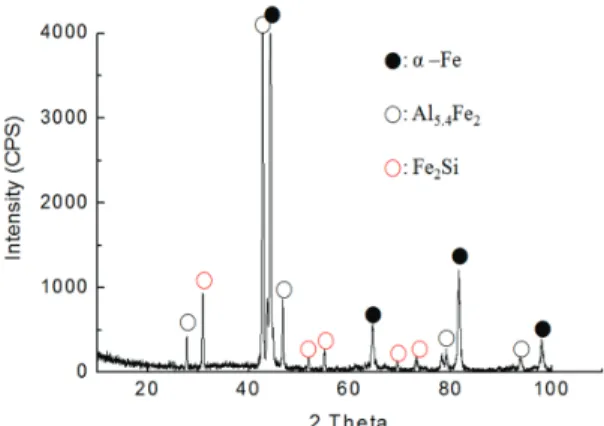
Figure 9 shows the diffraction curve and analysis obtained by X-ray diffraction of the coating layer of samples hot stamped after heating at 910℃ for 500 sec. In the coating layer, a compound having the structure of Al
5.4Fe
2and Fe
2Si (the composition of the plating solution) were present. Therefore, Al,
which was present in the coating layer before hot stamping, was obtained as a compound of Al
5.4Fe
2structure, and Si was obtained as a compound of Fe
2Si structure.
In general, when a steel plate coated with a plating solution containing Al and Si is heat-treated at a high temperature of 850℃
or higher, compounds such as FeAl, Fe
3Al, and Fe
2Al
5are obtained. However, the hot stamping in this study obtained compounds of Al
5.4Fe
2structure and Fe
2Si structure.
The above results show that when the SABC1470 steel plate with 40%Al - 10%Si - Fe coating is hot stamped, the compound layer had Al
5.4Fe
2and Fe
2Si compound.
4. Conclusions
In this study, the SABC1470 steel plate with 40%Al - 10%Si - Fe coating was hot stamped using various temperature and holding time, and the coating layer was investigated.
(a) (b)
Fig. 8 TEM micrographs of coating layer in hot stamped steel plate. (a) Bright-field image, and (b) SADP and indexing of SADP
Fig. 9 X-Ray diffraction patterns of coating layer
after hot stamping
The conclusions obtained are as follows:
(1) As the heating tem perature and the heating time increased, the thickness of the coating layer increased. However, the compound layer, which is the coating layer before forming, did not change.
(2) The thickness of coating layer after hot stamping with holding time of 500 sec at 890, 910 and 950℃ was obtained 8.9, 11.8, and 20.6 µm, respectively.
(3) The thickness of coating layer after hot stamping with holding time of 180, 500 and 850 sec at 910℃ was obtained 9.7, 11.8, and 17.8 µm, respectively.
(4) The diffusion layer was obtained by diffusion of Al in the coating layer. The com pound layer had Al
5.4Fe
2and Fe
2Si compound.
Acknowledgments
This work was supported by the Research Grant of Pukyong National University (2019).
References
[1] F. S. Perera, “Pollution from Fossil-Fuel Combustion is the Leading Environmental Threat to Global Pediatric Health and Equity:
Solutions Exist”, Int. J. Environmental Research and Public Health, vol. 15, No. 1, 16. (2018).
[2] S. Brauser, L. A. Pepke, G. Weber, M.
Rethmeier, “Deformation behaviour of spot-welded high strength steels for automotive applications”, Mater. Sci. Eng. A, vol. 527, pp. 7099-7108
(2010).
[3] G. M. Wood, “Lightweight Materials for Transportation”, Materials Technology, vol. 8, pp. 221-223 (1993).
[4] Y. G. Choi, S.H. Lee, I. S. Lee, “Effects of fiber survival rate on Mechanical properties in Light weight short fiber reinforced composites for Automobile Application”, Journal of The Korean Society of Industry Convergence. vol.
4, pp. 267-273 (2001).
[5] C. Fremgen, L. Mkrtchyan, U. Huber, M.
Maier, “Modeling and testing of energy absorbing lightweight materials and structures for automotive applications”, Science and Technology of Advanced Materials, pp.
883-888 (2005).
[6] Z. Gao, T. LaClair, S. Ou, S. Huff, G. Wu, P. Hao, K. Boriboonsomsin, M. Barth,
“Evaluation of electric vehicle component performance over eco-driving cycles”, Energy, vol. 172, pp. 823-839 (2019).
[7] M. Y. Lee, B. H. Jung, C. Y. Kang, T. I.
Kim, “Method for fabricating a member of a vehicle”, United States Patent 8558507 (2013).
[8] Y. Kim, K. Y. Park, B. Y. Lee, “A Study on Laser Weldability of Al-Si Coated 22MnB5 Steel for TWB Hot Stamping”, Journal of KWJS, vol. 31, pp. 30-36 (2013).
[9] Z. X. Gui, W. K. Liang, Y. Liu, Y. S. Zhang,
“Thermo-mechanical behavior of the Al-Si alloy coated hot stamping boron steel”, Mater.
Design, vol. 60, pp. 26-33 (2014).
[10] C. W. Lee, W. S. Choi, Y. R. Cho, B. C. De Cooman, “Microstructure evolution of a 55 wt.% Al-Zn coating on press hardening steel during rapid heating”, Surf. Coat. Technol. vol.
281, pp.35-43 (2015).
[11] C. Alléy, L. Dosdat, O. Clauzeau, K. Ogle, P.
Volovitch, “Anticorrosion mechanisms of aluminized steel for hot stamping”, Surf. Coat.
Technol. vol. 238, pp. 188-196 (2014).
[12] L. Dosdat, J. Petitjean, T. Vietoris, O.
Clauzeau, “Corrosion Resistance of Different
Metallic Coatings on Press‐Hardened Steels for Automotive”, Steel Res. Int. vol. 82, pp.
726-733 (2011).
[13] M. G. Lee, S. J. Kim, H. N. Han, W. C.
Jeong, “Application of hot press forming process to manufacture an automotive part and its finite element analysis considering phase transformation plasticity”, Int. J. Mech. Sci.
vol. 51, pp. 888-898 (2009).
[14] K. Hayashi, T. Nishibata, N. Kojima, M.
Kajihara, “Decarburization of 0.21C-1.3Mn-0.2Si Steel for Hot Stamping at Various Heating Temperatures”, Solid State Phenomena, vols.
172-174, pp. 882-892 (2011).
[15] S. Hamamoto, H. Omori, T. Asai, N. Mizuta, N. Jimbo, T. Yamano, “Steel sheets for highly
productive hot stamping”, Kobelco Technology Review, vol. 35, pp. 39-44 (2017).
[16] M. K. Ji, H. S. Son, J. K. Oh, S. W. Kim, K. M. Kim, T. S. Jun, “Effects of Al-Si coating thickness on 25MnB5 in hot stamping wear”, Korean J. Met. Mater., vol. 58, pp.
573-582 (2020).
[17] I. Yakubtsov, R. Sohmshetty, “Evolution of Al-Si coating microstructure during heat-treatment of Usibor® 1500”, IOP Conf. Series: Materials Science and Engineering, vol. 418, paper no.
012015 (2018).
(Manuscript received March 16, 2021;
revised April 06, 2021; accepted April 09, 2021)