Print ISSN: 2288-4637 / Online ISSN 2288-4645 doi:10.13106/jafeb.2021.vol8.no5.0241
Factors Influencing Digital Transformation of Logistics Service Providers: A Case Study in Thailand
Putthiwat SINGHDONG
1, Kamonchanok SUTHIWARTNARUEPUT
2, Pongsa PORNCHAIWISESKUL
3Received: January 15, 2021 Revised: March 21, 2021 Accepted: April 01, 2021
Abstract
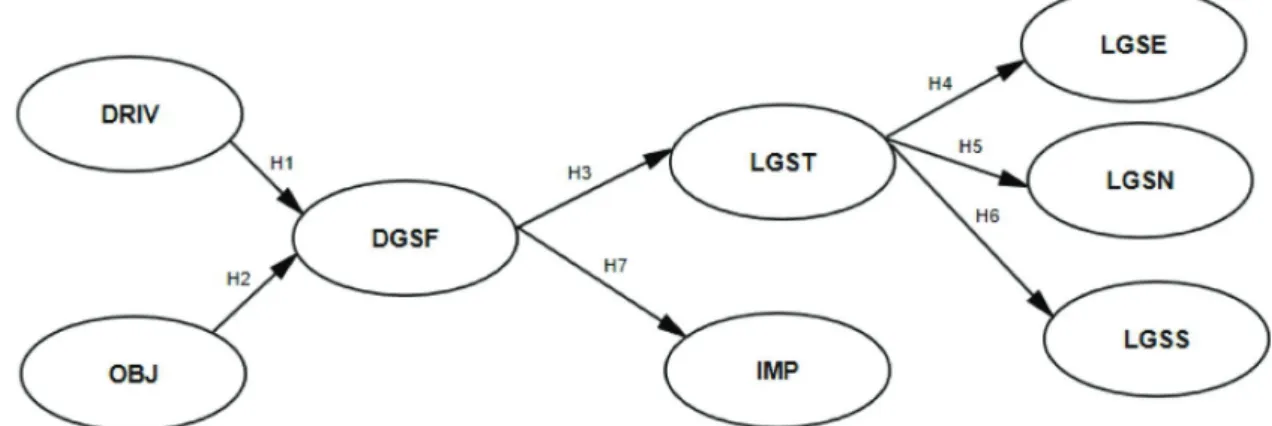
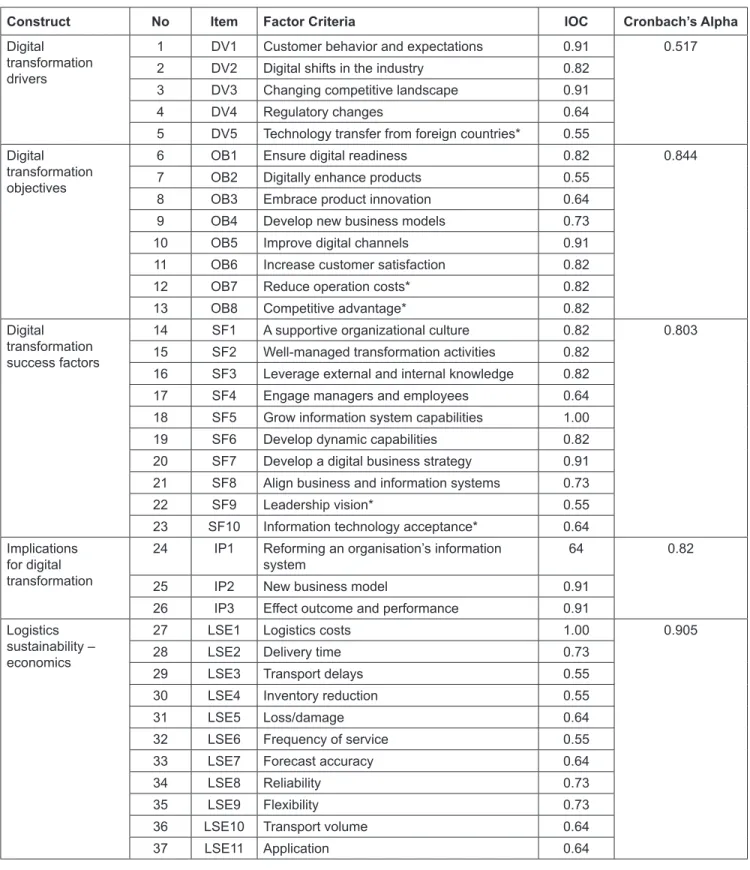
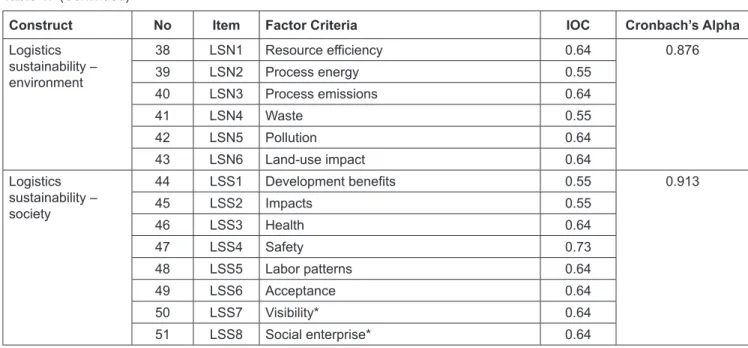
This research explores and develops digital transformation factors influencing the logistics service-provider sector in Thailand while also examining the impact sustainability factors associated with digital transformation. Divided into two parts, Part one of the theoretical study framework covers 21 factors relating to logistics, including drivers, objectives, implications, and success factors. The second part concerns 23 factors associated with logistics sustainability, including economic, environmental, and social aspects. This quantitative empirical research was conducted using an online questionnaire instrument, and a structural equation modeling (SEM) technique was used to test the proposed model. The findings from 545 samples collected between August and November 2020 from respondents working in logistics service-provider companies in Thailand show that digital transformation drivers and objectives seem likely to impact success factors and implications in digital transformation positively. Digital transformation success factors also positively impact logistics sustainability. In comparison, logistics sustainability has a significant impact on Thailand’s logistics service-provider sector’s economic, environmental, and social aspects. Lastly, this research highlights the significance of digital transformation success factors and extends the current knowledge about digital transformation factors and their potential impact on logistics sustainability.
Keywords: Digital Transformation, Logistics Sustainability, Logistics Service Providers JEL Classification Code: M19, O20, O30, Q56
ones, build new company cultures, and even introduce brand- new customer experiences to satisfy the changing needs of consumers and market demands. Digital transformation in logistics and transportation helps companies from the sector to take advantage of new technologies and stay competitive in a market that is continuously expanding. These include the web, the cloud, sensors, data analytics, machine learning, blockchain technology, and the Internet of Things (IoT), which improve vertical and horizontal alignment around supply chain networks.
Representing a revolutionary change in business thinking and logistics implementation, this digital transformation is likely to create a need for a new business model to produce smarter, more enabled, efficient, and feasible digital logistics.
To achieve authentic and real-time information exchange among supply chain stakeholders, it is necessary to adopt useful technologies such as sensor-enabling technology, the IoT, and Cloud-based database systems (Schrauf & Berttram 2016) The integration of these technologies with the supply network offers easy access to customer needs by effectively sharing the tracking information of product or service
1
First Author and Corresponding Author. Ph.D. Candidate, Program in Logistics and Supply Chain Management, Graduate School, Chulalongkorn University, Bangkok, Thailand [Postal Address: 254 Phayathai Rd, Pathum Wan, Pathum Wan District, Bangkok 10330, Thailand] Email: [email protected]
2
Professor, Department of Commerce, Chulalongkorn Business School, Chulalongkorn University, Bangkok, Thailand.
Email: [email protected]
3
Associate Professor, Program in Logistics and Supply Chain Management, Graduate School, Chulalongkorn University, Bangkok, Thailand. Email: [email protected]
© Copyright: The Author(s)
This is an Open Access article distributed under the terms of the Creative Commons Attribution Non-Commercial License (https://creativecommons.org/licenses/by-nc/4.0/) which permits unrestricted non-commercial use, distribution, and reproduction in any medium, provided the original work is properly cited.