• 검색 결과가 없습니다.

Screening of Marine Microbial Extracts for Tyrosine Phosphatase 1B Inhibitors

N/A
N/A
Protected

Academic year: 2021

Share "Screening of Marine Microbial Extracts for Tyrosine Phosphatase 1B Inhibitors"

Copied!
4
0
0

로드 중.... (전체 텍스트 보기)

전체 글

(1)

Journal of Marine Bioscience and Biotechnology 2007, p. 230-233 Vol. 2, No. 4

* Corresponding author

Phone: +82-51-999-5026, Fax: +82-51-999-5176 E-mail: [email protected]

Screening of Marine Microbial Extracts for Tyrosine Phosphatase 1B Inhibitors

Jae-Hak Sohn, Sun Jung Park, Changon Seo, Bokyung Chun and Hyuncheol Oh

*

College of Medical and Life Sciences, Silla University, Busan 617-736, Korea

Abstract Protein tyrosine phosphatase 1B (PTP1B) acts as a negative regulator of insulin signal- ing, and selective inhibition of PTP1B has served as a potential drug target for the treatment of type 2 diabetes. As part of our searching for PTP1B inhibitors from natural products, the extracts of marine microorganisms were screened for the inhibitory effects on the activity of protein tyrosine phosphatase 1B (PTP1B). Among the tested 304 extracts, 29 extracts exhibited inhibition rate ranging 40.1 - 83.6 % against PTP1B at the concentration level of 30 μg/mL.

Key words : Marine microorganisms, protein tyrosine phosphatase 1B (PTP1B) inhibitor, diabetes mellitus

Introduction

Several protein tyrosine phosphatases (PTPases) play a critical role in the regulations of a variety of cellular processes, such as growth, proliferation and differ- entiation, metabolism, immune response, cell-cell adhe- sion, and cell-matrix contacts [3,5]. Particularly, protein tyrosine phosphatase1B (PTP1B) is a major non- transmembrane phosphotyrosine phosphatase in human tissues and a negative regulator of the insulin-stimulated signal transduction pathway by dephosphorylating the insulin receptor (IR) as well as its substrate, insulin re- ceptor substrate-1 (IRS-1) and insulin receptor sub- strate-2 (IRS-2)[2,7,12]. The protein levels are in- creased in insulin-resistant diabetes patients and the de- letion of PTP1B in mice has been shown to increase insulin sensitivity [1,6,15]. Thus, inhibiting PTP1B ac- tion by using antisense oligonucleotides or small mole- cule inhibitors represents one of the novel therapeutic approaches for the treatment of insulin resistance [4,13].

Although there have been a number of reports on the designing and development of synthetic PTP1B in- hibitors little has been studied for PTP1B inhibitors de- rived from natural resources such as plant or microbial resources [4,6]. Et-3,4-dephostatin is one of few PTP1B inhibitors derived from microbial source. As a stable

analogue

of dephostatin isolated from Streptomyces, Et-3,4-de- phostatin has been shown to strongly inhibit PTP1B ac- tivity in vitro, and to potentiate insulin-related signal transduction in cultured mouse adipocytes [13].

Recently, a dimeric depside-type fungal metabolite KS-506a was isolated as a competitive PTP1B inhibitor with the Ki value of 2.7 μM by bioassay guided fractio- nation from the EtOAc extract of M. ramannianus var.

angulisporus [10].

Considering the track record of success in the devel- opment of a number of useful therapeutics, it seems reasonable to search for PTP1B inhibitors from natural resources. In our continuing search for PTP1B in- hibitors from natural resources, a number of bacterial and fungal isolates were screened for their ability to produce PTP1B inhibitory secondary metabolites.

Materials and Methods Collection of samples

Samples of sediments and sea water were collected

by hand in several geographically different areas in south

coast of Korea. Six samples were obtained form Masan

Bay area in January 2006. Forty-five samples were ob-

(2)

Marine Microbial Extracts for Tyrosine Phosphatase 1B Inhibitors 231

tained form Geojedo area in August 2006. Eight samples were obtained form Geojedo area in April 2007. Six sam- ples were obtained form Dadaepo area in April 2006.

Culture medium and agar plates

Modified ZoBell 2216e agar medium was used for isolation of bacteria, which contained (per liter) 5 g of Bacto Peptone (Difco), 1 g of yeast extract (Difco), 10 mg of FePO

4

, 15 g of agar, and 750 g of seawater.

The medium was adjusted to a pH of 7.2 and a volume of 1 L with distilled water. Potato dextrose agar (PDA, Difco) medium was used for isolation of fungi.

Bacterial/fungal isolation

The samples were suspended in 10 ml of sterile sea- water and then serially diluted with seawater from 10

-1

to 10

-5

. Isolation of bacteria and fungi strains was ach- ieved by spreading 0.5 ml of the diluted samples on Emerson agar plates. The plates were maintained at 28

o

C for 14 days to permit bacteria and fungi growth.

The gross cell morphology of the resulting colonies were examined microscopically, sub-cultures were set up by transferring bacterial and fungal colonies to new plates until pure culture were isolated on the basis of distinct colony morphology. The purified strains were stored at -70

o

C in the presence of glycerol.

Culture and extraction

Isolated strains were incubated at 25 - 30

o

C for 4

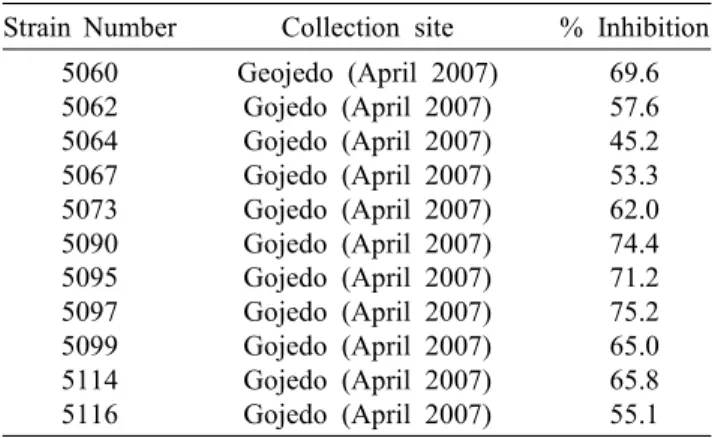
Table 1. Inhibition of PTP1B activity by the crude extracts of marine-derived bacterial strains

Strain Number Collection site % Inhibition 1005

1017 1050 1095 1127 1139 1154 1157 1164 1165 1171 1174 1178 1185 1234 1245 1249 1272

Masan Bay (January 2006) Masan Bay (January 2006) Masan Bay (January 2006) Geojedo (August 2006) Geojedo (August 2006) Geojedo (August 2006) Geojedo (August 2006) Geojedo (August 2006) Geojedo (August 2006) Geojedo (August 2006) Geojedo (August 2006) Geojedo (August 2006)) Geojedo (August 2006) Geojedo (August 2006) Geojedo (April 2007) Geojedo (April 2007) Geojedo (April 2007) Geojedo (April 2007)

48.1 45.5 40.6 43.1 56.9 83.6 65.9 66.5 55.0 50.5 42.4 47.8 44.3 43.9 49.7 40.1 41.0 48.8

Table 2. Inhibition of PTP1B activity by the crude extracts of marine-derived fungal strains

Strain Number Collection site % Inhibition 5060

5062 5064 5067 5073 5090 5095 5097 5099 5114 5116

Geojedo (April 2007) Gojedo (April 2007) Gojedo (April 2007) Gojedo (April 2007) Gojedo (April 2007) Gojedo (April 2007) Gojedo (April 2007) Gojedo (April 2007) Gojedo (April 2007) Gojedo (April 2007) Gojedo (April 2007)

69.6 57.6 45.2 53.3 62.0 74.4 71.2 75.2 65.0 65.8 55.1

- 5 days in a medium of bacteria (culture medium de- scription) or in a medium of fungi (culture medium de- scription). After the cultivation, the agar plate was ex- tracted with MeOH, and the extract was concentrated in vacuo to dryness. All dried extracts were dissolved in DMSO and were used for the assay. The medium materials used for the cultivation was examined as background.

PTP1B enzyme assay

PTP1B (human, recombinant) was purchased from BIOMOL Research Laboratories, Inc., and the enzyme activity was measured using p-nitrophenyl phosphate (pNPP) as substrate. For inhibition assay, inhibitors were added to the reaction mixture (final volume 100 μL) containing PTP1B (0.05 - 0.1 μL) and 2 mM pNPP in a buffer solution [50 mM citrate (pH 6.0), 0.1 M NaCl, 1mM EDTA and 1mM dithiothreitol (DTT)]. The reaction mixture was placed in a 30

o

C incubator for 30 min, and the reaction was terminated by addition of 1 M NaOH solution (10 μL). The amount of pro- duced p-nitrophenol was estimated by measuring the absorbance at 405 nm. The non-enzymatic hydrolysis of 2 mM pNPP was corrected by measuring the absorb- ance at 405 nm in the absence of PTP1B enzyme.

Results and Discussion

The prevalence of diabetes is rapidly increasing in

industrialized countries, and type 2 diabetes particularly

accounts for more than 90% of cases. In type 2 diabetes,

insulin-resistance is one of the characteristic patho-

genesis, and several drugs to increase the insulin sensi-

tivity are currently being used in clinic. However, cur-

rently available drugs for type 2 diabetes have a number

(3)

232 S

OHN

et al.

of limitations, such as adverse effects and high rates of secondary failure [8]. Among the various potential drug targets for improving insulin sensitivity, protein tyrosine phosphatase1B (PTP1B) has recently emerged as a promising one in the effective treatment of type 2 diabetes [11]. This is solidly supported by a number of accumulated evidences suggesting PTP1B as a major negative regulator of insulin receptor signaling [6,11].

Natural products have long proved to be valuable sources bioactive agents as well as of various enzyme inhibitors. By comparison to synthetic studies for the development of PTP1B inhibitors, reports on the screening for PTP1B inhibitors from natural products are relatively rare. However, it is conceivable that the screening of crude biological extracts for PTP1B in- hibitor could provide certain benefit since each extract likely contains countless primary and secondary metab- olites, many of which will not have been previously characterized, and this will allow us to dramatically in- crease the chemical space being sampled [14].

To identify the crude extract(s) with PTP1B in- hibitory effects from marine-derived microbial sources, the crude extracts from the bacterial and fungal isolates, which were DMSO solutions that contained 1 mg/mL of dried methanolic extracts, were tested at a dilution of 3 μL in a final assay volume of 100 μL (30 μg/mL final extract concentration). The enzymatic activity of PTP1B was found to be completely unaffected by the addition of this amount of DMSO (3%). A known PTP1B inhibitor, ursolic acid (IC

50

= 3.5 μM), was em- ployed as a positive control [15,16]. Among the total of 276 extracts from bacterial strains isolated, 18 ex- tracts exhibited moderate inhibition rate ranging 40.1 - 83.6 % against PTP1B. Eleven extracts from the total the total of 128 extracts from fungal strains isolated were also identified to have inhibitory effects on PTP1B activity with inhibition rate ranging 45.2 - 75.2 %.

Overall 6.5% of bacterial extracts and 8.5% of fungal extracts were considered as hits in the screening for PTP1B inhibitory extracts, and further investigation on these strains to identify PTP1B inhibitors is on process.

References

1. Dadke, S. and Chernoff, J. 2003. Protein-tyrosine phos- phatase 1b as a potential drug target for obesity. Curr.

Drug Targets-Immune, Endocr. & Metabol. Disord. 3, 299-304.

2. Elchebly, M., Payette, P., Michaliszyn, E., Cromlish, W.,

Collins, S., Loy, A. L., Normandin, D., Cheng, A., Himms-Hagen, J., Chan, C.-C., Ramachandran, C., Gresser, M. J., Tremblay, M. L. and Kennedy, B. P. 1999.

Increased insulin sensitivity and obesity resistance in mice lacking the protein tyrosine phosphatase 1B gene.

Science 283, 1544-1548.

3. Fisher, E. H., Charbonneau, H. and Tonks, N. K. 1991.

Protein tyrosine phosphatases: a diverse family of intra- cellular and transmembrane enzymes. Science 253, 401-406.

4. Harley, E. A. and Levens, N. 2003. Protein tyrosine phos- phatase 1B inhibitors for the treatment of type 2 diabetes and obesity: Recent advances. Curr. Opin. Investig.

Drugs 4, 1179-1189.

5. Hunter, T. 1995. Protein kinases and phosphatases: the yin and yang of protein phosphorylation and signaling.

Cell 80, 225-236.

6. Johnson, T. O., Ermolieff, J. and Jirousek, M. R. 2002.

Protein tyrosine phosphatase 1b inhibitors for diabetes.

Nat. Rev. Drug. Discov. 1, 696-709.

7. Klaman, L. D., Boss, O., Peroni, O. D., Kim, J. K., Martino, J. L., Zabolotny, J. M., Moghal, N., Lubkin, M., Kim, Y. B., Sharpe, A. H., Stricker-Krongrad, A., Shulman, G. I., Neel, B. G. and Kahn, B. B. 2000.

Increased energy expenditure, decreased adiposity, and tissue-specific insulin sensitivity in protein-tyrosine phosphatase 1B-deficient mice. Mol. Cell. Biol. 20, 5479-5489.

8. Moller, D. E. 2001. New drug targets for type 2 diabetes and the metabolic syndrome. Nature 414, 821-827.

9. Na, M., Yang, S., He, L., Oh, H., Kim, B. S., Oh, W.

K., Kim, B. Y. and Ahn, J. S. 2006. Inhibition of protein tyrosine phosphatase 1B by ursane-type triterpenes iso- lated from Symplocos paniculata. Planta Med. 72, 261-263.

10. Oh, H., Kim, B. S., Bae, E. Y., Kim, M. S., Kim, B.

Y., Lee, H. B., Kim, C. J. and Ahn, J. S. 2004. Inhibition of PTP1B by metabolites from Micromucor ramannianus var. angulisporus CRM000232. J. Antibiot. 57, 528-531.

11. van Huijsduijnen, R. H., Bombrun, A. and Swinnen, D.

2002. Selecting protein tyrosine phosphatases as drug targets. Drug Discov. Today 7, 1013-1019.

12. Saltiel, A. R. and Kahn, C. R. 2001. Insulin signalling and the regulation of glucose and lipid metabolism.

Nature 414, 799-806.

13. Suzuki, T., Hiroki, B. A., Watanabe, T., Yamashita, T., Takei I. and Umezawa, K. 2001. Potentiation of in- sulin-related signal transduction by a novel protein-ty- rosine phosphatase inhibitor, Et-3,4-dephostatin, on cul- tured 3T3-L1 adipocytes. J. Biol. Chem. 276, 27511- 27518.

14. Tarling, C. A., Woods, K., Zhang, R., Brastianos, H. C., Brayer, G. D., Andersen, R. J. and Withers, S. G. 2008.

The Search for Novel Human Pancreatic a-Amylase Inhibitors: High Throughput Screening of Terrestrial and Marine Natural Product Extracts. Chem. BioChem. 9, 433-438.

15. Tonks, N. K. 2003. PTP1B: From the sidelines to the

(4)

Marine Microbial Extracts for Tyrosine Phosphatase 1B Inhibitors 233

front lines. FEBS Lett. 546, 140-148.

16. Zhang, W., Hong, D., Zhou, Y., Zhang, Y., Shen, Q., Li, J. Y., Hu, L. H. and Li, J. 2006. Ursolic acid and its derivative inhibit protein tyrosine phosphatase 1B, en-

hancing insulin receptor phosphorylation and stimulating

glucose uptake. Biochim. Biophys. Acta. 1760, 1505-

1512.

수치

Table  1.  Inhibition  of  PTP1B  activity  by  the  crude  extracts  of  marine-derived  bacterial  strains

참조

관련 문서