Original Articles 순환기:순환기:제순환기:순환기:제제제 2 7 권권권 제권 제제 1 호제 호호 1997호
본태성 고혈압 환자에서 주·야간 혈압 변동과 좌심실 질량의 비교 연구
조선대학교 의과대학 내과학교실
이충근·허경무·박관웅·윤채중·정종훈·이승일·장경식·홍순표
=
=
=
= Abstract = = = =
Interrelationship between Left Ventricular Mass and Diurnal Variations of Blood Pressure in Patients with Essential Hypertension
Choong Keun Lee, M.D., Gyoung Mu Her, M.D., Gwan Eung Park, M.D., Chai Jung Yoon, M.D., Jong Hoon Chung, M.D., Seung Ill Lee, M.D.,
Kyung Sik Jang, M.D., Soon Pyo Hong, M.D.
Department of Internal Medicine, Chosun University Hospital, Kwangju, Korea
Background:In hypertensive patients, the left ventricular hypertrophy(LVH) is very important as an independent risk factor along with developing complications. The present study was attempted to assess whether LVH assessed by echocardiography is related to diurnal variations of blood pressure in patients with essential hypertension.
Methods:After 24hr ambulatory blood pressure monitoring, echocardiographic parameters were investigated in 30 healthy normotensive subjects and 17 patients with diurnal variation of blood pressure and 19 patients without diurnal variation respectively.
Results :Left ventricular mass index was higher in essential hypertensive patients than normotensive subjects. In patients without nocturnal fall in systolic blood pressure, left ventricular mass tended to be higher than in patients with a nocturnal fall without statistic significance.In the hypertensive patients with nocturnal fall, there was a correlationship between LVMI and changes in systolic blood pressure, but no correlation between left ventricular mass index and changes in diastolic blood pressure.In the hypertensive patients without nocturnal fall, changes of both systolic and diastolic pressure did not affect LVMI.
Conclusion:It is suggested strongly that left ventricular hypertrophy may occur highly in the hypertensive patients without nocturnal(diurnal) variation in blood pressure and may be associated with changes in diastolic and systolic blood pressure.But in hypertensive patient with nocurnal fall, left ventricular hypertrophy may be associated with changes in systolic blood pressure.
KEY WORDS:Hypertension·Left ventricular mass index(LVMI).
서 론
혈압은 일상 활동 및 환경적인 상황에 수반된 육체적,
정신적 상황에 따라 변화를 보이며, 정상인은 하루 일 과가 시작되는 아침 시간에 높은 혈압을 보이고 수면 중에 가장 낮은 혈압을 보이는 일중 주기(diurnal rhy-
thm)를 보인다. 이러한 혈압의 야간 하강의 기전은 확 실히 밝혀지지는 않았으나 각성 상태의 변화, 즉 교감 신경 활성도의 감소와 관련이 있는 것으로 알려져 있으 며 혈압 주기 사이의 혈압 감소 폭은 20~30mmHg 정도로 알려져 있다1). 혈압의 일중 주기 변동이 없어지 는 경우로는 악성 고혈압2), 수면무호흡증후군3), 갈색세 포종4), 임신중독증5), 쿠싱증후군6), 당뇨병성 자율신경 병증과 심장이식 후7), 기립성 저혈압8), 그리고 울혈성 심부전증9) 등이 있으며 일반적으로 고혈압 환자에서도 일중 주기 변동은 유지된다. 그러나 본태성 고혈압 환 자에서 혈압의 일중 주기 변동의 소실이 관찰되는 경우 가 보고되고 있으며 이러한 경우 좌심실 비대의 빈도가 증가한다고 한다10).
본태성 고혈압 환자에서 혈압 상승은 좌심실 비대와 밀접한 관계가 있으며 좌심실 질량의 증가는 고혈압 환자의 불완전한 혈압 조절의 결과이며, 고혈압성 심 혈관 질환의 중요한 합병증일 뿐만 아니라 급사의 원 인이 된다. 저자는 고혈압 환자에서 일중 주기 변동의 소실이 좌심실 질량에 어떠한 변화를 주는지 비교 관 찰하여 분석하고자 한다.
연구 대상 및 방법
1. 대 상
정상대조군은 심혈관계 증상이 없고 고혈압, 당뇨 병, 혈청 지질의 이상 소견, 자율 신경계 기능장애의 임상 증상(배뇨 곤란, 설사, 기립성 현기증 등)이 없 으면서, 혈압 기준은 24시간 자동혈압측정기로 주・
야간 평균 수축기 혈압이 140mmHg미만, 확장기 혈압 이 90mm Hg미만인 정상인 30명을 대상으로 하였다.
본태성 고혈압 환자군은 24시간 자동혈압측정기로 주
・야간 평균 수축기 혈압이 140mmHg이상, 확장기 혈 압이 90mmHg이상이면서 이차성 원인에 의한 경우를 제외한 고혈압 환자를 대상으로 하였으며 주간에 비해 야간 수축기 혈압과 확장기 혈압 평균변동폭이 10%
이상 하강하는 군(Group 1) 17명과 주간에 비해 야 간 수축기 혈압과 확장기 혈압 평균변동폭이 10%미 만이거나 오히려 증가하는 군(Group 2) 19명을 대상 으로 하였다.
정상대조군 총 30명(남:20, 녀:10)의 평균 나이, 체중, 신장, 체표 면적은 각각 39±13세, 63±9kg, 167
±6cm, 1.72±0.08M 2이고, 본태성 고혈압군 중 Group 1 17명(남:10, 녀:7)의 평균 나이, 체중, 신장, 체표 면적은 각각 43±16세, 65±10kg, 163±7cm, 1.70±0.09M 2였고, Group 2 19명(남:5, 녀:14)의 평균 나이, 체중, 신장, 체표 면적은 각각 54±11세, 63
±7kg, 160 ±7cm, 1.65±0.11M 2이었다(Table 1).
2. 방 법
정상대조군과 본태성 고혈압군(Group 1과 Group 2) 의 24시간 혈압 동태는 TM-2420 Blood Pressure Monitor(A and D Engineering, Inc. U.S.A.)를 이용 하였으며 주간 혈압은 아침 6시부터 저녁 10시까지 15 분 간격으로 측정하고 야간 혈압은 저녁 10시부터 다 음날 아침 6시까지 30분 간격으로 측정하였다. 심박수 가 분당 35이하 또는 200이상인 경우, 확장기 혈압이 160mmHg이상 또는 40mmHg이하인 경우, 수축기 혈 압이 60mmHg이하 또는 280mmHg이상인 경우, 수축 기 혈압과 확장기 혈압의 차이가 10mmHg이하인 경우 또는 150mmHg이상인 경우는 자동적 분석 대상에서 error로 처리되었다. 대상 환자는 측정 기간 동안 혈압 과 심박수에 영향을 미칠 수 있는 약물의 복용은 금지 하였고 일상적인 활동과 식사를 하도록 하였다.
정상대조군과 본태성 고혈압 환자군(Group 1과 Gro- up 2)은 일괄적으로 M-mode 심초음파를 실시하여 좌심실 지표를 최소 3번 이상 측정하고 평균을 구해 좌 심실 질량을 구하고 체표 면적으로 나누어 좌심실 질량 지표를 산출하여 주・야간 수축기 혈압과 확장기 혈압 이 좌심실 질량 증가와 관련성이 있는지 분석하였다.
심초음파에 의한 좌심실 parameter의 측정은 Ame- rican Society of Echocardiography(ASE) 추천에 의
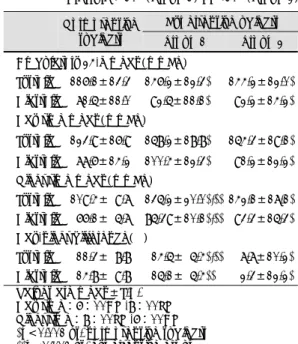
Table 1. Clinical characteristics of normotensive and hypertensive subjects with nocturnal fall of blood pressure>10%(group 1)or <10% (gro- up 2)
Hypertensive subjects Normotensive
subjects
group 1 group 2 Number(M/F) 20/10 10/7 5/14 Age(years±SD) 39±13 43±16 54±11 Weight(kg±SD) 63± 9 65±10 63± 7 Height(cm±SD) 16±76 163± 7 160± 7 B.S.A.(m2) 1.72±0.08 1.70±0.09 1.65±0.11 Values are mean±S.D.
한 leading edge to leading edge법을 이용하였다. 좌 심실 질량 지표는 Devereux 등13)에 의해 소개된 공식 (좌심실 질량 지표(g)=1.04([좌심실내경+확장 말기 후벽두께+확장 말기 중격두께]3–좌심실 내경3)×0.8+
0.6/체표 면적)을 이용하였고, 체표 면적은 Dubois14)의 방법(체표 면적(m2)=0.007184×[체중(Kg)] 0.425×
[신장(cm)]0.725)을 이용하여 구하였다.
결 과
1. 정상대조군과 본태성 고혈압군(Group 1 과 Group 2)의 24시간 혈압 동태
정상 대조 군의 24시간 평균 수축기 혈압, 평균 주 간 수축기 혈압, 평균 야간 수축기 혈압은 각각 116.1±13.3mmHg, 123.9±16.9mmHg, 109.4±9.7mmHg였 고, 24시간 평균 확장기 혈압, 평균 주간 확장기 혈압, 평균 야간 확장기 혈압은 각각 71.5±11.0mmHg, 77.6
±14.2mmHg, 66.1±5.7mmHg였다. 정상 대조 군의 주・야간 평균 혈압 변동폭은 수축기 혈압이 11.3±
8.8%, 확장기 혈압이 14.8±9.8%였다.
본태성 고혈압군중 Group 1의 24시간 평균 수축기 혈압, 평균 주간 수축기 혈압, 평균 야간 수축기 혈압 은 각각 146.6±12.3mmHg, 158.2±18.8mmHg, 135.2 ±20.0mmHg이고 24시간 평균 확장기 혈압, 평균 주간 확장기 혈압, 평균 야간 확장기 혈압은 각 각 92.5±11.1 mmHg, 100.4±12.3mmHg, 85.3±
10.1mmHg였다. 주・야간 평균 혈압 변동폭은 수축 기 혈압이 14.5±5.4% 확장기 혈압이 15.1±5.4%
였다. 본태성 고혈압 군중 Group 2의 24시간 평균 수 축기 혈압, 평균 주간 수축기 혈압, 평균 야간 수축기 혈압은 각각 148.2±12.0 mmHg, 154.3±19.1mm Hg, 142.1±17.1mmHg이고, 24시간 평균 확장기 혈압, 평 균 주간 확장기 혈압, 평균 야간 확장기 혈압은 각각 92.2±14.2mmHg, 91.2±12.2mmHg, 93.3±15.3m mHg였다. 주・야간 평균 혈압 변동폭은 수축기 혈압이 7.7±10.2%, 확장기 혈압이 2.3±12.2%였다(Table 2).
정상대조군과 본태성 고혈압군(Group 1과 Group 2) 간의 24시간 평균 수축기 및 이완기 혈압, 평균 주간 수축기 및 이완기 혈압, 평균 야간 수축기 및 이완기 혈압은 통계학적인 유의성이 있었으며 본태성 고혈압 Group 1과 Group 2 사이에는 평균 야간 수축기 및
이완기 혈압외에는 통계학적인 유의성은 없었다.
2. 정상대조군과 본태성 고혈압 환자의 M-mode 심초음파 소견에 의한 좌심실 질량 지표
좌심실 질량 지표는 건강대조군에서 87.8±12.8g/M2, 본태성 고혈압중 Group 1이 125.8±29.7g/M2, Group 2가 148.3±47.1g/M2로 정상대조군과 본태성 고혈압 군(Group 1과 Group 2)간에 통계학적으로 유의한 차이 가 있었으며 본태성 고혈압군 Group 1과 Group 2간에 는 Group 2에서 좌심실 질량 지표가 높게 나타났으나 통 계학적으로 유의한 차이는 없었다(Fig. 1, Table 3).3. 정상대조군에서 주·야간 혈압 변동폭과 좌 심실 질량 지표
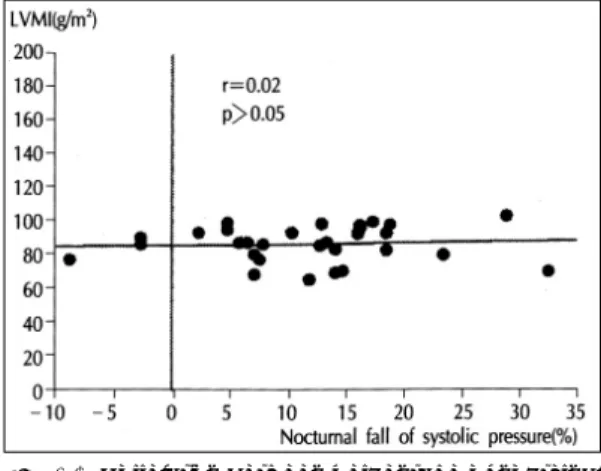
정상대조군에서 수축기 혈압의 변동폭과 좌심실 질량 지표 사이에 상관성(r=0.02)은 통계학적 의의가 없었 으며, 확장기 혈압의 변동폭사이의 상관성(r=-0.01) 에도 유의성이 없었다(Fig. 2-1, 2).
4. 본태성 고혈압 환자중 Group 1의 주·야간 혈압 변동폭과 좌심실 질량 지표
본태성 고혈압 환자중 주간 수축기 및 확장기 혈압에 비해 야간 수축기 및 확장기 혈압이 10% 이상 하강
Table 2. Comparison of 24 ambulatory blood pre- ssure levels in normotensive and hyperte- nsive subjects with nocturnal fall of blood pressure >10%(group 1) or <10%(group 2)
Hypertensive ubjects Normotensive
subjects group 1 group 2 Ambulatory 24-h mean(mmHg)
Systolic 116.1±13.3 146.2±12.3* 144.2±12.0*
Diastolic 71.5±11.0 92.5±11.1* 92.2±14.2*
Day time mean(mmHg)
Systolic 123.9±16.9 158.2±18.8* 154.3±19.1*
Diastolic 77.6±14.2 100.4±12.3* 91.2±12.2*
Night time mean(mmHg)
Systolic 109.4± 9.7 135.2±20.0*,** 142.1±17.1*
Diastolic 66.1± 5.7 85.39±10.1*,** 93.3±15.3*
Day-night difference(%)
Systolic 11.3± 8.8 14.5± 5.4*,** 7.7±10.2*
Diastolic 14.8± 9.8 15.1± 5.4** 2.3±12.2*
Values are mean±S.D.
Day time:6:00AM-8:00PM Night time:8:00PM-6:00AM
*p<0.001 vs. normotensive subjects
**p<0.001 vs. hypertensive group 2
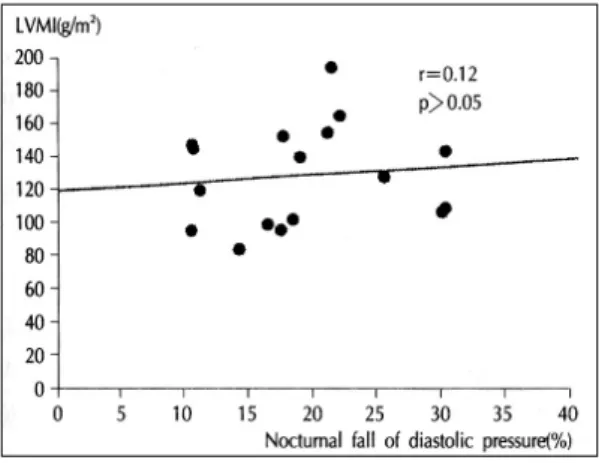
하는 Group 1에서 수축기 혈압변동폭과 좌심실 질량 지표사이의 상관성(r=-0.47)은 통계학적 의의가 있 으나, 확장기 혈압 변동폭과 좌심실질량지표사이의 상관 성(r=0.12)에는 유의성이 없었다(Fig. 3-1, 2).
5. 본태성 고혈압 환자중 Group 2의 주·야 간 혈압 변동폭과 좌심실 질량 지표
본태성 고혈압 환자중 주간 수축기 및 확장기 혈압에Table 3. Echocardiographic findings in normoten- sive and hypertensive subjects with noctur- nal fall of blood pressure>10%(group 1) or
<10%(group 2)
Hypertensive subjects Normotensive
subjects group 1 group 2 IVSTd(cm): 0.93± 0.2 1.16± 0.3** 1.21± 0.3**
PWTd(cm): 0.81± 0.1 0.95± 0.1* 1.03± 0.2*
LVIDd(cm): 4.9 ± 0.4 5.2 ± 0.7 5.4 ± 0.6 LVM(g): 150.9 ±36.4 213.2±57.4** 245.5±86.4**
LVMI(g/m2): 87.8 ±12.8 125.8±29.7** 148.3±47.1**
Shortening fraction(%):
38.4± 6 35.9± 6 37.3± 5 Ejection fraction(%):
66.8± 7 67.2± 8 64.5± 6 Values mean±S.D.
Abbreviations:
IVSTd=interventricular septal wall thickness(diastolic);
PWTd=left ventricular posterior wall thickness(diastolic);
LVIDd=left ventricular internal dimension(diastolic);
RWT=relative wall thickness;
LVM=left ventricular mass;
LVMI=left ventricular mass index
*p<0.01, versus normotensive subjects
**p<0.001, versus normotensive subjects
Fig. 1. Mean value of left ventricular mass and left ventricular mass index in normotensive and hy- pertensive subject with nocturnal fall of blood pressure>10%(Group 1) or<0%(Group 2),
*:p<0.05, LVMI:left ventricular mass index.
Fig. 2-1. Correlation between percentage of nocturnal fall of systolic blood pressure and LVMI in no- rmotensive subjects, LVMI : left ventricular mass index.
Fig. 2-2. Correlation between percentage of nocturnal fall of diastolic blood pressure and LVMI in no- rmotensive subjects, LVMI : left ventricular mass index.
Fig. 3-1. Correlation between percentage of nocturnal fall of systolic blood pressure and LVMI in hy- pertensive patients(Group 1), LVMI:left ven- tricular mass index.
비해 야간 수축기 및 확장기압이 10%미만 하강 또는 상승하는 Group 2에서 수축기 혈압 변동폭과 좌심량지 표 사이에 상관성(r=-0.12)은 통계학적 의의는 없었 으며, 확장기 혈압 변동폭과 좌심실 질량 지표 사이의 상관성(r=0.01)에도 유의성이 없었다(Fig. 4-1, 2).
고 안
좌심실 비후는 고혈압 환자의 불완전한 혈압 조절의 결과이고, 고혈압성 심혈관 질환의 중요한 합병증일 뿐만 아니라 급사의 원인이 된다. 고혈압 환자에서 좌 심실 비후는 심혈관계 질환의 이환율과 치사율에 매 우 중요한 예견 인자이며 독립적인 위험 인자이다11). 수축기 혈압이 180mmHg이상인 환자에서 12년안에 50%에서 좌심실 비후가 발견된다고 한다16). 또한 야 간 혈압 하강이 없는 고혈압 환자는 뇌졸중에 대한 더 큰 위험 가능성을 제시하고 있다12). 과거 여러 연구에 서, 수시 혈압보다 24시간 활동중 혈압을 측정하는 것이 좌심실 비후와 혈압과의 관계를 파악하는데 더 정확하다는 것은 이미 알려진 사실이다. 심초음파 검 사는 고혈압 환자에서 좌심실 비후를 찾아내는데 심 전도 소견보다 더 민감한 검사로 심초음파 검사상 좌 심실 비후가 있는 고혈압 환자에서 심전도 소견으로 는 단지 38%만이 좌심실 비후가 확인되었다24). 또한 심초음파 검사는좌심실 비후의 양적 평가가 가능하며 necropsy소견과도 거의 일치된다22,23).
M-mode 심초음파 검사로 구한 좌심실 비후를 나 타내는 좌심실 질량 지표와 혈압의 일중 주기 변동과 의 관계는 정상혈압군과 10%이상 야간 혈압의 감소 를 나타낸 본태성 고혈압 집단에서 보다는 10%이하 의 혈압 감소를 가진 본태성 고혈압군에서 더 높게 나 타난다고 보고한 연구가 있으며16), Devereux등18)과 Drayer등19)은 좌심실 질량이 야간혈압보다 주간혈압 과 더 밀접한 관계가 있다고 하였고, Rowlands등20)은 주간과 야간 혈압 모두 동등하게 좌심실 질량과 관계된 다고 보고하였다. 반면에 Smith등21)은 고혈압과 정상 혈압을 가진 혼합된 Group에서 주간 혈압보다는 야간 혈압이 좌심실 질량에 더 밀접한 관계를 가진다고 보고 하였다. 최근에는 주간 평균혈압에 비해 야간 평균혈압 의 감소폭이 적은 환자에서 좌심실 비후가 더 심하였다 고 보고하고 있다25). 따라서 여러 연구결과로 고혈압 Fig. 3-2. Correlation between percentage of nocturnal
diastolic blood pressure and LVMI in hyperte- nsive patients(Group 1), LVMI:left ventricul- ar mass index.
Fig. 4-1. Correlation between percentage of nocturnal systolic blood pressure and LVMI in hyperte- nsive patients(Group 2), LVMI : left ventri- cular mass index.
Fig. 4-2. Correlation between percentage of nocturnal fall of distolic blood pressure and LVMI in hy- pertensive patients(Group 2), LVMI:left ven- tricular mass index.
환자가 좌심실 비후가 발생하는데 주간 혈압이 우세 한지 야간 혈압이 우세한지 아직 판단을 하기가 곤란 하며 수축기 또는 확장기 혈압중 어느쪽이 더 관련성 이 있는지를 연구한 보고는 거의 없다. 본 연구에서는 정상혈압군과 본태성 고혈압군으로 나누어 M-mode 심초음파술로 구한 좌심실 질량 지표를 비교한 결과 본태성 고혈압군에서 좌심실 질량 지표가 통계학적으 로 의의 있게 높게 나타났다. 또 고혈압 환자를 두군 으로 즉 주간에 비해 야간 수축기 혈압과 확장기 혈압 평균감소폭이 10%이상인 경우 Group 1, 주간에 비해 야간 수축기 혈압과 확장기 혈압 평균감소폭이 10%미만 인 경우 Group 2로 분류하여 좌심실 질량 지표를 비교 분석하였다. 일중 주기 변동이 소실된 군(Group 2)과 소실되지 않은 군(Group 1)사이에서 좌심실 질량은 Group 2에서 높게 나타났으나 통계학적으로 차이가 없 었으며, Group 1에서 수축기 혈압 변동폭과 좌심실 질 량 지표가 역상관관계를 보였으며 확장기 혈압 변동 폭과는 상관관계가 없었고 Group 2에서는 수축기 혈 압과 확장기 혈압 변동폭 모두 상관관계가 없었다. 결 론적으로 주간에 비해 야간 수축기 혈압과 확장기 혈 압 평균변동폭이 10%이상인 본태성 고혈압 환자의 경우 야간 수축기 혈압의 지속적 상승이 좌심실 비후 에 확장기 혈압보다 더 큰 역할을 한다고 사료되었고 주간에 비해 야간 수축기 혈압과 확장기 혈압 평균변 동폭이 10%미만인 본태성 고혈압 환자는 수축기 및 확장기 혈압 모두 동등하게 좌심실 비후에 기여한다 고 사료되었다.
요 약
연구배경:
고혈압 환자에서 주요 합병증 및 독립된 위험 인자로 서 좌심실 비후의 역할은 매우 중요하며, 24시간 혈압 자동측정 결과 일중 주기 변동의 소실이 좌심실 비후의 빈도를 높이는 것으로 알려져 있다. 저자는 이러한 혈 압의 일중 주기 변동과 심초음파상 좌심실 질량과의 상 관관계를 규명하기 위해 연구를 시행하였다.
방 법:
조선대학교 부속병원 내과에 내원하여 24시간 혈압 자동측정을 시행한 환자를 정상대조군 30명, 일중 주 기 변동이 있는 고혈압군 17명, 일중 주기 변동이 없는
고혈압군 19명으로 나누어 심초음파상 측정한 좌심실 질량 지표와 서로 비교 분석하였다.
결 과:
고혈압군과 정상대조군간의 좌심실 질량을 비교한 결 과, 본태성 고혈압군에서 좌심실 질량 지표가 통계학적 으로 의의 있게 높게 나타났으며, 특히 일중 주기 변동 이 없는 고혈압 군이 주기 변동이 있는 고혈압 군보다 좌심실 질량 지표가 높게 나타났으나 통계학적으로 의 의는 없었다.
일중 주기 변동이 있는 고혈압군에서 수축기 혈압의 변동폭과 좌심실 질량 지표는 서로 역상관관계를 보였 으나, 확장기 혈압의 변동폭과는 상관관계가 없었다. 일 중주기변동이 없는 군에서는 수축기와 확장기 혈압의 변동폭 모두 좌심실 질량 지표와는 상관관계가 없었다.
결 론:
혈압의 일중 주기 변동이 있는 군에서 좌심실 비후 정도는 확장기 혈압의 변동보다는 수축기 혈압의 변 동과 관계가 있으며, 일중 주기 변동이 없는 군에서 좌심실 비후는 수축기 및 확장기 혈압 변동과 관계가 있는 것으로 사료된다.
References
1) Pickering TG, Harshfield GA, Kleinert HD, Blank S, Laragh JH:Blood pressure during normal daily activi- ties, sleep, and exercise. JANA 247:992-996, 1982 2) Shaw DB, Knapp MS, Davies DH:Variations in blood
pressure in hypertensives during sleep. Lancet 1:797- 798, 1982
3) Guilleminault C, Tillkian A, Dement W:The sleep apnea syndromes. Annu Rev Med 27:465-484, 1976 4) Imai Y, Abe K, Miura Y, Nihei M, Sasaki S, Minami N,
Munakata M, Taira N, Sekino H, Yamakoshi K, Toshim- aga K:Hypertensive episodes and circadian fluctuation of blood pressure in patients with phaeochromocytoma: Studies by longterm monitoring based on a volume- oscillometric method. J Hypertens 6:9-15, 1988 5) Redman CWG, Beilin LJ, Bonnar J:Reversed diurnal
blood pressure rhythm in hypertensive pregnancies. Clin Sci Mol Med 51:687s-689, 1976
6) Munakata M, Imai Y, Abe K, Sasaki S, Minami N, Se- kino H, Yoshimaga K:Involvement of the hypothalamus- pituitary- adrenal axis in the control of circadian blood pressure rhythm. J Hypertens 6(suppl 4):S44-S46, 1988 7) Reeves RA, Shapiro AP, Thompson ME, Johnsen AM:
Loss of nocturnal decline in blood pressure after cardiac
transplantation. Circulation 73:401-408, 1986 8) Mann S, Altman DG, Raftery EB, Bannister R:Circa-
dian variation of blood pressure in autonomic failure.
Circulation 68:477-483, 1983
9) Caruana M, Lahiri A, Cashman PMM, Altman DG, Ra- ftery EB:Effects of chronic congestive heart failure seco- ndary to coronary artery disease on the circadian rhythm of blood pressure and heart rate. Am J Cardiol 62:755- 759, 1988
10) Verdecchia P, Schillaci G, Guerreri M, Gatteschi C, Ben- emio G, Boldrini F, Porcellati C:Circadian blood pre- ssure changes and left ventricular hypertrophy in essen- tial hypertension. Circulation 81:528-536, 1990 11) Dunn FG, McLenachan J, Isles CG, et al:Left ventri-
cular hypertrophy and mortality in hypertension:an analysis of data from the Glasgow Blood Pressure Clinic.
J Hypertension 8:775-782, 1990
12) O’Brien E, Sheridan J, O’Mailley K:Dippers and non- dippers. Lancet 2:397-400, 1988
13) Raftery EB:Understanding hypertension:The contri- bution of direct ambulatory blood pressure monitoring, in Weber MA,Drayer JIM(eds):Ambulatory Blood Pre- ssure Monitoring. Darmstadt, Steinkopff, p105-116, 1984 14) Devereux RB, et al:Echocardiographic assessment of
left ventricular hypertrophy:Comparison to necropsy findings. Am J Cardiol 57:450-458, 1986
15) Dubois EF:Basal Metabolism in Health and Disease.
Philadelphia, Lea & Febiger, 1936
16) Kannel WB, Gordon T, Offut D:Left ventricular hype- rtrophy by electrocardiogram. Prevalence, incidence and mortality in the Framingham Study. Ann Intern Med 71:89-105, 1969
17) Verdecchia P, Schillaci G, Guerrieri M, et al:Circadian
blood pressure and left ventricular hypertrophy in esse- ntial hypertension. Circulation 81:528-536, 1990 18) Devereux RB, Pickering TG, Harshfield GA, Kleinert
HD, Denby L, Clark L, Pregibon D, Jason M, Kleinert B, Borer JS, Laragh JH:Left ventricular hypertrophy in patients with hypertension:Importance of blood pre- ssure response to regularly recurring stress. Circulation 68:470-476, 1983
19) Drayer JIM, Weber MA, De Young JL:BP as a deter- minant of cardiac left ventricular muscle mass. Arch In- tern Med 143:90-92, 1983
20) Rowlands DB, Glover DR, Ireland MA, McLeay RAB, Stallard TJ, Watson RDS, Littler WA:Assessment of left ventricular mass and its response to antihypertensive tre- atment. Lancet 1:467-470, 1982
21) Smith VE, White WB, Karimeddini MK, McCabe EJ, Katz AM:Lowest not highest blood pressure may deter- mine left ventricular filling(abstract). Circulation 74 (suppl II):II-290A, 1984
22) Devereux RB, Reichek N:Echocardiographic determi- nation of left ventricular mass in man. Anatomic valida- tion of the method. Circulation 55:613-618, 1977 23) Devereux RB, Alonso DR, Lutas EM, Gottlieb GJ, Cam-
po E, Sachs I, Reichek N:Echocardiographic assessm- ent of left ventricular hypertrophy:Comparison to necr- opsy findings. Am J Cardiol 57:450-458, 1986 24) Carr AA, Prisant M, Watkins LO:Detection of hyperte-
nsive left ventricular hypertrophy. Hypertension 7:948- 954, 1985
25) Verdecchia, et al:Circadian blood pressure changes and left ventricular hypertrophy in essential hypertension.
Circulation 81:528-536, 1990