• 검색 결과가 없습니다.

Impact of Heterogeneous Overlapping Drug-Eluting Stents on the Arterial Responses of Rabbit Iliac Arteries: A Comparison With Overlapping Bare Metal Stents

N/A
N/A
Protected

Academic year: 2022

Share "Impact of Heterogeneous Overlapping Drug-Eluting Stents on the Arterial Responses of Rabbit Iliac Arteries: A Comparison With Overlapping Bare Metal Stents"

Copied!
9
0
0

로드 중.... (전체 텍스트 보기)

전체 글

(1)

Korean Circulation Journal

Introduction

Despite a paucity of data supporting their safety and efficacy, the

Print ISSN 1738-5520 • On-line ISSN 1738-5555

Impact of Heterogeneous Overlapping Drug-Eluting Stents on the Arterial Responses of Rabbit Iliac Arteries:

A Comparison With Overlapping Bare Metal Stents

Seung-Woon Rha, MD 1 , Kang-Yin Chen, MD 1,2 , Dong Joo Oh, MD 1 , Yong-Jian Li, MD 1,3 , Zhe Jin, MD 1,3 , Kanhaiya Lal Poddar, MD 1 , Sureshkumar Ramasamy, MD 1 , Yoshiyasu Minami, MD 1 , Amro Elnagar, MD 1 , Byoung Geol Choi, BS 1 , Sang Pyo Hong, BS 1 , Byoung Won Cheon, BS 1 , Sang Ki Moon, BS 1 ,

Sung Il Im, MD 1 , Sun Won Kim, MD 1 , Jin Oh Na, MD 1 , Cheol Ung Choi, MD 1 , Hong Euy Lim, MD 1 , Jin Won Kim, MD 1 , Eung Ju Kim, MD 1 , Seong Woo Han, MD 1 , Chang Gyu Park, MD 1 ,

Hong Seog Seo, MD 1 , Jung Ha Kim, BS 4 , Young Joon Hong, MD 4 , and Myung Ho Jeong, MD 4

1

Cardiovascular Center, Korea University Guro Hospital, Seoul, Korea

2

Cardiology Department, The Second Hospital of Tianjin Medical University, Tianjin,

3

Cardiology Department, Tianjin Nankai Hospital, Tianjin, China

4
Cardiovascular Center, Chonnam National University Hospital, Gwangju, Korea

Background and Objectives: Although the use of heterogeneous overlapping drug-eluting stents (DES) is not uncommon in clinical practice, whether the implantation sequences of heterogeneous DES will influence the endothelialization or arterial responses differently remains unclear.

Materials and Methods: Twenty-one rabbits were randomized to receive overlapping stents in the iliac artery for 3 months {distal siroli- mus-eluting stent (SES, Cypher

TM

)+proximal paclitaxel-eluting stent (PES, Taxus

TM

) (C+T, n=7), distal Taxus+proximal Cypher (T+C, n=7) and bare metal stent (BMS)+BMS (B+B, n=7)}. Endothelial function was evaluated by the acetylcholine provocation test during follow-up an- giography. Histopathological changes in proximal, overlapped, and distal stented segments were evaluated.

Results: Although the overall angiographic outcomes were comparable, late loss (mm) in the distal stented segment was higher in the B+B (0.39±0.07) and C+T (0.40±0.20) than that in the T+C (0.06±0.02) group (p<0.001). The incidence of acetylcholine-induced spasm was higher in the DES groups compared with BMS, regardless of the implantation sequences (85.7% in C+T vs. 14.3% in B+B vs. 71.4% in T+C, p=0.017). Notably, only the distal Cypher implantation group (C+T) had three cases of stent fracture. A histopathological analysis showed that despite similar arterial injury scores, Taxus and Cypher stents had higher inflammatory reactions at the overlapped and distal segments compared with those of BMS.

Conclusion: Despite similar arterial injury, higher inflammatory reactions were observed in overlapping DES segments regardless of the im- plantation sequence compared with that of BMS. Moreover, DES was associated with impaired endothelial function on the adjacent non- stented segments. (Korean Circ J 2012;42:397-405)

KEY WORDS: Drug-eluting stents; Endothelium; Vasoconstriction.

Received: August 31, 2011 / Revision Received: October 31, 2011 / Accepted: December 12, 2011

Correspondence: Dong Joo Oh, MD, Cardiovascular Center, Korea University Guro Hospital, 148 Gurodong-ro, Guro-gu, Seoul 152-703, Korea Tel: 82-2-2626-1047, Fax: 82-2-864-3062, E-mail: [email protected]

• The authors have no financial conflicts of interest.

This is an Open Access article distributed under the terms of the Creative Commons Attribution Non-Commercial License (http://creativecommons.org/licenses/

by-nc/3.0) which permits unrestricted non-commercial use, distribution, and reproduction in any medium, provided the original work is properly cited.

use of heterogeneous overlapping drug-eluting stents (DESs) is not

uncommon for treating diffuse long lesions in clinical practice.

1)2)

Therefore, clinical trials and basic studies are needed to fully clarify

(2)

their safety and efficacy and identify the potential pathophysiologi- cal mechanisms. Additionally, we suppose that the implantation se- quence of different DESs may have distinct impacts on the endo- thelialization and arterial responses, particularly at the overlapping stented segment. Thus, in the present study, we evaluated the im- pacts of different implantation sequences of heterogeneous over- lapping DESs on the endothelialization and arterial responses in rab- bit iliac arteries.

Materials and Methods

Animal study protocol

Twenty-one New Zealand White rabbits, weighing 4.14±0.37 kg, were randomly assigned to receive two overlapping bare-metal stents (BMS, Driver

TM

, Medtronic AVE Co., Minneapolis, MN, USA) (group I, B+B, n=7), or distal sirolimus-eluting stent (SES, Cypher

TM

, Cordis Corp, Johnson & Johnson Co., New Brunswick, NJ, USA) plus a proximal paclitaxel-eluting stent (PES, Taxus

TM

, Boston Scientific Co., Natick, MA, USA) (group II, C+T, n=7), or distal PES plus proximal SES (group III, T+C, n=7). After being anesthetized with ketamine (20 mg/kg intramuscularly) and xylazine (2 mg/kg intramuscularly), the stents were deployed at a single iliac artery via a right carotid ar- tery approach under fluoroscopic guidance. The diameters of the st- ents were determined according to the iliac artery diameter after nitroglycerine infusion with a ratio of stent to artery of 1.0 to 1.1.

Individual stents were deployed at their respective nominal pressures (9-11 atm, 10-second balloon inflation), and the overlapped seg- ment was postdilated at 12 atm to ensure complete expansion.

All rabbits were pretreated with aspirin 40 mg PO (-10 mg/kg) and clopidogrel 25 mg PO (-6 mg/kg) 24 hours before stenting with con- tinued therapy (same doses of aspirin and clopidogrel) until death.

Additionally, unfractionated heparin (150 IU/kg) was administered intravenously before catheterization procedures. This animal study was approved by the Ethical Committee of Korea University Guro Hospital, Seoul, Korea.

Follow-up angiography and acetylcholine provocation test Animals were anesthetized 3 months after the index procedure, and follow-up angiography of the iliac arteries was performed to evaluate the angiographic outcomes including the presence of stent fracture, patency, and position of the overlapping stents.

Endothelial function of the stented iliac artery was assessed after direct arterial infusion to iliac arteries using increasing doses of ace- tylcholine (ACh) (3, 6, and 15 μg/min) followed by nitroglycerin via a microcatheter. ACh was injected into the stented iliac artery over a 1 minute period with 5 minutes intervals.

3)

Angiography was re- peated after each ACh dose. Then, an intrailiac infusion with 0.2 mg nitroglycerin was administered, and angiography was performed 2 minutes later. If significant vasoconstriction of the iliac artery was induced with any ACh dose, the ACh infusion was stopped. Signifi-

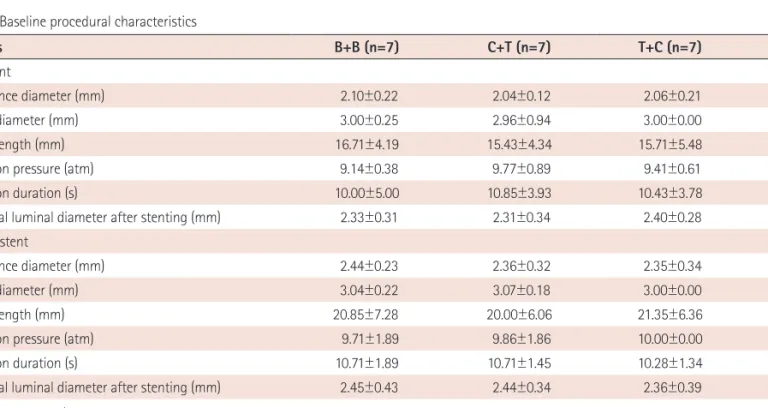
Table 1. Baseline procedural characteristics

Variables B+B (n=7) C+T (n=7) T+C (n=7) p

Distal stent

Reference diameter (mm) 2.10±0.22 2.04±0.12 2.06±0.21 0.569

Stent diameter (mm) 3.00±0.25 2.96±0.94 3.00±0.00 0.883

Stent length (mm) 16.71±4.19 15.43±4.34 15.71±5.48 0.751

Inflation pressure (atm) 9.14±0.38 9.77±0.89 9.41±0.61 0.482

Inflation duration (s) 10.00±5.00 10.85±3.93 10.43±3.78 0.672

Minimal luminal diameter after stenting (mm) 2.33±0.31 2.31±0.34 2.40±0.28 0.631

Proximal stent

Reference diameter (mm) 2.44±0.23 2.36±0.32 2.35±0.34 0.232

Stent diameter (mm) 3.04±0.22 3.07±0.18 3.00±0.00 0.737

Stent length (mm) 20.85±7.28 20.00±6.06 21.35±6.36 0.761

Inflation pressure (atm) 9.71±1.89 9.86±1.86 10.00±0.00 0.941

Inflation duration (s) 10.71±1.89 10.71±1.45 10.28±1.34 0.861

Minimal luminal diameter after stenting (mm) 2.45±0.43 2.44±0.34 2.36±0.39 0.597

Overlapping segment

Overlapping length (mm) 6.29±1.34 5.73±1.47 6.01±0.93 0.372

Minimal luminal diameter at overlapping site (mm) 2.34±0.33 2.37±0.38 2.38±0.30 0.586

Artery spasm after stenting, n (%) 1 (14.3) 2 (28.6) 2 (28.6) 0.769

C: sirolimus-eluting stent, Cypher, T: paclitaxel eluting stent, Taxus, B: bare metal stent, C+T: distal Cypher+proximal Taxus, T+C: distal Taxus+proximal Cypher

(3)

cant endothelial dysfunction was defined as a transient >90% lu- minal narrowing of the stented iliac artery.

3)4)

Subsequently, rabbits were euthanized with an overdose of ket- amine, and the stented arteries were perfusion fixed in situ. Speci- mens were embedded in 10% formalin; and 3 mm from the proximal

segment, middle overlapped segment, and distal ends of the stent were cut with a tungsten carbide knife (Delaware Diamond Knives, Wilmington, DE, USA). Sections were cut on an automated micro- tome (Leica) and stained with hematoxylin and eosin.

A   B  

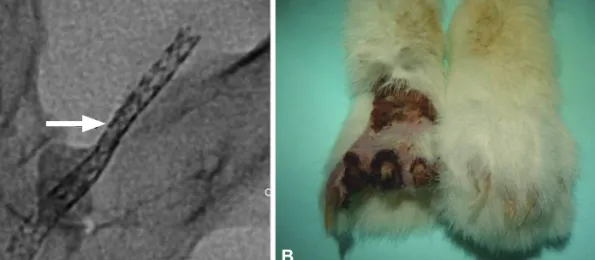
Fig. 1. A representative case of stent fracture, associated occlusion and ischemic necrosis. A: limb ischemia caused by stent fracture and subsequent arte- rial occlusion. Arrow indicates the fractured struts. B: gross appearance of limb necrosis.

Table 2. Follow-up angiographic characteristics at 3 months after stenting

Variables B+B (n=7) C+T (n=7) T+C (n=7) P

1

P

2

P

3

P

4

Distal stent

Reference diameter (mm) 2.11±0.27 2.01±0.16 2.08±0.30 0.293

Minimal luminal diameter (mm) 1.02±0.20 1.45±0.61 2.09±0.27 <0.001 0.076 <0.001 0.011

Restenois percentage (%) 41.98±14.94 39.21±17.72 8.10±3.21 <0.001 0.752 <0.001 <0.001

Late loss (mm) 0.39±0.07 0.40±0.20 0.06±0.02 <0.001 0.901 <0.001 <0.001

Edge restenosis percentage (%) 12.77±8.39 8.09±4.91 11.71±5.73 0.636

Stent fracture, n (%) 0 (0) 3 (42.9) 0 (0) 0.030 0.070 - 0.070

Stent thrombosis, n (%) 0 (0) 0 (0) 0 (0) -

Proximal stent

Reference diameter (mm) 2.41±0.34 2.33±0.37 2.29±0.28 0.273

Minimal luminal diameter (mm) 2.49±0.40 2.46±0.31 2.38±0.29 0.427

Restenois percentage (%) 10.01±4.33 6.13±2.89 5.45±3.10 0.237

Late loss (mm) 0.03±0.03 0.03±0.01 0.02±0.01 0.584

Edge restenosis percentage (%) 14.71±6.31 14.11±5.17 10.44±8.31 0.591

Stent fracture, n (%) 0 (0) 0 (0) 0 (0) -

Stent thrombosis, n (%) 0 (0) 0 (0) 0 (0) -

Overlapping segment

Minimal luminal diameter (mm) 2.10±0.39 2.21±0.34 2.19±0.35 0.287

Restenois percentage (%) 11.93±8.52 7.15±4.81 6.51±4.33 0.638

Late loss (mm) 0.12±0.09 0.10±0.04 0.06±0.03 0.721

Stent fracture, n (%) 0 (0) 0 (0) 0 (0) -

Stent thrombosis, n (%) 0 (0) 0 (0) 0 (0) -

P

1

, P

2

, P

3

and P

4

indicate the p of the comparisons among the overall 3 groups, between B+B and C+T, between B+B and T+C, between C+T and T+C, re-

spectively. C: sirolimus-eluting stent, Cypher, T: paclitaxel eluting stent, Taxus, B: bare metal stent, C+T: distal Cypher+proximal Taxus, T+C: distal

Taxus+proximal Cypher

(4)

Histopathological analysis

All histological samples were managed blindly by an expert. Com- puterized planimetry was performed as described previously.

5)6)

Specimens were embedded in methylmethacrylate, and 50-100 μm sections were cut approximately 1 mm apart with a low-speed di- amond wafer mounted on a Buehler Isomet saw (Buehler Ltd., Lake Bluff, IL, USA), leaving the stent wires intact in the cross-sections to minimize potential artifacts caused by removing stent wires.

A calibrated microscope digital video imaging system, and a mi- crocomputer program (Visus 2000 Visual Image Analysis System) were used to measure the sections. Lumen area borders were manu- ally traced, and the area was circumscribed by the internal elastic lamina and the innermost border of the external elastic lamina (ex- ternal elastic lamina area). The measured internal elastic lamina area minus the lumen area was considered the neointimal area. Area stenosis was calculated as 100×{1-(lesion lumen area/lesion inter- nal elastic lamina area)}.

5)

The measurements were made on four cross-sections of each stent.

Arterial injury at each strut was evaluated by the anatomic struc- tures that penetrated each strut. A numeric value was used as pre- viously described by Schwartz et al.

7)

: 0=no injury; 1=break in the

internal elastic membrane; 2=perforation of the media; 3=perfora- tion of the external elastic membrane to the adventitia. The injury score was calculated by dividing the sum of each inflammatory sc- ore by the total strut number at the examined section.

5)6)

To determine the inflammatory score for each individual strut, a grading system was used as follows: 0=no inflammatory cells sur- rounding the strut; 1=light, noncircumferential lymphohistiocytic infiltrate surrounding strut; 2=localized, moderate to dense cellu- lar aggregate surrounding the strut noncircumferentially; and 3=

circumferential dense lymphohistiocytic cell infiltration of the strut.

The inflammatory score for each cross-section was calculated by dividing the sum of the individual inflammatory scores by the total number of struts in the examined section.

6)8)

Statistical analyses

All statistical analyses were performed using Statistical Package for the Social Sciences (SPSS) 11.0 (SPSS Inc., Chicago, IL, USA).

Differences among groups of continuous variables were evaluated by one-way analysis of variance. Differences in discrete variables were expressed as counts and percentages and were analyzed with the chi-square (or Fisher’s exact) test among groups as appropri- Table 3. Comparisons of morphometric measurements at 3 months after stenting

Variables B+B (n=7) C+T (n=7) T+C (n=7) P

1

P

2

P

3

P

4

Distal segment

Injury scores 1.45±0.57 1.69±0.49 1.29±0.46 0.037 0.221 0.406 0.006

Lumen area (mm

2

) 1.31±1.11 2.09±1.09 3.33±0.73 <0.001 0.081 <0.001 <0.001

Neointima area (mm

2

) 1.60±0.96 1.40±0.73 1.08±0.40 0.114

Internal elastic lamina area (mm

2

) 2.90±0.57 3.50±0.85 4.41±1.02 <0.001 0.015 <0.001 0.001

Area stenosis (%) 57.97±35.20 41.64±23.73 24.18±5.92 0.001 0.152 <0.001 0.001

Inflammatory scores 1.01±0.32 1.98±0.68 1.47±0.40 <0.001 <0.001 <0.001 0.003

Proximal segment

Injury scores 1.30±0.41 1.21±0.36 1.31±0.43 0.749

Lumen area (mm

2

) 3.21±0.77 3.89±0.41 3.75±0.23 0.003 0.002 0.018 0.173

Neointima area (mm

2

) 1.07±0.27 1.24±0.31 1.04±0.24 0.124

Internal elastic lamina area (mm

2

) 4.28±0.68 5.13±0.58 4.80±0.29 0.001 <0.001 0.011 0.178

Area stenosis (%) 25.76±8.14 23.94±4.57 21.77±4.17 0.222

Inflammatory scores 1.01±0.33 1.22±0.26 1.15±0.32 0.174

Overlapped segment

Injury scores 1.48±0.44 1.53±0.46 1.69±0.46 0.264

Lumen area (mm

2

) 3.18±1.13 3.24±1.09 3.50±0.62 0.552

Neointima area (mm

2

) 1.35±0.50 1.38±0.39 1.46±0.39 0.658

Internal elastic lamina area (mm

2

) 4.52±0.81 4.62±1.07 4.96±0.71 0.243

Area stenosis (%) 32.04±18.90 31.10±10.66 29.58±6.80 0.836

Inflammatory scores 1.02±0.30 1.73±0.61 1.75±0.67 <0.001 <0.001 <0.001 0.919

P

1

, P

2

, P

3

and P

4

indicate the p of the comparisons among the overall 3 groups, between B+B and C+T, between B+B and T+C, between C+T and T+C, re-

spectively. C: sirolimus-eluting stent, Cypher, T: paclitaxel eluting stent, Taxus, B: bare metal stent, C+T: distal Cypher+proximal Taxus, T+C: distal

Taxus+proximal Cypher

(5)

ate. Data are expressed as rate or mean±standard deviation. A two- tailed p of <0.05 was considered statistically significant.

Results

The baseline procedural characteristics were similar among the three groups (Table 1). The 3-month follow-up angiography of the distal stented segment after the index procedure showed that the B+B and C+T groups had significantly lower minimal luminal diam- eter (MLD), higher restenosis percentage, and late loss compared with those in the T+C group. The reference diameter and edge re- stenosis percentage were similar among the three groups. Interest- ingly, three cases of stent fractures occurred but only in the C+T gr- oup, whereas no stent fractures were observed in the other two gr- oups. Furthermore, one rabbit with a stent fracture developed ex- tensive necrosis distal to the fracture site (Fig. 1). No angiographic stent thrombosis was observed in the three groups at the time of

angiographic follow-up. The three groups did not differ significantly in the proximal stented segment, including MLD, restenosis percent- age, and late loss. No stent fracture or thrombosis was observed among the three groups. Similar results were observed in the over- lapping segment (Table 2).

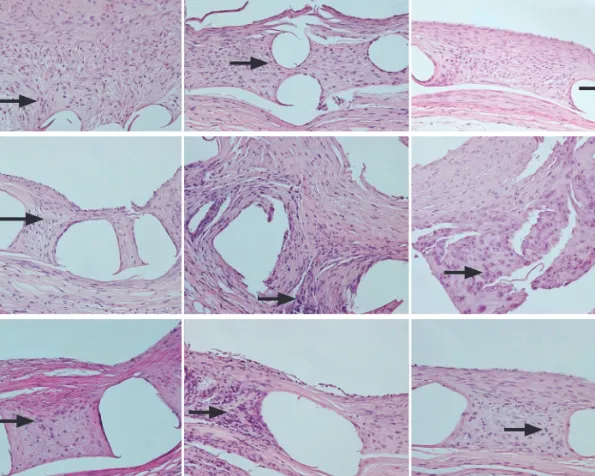
The histopathological results are presented in Table 3 and Figs. 2 and 3. Consistent with the 3-month angiographic outcomes, the B+B and C+T groups had significantly lower luminal area, lower in- ternal elastic lamina (IEL) area, and higher area stenosis in the dis- tal stented segment compared with those in the T+C group. The C+T group had significantly lower IEL area, and a trend toward lower lu- minal area compared with those in the B+B group. In addition, the C+T group had significantly higher injury and inflammatory scores due to the three cases of stent fracture compared with those in the T+C and B+B groups. Despite similar injury scores, the T+C gr- oup had significantly higher inflammatory scores in the distal stent- ed segment than those in the B+B group.

Fig. 2. Overall endothelialization under a microscope. A: bare metal stent group. B: distal Cypher+proximal Taxus group. C: distal Taxus+proximal Cypher group. From left to right are proximal segment, overlapped segment, and distal segment, respectively.

A  

B  

C  

(6)

The C+T and T+C groups had significantly larger luminal area and IEL area in the proximal stented segment compared with those in the B+B group. But, neointimal area and area stenosis did not differ significantly among the three groups. Furthermore, the injury and inflammatory scores were similar among the three groups.

The three groups did not differ significantly regarding luminal area, neointima area, IEL area, or area stenosis in the overlapping seg- ment. Moreover, the three groups also had similar injury scores. But, the C+T and T+C groups had significantly higher inflammatory sc- ores than those in the B+B group, consistent with the results in the distal stented segment.

The endothelial function assessed with the ACh provocation test showed that the C+T and T+C groups had a significantly higher in-

cidence of significant vasoconstriction as compared with that in the B+B group, suggesting significant endothelial dysfunction in the vessels where DESs were deployed (Table 4). Significant iliac artery spasm (luminal narrowing >90%) was induced with ACh infusion (50 μg/min) (Fig. 4A), and vasodilation was achieved after a nitroglyc- erine infusion (Fig. 4B).

Discussion

As the overall angiographic outcomes and histopathological re- sults were comparable between the two groups with different first- generation DES implants (Cypher and Taxus) at three different stent- ed segments (proximal, overlapping and distal), the present study Fig. 3. High power light microscopic findings (×200) of hematoxylin and eosin staining. A: bare metal stent group. B: distal Cypher+proximal Taxus group.

C: distal Taxus+proximal Cypher group. From left to right are proximal segment, overlapped segment, and distal segment, respectively. More large round mononuclear cells (inflammatory white blood cells, black arrows) were observed in the drug eluting stent groups (B and C) compared with those in the bare metal stent group (A).

B   A  

C  

Table 4. Endothelial function assessed with the acetylcholine provocation test at 3 months after stenting

Variables B+B (n=7) C+T (n=7) T+C (n=7) P

1

P

2

P

3

P

4

Acetylcholine induced significant vasoconstriction, n (%) 1 (14.3) 6 (85.7) 5 (71.4) 0.017 0.029 0.103 1.000

Diameter narrowing rate after acetylcholine infusion (%) 30.00±28.28 94.86±7.36 88.29±16.54 <0.001 <0.001 <0.001 0.337

P

1

, P

2

, P

3

and P

4

indicate the p of the comparisons among the overall 3 groups, between B+B and C+T, between B+B and T+C, between C+T and T+C, re-

spectively. C: sirolimus-eluting stent, Cypher, T: paclitaxel eluting stent, Taxus, B: bare metal stent, C+T: distal Cypher+proximal Taxus, T+C: distal

Taxus+proximal Cypher

(7)

did not support the hypothesis that the different implantation se- quences of heterogeneous DESs have distinct impacts on the en- dothelialization and arterial responses in the rabbit iliac artery.

Some studies have shown that deploying BMSs for diffuse long lesions is associated with a high restenosis rate.

9)

DESs have signifi- cantly reduced the rate of restenosis by inhibiting neointimal hyper- plasia after stenting. However, a diffuse long lesion still remains an independent risk factor for restenosis even in the DES era.

10)

There- fore, a variety of methods have been tested to treat diffuse long le- sions including the heterogeneous overlapping DES.

1)2)11)12)

Kang et al.

1)

evaluated the effect of stent overlap with different DESs on neointimal hyperplasia in 47 patients with diffuse long lesions. Their study showed that percutaneous coronary intervention with differ- ent overlapping DESs resulted in similar suppression of neointimal hyperplasia and did not increase the side effects of the DES com- pared with using the same overlapping DES. Similarly, a recent study also suggested that overlapping heterogeneous DESs and overlap- ping homogeneous DESs had similar long-term safety and efficacy in patients with diffuse long lesions.

2)

A preclinical study in a porcine model reported that overlapping different DESs did not differ signi- ficantly from overlapping the same DES in terms of restenosis rate, neointimal area, and endothelialization scores.

5)

However, only one group of heterogeneous overlapping stents was used in their study.

5)

It still remains unclear whether the implantation sequences of het- erogeneous overlapping DES influences endothelialization and neo- intimal hyperplasia. Therefore, our study was the first to test this qu- estion and showed that although the two overlapping DES groups had significantly smaller neointimal area and less late loss compared with those in the BMS group, the two overlapping DES groups did not differ significantly, suggesting that the different Cypher and Taxus

implantation sequences had similar effects on neointimal hyperplasia.

Concerns have been raised regarding the safety of DESs. Some studies have shown that DESs result in a higher incidence of stent thrombosis compared with BMSs even long after the index proce- dure.

13)

Increasing evidence suggests that the local inflammatory reaction in the DES segment might be an important mechanism be- hind stent thrombosis.

14)15)

Nakazawa et al.

14)

showed that DES im- plantation in the culprit lesion of acute myocardial infarction is as- sociated with delayed arterial healing and increased local inflam- matory reactions, which increase the rate of late stent thrombosis.

Cook et al.

15)

demonstrated that very late stent thrombosis is asso- ciated with histopathological signs of inflammation. Some preclin- ical studies have also revealed that DESs are related to significantly higher inflammatory reactions in the stented segment as compar- ed with those in BMSs.

5)16)17)

Finn et al.

16)

compared the histopath- ological response at sites of overlapping homogeneous SESs, PESs, and BMSs in the rabbit iliac artery. Their study showed that DESs are associated with delayed arterial healing and promote inflamma- tion at overlap sites compared with those of BMSs, suggesting that patients receiving overlapping DESs need more frequent follow-up than patients with overlapping BMSs. In addition, a study by Lim et al.

5)

also suggested that although DESs inhibit neointimal hyperpla- sia, significantly higher inflammation reactions and poorer endothe- lialization occur at the site of overlapped segments as compared with those of BMS. Consistent with these studies,

5)16)17)

our study also suggested that implanting overlapping DESs was related to significantly higher inflammatory reactions in the overlapped seg- ment as compared with those in BMS. Specifically, our study also revealed that the local inflammatory reactions did not differ signi- ficantly by implantation sequence of the different DESs.

Fig. 4. Acetylcholine provocation test. A: significant iliac artery spasm (luminal narrowing >90%) induced by acetylcholine infusion (50 μg/min). B: vasodi- lation after nitroglycerine infusion.

A   B  

(8)

Furthermore, some studies have suggested that DES implantation is associated with significant endothelial dysfunction compared to that of BMSs.

18)

Similarly, our study showed that the two DES groups had a higher incidence of significant iliac artery spasm as compar- ed with that in the BMS group, suggesting that a higher prevalence of endothelial dysfunction occurred in the DES implanted segment.

Given the higher inflammatory scores observed in the two DES gr- oups, we suppose that the long-lasting inflammatory reactions at the DES stented segments might be the mechanism behind the sig- nificant endothelial dysfunction in the DES groups.

Interestingly, three cases of stent fracture occurred at a site distal to the Cypher segment. These fractures might have developed due to active joint motion in the area of the iliac artery. Recently, special attention has been paid to the clinical implications of stent fracture.

Chhatriwalla et al.

19)

reviewed literature regarding DES fracture and showed that most DES fracture reports involved Cypher stents, and that a DES fracture could be associated with stent thrombosis, myo- cardial infarction, or angina. Due to the potentially harmful effects of stent fracture, we suggest that a more flexible DES should be used in an artery with a greater range of motion such as the mid right coronary artery. Notably, the Cypher and Taxus stents did not differ significantly regarding endothelialization, neointimal growth, or arterial response at the proximal and overlapped segments, sug- gesting that the effect of inhibiting neointimal hyperplasia and pe- ristructural inflammation were similar between these two types of DESs. More neointimal hyperplasia and a greater arterial response in the distal segment of C+T was mainly due to the stent fractures.

Study limitations

The present study had some limitations. First, the number of ex- perimental animals was relatively small, which might have weak- ened the conclusions. Second, we used first-generation DESs (Cypher and Taxus), and compared them with BMSs. Furthermore, we could not distinguish the effects of eluting drug from those of polymers.

Third, we prepared the groups with the same overlapping DESs.

Thus, the conclusions of the current study regarding the impacts of different implantation sequences on endothelialization and arterial response should be interpreted cautiously. Fourth, because the stents were deployed in normal iliac arteries, the results may not be representative of human atherosclerotic disease, particularly human coronary artery disease.

In conclusion, despite similar arterial injury, greater inflammatory reactions were observed in the DES overlapped segments regard- less of the implantation sequence as compared with BMS. Moreover, DES was more associated with impaired endothelial function on the adjacent nonstented segments as compared with that of BMS.

Therefore, more frequent clinical follow-up with intensive medical

therapy will be needed in patients receiving overlapping DESs as com- pared with those receiving overlapping BMSs.

Acknowledgments

This study was supported by a research grant from the Korean So- ciety of Cardiology (2006).

References

1. Kang WC, Oh KJ, Han SH, et al. Angiographic and intravascular ultra- sound study of the effects of overlapping sirolimus- and paclitaxel- eluting stents: comparison with same drug-eluting overlapping stents.

Int J Cardiol 2007;123:12-7.

2. Her SH, Yoo KD, Park CS, et al. Long-term clinical outcomes of over- lapping heterogeneous drug-eluting stents compared with homoge- neous drug-eluting stents. Heart 2011;97:1501-6.

3. Kim JW, Seo HS, Park JH, et al. A prospective, randomized, 6-month comparison of the coronary vasomotor response associated with a zotarolimus- versus a sirolimus-eluting stent: differential recovery of coronary endothelial dysfunction. J Am Coll Cardiol 2009;53:1653-9.

4. Obata JE, Kitta Y, Takano H, et al. Sirolimus-eluting stent implantation aggravates endothelial vasomotor dysfunction in the infarct-related coronary artery in patients with acute myocardial infarction. J Am Coll Cardiol 2007;50:1305-9.

5. Lim SY, Jeong MH, Hong SJ, et al. Inflammation and delayed endotheli- zation with overlapping drug-eluting stents in a porcine model of in- stent restenosis. Circ J 2008;72:463-8.

6. Lim SY, Bae EH, Jeong MH, et al. Effect of alpha lipoic acid in a porcine in-stent restenosis model. J Cardiol 2009;54:375-85.

7. Schwartz RS, Huber KC, Murphy JG, et al. Restenosis and the propor- tional neointimal response to coronary artery injury: results in a por- cine model. J Am Coll Cardiol 1992;19:267-74.

8. Hong YJ, Jeong MH, Lee SR, et al. Anti-inflammatory effect of abcix- imab-coated stent in a porcine coronary restenosis model. J Korean Med Sci 2007;22:802-9.

9. Serruys PW, Foley DP, Suttorp MJ, et al. A randomized comparison of the value of additional stenting after optimal balloon angioplasty for long coronary lesions: final results of the additional value of NIR stents for treatment of long coronary lesions (ADVANCE) study. J Am Coll Cardiol 2002;39:393-9.

10. Colombo A, Chieffo A. Drug-eluting stent update 2007: part III: tech- nique and unapproved/unsettled indications (left main, bifurcations, chronic total occlusions, small vessels and long lesions, saphenous vein grafts, acute myocardial infarctions, and multivessel disease). Circul- ation 2007;116:1424-32.

11. Tsagalou E, Chieffo A, Iakovou I, et al. Multiple overlapping drug- eluting stents to treat diffuse disease of the left anterior descending coronary artery. J Am Coll Cardiol 2005;45:1570-3.

12. Chu WW, Kuchulakanti PK, Torguson R, et al. Comparison of clinical

outcomes of overlapping sirolimus- versus paclitaxel-eluting stents in

patients undergoing percutaneous coronary intervention. Am J Car-

diol 2006;98:1563-6.

(9)

13. Holmes DR Jr, Kereiakes DJ, Garg S, et al. Stent thrombosis. J Am Coll Cardiol 2010;56:1357-65.

14. Nakazawa G, Finn AV, Joner M, et al. Delayed arterial healing and in- creased late stent thrombosis at culprit sites after drug-eluting stent placement for acute myocardial infarction patients: an autopsy study.

Circulation 2008;118:1138-45.

15. Cook S, Ladich E, Nakazawa G, et al. Correlation of intravascular ultra- sound findings with histopathological analysis of thrombus aspirates in patients with very late drug-eluting stent thrombosis. Circulation 2009;120:391-9.

16. Finn AV, Kolodgie FD, Harnek J, et al. Differential response of delayed

healing and persistent inflammation at sites of overlapping sirolimus- or paclitaxel-eluting stents. Circulation 2005;112:270-8.

17. Wilson GJ, Nakazawa G, Schwartz RS, et al. Comparison of inflamma- tory response after implantation of sirolimus- and paclitaxel-eluting stents in porcine coronary arteries. Circulation 2009;120:141-9.

18. Shinke T, Li J, Chen JP, et al. High incidence of intramural thrombus after overlapping paclitaxel-eluting stent implantation: angioscopic and histopathologic analysis in porcine coronary arteries. Circ Car- diovasc Interv 2008;1:28-35.

19. Chhatriwalla AK, Cam A, Unzek S, et al. Drug-eluting stent fracture and

acute coronary syndrome. Cardiovasc Revasc Med 2009;10:166-71.

수치

Table 1. Baseline procedural characteristics
Fig. 1. A representative case of stent fracture, associated occlusion and ischemic necrosis
Fig. 2. Overall endothelialization under a microscope. A: bare metal stent group. B: distal Cypher+proximal Taxus group
Table 4. Endothelial function assessed with the acetylcholine provocation test at 3 months after stenting
+2

참조

관련 문서