ISSN: 2233-601X (Print) ISSN: 2093-6516 (Online)
Received: April 20, 2017, Revised: May 5, 2017, Accepted: May 11, 2017, Published online: June 5, 2017
Corresponding author: Chang Young Lim, Department of Thoracic and Cardiovascular Surgery, Andong General Hospital, 11 Angsil-ro, Andong 36743, Korea
(Tel) 82-54-840-0248 (Fax) 82-54-840-1515 (E-mail) [email protected]
© The Korean Society for Thoracic and Cardiovascular Surgery. 2017. All right reserved.
This is an open access article distributed under the terms of the Creative Commons Attribution Non-Commercial License (http://creativecommons.org/
licenses/by-nc/4.0) which permits unrestricted non-commercial use, distribution, and reproduction in any medium, provided the original work is properly cited.
Endovascular Repair in Acute Complicated Type B Aortic Dissection: 3-Year Results from the Valiant US
Investigational Device Exemption Study
Chang Young Lim, M.D.
Department of Thoracic and Cardiovascular Surgery, Andong General Hospital
Acute complicated type B aortic dissection (TBAD) is a potentially catastrophic, life-threatening condition. If left untreated, there is a high risk of aortic rupture, irreversible organ or limb damage, or death. Several risk factors have been associated with acute complicated TBAD, including age and refractory hypertension. In the acute phase, even uncomplicated patients are more prone to develop complications if hypertension and pain are left medically untreated. Innovations in stent graft technologies have incrementally improved out- comes since their first use for this condition in 1999, though improvement is needed in mitigating periproce- dural complications, adverse events, and mortality. In the past decade, endovascular repair has become the preferred treatment because of its superior outcomes to open repair and medical therapy. The Valiant Captivia Thoracic Stent Graft System is a third-generation endovascular stent graft with advancements in minimally invasive delivery, conformability to the anatomy, and the minimization of adverse sequelae. Herein, this stent graft is briefly reviewed and its 3-year outcomes are presented. Freedom from all-cause and dis- section-related mortality was 79.1% and 90.0%, respectiv ely. The Valiant Captiv ia Stent Graft represents a safe, effective intervention for acute complicated TBAD. Continued surveillance is needed to verify its lon- ger-term durability.
Key words: 1. Self expandable metallic stents 2. Aortic aneurysm, thoracic 3. Aortic dissection
4. Endovascular procedures 5. Valiant captiv ia
Introduction
1) The challenge of acute complicated type B aortic dissections
Acute aortic dissection is the most common type of potentially catastrophic aortic condition, and, if untreated, poses a high risk of early mortality. The widely adopted Stanford classification distinguishes type B aortic dissections (TBADs), which involve the
descending aorta distal from the left subclavian ar- tery (LSA), from type A dissections, which involve the aortic arch. TBADs may further be classified as complicated or uncomplicated based on their distinc- tive patterns of clinical presentation, and the prog- nosis may differ significantly. In-hospital mortality has been reported to be roughly 50% for complicated TBAD patients and 10% for uncomplicated TBAD pa- tients [1-5]. Roughly one-quarter of all acute TBADs
https://doi.org/10.5090/kjtcs.2017.50.3.137
may be considered complicated if there are signs of imminent rupture, any sign of organ or limb malper- fusion, the presence of refractory hypertension, hypo- tension (<90 mm Hg systolic), or cardiogenic shock.
Acute complicated TBADs are challenging because of the formidable risk of organ or limb malperfusion, and/or the rapid expansion of the thoracic aorta, which may lead to rupture (a diameter of >4.5 cm or 5 cm). A timely intervention is critical for survival.
Malperfusion is caused by the static or dynamic com- pression of the true lumen by the false lumen, which must be successfully managed to restore end-organ perfusion and avoid irreversible end-organ or limb damage [6]. Partial false lumen thrombosis indepen- dently predicts aortic growth and follow-up mortality in acute TBAD [7,8]. In 2007, Song et al. [9] reported that upper false lumen diameters ≥22 mm predicted late mortality (up to 9 years) versus diameters <22 mm (p<0.001).
Compared to patients with chronic expanding TBADs, patients with acute complicated TBADs are known to have poorer outcomes because of their presentation and aggressive course. In 2006, Bockler et al. [10] reported a 30-day mortality rate of 19%
in patients with acute complicated TBADs versus 0%
in patients with chronic TBADs. Systemic hyper- tension has been reported as one of the most im- portant risk factors for acute TBAD, present in about 80% of patients [1], as well as increasing age, athe- rosclerosis, and taller stature [11-14].
2) Interventions for acute complicated type B aortic dissection
The mainstay life-saving treatments for acute com- plicated TBAD are open surgical repair (OSR), which was first performed in the 1950s, and thoracic endo- vascular aortic repair (TEVAR), first undertaken in 1999 by both Dake et al. [15] (a series of 19 acute complicated TBADs with early death occurring in 16% of the patients) and Nienaber et al. [16] (a case-control study of 24 subacute or chronic TBAD patients, 12 of whom underwent OSR, with a 33%
mortality rate, and 12 of whom underwent TEVAR, with no early deaths). Medical therapy is typically a less aggressive modality reserved for uncomplicated acute, subacute, and chronic TBAD cases. However, medical therapy was employed for many patients be- fore the debut of endovascular interventions. Currently,
only a minority of patients with acute complicated TBAD are treated by medical therapy alone, if the use of either TEVAR and OSR is ruled out because of contraindicating patient comorbidities, anatomical con- siderations, or a lack of appropriate facilities, equip- ment, or expertise [17]. OSR and TEVAR each have their own rates of morbidity, treatment related com- plications, and mortality [15,18]. Although OSR is preferred for type A aortic dissections, endovascular repair has become the preferred first-line treatment for acute complicated TBADs and is increasingly em- ployed for the distal arch, with OSR recommended to be reserved for patients unsuitable for endovascular repair [19].
Endovascular repair is now a standard therapy for acute complicated TBAD [20]. Fattori et al. [21,22]
reported that TEVAR mortality rates when used to treat acute complicated TBADs are now similar to the mortality rates when TEVAR is used to treat un- complicated TBADs, particularly with advancements in endovascular technologies. TEVAR offers a nearly a 4-fold increase in early survival for patients with acute complicated TBADs, which may be attributable to its myriad advantages [23]. TEVAR is less invasive than OSR. It is also a straightforward intervention to train for and perform, particularly with the avail- ability of newer generation thoracic devices. The per- iprocedural advantages of TEVAR include a shorter procedure time, reduced blood loss, and faster pa- tient recovery [24]. The technical success rates of TEVAR are high for both acute TBAD (ranging from 93.3% to 100.0%) [25-27] as well as for chronic TBAD (ranging from 77.6% to 100.0%) [28-30]. In addition, TEVAR for acute TBAD is surmised to promote aortic remodeling and have a prophylactic effect against late complications [31-33]. Although TEVAR is sus- ceptible to periprocedural complications such as en- doleak, new entry tears, and migration, technical suc- cess is commonly achieved.
3) Thoracic endovascular aortic repair versus open surgical repair versus medical therapy
Several studies have shown TEVAR survival out-
comes to be superior to OSR in the short- to mid-
term time horizon [34-36]. Notable studies include a
2010 comparative analysis by Zeeshan et al. [37] at
the University of Pennsylvania. In-hospital mortality
was significantly different between groups, with mor-
tality rates of 4% for TEVAR, 40% for OSR, and 33%
for medical therapy (p=0.006). For TEVAR patients, survival was reported at years 1, 3, and 5 to be 82%, 79%, and 79%, whereas the survival in pa- tients receiving OSR or medical therapy (grouped to- gether) was 58%, 52%, and 44% (p=0.008) at the same times [37]. These findings were confirmed in a 2014 comparative decision model study by Hogendoorn et al. [19], which concluded that TEVAR showed greater total effectiveness than OSR for all age groups.
In 2013, Fattori et al. [22] reported a propen- sity-matched analysis of the International Registry of Acute Aortic Dissection database (N=1,129 patients).
Notably, this study revealed historical differences be- tween TEVAR and medical therapy from 1995 to 2015; that is, from before the advent of TEVAR for acute TBADs, during the rising trend of TEVAR adop- tion in the 2000s, all the way to contemporary practice. TEVAR plus medical therapy (n=276, 25.2%) was compared to medical therapy alone (n=853, 74.8%) for both acute complicated and acute un- complicated TBADs. Several baseline characteristics were significantly different between groups. It is in- teresting to note that TEVAR-treated TBADs were significantly more likely than medically managed dis- sections to be considered complicated (61.7% versus 37.2%, respectively; p<0.001), which is understan- dable given the scope of the time period and the seesaw-like shift in the usage of these respective interventions. Further differences between TEVAR and medical therapy can be seen in in specific com- plication categories, including malperfusion (21.7%
versus 8.4%, p<0.001), significantly worse reported pain (27.5% versus 15.7%, p<0.001), acute renal failure prior to treatment (21.4% versus 12.4%, p<
0.001) and any pulse deficit on presentation (28.3%
versus 13.4%, p<0.001), all of which were more prevalent in the interventional group. In-hospital mortality was statistically similar (10.9% versus 8.7%, p=0.273) despite the TEVAR group presenting with more complications. However, the cumulative probability of mortality at 5 years was significantly lower in the TEVAR group than in the group of pa- tients who underwent medical therapy alone ( 29.0%
versus 15.5%, p=0.018) [22].
Longer-term outcomes for TEVAR and OSR for acute complicated TBADs, however, are sparse and remain of great interest. Current long-term survival
data suggest that no significant differences are pres- ent between TEVAR and OSR, which was recently confirmed in a 2016 meta analysis of 8 studies, in addition to a study conducted in a Chinese popula- tion of 118 inpatients ( n=45 in the OSR group and n=73 in the TEVAR group) enrolled from January 2004 to January 2015. They concluded that there was no significant difference in the 10-year survival between OSR and TEVAR ( 56.7% and 26.1%, respec- tively; log-rank p=0.953) [38].
Only in recent years has oversizing been scruti- nized and debated in terms of its relationship with severe complications over time, including stent-graft- induced new entry (SINE) tears, retrograde type A dissection, and proximal neck dilatation [17,39]. Ex- cessive distal oversizing has been reported to be an independent predictor of SINE events, which usually require reintervention. It is believed that SINE events occur because of the fragility of the dissected intimal membrane in acute dissection as opposed to chronic dissection [39,40], although SINE events have been reported to be more common in chronic dissection [41]. However, a 2016 study of type B dissection cas- es reported that a distal-first rather than prox- imal-first deployment approach resulted in signifi- cantly fewer SINE events [42]. A better understanding of the long-term durability of TEVAR is needed to appropriately advance the technology and practice to achieve better durability and outcomes.
The US DISSECTION trial 3-year results of Valiant Captivia for acute complicated
type B aortic dissection
The DISSECTION trial is an ongoing prospective, nonrandomized, multicenter evaluation of 50 patients (80% male) with acute complicated TBAD treated with the Valiant Captivia Thoracic Stent Graft System (Medtronic, Santa Rosa, CA, USA). Bavaria et al. [43]
have described the design and methods of the trial
and reported the 30-day and 1-year results. The
study has continued with plans for a 5-year fol-
low-up. Valiant Captivia received US Food and Drug
Administration (FDA) investigational device exemp-
tion (IDE) in January 2014 and DISSECTION trial en-
rollment began in 16 centers in the United States.
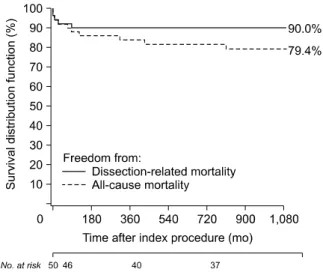
Fig. 1. All-cause mortality and dissection-related mortality through 3 years.
1) The Valiant Captivia Thoracic Stent Graft System Valiant Captivia is a third-generation stent graft system with approved indications for use in Europe and US for thoracic aortic aneurysms, transections, and dissections. As the successor to the Talent Tho- racic Stent Graft System (Medtronic), Valiant has been evaluated in a number of critical research studies specifically aimed at elucidating its feasibility, safety, and effectiveness in the thoracic aorta, all with sat- isfactory results: VALOR II ( US IDE for descending thoracic aneurysms, n=160) [44,45], VIRTUE (European registry for all types of TBADs, n=100) [46-48], the VALIANT CAPTIVIA registry (mid- to high-risk all-com- er cohort, n=100) [28], the RESCUE trial (blunt tho- racic aortic injury, n=50) [49,50], and the Valiant Mona LSA first-in-human feasibility trial using a modified Valiant Captivia System with branching to allow LSA patency ( US FDA IDE via the new Innovation Pathway, n=9) [51]. The VIRTUE registry was a prospective co- hort study comparing 3 groups of TBADs: compli- cated acute (n=50), subacute (n=24), and chronic (n=26). All-cause mortality at 3 years was 18%, 4%, and 24%, respectively, and dissection-related mortal- ity was 12%, 4%, and 9%, respectively [46].
The DISSECTION trial included patients diagnosed with an acute complicated TBAD who were treated with a stent graft within 14 days from presentation.
The included patients had malperfusion (visceral, re- nal, spinal cord, and/or lower limb ischemia) or rup- ture; patients were excluded if they had a history of a connective tissue disorder. The Valiant Captivia Thoracic Stent Graft System consists of a modular, self-expanding endograft preloaded into the Captivia Delivery System. The endograft size matrix was ex- panded in 2014, significantly broadening the size and configuration choices to address a wider range of anatomical variants. The proximal end of the endog- raft is composed of its bare-spring 8-Peak FreeFlo configuration, which was designed and bench-tested to successfully distribute force radially across its multiple apices. The distal end consists of either a closed web configuration devoid of bare springs or an 8-peak bare-spring configuration at the distal end.
2) Baseline characteristics and index procedure A total of 50 patients (80% males) were enrolled;
62% were Caucasian, 12% Asian, 22% black, and 4%
other. Their mean age was 57.2±12.9 years. The vast majority of patients had a medical history of hyper- tension (90%), while relatively few had a history of myocardial infarction (6.0%) or congestive heart fail- ure (8.0%). There were a variety of patient pre- sentations, with 1 in 5 patients presenting with an impending rupture (20%), and fewer with paraparesis (12%). Abdominal pain at presentation was present in 36% of patients. The mean time from the onset of symptoms to the index procedure was 4.7 days.
The majority of patients complained of back or chest pain ( 88%). Malperfusion was diagnosed in 86% of patients, of whom visceral ischemia was present in 40%, renal ischemia in 42%, lower limb ischemia in 40%, and spinal cord ischemia in 6%.
Medical therapy was administered to 84% of patients (antihypertensives), and 16% required ionotropic sup- port. At the baseline index procedure, the primary entry tear was covered in all dissections, and all cas- es achieved 100% delivery and deployment success with no misaligned deployments. Device oversizing was 12.0%±10.3% and the length of coverage was 196.9±67.1 mm. Through year 3 post-index, a total of 28 of the 32 eligible patients (87.5%) have re- portedly completed their follow-up appointment. Since the previous report by Bavaria et al. [43], there have been no post-index ruptures or conversions to OSR.
3) Mortality through 3 years
All-cause mortality was 8% in the first 30 days
and 14.6% (7 of 48) in the first year. Throughout
Table 1. Aortic remodeling through 3 years Stented segment
Months
6 12 24 36
False lumen maximum diameter (decreased or stable)
a)75.8 (25/33) 82.4 (28/34) 78.6 (22/28) 69.2 (18/26) True lumen maximum diameter (increased or stable)
a)93.9 (31/33) 94.1 (32/34) 85.7 (24/28) 92.3 (24/26) False lumen thrombosis (partial or complete) 75.8 (25/33) 79.4 (27/34) 70.4 (19/27) 75.0 (18/24) Values are presented as % (number).
a)