비타민나무 잎으로부터 항산화활성 관련 Flavonol Glycoside 분리
이지원*#·박주희*#·김주성***·최은영*·한상노*·성은수**·유창연*****·권용수****·김명조*****†
*삼성생약(주)부설 바이오생명공학연구소,**강원대학교 농업생명과학대학 식물자원응용공학과,
***제주대학교 생명자원과학대학 생물산업학부, ****강원대학교 약학대학 약학과,*****강원대학교 한방Bio연구소
Isolation of Flavonol Glycoside Related to Antioxidant Activity from Hippophae rhamnoides Leaves
Ji Won Lee
*#, Ju Hee Park
*#, Ju Sung Kim
***, Eun Young Choi
*, Sang No Han
*, Eun Soo Seong
**, Chang Yoen Yu
*****, Yong Soo Kwon
****and Myong Jo Kim
*****†*Institute of Samsung Herb Medicine Co., Ltd. Chuncheon 200-701, Korea.
**Department of Applied Plant Sciences, Kangwon National University, Chuncheon 200-701, Korea.
***College of Applied Life Science, Jeju National University, Jeju 690-756, Korea.
****Department of Pharmacy, Kangwon National University, Chuncheon 200-701, Korea.
*****Oriental Bio-herb Research Institute, Kangwon National University, Chuncheon 200-701, Korea
ABSTRACT : The leaves of
Hippophae rhamnoideswere extracted with methanol and then further fractioned with hexane, ethyl acetate, butanol and water in order to investigate biological activity. Two flavonol glycosides were isolated and identi- fied from ethyl acetate soluble fraction, which showed the strongest antioxidant activity (RC
50= 4.33
㎍/
㎖). Isolated two compounds have shown strong free radical scavenging activity. Especially, quercetin 3-
O-glucoside (RC
50= 2.60
㎍/
㎖) was more active than
α-tocopherol (RC
50= 4.67
㎍/
㎖). Total phenol and flavonoid contents were the highest to 4.17 and 1.14
㎎/
㎖in the ethyl acetate soluble fraction. In addition, ethyl acetate soluble fraction was shown to the strongest
α-glu- cosidase inhibitory activity (IC
50= 137.88
㎍/
㎖) among the fractions. The results suggest that leaves of
H. rhamnoidescould be a potential source of natural antioxidant.
Key Words
:
Hippophae rhamnoides, Flavonol Glycoside, DPPH Free Radical Activity, α-Glucosidase Inhibitory Activity.서 언
Flavonoid는 항산화특성을가진 대표적인 polyphenol 화합 물로서식물의색과풍미에 관여하며병원체와곤충들의공격 에대한방어기능및항암, 항바이러스, 항염, 항알러지등의 활성을 나타낸다 (Deshner et al., 1991; Hwang, 2009; Lee et al., 2006). Flavonoid는 화학구조에 따라서 flavonol, flavone, flavanone, anthocyanidin, catechin, bioflavan 등으로 나뉘며, 이 중 flavonol은 특이적인 골격 diphenylpropane (C6–C3–C6)의 C3수소가 hydroxyl group로 치환된형태로자 연계에서유리상태 (free state)로존재하기도하나 대개의경 우 O- 나 C-glycoside의 형태로 존재한다 (Chen and Zuo, 2007). Flavonol glycoside계 화합물은현재 100여종이밝혀졌
으며 aglycone의 종류에 따라 quercetin, isorhamnetin 및
kaempferol 등의 glycoside로 분류할 수 있는데, 항산화 활성 이있다고 알려진이들배당체의경우 hydroxyl group의수나 위치가 활성에 중요한 영향을 미치는 것으로 보고되었다
(Shim et al., 2005).
비타민나무(Hippophae rhamnoides)는보리수과에속하는관 목으로서 ‘산자나무’, ‘갈매보리수나무’, ‘보리수아재비’ 등으로
불려지기도 하며 vitamin, flavonoid, amino acid, 미량원소
등 100여종 이상의풍부한유효성분을 포함하고있다. 최근 열매, 잎, 수피등의뛰어난영양학적가치와생리활성을활용 한 기능성제품개발에많은관심이집중되면서전세계적으로 재배 면적이점차 확대되어가고있다. 중국과 러시아및 일 부유럽국가에서는열매와오일을이용하여액상형, 환약, 연 고 등여러 형태의의약품과화장품이개발하여사용하고있 으며 잼, 주스 등열매를 활용한다양한제품이 출시되고있
†Corresponding author: (Phone) +82-33-250-6413 (E-mail) [email protected]
#Ji Won Lee and Ju Hee Park are contributed equally to this work.
Received 2011 July 27 / 1st Revised 2011 August 13 / Accepted 2011 August 16
다. 비타민 나무의열매는 polyphenol, tocophenol, carotenoid
등 항산화 물질이풍부하여 (Kim et al., 2009), 뛰어난 항산 화효과를나타내는것으로보고되었다. 열매로부터추출된오 일은 피부질환, 호흡기질환, 소화기계통질환, 상처, 화상, 염
증치료에 효과가 뛰어난 것으로 알려져 있다 (Ge et al.,
1985; Xing et al., 2002; Xu et al., 1994; Yang et al., 2000). 비타민나무의잎은항산화, 항미생물, 항바이러스, 항종 양 활성 등이 보고되어 있고 (Geetha et al., 2002; Tsybikava et al., 1983), 관절염유도 처리된 rat model에서우수한항염 증활성을 나타내관절염치료제로의개발가능성이제시되었 다 (Ganju et al., 2005). 이처럼비타민나무를 이용한연구가 활발히진행중에 있고다양한제품이개발되고있지만대부 분은열매와오일에한정되어 있으며, 잎에대한이화학적성
분이나유효성분의자료는부족한실정이다.
이에본연구는비타민나무잎추출물의생리활성을검정하 여항산화활성이있다고알려진 flavonol glycoside를분리함 으로써비타민나무잎의항산화제로서의활용에기초 자료를 제공하고자 한다.
재료 및 방법
1.
실험재료본연구에사용한비타민나무잎은실온음지에서 7일동안 건조한후세절하였다. 이를 100% methanol에침지하여실온 에서 3일간추출한 후감압 농축하여조추출물을얻었다. 이 후조추출물을 증류수에현탁시켜 hexane, ethyl acetate, 수포
화 butanol을이용하여순차적으로용매분획하였다.
2.
총 페놀 및 플라보노이드함량Total phenol 함량은 Folin-Ciocalteau 시약을이용하여 측정 하였다 (Sato et al., 1996). 시료 100㎕ 에 Folin-Ciocalteau
시약 50㎕을넣어 5분간 안정화시킨뒤 20% Na2CO3(w/v)
을 300㎕첨가하여다시 15분간안정화시킨뒤 1㎖의증류
수를 첨가하여 725㎚ 파장에서 흡광도를 측정 하고 gallic
acid를 이용하여검량선을작성하여결과를나타내었다. Total flavonoid 함량은 Moreno 등 (2000)의 방법을변형하 여 각 농도 별 추출액 0.1㎖ 를첨가 하여 80% 에탄올 0.4
㎖ 를 첨가하여 혼합한 후 10% aluminum nitrate 0.1㎖ 와
1M potassium acetate 0.1㎖ 그리고 80% ethanol 4.3㎖ 을 가하여 25℃에서 40분간 반응시킨 후 415㎚에서 흡광도를
측정하였다. Quercetin의 농도가 10, 25, 50, 100, 250, 500
㎍/㎖가되도록취하여위와동일한방법으로측정한표준곡 선으로부터 산출하여전체추출물과분획물의 total flavonoid
화합물함량을구하였다.
3. DPPH free radical
소거법에 의한 항산화 활성Xiong 등 (1996)의 방법을변형하여 측정하였다. 시험관에
4㎖ 의 methanol을 넣고시료화합물을농도 별로첨가한다 음 0.15 mM DPPH 용액을 1㎖ 첨가하여 실온에서 30분간 반응시킨 후 517㎚에서흡광도를측정하였다 (Hong et al., 2007). 이때 RC50 (㎍/㎖)은시료를첨가하지않은대조군의
값을 50% 감소시키는화합물의농도를 나타냈으며, 기존 항
산화제인 α-tocopherol, tert-butyl hydroxyanisole (BHA), tert-butyl hydroxyl-toluene (BHT)과비교하였다.
4.
α-Glucosidase
저해 활성α-Glucosidase는장내에분비되는다당류의분해효소로식 후 혈중 당의 흡수를결정하는 중요한효소이나, 당뇨환자의
식후고혈당문제를야기시킨다. 이에비타민나무잎추출물 과 분획물 50㎕ 를 0.15U/㎖ α-glucosidase 효소액 50㎕, 0.2M KPB (pH 7.0) 50㎕ 와 혼합하여 37℃에서 15분간
preincubation 한 후 3 mM pNPG (4-nitrophenyl-α-D-gluco pyranoside) 100㎕ 를 가하여 37℃에서 10분간 반응시켰다. 0.1M Na2CO3 750㎕로반응을정지시킨후, 분광광도계를이 용하여 405㎚에서흡광도를측정하였다. 대조구로는 acarbose
를 사용하였으며, α-glucosidase의 IC50을 계산하였다.
5. Column chromatography
법에 의한 활성물질분리비타민나무 잎 추출물로부터 얻은 용매 분획물 중 DPPH free radical 소거법에 따른 항산화활성을 지표로활성물질을 분리·정제하였다. 높은항산화활성을나타낸 ethyl acetate 분
획물 23.7g을 methanol로 용해시킨 후, silica gel이 충전된 glass column (ϕ 6×60㎝)을 이용하여 chloroform, methanol
의 혼합용매로전개하여 5개의 소획분을얻었다. 이 중 강한 활성을나타내며수율이높은소분획 3을대상으로 2차 open column chromatography를 실시하였다. Octadecyl silica gel (ODS)을 glass column (ϕ 1.5×60㎝)에 충진하고 gradient system을 이용하여 20% methanol에서 80% methanol까지 전
개하여 compound 1, 2 (55, 20㎎)를 분리하였다. 상기의 방
법으로 분리된 화합물은 1H-NMR, 13C-NMR, MS, IR, UV/
VIS, 등의기기분석을 통하여화학적구조를밝혔다.
Compound 1; Pale yellow powder; MS m/z : 449 [M+H]+; IR :γmax (KBr, ㎝−1) 3291 (OH), 1515, 1456 (aromatic C=C); UV :λmax (MeOH, ㎚) : 254; 1H-NMR (400㎒, DMSO-d6) :δ: 7.71 (1H, d, J= 1.89㎐, H-2'), 7.58 (1H, d, J= 8.43, 1.89 ㎐, H-6'), 6.87 (1H, dd, J= 8.43㎐, H-5'), 6.19 (1H, d, J= 1.77㎐, H-8), 6.19 (1H, d, J= 1.77㎐, H-6), 5.25 (1H, d, J= 7.47㎐, anomeric H).; 13C-NMR (100㎒, DMSO-d6) :δ: 170.50 (C-4), 166.17 (C-7), 163.07 (C-5), 159.02 (C-9), 158.49 (C-2), 149.89 (C-4'), 145.94
(C-3'), 135.64 (C-3), 122.23 (C-6'), 123.09 (C-1'), 117.58 (C-5'), 116.03 (C-2'), 105.68 (C-10), 104.34 (C-1"), 99.95 (C-6), 94.77 (C-8), 78.42 (C-5"), 78.14 (C-3"), 75.76 (C- 2"), 71.23 (C-4"), 62.57 (C-6").
Compound 2; Yellow liquid; MS m/z : 462 [M]+; IR :
γmax (KBr, ㎝−1) 3267 (OH), 1706 (-COO−), 1512, 1445 (aromatic C=C) ; 1H-NMR (400㎒, MeOH-d6) :δ: 7.95 (1H, d, J= 1.27㎐, H-2'), 7.61 (1H, dd, J= 8.39, 1.27㎐, H-6'), 6.93 (1H, d, J= 8.93㎐, H-5'), 6.42 (1H, br s, H- 8), 6.22 (1H, br s, H-6), 5.42 (1H, d, J= 7.12㎐, aromatic H), 3.97 (3H, s, -OCH3). 13C-NMR (100㎒, MeOH-d6) :δ: 177.79 (C-4), 165.11 (C-7), 161.70 (C-5), 158.63 (C-9), 158.54 (C-2), 150.89 (C-4'), 148.43 (C-3'), 135.32 (C-3), 123.83 (C-6'), 123.13 (C-1'), 116.02 (C-5'), 114.38(C-2'), 105.67 (C-10), 103.67 (C-1"), 100.06 (C-6), 94.95 (C-8), 78.57 (C-5"), 78.10 (C-3"), 75.94 (C-2"), 71.51 (C-4"), 62.55 (C-6"), 56.78 (-OCH3).
결과 및 고찰
1. Flavonol glycoside
구조 해석Compound 1은 IR 흡수 spectrum이 페놀성 화합물의특징 을 보이며 1H-NMR에서 meta coupling하는 두 개의 proton [δ 6.19 (1H each, d, J= 1.77㎐]과 ABX system의 coupling [δ 7.71 (1H, d, J= 1.89㎐, H-2'), δ 6.87 (1H, d, J= 8.43㎐, H-5'), δ 7.58 (1H, d, J= 8.43, 1.89㎐, H-6')]은 식 물체에 널리 분포되어 있는 flavonoid aglycon인 quercetin의 전형으로 보여졌다. 또한 13C-NMR에서 78.42, 78.14, 75.76, 71.23, 62.57 등에서 나타나는 signal들로부터 결합된 당은
glucose임을알수있었다. 이상의결과와문헌 (Rösch et al.,
2003)을 비교하여화합물 1을 quercetin 3-O-glucoside로 동정 하였다.
Compound 2는 IR 흡수 spectrum이 페놀성 화합물의특징
을 보이며 1H-NMR에서 meta coupling하는 두 개의 proton [δ 6.20 (1H each, d, J= 1.77㎐]과 ABX system의 coupling [δ 7.95 (1H, d, J= 1.89㎐, H-2'), δ 6.93 (1H, d, J= 8.43㎐, H-5'), δ 7.61 (1H, d, J= 8.43, 1.89㎐, H-6')] 또 한 flavonoid aglycon인 quercetin로 보여졌다. 그리고 13C- NMR에서 78.78, 78.02, 74.04, 71.09, 62.35 등에서 나타나
Table 1. DPPH free radical scavenging activity of H. rhamnoides leaves.
Sample RC50 (㎍/㎖)‡
Methanol extract 10.00±0.00†
Hexane fraction 65.67±0.58
Ethyl acetate fraction 54.33±0.12
Butanol fraction 58.27±0.23
Water fraction 12.87±0.23
Compound 1 52.60±0.00
Compound 2 19.47±0.09
BHA§ 56.00±1.16
BHT¶ 90.67±1.15
α-Tocopherol 54.67±1.15
†Each value is mean±standard derivation of triplicate tests.
‡RC50 : Amount required for 50% reduction of DPPH after 30 min.
§tert-Butyl hydroxyanisole ¶tert-Butyl hydroxytoluene
Table 2. α-Glucosidase inhibition effect of extract and fractions from H. rhamnoides leaves.
Sample IC50 (㎍/㎖)
Methanol extract 240.25±2.15*
Hexane fraction 203.23±1.57
Ethyl acetate fraction 137.88±5.73
Butanol fraction 191.96±7.62
Water fraction 781.00±58.91
Compound 1 >1000
Compound 2 739.73±26.57
Acarbose 550.01±0.00
*Each value is mean±standard derivation of the triplicate test.
Fig. 1. Total phenol (A) and flavonoid (B) contents of the extract
and fractions from
H. rhamnoidesleaves.
는 signal로부터결합된당은 glucose임을알수 있었다. 이상 의 결과와문헌 (Rösch et al., 2003)을 비교하여화합물 2를 isorhamnetin 3-O-glucoside로 동정하였다.
식물 내 quercetin은 당과 결합되어 있으며, 특히 β- glycoside형태로 이들 quercetin glycoside는 sugar moiety의 영향을 받는다. 식품 내 quercetin의 중요형태인 quercetin-4'- glucoside는섭취된양의 52%가흡수되어생체이용성이높은 것으로알려져있다 (Hollman et al., 1995).
Compound 1 (quercetin 3-O-glucoside)은 차, 토마토, 사과 등에 흔히 함유되어 있으며, 생체이용성은 quercetin-4'- glucoside와 거의비슷하며다른 quercetin glucoside보다 빠르 게 흡수되는 것으로 보고되었다 (Hollman and Buysman,
1996). 또한 qurcetin glucoside의 50% 정도는 소장에서흡수 되어간이나다른장기에서 isorhamnetin 등으로대사된다고 알려져있다 (Margreet el al., 2000).
2.
총 페놀 및 플라보노이드함량Gallic acid를표준용액으로하여작성한검량선으로부터비
타민나무잎추출물의 total phenol함량을계산하였다. 그결과
ethyl acetate 분획 (4.17㎎ GAE/㎖)에서 가장 높은 함량을 보였고, 다음으로 methanol 추출물 (1.19㎎ GAE/㎖), butanol (0.97㎎ GAE/㎖), 물 (0.69㎎ GAE/㎖), hexane
(0.28㎎ GAE/㎖) 분획물 순으로 나타났다. Total flavonoid
함량 측정결과 ethyl acetate 분획물에서 1.14㎎ QE/㎖로가 장 높은함량을나타냈다. 식물계에널리분포되어있는페놀 성 물질은 다양한구조와분자량을 가지며, 항산화, 항균, 항 암 등의다양한생리활성을나타낸다 (Oh et al., 2010). 또한
세포벽, 다당류, 리그닌등과에스테르결합되어있거나중합
체로 존재하며, 수산기를통한 수소공여와 페놀 고리구조의 공명 안정화에 의해 항산화 능력을 나타낸다고 보고되었다
(Hermann et al., 1989; Yusof et al., 1990). Flavonoid는
1O2, O2−와 결합하여안정한 complex를형성하여 지질과산화
에 대한 항산화 효과가 있는 것으로 밝혀져 있다 (Choi et
al., 2009). 비타민나무 잎의 ethyl acetate 분획물에는
phenolic compound 및 flavonoid가 존재하여 항산화 활성을
나타냄을알수 있었다.
3. DPPH free radical
소거법에 의한 항산화 활성DPPH를 이용한전자공여능측정법은식물추출물의항산
화활성을 간단히측정할수있는동시에실제항산화작용과 도 연관성이 매우 높아 많이 이용되고 있다 (Jun et al., 2001). DPPH는 전자 또는 수소를 받으면 517㎚ 부근에서
흡광도가감소하며, 이러한 DPPH free radical을환원시키거나
상쇄시키는능력이크면활성산소를비롯한다른 radical에 대 하여 소거 활성을 기대할 수 있다 (Kim et al., 2010). 비타
민나무 잎 추출물 및 분획물에 대한 항산화 활성은 DPPH
free radical을 50% 억제하는데필요한시료의농도 (RC50)로 나타냈다. Ethyl acetate 분획물에서 RC50 값이 4.33㎍/㎖ 로
가장 높은 활성을 보였는데 이는 합성 항산화제인 BHA (RC50= 6㎍/㎖)와 천연 항산화제 α-tocopherol (RC50= 4.67
㎍/㎖)과 비교해 볼 때 더욱 강한 활성을 나타냄을확인 할 수 있었다. 또한 methanol 추출물과 butanol 분획물에서도 각 각 10과 8.27㎍/㎖의 RC50 값을나타내며강한항산화활성 을 나타내는 것을알 수 있었다. 정 등 (2010)은 비타민나무 뿌리와줄기의 ethyl acetate 분획물이각각 1.5와 1.0㎍/㎖의 RC50 값을나타내며높은 radical 소거활성을나타냈으며, 높은
활성은 ethyl acetate 분획물에 존재하는다량의 polyphenolic constituent에의한것이라보고하였다. 이는 total phenol 함량 이 높을수록 DPPH radical 소거활성이높게나타난 본 연구
결과와 일치하는 것이다. 산화 활성이 가장 높았던 ethyl
acetate 분획물을대상으로 분리한 compound 1 (quercetin 3- O-glucoside)의경우단일화됨에따라더 높은활성을나타내
는 것을 확인 할 수 있었다 (RC50= 2.6㎍/㎖). 반면에 com- pound 2 (Isorhamnetin 3-O-glucoside)는 19.47㎍/㎖ 의 RC50
값을 나타내며 ethyl acetate 분획물 (RC50= 4.33㎍/㎖)보다 낮은 활성을 보였다. 일반적으로 flavonoid의 항산화 활성은
diphenylpropane에서 phenolic hydroxyl group의 위치에 영향
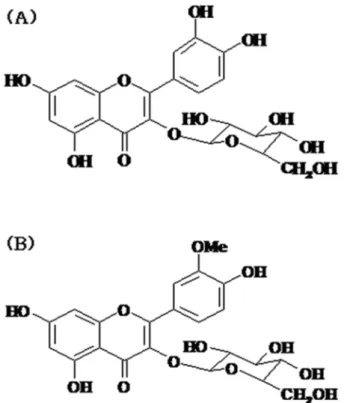
Fig. 2. Chemical structure of compounds 1, 2 from H.
rham- noidesleaves.
(A) Compound 1: quercetin 3-O- glucoside. (B) Compound 2: isorhamnetin 3-O-glucoside.을 받는 것으로 알려져 있다 (Moon et al., 2001). 조 등
(2008)은 Camellia japonica잎으로부터분리한 14개 phenolic compound와 flavonoid를 대상으로 DPPH radical 소거활성을 검정한 결과 monohydroxy phenyl group을 가진 화합물에 비해 catechol moiety를 가진 화합물의 활성이 훨씬 더 높
게 나타났다고보고하였다. 이는 flavonol의 기본골격에서 B ring에 catechol moiety를 가진 compound 1 (quercetin 3-O- glucoside)의 DPPH free radical 소거 활성이 compound 2 (isorhamnetin 3-O-glucoside)보다높게나타난본 연구결과와 일치한다.
4.
α-Glucosidase
저해 활성α-Glucosidase는소장의 brush-border membrane에존재하는
소화 효소다. 이들은이당류나다당류를 탄수화물이소화흡 수되기 위한상태인 단당류로가수분해하는 역할을한다. α-
Glucosidase 저해제는 탄수화물식이 후 혈당 상승을 억제하
는데 (Caspary, 1978), 활성 억제 정도를 IC50 (㎍/㎖) 값으로 나타낸 결과 α-glucosidase에 대해 ethyl acetate 분획물 의 저해 활성이 137.88±5.73㎍/㎖ 로 가장 높게 측정되었으며,
그 다음으로 butanol (191.96±7.62㎍/㎖), hexane (203.23± 1.57㎍/㎖), methanol 추출물 (240.25±2.15㎍/㎖), 물 분획
물 (781.00±58.91㎍/㎖) 순으로활성억제를나타내었다. 이 결과로볼때 안개나무가지추출물의 ethyl acetate 분획물이
5㎎/㎖의농도에서 95.8%의 높은억제활성을나타냈다는보 고 (Cha et al., 2009)와 같이 비타민나무 잎에 함유된 α- glucosidase 저해활성 성분들이 주로 ethyl acetate 분획물에
집중되어있을것이라예측할수 있었다. 그러나 ethyl acetate
분획물에서 분리한 화합물을 이용하여 α-glucosidase에 대한
저해활성을 검토한 결과 compound 1의 경우 고농도 (1000
㎍/㎖)에서도 저해효과가 나타나지 않았으며, compound 2는
739.73㎍/㎖ 의 농도에서 저해효과가 나타났다. 이는 ethyl acetate 분획물에서분리된두개의화합물외에 α-glucosidase
저해활성을 나타내는 성분이존재할 것으로 생각할 수 있으 며, 이에 ethyl acetate 분획물에대한 심도있는연구가 필요
할것이다.
감사의 글
본연구는중소기업청산학연협력기업부설연구소지원사업
(과제명: 비타민나무의유용성분탐색및기능성제품개발)의
지원에의해수행된것으로이에감사드림니다.
LITERATURE CITED
Caspary W. (1978). Sucrose malabsorption in man after ingestion
of α-glucosidehydrolase inhibitor. Lancet. 311:1231-1233.
Cha MR, Park JH, Choi YH, Choi CW, Hong KS, Choi SU, Kim YS, Kim YK, Kim YH and Ryu SY. (2009). Alpha- glucosidase inhibitors from the branches extract of Cotinus coggygria. Korean Journal of Pharmacognosy. 40:229-232.
Chen H and Zuo Y. (2007). Identification of flavonol glycosides in American cranberry fruit. Food Chemistry. 101:1357-1364.
Cho JY, Ji SH, Moon JH, Lee KH, Jung JH and Park KH.
(2008). A novel benzoyl glucoside and phenoic compounds from the leaves of Camellia japonica. Food Science and Biotechnology. 17:1060-1065.
Choi SR, You DH, Kim JY, Park CB, Kim DH and Ryu J.
(2009). Antioxidant activity of methanol extracts from Cudrania tricuspidata Bureau according to harvesting parts and time. Korean Journal of Medicinal Crop science. 17:115-120.
Deshner EE, Ruperto J, Wong G and Newmark HL. (1991).
Quercetin and rutin as inhibitors of azoxymethaol-induced olonic eoplasia. Carcinogenisis. 7:1193-1196.
Ganju L, Padwad Y, Singh R, Karan D, Chanda S, Chopra KM, Bhatnagar P, Kashyap R and Sawhney RC. (2005).
Anti-inflammatory activity of sea buckthorn (Hippophae rhamnoides) leaves. International Immunopharmacology. 5:
1675-1684.
Ge XY, Shi GF, Zhang YM and Wang TB. (1985). Medical application of seabuckthorn. Shanxi Medical Research. 2:9-14.
Geetha S, SaiRam M, Singh V, Ilavazhagan G and Sawhney RC. (2002). Antioxidant and immunomodulatory properties of seabuckthorn an in-vitro study. Journal of Ethnopharmacology.
79:373-378.
Hermann K. (1989). Occurrence and content of hydroxycinnamic and hydroxylbenzoic acid compounds in foods. Critical Reviews in Food Science and Nutrition. 28:315-347.
Hollman PC, Vries JH, Jeeuwen SD, Mengelers MJ and Katan MB. (1995). Absorption of dietary quercetin glycosides and quercetin in healthy ileostomy volunteers. American Journal of Clinical Nutrition. 62:1276-1282.
Hollman PT and Buysma M. (1996). Fluorescence detection of flavonols in HPLC by postcolumn chelation with aluminum.
Analytical Chemistry. 68:3511-3515.
Hong BK, Eom SH, Lee CO, Lee JW, Jeong JH, Kim JK, Cho DH, Yu CY, Kwon YS and Kim MJ. (2007). Biological activities and bioactive compounds in the extract of Acer tegmentosum Maxim. stem. Korean Journal of Medicinal Crop Science. 15:296-303.
Hwang EK. (2009). Effect of quercetin supplement on major biochemical parameters in sera of rats fed high fat and high cholesterol diet. Journal of Veterinary Clinics. 26:413-418.
Jeong JH, Lee JW, Kim KS, Kim JS, Han SN, Yu CY, Lee JK, Kwon YS and Kim MJ. (2010). Antioxidant and antimicrobial activities of extracts from a medicinal plant, sea bucthorn.
Journal of the Korean Society for Applied Biological Chemistry. 53:33-38.
Jun BS, Cha JY and Cho YS. (2001). Antioxidative activities of fruit extracts of Paulownia tomentosa stued. Korean Journal of Food Preservation Sciences Technology. 8:231-238.
Kim KM, Park MH, Kim HK, Im SH and Kim YN. (2009).
Analysis of chemical composition and in vitro anti-oxidant
properities of extracts from seabuckthorn (Hippophae rhamnoides). Journal of Applied Biological Chemistry. 52:58- Kim SS, Jeong MH, Seo YC, Kim JS, Kim NS, Woon WB,64.
Ahn JH, Hwang B, Park DS, Park SJ and Lee HY. (2010).
Comparison of antioxidant activities by high pressure extraction of Codonopsis lanceolata from different production areas.
Korean Journal of Medicinal Crop science. 18:248-254.
Lee CH, Krueger CG, Reed JD and Richards MP. (2006).
Inhibition of hemoglobin-mediated lipid oxidation in washed fish muscle by cranberry components. Food Chemistry. 99:591- Margreet RO, Peter CHH, Tom BV and Martijn BK. (2000).599.
Bioavailabilities of quercetin-3-glucoside and quercetin-4'- glucoside do not differ in humans. The American Society for Nutritional Sciences. 130:1200-1203.
Moreno MIN, Isla MI, Sampietro AR and Vattuone MA.
(2000). Comparison of the free radical-scavenging activity of propolis from several regions of Argntina. Journal of Ethopharmacology. 71:109-114.
Moon JH, Tsushida T, Nakahra K and Terao J. (2001).
Identification of quercetin 3-O-β-D-glucuronide as an antioxidative metabolite in rat plasma after oral admistration of quercetin. Free Radical Biology and Medicine. 30: 1274-1285.
Oh YJ, Seo HR, Choi YM and Jung DS. (2010). Evaluation of antioxidant activity of the extracts from the aerial parts of Cnidium officinale Makino. Korean Journal of Medicinal Crop Science. 18:373-378.
Rösch D, Bergmann M, Knorr D and Kroh LW. (2003).
Structure-antioxidant efficiency relationships of phenoic compounds and their contribution to the antioxidant activity of seabuckthorn juice. Journal of Agricultural and Food Chemistry.
51:4233-4239.
Sato M, Ramarathnam N, Suzuki Y, Ohkubo T, Takeuchi M and Ochi H. (1996). Varietal differences in the phenolic content and superoxide radical scavenging potential of wines from different sources. Journal of Agricultural and Food Chemistry. 44:37-41.
Shim JS, Kim SD, Kim TS and Kim KN. (2005). Biological activity of flavonoid glycosides isolated from Angelica keiskei. Korean Journal of Food Science and Technology. 37:78-83.
Tsybikova DTs, Rasputina DB, Zalykeeva DN, Darzhapova GZh and Khundanova LL. (1983). A study of leaves and the oil cake of seabuckthorn; biology, chemistry and pharmacology of Sea buckthorn. Nauka Publishers, Novosibirsk. p. 107-109 (in Russia).
Xing JF, Yang BR, Dong YL, Wang BW, Wang JX and Kallio HP. (2002). Effects of sea buckthorn (Hippophaëa rhamnoides L.) seed and pulp oils on experimental models of gastric ulcer in rats. Fitoterapia 73:644-650.
Xiong Q, Kadota S, Tani T and Namba T. (1996). Antioxidative effects of phenylethanoids from Cistanche deserticola. Biological Pharmaceutical Bulletin. 19:1580-1585.
Xu MY, Sun XX and Tong WX. (1994). Medical research and development on seabuckthorn. Hippophae. 7:32-39.
Yang B, Kalimo KO, Tahvonen RL, Mattila LM, Katajisto JK and Kallio HP. (2000). Effect of dietary supplementation with sea buckthorn (Hippophaë rhamnoides) seed and pulp oils on the fatty acid composition of skin glycerophospholipids of patients with atopic dermatitis. The Journal of Nutritional Biochemistry. 11:338-340.
Yusof S, Chazali HM and King GS. (1990). Naringin content in local citrus fruits. Food Chemistry. 37:113-121.