Optimization of Extraction Conditions for Bakkenolide B from the Leaves of Petasites japonicus by Using Response Surface Methodology
Jung-Hun Kim
1, Yong-Min Kim
1, Hun-Sik Chung
1, Young-Whan Choi
2, Kyoung-Pil Lee
3, Dong-Soon Im
3and Young-Guen Lee
1*
1
Department of Food Science and Technology, College of Natural Resources & Life Science, Pusan National University, Miryang 627-706, Korea
2
Department of Horticultural Bioscience, College of Natural Resources & Life Science, Pusan National University, Miryang 627-706, Korea
3
Molecular Inflammation Research Center for Aging Intervention (MIRCA) and College of Pharmacy, Pusan National University, Busan 609- 735, Korea
Received January 9, 2014 /Revised February 10, 2014 /Accepted February 14, 2014
Optimal conditions for extraction of bakkenolide B from Petasites japonicus leaves were determined by using response surface methodology. A second-order Box-Behnken design representing three ex- traction temperatures (80, 100, 120℃), three extraction times (30, 45, 60 min), and three solvent pH’s (5, 7, 9) was executed. The efficiency of the extraction conditions was defined using the β-hexosami- dase assay by comparing both the bakkenolide B content and its anti-allergic activity expressed as ex- tract inhibition on degranulation. The response surface plot described for the bakkenolide B content showed that the maximum content was predicted as 121.6 µg/g with extraction conditions of 127.1℃, 46.6 min, and pH 7.7. Extraction temperature and time were important factors in determining bakke- nolide B content. Using regression analysis, correlation between the inhibition effect of mast cell de- granulation and bakkenolide B content was found to be low.
Key words : Anti-allergy, bakkenolide-B, optimum extraction conditions, Petasites japonicus, response surface methodology
*Corresponding author
*Tel : +82-55-350-5354, Fax : +82-55-350-5359
*E-mail : [email protected]
This is an Open-Access article distributed under the terms of the Creative Commons Attribution Non-Commercial License (http://creativecommons.org/licenses/by-nc/3.0) which permits unrestricted non-commercial use, distribution, and reproduction in any medium, provided the original work is properly cited.
Journal of Life Science 2014 Vol. 24. No. 2. 167~172 DOI : http://dx.doi.org/10.5352/JLS.2014.24.2.167
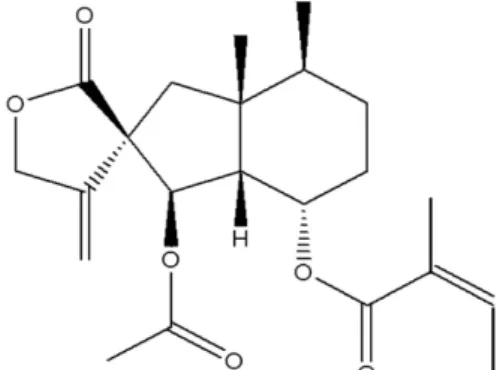
Fig. 1. Structure of bakkenolide B.
Introduction
Petasites genus has been reported to have many sesqui- terpene lactones, especially petasin-type and bakkenolide type [4], and the extracts from this plant have been shown to have anti-allergic and anti-inflammatory effects [5, 10, 18]
and to inhibit mast cell degranulation [15]. Some pharmaco- logical studies have suggested that petasin and s-petasin were active ingredients in this plant [1, 5, 16, 17], fur- thermore, we found that bakkenolide B (Fig. 1), a major com- ponent in the leaves of Petasites japonicus, showed significant effects in an ovalbumin-induced asthma model in our pre- vious studies [11].
Recently, the use of herbs containing Petasites genus as dietary supplements and medicines in a form of the ex- tractable material has increased in many countries. In many
previous information, only a few solvents such as methanol, ethanol and acetone were generally used [6, 7, 14], but they were must been eliminated from the final food or medicine products. Water extraction is profitable in developing a func- tional beverage using the extracts derived from Petasites japo- nicus, even though the most target components have low water solubility. Extraction efficiency is affected by multiple parameters, including temperature, time, solvent polarity, and etc. Response surface methodology (RSM) described originally by Box and Wilson [2] is effective for optimizing multiple, interrelated parameters.
This study was designed to determine the optimum con-
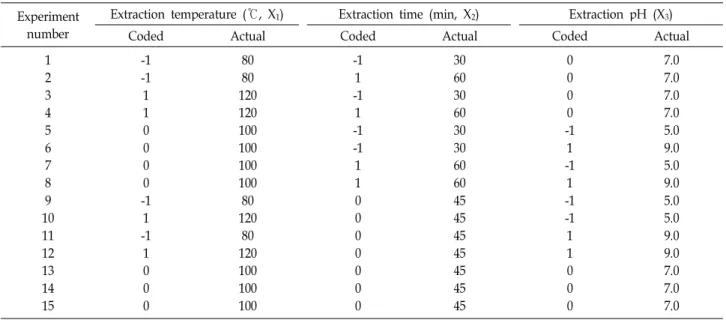
Table 1. Box-Behnken experimental design used for the extraction procedure of
Petasites japonicas
Experimentnumber
Extraction temperature (℃, X1) Extraction time (min, X2) Extraction pH (X3)
Coded Actual Coded Actual Coded Actual
12 34 5 67 89 1011 1213 14 15
-1-1 11 0 00 -10 -11 10 0 0
8080 120120 100 100100 10080 12080 120100 100 100
-11 -11 -1 -11 10 00 00 0 0
3060 3060 30 3060 6045 4545 4545 45 45
00 00 -1 -11 -11 -11 10 0 0
7.07.0 7.07.0 5.0 9.05.0 9.05.0 5.09.0 9.07.0 7.0 7.0
ditions of water extraction for bakkenolide B and its anti-al-
lergic effects (described as inhibition effects on de- granulation) of extracts from the leaves of Petasites japonicus by using RSM.
Materials and Methods Materials
Petasites japonicus leaves were collected in June 2012 in Chungdo province (South Korea) and a voucher specimen (accession number MW-PRDR-11) was deposited at the Herbarium of Pusan National University.
Experimental design
Box-behnken design was used to investigate the effects of three independent parameters, extraction temperature (X
1), time (X
2) and pH (X
3) on the bakkenolide B content (Y
1, extracted content from the leaves, μg/g) and inhibition effects on degranulation (Y
2). The independent parameters were coded at three levels (-1, 0, and 1), and the complete design consisted of 15 experimental points including three replicates of center points as shown in Table 1.
Analysis of regression
Triplicate tests were performed at all experimental points in randomized order. Each extracts were analyzed for de- pendent parameters (response variables), bakkenolide B con- tent (Y
1) and inhibition effects on degranulation (Y
2). Mean values were analyzed to fit the following second order poly-
nomial models to response Y variables.
The model proposed for each response of Y is
where X
1and X
2correspond to independent parameters, and b
nvalues represent corresponding regression coefficients [12]. SAS statistical analysis system was used to predict models through regression analysis and variance analysis (ANOVA). When the results showed a saddle point in re- sponse surfaces, optimal conditions were determined using analysis of ridge.
Extraction
The leaves (400 g) of Petasites japonicas were blended and then extracted with 800 ml of distilled water on the basis of pre-established conditions, followed by filteration using Whatman No. 2.
Determination of bakkenolide B content
The extracts (100 ml) from 15 experimental conditions were extracted with 100 ml of n-hexane in separation funnels and evaporated using a rotary vacuum evaporator at 50℃
to 20 ml of volume. The solution filtered by membrane filter
(Dismic-13JP, 0.50 μm PTFE, ADVANTEC, Japan) was ana-
lyzed by HPLC system. The system consisted of HPLC (9600,
Younglin, Korea), C
18column (250×4.6 mm, 5 μm, Agilent,
USA), mobile solvent consisted of 28% THF, 12% acetonitrile
and 60% water, and detector at 215 nm. The bakkenolide
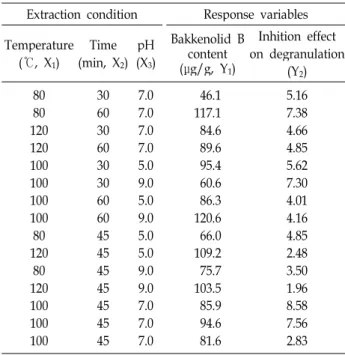
Table 2. Experimental data for response parameters of
Petasites japonicas
leave extracts in relation to the extraction con- ditionsExtraction condition Response variables Temperature
(℃, X1) Time (min, X2) pH
(X3)
Bakkenolid B content (μg/g, Y1)
Inhition effect on degranulation
(Y2) 8080
120120 100 100100 10080 12080 120100 100 100
3060 3060 30 3060 6045 4545 4545 45 45
7.07.0 7.07.0 5.0 9.05.0 9.05.0 5.09.0 9.07.0 7.0 7.0
117.146.1 84.689.6 95.4 60.686.3 120.6 66.0 109.2 75.7 103.5 85.9 94.6 81.6
5.167.38 4.664.85 5.62 7.304.01 4.164.85 2.483.50 1.968.58 7.56 2.83
B content was calculated by application the data from HPLC
analysis to standard curve which established using bakkeno- lide B isolated and identified from Petasites japonicas leaves.
Measurement of degranulation
Degranulation was estimated by measuring β-hexosami- dase release, as previously described by Dearman et al. [3].
RBL-2H3 cells (2×10
5cells/well in 24-well plates) were sensi- tized with 0.5 mg/ml monoclonal anti-dinitrophenyl specific mouse IgE (DNP-IgE, D8406, Sigma, St. Louis, MO) over- night at 37
oC in a 5% CO
2incubator. Cells were washed twice with PIPES buffer (pH 7.2), containing 25 mM PIPES, 110 mM NaCl, 5 m M KCl, 5.6 mM glucose, 0.4 mM MgCl
2, 0.1% BSA, and 1 mM CaCl
2to remove DNP-IgE before stim- ulation, and then incubated in PIPES buffer or extract-con- taining PIPES buffer in 500 µl at 37
oC for 30 min. Extracts were diluted 10 times by the PIPES buffer. After washing with PIPES buffer, cells were incubated with 10 mg/ml of human dinitrophenyl albumin (DNP-hAb, A6661 Sigma, St.
Louis, MO) for a further 30 min at 37
oC to induce degranulation. Aliquots (50 μl) of medium were then trans- ferred to a 96-well microplate and incubated for 60 min with 50 ml of 1 mM 4-nitrophenyl N-acetyl-β-D-glucosaminide (N9376, Sigma, St. Louis) in 0.1 M citrate buffer (pH 4.5).
Cells were lysed with an equal volume of 0.5% Triton X-100 at 37
oC for 1 h. Total β-hexosamidase activity in RBL-2H3 mast cells was measured at the same rate. The reaction was terminated by adding 250 ml of 0.05 M sodium carbonate buffer (pH 10.0; 0.05 M Na
2CO
3/0.05MNaHCO
3). Absorban- ces (OD) at 410 nm were measured using a microplate reader. Degranulation (%) was calculated by the ratio of re- leased β-hexosamidase in stimulated cells to total β-hexosa- midase activity [11, 13].
Isolation and identification of bakkenolide B The fresh leaves of P. japonicus (425.36 g) were chopped to a fine particle with an electric mixer (HMF-3100S, Hanil Electric, Seoul, Korea) and then extracted at room temper- ature with 75% EtOH. The EtOH was then removed using a rotary evaporator and the remaining aqueous extract was fractionated successively with BuOH, EtOAc, and n-hexane.
The hexane extract (2.6728 g) so obtained was evaporated in vacuo, and the residue was chromatographed on a silica- gel (40 μm, Baker, NJ) column (100×4.0 cm) using a step gradient 2.5%, 15%, 25% acetone in dichloromethylene and 15% and 25% MeOH in chloroform to obtain 62 fractions.
Fraction 9 (MWLSH9, 304.9 mg) was separated on a Sephadex column (100×3.0 cm) using MeOH as eluant to obtain 7 fractions. The fraction 3 (MWLSH9IC, 209.7 mg) was further separated on a Sephadex column (100×3.0 cm) using MeOH to obtain five fractions. Fractions 2 and 3 (MWLSH9ICIB, 202.3 mg) were passed through a silicagel column (100×4.0 cm) using 1.5% acetone in CH
2Cl
2as eluant to yield bakkenolide B (173.8 mg). Pure bakkenolide B was identified by HPLC on a Phenomenex Luna C18 column (Phenomenex, 150×4.6 mm ID; 5 μm particle size) using an acetonitrile-water reagent alcohol gradient at a flow rate of 1.0 ml per minute. Bakkenolide B isolated from P. japonicus leaves was identified using
1H,
13C, and distortionless en- hancement of polarization transfer nuclear magnetic reso- nance spectroscopy in CDCl
3by comparison with previously reported spectral data [4].
Results and Discussion
Bakkenolide B content (Y
1) and inhibition effects on de-
granulation (Y
2) of extracts for each extraction of variable
combinations were shown as Table 2. The regression co-
efficients were calculated by employing a least squares tech-
nique to predict second order polynomial models for Y
1and
Y
2.
A B C
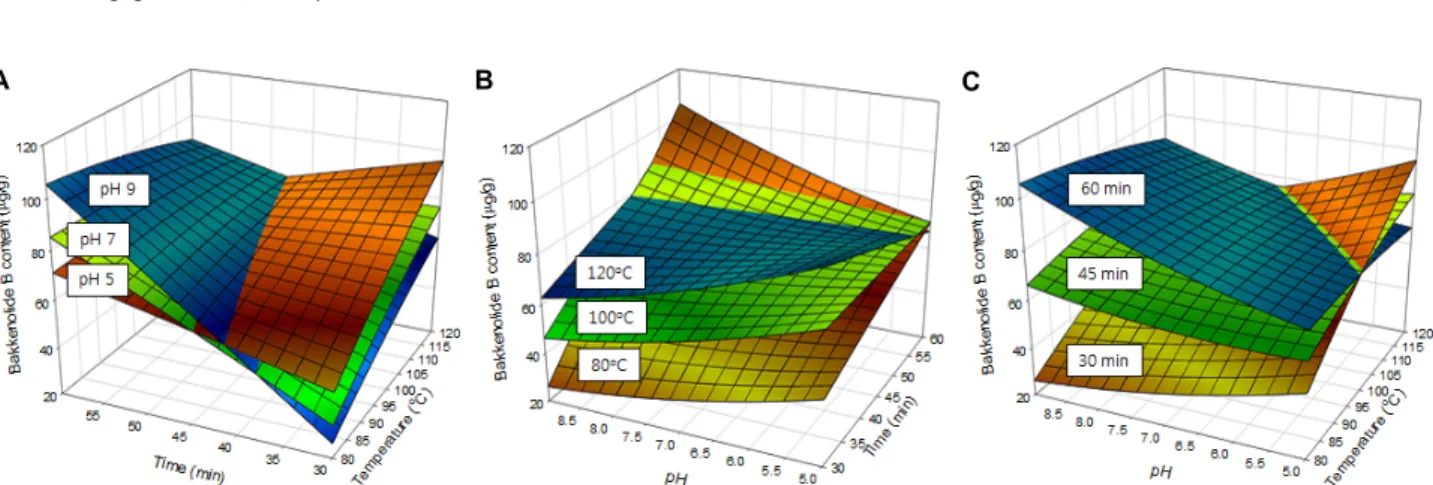
Fig. 2. Response surface plots for the effects of extraction conditions on bakkenolide B content of extracts from
Petasites japonicus
: (A) Time and temperature; (B) pH and time; (C) pH and temperature.A B C
Fig. 3. Response surface plots for the effects of extraction conditions on the inhibition effect on degranulation of extracts from
Petasites japonicus
: (A) Time and temperature; (B) pH and time; (C) pH and temperature. *Inhibition effects are expressed as the remained number from that 10% minus β-hexosamidase release rate (%).Bakkenolide B content
The analysis of variance of bakkenolide B content (Y
1) was significant (p<0.05) with high correlation coefficient (R
2= 0.8949), and the predicted model for Y
1was
Y
1=-134.626250+3.954125X
1+2.163000X
2-23.451250X
3-0.005 131X
12-0.043933X
2X
1-0.001567X
22-0.077312X
3X
1+0.4595 83X
3X
2+0.762500X
32The model indicated that extraction temperature had the most linear effect on bakkenolide B content as it showed the largest positive linear coefficient. The response surface plot described for bakkenolide B content (Fig. 1) showed that the maximum bakkenolide B content was predicted as 121.6 μ g/g at the extraction conditions of 127.1℃, 46.6 min, and pH 7.76. The extraction temperature and time were im- portant factors, whereas extraction pH had the lowest sig- nificant effects on bakkenolide B content. These results part- ly disagreed the previous studies that the extraction time had no significant effect on the extraction of soluble solids
from various natural products [2, 6, 14]. On the other hand, the bakkenolide B content of extracts were very low as com- pared with s-petasin (up to 680 μg/g) which extracted by ethanol in our previous studies [8]. It may be originated from the different polarities of water and ethanol, while both bakkenolide B and s-petasin were nonpolar compounds.
Inhibition effects on degranulation
Inhibition effects are expressed as the remained number from that 10% minus β-hexosamidase release rate (%). The regression equation of inhibition effects on degranulation (Y
2) had no significant (p>0.05) and showed low correlation coefficient (R
2=0.5095). The model for Y
2was predicted as follows:
Y
2=-47.441563+0.7178960X
1-0.013917X
2+5.9427080X
3-0.003607X
12-0.001692X
2X
1+0.002809X
22+0.005188X
3X
1-0.012750X
3X
2-0.420729X
32The maximum responses predicted peak for the variables
about inhibition effects on degranulation indicated that the value of the saddle point was 6.44% at the extraction temper- ature (93.61℃), the extraction time (46.40 min), and the ex- traction pH 6.93. In the present study, 400 g of leaves were used as materials and adjusted to volume of 800 ml, so the bakkenolide B content of the leaves (Table 2) was diluted to half (briefly summed up 30 μg/ml) in experimental extracts. In our previous study [11], we found that bakkeno- lide B inhibited antigen-induced degranulation in RBL-2H3 mast cells and the induction of inducible NOS and COX-2 in mouse peritoneal macrophages, and observed significant effects of bakkenolide B in 10 μg/ml and lower concen- trations in RBL-2H3 mast cells. Therefore, bakkenolide B concentration of most experimental extracts were upper than minimum concentration level which could be effective on degranulation, though the extracts had no significant effects in the analysis of variance. These results may be inferred that the bakkenolide B was extracted at hot state from the leaves of Petasites japonicas, after then insoluble and not ho- mogeneous in extract at room temperature, so it had showed irregular effects. In future manufacturing of beverage by us- ing Petasites japonicas, it will be remains as a next work that the sub-ingredients having a role of surfactant must be add- ed in the objective products.
Acknowledgement
This work was supported by a 2-Year Research Grant of Pusan National University.
References
1. Bickel, D., Roder, T., Bestmann, H. J. and Brune, K. 1994.
Identification and characterization of inhibitors of pepti- do-leukotriene-synthesis from Petasites hybridus.
Planta Medica
60, 318-322.2. Box, G. E. P. and Wilson, K. G. 1951. On the experimental attainment of optimum conditions.
J R Stat Soc
13, 1-45.3. Dearman, R. J., Skinner, R. A., Deakin, N., Shaw, D. and Kimber, I. 2005. Evaluation of an
in vitro
method for the measurement of specific IgE antibody responses: the rat ba- sophilic leukemia (RBL) cell assay.Toxicology
206, 195-205.4. Dong, X. W., Li, R. J., Gao, X. and Row, K. H. 2010.
Bakkenolides from
Petasites tatewakianus. Fitoterapia
81, 153-156.5. Fiebich, B. L., Grozdeva, M., Hess, S., Hull, M., Danesch, U. and Bodensieck, A. 2005.
Petasites hybridus
extracts in vi- tro inhibit COX-2 and PGE2 release by direct interaction with the enzyme and by preventing p42/44 MAP kinaseactivation in rat primary microglial cells.
Planta Medica
71, 12-19.6. Ko, S. R., Kim, S. C. and Choi, K. J. 1992. Extract yields and saponin comtent of red ginseng extracts prepared with various concentrations of ethanol.
Korean J Pharmacogn
23, 24-28.7. Kwon, J. H., Bélanger, J. M. R. and Jocelyn Paré, J. R. 2003.
Optimization of microwave-assisted extraction (MAP) for ginseng components by response surface methodology.
J Agric Food Chem
51, 1807-1810.8. Lee, D. W., Lee, S. Y., Chung, H. S., Choi, Y. W., Im, D.
S. and Lee, Y. G. 2013. Optimization of a process for ex- traction of petasin from
Petasites japonicus
leaves by re- sponse surface methodology.J Life Sci
23, 1360-1364.9. Lee, H. N., Kundu, J. K., Cha, Y. N. and Surh, Y. J. 2013a.
Resolvin D1 stimulates efferocytosis through p50/p50-medi- ated suppression of tumor necrosis factor-alpha expression.
J Cell Sci
126, 4037-4047.10. Lee, J. S., Yang, E. J., Yun, C. Y., Kim, D. H. and Kim, I.
S. 2011. Suppressive effect of
Petasites japonicus
extract on ovalbumin-induced airway inflammation in an asthmatic mouse model.J Ethnopharmacol
133, 551-557.11. Lee, K. P., Kang, S., Park, S. J., Choi, Y. W., Lee, Y. G. and Im, D. S. 2013. Anti-allergic and anti-inflammatory effects of bakkenolide B isolated from Petasites japonicus leaves.
J Ethnopharmacol
148, 890-894.12. Liu, F. F., Ang, C. Y. W. and Springer, D. 2000. Optimization of extraction conditions for active components in
Hypericum perforatum
using response surface methodology.J Agric Food Chem
48, 3364-3371.13. Lu, Y., Son, J. K. and Chang, H. W. 2012. Saucerneol F, a new lignan isolated from
Saururus chinensis
, attenuates de- granulation via phospholipase Cg1 inhibition and eicosa- noid generation by suppressing MAP kinases in mast cells.Biomol Ther
20, 526-531.14. Park, N. Y., Lee, G. D., Jeong, Y. J. and Kwon, J. H. 1998.
Optimization of extraction conditions for Physicochemical properties of ethanol extracts from
Chrysanthemum boreale
.J Korean Soc Food Sci Nutr
27, 585-590.15. Shimoda, H., Tanaka, J., Yamada, E., Morikawa, T., Kasajima, N. and Yoshikawa, M. 2006. Anti type Ⅰ allergic property of Japanese butterbur extract and its mast cell de- granulation inhibitory ingredients.
J Agric Food Chem
54, 2915-2920.16. Thomet, O. A., Wiesmann, U. N., Schapowal, A., Bizer, C.
and Simon, H. U. 2001. Role of petasin in the potential an- ti-inflammatory activity of a plant extract of
Petasites hybridus
.Biochem Pharmacol
61, 1041-1047.17. Wang, G. J., Wu, X. C., Lin, Y. L., Ren, J., Shum, A. Y. and Wu, Y. Y. 2002. Ca2+ channel blocking effect of iso-S-petasin in rat aortic smooth muscle cells.
Eur J Pharmacol
445, 239-245.18. Zhang, F. J., Wang, Q., Wang Y. and Guo, M. L. 2011.
Anti-allergic effects of total bakkenolides from