• 검색 결과가 없습니다.

Study protocol for clinical trial to Compare the Effectiveness of 'Individualized Acupuncture' with 'Standardized Acupuncture' in Korean patients with Knee Osteoarthritis

N/A
N/A
Protected

Academic year: 2021

Share "Study protocol for clinical trial to Compare the Effectiveness of 'Individualized Acupuncture' with 'Standardized Acupuncture' in Korean patients with Knee Osteoarthritis"

Copied!
14
0
0

로드 중.... (전체 텍스트 보기)

전체 글

(1)

⋅교신저자 : Kim Yong-Suk, Department of Acupuncture &

Moxibustion, College of Korean Medicine, Kyung Hee University, Heogi‐dong, Dongdaemun‐gu, Seoul, 130‐701, South Korea, Tel. 82-2-3457-9013, Fax.

82-2-3457-9111, E-mail ; [email protected]

⋅투고 : 2008/12/03 심사 : 2008/12/16 채택 : 2008/12/18

Study protocol for clinical trial to Compare the Effectiveness of ‘Individualized Acupuncture’ with

‘Standardized Acupuncture’ in Korean patients with Knee Osteoarthritis

Lee Seung-Deok

1

, Seo Jung-Chul

1

, Lee Sang-Hoon

1

, Kim Yong-Suk

1,*

, Jang Jun-Hyouk

1

, Park Hi-Joon

2

, Choi Sun-Mi

3

, Park Ji-Eun

3

, Shin Leem-Hee

4

, Hahn Seo-kyung

5

, Takahashi Norihito

6

, Sumiya Eiichi

6

,

Kazunori Itoh

6

, Shichidou Toshiyuki

6

and Kawakita Kenji

6

1

KAMS (Korean Acupuncture and Moxibustion Society),

2

Kyung Hee University, South Korea,

3

Korea Institute of Oriental Medicine, South Korea,

4

Department of Biostatistics, College of Medicine, Catholic University of Daegu,

5

Medical Research Collaborating Center, Seoul National University Hospital, Seoul National University College of Medicine, South Korea,

6

JSAM (Japan Society of Acupuncture and Moxibustion)

Abstract

Background : One of the characteristics of acupuncture, a popular modality for treating musculoskeletal pain, is a plurality in diagnosis and treatment that can profoundly influence the treatment outcome. This multiplicity in treatment modality has to be considered in any research on the effectiveness of acupuncture. Many practitioners stress the necessity for individualized patient treatment, including acupuncture point selection and manipulation technique. However, the importance of individualization in acupuncture treatment, compared with standardization, has received little attention in clinical trials. The aim of the future study described here is therefore to compare the effectiveness of individualized acupuncture for knee osteoarthritis with standardized acupuncture and no acupuncture in patients with knee osteoarthritis.

Methods : A total of 195 patients aged 50 years and over with knee pain, will be randomly divided into three treatment groups: individualized acupuncture, standardized acupuncture, and waiting list. Outcome data will be collected through patient‐completed questionnaires before randomization, and at 4, 8 and 12 weeks after randomization. The questionnaires will be investigated demographic details as well as information on pain, movement and function of the affected knee, general health and quality of life.

Discussion : This paper presents details on the rationale, design, and methods of the trial.

Key words : Individualized acupuncture, Standardized acupuncture, Waiting list, Knee Osteoarthritis,€Study protocol.

Introduction

Osteoarthritis (OA) most frequently

affects the knee joint

1)

. OA of the knee is

(2)

a debilitating disease that affects 52% of adults over the age of 75 years

2)

. Knee OA is common and contributes greatly to morbidity in the community

3,4)

. Current therapies for OA are largely aimed at providing symptom relief, and include non-steroidal anti‐inflammatory drugs (NSAIDs), cyclo‐oxygenase 2 (COX-2) specific inhibitors and mild opioids

5,6)

. However, chronic use of these drugs is associated with significant side‐effects such as peptic ulceration, gastrointestinal haemorrhage, renal impairment, interference with platelets, peptic ulceration and bronchospasm

7,8)

.

Acupuncture is an integral part of the ancient Chinese system of medicine that has been used for more than 2,500 years to treat diseases and relieve pain

9)

. There are numerous techniques and approaches to acupuncture, reflecting a variety of medical traditions and schools from China, Korea, Japan, Vietnam, and other countries

10)

. One of acupuncture’s characteristics is a plurality in diagnosis and treatment, which has withstood many attempts to create a singular and uniform system

11,12)

While this lack of individualization is potentially confounding in research trials, the multiplicity inherent in acupuncture is a reality of the practice. Acupuncture has some aspects of an art as well as a

science because many factors that can profoundly influence the treatment outcome have to be considered. Such variations make it difficult to practice acupuncture procedures and hamper the clinical research of acupuncture. Few comparative studies of acupuncture and NSAIDs for the treatment of knee OA have been conducted

4-13)

. Nevertheless, while some previous studies

15-18)

have demonstrated the clinical effectiveness of acupuncture for knee OA, these studies

8-15)

  have used formulaic, fixed acupuncture protocols in contrast to the individualized treatments that are emphasized in the real practice of acupuncture.

Each acupuncturist has his/her own individualized treatment styles based on clinical experience and personal beliefs.

Practitioners believe it is vital to use treatment that is individualized to the patients involving choice of acupuncture points or technique of manipulation. The importance of individualization in comparison with formulae acupuncture has received little research attention in clinical trials

19)

.

Interventions used in the previous

studies on formulae acupuncture

8-15)

have

not reflected the clinical practice that

would be acceptable to many

acupuncturists, which seriously limits

(3)

validity of the conclusions that were drawn. The aim of study is to determine the effectiveness of individualized acupuncture that is reflect real acupuncture practice in comparison with no acupuncture (waiting list) and standardized acupuncture that was used in previous study for the patients with OA.

Methods/Design

In order to reflect the way acupuncture is used in real clinical practice, this study protocol was developed on a consensus basis by Korea-Japan EBM working group which was organized to create individualized method for the clinical trial of acupuncture.

This group has met frequently for three years (2004-06) and is made up of KMD and Japanese acupuncturist including physiologist, professors of acupuncture, meridian and acupuncture, and physiology.

This prospective study has been designed to compare individualized acupuncture, standardized acupuncture, and no acupuncture in knee OA patients.

This multi-center, three‐arm, controlled, randomized trial will be conducted in 3 oriental medical centers that provide acupuncture treatments situated in Korea (Kyung Hee University Korean Hospital, Dongguk International Hospital, Clinical trial center of Korea

institute of Oriental Medicine)

The patient evaluation and analysis of the results will be carried out by blinded assessors.

Study subjects

A total of 195 participants aged 50

years and over with knee pain will be

recruited from the community. Participants

will be screened for eligibility at their

first visit with clinical coordinators

according to the inclusion and exclusion

criteria as listed below. The clinical

coordinator will then contact one of the

researchers and pass on the patient's

contact details. The researchers will meet

with the participants, confirm, and

formally enroll them in the trial. All the

enrolled subjects will be randomized into

three groups: individualized, standardized

or waiting list. All the participants will

give written informed consent before

being randomly assigned. The following

information shall be provided to each

subject; "We would like you to consider

taking part in a research study to look at

the best form of acupuncture treatment

for your knee condition. You will then be

randomly assigned to one of two

treatment groups: individualized

acupuncture group or standardized

acupuncture group. You have an equal

chance of being assigned to either

treatment group. You will not know

(4)

which treatment group you are in. You will remain in the same treatment group throughout the remainder of the study".

They will also be informed of the possible risks associated with the different types of acupuncture (infection, fainting, and bruising), and of their freedom to end their study participation at any time, with no suffering, penalization or loss of benefits to which they are entitled.

Inclusion criteria

Eligible patients are male and female subjects aged 50 years and above with pain in one or both knees presenting to primary care. Participants must be able to read and write Korean, be willing to consent to participation, and voluntarily sign an institutional review board (IRB)-approved informed consent. They must also be available for telephone contact. Participants must be able to understand the study requirements and complete the questionnaires. The diagnoses of knee OA will be based on the American College of Rheumatology definition for knee OA, and the inclusion criteria are as follows:

․ At least 50 years old

․ Current symptoms of chronic (3 months), stable pain and/or stiffness in one or both knees during weight‐

bearing activities

․ Knee pain due to OA rated > 40 ㎜ on a 100 ㎜ visual analogue scale (VAS) in one or both knees

․ Morning stiffness of knee for ≤ 30 min

․ Crepitus on motion

Exclusion criteria

․ Inflammatory, metabolic, or neuropathic arthropathies

․ Trauma or surgery to the knee(s) which has caused pain or functional problems within 6 months prior to the enrollment period

․ Suspicious meniscus injury by physical examination

․ Pain emanating more from the back or hip than from the knee which interferes with patient knee assessment

․ Any condition which severely limits local ambulation, such as amputation or stroke

․ History or evidence of active rheumatologic disease, severe peripheral neuropathy, clinically evident cardiac or respiratory disease that interferes with functional status, or other serious diseases, including psychiatric disorders

․ Autoimmune disease, systemic lupus

erythematosus (SLE), psoriatic arthritis,

active (redness, swelling, fever, etc.)

gout or pseudo‐gout within 6 months

prior to screening

(5)

․ History of prolotherapy, or injection of hyaluronic acid or cortisone within the previous 1 month

․ Inability to stop taking anti‐

inflammatory medication or NSAIDs such as acetaminophen for the entire period of study

․ Bleeding disorders that might contraindicate acupuncture

․ Pension or disability benefits

Randomization

We will randomize participants by using a computer generated random number list, prepared for each of the three centres.

Random allocation to one of three groups will be performed in a ratio of 1:1:1 within balanced blocks of 12. The patients will be stratified per center and according to the number of affected knees in order to give each investigator the same chance to use individualized acupuncture, standardized acupuncture and waiting list.

Blinding

Patients, diagnosing Korean Traditional Medical Doctors (KMD) and evaluators responsible for all outcome assessments will be blinded to the group. Patients will be told that they will receive acupuncture treatment but will be blinded

to the allocation of the two treatments and the waiting list. The diagnosing KMD responsible for Oriental Medicine diagnosis will also be blinded for allocation to prevent accidentally informing the patients of their allocated treatment. The intervention KMD who is responsible for treatment will have access to the randomization list and will be aware of which patients are received which kind of acupuncture treatment, but will not be involved in the outcome measurement.

After the start of recruitment of patients, intervention KMD will be the only one who had access to the randomization list.

No person involved in the execution or monitoring of the study will have access to the randomization list.

The allocation concealment will be

maintained by the use of sealed opaque

envelopes, which will be prepared by an

independent statistician and stored in a

metal locker at a safe place with

restricted access. When a patient consents

to enter a trial, the intervention KMD will

open an envelope and the patient will be

then offered the allocated treatment

regimen.

(6)

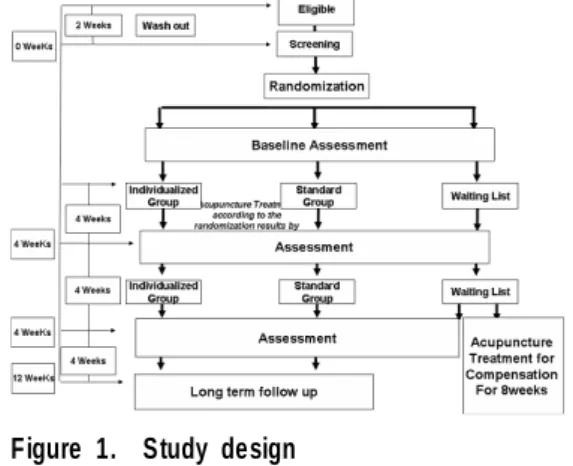
Figure 1. Study design

Interventions

Before the trial, the principle investigators in each center will meet and discuss to produce a clinical manual that provides guidance to its researchers so that selection of acupuncture points and techniques will be conducted according to the theory of Korean traditional medicine in the clinical trial.  This clinical manual discusses pathogenesis and diagnosis, but the emphasis is laid on key points in the selection of acupuncture points and techniques, particularly with differentiation of syndrome. Each center will have one more diagnosing and intervention KMDs who will be trained with the clinical manual for the clinical trial.

After a baseline assessment patients are randomly assigned to one of three groups.

There are two acupuncture treatment groups: individualized acupuncture group (selection of acupuncture points with needle manipulation) and standardized

acupuncture group (fixed acupuncture points without needle manipulation). Both acupuncture treatments consist of 12 sessions of 20 minutes, administered twice a week for 8 weeks. There is a second assessment after the treatment. The third group is a waiting list group. After the waiting period of 8 weeks patients get a second assessment.

At the first treatment session, all patients in acupuncture groups will be evaluated by one of the "diagnosing KMD" who will determine the oriental medicine diagnosis according meridian theory to treat knee joint pain, known as the "Bi" syndrome and "prescribe" an individualized set of acupuncture points and technique of manipulation for each point. The diagnosis and prescription will be recorded on a data form and forwarded to the intervention KMD, who will then follow the prescription only if the patient is in the individualized treatment group.

The number of acupuncture points will

be as follows. In the case of unilateral

OA, the treatment will be performed with

4 local points in the affected side and 2

distal points in the opposite side (6

needles altogether). If both knees are

affected, they will be acupunctured with 4

local points in each side, and 2 distal

points will be acupunctured in the lesser

affected side (10 needles altogether).

(7)

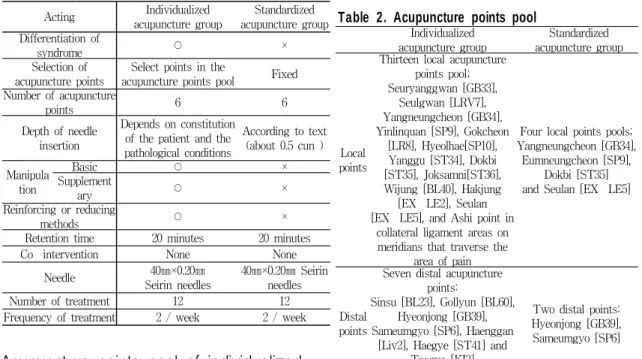
Table 1. Details of individualized and standardized acupuncture groups

Acting Individualized

acupuncture group

Standardized acupuncture group Differentiation of

syndrome ○ ×

Selection of acupuncture points

Select points in the

acupuncture points pool Fixed Number of acupuncture

points 6 6

Depth of needle insertion

Depends on constitution of the patient and the pathological conditions

According to text (about 0.5 cun ) Manipula

tion

Basic ○ ×

Supplement

ary ○ ×

Reinforcing or reducing

methods ○ ×

Retention time 20 minutes 20 minutes

Co‐intervention None None

Needle 40㎜×0.20㎜

Seirin needles

40㎜×0.20㎜ Seirin needles

Number of treatment 12 12

Frequency of treatment 2 / week 2 / week

Table 2. Acupuncture points pool
 

Individualized

acupuncture group

Standardized acupuncture group

Local points

Thirteen local acupuncture points pool;

Seuryanggwan [GB33], Seulgwan [LRV7], Yangneungcheon [GB34], Yinlinquan [SP9], Gokcheon

[LR8], Hyeolhae[SP10], Yanggu [ST34], Dokbi [ST35], Joksamni[ST36], Wijung [BL40], Hakjung

[EX‐LE2], Seulan [EX‐LE5], and Ashi point in

collateral ligament areas on meridians that traverse the

area of pain

Four local points pools;

Yangneungcheon [GB34], Eumneungcheon [SP9],

Dokbi [ST35]

and Seulan [EX‐LE5]

Distal points

Seven distal acupuncture points:

Sinsu [BL23], Gollyun [BL60], Hyeonjong [GB39], Sameumgyo [SP6], Haenggan

[Liv2], Haegye [ST41] and Taegye [KI3]

Two distal points:

Hyeonjong [GB39], Sameumgyo [SP6]

Treatment will be performed with pre‐

packed, sterilized, disposable 40㎜×0.20㎜

needles (Seirin, Shimizu, Japan). The diagnosing and intervention KMDs are required to have a minimum of 2 years postgraduate experience. The number of acupuncture points, retention time, and duration and frequency of the sessions in the standardized and individualized acupuncture groups will be the same. The selection of acupuncture points and needle manipulation that is accomplished in order to elicit "De Qi" sensation in the individualized treatment will not be used in the standardized acupuncture group (Table 1).

Acupuncture points pool of individualized

acupuncture group

The composition of the points pools is

based on the acupuncture points which

are obtained from the distinguished and

classis acupuncture textbook, Zhenjiu

Dacheng

20)

. All patients in the

individualized acupuncture group will have

to be treated with 4 points among the

permitted 13 local acupuncture points pool

and 2 points among the permitted 8 distal

acupuncture points pool, which must be

selected according to the principles of

traditional Korean medicine by experienced

KMD. The main principles for selecting

acupuncture points will be selection along

the meridians and according to the

pathological conditions (Table 2).

(8)

Table 3. Needle manipulation techniques

Techniques Basic

manipulation

Twirling‐rotating Lifting‐thrusting Supplementary

manipulation

Pressing Scarping Plucking Shaking

Reinforcing and reducing manipulation

1. Twirling and rotating the needle 2. Lifting and thrusting the needle 3. Rapid and slow insertion and

withdrawal of the needle 4. Keeping the needled acupuncture point

open or close

5. The direction of the needle tip toward which the tip of the needle points

6. Means of respiration.

Acupuncture points pool of standardized acupuncture group

In the standardized acupuncture group, participants will be treated with the same formulaic, fixed acupuncture points that were used in a previous study

13)

, regardless of the results of syndrome differentiation (Table 2).

Waiting list group

The participants of the waiting list group will not receive any acupuncture treatment but will spend the same amount of time to take lesson from KMD and will be tested at the same times as scheduled for the patients in the acupuncture groups for 8 weeks. For ethical reasons, the patients in the waiting list group will be guaranteed acupuncture treatment for 8 weeks, which began after completing the post‐treatment assessment for the intervention group, and completed an assessment after finishing their treatment. This enabled us to use their results as comparison for the original treatment conditions outcome results.

Needle manipulation of individualized acupuncture group

The individualized acupuncture group will receive needle manipulation according

to the prescription made by the diagnosing KMD. The intervention KMD will perform the needle manipulation technique on the basis of 『Yellow Emperor's Canon Internal Medicine』

21)

and 『Zhen jiu wen dui』(Queries and Responses on Acupuncture &

Moxibustion)

22)

in the individualized acupuncture group.

Basic manipulation will be used while the needle is inserted, and supplementary manipulation will be used if De qi is not achieved. Intervention KMD will perform the reinforcing and reducing manipulation in order to regulate the deficient or excessive states according to the acupuncture prescription made by the diagnosing KMD (Table 3).

Needle manipulation of standardized acupuncture group

Intervention KMD will insert needles

(9)

into the skin with the guiding tube without any manipulation.

Depths of insertion of individualized acupuncture group

Intervention KMD will perform acupuncture according to the acupuncture prescription written by the diagnosing KMD. The depth of needle insertion mostly depends upon the location of the acupuncture points, the constitution of the patient and the pathological conditions.

Depths of insertion of standardized acupuncture group

Intervention KMD will insert needles to a depth of about 0.5 cun at the acupuncture points according to the textbook of acupuncture regardless of the patient condition and diagnosis result.

Outcome measures

The primary outcome measure will be change in knee pain from baseline to 8 weeks, as measured by the pain subscale score of the Western Ontario and McMaster Universities Osteoarthritis Index (WOMAC)

23)

. The WOMAC is a disease specific questionnaire addressing severity of joint pain (5 questions), limitation of physical function (17 questions), and

stiffness (2 questions). Each question is assessed by a 100 mm visual analogue scale, and the aggregate WOMAC score is represented by the sum of the 24 component item scores

25)

.

Secondary outcomes will be changes in all other WOMAC score(stiffness sub score, physical function sub score, total WOMAC score), change in quality of life assessed by the SF-36 questionnaire and changes in knee pain using the VAS.

The VAS consisted of a 10 cm line with no pain corresponding to the beginning and worst pain to the end of this line. Patients will be asked to indicate the severity of pain by placing a marking on the line. VAS will be measured by as response to the question, "How bad was the pain from your knee arthritis in the last week when it was at its worst?”.

The assessments of the outcomes will be measured at baseline, weeks 4, 8 and 12. 

All adverse events will be reported, whether or not they are considered to be related to the study acupuncture.

Acupuncture related side effects will be

assessed by interview as well as a

questionnaire at each study visit. Clinical

adverse events will be assessed for

intensity using the scale mild, moderate,

or severe. The number of possibly

acupuncture related adverse events will be

recorded at each visit and their intensity

(10)

graded from 1 to 3.

Statistical analyses

Data collection and statistical analysis will be performed blinded to treatment allocation. For primary and secondary outcomes, a p value of <0.05 will be considered statistically significant.

Analysis will be performed on an intention to treat (ITT) basis. We will conduct basic analyses of the demographic and baseline patient characteristics and use one‐way analysis of variance (ANOVA) to determine whether the three treatment groups have differed in mean values of change from the base‐line in WOMAC, VAS and SF‐36 scores.  In these analyses, if there is a significant difference in secondary outcomes between the treatment groups, we will conduct post‐hoc analyses to inspect the differences in secondary outcome variables at baseline, and at 4, 8 and 12 weeks.

We will also perform multiple imputation analysis if there is a marked dropout of patients during the clinical study. In addition, an exploratory analysis will be conducted to provide the graphics for the univariate and multivariate data.

Sample size

Generally, a level of significance of α

=0.05, corresponding to a level of confidence of 1-α=0.95, will be used. To determine the optimal sample size for the study, we will consider the following hypotheses of interest and sample size formulae, assuming the values of parameters given below according to the results from Vas et al

16)

and Witt et al

17)

. The calculations will be performed for achieving an 80% power at the 5% level of significance and an equal allocation will be considered for the treatment groups.

At least 156 patients will be needed for a three‐arm study. Therefore, allowing a 20% dropout rate during the study, the total number of patients required is 195.

Supporting rationale for this study

This study is a major trial of individualized acupuncture treatment for knee pain. The participation of KMD, across various regions of Korea in 3 oriental clinical centers, in working on the agreed treatment protocols has in itself been an important achievement. We have presented the rationale, design, and strategy for the implementation of a multi

‐center RCT to examine, firstly, whether individualized acupuncture is effective, in comparison with standardized acupuncture treatment and no acupuncture, for treating knee pain in older adults.

The secondary objectives are to

(11)

determine if individualized acupuncture induces more change in stiffness and physical function of the knee (WOMAC) and a greater increase in the average quality of life (SF-36), compared to standardized acupuncture and non‐

treatment at 4, 8 and 12 weeks. The results of this trial will be published in the near future.

Human participation protection

The study protocol and written informed consent form will be approved by the appropriate institutional review board and ethics review committee of each participating study site. All patients will sign the specific informed consent prior to any protocol procedures. The consent form will include relevant contact information such as the name and phone number of the researcher. Consent will be documented by patient's dated signature on a consent form along with the dated signatures of the person conducting the consent discussion.

Competing interests

The authors declare that they have no competing interests.

Authors' contributions

All authors participated in the trial design and manuscript drafting. All authors have read and approved the final manuscript.

Acknowledgements

This study was supported financially by a Project Grant awarded by the Japan Society of Acupuncture, Japan and Acupuncture, Moxibustion and Meridian Research Project (K06070) of Korea Institute of Oriental Medicine.

References

1. Creamer P, Hochberg MC.

Osteoarthritis. Lancet. 1997;

350(9076):503-8.

2. Gaines JM, Metter EJ, Talbot LA. The effect of neuromuscular electrical stimulation on arthritis knee pain in older adults with osteoarthritis of the knee. Appl Nurs Res. 2004;

17(3):201-6.

3. Felson DT, Naimark A, Anderson J, Kazis L, Castelli W, Meenan RF. The prevalence of knee osteoarthritis in the elderly. The Framingham Osteoarthritis Study. Arthritis Rheum.

1987; 30(8):914-8.

4. Badley EM, Tennant A. Disablement

associated with rheumatic disorders in

a British population: problems with

(12)

activities of daily living and level of support. Br J Rheumatol. 1993;

32(7):601-8.

5. Recommendations for the medical management of osteoarthritis of the hip and knee: 2000 update. American

College of Rheumatology

Subcommittee on Osteoarthritis Guidelines. Arthritis Rheum. 2000;

43(9):1905-15.

6. Hochberg MC. What a difference a year makes: reflections on the ACR recommendations for the medical management of osteoarthritis. Curr Rheumatol Rep. 2001; 3(6):473-8.

7. M. J. S. Langman. Ulcer complications associated with anti-inflammatory drug use. What is the extent of the disease burden? Pharmacoepidemiology and Drug Safety. 2001; 10(1):13-9.

8. Macintyre P, Power I, Schug S. Acute Pain Management: Scientific Evidence.

Australian and New Zealand College of Anaesthetists, Melbourne. 2005.

9. Kaptchuk TJ. Acupuncture: theory, efficacy, and practice. Ann Intern Med. 2002; 136(5):374-83.

10. Birch S, Kaptchuk T. History, nature and current practice of acupuncture:

an East Asian perspective.

Acupuncture: A Scientific Appraisal.

1999.

11. Bates DG. Knowledge and the

scholarly medical traditions.

Cambridge University Press. 1995.

12. Hsu E. Innovation in Chinese Medicine. Cambridge University Press.

2001.

13. Perrot S, Menkes CJ.

Nonpharmacological approaches to pain in osteoarthritis. Available options. Drugs. 1996; 52 Suppl 3:21-6.

14. Sangdee C, Teekachunhatean S, Sananpanich K, Sugandhavesa N,

Chiewchantanakit S,

Pojchamarnwiputh S, Jayasvasti S.

Electroacupuncture versus diclofenac in symptomatic treatment of osteoarthritis of the knee: a randomized controlled trial. BMC Complement Altern Med. 2002; 2:3.

15. Berman BM, Lao L, Langenberg P, Lee WL, Gilpin AM, Hochberg MC.

Effectiveness of acupuncture as adjunctive therapy in osteoarthritis of the knee: a randomized, controlled trial. Ann Intern Med. 2004;

141(12):901-10.

16. Vas J, Mendez C, Perea-Milla E, Vega

E, Panadero MD, Leon JM, Borge

MA, Gaspar O, Sanchez-Rodriguez F,

Aguilar I et al. Acupuncture as a

complementary therapy to the

pharmacological treatment of

osteoarthritis of the knee: randomised

controlled trial. BMJ. 2004;

(13)

329(7476):1216.

17. Witt C, Brinkhaus B, Jena S, Linde K,

Streng A, Wagenpfeil S,

Hummelsberger J, Walther HU, Melchart D, Willich SN. Acupuncture in patients with osteoarthritis of the knee: a randomised trial. Lancet. 2005;

366(9480):136-43.

18. Tukmachi E, Jubb R, Dempsey E, Jones P. The effect of acupuncture on

the symptoms of knee

osteoarthritis--an open randomised controlled study. Acupunct Med. 2004;

22(1):14-22.

19. Schnyer RN, Wayne PM, Kaptchuk TJ, Cheng X, Zhang Z, Stason WB.

Standardization of individualized treatments in a randomized controlled trial of acupuncture for stroke rehabilitation. J Altern Complement Med. 2006; 12(2):106-9.

20. Yang J. Zhenjiudacheng (Compendium of Acupuncture and Moxibustion). The Great China Book Co. 1982.

21. Wu L, Wang B, Wu Q. Yellow Emperor's Canon Internal Medicine.

1997.

22. Wang J. Zhenjiuwendui (Questions and Answers About Acupuncture and Moxibustion). Taiwan. Shang wu yin shu guan. 1985.

23. Bae SC, Lee HS, Yun HR, Kim TH, Yoo DH, Kim SY. Cross-cultural

adaptation and validation of Korean Western Ontario and McMaster Universities (WOMAC) and Lequesne osteoarthritis indices for clinical research. Osteoarthritis Cartilage. 2001;

9(8):746-50.

24. Hashimoto H, Hanyu T, Sledge CB, Lingard EA. Validation of a Japanese patient-derived outcome scale for assessing total knee arthroplasty:

comparison with Western Ontario and McMaster Universities osteoarthritis index (WOMAC). J Orthop Sci. 2003;

8(3):288-93.

25. Bellamy N, Buchanan WW, Goldsmith CH, Campbell J, Stitt LW. Validation study of WOMAC: a health status instrument for measuring clinically important patient relevant outcomes to antirheumatic drug therapy in patients with osteoarthritis of the hip or knee.

J Rheumatol. 1988; 15(12):1833-40.

26. Roos EM, Klassbo M, Lohmander LS.

WOMAC osteoarthritis index.

Reliability, validity, and responsiveness in patients with arthroscopically assessed osteoarthritis. Western Ontario and MacMaster Universities.

Scand J Rheumatol. 1999; 28(4):210-5.

27. Price DD, McGrath PA, Rafii A,

Buckingham B. The validation of

visual analogue scales as ratio scale

measures for chronic and experimental

(14)

pain. Pain. 1983; 17(1):45-56.

28. Witt CM, Jena S, Brinkhaus B, Liecker B, Wegscheider K, Willich SN. Acupuncture in patients with

osteoarthritis of the knee or hip: a randomized, controlled trial with an additional nonrandomized arm.

Arthritis Rheum. 2006; 54(11):3485-93.

수치

Figure 1.  Study design
Table 2. Acupuncture points pool
Table 3. Needle manipulation techniques Techniques Basic  manipulation  Twirling‐rotatingLifting‐thrusting  Supplementary  manipulation PressingScarping Plucking Shaking Reinforcing  and  reducing      manipulation

참조

관련 문서

19) Yu Y, Kang J., Clinical studies on treatment of chronic prostatitis with acupuncture

The proposed system includes an acupuncture training dummy linked to MR content, acupuncture controller linked to MR content, tracker, control interface

With analysis that it will be a chance for children with autism who have difficulty of using languages and usually can't make any relationship with people

- The fact that financial consumer, like ordinary consumers, lack in information, difficult to transfer the dangers, and lacks capacity to negotiate should be considered..

□ The least-upper-bound property (sometimes called completeness or supremum property) is a fundamental property of the real number system. The least-upper-bound

□ The least-upper-bound property (sometimes called completeness or supremum property) is a fundamental property of the real number system. The least-upper-bound

이것은 가 위로 유계가 아니라는 문제의 가정에 모순이다... 유리수의

수렴하는