울금( Curcuma longa L.)이 고지방․고콜레스테롤 식이 흰쥐의 항산화계 및 산화적 손상에 미치는 영향
김민선1․전성식1․최정화2†
1
한국국제대학교 식품과학과
2
한국국제대학교 식품영양학과
Effects of Turmeric ( Curcuma longa L.) on Antioxidative Systems and Oxidative Damage in Rats Fed a High Fat and Cholesterol Diet
Min-Sun Kim1, Sung-Sik Chun1, and Jeong-Hwa Choi2†
1Dept. of Food Science and 2Dept. of Food and Nutrition, International University of Korea, Gyeongnam 660-759, Korea
Abstract
The purpose of this study was to investigate the effect of turmeric on antioxidative systems and oxidative damage in rats fed a high fat and cholesterol diet. A total 40 rats were divided into four experimental groups:
a normal diet group (N), a high fat and cholesterol diet group (HF), a high fat and cholesterol diet group supple- mented with 2.5% turmeric powder (TPA group) and a high fat and cholesterol diet group supplemented with 5% turmeric powder (TPB group). The serum glutamate oxaloacetate transaminase (GOT) and glutamate pyr- uvate transaminase (GPT) activity of the turmeric supplemented groups were decreased compared to the HF group. The GPT activity of the TPB group was especially and significantly decreased compared to the HF group.
Hepatic superoxide dismutase (SOD) of the TPB group was significantly increased compared to the HF group.
However, there were no significant differences in the activities of hepatic glutathione peroxidase (GSHpx) and catalase (CAT) among all experimental groups. Hepatic glutathione S-transferase (GST) activity in the TPA and TPB groups were increased compared to the HF group. Hepatic superoxide radical content in mitochondria of the 5% turmeric supplemented group was significantly decreased compared to the HF group. Hepatic hydrogen peroxide content in the cytosol and mitochondria of the turmeric-supplemented groups were decreased compared to the HF group. Hepatic carbonyl values in the mitochondria of the turmeric supplemented groups were sig- nificantly decreased compared to the HF group. Thiobarbituric acid reaction substance (TBARS) values in the liver were significantly reduced in turmeric supplemented groups compared to the HF group. These result suggest that turmeric powder may reduce oxidative damage through the activation of antioxidative defense systems in rats fed high fat and cholesterol diets.
Key words: turmeric, oxidative damage, antioxidative system, high cholesterol, free radical
†
Corresponding author. E-mail: [email protected]
†
Phone: 82-55-751-8326, Fax: 82-55-751-8205
서 론
현대인은 급속한 산업화, 자동화에 따라 생활의 편리함을 누리게 되었으나 이에 따른 환경 파괴와 스트레스 등에 의해 성인병 및 합병증 등이 나타나고 있다. 또한 고지방 섭취가 증가함으로써 이와 관련된 여러 가지 질병의 발생 빈도가 급속도로 증가하는 추세이다. 생체 내 생성되는 활성산소와 그를 제거하는 항산화 방어계의 불균형에 의해 초래되는 산 화적 스트레스는 암, 염증, 심장병, 뇌질환, 면역체계 감소 및 노화 등의 여러 가지 산화적 질환의 발병이 주된 원인이 된다(1). 고지방 식이와 콜레스테롤 식이의 공급으로 인한 조직과 혈청 중 지질과산화물 함량의 증가를 보고하여 과량
의 식이지방이나 콜레스테롤 섭취가 체내 조직의 산화적 손
상을 규명하였다(2,3). 고콜레스테롤 상태에서는 산화적 스
트레스가 촉진되는데(4), 이때의 항산화 효소의 양과 활성은
충분하지 않아 생체 내 자유라디칼의 제거계인 항산화 방어
계에 불균형을 초래하고, 심혈관계 질환을 유발하는데 중요
한 병인으로 작용한다고 보고되고 있다(5). 사람과 동물에는
산화적 손상을 예방하거나 복구하는 체계를 가지고 있으며
그 종류로는 superoxide dismutase(SOD), 환원형 gluta-
thion(GSH), glutathion peroxidase(GSH-Px), glutathione
S-transferase(GST), catalase(CAT) 등이 있다(6). 더불어
유해산소로 알려져 있는 활성산소종(reactive oxygen spe-
cies, ROS)은 산소라디칼 및 이것으로부터 파생된 여러 가
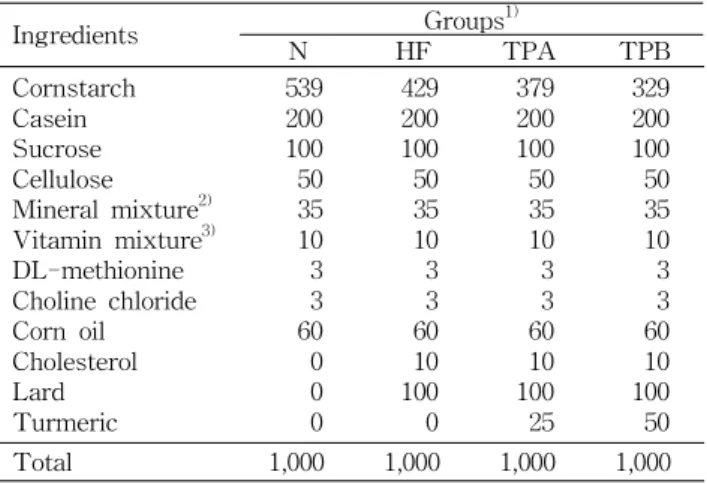
Table 1. Compositions of experiment groups (g/kg diet)
Ingredients Groups
1)N HF TPA TPB
Cornstarch Casein Sucrose Cellulose Mineral mixture
2)Vitamin mixture
3)DL-methionine Choline chloride Corn oil Cholesterol Lard Turmeric
539 200 100 50 35 10 3 60 3 0 0 0
429 200 100 50 35 10 3 60 3 100 10 0
379 200 100 50 35 10 3 60 3 100 10 25
329 200 100 50 35 10 3 60 3 100 10 50
Total 1,000 1,000 1,000 1,000
1)
N: Normal diet, HF: High fat high cholesterol diet, TPA: High fat high cholesterol diet+turmeric powder 2.5%, TPB: High fat high cholesterol diet+turmeric powder 5%.
2)
AIN-76 mineral mixture (g/kg mixture).
3)
AIN-76 vitamin mixture (g/kg mixture).
지 산소 화합물을 통칭하는 것으로 화학적 성질로 인해 환원 된 자유라디칼(free radical)인 superoxide anion radical (O
2․
-), hydroxyl radical(OH) 및 hydrogen peroxide(H
2O
2) 등이 있다(7). ROS에서 유래된 산소라디칼은 자유라디칼 중 에서 가장 많은 부분을 차지하며, 비공유 전자(unpaired electron)를 갖고 있기 때문에 불안정하고 반응력이 높아 여 러 생체 물질과 쉽게 반응하게 되고, 끊임없이 체내 고분자 들을 공격하여 결국에는 세포와 조직에 비가역적인 손상을 초래하거나 돌연변이, 세포독성 및 발암 등을 유발하여 생체 나 식품에서 문제시되고 있다(8-10).
울금(
Curcuma longaL., turmeric)은 생강과에 속하는 다 년생 숙근 초본 식물로 울금의 덩이뿌리를 그대로 또는 주피 를 제거하고 쪄서 말린 것을 말하며, 한약재, 향신료 및 식용 으로 사용되어져 왔다(11). 울금이 약제로서 효능을 지닌 것 은 주요 성분인 curcumin 이외에 demethoxycurcumin, bisdmethoxycurcumin, cyclocurcumin, calebin 등이 존재하 며, 식물성 sterols 및 정유성분인 β-sitosterol, zingiberene, campesterol, stigmasterol, mono- 및 di-enoic acid, tumer- one, zingiberone, borneol, eugenol, camphor, curdion, α- phellandrene, cineol 등이 전체 4.2~4.5% 내외로 포함되어 있다(12-15). 최근 울금의 생리활성물질인 curcuminoids의 약리효과가 알려지면서 많은 연구가 활발히 이루어지고 있 는 실정이며, 국내연구로는 curcuminoids의 항산화작용(16), 울금 에탄올 추출물의 항산화 활성 비교(17), curcumin의 항산화․항암성․항돌연변이성․항염증(18,19) 및 항균성 효 과(20) 등이 보고되어 있으나, 고지방․고콜레스테롤 식의 흰 쥐에서의 항산화 및 산화적 손상에 관한 연구는 미흡한 실정 이다.
따라서 본 연구에서는 국내산 울금의 항산화작용을 규명 하기 위하여 흰쥐에 고지방․고콜레스테롤 식이와 함께 울금 분말을 농도별로 공급했을 경우 간조직의 자유라디칼 생성 계와 제거계 및 산화적 손상에 미치는 영향을 관찰하였다.
재료 및 방법
울금 추출물 분말 제조
본 연구에 사용한 울금은 진도에서 제공받아 농가형 열풍 건조기를 이용하여 85~80
oC로 건조하였다. 울금은 분쇄기 (대성파워 믹서/분쇄기 DA-280G, Seoul, Korea)로 분쇄한 울금당 6배에 해당하는 증류수(w/v)를 가하여 4
oC에서 24시 간 추출한 후, 위와 같은 조건으로 3회 반복하고 상등액을 모아 Whatman No. 1(Whatman, Lawrence, KS, USA) 여과 지로 여과하였다. 여과한 여액은 rotary vacuum evaporator (HS-2001N, Hanshin Science Co., Bucheon, Korea)를 사용 하여 감압농축 하고, 동결건조기(Bondiro, Ilshin, Dongdu- cheon, Korea)로 건조하여 사용하였다. 각각의 추출물에 대 한 수율은 추출 전의 시료 무게에 대한 동결건조 후 추출물의
무게를 측정하여 나타내었다. 본 연구에서 사용한 울금 추출 물 분말은 추출한 후 동결건조 시켜 조제하여 사용하였다.
실험동물 사육 및 식이
본 실험에 사용된 동물은 체중 130±10 g 내외의 Sprague- Dawley 종 수컷을 (주)바이오 제노믹스사(Bio genomics, Inc., Seoul, Korea)에서 구입하여 각 군당 10마리씩 사용하 였다. 실험식이 시작 전 일주일간 일반배합사료(Purina Co., Seoul, Korea)로 예비사육한 후 평균체중이 유사하도록 난 괴법(randomized complete block design)에 의해 대조군과 실험군으로 나눈 후 Table 1과 같이 나누어 4주간 사육하였 다. 실험 기간 중 식이는 4
oC에서 보관하였으며, 매일 일정 시간에 공급하여 자유로이 섭취하게 하였다. 사육실의 온도 는 22±2
oC, 상대습도 50±10%를 유지하였다. 식이 그룹은 정상군(N group)과 1% 고지방․고콜레스테롤 식이 실험군 으로 나눈 후 고지방․고콜레스테롤 실험군은 고지방․고콜 레스테롤 대조군(HF group), 고지방․고콜레스테롤식이+
2.5% 울금 분말 공급군(TPA group), 고지방․고콜레스테롤
+5% 울금 분말 공급군(TPB group) 총 4군으로 나누어 사 육하였다. 본 동물 실험은 한국국제대학교 동물실험 윤리위 원회의 승인(NVRQS AEC5)을 거쳐 진행하였다.
혈액 및 장기의 채취
사육기간 완료 후 실험동물을 12시간 절식시키고 가벼운 ether 마취 하에서 복부대동맥으로부터 혈액을 채취한 후 즉시 간을 채취하여 생리식염수로 헹군 다음 거즈로 수분을 제거하고 무게를 측정한 후 액체질소로 급속동결 시켜 -80
o
C에 보관하였다.
분석 시료의 전처리
간장을 각 간엽에서 고르게 일정량을 취하여 Potter
Elvehjem homogenizer(Dalhan, Seoul, Korea)를 사용하여
0.25 M sucrose/0.5 mM ethylene diamine teraacetic acid (EDTA)/5 mM N-2-hydroxyethyl-piperazine-N-2-ethane sulfonic acid(HEPES) 용액으로 10%(w/v) 마쇄액을 만들 었다. 마쇄액의 일부를 8,000×
g에서 20분간 원심분리 하여 그 상층액을 과산화지질 정량에 사용하였고, 나머지는 10,000
×
g에서 30분간 원심분리 하여 그 상층액 중 일정량을 취하 여 0.4배량의 ethanol : chloroform 냉혼합액(5:3)을 가하고 2분간 진탕한 다음 10,000×
g에서 30분간 원심분리 하여 얻 은 상층액을 세포질 SOD 원액으로 사용하였다. 또 10,000×
g상층액의 일부는 다시 105,000×
g에서 30분간 원심분리 하 여 얻은 cytosol은 GSH-px의 활성도를 측정하였다. 모든 실 험 조건은 4
oC를 유지하면서 행하였다.
혈청 중 GOT 및 GPT 활성
혈청 GOT와 GPT 활성도는 Reitman과 Frankel의 방법 (21)을 응용한 아산제약(Seoul, Korea)의 kit를 사용하여 측 정하였다. 즉 GOT 기질로 L-aspartate와 ∝-ketoglutaric acid, GPT 기질로 D,L-alanine과 ∝-ketoglutaric acid 용액 에 각각 혈청을 가하여 37
oC에서 GOT는 60분, GPT는 30분 간 효소반응을 시킨 후 생성된 oxaloacetate 및 pyruvic acid 에 2,4-dinitrophenyl hydrazine 정색시약과 0.4 N NaOH를 가하여 잘 혼합한 다음 실온에 10분간 방치한 후 505 nm에 서 비색정량을 하였다.
SOD, GSH-px, catalase 활성 측정
SOD 활성은 알칼리 상태에서 pyrogallol의 자동산화에 의한 발색을 이용한 Marklund와 Marklund(22)의 방법에 따 라 측정하였다. GSH-px 활성은 산화형 glutathione(GSSG) 이 glutathione reductase와 NADPH에 의해 환원될 때 340 nm에서 NADPH의 흡광도가 감소하는 것을 이용한 Law- rence와 Burk(23)의 방법에 따라 측정하였다. 간조직의 CAT 활성은 Abei 등(24)의 방법으로 측정하였다. 즉 50 mM potassium phosphate buffer(PH 7.0) 2.89 mL에 기질인 30 mM H
2O
2를 100 μL 넣어 25
oC에서 5분간 반응시켰다. 여기 에 시료 10 μL를 가하여 3.0 mL가 되도록 하고 25
oC, 240 nm에서 5분간 흡광도를 측정하였다. H
2O
2의 흡광도 변화와 H
2O
2의 몰흡광계수로 H
2O
2의 농도를 구하여 효소활성도를 계산하였다.
간조직의 GST 활성 측정
간조직의 GST 활성은 Habig 등(25)의 방법에 따라 측정 하였다. 1-chloro-2,4-dinitrobenzene(DCNB)과 환원형 glu- tathione(GSH)을 기질로 하여 25
oC에서 20분간 반응하는 동 안에 생성된 GSH-DCNB conjugate의 분자 흡광계수를 이 용하였다. 0.1 M potassium phosphate buffer(pH 6.5) 2.0 mL에 효소액 0.1 mL와 0.04 M 환원형 glutathione 0.075 mL를 넣고 25
oC에서 2분간 반응시킨 후 20% trichloroacetic acid 0.5 mL를 가하여 반응액을 정지시켰다. 반응액을 1.500
×
g에서 10분간 원심분리 하여 얻은 상층액을 340 nm에서
흡광도를 측정하였다.
Hydrogen peroxide(H
2O
2), superoxide radical(O
2˙ -) 함량 측정
간조직 중의 H
2O
2와 O
2․
-함량을 측정하기 위하여 1 g의 간 조직을 0.25 M sucrose 용액으로 균질화 시킨 후 8,000×
g
에서 원심분리 하여 mitochondria 분획을 얻은 후 다시 105,000×
g에서 원심분리 하여 cytosol과 microsome 분획 을 얻었다. H
2O
2생성량 측정은 Gay와 Gebicki(26)의 방법에 따라 xylenol orange를 이용하여 560 nm에서 흡광도 증가로 측정하였다. O
2․
-함량 측정은 Azzi 등(27)의 방법에 준해 실시하였다.
간조직 중의 carbonyl 함량 측정
간조직의 microsome 및 mitochondria 중의 산화된 단백 질의 함량은 Levine 등(28)의 방법에 따라 측정하였다. 0.1 mL의 시료에 trichloroacetic acid(TCA) 0.5 mL를 혼합한 후 3,000 rpm에서 10분간 원심분리 하여 얻어진 상층액을 제거한 뒤 잔사에 다시 10 mM dinitrophenylhadrazine (DNPH) 0.5 mL 가하여 15분마다 교반하면서 1시간 동안 실온에 방치한 후 3,000 rpm에서 10분간 원심분리 하였다.
이때 얻어진 상층액을 제거한 후 잔사에 ethanol/ethyl ace- tate(1:1, v/v) 3 mL를 첨가하여 실온에서 10분간 방치한 다 음 다시 3,000 rpm에서 10분간 원심분리한 후 얻어진 잔사를 6 M guanidine[20 mM potassium phosphate buffer(pH 7.3) 에 용해] 1.0 mL를 첨가하여 혼합한 후 37
oC의 항온수조에서 15분간 가온한 후 3,500 rpm에서 10분간 원심분리 하여 상층 액을 얻었다. 이때 carbonyl value의 양은 360 nm 흡광도의 파장에서 분자흡광계수(ε=22,000)를 이용하여 계산하였다.
Thiobarbituric acid reaction substance(TBARS) 정량
간조직 중의 TBARS는 Uchiyama와 Mihara의 방법(29) 에 따라 조직 0.5 g에 9배 부피의 0.01 M sodium phosphate buffer(pH7.0)를 넣어 균질화한 후 0.5 mL를 취하여 1%
phosphoric acid 3 mL와 0.06 M TBA용액 1 mL를 첨가하여 2,500×
g에서 10분간 원심분리 한 다음, TBA 반응물이 존재 하는
n-butanol 층을 취하여 535 nm에서 흡광도를 측정하였 다.
단백질 정량
각 시료의 단백질량은 Lowry 등(30)의 방법으로 하였으 며, bovin serum albumin을 표준품으로 사용하였다.
통계처리
모든 실험결과에 대한 통계처리는 SPSS(Statistical Pac-
kage for Social Science, version 18.0, SPSS Inc., Chicago,
IL, USA)를 사용하여 처리하였다. 각 실험 군별로 표준차이
가 있는가를 검증하기 위해 분산분석을 수행하였으며 분산
분석(ANOVA 검증) 결과 유의성이 발견된 경우 Tuckey's
HSD test(31)에 의해 군 간의 유의도를 분석하였다.
0 20 40 60 80
N HF TPA TPB
Groups
GOT, GPT (Karmen/mL) .
GOT GPT
c
ab b
ab a
a a
b
Fig. 1. Effects of turmeric powder on serum glutamate ox- aloacetate transaminase (GOT) and glutamate pyruvate transaminase (GPT) activities in rats fed high fat high cho- lesterol diets. Values with different superscripts are significantly different at p<0.05 by Tukey's test.
Table 2. Effects of turmeric powder on hepatic superoxide dismutase (SOD), glutathione peroxidase (GSH-px) and cat- alase activities in rats fed high fat high cholesterol diets
Groups SOD
(unit/mg protein/min)
GSH-px (nmol NADPH/
min/mg protein)
Catalase (nmol/mg protein/min) HF N
TPA TPB
10.2±0.6
a5.9±0.3
c7.2±0.9
bc7.7±0.4
b482.8±51.9
NS388.6±20.1 525.8±30.7 564.2±30.3
6.6±0.9
NS4.3±1.2 5.7±1.1 6.0±0.4 All values are mean±SE (n=10). Values with a column with different superscripts are significantly different at p<0.05 by Tukey's test.
NSNot significant.
The experimental conditions are the same as Table 1.
결과 및 고찰
혈청 중의 GOT 및 GPT 활성
임상에서 GOT 및 GPT는 간세포에 다량 존재하는 효소 로 간 손상 시 세포 외로 다량 유출되어 혈액에 증가됨으로 써 간 손상의 지표로 이용되는 효소이다. 이러한 간의 괴사 를 반영하는 GOT와 간조직의 비대화 및 간의 상태를 반영 하는 GPT의 활성을 측정한 결과는 Fig. 1과 같다. GOT 활 성은 정상군에 비해 HF군에서 유의적으로 증가되어졌으며, 5% 울금 공급군인 TPA군은 HF군에 비해 유의적으로 감소 하는 경향을 나타내었다. GPT 활성 또한 정상군에 비해 HF 군에서 유의적으로 증가되어졌으며, 울금 공급군 모두에서 유의적이지는 않았지만 감소하는 경향을 나타내었다. 최근 Fu 등(32)의 연구에 의하면 울금의 성분인 커큐민 투여가 ALT와 AST가 증가하는 것을 막고 CCI-4에 의해 손상된 간의 작용을 향상시킨다는 보고와 비슷한 경향을 보였다.
따라서 울금 내 함유된 성분이 고지방․고콜레스테롤 식이로 유도된 비만 쥐의 간 손상 완화에 효과적으로 작용 가능할 것으로 사료되어진다.
간조직 중 항산화 효소계 관찰
생체 내 항산화방어기구 중 효소적 방어계의 하나로서 NADPH oxidase에 의해 생성된 산소 음이온을 H
2O
2로 전환 시키며, superoxide radical을 과산화수소로 전환시키는 과 정을 촉매화 하는 SOD 활성을 간조직에서 관찰한 결과는 Table 2와 같다. 울금분말을 공급한 군에서 HF군에 비해 SOD 활성이 증가하였으며, 특히 TPB군에서는 유의적으로 증가하였다. 일종의 peroxidase로 NADP
+를 전자수용체로 하여 H
2O
2를 제거하면서 환원형 glutathione(GSH)을 산화 형 glutathione(GSSG)으로 전환시키는 효소로 알려져 있는 (33) GPx를 관찰한 결과(Table 2), 정상군에 비해 HF군에서 감소되었으나 울금 분말을 공급한 군에서 HF군에 비해 GPx 활성이 유의적으로 증가되었다. 조직 세포 속에 존재하
여 대사산물인 H
2O
2를 순간적으로 산화시켜 H
2O
2와 O
2로 분해하고 생체를 산소독으로부터 보호함으로써 과산화적 손상을 방지하는 간조직의 catalase를 관찰한 결과(Table 2), 정상군에 비해 HF군에서 감소되었으며 울금 분말을 공 급한 군에서는 증가되었으나 유의적인 차이는 없었다.
이러한 결과는 Liju 등(34)의 연구에서 마우스에 울금을 100 mg/kg b.wt, 500 mg/kg b.wt로 공급하였을 때 간조직 에서의 SOD, GPx 및 CAT의 활성을 조사한 결과, control 군에 비해 울금 투여군이 증가하는 보고와 일치하였다. 또한 Oh 등(35)의 연구에 따르면 울금 10 mg/mL에서 142.34 μg/
mL의 높은 폴리페놀 함량을 보였다. 따라서 이러한 항산화 효소 활성 변화들은 고콜레스테롤 공급으로 인해 불포화지 방산의 함량이 높은 생체막의 지질과산화가 촉진되어 세포 소기관들의 산화적 손상이 가속화되어 효소 활성이 저하되 었으나 본 연구에서 관찰한 바와 같이 폴리페놀 함량이 높은 울금의 공급으로 항산화 효소 활성이 증가된 것으로 볼 수 있다.
간조직의 GST 활성 측정
GST는 변이성 물질, 발암성 물질, 독성물질 등의 대사산 물, 그리고 내인성 독소들 중에서 친전자성 물질 등에 환원 형 glutathione을 포함시켜 glutathione thioester(R-S-G)를 형성하는 반응을 촉매하는 효소이다(36). 울금의 공급에 의 한 체내 안전성을 알아보기 위해 비효소적 방어계인 GST 활성을 간조직에서 관찰한 결과 Fig. 2와 같다. 정상군에 비 해 HF군에 유의적으로 감소되었고, 울금 분말을 공급한 모 든 군에서 HF에 비해 정상군 수준으로 증가하는 경향을 나 타내었다. Adaramoye 등(37)의 연구에서 울금의 커큐민을 먹인 마우스에서 GST의 활성이 대조군에서보다 증가된다 는 것과 일치하며 본 실험에 사용된 울금 분말에 항산화적 해독 기능이 있음을 알 수 있었다.
간조직의 superoxide radical(O
2․
-) 함량
지질과산화물을 생성하고 이로 인해 세포의 기능을 손상
시키는 것으로 알려져 있는 speroxide radical 함량을 간조직
에서 분획별로 관찰한 결과 Table 3과 같다. 간조직의 mi-
crosome에서는 정상군에 비해 HF군에서 증가되었으나 울
0 50 100 150
N HF TPA TPB
Groups
GST (nmol DNCB/ mg protein/min) .
a
ab b ab
Fig. 2. Effects of turmeric powder on hepatic glutathione S-transferase (GST) activities in rats fed high fat high cho- lesterol diets. Values with different superscripts are significantly different at p<0.05 by Tukey's test.
Table 3. Effects of turmeric powder on hepatic superoxide radical (O
2ㆍ
-) contents in rats fed high fat high cholesterol diets
Groups Microsome Mitochondria
(nmol/mg protein/min) HF N
TPA TPB
5.0±1.3
NS7.9±1.8 6.1±1.1 5.3±1.1
4.0±1.5
b8.8±1.5
a6.7±0.4
ab5.7±0.7
bAll values are mean±SE (n=10). Values with a column with different superscripts are significantly different at p<0.05 by Tukey's test.
NSNot significant.
The experimental conditions are the same as Table 1.
Table 4. Effects of turmeric powder on hepatic hydrogen peroxide (H
2O
2) contents in rats fed high fat high cholesterol diets
Groups Cytosol Mitochondria
(nmol/mg protein/min) HF N
TPA TPB
1.38±0.01
b1.43±0.03
a1.37±0.03
ab1.35±0.04
ab1.38±0.02
b1.50±0.03
a1.47±0.05
ab1.41±0.10
abAll values are mean±SE (n=10). Values with a column with different superscripts are significantly different at p<0.05 by Tukey's test.
The experimental conditions are the same as Table 1.
0 20 40 60 80 100
N HF TPA TPB
Groups
Carbonyl value (nmol/mg protein/min) . microsome mitochondria
NS
b b
a
b
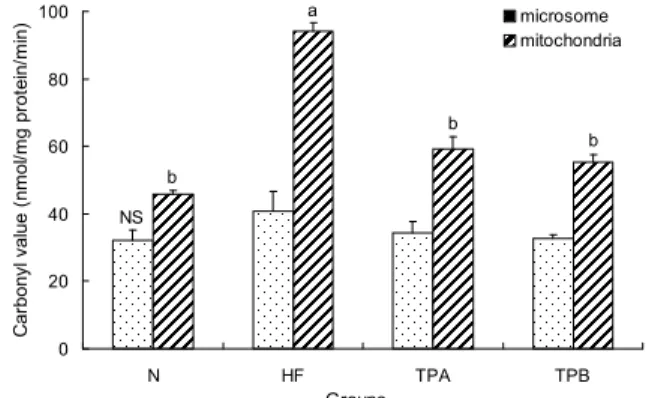
Fig. 3. Effects of turmeric powder on hepatic carbonyl values in rats fed high fat and high cholesterol diets. Values with different superscripts are significantly different at p<0.05 by Tukey's test. NS: Not significant.
금 분말을 공급한 모든 군에서 감소되었다. 간조직의 mi- tochondria에서는 정상군에 비해 HF군에서 유의적으로 증 가하였고, 울금 분말을 공급한 모든 군에서는 정상군 수준으 로 감소하였다. 특히 TPB군에서는 유의적으로 감소하는 것 을 볼 수 있었다. 이러한 결과는 An 등(38)의 연구에서 울금 의 농도를 달리하여 에탄올 추출물의 전자공여능을 측정한 결과 DPPH를 이용한 전자공여능이 농도가 증가할수록 전 자공여능이 증가하여 울금의 전자공여능의 효과가 있음을 보고한 결과와 유사했다.
간조직의 hydrogen peroxide(H
2O
2) 함량
H
2O
2는 지질과산화물을 생성하고 이로 인해 세포 상해를 주며 특히 세포막의 다불포화지방산에 작용하여 기능을 손 상시키는 것으로 알려져 있다(39). 간조직의 mitochondria 및 cytosol에서 H
2O
2의 함량을 관찰한 결과(Table 4), 두 분 획 모두에서 정상군에 비해 HF군에서 유의적으로 증가되었 으며, 울금 분말을 공급한 모든 군에서는 HF군에 비해 정상 군 수준으로 감소되었다. 이러한 결과는 울금 분말의 항산화 성분이 효과적으로 활성산소종의 소거에 관여한 것으로 보 인다.
간조직 중의 carbonyl value 함량
간조직의 산화적 손상의 지표로 삼고 있는 산화단백질의 생성지표인 carbonyl 가 함량을 측정한 결과는 Fig. 3과 같
다. 간조직의 microsome에서의 산화단백질 함량은 정상군 에 비해 고지방․고콜레스테롤군에서 증가하였으나 유의적 인 차이는 없었다. 또한 mitochondria에서 carbonyl 가의 함 량을 측정한 결과 정상군에 비해 고지방․고콜레스테롤 군에 서 증가되었으며, HF군에 비해 울금 분말을 공급한 모든 군에서 유의적으로 감소하는 경향을 나타내었다. 이러한 결 과는 울금에 항산화력의 지표가 되는 페놀함량이 다량 함유 되어 있다는 Kim 등(40)의 보고에서와 같이 울금의 풍부한 항산화 성분들로 인하여 단백질 산화를 억제하고 조직의 산 화를 억제시킨 것으로 여겨진다.
간조직 중의 과산화지질(TBARS) 함량
지질과산화 반응은 여러 가지 독성 화합물이나 약물 또는 질병에 의한 병태 생리학적 현상이나 조직의 손상 정도를 나타내는 가장 중요한 기전으로 인정되고 있는데, 이는 조직 내 세포의 산화적 스트레스의 증가와 생체 내 항산화 방어력 의 감소로 야기된다(41). 조직의 산화적 손장, 노화 및 기타 퇴행성 질환 유발의 요인이 되는 과산화지질 함량을 간조직 에서 관찰한 결과는 Table 5와 같다. 정상군에 비해 고지방․
고콜레스테롤군에서 유의적으로 증가되었으며, HF군에 비
해 울금 분말을 공급한 모든 군에서 유의적으로 감소하는
경향을 나타내었다. 이러한 결과는 고지방식이와 콜레스테
롤 식이의 공급으로 간조직의 TBARS가 증가하였다는 이전
Table 5. Effects of turmeric powder on hepatic thiobarbituric acid reaction substance (TBARS) contents in rats fed high fat high cholesterol diets
Groups TBARS (nmol/mg protein/min) HF N
TPA TPB
12.8±1.8
c107.3±29.5
a42.5±5.6
b34.7±7.8
bAll values are mean±SE (n=10). Values with a column with different superscripts are significantly different at p<0.05 by Tukey's test.
The experimental conditions are the same as Table 1.
의 보고(42,43)와 유사한 경향을 보였다. 또한 Akira(44) 연 구에서는 울금을 1.0 g/100 g 먹인 mice에서 TBARS 함량이 간조직의 세포막에 항산화력이 증가하고 있다고 보고하였 다. 따라서 울금은 조직 중의 과산화지질의 함량을 감소시키 는 효과가 있는 것으로 사료된다. 이로 미루어 볼 때 울금에 함유된 유기산 등 여러 항산화계 물질이 조직의 산화를 억제 하는 항산화계의 기능을 하는 것을 알 수 있었다.
요 약
본 연구는 흰쥐에 고지방․고콜레스테롤 식이와 함께 울 금 분말을 농도별로 2.5%(TPA group), 5%(TPB gorup)의 수준으로 공급하였을 시 항산화계 및 산화적 손상에 미치는 영향을 관찰하였다. SOD 활성을 간조직에서 관찰한 결과, 울금 분말을 공급한 군에서 HF군에 비해 SOD 활성이 증가 하였으며, 특히 TPB군에서는 유의적으로 증가하였다. GPx 활성은 정상군에 비해 HF군에서 감소되었으나, 울금 분말 을 공급한 군에서 HF군에 비해 GPx 활성이 유의적으로 증 가되었다. Catalase를 관찰한 결과는 정상군에 비해 고지 방․고콜레스테롤군에서 감소되었으며 울금 분말을 공급한 군에서는 증가되었다. Superoxide radical 함량을 간조직의 microsome에서는 정상군에 비해 HF군에서 증가되었으나 울금 분말을 공급한 모든 군에서 감소되었다. 간조직의 mi- tochondria에서는 정상군에 비해 HF군에서 유의적으로 증 가하였고, 울금 분말을 공급한 모든 군에서는 감소하였다.
특히 TPB군에서는 유의적으로 감소하는 것을 볼 수 있었다.
간조직의 mitochondria에서 H
2O
2의 함량은 정상군에 비해 HF군에서 유의적으로 증가되었다. 울금 분말을 공급한 모 든 군에서는 HF군에 비해 감소되었으며 정상군 수준으로 감소되었다. 간조직의 cytosol에서는 정상군에 비해 HF군에 서 유의적으로 증가되었으나 울금 분말을 공급한 군에서는 감소되었으며 정상군 수준으로 감소되었다. 간조직의 산화 단백질의 생성지표인 carbonyl 가 함량을 mitochondria에서 측정한 결과 정상군에 비해 고지방․고콜레스테롤군에서 증 가되었으며, HF군에 비해 울금 분말을 공급한 모든 군에서 유의적으로 감소하는 경향을 나타내었다. 간조직에서의 TBARS를 측정한 결과 HF군에 비해 울금 분말을 공급한
모든 군에서 유의적으로 감소하는 경향을 나타내었다. 이러 한 결과로부터 국내산 울금은 고콜레스테롤 식이 흰쥐에서 항산화계를 강화시켜 조직의 산화적 손상을 감소시키는 항 산화 효과가 있음이 규명되었다.
문 헌