
Allelic Gene Interaction and Anthocyanin Biosynthesis of Purple Pericarp Trait for Yield Improvement in Black Rice
Md Mominur Rahman
1,2, Kyung Eun Lee
1and Sang Gu Kang
1*
1Molecular Genetics Laboratory, Depatment of Biotechnology, College of Life and Applied Science, Yeungnam University, 280 Daehak-Ro, Gyeongsan, Gyeongbuk 38541, Korea
2Department of Agronomy, Hajee Mohammad Danesh Science and Technology University, Dinajpur, Bangladesh Received May 4, 2016 /Revised June 14, 2016 /Accepted June 14, 2016
Rice (Oryza sativa L.) is one of the major cereal crops for consumption by the world’s population.
Recently, various colored rice, such as white, red, brown, green, and black rice, have caught the atten- tion of world consumers. The commercial name ‘black rice’ contains a high amount of anthocyanins in pericarp, which increases nutritional value. Moreover, anthocyanin in black rice possesses bio- medical properties, including anti-oxidant, anti-cancer, and anti-inflammatory effects in humans. In ge- netics, black rice has a dominant PURPLE PERICARP (Prp) trait governed by two genes, Pb and Pp, which are involved in the synthesis of cyanidin-3-O-glucoside (C3G). Since the publication of a report by Nagai at 1921, the genetics and physiological studies of black rice driven by Prp traits are still un- able to understand the relevant genes and their roles. However, with the increased demand for antho- cyanin-rich black rice as a functional food for human health, it has become urgent to develop high- yielding anthocyanin-rich varieties of rice. We explored many years in the genetics of purple pericarp trait, anthocyanin biosynthesis in pericarp during seed development, and, consequently, their products in relation to different physiological and agronomic traits. In this review, we summarized the antho- cyanin biosynthesis in pericarp, emphasizing the inheritance pattern of the trait and functions of their products on different physiological and agronomic traits, including the yield of black rice.
Key words :
Anthocyanin, black rice, complementation gene, cyanidin-3-O-glucoside, purple pericarp
*Corresponding author
*Tel : +82-53-810-3025, Fax : +82-53-816-8498
*E-mail : [email protected]
This is an Open-Access article distributed under the terms of the Creative Commons Attribution Non-Commercial License (http://creativecommons.org/licenses/by-nc/3.0) which permits unrestricted non-commercial use, distribution, and reproduction in any medium, provided the original work is properly cited.
Journal of Life Science 2016 Vol. 26. No. 6. 727~736 DOI : http://dx.doi.org/10.5352/JLS.2016.26.6.727
Introduction
Pericarp is the outermost layer of rice seed and located just beneath the hull of rice. All over the world, the rice varieties mostly possess white pericarp and few are red, brown, green, black or purple pericarp [9, 12, 17, 25]. Among them, black rice is characterized by dark purple pigments of anthocyanin accumulation in the pericarp [18, 22, 38].
Genetically, the pigmentation in pericarp of black rice re- quires two dominant complementary genes, PURPLE PERICARP A (Pp, Prpa and Prp1) and PURPLE PERICARP B (Pb, Prpb and Prp2) located on chromosomes 1 and 4, re- spectively [14, 28, 47]. The existence of two dominant genes Pb and Pp result purple color of rice pericarp. However, Pb in the absence of Pp produces brown pericarp and Pp alone
produces ordinary white pericarp rice [13, 34, 45]. Addition- ally, the intensity of pericarp color in black rice also affected by the number of dominant Pp alleles in presence of domi- nant Pb alleles [34].
In black rice, high level of anthocyanins accumulation oc- curs during seed development stages result in a dark purple color pericarp [37, 41]. Anthocyanins are a group of natural pigments that belong to the family of flavonoids. Two major anthocyanin pigments namely cyanidin-3-O-glucoside (C3G) and peonidin-3-glucoside (P3G) are found in rice seed peri- carp [22, 34]. Among them, C3G anthocyanin possesses bio- medical properties including anti-oxidant, anti-cancer, and anti-inflammatory effects in human [15, 26, 29].
Although black rice has increased demand, the yield po- tentiality of colored rice is much lower as compared with white or hybrid rice [23, 31, 48]. The probable reasons for the low yield potentiality of black rice in comparison with white rice might be due to small sink size [16]. We con- ducted a pilot project to observe the pigments deposition pattern during grain filling stage and its influence on yield.
Therefore, it is urgent to explore the facts regarding the ge- netic makeup and deposition of anthocyanins in pericarp,
- Review -
Fig. 1. Chemical structures of most common anthocyanin in the pericarp of black rice [19, 42].
A
B
Fig. 2. Anthocyanin profile in progenies of black rice and white rice extract analyzed via HPLC. (A) HPLC profiles of the extracts from the dark-purple to white pericarp of rice seeds in F2 progenies. (B) Measurement of cyani- din-3-O-glucoside (C3G)in each pericarp of rice seeds.
The high amount of C3G was extracted in dark purple seeds. However, relatively smaller amounts of C3G were extracted in the medium purple seeds of the F2
progenies. The brown and white seeds of F2 progenies contained no anthocyanin [34].
review, we summarized the anthocyanin biosynthesis in per- icarp, emphasizing inheritance pattern of the trait and the functions of their products on different physiological and agronomic traits including yield of black rice.
Anthocyanin pigments in pericarp of black rice Black rice has a high level of purple pigments in pericarp layers [47], which results in dark purple color seed. This pur- ple pigmentation in the black rice is the color of anthocyanin [1]. Anthocyanins are a group of natural pigments that be- long to the family of flavonoids which synthesized by a sec- ondary metabolic pathway from the amino acid phenyl- alanine [36]. Early studies reported that, cyanidin-3-O-gluco- side (C3G) as a major anthocyanin in black rice, but the mi- nor ones either malvidin-3-glucoside [46] or peonidin-3-glu- coside (P3G) [38]. Recently, four anthocyanins were identi- fied in black rice namely cyanidin-3-O-glucoside, peoni- din-3-glucoside, cyanidin-3-5-diglucoside, cyanidin-3-rutino- side (Fig. 1). A strong and identical peak of cyanidin-3-O- glucoside (kuromanin) was found in pericarp extract of pur- ple pericarp rice, a trace amount of peonidin-3-glucoside was also found as well [34]. In contrast, the accumulation of an- thocyanin was not detected in pericarp extract of white and brown pericarp rice (Fig. 2). Cyanidin-3-O-glucoside as ma- jor pigment and peonidin-3-glucoside as minor pigment are also the core anthocyanins in seed pericarp of the grains such as purple wheat and purple rye [6].
Genes involved in anthocyanin biosynthesis in black rice
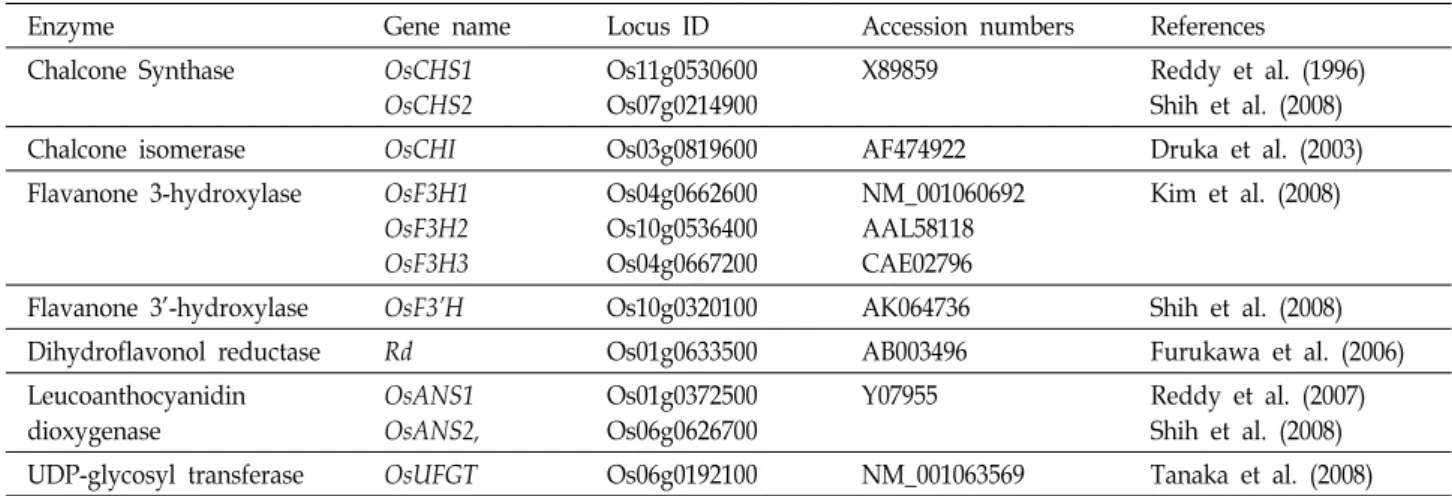
Anthocyanins are derived from one molecule of p-cou- maroyl-CoA and three molecule of malonyl-CoA which is
respectively (Fig. 3). Several genes are involved in anthocya- nin biosynthesis of rice and divided into two types; the structural genes (Table 1) are directly participating in the biosynthesis of anthocyanins, and the regulatory genes (Table 2) that control the expression of structural genes [11].
Structural genes for black rice
Anthocyanins with significant biological activities and a
number of structural genes isolated from rice have been de-
scribed in Table 1. The anthocyanin biosynthesis is catalyzed
by chalcone synthase (CHS), chalcone isomerase (CHI), fla-
vanone-3-hydroxylase (F3H), flavonoid-3’-hydroxylase (F3’H),
flavonoid-3’,5’-hydroxylase (F3’5’H), dihydroflavonol-4-re-
ductase (DFR), anthocyanidin synthase (ANS), and flavonoid-
3-O-glucosyltransferase (UFGT) [19, 21, 32, 42]. Generally,
the first step in anthocyanin biosynthesis is condensation of
three malonyl-CoA molecules and one p-coumaroyl-CoA
Fig. 3. The anthocyanin biosynthesis pathway in rice. CHS, chalcone synthase; CHI, chalcone isomerase; F3H, flavanone3β-hydroxylase;
F3’H, flavonoid 3’-hydroxylase; F3’5’H, flavonoid 3’, 5’-hydroxylase; DFR, dihydroflavonol 4-reductase; ANS, Anthocyanidin synthase; ANR, anthocyanidin reductase; LAR, leucoanthocyanidin reductase and UFGT, Flavonoid 3-0-glucosyltransferase [32, 37, 42].
Table 1. Structural genes involved in anthocyanin biosynthesis pathway in rice
Enzyme Gene name Locus ID Accession numbers References
Chalcone Synthase OsCHS1
OsCHS2
Os11g0530600 Os07g0214900
X89859 Reddy et al. (1996)
Shih et al. (2008)
Chalcone isomerase OsCHI Os03g0819600 AF474922 Druka et al. (2003)
Flavanone 3-hydroxylase OsF3H1 OsF3H2 OsF3H3
Os04g0662600 Os10g0536400 Os04g0667200
NM_001060692 AAL58118 CAE02796
Kim et al. (2008)
Flavanone 3’-hydroxylase OsF3’H Os10g0320100 AK064736 Shih et al. (2008)
Dihydroflavonol reductase Rd Os01g0633500 AB003496 Furukawa et al. (2006)
Leucoanthocyanidin dioxygenase
OsANS1 OsANS2,
Os01g0372500 Os06g0626700
Y07955 Reddy et al. (2007)
Shih et al. (2008)
UDP-glycosyl transferase OsUFGT Os06g0192100 NM_001063569 Tanaka et al. (2008)
molecule by the action of enzyme chalcone synthase (CHS) to produce a yellow naringenin chalcone. In rice (O. sativa), there are at least two genes CHS1 (LOC_Os11g32650) and CHS2 (LOC_Os07g11440) encoding CHS which are located on different chromosomes [42]. After the action of chalcone isomerase (CHI), naringenin chalcone isomerized into a col-
orless naringenin flavanone stereospecifically and quickly.
The naringenin flavanone is then hydroxylated by flavanone
3-β-hydroxylase (F3H) to produce an unpigmented dihydro-
flavonol. In rice, three genes F3H1 (NM_001060692), F3H2
(AAL58118) and F3H3 (CAE02796) encoding F3H were iden-
tified and characterized [20]. The dihydroflavonol is reduced
Genetics study Chromosome Gene locus Cloned or possible gene
Kato and Ishikawa 1921 Hsieh and Chang 1964 Hu et al. 1996 Yoshimura et al. 1997 Wang et al. 2009 Rahman et al. 2013
1
A
(Nagao and Takahashi 1963) Rd
(Furukawa et al. 2006)
DFR
(Furukawa et al. 2006) Pp
(Wang and Shu 2007) Kala1 (Maeda et al. 2014)
3
P
(Nagao and Takahashi 1963)
Unknown Kala3
(Maeda et al. 2014)
4
C
(Nagao and Takahashi 1963) Pb
(Wang and Shu 2007; Rahman et al. 2013)
OSB1 (Wang and Shu 2007;
Rahman et al. 2013) plw
(Sakamoto et al. 2001)
OSB1 and OSB2 (Sakamoto et al. 2001) Kala4
(Maeda et al. 2014)
OSB2 (Oikawa et al. 2015)
to colorless leucoanthocyanidin by dihydroflavonol- 4-re- ductase (DFR). This leucoanthocyanidin is then converted into a colored anthocyanidins, catalyzed by anthocyanidin synthase (ANS). Two highly conserved ANS genes ANS1 (Os01g0372500) and ANS2 (Os06g0626700) located on differ- ent chromosomes were identified and characterized in rice [42]. In the final step, anthocyanidins are glycosylated to form anthocyanins, catalyzed by the enzyme UDP glucose flavonoid-3-oxy–glucosyl transferase (UF3GT) (Fig. 3).
Over the last few years, many structural genes (Table 1) encoding the key enzymes involved in anthocyanin biosyn- thesis in rice have been cloned. Among them, two genes CHS [36] and CHI [8] were identified in rice based on sequence homology that involve in anthocyanin biosynthesis. A func- tional gene, DFR is responsible for red color in pericarp was established by over-expressing transgenic lines in rice [9].
Similarly, transient assays showed that ANS gene of rice can complement the function of mutated a2 gene in maize ker- nels [35]. Furthermore, biochemical roles of six genes of rice (CHS, CHI, F3H, F3’H, DFR and ANS) were well established by complementation assays in the Arabidopsis tt mutants [42].
Regulatory genes for anthocyanin of black rice Regulatory genes (Table 2) influence the intensity and tis-
sue specific pattern of anthocyanin accumulation and gen- erally regulate expression of different structural genes of an- thocyanin biosynthesis pathway at the transcriptional level [10]. Two major classes of regulatory gene family, namely R/B family gene encode basic helix-loop-helix (bHLH) myc type protein [3] and C1/PI family gene encode the myb type protein [5] are known to regulate anthocyanin biosynthesis pathway in many plants. At least one gene from each family is required for anthocyanins pigmentation in tissue specific manner. Physical interactions between the R/B and C1/PI proteins are necessary to activate the expression of the key structural genes in anthocyanin pathway. However, the genes encoding a WD40 protein are also required for the expression of anthocyanin biosynthetic genes in maize seed [2]. These are connected to form a complex in a hierarchical network to regulate the expression of the structural genes involved in the pathway [10].
Two basic genes namely, chromogen gene C and activator
gene A are essential in the formation of anthocyanin pig-
ments [43]. The organ-specific regulatory gene P is necessary
to confer tissue-specific accumulation of anthocyanin in
plants [44]. They are termed as localizer or distributor genes
or regulatory genes of the pathway conditioning tissue
specificity.
A B
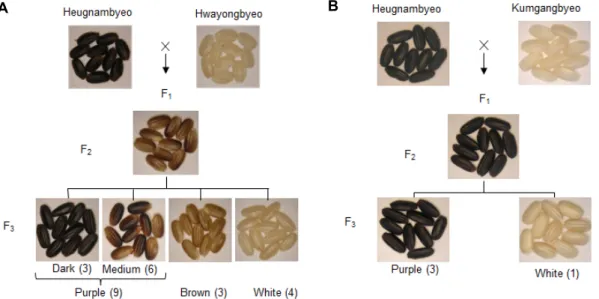
Fig. 4. Segregation analysis of pericarp color of black rice. (A) Purple pericarp rice Oryza sativa L. japonica var. ‘Heugnambyeo’
was crossed with a white pericarp rice. F1 plants become purple color pericarp. Further selfing of F2 plants produced F3
seeds with purple pericarp, brown color pericarp, and white pericarp. (B) Phenotypes of the pericarp of cross materials.
Purple pericarp rice was crossed with white-colored pericarp wild-type ‘Kumgangbyeo’ rice [34].
Rice seed pericarp becomes brown in color in presence of Pb alone (in absence of Pp), purple color in presence of both genes, and white color in absence of Pb (even in pres- ence or absence of Pp) [34]. Recently, three loci namely Kala1, Kala3 and Kala4 were identified to involve in pericarp pig- mentation of black rice [24]. It is also proposed that Kala1, Kala3 and Kala4 might correspond to C, A and P, respectively. Kala4 contains Pb gene that encodes a bHLH protein which is essential for color development in black rice pericarp [30]. The Pl
wlocus composed two highly homolo- gous genes OSB1 and OSB2 encoding bHLH protein and confers pigmented leaf and pericarp of black rice [40]. The Pb gene is probable to be the same gene OSB1 which is lo- cated in the Pl
wlocus [44]. Therefore, investigation of the Pl
wlocus is still endured. Pp may be an allele of Kala1 as the genetic interaction of Kala4 and Kala1 is similar with that of Pb and Pp [24]. However, Kala4 and Kala1 are urgent for anthocyanin biosynthesis in rice pericarp. Furthermore, Kala1 corresponds A gene which encodes the dihydrofavo- nol-4-reductase (DFR) enzyme and mapped on rice chromo- some 1. DFR is a widely conserved gene which encodes an enzyme involved in both anthocyanin and pro-anthocyanin synthesis pathway [42]. Kala3 might be a myb family tran- scription factor, act as a tissue-specific regulator and may be similar to P genes. Thus, Kala1 and Kala4 are necessary for anthocyanin biosynthesis and Kala3 might possess dis- tinct seed pericarp tissue-specific transcription pattern [24].
Molecular cloning has been conducted for the regulatory genes involved in anthocyanin biosynthesis in rice seed pericarp. The rice genes Ra1 and Rb [14], C1 [39] and Pb [30, 34, 40, 44] have been cloned. Further, Pp gene cloning is required to complete understanding the genetic regulation of Prp trait.
Genetic analysis of purple pericarp traits in black rice
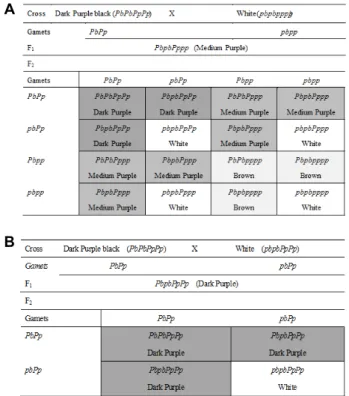
The inheritance of purple pericarp trait of rice is found to be dominant over white. The purple coloration in rice pericarp is determined by the complementary effect of two genes namely, Pp and Pb whose are located on chromosome 4 and 1, respectively [14, 47]. The Pp gene acts in a recessive epistasis fashion with the Pb gene for the production of pur- ple pericarp in rice [13, 44]. However, the Prp trait has been defined as complementary interaction between Pb and Pp genes recently (Lee et al. 2016 under publication). The Pb gene was mapped on rice chromosome number 4 and sug- gested that, Ra gene may be similar to Pb gene, and purple pericarp characteristic of rice is caused by two bases deletion (GT) within exon 7 of gene Ra [34, 43]. The Pb gene alone is responsible for the pigments accumulation in the pericarp of brown colored seed was described in figure 5. Further- more, purple pericarp rice requires the Pp gene to increase the content of the pigment from brown to purple (Fig. 5).
We proposed that Pp gene regulate the anthocyanidin syn-
A
B
Fig. 6. Analysis of the allelic polymorphism among progeny of the crosses between a black pericarp rice and a white pericarp rice. (A) DNA sequence fragments of the ampli- fied Pb gene (OsB1 DNA sequence). The black pericarp rice ‘Hugnambyeo’ was composed of two homologous dominant Pb alleles and presented a BamH1 restriction enzyme site in the amplified DNA sequences of each cor- responding allele. The white pericarp rice ‘Hwayoung- byeo’ was composed of two homologous recessive pb al- leles without any BamH1 restriction enzyme site in the amplified DNA sequences. The pb allele of the white peri- carp rice has a 2bp (GT) insertion in the BamH1 site of the same DNA sequences in the Pb allele. Schematic drawings are presented after BamH1 digestion in the DNA of the Pb allele resulting in division into two frag- ments of DNA. (B) Genetic analysis of the genotypic and phenotypic constitutions of the F3 progeny of the crosses between a black pericarp rice and a white pericarp rice.
Phenotypes are indicated by the pericarp colors, with DP indicating dark purple, MP indicating medium and mixed purple, Wh indicating white, and Br indicating brown. Genetic analysis of Prp trait was approved that phenotypes of progenies has been corresponded com- pletely to their genotypes [34].
B
Fig. 5. Genetic analysis of crosses among black rice. (A) Genetic analysis of a cross between black rice PbPb PpPp and white rice pbpb pppp in their genotypes. (B) Genetic anal- ysis of a cross between black rice PbPb PpPp and white rice pbpb PpPp in their genotypes [34].
thase which mediated the conversion of leucoanthocyanidin to anthocyanidin during anthocyanin biosynthetic pathway in rice. Therefore, Pb and Pp genes are involved in the purple pigmentation in rice pericarp, Pb- Pp- for purple pericarp, Pb- pppp for brown pericarp, and pbpb Pp-or pbpb pppp for white pericarp [34]. Here, homozygous recessive allele of pb gene may be masked the expression of either allele of the Pp gene. Consequently, Pp itself does not produce any pig- ment in presence of pbpb. Therefore, the Pb and Pp genes involved in the purple pigmentation of the rice pericarp with epistatic gene interaction having segregation ratio of 9 pur- ple: 3 brown: 4 white (Fig. 4). This gene interaction was also observed in inheritance of purple pericarp traits in wheat.
It is recognized that two dominant complementary genes, Pp1 and Pp3, control purple pigments deposition in wheat pericarps [7].
Interestingly, we found that the intensity of pericarp color in black rice varies from dark purple to medium purple [34].
Medium purple seeds of F
1and F
2plants showed purple color deposition in brown background. The purple pericarp progeny followed a segregation ratio of 1 dark purple (PpPp): 2 medium purple (Pppp): 1 brown (pppp), suggesting
cessive pp allele of the Pp gene (Fig, 5). Based on the genotype analysis shown in figure 5, the pericarp color phenotypes of the F
3progeny match with the genotypes exactly (Fig.
6). A strong peak of cyanidin-3-O-glucoside (kuromanin)
was observed in the dark purple pericarp rice having the
Pb_PpPp genotypes. But, cyanidin-3-O-glucoside peak was
detected significantly lower in the medium purple pericarp
rice (Pb_Pppp), and no cyanidin-3-O-glucoside peak was
identified in the pericarp extraction of the brown pericarp
rice (Pb_pppp) (Fig. 2). Hence, it is clear that the level of cya-
nidin-3-O-glucoside was determined by the number of cop-
A B
C D
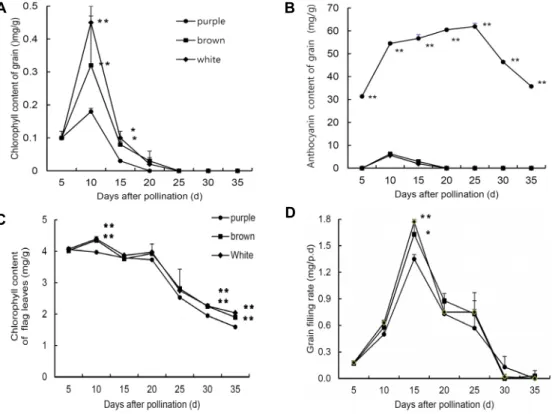
Fig. 7. Changes in chlorophyll and anthocyanin contents of seed extracts from the purple, brown and white pericarp rice. (A) Changes in grain chlorophyll content. (B) Changes in grain anthocyanin (C) Changes in chlorophyll content of flag leaves. (D) Changes in grain filling rate (mg/p.d.) [33].
ies of Pp alleles of the genotype in each progeny [34].
Furthermore, the dominant Pp allele was found incompletely dominant over the recessive pp allele in rice and the concen- tration of cyanidin-3-O-glucoside in the pericarp of black rice also affected by the number of dominant Pp alleles [34].
Accumulation of anthocyanins in rice pericarp during grain development
The green pigments accumulated in seed from fertiliza- tion to dough stage followed by continuous degradation of the deposited green pigments which finally disappeared in mature seed of white rice. Fading or disappearing of green pigment in pericarp of white rice by 25-30 days after pollina- tion (DAP) in field conditions were also reported [4]. When green pigment in seed started to degrade, color pigments started to accumulate simultaneously at the beginning of the desiccation stage and continued to intensify up to physio- logical maturity of seed development [33]. Brown pigment deposition was started at 15 DAP adjacent to the embryo and the entire seed turned into brown color followed by the complete disappearing of green pigment at 25 DAP in the brown pericarp rice. Furthermore, brown pigment accu- mulation continued to intensify the color of deep brown per-
icarp rice seed at harvest. In purple pericarp rice, the pig- ments accumulation was occurred in the pericarp at the be- ginning of the dough stage and persistently increased the accumulation of purple pigments until physiological ma- turity and begun to decrease slightly until at harvest.
An increasing trend of seed chlorophyll content was ob- served from 5
thday after pollination (DAP) which reached to maximum level at 10
thDAP and thereafter decreased sharply. The highest amount of chlorophyll were recorded in white rice which were found statistically identical with brown rice, whereas the lowest chlorophyll content was ob- served in black rice both at 10 DAP and 15 DAP (Fig. 7A).
Grain anthocyanin content of purple pericarp rice was re-
vealed much higher than the brown and white pericarp rice
throughout the growth season of rice (Fig. 7B). A gradual
increase in anthocyanin content was observed from 5
thDAP
and the whole rice seed become purple in color after 15
DAP. Furthermore, the anthocyanin content of purple peri-
carp rice was reached maximum at 25 DAP followed by a
gradual decrease until harvest. Finally, the endosperms of
black, brown and white rice were appeared fade purple, fade
brown and white color, respectively.
Fig. 8. Comparison of seed length (mm), seed width (mm) and 100 seed weight (g) of the purple, brown and white peri- carp rice [33].
decrease rice yield
The yield of colored rice is much lower compared to hy- brid and white rice [31]. Significantly lower seed weight of rice having purple pericarp in compare with rice having white pericarp was also reported [46]. We also hypothesized that the lower seed weight of purple pericarp rice might be due to the accumulation of anthocyanin in pericarp [33]. As we observed that pigments deposition in colored rice may be the reason for decrease of chlorophyll content in spikelet (Fig. 7A), which could be responsible for reduced yield [33].
In our previous study, inverse relationship between chlor- ophyll and anthocyanin content in the pericarp were found [33]. The probable reasons may be the deposition of carbohy- drates stimulates anthocyanin metabolism and chlorophyll degradation [27]. There is a significant relationship between seed length and seed weight. The reduced sink size may be resulted in the decreased 100 seed weight, which sug- gested that purple pericarp rice possessed reduced sink size (Fig. 8). It was also reported that purple pericarp rice found to give low yield as compared with white pericarp rice that might be due to reduced sink size [16]. The reduced grain thickness and lower yield in black rice near isogenic lines (NILs) found in Japan [24]. So, the small seed size of black rice resulting in its reduced yield potential may not be corre- lated with yield related genetic traits rather than it may re- lated to physiological factors associated with anthocyanin synthesis in pericarps. These factors would reduce the pho- tosynthetic rate and grain filling rate in seed which ulti- mately reduced the yield of black rice [33].
Conclusion and future prospects
Anthocyanins are a major group of flavonoid compounds
of rice tissues and organs. There is an increasing trend to develop functional food rich in anthocyanin. To fulfill the increasing demand, the identification of regulatory proteins should be conducted together with the investigation of the parameters controlling their expression, and a better under- standing of the regulatory mechanism involve in tissue spe- cific anthocyanin synthesis in rice are the key prerequisite.
As well, the endogenous factors which trigger the expression of the regulatory genes should also be determined. Mark genes of allelic variabilities are useful for black rice quality improvement. Understanding about the accumulation of an- thocyanin during chlorophyll degradation, distribution of assimilates, source and sink relationship as well as grain de- velopment and yield of black rice is essential.
Acknowledgements
We thank Dr. Pradeep Kumar and Jegeun Cho for their editorial assistance for this article. This research was sup- ported funded by Korea Institute of Planning and Evaluation for Technology in Food, Agriculture, Forestry and Fisheries (IPET) (Grant number 1080915).
References
1. Abdel-Aal, E. S. M., Young, J. C. and Rabalski, I. 2006.
Anthocyanin composition in black, blue, pink, purple, and red cereal grains. J. Agric. Food Chem. 54, 4696-4704.
2. Carey, C. C., Strahle, J. T., Selinger, D. A. and Chandler, V. 2004. Mutations in the pale aleurone color1 regulatory gene of the Zea mays anthocyanin pathway has distinct pheno- type relative to the functionally similar Transparent Testa Glabra1 gene in Arabidopsis thaliana. Plant Cell 16, 450-464.
3. Chandler, V. L., Radicella, J. P., Robbins, T. P., Chen, J. and Turks, D. 1989. Two regulatory genes of the maize antho- cyanin pathway are homologous: isolation of b utilizing r genomic sequences. Plant Cell 1, 1175-1183.
4. Chu, S. H., Lee, H. H., Ryu, S. N. and Koh, H. J. 2004.
Grain characteristics and inheritance of green kerneled rice (Oryza sativa L.). Kor. J. Breed. 36, 222-228.
5. Cone, K. C., Cocciolone, S. M., Burr, F. A. and Burr, B. 1993.
Maize anthocyanin regulatory gene pl is a duplicate of c1 that functions in the plant. Plant Cell 5, 1795-1805.
6. Dedio, W., Hill, R. D. and Evans, L. E. 1972. Anthocyanins in the pericarp and coleoptiles of purple wheat. Can. J. Plant Sci. 52, 977-980.
7. Dobrovolskaya, O. B., Arbuzova, V. S., Lohwasser, U., Roder, M. S. and Borner, A. 2006. Microsatellite mapping of complementary genes for purple grain colour in bread wheat (Triticum aestivum L.). Euphytica 150, 355-364.
8. Druka, A., Kudrna, D., Rpstoks, N., Brueggeman, R., von Wettstein, D. and Kleinhofs, A. 2003. Chalcone synthase gene from rice (Oryza sativa) and barley (Hordeum vulgare): phys- ical, genetic and mutation mapping. Gene 302, 171-178.
9. Furukawa, T., Maekawa, M., Oki, T., Suda, I., Iida, S., Shimada, H., Takamure, I. and Kadowaki, K. 2006. The Rc and Rd genes are involved in proanthocyanidin synthesis in rice pericarp. Plant J. 49, 91-102.
10. Hichri, I., Barrieu, F., Bogs, J., Kappel, C., Delrot, S. and Lauvergeat, V. 2011. Recent advances in the transcriptional regulation of the flavonoid biosynthetic pathway. J. Exp.
Bot. 62, 2465-2483.
11. Holton, T. A. and Cornish, E. C. 1995. Genetics and bio- chemistry of anthocyanin biosynthesis. Plant Cell 7, 1071- 1083.
12. Nagai, I. 1921. A genetico-physiological study on the for- mation of anthocyanin and brown pigments in plants. Tokyo Univ. College Agric. J. 8, 1-92.
13. Hsieh, S. C. and Chang, T. M. 1964. Genic analysis in rice.
IV. Genes for purple pericarp and other characters. Japan J. Breed. 14, 141-149.
14. Hu, J., Anderson, B. and Wessler, S. R. 1996. Isolation and characterization of rice R genes: evidence for distinct evolu- tionary paths in rice and maize. Genetics 142, 1021-1031.
15. Hyun, J. W. and Chung, H. S. 2004. Cyanidin and malvidin from Oryza sativa cv. Heugjinjubyeo mediate cytotoxicity against human monocytic leukemia cells by arrest of G2/M phase and induction of apoptosis. J. Agric. Food Chem. 52, 2213-2217.
16. Ji, Z. U., Wang, X. G., Zeng, Y. X., Ma, L. Y., Li, X. M., Liu, B. X. and Yang, C. D. 2012. Comparison of physio- logical and yield traits between purple and white pericarp rice using SLs. Breed. Sci. 62, 71-77.
17. Kang, S. G., Pandeya, D., Kim, S. S. and Suh, H. S. 2006.
Morphological characters of panicle and seed mutants of rice. Kor. J. Crop Sci. 51, 348-355.
18. Kato, H. and Ishikawa, J. 1921. On the inheritance of pig- ment of rice. Japan J. Genet. (Supp. 1) 1-7.
19. Kim, B. G., Kim, J. H., Min, S. Y., Shin, K. H., Kim, J. H., Kim, H. Y., Ryu, S. N. and Ahn, J. H. 2007. Anthocyanin content in rice is related to expression level of anthocyanin biosynthetic genes. J. Plant Biol. 50, 156-160.
20. Kim, J. H., Lee, Y. J., Kim, B. G., Lim, Y. and Ahn, J. H.
2008. Flavanone 3-beta-hydroxylases from rice: key en- zymes for favonol and anthocyanin biosynthesis. Mol. Cells 25, 312-316.
21. Koes, R., Verweij, W. and Quattrocchio, F. 2005. Flavonoids:
a colorful model for the regulation and evolution of bio- chemical pathways. Trends Plant Sci. 10, 236-242.
22. Lee, J. H. 2010. Identification and quantification of antho- cyanins from the grains of black rice (Oryza sativa L.) varieties. Food Sci. Biotechnol. 19, 391-397.
23. Liu, J. P., Ouyang, L. and Li, J. N. 1998. The preliminary report on the breeding of three-1ines for black rice. Jiangxi Agril. Sci. Technol. 2, 7-9.
24. Maeda, H., Yamaguchi, T., Omoteno, M., Takarada, T.,
Fujita, K., Murata, K., Iyama, Y., Kojima, Y., Morikawa, M., Ozaki, H., Mukaino, N., Kidani, Y. and Ebitani, T.
2014. Genetic dissection of black grain rice by the develop- ment of a near isogenic line. Breed. Sci. 64, 134-41.
25. Matin, M. N. and Kang, S. G. 2010. Morphological charac- teristics of the rice (Oryza sativa L.) with red pigmentation.
J. Life. Sci. 20, 22-26.
26. Min, B., McClung, A. M. and Chen, M. H. 2011. Phytochem- icals and antioxidant capacities in rice brans of different color. J. Food Sci. 76, 117-126.
27. Momose, T. and Ozeki, Y. 2013. Regulatory effect of stems on sucrose-induced chlorophyll degradation and anthocya- nin synthesis in Egeria densa leaves. J. Plant Res. 126, 859- 867.
28. Nagao, S. and Takahashi, M. 1963. Trial construction of twelve linkage groups in Japanese rice. J. Fac. Agri. Hokkaido Univ. 53, 76-131.
29. Nam, S. H., Choi, S. P., Kang, M. Y., Koh, H. J., Kozukue, N. and Friedman, M. 2006. Antioxidative activities of bran from twenty one pigmented rice cultivars. Food Chem. 94, 613-620.
30. Oikawa, T., Maeda, H., Oguchi, T., Yamaguchi, T., Tanabe, N., Ebana, K., Yano, M., Ebitani, T. and Izawa, T. 2015.
The birth of a black rice gene and its local spread by introgression. Plant Cell 27, 2401-2414.
31. Peng, Z. M., Zhang, M. W. and Tu, J. M. 2004. Breeding and nutrient evaluation on three-lines and their combina- tion of indica black glutinous rice hybrid. Acta Agronomica Sinica 30, 342-347.
32. Petroni, K. and Tonelli, C. 2011. Recent advances on the regulation of anthocyanin synthesis in reproductive organs.
Plant Sci. 181, 219-229.
33. Rahman, M. M., Lee, K. E. and Kang, S. G. 2015. Studies on the effects of pericarp pigmentation on grain develop- ment and yield of black rice. Indian J. Genet. 75, 426-433.
34. Rahman, M. M., Lee, K, E., Lee, E. S., Matin, M. N., Lee, D. S., Yun, J. S., Kim, J. B. and Kang, S. G. 2013. The genetic constitutions of complementary genes Pp and Pb determine the purple color variation in pericarps with cyani- din-3-0-glucoside depositions in black rice. J. Plant Biol. 56, 24-31.
35. Reddy, A. M., Reddy, V. S., Schezer, B. E., Wienand, U.
and Reddy, A. R. 2007. Novel transgenic rice over- expressing anthocyanidin synthase accumulates a mixture of flavonoids leading to an increased antioxidant potential.
Metab. Eng. 9, 95-111.
36. Reddy, A. R., ScheZer, B. E., Nadhuri, G., Srivastava, M.
N., Kumar, A., Sathyanarayanan, P. V., Nair, S. and Mohan, M. 1996. Chalcone synthase in rice (Oryza sativa L.): de- tection of the CHS protein in seedlings and molecular map- ping of the chs locus. Plant Mol. Biol. 32, 735-743.
37. Reddy, V. S., Dash, S. and Reddy, A. R. 1995. Anthocyanin pathway in rice (Oryza sativa L.): identification of a mutant showing dominant inhibition of anthocyanins in leaf and accumulation of proanthocyanidins in pericarps. Theor.
Appl. Genet. 91, 301-312.
초록: 흑미의 자색종자과피 형질을 결정하는 대립유전자와 안토시아닌 생성의 상호관계
라만 모하마드 모미너
1,2․이경은
1․강상구
1*
(1영남대학교 생명공학과, 2하지모하마드대니쉬 과학기술대학교 농학과)
쌀은 인류가 가장 많이 먹고 있는 주식이다. 최근 백색미, 적색미, 갈색미, 녹색미 그리고 흑색미 등 다양한 품 종들이 소비되고 있다. 고농도의 안토시아닌이 함유되어 있는 흑미는 영양가뿐만 아니라 암 발생 예방 효과가 있어 세계적으로 그 소비가 증가되고 있다. 유전학적으로 흑미는 cyanidin-3-O-glucoside (C3G)의 합성경로를 조 절하는 두 개의 유전자 Pb와 Pp가 관여하는 Purple Pericarp (Prp) 유전형질에 의하여 종자과피의 색이 결정된다.
1921년 Nagai가 흑미의 유전현상을 일으키는 Prp 형질을 보고한 이 후 Prp 형질에 관여하는 유전자들과 그 기능 분석에 관한 많은 연구가 보고 되었으나 아직도 많은 부분이 밝혀지지 않았다. 그러나 안토시아닌의 함량이 높은 기능성 흑미의 소비는 증가하고 있는 반면 흑미는 일반 재배 벼에 비하여 상대적인 수확량이 매우 적어 농경제적 인 문제가 있다. 본 논문에서는 흑미 종자가 성숙하는 과정에서 Prp 유전자의 유전현상의 특성과 안토시아닌 합성 경로 그리고 수확량에 관한 유전학적 관점에서 내용을 정리하였다.
pigments in some varieties of black rice. J. Food Drug Anal.
6, 1710-1715.
39. Saitoh, K., Onishi, K., Mikami, I., Thidar, K. and Sano, Y.
2004. Allelic diversification at the C (OsC1) locus of wild and cultivated rice: nucleotide changes associated with phenotypes. Genetics 168, 997-1007.
40. Sakamoto, W., Ohmori, T., Kageyama, K., Miyazaki, C., Saito, A., Murata, M., Noda, K. and Maekawa, M. 2001. The Purple leaf (Pl) locus of rice: the Plw allele has a complex organization and includes two genes encoding basic he- lix-loop-helix proteins involved in anthocyanin biosynthesis.
Plant Cell Physiol. 42, 982-991.
41. Shao, Y., Jin, L., Zhang, G., Lu, Y., Shen, Y. and Bao, J.
2011. Association mapping of grain color, phenolic content, flavonoid content and antioxidant capacity in dehulled rice.
Theor. Appl. Genet. 122, 1005-1016.
42. Shih, C. H., Chu, H., Tang, L. K., Sakamoto, W. Maekawa, M., Chu, I. K., Wang, M. and Lo, C. 2008. Functional characterization of key structural genes in rice flavonoid
essential to anthocyanin coloration in rice. J. Fac. Agric.
Hokkaido Univ. 50, 266-362.
44. Wang, C. and Shu, Q. 2007. Fine mapping and candidate gene analysis of purple pericarp gene Pb in rice (Oryza sativa L.). Chinese Sci. Bull. 52, 3097-3104.
45. Wang, X., Ji, Z., Cai, J., Ma, L., Li, X. and Yang, C. 2009.
Construction of near isogenic lines for pericarp color and evaluation on their near isogenicity in rice. Rice Sci. 16, 261-266.
46. Yoon, H. H., Paik, Y. S., Kim, J. B. and Hahn, T. R. 1995.
Identification of anthocyanidins from Korean pigmented rice. Agric. Chem. Biotechnol. 38, 581-583.
47. Yoshimura, Y., Zaima, N., Moriyama, T. and Kawamura, Y. 2012. Different localization patterns of anthocyanin spe- cies in the pericarp of black rice revealed by imaging mass spectrometry. PLoS One 7, e31285.
48. Zhang, M. W., Zhou, J. and Peng, Z. M. 1994. Effects of different sowing date on yield traits and pigment contents in purple pericarp rice. J. Hubei Agril. Sci. 1, l-4.
![Fig. 1. Chemical structures of most common anthocyanin in the pericarp of black rice [19, 42]](https://thumb-ap.123doks.com/thumbv2/123dokinfo/5007905.548905/2.892.466.807.573.960/fig-chemical-structures-common-anthocyanin-pericarp-black-rice.webp)
![Fig. 8. Comparison of seed length (mm), seed width (mm) and 100 seed weight (g) of the purple, brown and white peri-carp rice [33].](https://thumb-ap.123doks.com/thumbv2/123dokinfo/5007905.548905/8.892.112.399.904.1082/fig-comparison-length-width-weight-purple-brown-white.webp)
