Multiple vertebral compression fractures are a rare condition and are a serious consequence of postpartum osteoporosis. This report describes the case of a 35-year-old woman who had given birth to her first child 2 months before the onset of pain. Magnetic resonance imaging showed compression fractures of 7 vertebrae.
The patient was treated with both conventional, and Korean medicine methods including acupuncture and herbal prescriptions. The patient’s progress was assessed using self-reported symptoms, scale scores and laboratory test results. Her pain was gradually alleviated and biochemical inflammation marker levels improved, but her functional status remained severely impaired. Clinical practitioners who treat women in the postpartum period must be aware of osteoporosis and potential vertebral fractures and need to consider Korean medicine as an alternative therapy to help such patients.
©2018 Korean Acupuncture & Moxibustion Medicine Society. This is an open access article under the CC BY- NC-ND license (http://creativecommons.org/licenses/by-nc-nd/4.0/).
Article history:
Submitted: September 19, 2018 Accepted: October 15, 2018 Keywords:
compression fractures, Korean traditional medicine, low back pain, osteoporosis, postpartum, vertebra
https://doi.org/10.13045/jar.2018.00241 pISSN 2586-288X eISSN 2586-2898
J Acupunct Res 2018;35(4):244-247
Case Report
Combination Therapy of Conventional and Korean Medicine for
Multiple Vertebral Compression Fractures Associated with Postpartum Osteoporosis: A Case Report
Ki-Beom Lee*, Kyu-Jin Yang, Yu-Mi Gi, Tae-Gyu Kim, Hooin Jo, Jongho Choi
Department of Acupuncture and Moxibustion, Jaseng Hospital of Korean Medicine, Seoul, Korea
ABSTRACT
Journal of Acupuncture Research
Journal homepage: http://www.e-jar.org
Introduction
Postpartum osteoporosis is mostly described in association with multiple fractures of vertebral bodies. Since multiple vertebral fractures associated with postpartum osteoporosis are very rare, their incidence, etiology and mechanisms are not fully understood.
Patients’ symptoms include severe back pain, disability, and perceived changes in body shape such as decreased height [1].
Back pain usually starts spontaneously without a history of trauma, making it difficult to diagnose osteoporotic fractures at an early stage [2]. Multiple vertebral compression fractures associated with postpartum osteoporosis that have been treated with traditional Korean medicine have not previously been reported.
In this case study a female patient with multiple vertebral compression fractures associated with postpartum osteoporosis is described, and the result of a month of hospital treatment with both conventional and traditional Korean medicine is presented.
Case Report Medical history
A 35-year-old woman was admitted to hospital. Her chief complaint was severe lower back pain on the right side that made walking impossible without assistance. Gynecological history of the patient revealed that she gave birth to her first child via cesarean section 2 months prior and was currently breastfeeding.
She experienced mild lower back pain for approximately 2 weeks before the sudden onset of severe and long-lasting pain which began after standing up from a seated position, several hours before admission. There was no past history, hereditary disease, malignancy, or osteoporosis that could explain the symptoms.
Radiography and magnetic resonance imaging results
The patient was unable to stand upright, so she underwent a lumbar spine X-ray in a supine position. No significant bony
*Corresponding author.
Department of Acupuncture and Moxibustion, Jaseng Hospital of Korean Medicine, Seoul, Korea E-mail: [email protected]
©2018 Korean Acupuncture & Moxibustion Medicine Society. This is an open access article under the CC BY-NC-ND license (http://creativecommons.org/licenses/by-nc- nd/4.0/).
nov-034
Ki-Beom Lee et al / Postpartum Osteoporosis 245
abnormality was found on the radiograph (Fig. 1). The magnetic resonance imaging (MRI) of the lumbar spine showed compression fractures of 7 vertebral bodies, from T11 to L5 (Fig. 2). Additional cervical-thoracic-lumbar spine images were scanned to assess whether further lesions related to the patient’s current symptoms had occurred, but no other abnormalities were found (data not shown). After the confirmation of multiple fractures, a quantitative
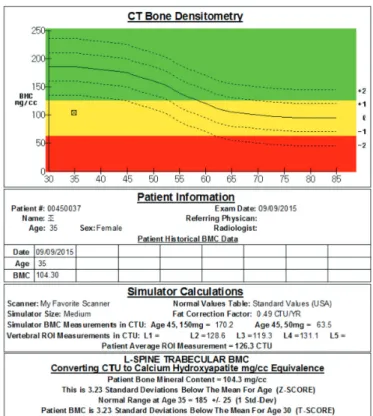
computed tomography scan of the lumbar spine was carried out. The bone mineral content was 104.3 mg/mL, which in itself indicated osteopenia. Using the department’s internal method, the result corresponded to a Z-score of -3.23, which indicated a bone mineral density of 3.23 standard deviation below the expected range for the patient’s age (Fig. 3).
Laboratory tests
Routine admission laboratory examination consisted of biochemistry, blood and urine tests. After the radiology results had been assessed, a thyroid function test, serum C-terminal parathyroid hormone (PTH-C) was measured, electrolyte tests including serum calcium and phosphate, 25-hydroxyvitamin D, and an osteocalcin test to determine the etiology of the patient’s fractures. Table 1 shows the laboratory test results of clinical relevance. All other investigations were within the normal range (data not shown).
Treatment methods Conventional treatment
The patient was referred to the Department of Internal Medicine for conventional medical care. Detailed information of the treatment provided, including the names of the medications, daily doses, therapeutic effect and active substances, is provided in Table 2.
Korean medicine treatment
Acupuncture treatment was performed at EX-B2 near the site of the patient’s lower back pain and the quadratus lumborum muscle, using 0.25×40 mm, sterilized, disposable stainless-steel needles.
As the patient was uncomfortable in the prone position, treatment was performed with her lying on her side. Acupuncture treatment was generally performed twice a day. Additional treatment for indigestion was given when necessary at LI4, LR3, CV12, and ST36.
Herbal medicines were prescribed for the patient’s chief complaints and any further symptoms. Two preparations from
Fig. 2. Lumbar spine magnetic resonance images of the patient showing multiple vertebral compression fractures from T11 to L5. The posterior column of the spine remains preserved.
Fig. 3. Lumbar spine quantitative computed tomography results.
Fig. 1. Lumbar spine X-rays of the patient showing no significant bone abnormality.
Item Result Normal range
ALP (IU/L) 320.3 104–338
ESR (mm/h) 41.0 (H)* 0–20
CRP (mg/dL) Positive (0.43) Negative
25-hydroxyvitamin D
(ng/mL) 14.78 (L)† < 10 deficiency
10–30 insufficiency 30–100 sufficiency
≥ 100 toxicity
Ca (mg/dL) 9.50 8.2–10.8
P (mg/dL) 4.20 2.5–5.5
Mg (mg/dL) 1.70 1.4–2.1
Osteocalcin (ng/mL) 14.13 9-42
PTH-C (pg/mL) 102.5 (L)† 180–560
*Higher value compared to normal range; †lower value compared to normal range.
ALP, Alkaline phosphatase; Ca, calcium; CRP, C-reactive protein (qualitative method);
ESR, erythrocyte sedimentation rate; Mg, magnesium; P, phosphate; PTH-C, C-terminal parathyroid hormone.
Table 1. Summary of Admission Laboratory Test Results.
J Acupunct Res 2018;35(4):244-247 246
Jaseng Hospital of Korean Medicine were made up for the patient:
Keoseup-hwalhyeol-jitong-tang (decoction that removes dampness, supports blood circulation and stops pain) and Nokyong-kunbi- tang (decoction that strengthens the spleen with deer antler). The schedule, daily doses and exact herbal ingredients are described in Table 3.
Assessments
Patient-reported symptoms
The patient’s electronic medical records were reviewed to evaluate changes in the patient’s symptoms.
Patient-reported scales
The 11-point numeric rating scale (NRS) was used to measure the severity of pain and evaluate average pain during routine daily movements. The 3-level version of EuroQol-5 dimensions (EQ- 5D®), instrument was used to evaluate the patient’s quality of life [3], (the maximum score is 1 point, which indicates a perfect quality of life). The Oswestry Disability Index (ODI) evaluates disability in patients with lower back pain [4]. It consists of 10 questions, with scores ranging from 0 to 100 with higher values indicating a higher degree of disability. All 3 assessments were taken 3 times: at admission, on Day 15, and at discharge.
Follow-up laboratory tests
On Day 15, follow-up laboratory examinations were performed to trace abnormalities on admission.
Progress of the patient under treatment
The patient’s acute pain lasted for 3 days after admission. From the 4th day on, her night pain was alleviated, but she still felt pain when trying to move without assistance. After Day 16, the pain was generally alleviated, but walking independently was still impossible because of the pain it caused. The patient experienced intermittent dyspepsia, and constipation due to bed rest and lack of exercise, which improved with acupuncture treatments. After
Day 18, the patient complained of dizziness and headache. To treat these symptoms, the original prescription of herbal medicine was changed at Day 19 to Nokyong-kunbi-tang (decoction that strengthens the spleen with deer antler) and the symptoms improved (Table 3).
NRS score slightly decreased from 7 at admission to 5 at discharge. Regardless of the pain with active movement, the patient’s pain at rest quickly disappeared after initial treatments.
The EQ-5D® score was at its worst on admission (–0.121), but showed considerable improvement at discharge (0.677). The ODI remained relatively high throughout the hospitalization period.
Follow-up laboratory test results are summarized in Table 4.
Product Dose Medical purpose Ingredients per daily dose
Hadcal 1 tablet/ d Provides calcium and vitamin D Calcium carbonate 1,500 mg
Cholecalciferol concentrated powder 4 mg
Parlodel 0.5 tablet/ d Suppression of lactation Bromocriptine mesylate 1.43 mg
Table 2. Detailed Information of Conventional Medication Administered to the Patient.
Herbal prescription Herbal components Administered Daily dose
Keoseup-hwalhyeol-jitong-tang (decoction that removes dampness, supports blood circulation and stops pain)
Lonicerae Flos 8 g, Akebiae Caulis 8 g, Coicis Semen 8 g, Atractylodis Rhizoma 8 g, Cinnamomi Ramulus 4 g, Dianthi Herba 4 g, Angelicae Gigantis Radix 4 g, Persicae Semen 4 g, Saposhnikoviae Radix 4 g, Angelicae Dahuricae Radix 4 g, Rehmanniae Radix Recens 4 g, Linderae Radix 4 g, Achyranthis Radix 4 g, Clematidis Radix 4 g, Poria Sclerotium 4 g, Paeoniae Radix 4 g, Citri Unshius Pericarpium 4 g, Cnidii Rhizoma 4 g, Gentianae Scabrae Radix et Rhizoma 4 g, Polygoni Avicularis Herba 4 g, Biancaea sappan 2 g, Carthami Flos 2 g
Day 1 to Day 18 Extract of 120 mL, 3 times per d
Nokyong-kunbi-tang
(decoction that strengthens the spleen with deer antler)
Astragali Radix 12 g, Lycii Fructus 8 g, Angelicae Gigantis Radix 8 g, Atractylodis Rhizoma Alba 8g, Longanae Arillus 8 g,
Cnidii Rhizoma 6 g, Glycyrrhizae Radix et Rhizoma 4 g, Amomi Semen 4 g, Cervi Parvum Cornu 4 g, Aucklandiae Radix 4 g, Poria Sclerotium 4 g, Paeoniae Radix 4 g, Crataegi Fructus 4 g, Rehmanniae Radix Preparata 4 g, Ginseng Radix 4 g, Fallopia multiflora 4 g, Carthami Flos 1 g
Day 19 to Day 27 Extract of 120 mL, 3 times per d Table 3. Traditional Korean Medicine Herbal Prescriptions Administered to the Patient.
Day 1
(admission) Day 15
(follow-up) Day 27
(discharge) Patient-reported scales
NRS 7 6 5
EQ-5D - 0.121 0.108 0.677
ODI 93.33 88.89 86.67
Laboratory test results
ESR 41.0 mm/h (H)* 3.0 mm/h (-)‡
CRP Positive
(0.43 mg/dL) Negative (-)‡
PTH-C 102.5 pg/mL (L)† 160.0 pg/mL (L)† (-)‡
*Higher value compared to normal range; †lower value compared to normal range; ‡no results.
CRP, C-reactive protein (qualitative method); EQ-5D, 3-level version of EuroQol-5 dimension, ESR, erythrocyte sedimentation rate, normal range 0–20 mm/h; NRS, numeric rating scale; ODI, Oswestry (Low Back) Disability Index, PTH-C, C-terminal parathyroid hormone, normal range 180–560 pg/Ml.
Table 4. Patient-reported Scales and Laboratory Test Results.
Ki-Beom Lee et al / Postpartum Osteoporosis 247
Most parameters were within their normal range. Electrolyte test results were within their normal range (data not shown).
Normalization of erythrocyte sedimentation rate and C-reactive protein was observed. PTH-C remained below normal throughout the follow-up period, even though it improved compared with the admission laboratory results.
The patient was discharged on the 27th day of hospitalization.
Although her overall physical condition had improved, walking and performance of daily activities were still difficult without help.
Discussion
It is difficult to define the risk factors of multiple vertebral compression fractures associated with postpartum osteoporosis, because of its rare nature and the few cases that have been reported so far. Relatively recent reports concluded that immobility, lack of sports activity, and a history of severe dental problems could be related to postpartum osteoporotic fractures [1]. Loss of bone calcium due to breastfeeding [5] is also one of the factors under consideration.
It is remarkable that radiography did not show any signs of fracture. The false-negative rate of radiography in suspected spinal fractures was reported to be at a worldwide average of 34% [6].
Clinical practitioners are well-advised not to rely upon radiology results, but should perform further evaluations when patient’s symptoms and history to indicate potential fractures.
Laboratory test results were characterized by an elevation of inflammatory markers and a decrease of PTH-C initially.
Elevated erythrocyte sedimentation rate and C-reactive protein at admission had normalized by follow-up, which implied that acute inflammation at the fracture sites had settled.
Deficiency in parathyroid hormone causes hypocalcemia and hyperphosphatemia [7], but neither condition was observed in our patient. PTH-C showed a recovering trend, although it remained slightly below the lower limit of the normal range.
There are no clinical guidelines on the treatment of multiple vertebral compression fractures associated with postpartum osteoporosis. The available options include cessation of breastfeeding, providing calcium and Vitamin D supplements [5], bisphosphonates to treat the underlying osteoporosis [8], and kyphoplasty in case of structural instability or chronic pain [9].
Medical care was provided to the patient by supplementing with calcium and vitamin D, assistance was given for the patient to stop breastfeeding, and traditional Korean medicine was prescribed for pain relief. Korean medicine played a major supporting role in the patient’s treatment with conventional medicine, providing pain relief in the early stage of hospitalization, and through treatment of discomfort such as dyspepsia, headache, and dizziness. Pain relief was exclusively managed using traditional Korean medicine.
Non-steroidal anti-inflammatory drugs, which are considered first-line therapy for patients suffering from vertebral fractures [10], were not used. During the hospitalization period when the patient was on bed rest, Korean medicine was particularly beneficial at reducing side effects of the patient’s condition such as digestive disorders. Furthermore, acupuncture is effective in relieving paraspinal muscle spasm and tenderness, which are major problems in patients with vertebral fractures [11].
In this study a rare case of multiple vertebral compression fractures associated with postpartum osteoporosis was reported, marked by severe lower back pain and a decrease in serum PTH. Combination therapy of acupuncture, herbal medicine and conventional medicine helped relieve the patient’s pain and uncomfortable symptoms during the 4 weeks of hospitalization.
Traditional Korean medicine can be used to treat patients with a similar presentation.
Conflicts of Interest
The authors have no conflicts of interest to declare.
References
[1] Hadji P, Boekhoff J, Hahn M, Hellmeyer L, Hars O, Kyvernitakis I.
Pregnancy-associated osteoporosis: a case-control study. Osteoporos Int 2017;28:1393-1399.
[2] Ofluoglu O, Ofluoglu D. A case report: pregnancy-induced severe osteoporosis with eight vertebral fractures. Rheumatol Int 2008;29:197-201.
[3] Lee YK, Nam HS, Chuang LH, Kim KY, Yang HK, Kwon IS, et al. South Korean time trade-off values for EQ-5D health states: modeling with observed values for 101 health states. Value Health 2009;12:1187-1193.
[4] Jeon CH, Kim DJ, Kim SK, Kim DJ, Lee HM, Park HJ. Validation in the cross-cultural adaptation of the Korean version of the Oswestry Disability Index. J Korean Med Sci 2006;21:1092-1097.
[5] Terzi R, Terzi H, Ozer T, Kale A. A rare cause of postpartum low back pain: pregnancy- and lactation-associated osteoporosis. BioMed Res Int 2014;2014:287832.
[6] Delmas PD, van de Langerijt L, Watts NB, Eastell R, Genant H, Grauer A et al. Underdiagnosis of vertebral fractures is a worldwide problem: the IMPACT study. J Bone Miner R 2005;20:557-563.
[7] Gardner D, Shoback D. Greenspan’s Basic & Clinical Endocrinology, 10th ed. Los Altos (CA): McGraw Hill; 2018. 244 p.
[8] O’Sullivan SM, Grey AB, Singh R, Reid IR. Bisphosphonates in pregnancy and lactation-associated osteoporosis. Osteoporos Int 2006;17:1008-1012.
[9] Bonacker J, Janousek M, Krober M. Pregnancy-associated osteoporosis with eight fractures in the vertebral column treated with kyphoplasty and bracing: a case report. Arch Orthop Trauma Surg 2014;134:173-179.
[10] Genev IK, Tobin MK, Zaidi SP, Khan SR, Amirouche FML, Mehta AI. Spinal compression fracture management: A review of current treatment strategies and possible future avenues. Global Spine J 2017;7:71-82.
[11] Ross PD. Clinical consequences of vertebral fractures. Am J Med 1997;103:S30-S42.