ORIGINAL ARTICLE
급성췌장염의 중증도 예측에 대한 혈청 Procalcitonin의 효용성 및 절단값
우수미, 노명환, 김병근, 형건덕, 한지선, 유승희, 서정민, 윤현아, 장진석, 최석렬, 조진한1
동아대학교 의과대학 내과학교실, 방사선학교실1
Comparison of Serum Procalcitonin with Ranson, APACHE-II, Glasgow and Balthazar CT Severity Index Scores in Predicting Severity of Acute Pancreatitis
Su Mi Woo, Myung Hwan Noh, Byung Geun Kim, Chien Ter Hsing, Ji Sun Han, Seung Hee Ryu, Jeong Min Seo, Hyun Ah Yoon, Jin Seok Jang, Seok Reyol Choi and Jin Han Cho1
Departments of Internal Medicine and Radiology1, Dong-A University College of Medicine, Busan, Korea
Background/Aims: The aim of this study is to assess serum procalcitonin (PCT) for early prediction of severe acute pancreatitis compared with multiple scoring systems and biomarkers.
Methods: Forty-four patients with acute pancreatitis confirmed by radiological evidences, laboratory assessments, and clinical manifestation were prospectively enrolled. All blood samples and image studies were obtained within 24 hours of admission.
Results: Acute pancreatitis was graded as severe in 19 patients and mild in 25 patients according to the Atlanta criteria.
Levels of serum PCT were significantly higher in severe acute pancreatitis (p=0.001). The accuracy of serum PCT as a predicting marker was 77.3%, which was similar to the acute physiology and chronic health examination (APACHE)-II score, worse than the Ranson score (93.2%) and better than the Balthazar CT index (65.9%). The most effective cut-off level of serum PCT was estimated at 1.77 ng/mL (AUC=0.797, 95% CI=0.658-0.935). In comparision to other simple biomarkers, serum PCT had more accurate value (77.3%) than C-reactive protein (68.2%), urea (75.0%) and lactic dehydrogenase (72.7%). Logistic regression analysis revealed that serum PCT has statistical significance in acute severe pancreatitis. Assessment of serum PCT levels and length of hospital stay by simple linear regression analysis revealed effective p-value with low R square level, which could make only possibilty for affection of serum PCT to admission duration (r2=0.127, p=0.021).
Conclusions: Serum PCT was a promising simple biomarker and had similar accuracy of APACHE-II scores as predicting severity of acute pancreatitis. (Korean J Gastroenterol 2011;58:31-37)
Key Words: Serum procalcitonin; Acute necrotizing pancreatitis; Multiple scoring systems
Received January 8, 2011. Revised April 14, 2011. Accepted May 9, 2011.
CC This is an open access article distributed under the terms of the Creative Commons Attribution Non-Commercial License (http://creativecommons.org/licenses/
by-nc/3.0) which permits unrestricted non-commercial use, distribution, and reproduction in any medium, provided the original work is properly cited.
교신저자: 노명환, 602-715, 부산시 서구 동대신동 3가 1번지, 동아대학교 의과대학 소화기내과학교실
Correspondence to: Myung Hwan Noh, Division of Gastroenterology, Department of Internal Medicine, Dong-A University College of Medicine, 3-1, Dongdaeshin-dong, Seo-gu, Busan 602-715, Korea. Tel: +82-51-240-2862, Fax: +82-51-242-5852, E-mail: [email protected]
Financial support: None. Conflict of interest: None.
INTRODUCTION
Acute pancreatitis has an acute inflammatory process ranging from mild discomfort with localized inflammation to severe disease with multiple organ failure.1 Multiple scoring systems, including the Ranson, Glasgow and acute physiol-
ogy and chronic health examination (APACHE)-II scores, and several biochemical markers have been developed for the early prediction of severity of acute pancreatitis which facili- tate early treatment in an intensive care unit.2-4 Serum pro- calcitonin (PCT) is an early marker of systemic bacterial in- fection, sepsis, and multi-organ failure.5 The major complica-
tions of acute pancreatitis are infected pancreatic necrosis, sepsis, and multi-organ failure. We therefore hypothesized that increased serum levels of PCT could predict a severe acute pancreatitis and poor outcome of treatment.6 Serum PCT has been previously analyzed with certain acute-phase proteins and mediators and APACHE-II scoring system7-10 but not compared to CT severity index and Glasgow system. The correlation between levels of serum PCT and length of hospi- tal stay has not been reported yet.
Thus, we designed the aim of this prospective study with two-fold. First was to assess the clinical usefulness of serum PCT as a predictive marker for severity in early course of acute pancreatitis, in comparison to established indices including C-reactive protein (CRP), Ranson score, Glasgow score, APACHE-II score, Balthazar CT severity index and, other rou- tinely measured biochemical parameters. Second was to eval- uate the correlation of serum PCT with length of hospital stay.
SUBJECTS AND METHODS
1. Subjects
This prospective study included forty-four consecutive pa- tients with acute pancreatitis over a 10-month period. The di- agnosis of acute pancreatitis was based on the clinical mani- festation of acute upper abdominal pain associated with a raised serum amylase level greater than three times of nor- mal value or elevated serum lipase levels and radiological evidences compatible with acute pancreatitis.9,11 CT was per- formed in all patients. 32 patients were performed with con- trast CT and 12 patients were performed with non-contrast CT owing to elevated serum creatinine levels. We classified patient as mild and severe pancreatitis by Atlanta classi- fication8,12 and analysed with variable data obtained within 24 hours on admission. We treated patients according to the accepted standard management of acute pancreatitis.11,12 All patients were fasted soon after admission and ad- ministered fluids, ions, and analgesics parenterally. If neces- sary, systemic antibiotics were applied.13 Patients with a sus- pected biliary cause of acute pancreatitis underwent endo- scopic retrograde endoscopic retrograde cholangiopancrea- tography within the first 24 hours.
2. Methods
Blood samples for PCT, CRP and routine biochemical tests
were collected on admission. The blood samples were centri- fuged for 10 mins at 3,000 rotation/min at -4oC. The serum was subsequently removed and stored at -80oC until bio- chemical analysis. PCT concentration was measured with a chemo luminescent immunoassay (LUMItestⓇ PCT). The ref- erence value range established for this method was less than 0.05 ng/mL. Serum CRP levels were measured via im- munoturbidimetry (Denka Seiken Co. Ltd., Japan). The refer- ence value range established for this method was 0 to 0.5 mg/dL. Appropriate laboratory and physiological data were recorded concurrently together with weightings for age and chronic health state to permit calculation of Ranson score, Glasgow score and APACHE-II score. This study was approved by the Institutional Review Board of Dong-A University Hospital, Busan, South Korea.
3. Statistical analysis
We expressed the results as median followed by range or 95% confidence interval. Statistical analysis between the groups was calculated by Mann-Whitney U test for non-cate- gorical data. Fisher’s exact test was used to examine differ- ences in sex ratio, etiology, and death ratio. The mean values of serum PCT were compared by Mann-Whitney U test accord- ing to the severity of acute pancreatitis. The cut-off values of serum PCT and other parameters were determined by the Receiver operating characteristic (ROC) curves. Sensitivity, specificity, positive predictive value, negative predictive val- ue, accuracy, and likelihood ratios were also calculated.
Logistic regression analysis was used to establish the influ- ence of the chosen parameters on the prognosis of acute pancreatitis. Linear regression analysis was conducted to es- timate the relationship between the serum values of PCT and length of hospital stay. A p value of <0.05 was considered to be statistically significant. The SPSS Version 18.0 (SPSS Inc., Chicago, IL, USA) for Windows was used to perform all statistical analyses.
RESULTS
Of the 44 patients, 28 patients were men, and 16 patients were women. The median age of the patients was 61.5 years.
According to the Atlanta criteria, 25 patients were classified as mild acute pancreatitis and 19 patients were classified as severe acute pancreatitis. There was no statistical sig-
Table 1. Characteristics of Patients with Acute Pancreatitis
Mild pancreatitis (n=25) Severe pancreatitis (n=19) Total (n=44) p-value
Men/Women 17/8 11/8 28/16 0.490
Age (yr); median (range) 55 (22-89) 66 (39-79) 61.5 (22-89) 0.061
Death 0 4 4 0.029
Duration of admission (days); median (range) 11.5 (6-35) 20 (2-40) 14.5 (2-40) 0.147
Etiology 0.465
Alcoholic 10 9 19
Biliary 8 3 11
Idiopathic and miscellaneous 7 7 14
Scoring system and biochemical markers: median (range)
APACHE II score 4 (0-8) 11 (2-19) 6 (0-19) <0.001
Ranson score 2 (0-5) 4 (2-9) 2 (0-9) <0.001
Glasgow score 1 (0-4) 3 (1-7) 2 (0-7) <0.001
BCTSI 2 (0-4) 3 (1-10) 2 (0-10) 0.024
PCT (ng/mL) 0.43 (0.01-18.82) 4.28 (0.01-166.69) 1.66 (0.01-166.69) 0.001
CRP (mg/dL) 3.69 (0.03-42.91) 11.73 (0.79-44.08) 7.9 (0.03-44.08) 0.015
Total calcium (mg/dL) 8.6 (4.1-11) 8.2 (3.9-11.1) 8.6 (3.9-11.1) 0.380
LDH (IU/L) 432 (155-2047) 645 (279-3321) 550 (155-3321) 0.014
Glucose (mg/dL) 128 (89-316) 157 (89-567) 138.5 (89-567) 0.112
Urea (mg/dL) 16 (5-75) 28 (6-220) 19 (5-220) 0.011
APACHE, acute physiology and chronic health examination; BCTSI, balthazar CT severity index; PCT, procalcitonin.
Fig. 1. Mean value of serum levels of procalcitonin in mild and severe acute pancreatitis clossified by Atlanta criteria. Levels of serum procalcitonin were significantly higher in severe acute pancreatitis.
Md, mild acute pancreatitis (n=25, SD=4.614); Severe, severe acute pancreatitis (n=24, SD= 53.433). *Mann-Whitney U test, p=0.001.
Fig. 2. Receiver operation characteristic curve of serum levels of procalcitonin in prediction of severity of acute pancreatitis. Numbers of observation=44. AUC, area under curve.
nificance of age (p=0.061) and sex (p=0.490) (Table 1). The causes of acute pancreatitis were alcoholic, biliary, and idio- pathic or miscellaneous conditions and it had no significance (p=0.465).
Total 4 patients died, 3 patients had multiple organ failure, and 1 patient had extensive necrotizing pancreatitis. The APACHE-II scores, Ranson scores and Glasgow scores in se- vere acute pancreatitis were significantly higher than those in the mild attacks on admission (p<0.001). The Balthazar
CT severity index was also significantly higher in patients with severe acute pancreatitis than mild acute pancreatitis (p=0.024). Both serum CRP and lactic dehydrogenase (LDH) were significantly higher in severe acute pancreatitis, but the levels of total serum calcium and glucose were not different between mild and severe acute pancreatitis. The levels of se- rum PCT were in severe acute pancreatitis were significantly higher than those in mild pancreatitis (p<0.001, Table 1, Fig.
1). The accuracy of serum PCT as a biochemical marker was 77.3%, which was same as APACHE-II score, worse than the Ranson score (93.2%) and better than the Balthazar CT se-
Table 2. Analysis of Acute Pancreatitis Parameters
Parameters Sensitivity (%) Specificity (%) PPV (%) NPV (%) Accuracy (%) Likelihood ratio
APACHE II score ≥7 78.9 76 71.4 82.6 77.3 13.795
Ranson score ≥3 89.5 96 94.4 92.3 93.2 38.35
Glasgow score ≥3 63.2 92 85.7 76.7 79.6 16.097
BCTSI ≥4 42.1 84 66.7 65.6 65.9 3.716
PCT (ng/mL) ≥1.77 78.9 76 71.4 82.6 77.3 13.795
CRP (mg/dL) ≥8.2 68.4 68 61.9 73.9 68.2 5.864
Total-calcium (mg/dL) ≥9.04 31.6 76 50 59.4 56.8 0.311
LDH (IU/L) ≥453 94.7 56 62 93.3 72.7 14.332
Glucose (mg/dL) ≥140 63.2 60 54.6 68.2 61.4 2.338
Urea (mg/dL) ≥20 73.7 76 70 79.2 75 9.358
APACHE, acute physiology and chronic health examination; BCTSI, balthazar CT severity index; PCT, procalcitonin; PPV, positive predictive value; NPV, negative predictive value.
Table 3. Serum Procalcitonin in Prediction of Severe Acute Pancreatitis
Cutoff value (ng/mL) Sensitivity (%) Specificity (%) PPV (%) NPV (%) Accuracy (%) Likelihood ratio
0.50 89.5 56 60.71 87.5 70.5 10.599
1.00 84.2 64 64 84.2 72.7 10.931
1.77 78.9 76 71.4 82.6 77.3 13.795
2.65 68.4 76 68.4 76 72.7 8.923
PPV, positive predictive value; NPV, negative predictive value.
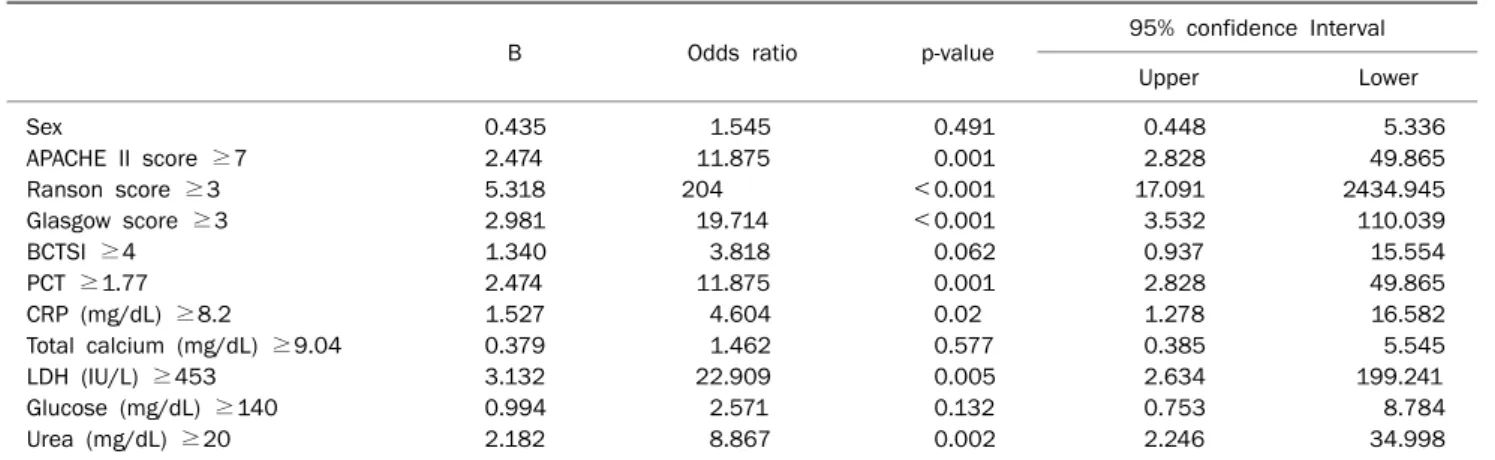
Table 4. Logistic Regression Analysis of Risk Factors for Severe Acute Pancreatitis
B Odds ratio p-value 95% confidence Interval
Upper Lower
Sex 0.435 1.545 0.491 0.448 5.336
APACHE II score ≥7 2.474 11.875 0.001 2.828 49.865
Ranson score ≥3 5.318 204 <0.001 17.091 2434.945
Glasgow score ≥3 2.981 19.714 <0.001 3.532 110.039
BCTSI ≥4 1.340 3.818 0.062 0.937 15.554
PCT ≥1.77 2.474 11.875 0.001 2.828 49.865
CRP (mg/dL) ≥8.2 1.527 4.604 0.02 1.278 16.582
Total calcium (mg/dL) ≥9.04 0.379 1.462 0.577 0.385 5.545
LDH (IU/L) ≥453 3.132 22.909 0.005 2.634 199.241
Glucose (mg/dL) ≥140 0.994 2.571 0.132 0.753 8.784
Urea (mg/dL) ≥20 2.182 8.867 0.002 2.246 34.998
APACHE, acute physiology and chronic health examination; BCTSI, balthazar CT severity index; PCT, procalcitonin.
verity index (65.9%). We analysed 4 cut-off values for serum PCT levels (0.50, 1.00, 1.77, and 2.65 ng/mL), among them, level of 1.77 ng/mL (area under the curve, AUC=0.797; 95%
confidence interval, CI=0.658-0.935, Fig. 2) )had the best accuracy and best positive predictive value and likelihood ra- tio (77.3%, 71.4%, 13.797, respectively). It could be esti- mated that the efficacy of serum PCT was similar to APACHE- II scores (Table 2) and its’ best cut-off level is 1.77 ng/mL
(Table 3).
We evaluated serum PCT and other parameters according to severity of pancreatitis by logistic regression analysis and found that serum levels of PCT, CRP, LDH and urea were sig- nificantly correlated with severity of pancreatitis. The odds ratio of serum PCT was 11.875 (p=0.001) (Table 4). The se- rum levels of total calcium and glucose were not correlated with the severity of pancreatitis (p=0.577, p=0.132, respec-
Fig. 3. Correlation between serum procalcitonin levels and duration of admission in patients with acute pancreatitis. Procalcitonin is indendent variable (x), admission duration is dependent variable (y).
Coefficient B is -8.791. Coefficient of determinant (r2)=0.127, t value=2.413, dependent p-value=0.021.
tively). The range of admission duration of each patients were 4 to 41 days, and we used simple linear regression analysis to evaluate the relationship between serum PCT levels and length of hospital stay. It revealed effective p- value with low R square level, which could make only possibilty for affection of serum PCT to admission duration (r2=0.127, p=0.021, Fig.
3).
DISCUSSION
Acute pancreatitis is an increasing common abdominal emergency.13 In patients with severe acute pancreatitis, range of mortalities is 10-30%14 and effective treatment is re- lay on predictiction of severity and there is still no ideal simple predictive system or biochemical marker which can be con- viniently used in clinical bases.15 Certain predictive methods, such as the Ranson score, Glasgow score, and APACHE-II score have been established as important methods for as- sessing the severity of acute pancreatitis,7,15,16 but these multifactorial scoring systems are complex and hard to use in clinical bases. Therefore, we want to set out to identify se- rum PCT as a single biochemical to predict the severity of acute pancreatitis. In 2000, Neoptolemos et al. reported se- rum CRP (≥150 mg/L on admission) to be a predictor of se- vere acute pancareatitis with an overall accuracy of 69%.17 In our study, the accuracy of CRP as a predictor was 68.2%
similarly. However many studies have described limitation of
clinical utility of CRP in early phase of acute pancreatitis, which revealed the usage of CRP alone was potentially failing to detect severe cases of acute pancreatitis.18-21
Serum PCT as another biochemical marker related to in- flammation was introduced several years ago. PCT is a 116-amino acid protein with a molecular mass of 12,793 Da.
In neuroendocrine cells (C cells of the thyroid, pulmonary and pancreatic tissues), it undergoes successive cleavages to produce 3 molecules of calcitonin (32 amino acids) and kata- calcin (21 amino acids) and the N-terminal 57 amino acids.22 During the infection, PCT is secreted into the bloodstream without increas of calcitonin, and it correlates closely with the inflammatory response of a host to microbial infections.23 Serum PCT has also been perceived as a reliable marker for the diagnosis of infected necrosis of the pancreas,24-26 but an increased serum PCT value in acute phase occurs regardless of cause of the triggering mechanism.27 Some studies have focused on the increased PCT concentration in acute pan- creatitis, but the results of studies were still inconclusive.28-30 In our study, the accuracy of serum PCT as a biochemical marker was 77.3%, which was similar to the APACHE-II score, worse than the Ranson score (93.2%) and better than the Balthazar CT severity index (65.9%). We analysed 4 cut-off values for serum PCT levels (0.50, 1.00, 1.77, and 2.65 ng/mL), among them, 1.77 ng/mL value had the best accu- rate value and positive predictive value and likelihood ratio (77.3%, 71.4%, 13.797, respectively). Therefore we propose the level of 1.77 ng/mL could be the best cut-off value for pre- dicting severe acute pancreatitis. Serum PCT might replace to APACHE-II score for predicting severity of acute pan- creatitis. On logistic regression analysis, the Balthazar CT se- verity index had no significance in assessing the severity of acute pancreatitis (p=0.062), but this lack of significance might be due to small number of subjects in this study. By the Atlanta classification, serum CRP, LDH and urea levels had al- so significance in severe acute pancreatitis (p<0.05), but serum glucose and total calcium levels were meaningless. By the analysis of accuracy, serum PCT was superior value (77.3%) than serum CRP, LDH and urea. We evaluated serum PCT and other parameters according to the severity of pan- creatitis by logistic regression analysis and found that serum levels of PCT, CRP, LDH, and urea were significantly corre- lated with the severity of pancreatitis. There is a report of APACHE-II scoring system which had been shown to sig-
nificant relation to the length of hospital stay.10 In this study, serum PCT did not show definite relation to the length of hos- pital stay but only with possibility due to low R square level (r2=0.127) even if it had effective p-value (p=0.021), and we think more studies are needed from the viewpoint of hospital stay. In this analysis, serum PCT levels (ng/mL) was used as independent variables and admission duration (days) was dependent variables. Coefficients B value of dependent vari- able was 1.444 and t-value was 2.43 and p-value was 0.021.
In conclusion, we think that serum PCT can be a promising simple and convinient biomarker to predict severity of acute pancreatitis, which had accuracy similar to APACHE-II score and higher accuracy than the CRP, LDH and urea.
REFERENCES
1. Triester SL, Kowdley KV. Prognostic factors in acute pancreatitis.
J Clin Gastroenterol 2002;34:167-176.
2. Kusske AM, Rongione AJ, Reber HA. Cytokines and acute pancreatitis. Gastroenterology 1996;110:639-642.
3. Larvin M. Circulating mediators in acute pancreatitis as pre- dictors of severity. Scand J Gastroenterol Suppl 1996;219:
16-19.
4. Windsor AC, Kanwar S, Li AG, et al. Compared with parenteral nu- trition, enteral feeding attenuates the acute phase response and improves disease severity in acute pancreatitis. Gut 1998;42:431-435.
5. Al-Nawas B, Krammer I, Shah PM. Procalcitonin in diagnosis of severe infections. Eur J Med Res 1996;1:331-333.
6. Kylänpää-Bäck ML, Takala A, Kemppainen E, Puolakkainen P, Haapiainen R, Repo H. Procalcitonin strip test in the early de- tection of severe acute pancreatitis. Br J Surg 2001;88:222- 227.
7. Lempinen M, Puolakkainen P, Kemppainen E. Clinical value of severity markers in acute pancreatitis. Scand J Surg 2005;94:
118-123.
8. Gurda-Duda A, Kuśnierz-Cabala B, Nowak W, Naskalski JW, Kulig J. Assessment of the prognostic value of certain acute-phase proteins and procalcitonin in the prognosis of acute pancreatitis. Pancreas 2008;37:449-453.
9. Modrau IS, Floyd AK, Thorlacius-Ussing O. The clinical value of procalcitonin in early assessment of acute pancreatitis. Am J Gastroenterol 2005;100:1593-1597.
10. Bumbasirevic V, Radenkovic D, Jankovic Z, et al. Severe acute pancreatitis: overall and early versus late mortality in intensive care units. Pancreas 2009;38:122-125.
11. Rau BM, Kemppainen EA, Gumbs AA, et al. Early assessment of pancreatic infections and overall prognosis in severe acute pan- creatitis by procalcitonin (PCT): a prospective international mul- ticenter study. Ann Surg 2007;245:745-754.
12. Toouli J, Brooke-Smith M, Bassi C, et al. Guidelines for the man-
agement of acute pancreatitis. J Gastroenterol Hepatol 2002;17(Suppl):S15-S39.
13. Villatoro E, Bassi C, Larvin M. Antibiotic therapy for prophylaxis against infection of pancreatic necrosis in acute pancreatitis.
Cochrane Database Syst Rev 2006;(4):CD002941.
14. Servín-Torres E, Velázquez-García JA, Delgadillo-Teyer G, Galindo-Mendoza L, Bevia-Pérez F, Rivera-Bennet F. Severe acute pancreatitis: surgical management in a third-level hospital. Cir Cir 2009;77:407-410.
15. Dervenis C, Bassi C. Evidence-based assessment of severity and management of acute pancreatitis. Br J Surg 2000;87:257-258.
16. Wyncoll DL. The management of severe acute necrotising pan- creatitis: an evidence-based review of the literature. Intensive Care Med 1999;25:146-156.
17. Neoptolemos JP, Kemppainen EA, Mayer JM, et al. Early pre- diction of severity in acute pancreatitis by urinary trypsinogen ac- tivation peptide: a multicentre study. Lancet 2000;355:1955- 1960.
18. Müller CA, Uhl W, Printzen G, et al. Role of procalcitonin and gran- ulocyte colony stimulating factor in the early prediction of in- fected necrosis in severe acute pancreatitis. Gut 2000;46:233- 238.
19. Puolakkainen P, Valtonen V, Paananen A, Schröder T. C-reactive protein (CRP) and serum phospholipase A2 in the assessment of the severity of acute pancreatitis. Gut 1987;28:764-771.
20. Wilson C, Heads A, Shenkin A, Imrie CW. C-reactive protein, anti- proteases and complement factors as objective markers of se- verity in acute pancreatitis. Br J Surg 1989;76:177-181.
21. Chen CC, Wang SS, Lee FY, Chang FY, Lee SD. Proinflammatory cytokines in early assessment of the prognosis of acute pancreatitis. Am J Gastroenterol 1999;94:213-218.
22. Gendrel D, Bohuon C. Procalcitonin as a marker of bacterial infection. Pediatr Infect Dis J 2000;19:679-687.
23. Braithwaite S. Procalcitonin: new insights on regulation and origin. Crit Care Med 2000;28:586-588.
24. Mándi Y, Farkas G, Takács T, Boda K, Lonovics J. Diagnostic rele- vance of procalcitonin, IL-6, and sICAM-1 in the prediction of in- fected necrosis in acute pancreatitis. Int J Pancreatol 2000;28:
41-49.
25. Riché FC, Cholley BP, Laisné MJ, et al. Inflammatory cytokines, C reactive protein, and procalcitonin as early predictors of ne- crosis infection in acute necrotizing pancreatitis. Surgery 2003;133:257-262.
26. Oláh A, Belágyi T, Issekutz A, Makay R, Zaborszky A. Value of pro- calcitonin quick test in the differentiation between sterile and in- fected forms of acute pancreatitis. Hepatogastroenterology 2005;52:243-245.
27. Wanner GA, Keel M, Steckholzer U, Beier W, Stocker R, Ertel W.
Relationship between procalcitonin plasma levels and severity of injury, sepsis, organ failure, and mortality in injured patients.
Crit Care Med 2000;28:950-957.
28. Ammori BJ, Becker KL, Kite P, et al. Calcitonin precursors in the prediction of severity of acute pancreatitis on the day of admission. Br J Surg 2003;90:197-204.
29. Shafiq N, Malhotra S, Bhasin DK, Rana S, Siddhu S, Pandhi P.
Estimating the diagnostic accuracy of procalcitonin as a marker
of the severity of acute pancreatitis: a meta-analytic approach.
JOP 2005;6:231-237.
30. Melzi D'Eril GV, Merlini G, Finazzi S, Bosoni T, Barakat B, Pezzilli
R. Procalcitonin is not a reliable marker for the assessment of severity in acute pancreatitis without infectious complications.
Clin Chem 2000;46:428-430.