73
Clinical Practice of Glycerol Preserved Xenograft
Jeong Wook Jeon, M.D., Dohern Kim, M.D., Jun Hur, M.D., Wook Chun, M.D.
Woo Young Jang, M.D.1
and Jong Hyun Kim, M.D.
Departments of Surgery and
1Pathology, Hangang Sacred Heart Hospital, College of Medicine, Hallym University, Seoul, Korea
Backgrounds: In the treatment of patients with extensive burn, covering the burned areas and open wounds after escharectomy with a biological dressing for a period of time is largely known to help save patients' lives. These authors report an application of safely processed swine skins in the treatment of extensive burns using a glycerol-preserve method, one of the preservation methods of cadaver skins.
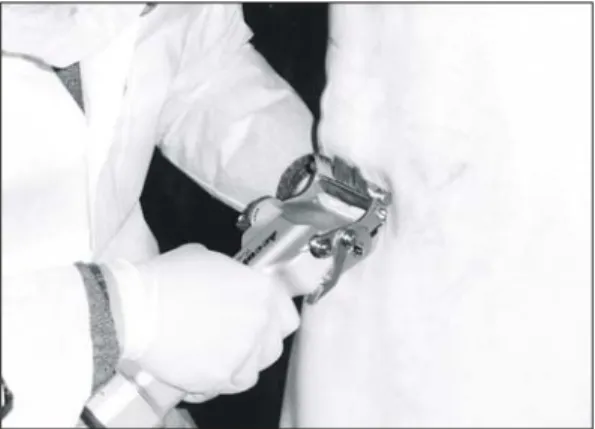
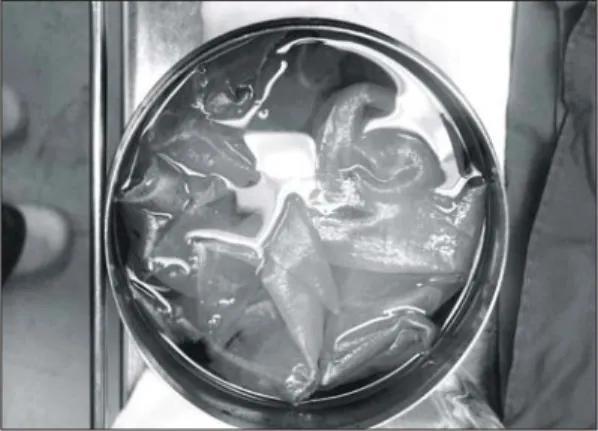
Methods: Using a dermatome, swine dermis was collected at a thickness of 15/1,000 inch at a slaughter house. The collected samples were washed with a normal saline several times, and then they were immediately preserved in an 85% glycerol solution. After sufficiently soaking the specimens in a phosphate buffered saline solution just before surgery, the specimens were submerged in 1,000 ml saline solution mixed with ceftazidime 1,000 mg, ampicillin 1,000 mg and amphotericin B 50 mg. All of the skins were used by preparing 1:2 mesh grafts.
Results: The subject of this investigation was a 45-year old male patient inflicted with a 22900-volt electric burn (40% TBSA burned). Escharectomy was done in the trunk and both extremities at three days after injury. Acute renal failure and pulmonary edema were developed concurrently immediately after surgery. As patients' condition became worse, the wounds were infected. We re-operated him instantly. Debridement were performed for infected wound and the muscular injury sites in the patient's left forearm. The swine skin was grafted on the trunk open wound. The patient improved his renal function and pulmonary edema some extent after two days.
Then, the swine skin was removed and an autograft was performed and, amputation of the left upper limb was carried out. The swine skins were somewhat firmly attached and slight bleeding was witnessed as it was removed. The wounds, however, were clean. Auto-grafting was successfully carried out and the patient survived.
Conclusions: Using 85% glycerol solution, these authors were able to replace the water in all cells
생물학적 드레싱으로 돼지 피부를 이용한 광범위 화상의 치료
한림대학교 의과대학 한강성심병원 외과학교실, 1병리학교실
전정욱․김도헌․허 준․전 욱․장우영1․김종현
책임저자:전 욱, 서울시 영등포구 영등포동 94-200, 우편번호: 150-719, 한림대학교 한강성심병원 외과 Tel: 02-2639-5446, Fax: 02-2678-4386, E-mail: [email protected]