Printed in the Republic of Korea http://dx.doi.org/10.5012/jkcs.2014.58.1.25
Aqueous Extract of Coriander Seeds as Green Corrosion Inhibitor for 304 Stainless Steel in Hydrochloric Acid Solutions
Abd El-Aziz. S. Fouda*, Salah M. Rashwan†, and Hytham A. Abo-Mosallam‡ Department of Chemistry, Faculty of Science, El-Mansoura University, El-Mansoura-35516, Egypt.
*E-mail: [email protected]
†Department of Chemistry, Faculty of Science, Suez Canal University, Egypt
‡Water and Wastewater Company, Dakahlia, Egypt (Received September 3, 2013; Accepted January 16, 2014)
ABSTRACT. Corrosion inhibition of 304 stainless steel (SS) in 1 M HCl by aqueous extract of coriander seeds was studied using weight loss, potentiodynamic polarization, electrochemical impedance spectroscopy (EIS) and electrochemical frequency modu- lation (EFM) techniques. Values of inhibition efficiency obtained are dependent upon the concentration of extract and temperature. Gen- erally, inhibition was found to increase with inhibitor concentration, but decrease with temperature. Physical adsorption mechanism has been proposed for the inhibition with Langmuir adsorption isotherm obeyed. Values of activation energy of the inhibited cor- rosion reaction of 304 SS are greater than the value obtained for the blank. Thermodynamic consideration reveals that adsorp- tion of aqueous extract of coriander seeds 304 SS surface is spontaneous.
Key words: Corrosion, Coriander seed extract, 304 SS, Langmuir adsorption isotherm
INTRODUCTION
Pure metals and alloys react chemically/electrochemi- cally with corrosive medium to form a stable compound, in which the loss of metal occurs. The compound so formed is called corrosion product and metal surface becomes corroded. Corrosion involves the movement of metal ions into the solution at active areas (anode), passage of electrons from the metal to an acceptor at less active areas (cath- ode), an ionic current in the solution and an electronic cur- rent in the metal. The cathodic process requires the presence of an electron acceptor such as oxygen or oxidizing agents or hydrogen ions.1 Corrosion of metals is a major problem that must be confronted for safety, environment, and eco- nomic reasons. It can be minimized by suitable strategies which in turn stifle, retard or completely stop the anodic or cathodic reactions or both. Among the several methods of corrosion control and prevention, the use of corrosion inhib- itors, is very popular. Most of the efficient inhibitors are organic compounds that contain in their structures mostly nitrogen, sulfur or oxygen atoms. Unfortunately, the use of some chemical inhibitors has been limited because of some reasons namely their synthesis is very often expen- sive and they can be toxic and hazardous for human beings environment as well. This has prompted the search for eco- friendly corrosion inhibitors as an alternative to replace inorganic and organic inhibitors to foster sustainable green-
ness to the environment. These nontoxic, benign, inexpensive, renewable and readily available alternative corrosion inhibi- tors have been found in different parts of plant extracts.2 The use of plant products as corrosion inhibitors are justied by the phytochemical compounds present therein, with molecular and electronic structures bearing close similar- ity to those of conventional organic inhibitor molecules.
Some research groups have reported the successful use of naturally occurring substances to inhibit the corrosion of metals in acidic and alkaline environment. Delonix regia extracts inhibited the corrosion of aluminum in hydrochloric acid solutions,3 rosemary leaves were studied as corrosion inhibitor for the Al + 2.5 Mg alloy in a 3% NaCl solution at 25oC,4 El-Etre investigated opuntia extract as corrosion inhib- itor for aluminum.5 The inhibitive effect of the extract of ginger on the corrosion of steel in polluted sodium chloride solution was investigated.6 Also, Fouda et al.7 investigated camellia sinensis as corrosion inhibitor for mild steel in chloride and aluminum sulfate solution.
The present study is aimed to investigate the inhibitive and adsorption properties of aqueous extract of coriander seeds for the corrosion of 304 SS in HCl.
EXPERIMENTAL Materials
The experiments were performed with stainless steel type
304 specimens in the form of sheets with the following composition (wt%): 18 Cr, 8 Ni, less than 0.03 C and the remainder iron. For electrochemical measurements, the sheets were welded with Cu-wire for electrical connec- tion and mounted into glass tubes of appropriate diameter using Araldite to offer an active surface of 1 cm2 to contact the test solution. Prior to each experiment, these sheets were abraded with emery paper (400−1000 grade) to a mir- ror finish and degreased with trichloroethylene, washed with bidistilled water and then dried. A conventional elec- trochemical cell of capacity 100 ml was used containing three compartments for 304 SS as working electrode, plat- inum foil with a 1 cm2 surface area as counter electrode and saturated calomel electrode (SCE) via a Luggin capillary probe was used as reference electrode. All reagents used for this study was of analytical grade and were used as received and bidistilled water was used for their prepa- rations. All experiments were carried out open to the atmosphere. The experiments were repeated and repro- ducibility was tested and confirmed.
Aqueous Extract of Coriander Seeds
Coriander is native to regions spanning from southern Europe and North Africa to southwestern Asia. The word coriander derives from the old French coriandre, which comes from Latin coriandrum. The analysis of coriander
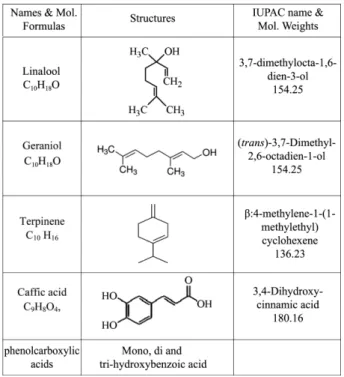
seeds aqueous extract showed that it contains linalool (60–
80%), geraniol (1.2–4.6%), terpinen-terpinene (1–8%), caf- feic acids and phenolcarboxylic acids.
Weight Loss Measurements
The samples measuring 2×2×0.2 cm were prepared as before. The specimens were immersed in 250 ml beaker, which contained 100 ml of 1 M HCl with and without dif- ferent concentrations of extract. After 3 h, the specimens were taken out, washed, dried, and weighed accurately. The average weight loss of the parallel 304 SS sheets could be obtained. Then the tests were carried out at a temperature range 25–45 ºC. The inhibition efficiency (IE) of the inhib- itor and corrosion rate (CR) in mg cm−2 min−1 of 304 SS in HCl solution was calculated using equations (1) and (2) respectively:8
% IE = [1 – (W1/W2)] × 100 (1)
CR = [W2–W1]/At (2)
where W1 and W2 are the weight losses (mg/cm2) in the presence and absence of the extract, respectively, A is the area of the specimen in cm−2 and t is the period of immer- sion in minutes.
Potentiodynamic Polarization Measurements
Working electrode was immersed in the test solution (100 ml) for 30 min until steady state was attained this was taking as EOC. All experiments were carried out at 25 ± 1 ºC and solutions were not aerated. For polarization mea- surements potential from −300 to 100 mV [relative to open circuit potential, (EOC)] was applied. The inhibition efficiency was calculated using equation7 (3):
% IE = [1− (icorr(inh)/icorr(free))] × 100 (3) where icorr(free) and icorr(inh) are the corrosion current den- sities in the absence and presence of extract, respectively.
Electrochemical Impedance Spectroscopy (EIS) Mea- surements
The impedance spectra were recorded at OCP after immersion of the electrode for 30 min in the test solution in order to attain steady state. The alternating current (AC) signal was 5 mV peak to peak and the frequency range stud- ied was between 100 kHz and 0.2 Hz.
The % IE and the surface coverage (θ) of the used inhib- itors obtained from the impedance measurements can be calculated using equation7 (4):
Figure 1. Molecular structures, names, molecular weights and molecular formulas of main components in aqueous extract of coriander seeds.
% IE =θ × 100 = [1 − (R°ct/Rct)] × 100 (4) R°ct and Rct are the charge transfer resistance in the absence and presence of inhibitor, respectively.
Electrochemical Frequency Modulation (EFM) Mea- surements
Electrochemical frequency modulation was carried out using two frequencies 2 and 5 Hz. The base frequency was 0.1 Hz, so the waveform repeats after 1s. The Intermodula- tion spectra contain current responses assigned for har- monical and intermodulation current peaks. The larger peaks were used to calculate the corrosion current density (icorr), the Tafel slopes (βc and βa) and the causality factors CF-2
& CF-3.9,10
All electrochemical experiments were carried out using Potentiostat/Galvanostat/Zra analyzer (Gamry PCI300/4, USA). A personal computer with DC 105 software for polar- ization, EIS 300 software for impedance, EFM140 software for electrochemical frequency modulation and Echem Ana- lyst 5.21 was used for data tting and calculating.
RESULTS AND DISCUSSION Weight Loss Measurements
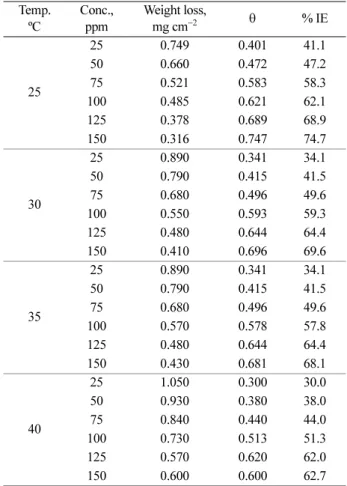
The weight loss-time curves of 304 SS specimens in 1 M HCl solution, with and without different concentrations of the investigated coriander seeds extract, were determined after 3 h of immersion at 25 ºC and are given in Fig. 2. % IE are given in Table 1. The presence of extract reduces the
corrosion rate of 304 SS in HCl. From the plot, weight loss for systems containing coriander extract was found to be lower compared to the blank, indicating that different con- centrations of coriander extract retard the corrosion of 304 SS in 1 M HCl. The Figure reveals that the plant extract actu- ally inhibited the HCl induced corrosion of 304 SS to an appreciable extent. The Figure also reveals that 304 SS corrosion by HCl occurs not by simple homogenous pro- cess but by a heterogeneous one consisting of different or same rates. This assertion is made from the non-uniformity or nonlinearity of the plots obtained.11
Adsorption Isotherm and Thermodynamic Parameters The mechanism of the interaction between inhibitor and the metal surface can be explained using adsorption isotherms.
The degree of surface coverage, θ, was computed for the different concentrations of the extract from weight loss measurements as follows: % IE = θ × 100, assuming direct relationship between surface coverage and inhibition effi- ciency. The surface coverage values obtained were applied to Table 1. Data of weight loss measurements for 304 SS in 1 M HCl solution in the absence and presence of different concentrations of coriander extract at temperature ranges (25−40 ºC)
Temp.
ºC
Conc., ppm
Weight loss,
mg cm−2 θ % IE
25
25 0.749 0.401 41.1
50 0.660 0.472 47.2
75 0.521 0.583 58.3
100 0.485 0.621 62.1
125 0.378 0.689 68.9
150 0.316 0.747 74.7
30
25 0.890 0.341 34.1
50 0.790 0.415 41.5
75 0.680 0.496 49.6
100 0.550 0.593 59.3
125 0.480 0.644 64.4
150 0.410 0.696 69.6
35
25 0.890 0.341 34.1
50 0.790 0.415 41.5
75 0.680 0.496 49.6
100 0.570 0.578 57.8
125 0.480 0.644 64.4
150 0.430 0.681 68.1
40
25 1.050 0.300 30.0
50 0.930 0.380 38.0
75 0.840 0.440 44.0
100 0.730 0.513 51.3
125 0.570 0.620 62.0
150 0.600 0.600 62.7
Figure 2. Weight loss-time curves for the corrosion of 304 SS in 1 M HCl in absence and presence of different concentrations of coriander extract at 25oC.
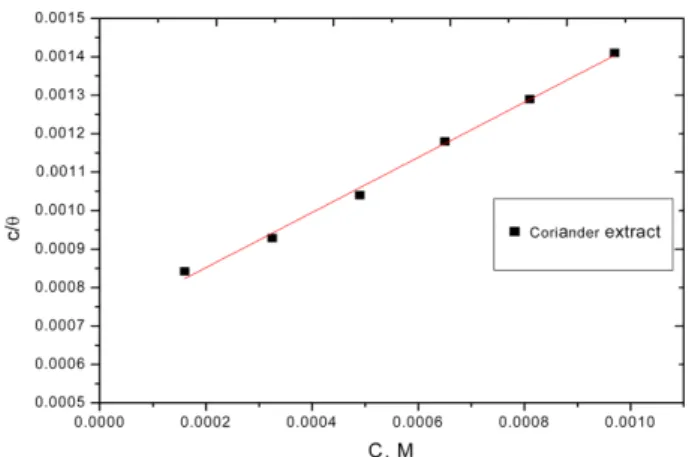
various adsorption isotherm models. By far, the best fit was found to obey Langmuir adsorption isotherm (Fig. 3), which may be formulated as in equation9 (5):
C/θ = 1/Kads + C (5)
where Kads is the adsorption equilibrium constant of the inhibitor, C is the inhibitor concentration and θ is the sur- face coverage. The free energy of adsorption (ΔGoads) can be obtained from equation9 (6):
log Kads = −log 55.5 − ΔGoads/2.303RT (6) where R is the universal gas constant, T is the absolute temperature. The value 55.5 is the concentration of water on the metal surface in mol/L.
The negative values of ΔGoads in Table 2 suggested that the adsorption of inhibitor molecules onto 304 SS surface is a spontaneous process. Generally, values of ΔGoads up to
−20 kJ mol−1 are consistent with the electrostatic interaction between the charged molecules and the charged metal (physical adsorption) while those more negative than 40 kJ mol−1 involve charge sharing or transfer of electrons from the inhibitor molecules to the metal surface to form a co-ordinate type of bond (chemisorption).12,13 The large Kads
value gives better inhibition efficiency due to strong elec- trical interaction between the double layer and adsorbing inhibitor molecules while a small Kads value compromise that such interactions between the adsorbing inhibitor mole- cules and the metal surface are weaker, indicating that the
inhibitor molecules are easily removable by the solvent molecules from the surface of 304 SS. Fig. 4 shows the plot of log Kads vs 1/T, a straight line with an intercept equal to ΔHoads and with slope equal to ΔSoads in Equation (7):
ΔGoads=ΔHoads− TΔSoads (7) The negative sign of ΔHoads indicated that the adsorption of inhibitor molecules is an exothermic process in all cases. The sign of ΔSoads is negative because inhibitor molecules freely moving in the bulk solution were adsorbed in an orderly fashion on to 304 SS, resulting in a decrease in entropy.14 Moreover, from thermodynamic principles, since the adsorp- tion was an exothermic process, it must be accompanied by a decrease in entropy.15
Effect of Temperature
Temperature plays an important role on metal dissolu- tion. The corrosion rate in acid solution, for example, increases exponentially with temperature increase because the hydro- gen evolution overpotential increases.16 In order to access the effect of temperature on the corrosion and corrosion inhibition process, weight loss experiments were carried out in the temperature range of 25−40oC in 1 M HCl in the absence and presence of different concentrations (25− 150 ppm) of coriander seeds extract. It was found that after 3 h immersion period, the surface coverage and inhibition efficiency decrease with rise in temperature (Table 1). Arrhe- nius-type dependence is observed between corrosion rate and temperature often expressed as in equation20 8:
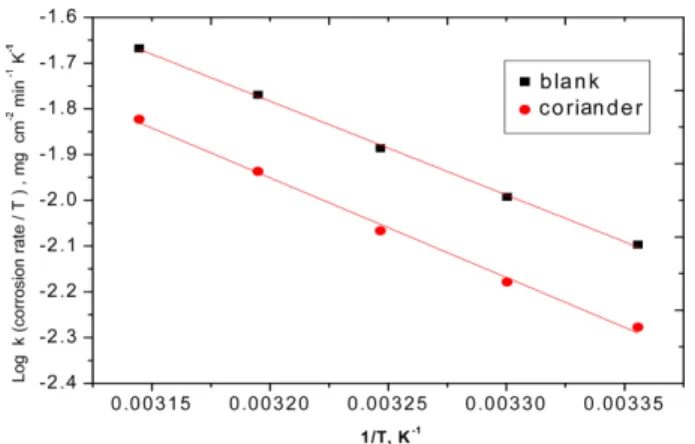
Corrosion rate (k) = A exp− Ea*/RT (8) where k is the corrosion rate constant and Ea* is the appar- ent activation energy, and A is the frequency factor. Fig. 5 depicts an Arrhenius plot (logarithm of k against the recip- Figure 3. Adsorption isotherm for the adsorption of extract on
304 SS in 1 M HCl at 25oC.
Table 2. Thermodynamic parameters for 304 SS in 1 M HCl for coriander seeds extract
Inhibitor Temp., K
−ΔSoads
J mol−1K−1
−ΔHoads
kJ mol−1
−ΔGoads
kJ mol−1 Kads M−1
Extract 298 19.5 22.1 27.9 1410
Figure 4. Variation of log Kads with 1/T.
rocal of temperature (1/T) for 304 SS in 1 M HCl solution in the absence and presence of different extract concen- trations. Satisfactory straight lines of high correlation coeffi- cients were obtained. The values of activation energy were obtained from the slopes of the linear plots and are given in Table 3. It is clear from Table 3 that Ea*values in the presence of the different concentrations of the extract are higher than in their absence. This denotes that the adsorption is physically while the reverse is usually attributed to chem- ical adsorption.17 This conclusion is denoted by the decrease in inhibition efficiency with increasing temperature (Table 1). Similar result has been reported by Okafor et al.18 on the inhibition of acid corrosion of carbon steel using aque- ous extract of P. amarus seeds and leaves. Moreover, the increase in activation energy is proportional to the inhib- itor concentration, indicating that the energy barrier for the corrosion process is also increased.19 An alternative formulation of Arrhenius equation is:20
k = (RT/Nh) exp (ΔS*/R) exp (−ΔH*/RT) (9) where h is the Planck’s constant, N is the Avogadro’s number, ΔS* is the entropy of activation, and ΔH* is the enthalpy of activation. Fig. 6 shows a plot of log (k/T) as a function of 1/T. Straight lines were obtained with a slope of (ΔH*/R) and an intercept of (ln R/Nh− ΔS*/R) from which the values of ΔH*and ΔS*were calculated Table 3.
The positive values of ΔH* both in the absence and pres-
ence of the extract reflect the endothermic nature of the 304 SS dissolution process. It is also clear that the activation enthalpies vary in the same manner as the activation energies, supporting the proposed inhibition mechanism. Large and negative values of entropies imply that the activated com- plex in the rate determining step represents an association rather than a dissociation step, meaning that a decrease in disordering takes place on going from reactants to the acti- vated complex. Similar observation has been reported in the literature.21
Potentiodynamic Polarization Measurements
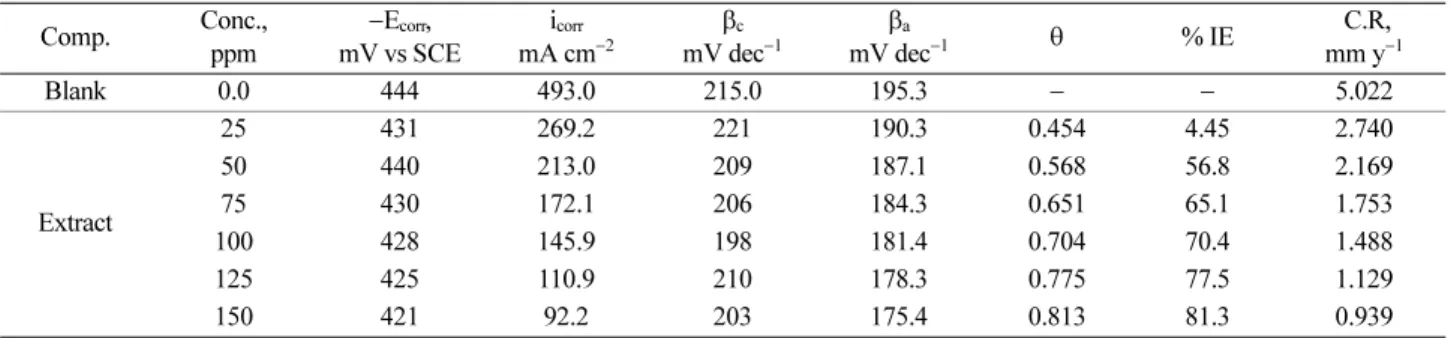
Potentiodynamic polarization curves for 304 SS in uninhib- ited and inhibited acidic solutions containing different con- centrations of coriander seeds extract are shown in Fig. 7.
The corrosion kinetic parameters derived from potentio- dynamic polarization curves together with % IE are listed in Table 4. It has been observed that values of corrosion current density (icorr) for 304 SS in 1 M HCl solution decreased with increase in coriander seeds extract concentration.
The decrease in corrosion current densities in the pres- ence of the extract might be due to the adsorption of cori- ander seeds extract components molecules on the 304 SS surface. In the absence and presence of coriander seeds extract, βa and βc values remain almost constant indicat- ing that the presence of extract not changes the mecha- nism of corrosion. The value of corrosion potential (Ecorr.) showed a slight shift towards anodic region as concentration of extract increased, suggesting the effect of extract is more pronounced at anodic site. It was reported before22 that, if the displacement in corrosion potential is more than 85 mV with respect to corrosion potential of uninhibited solu- tion, the inhibitor can be seen as a cathodic or anodic type.
In our study the maximum displacement was 15 mV, indi- Figure 5. Arrhenius plot of variation of (log k) vs (1/T) for dis-
solution of 304 SS in 1M HCl in the absence and presence of 50 ppm of coriander extract.
Table 3. Kinetic activation parameters for 304 SS in 1 M HCl in the absence and presence of 50 ppm coriander seeds extract Inhibitors Conc.
ppm
Activation parameters
Ea*, kJ mol−1 ΔH*, kJ mol−1 −ΔS*, J mol−1K−1
Blank 0.0 39.2 36.7 162.1
Extract 50 41.7 38.5 158.2
Figure 6. Arrhenius plot of variation of (log k/T) vs. (1/T) for dissolution of 304 SS in 1 M HCl in the absence and presence of 50 ppm of coriander extract.
cating that coriander seeds extract belonged to mixed-type.
Electrochemical Impedance Spectroscopy (EIS) The corrosion of 304 SS in 1 M HCl in the presence of coriander seeds extract was investigated by EIS method at 25 ºC. Impedance parameters, such as charge transfer resis- tance Rct, which is equivalent to Rp, and the double layer capacitance Cdl, are derived from the Nyquist plot (Fig. 8)
and are given in Table 5 for 304 SS in 1M HCl acid solution in the presence and absence of the extract. It is observed that the values of Rct increase with increasing the concentra- tion of the extract and this in turn leads to a decrease in corrosion rate of 304 SS in 1 M HCl acid solution. Imped- ance diagram have a semicircular appearance; the diagram indicates that the corrosion of 304 SS is mainly controlled by a charge transfer process.23 The values of double layer Figure 7. Potentiodynamic polarization curves of 304 SS in 1 M
HCl in the absence and presence of different concentrations of coriander seeds extract at 25oC.
Table 4. Corrosion parameters obtained from potentiodynamic polarization of 304 SS in 1 M HCl containing various concentrations of cori- ander seeds extract at 25oC
Comp. Conc.,
ppm
−Ecorr, mV vs SCE
icorr
mA cm−2
βc
mV dec−1
βa
mV dec−1 θ % IE C.R,
mm y−1
Blank 0.0 444 493.0 215.0 195.3 − − 5.022
Extract
25 431 269.2 221 190.3 0.454 4.45 2.740
50 440 213.0 209 187.1 0.568 56.8 2.169
75 430 172.1 206 184.3 0.651 65.1 1.753
100 428 145.9 198 181.4 0.704 70.4 1.488
125 425 110.9 210 178.3 0.775 77.5 1.129
150 421 92.2 203 175.4 0.813 81.3 0.939
Table 5. EIS data of 304 SS in 1 M HCl and in the presence and absence of different concentrations of coriander extract at 25oC Comp. Conc., ppm RS, Ω cm2 Cdl, µF cm2 n Rct, Ω cm2 θ % IEEIS
Blank 0.0 1.321 30.597 0.834 89.2 − −
Extract
25 1.231 24.245 0.881 120.3 0.258 25.8
50 1.161 21.234 0.872 168.1 0.470 47.0
75 1.148 18.922 0.842 430.2 0.793 79.3
100 1.120 16.943 0.836 500.6 0.822 82.2
125 1.112 15.321 0.871 575.2 0.845 84.5
150 1.108 13.521 0.869 650.9 0.863 86.3
Figure 8. Nyquist plot of 304 SS in 1 M HCl in the absence and presence of different concentrations of coriander seeds extract at 25oC.
capacitance, Cdl, decrease with increasing the concentration of coriander seeds extract. A low capacitance may result if water molecules at the electrode interface are replaced by inhibitor molecules of lower dielectric constant through adsorption. When such low capacitance values are connected with high Rct values, it is apparent that a relationship exists between adsorption and inhibition.
The impedance data of 304 SS in 1 M HCl are analyzed in terms of an equivalent circuit model (Fig. 9) which includes the solution resistance Rs and the double layer capacitance Cdl which is placed in parallel to the charge transfer resis- tance Rct due to the charge transfer reaction. Cdl can be cal- culated from the angular frequency (ωmax= 2πf) at the maximum imaginary component and the charge transfer resistance according equation9 (10):
Cdl = [1/ωmax Rp] = [1/2πfmax Rp] (10) where fmax is maximum frequency, ω is the angular velocity.
Electrochemical Frequency Modulation (EFM) Mea- surements
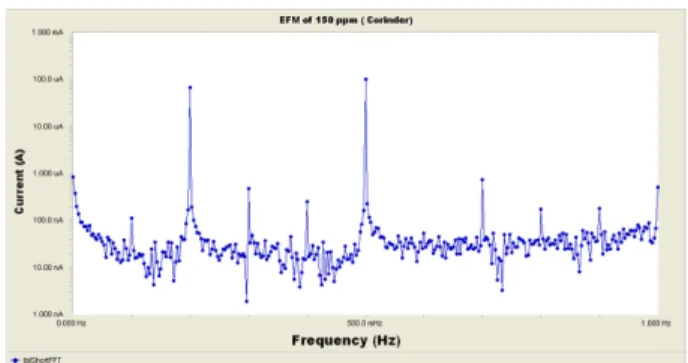
The EFM is a nondestructive corrosion measurement technique that can directly give values of the corrosion current without prior knowledge of Tafel constants. Like EIS, it is a small ac signal. Intermodulation spectra obtained from EFM measurements are presented in Figs. 10 and 11 as examples of 304 SS in aerated 1 M HCl solutions devoid of and containing 150 ppm of coriander extract at 25oC.
Each spectrum is a current response as a function of fre- quency. The calculated corrosion kinetic parameters at
different concentrations of coriander extract in 1 M HCl at 25oC (icorr, βa, βc, CF-2, CF-3 and % IE) are given in Table 6. From Table 6, the corrosion current densities decrease by increasing the concentration of coriander extract and the inhibition efficiency increases by increasing the extract concentration. The causality factors in Table 6 are very close to theoretical values (2.0 & 3.0) which according to EFM theory should guarantee the validity of Tafel slopes and corrosion current densities and indicate that the measured data are of good quality. The deviation of causality factors from their ideal values (2 & 3) might be due to the small values of perturbation amplitude or due to the resolution of the frequency spectrum is not high enough. Another possible explanation, the inhibitor is not performing very well. The Figure 9. Equivalent circuit model used to fit impedance data.
Table 6. Electrochemical kinetic parameters obtained from EFM technique for 304 SS in the absence and presence of various concentrations of coriander seeds extract in 1 M HCl at 25oC
Comp. Conc., ppm icorr, µAcm−2 βc, mVdec−1 βa, mVdec−1 CF-2 CF-3 θ % IE CR, mmy−1
Blank 00 5330.5 233 212 1.78 2.811 − − 7.216
Extract
25 2776.7 220 205 1.65 2.78 0.479 47.9 3.759
50 2461.4 212 201 1.76 2.89 0.538 53.8 3.332
75 2200.6 201 194 1.92 2.67 0.587 58.7 2.979
100 1710.1 194 180 1.82 2.59 0.679 67.9 2.315
125 1280.2 188 173 1.89 2.92 0.760 76.0 1.733
150 800.8 181 162 1.69 2.88 0.850 85.0 1.084
Figure 10. EFM spectra for 304 SS in 1M HCl (blank) at 25oC.
Figure 11. EFM spectra for 304 SS in 1M HCl solution in the presence of 150 ppm coriander seeds extract at 25oC.
obtained results showed good agreement of inhibition effi- ciency obtained from the potentiodynamic polarization, EIS and weight loss methods.
Mechanism of Corrosion Inhibition
By examining the chemical composition of coriander extract, Table 1 shows that the aqueous extracts of coriander contain linalool (60–80%), geraniol (1.2–4.6%), terpinen- terpinene (1–8%), caffeic acid, phenol carboxylic acids (mono-, di-, and tri-hydroxybenzoic acids). In view of these components it is clear that the majority of organic com- pounds contain oxygen, and all have pairs of free elec- trons, so these compounds will be able to adsorb on 304 SS surface through the free electrons on the oxygen atoms.
The occurrence of the adsorption of the compounds in the extracts on 304 SS surface constitutes the barrier for mass and charge transfer, leading to reduced interaction between the sample with central corrosion and thus decrease the corrosion rate, moreover, these compounds may be form complexes with ions of iron, causing the covering (lock) of anodic sites (microanodes) and/or cathodic sites (mic- ocathodes) generated on the 304 SS surface under con- ditions of corrosion and lead to disability soluble of iron.
It is interesting to note that a number of the above named organic compounds exhibit antioxidant activity. For exam- ple, caffeic acids (phenolic compounds) are antioxidants.24 Results of earlier studies suggest that antioxidant com- pounds in plant extracts contribute to inhibition of steel corrosion in some acidic medium.25,26,2
CONCLUSIONS
Based on the above results, the following conclusions can be drawn:
(1) Coriander seeds extract was found to be an effective eco friendly and low cost inhibitor.
(2) Inhibition efficiency increased with an increase in coriander seeds extract in 1 M HCl but decreased with rise in temperature.
(3) Coriander seeds extract adsorbed physically on 304 SS surface following the Langmuir adsorption isotherm.
(4) Values of Tafel constants βa and βc confirm that the coriander seeds extract acts like mixed type inhibitor.
(5) The inhibition efficiencies determined by weight loss and electrochemical methods are in reasonable good agreement.
(6) Thus the coriander seeds extract was proved to be good inhibitor.
Acknowledgments. The publication cost of this paper was supported by the Korean Chemical Society.
REFERENCES
1. Bothi, R. P.; Sethuraman, M. G. Materials and Corrosion 2008, 59, 1.
2. Oguzie, E. E. Corros. Sci. 2008, 50, 2993.
3. Abiola, O. K.; Oforka, N. C.; Ebenso, E. E.; Nwinuka, N.
M. Anti-Corrosion Methods and Materials 2007, 54(4), 219.
4. Kliskic, M.; Radoservic, J.; Gudic, S.; Katalinic, V. J. Appl.
Electrochem. 2000, 30(7), 823.
5. El-Etre, A. Y. Corros. Sci. 2003, 45(11), 2485.
6. Fouda, A. S.; Abd El-Nazeer, A.; Ibrahim, M.; Fakih, M.
J. Korean Chem. Soc. 2013, 57(2), 272.
7. Fouda, A. S.; Makkia, D.; Badr, A. J. Korean Chem. Soc.
2013, 57(2), 264.
8. Talati, J. D.; Modi, R. M. Trans SEAST 1986, 11, 259.
9. Abdel-Rehim, S. S.; Khaled, K. F.; Abd-Elsha, N. S. Electro- chim. Acta 2006, 51, 3269.
10. Bosch, R. W.; Hubrecht, J.; Bogaerts, W. F.; Syrett, B. C.
Electrochemical Technique for Online Corrosion Moni- toring Corrosion 2001, 57, 60.
11. Lahhit, N.; Bouyanzer, A.; Desjobert, J.-M. Port. Elec- trochim. Acta 2011, 29(2), 127.
12. Donahue, F. M.; Nobe, K. J. Electrochem. Soc. 1965, 112, 886.
13. Kamis, E.; Belluci, F.; Latanision, R. M.; El-Ashry, E. S.
H. Corrosion 1991, 47, 677.
14. Li, X.; Mu, G. Appl. Surf. Sci. 2005, 252, 1254.
15. Mu, G.; Li, X.; Li, G. Corros. Sci. 2005, 47, 1932.
16. de Souza, F. S.; Spinelli, A. Corros. Sci. 2009, 51, 642.
17. Awad, M. I. J. Appl. Electrochem. 2006, 36, 1163.
18. Okafor, P. C., Ikpi, M. Euwah, I. E.; Ebenso, E. E.; Ekpe, U. J.; Umoren, S. A. Corros. Sci. 2008, 50, 2310.
19. Popova, A.; Sokolova, E.; Raicheva, S.; Christov, M. Cor- ros. Sci. 2003, 5, 33.
20. Fouda, A. S.; Al-Sarawy, A. A.; Ahmed, F. S.; El-Abbasy, H. M. Corros. Sci. 2009, 51, 485.
21. Ferreira, E. S.; Giancomrlli, C.; Giancomrlli, F. C.; Spinelli, A. Mater. Chem. Phys. 2004, 83, 129.
22. Quraishi, M. A.; Rawad, J.; Ajmal, M. Corrosion 1998, 54, 996.
23. Wanklyn, J. N. Corros. Sci. 1981, 21, 211.
24. Sudheeh, S.; Sandhya, C.; Koshy, A. S.; Vijayalakshmi, N. R.
Phytother. Res. 1999, 13(5), 393.
25. Martinez, S.; Stern, I. J. Appl. Electrochem. 2001, 31(9), 973.
26. Eddy, N. O.; Ebenso, E. E. Afr. J. Pure Appl. Chem. 2008, 2(6), 46.