• 검색 결과가 없습니다.

Adverse drug reactions in Acute Elderly Care Unit

N/A
N/A
Protected

Academic year: 2021

Share "Adverse drug reactions in Acute Elderly Care Unit"

Copied!
10
0
0

로드 중.... (전체 텍스트 보기)

전체 글

(1)

노인의료센터 입원환자의 약물유해반응 현황 및 위험인자 분석

김형숙, 서예원, 이정화, 이은숙, 이병구 a , 신완균 b , 박명숙 c , 김광일 d 분당서울대학교병원 약제부, 이화여자대학교 약학대학 a , 서울대학교 약학대학 b ,

분당서울대학교병원 노인의료센터 c

Adverse drug reactions in Acute Elderly Care Unit

Hyungsook Kim, Yewon Suh, Jyunghwa Lee, Eunsook Lee, Byungkoo Lee a , Wangyoon Shin b , Myungsook Park c , Kwangil Kim d

Department of Pharmacy, Seoul National University Bundang Hospital aEwha womans University College of Pharmacy

bSeoul National University College of Pharmacy cGeriatric center, Seoul National University Bundang Hospital 300, Gumi-dong, Bundang-gu, Seongnam-city, Gyeonggi-do 463-802, Korea

회원학술보고

Abstract : Adverse drug reaction(ADR) is an expression that describes the unwanted, negative

consequences associated with the use of given medications. Several circumstance contribute to

the greater propensity for ADRs in the elderly, including use of multiple drugs, pharmacokinetic

and pharmacodynamic alterations intrinsic to aging and loss of functional reserve in the body. In

other countries, it has been estimated that ADRs in the elderly, but, such study is insufficient in

our country. This study assesses the prevalence of ADRs among an acute elderly care unit, deter-

mines the drugs more frequently associated with ADRs and characterises the risk factors impli-

cated in these reactions. We studied 252 patients who admitted the Geriatric Center(GC) in Seoul

National University Bundang Hospital from March 1 2006 to August 31 2007. The adverse drug

reactions were collected by pharmacist using daily patient medication profiles and computerized

Adverse Drug Event Surveillance System method to report ADRs. The degree of probability for

each adverse drug reaction was determined using the Naranjo algorithm. Medication-related

information was obtained from medication assessment of Comprehensive Geriatric Assessment

(CGA) by pharmacist and baseline information was obtained from Electronic Medication Record

(EMR). Up to 51 patients(20.2%) of the study population presented at least one ADR. Total of 80

(2)

연구 배경 및 목적

약물유해반응은 의약품 등을 정상적으로 투여, 사 용시 발생한 해롭고 의도하지 않은 반응으로 유병률, 사망률 및 의료비용을 증가시키는 주요 원인이다

1)

. 특히 고령환자는 노화에 따른 흡수, 분포, 대사, 배 설에 있어 약동학적 변화와 약물수용체의 변화, 항상 성 기전의 손상 등 약력학적 변화 및 다약제 복용으 로 약물유해반응이 많이 발생한다

2)

고 알려져 있다.

실제 미국의 경우 고령환자의 10~17%가 약물유해반 응 때문에 입원하고, 0.1%의 고령환자는 약물사용과 관련된 합병증 때문에 사망한다고 한다

3)

. 이와 같이 외국은 고령환자 약물유해반응에 대한 연구가 활발 히 이루어지고 있으나, 우리나라는 고령환자의 약물 유해반응과 관련된 연구가 미흡하다. 분당서울대학 교병원 노인의료센터는 의사, 약사, 간호사, 영양사, 사회복지사가 포함된 노인의료 전문팀을 구성하여 팀의료를 수행하고 있으며, 전담 약사에 의해서 약물 평가, 복약상담 및 처방검토 등을 통해서 고령환자에

게 보다 적절한 약물요법이 이루어지도록 하고 있다.

그럼에도 불구하고 노인의료센터 입원환자에서 약물 유해반응이 발생하고 있어, 본 연구에서는 노인의료 센터 입원 환자를 대상으로 약물유해반응의 현황 및 위험인자를 분석하여 고령환자 약물관리 및 약물유 해반응 예측에 도움이 되고자 하였다.

연구 방법

1. Patients

2006년 3월 1일부터 2007년 8월 31일까지 분당서 울대학교병원 노인의료센터 입원환자를 대상으로 하 였다.

2. Methods

노인의료센터 전담 약사의 처방관리 기록과 환자의 약물이상 반응과 관련된 signal을 이용하여 약물이 ADRs were found, and type A reactions were more common(72 ADRs; 90%) than type B reac- tions(8 ADRs; 10%). The 54 prescribed drugs led to ADRs. The variables that were associated with ADRs were use of inappropriate drugs before admission into a hospital(p<0.001), number of diag- noses(p<0.001), prescribed drugs during hospitalization(p=0.003), and abnormal liver function test(p=0.048). In addition, length of hospitalization was significantly greater among elderly patients who experienced ADRs(p=0.005). By means of a multiple logistic regression model, the following were considered to be significant risk factors for the appearance of ADRs: number of diagnosis(p=0.003). In conclusion, we need to be extremely careful that use of inappropriate drugs before admission into a hospital, multiple organ diseases, and an abnormal liver function test in the elderly to prevent ADRs. Thus, the prevalence of ADRs in the study population, is lower than result of prospective study in developing country(46.2%).

It is likely that the main reason for this relates to the active pharmacist intervention through the medication assessment helps to reduce the potentially inappropriate medication uses in the elderly patients and it can aid the safe and effective medication uses in elderly. Therefore, the medication assessment of pharmacist may be crucial in the realization of improving quality of life in elderly by preventing ADRs and declining hospitalization.

[Key words] Adverse drug reactions, elderly patients, risk factors

(3)

상 반응 가능성을 검토, 보고하는 약물유해사례 감시 시스템을 통하여 신기능, 간기능, 전해질, 혈액학적 항목 등 신체 기능의 이상이나 변화가 야기된 약물유 해반응 사례를 수집하였다. 입원시 약사, 노인전문간 호사, 영양사에 의해 노인포괄평가를 시행하여 자가 약물 수와 노인부적절약물

4)

투약, 일반의약품, 입원 전 약물유해반응 경험, Mini Mental State Examination-Korea (MMSE-K), 일상생활능력 등 인구학적 정보를 수집하였고, 전자의무기록 (EMR, Electronic Medical Record)을 통하여 성 별, 연령, 주진단명, 진단명 개수, 신기능, 간수치, 총 투약 약물 수 및 재원 기간을 분석하였다.

3. 약물유해반응 분석

약물유해반응 인과성은 Naranjo scale

5)

로 분석 후 possible 등급부터 약물유해반응으로 간주하였다 (Table 1). 약물유해반응 발생 원인은 크게 type A, type B로 나누었으며, type A란 약물자체에 의해 약물유해반응이 나타나는 경우로, 약물학적인 이상

반응, 약물상호작용, 약물 과용량 투약 또는 독성반 응에 의한 경우이고, type B는 환자 자체의 특성인 약물 과민, 특이반응 등에 의해 약물유해반응이 나타 나는 경우를 의미한다

6)

.

4. 통계 분석

본 연구의 통계분석은 SAS(version 9)를 이용하였 으며, 약물유해반응 발생군과 비발생군 간 비척도 비 교는 t-test 를 통하여 분석하였으며, 명목 척도 비 교는 chi-square 검정을 이용하여 분석하였다. 약 물유해반응의 독립적인 위험인자를 알아보기 위하여 로지스틱 회귀분석을 시행하였다. 모든 통계 분석은 p 값이 0.05 미만일 때 통계학적으로 유의한 것으로 판정하였다.

연구 결과

1. 환자군의 특성

Questions Yes No Don't

Know

1. Are the previous conclusive reports on this reaction? 1 0 0

2. Did the adverse event appear after the suspected drug was administered? 2 -1 0 3. Did the adverse event improved when the drug was discontinued or a specific

antagonist was administered? 1 0 0

4. Did the adverse event reappear when the drug was re-administered? 2 -1 0 5. Are there alternative causes(other than the drug) that could on their own have

caused reaction? -1 2 0

6. Did the reaction reappear when a placebo was given? -1 1 0

7. Was the drug detected in the blood(or other fluids) in concentration known to be

toxic? 1 0 0

8. Was the drug detected in the blood(or other fluids) increased, or less severe when

the dose was decreased? 1 0 0

9. Did the patient have a similar reaction to the same or similar drugs in any previ-

ous exposure? 1 0 0

10. Was the adverse event confirmed by any objective evidence? 1 0 0

Naranjo Score Doubtful - 0 Possible - 1~4 Probable - 5~8 Definite -≥9

Table 1. Naranjo scale

(4)

Characteristics Number of patients (%) Age

60 ~ 69 years 70 ~ 79 years 80 ~ 89 years

≥ 90 years

20(7.9%) 109(43.3%) 103(40.9%) 20(7.9%) Sex

Male Female

96(38.1%) 156(61.9%) Main diagnosis

Infection Cardiovascular Neurology Gastrointestinal Fracture Renal Others

Adverse drug events

81(32.1%) 50(19.8%) 32(12.7%) 26(10.3%) 23( 9.1%) 13( 5.0%) 17( 6.7%) 10( 4.0%) Comorbidity

Hypertension Diabetes mellitus

Stroke, Cerebrovascular accidents Congestive Heart Failure

171(67.9%) 92(36.5%) 60(23.8%) 28(11.1%) 2006년 3월 1일부터 2007년 8월 31일까지 분당서

울대학교병원 노인의료센터에 입원한 환자는 재입원 환자 24명을 포함하여 총 252 명이었고, 이 중 남자 가 96명(38.1%), 여자가 156명(61.9%)이었다. 연령 군은 62세에서 101세까지 다양하였으며, 평균연령 은 79.3±6.93세였다. 환자군의 특성을 주 진단명으 로 분류하면 폐렴, 뇨로 감염 등 감염성 질환에 의해 내원한 경우가 81명(32.1%), 심혈관계 질환으로 내 원한 환자는 50명(19.8%), 신경계 질환은 32명 (12.7%), 위궤양 등 소화기계 질환은 26명(10.3%), 약물유해반응으로 입원한 환자는 10명(4.0%) 등이 었다(Table 2). 변수들 중 일상생활능력, 도구적 일 상생활능력, 낙상위험도, MMSE-K 측정치가 의사 소통이 불가능하여 시행 불가능했던 환자군은 약물 유해반응 발생군에서 9명을 포함하여 47명(18.7%) 으로 이 군은 해당 변수의 통계학적 분석에서 제외하 였다.

2. 변수들과 약물유해반응과의 관계

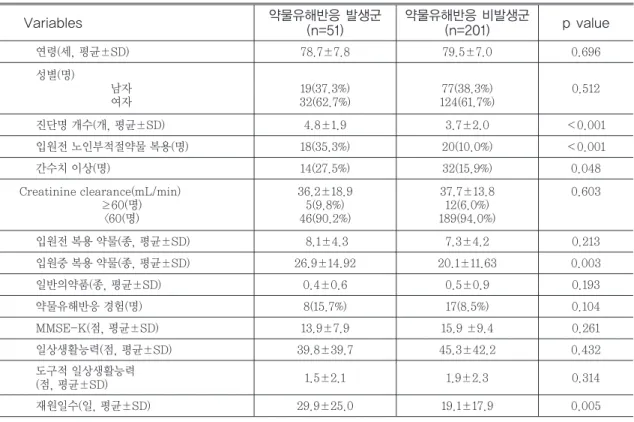
대상군 총 252명 중 51명(20.2%)에서 약물유해반 응이 발생하였다. 이중 남자는 19명(남자 환자의 37.3%)이었고, 여자는 32명(여자 환자의 62.7%)이 었다. 약물유해반응 발생군과 비발생군에서 각각의 변수들을 비교한 결과를 보면 평균 연령은 약물유해 반응 발생군 78.7±7.8세, 약물유해반응 비발생군 79.5±7.0세였으며 통계학적으로 유의한 차이는 없 었다. 두 군간 신기능을 비교하고자 계산한 creati- nine clearance도 유의한 차이는 없었으나 평균 약 37 ㎖/min 정도로 고령환자가 신기능이 저하되어 있음을 알 수 있었다.

약물유해반응 발생군의 진단명 개수가 평균 4.8개, 비발생군의 진단명 개수는 평균 3.7개로 통계학적으 로 유의성 있게 약물유해반응 발생군의 진단명 개수 가 많았다(p<0.001). 또한 입원전 노인부적절약물 을 복용한 환자의 비율이 약물유해반응 발생군에서

Table 2. Clinical characteristics of subjects(N=252)

(5)

Variables 약물유해반응 발생군 (n=51)

약물유해반응 비발생군

(n=201) p value

연령(세, 평균±SD) 78.7±7.8 79.5±7.0 0.696

성별(명)

남자 여자

19(37.3%) 32(62.7%)

77(38.3%) 124(61.7%)

0.512

진단명 개수(개, 평균±SD) 4.8±1.9 3.7±2.0 <0.001

입원전 노인부적절약물 복용(명) 18(35.3%) 20(10.0%) <0.001

간수치 이상(명) 14(27.5%) 32(15.9%) 0.048

Creatinine clearance(mL/min)

≥60(명)

<60(명)

36.2±18.9 5(9.8%) 46(90.2%)

37.7±13.8 12(6.0%) 189(94.0%)

0.603

입원전 복용 약물(종, 평균±SD) 8.1±4.3 7.3±4.2 0.213

입원중 복용 약물(종, 평균±SD) 26.9±14.92 20.1±11.63 0.003

일반의약품(종, 평균±SD) 0.4±0.6 0.5±0.9 0.193

약물유해반응 경험(명) 8(15.7%) 17(8.5%) 0.104

MMSE-K(점, 평균±SD) 13.9±7.9 15.9 ±9.4 0.261

일상생활능력(점, 평균±SD) 39.8±39.7 45.3±42.2 0.432

도구적 일상생활능력

(점, 평균±SD) 1.5±2.1 1.9±2.3 0.314

재원일수(일, 평균±SD) 29.9±25.0 19.1±17.9 0.005

는 35.3%였던 반면, 비발생군에서는 10.0%에 불과 하여 약물유해반응 발생군에서 노인부적절약물을 복 용한 환자의 비율이 유의성 있게 높았고(p<0.001), 입원중 처방된 총 약물 수가 약물유해발생군은 26.9

±14.92종, 비발생군은 20.1± 11.63종으로 약물유 해반응발생군에서 유의성 있게 많은 것으로 나타났 다(p=0.003). 간수치 이상을 보인 환자의 비율도 약 물유해반응이 발생한 군 27.5%, 비발생군 15.9%로 유의성있게 약물유해반응 발생군에서 높았다 (p=0.048). 또한 입원전 복용 약물 수와 약물유해반 응을 경험한 환자의 비율이 약물유해반응 발생군에 서 높았고, MMSE-K, 일상생활능력, 도구적 일상 생활능력 3가지 항목 모두 약물유해반응 발생군에서 더 낮은 점수로 측정되었으나 통계학적으로 유의성 있는 차이를 보이지는 않았다. 약물유해반응 발생군 의 평균 재원일수는 약 30일로 비발생군 약 19일보 다 유의성 있게 연장된 것으로 나타났다(p=0.005)

(Table 3).

약물유해반응의 위험인자를 알아보기 위하여 시행 한 로지스틱회귀분석에서 진단명 개수가 약물유해반 응 발생률에 영향을 미치는 것으로 분석되었다 (p=0.003)(Table 4).

3. 약물유해반응 분석

약물유해반응은 총 80건이 발생하였다. Naranjo scale로 인과관계 분석시‘definite’ 등급이 50건 (62.5%)으로 가장 많았다. 다음으로‘probable’ 등 급 26건(32.5%), ‘possible’ 등급 4건(5.0%) 순으로 나타났다. 약물유해반응 발생원인 분석 결과 type A 가 72건(90.0%), type B가 8건(10.0%)이었으며, type A 중에서는 약물학적인 이상반응 60건 (75.0%), 약물 과용량 또는 독성반응 11건(13.7%), 약물 상호 작용 1건(1.3%) 순이었다(Table 5). 약효

Table 3. Influence of variables between adverse drug reactions and nonadverse drug reactions

group

(6)

군별로 분류시 총 11종의 항균제에서 20건의 약물유 해반응이 발생한 것으로 나타났으며, 중추신경계 약 물 8종에서 12건, 혈당강하제 2종에서 8건순으로 약 물유해반응이 발생하였다(Table 6).

고찰 및 결론

본 연구에서 진단명 개수가 많은 경우 약물유해반 응 위험성이 증가하는 것으로(p=0.003) 분석되었으 므로, 다장기 질환을 가진 고령환자의 경우 적절한 용량, 처방의 적절성 등을 고려하여 보다 철저한 약 물관리를 해야 한다. 또한 약물유해반응 발생군과 비 발생군에서 입원전 노인부적절약물 복용 이력(p

<0.001), 간수치 이상이 있는 경우(p=0.048)도 유 의성 있는 차이를 보였으므로, 이러한 경우에도 약물 유해반응 예방을 위해 더욱 주의하여 안전한 약물요 법을 시행해야 한다. 하지만 이번 연구는 다장기 질

환 급성 노인병동 환자만을 대상으로 했기 때문에 전 체 고령환자에 그대로 적용하기에는 무리가 있을 수 있다.

약물유해반응이 발생한 군에서 처방된 총 약물 수 가 많고(p=0.003), 재원기간이 연장된 것으로 나타 났다(p=0.005). 이는 다약제 복용 또는 재원기간 연 장에 의해 약물유해반응이 발생했을 수도 있고, 약물 유해반응이 발생하여 타약물로 대체하거나 치료를 위한 약물이 추가되어 처방 약물 수 증가 및 재원기 간이 연장되었을 가능성도 있다. 약물유해반응 발생 과 의료비 증가와의 관계를 파악하기 위해서는 약물 유해반응을 치료하기 위해 투약한 약물에 의한 치료 비용, 재원기간 연장에 따른 병원비 지출 등에 대한 추가 연구가 필요하다.

본 연구와 유사하게 전향적으로 고령환자의 약물유 해반응 현황 및 위험인자를 분석한 Maria의 연구와 비교했을 때

7)

약물유해반응 발생률은 본 연구 20.2%, Maria의 연구 46.2%로 본 연구에서 약물유 해반응 발생률이 낮게 나타났다. 이러한 결과는 우리 나라가 외국에 비해 약물유해반응에 대한 인식이 적 은 것이 한 원인이 될 수 있다. Maria의 연구에서는 약물유해반응 발생군과 비발생군에서 유의한 차이를 가진 인자로 노인부적절약물 복용, 처방된 총 약물 수, 진단명 개수, 재원기간 등이 있었으며, 이중 재 원기간을 제외한 나머지 인자는 약물유해반응의 위 험인자로 밝혀졌다. 본 연구에서도 입원전 노인부적 절약물, 처방된 총 약물 수, 진단명 개수 및 재원기간 은 유의성 있는 차이가 있었고, 분석 결과 진단명 개 수는 약물유해반응 위험성을 높이는 인자로 밝혀졌 다. 반면, Maria의 연구에서 입원중 노인부적절약물 이 약물유해반응 위험 인자로 분석되었으나, 본 연구 의 대상인 분당서울대학교병원 노인의료센터는 팀의

Item No. (%)

Causality Definite Probable Possible

50(62.5) 26(32.5) 4(5.0) Mechanism

Type A 72(90.0)

Pharmacological effect Drug overdose or toxicity Drug interaction

60(75.0) 11(13.7)

1(1.3)

Type B 8(10.0)

Idiosyncratic reaction Hypersensitivity

4(5.0) 4(5.0)

항목 p-value Odds ratio 95% CI for odds ratio

lower upper

진단명 개수 0.003 1.261 1.081 1.472

입원전 노인부적절약물 복용 0.301 0.680 0.328 1.411

간수치 이상 0.231 0.626 0.291 1.347

Table 4. Independent risk factors for adverse drug reactions by logistic regression

Table 5. Casusality, Mechanism of adverse

drug reactions

(7)

Drugs Adverse drug reactions (발생건수) Antibiotics

Ampicillin Rash

Nafcillin Pruritis, hypokalemia, diarrhea

Linezolid Thrombocytopenia

Clindamycin Diarrhea

Vancomycin Acute renal failure(3)

Cefotaxime Diarrhea

Piperacillin/tazobactam Drug fever / Pseudo-Membranous Colitis (+)/ neutropenia / Abnormal liver function test / diarrhea(2) / thrombocytopenia

Rifampicin Abnormal liver function test

Ceftriaxone Diarrhea

Para-Amino-Salycilic acid Gestro intestinal trouble

Amikacin Acute renal failure

중추신경계

Trazodon Delirium, sedation

Pregabalin Thrombocytopenia

Valproate Thrombocytopenia(2)/ sedation

Donepezil Neutropenia

Risperidone Sedation, drug induced parkinsonism

Sertraline Hyponatremia

Mirtazapine Abnormal liver function test Gabapentin Drug induced parkinsonism 혈당강하제

Insulin Hypoglycemia(5), hypokalemia

Glimepiride Hypoglycemia(2)

Angioconverting enzyme inhibitors & Angiotensin receptor blocker

Moexpril Dry cough

Irbesartan Hyperkalemia(2)

Candesartan Azotemia

Ramipril Acute renal failure, dry cough Antiplatelet & anticoagulation agents

Warfarin INR(International normalized ration) elevation(2) / bleeding

Ticlopidine Pruritis

Clopidogrel Skin rash

Aspirin Melena

Table 6. Drugs & adverse drug reactions

(8)

Drugs Adverse drug reactions (발생건수) 소화기계

Mg. Oxide Diarrhea(3)

Itopride Tremor

Lactulose Diarrhea

Levosulpiride Extra-Pyramidal Syndrome

Mutacil Diarrhea

Nutritional agents

Total parenteral nutrition Abnormal liver function test(2)

Ferrumate Vomitting

K Hyperkalemia(2)

Cardiovascular agents

Digoxin Hypokalemia

Amiodarone Abnormal liver function test/ hypothyroidism/

Interstitial lung disease NSAIDs & analgesics

Celecoxib Serum creatinine elevation Tramadol/acetaminophen Sedation

Acetaminophen Pruritis

Pethidine Fall

Diuretics

Metolazone Hypokalemia

Spironolactone Hyperkalemia

Hydrochlorothiazide Hyponatremia Benzodiazepine & zolpidem

Zolpidem Delirium

Clonazepam Sedation

Triazolam Headache

Calcium channel blocker & β -blocker

Felodipine Dizziness

Carvedilol Hypotension

호흡기계

Theophylline Abnormal liver function test 근골격계

Hyoscine Dysuria

Methocarbamol Dysuria

Baclofen Delirium, urinary deficiency

(9)

료를 하고 있으며, 노인전문약사에 의한 처방관리를 통해 입원 중 노인부적절약물을 거의 사용하지 않고 있어 본 연구에서는 약물유해반응 위험인자에 포함 되지 않았다. 또한 처방관리 시 상용량, 제형의 적절 성, 약물상호작용, 약물유해반응 여부, TDM 등을 검토하고 있으며, 정기적으로 중복처방 또는 처방의 적절성을 평가하고 있다. 이러한 노인전문약사에 의 한 처방관리를 통해 고령환자에게 보다 적절한 약물 요법

8)

이 이루어지도록 하고 있어 약물유해반응 발생 률이 낮게 나타난 것으로 생각된다.

약물유해반응은 환자의 기저 질환이 아닌 의학적 관리에 의한 손상이므로 예방이 가능하며, 최근에는 불필요한 의료비 지출 감소를 위한 측면에서도 약물 유해반응을 효과적으로 찾아내고 감소 및 예방하기 위한 시스템을 구축하고 있다. 본원에서는 약물유해 반응 발생 가능성이 높은 고령환자의 안전하고 효과 적인 약물 사용을 위해 약물사용지침을 개발하고, 의 료진에게 홍보 및 이에 따른 처방관리를 통해 약물유 해반응을 예방하고자 하고 있다. 전체 고령환자의 안 전한 약물사용을 위해 약물사용지침의 홍보 및 확대 적용이 필요하며, 노인전문약사에 의한 약물관리를 통해 안전하고 효과적인 약물요법을 이루어 약물유 해반응을 예방할 수 있고, 이를 통해 고령환자 안전 성 및 의료의 질 향상에도 기여할 수 있을 것으로 사 료된다.

참고문헌

1) Nebeker JR., Barach P., Samore MH.:

Clarifying adverse drug events: a clini- cian's guide to terminology, documenta- tion, and reporting. Ann. Intern. Med.

140:795-801 (2004)

2) Sudeep Gill., Barbara Liu.: How to Avoid Dangerous Medication Prescribing Practice. Geriatrics & Aging. 4(8):18- 19,37 (2001)

3) Randall Wooley., Kyle C. Moylan.:

Approach to Polypharmacy and Appropriate Medication Use. Geriatrics Subspecialty

Consult. 35-38

4) Donna M. Fick., PhD., Et al.: Updating the Beers Criteria for potentially inap- propriate medication use in older adults.

Arch Intern Med. 163:2716-2724 (2003) 5) Naranjo CA., Busto U., Sellers EM. et al.:

A method for estimating the probability of adverse drug reactions. Clin Pharmacol Ther. 30:239-245 (1981)

6) Davies DM.: Textbook of Adverse Drug Reactions. 58-59 (1985)

7) Maria Cristina G. Pass., Wilson Jacob- Filho., Albert Fiqueras.: Adverse Drug Reactions in an elderly hospitalised pop- ulation. Drugs Aging. 22(9):767-777 (2005)

8) Sangeun Lee.: Medication assessment and impact of pharmacist interventions in elderly patients. Drugs Aging.(2006) 9) Cyndie K. Mannesse., Frans H.M.Derkx :

Do older hospital patients recognize adverse drug reactions? Age and Ageing.

29:79-81 (2000)

10) Louis Merle., Marie-Laure Laroche : Predicting and Preventing Adverse Drug Reactions in the Very Old. Drugs Aging.

22(5):375-392 (2005)

11) Rebecca J. Beyth., Ron I. Short. : Epidemiology of Adverse Drug Reactions in the Elderly by Drug Class. Drugs Aging. 14(3):231-239 (1999)

12) P.A. Rotuledge. Adverse drug reactions in elderly patients. British Journal of Clinical Pharmacology. 57(2):121-126 (2003)

13) Yumiko Mita., Masahiro Akishita., et al. :

Improvement of inappropriate prescrib-

ing and adverse drug withdrawal events

after admission to long-term care facili-

ties. Geriatrics and Gerontology

(10)

International. 4:146-150 (2004)

14) Marie-Laure Laroche., Jean-Pierre Charmes., et al : Is inappropriate med- ication use a major cause of adverse drug reactions in the elderly? British Journal of Clinical Pharmacology.

63(2):177-186 (2003)

15) Jeffrey K. Aronson : Adverse drug reac- tions-no farewell to harms. British Journal of Clinical Pharmacology.

63(2):131-135 (2007)

16) Graziano onder., Claudio Pedone. et al : Adverse Drug Reactions as Cause of Hospital Admissions: Results from the Italian Group of Pharmacoepidemiology in the Elderly. Journal of the American Geriatrics Society. 50:1962-1968 (2002) 17) Linda M. Lucas., Colleen A. Colley :

Recognizing and Reporting Adverse Drug

Reactions. The Western Journal of

Medicine. 156:172-175 (1992)

수치

Table 2. Clinical characteristics of subjects(N=252)
Table 3. Influence  of  variables  between  adverse  drug  reactions  and  nonadverse  drug  reactions group
Table 4. Independent risk factors for adverse drug reactions by logistic regression
Table 6. Drugs &amp; adverse drug reactions

참조

관련 문서