Received August 13, 2015, Revised September 3, 2015, Accepted September 4, 2015 Corresponding author: Yun-Kyoung Yim
Department of Meridian and Acupoint, College of Korean Medicine, Daejeon University, 96-3, Yongun-dong, Dong-gu, Daejeon 34520, Korea Tel: +82-42-280-2610, Fax: +82-42-280-2610, E-mail: [email protected]
CCThis is an open access article distributed under the terms of the Creative Commons Attribution Non-Commercial License (http://creativecommons.org/licenses/ by-nc/4.0) which permits unrestricted non-commercial use, distribution, and reproduction in any medium, provided the original work is properly cited.
족삼리 전침자극이 Carbon Tetrachloride 장기투여로 유발된 흰쥐의 만성 간손상에 미치는 영향
김병수ㆍ이현석ㆍ임윤경
대전대학교 한의과대학 경락경혈학교실
The Effect of Electro-acupuncture at ST36 on Carbon Tetrachloride-induced Chronic Hepatic Damage in Rats
Byung-Soo Kim, Hyun-Suk Lee, Yun-Kyoung Yim
Department of Meridian and Acupoint, College of Korean Medicine, Daejeon University
Objectives : The purpose of this study is to investigate the effect of electro-acupuncture(EA) at ST36 on CCl4 - induced chronic hepatic damage in rats. Methods : The authors performed several experimental items, including measurements of liver index, hematological analysis for WBC, lymphocytes, neutrophils, monocytes, hemoglobin, and biochemical assays for ALT, AST, ALP in serum, and histological analysis of liver tissue. Results : Liver index(liver weight/body weight), the levels of WBC, Neutrophils and Monocytes in blood, the levels of ALT, AST and ALP in serum which were increased by CCl4 - intoxication were reduced signi- ficantly by EA at ST36. The levels of lymphocyte and hemoglobin in blood which were decreased by CCl4 - intoxication were significantly increased by EA at ST36. Conclusions : EA at ST36 has a hepatoprotective effect on chronic hepatic damage in CCl4 - intoxicated rats.
Key words : Electro-acupuncture, ST36, CCl4, liver demage
서 론
한의학적으로 간의 중요한 생리기능은 肝主疏泄과 肝主藏血로 인체의 혈액을 저장하여 혈액량을 조절하며, 消化吸收, 精神情志와 氣血運行과 밀접한 관계를 가지고 있다1).
서양의학적으로 간은 혈장단백의 합성, 담즙의 생산, 해독작용 과 이물의 제거, 탄수화물과 지질의 대사 등 여러 가지 기능을 담당 한다2). 또한 간은 腸 및 문맥과 혈액순환계의 사이에 위치하여 ‘문 지기(gate keeper)’로서의 면역 방어 역할을 수행한다3). 예를 들어, 간의 stellate cell은 Vitamin A의 대사에서 중추적 역할을 하며,
신체 retinol의 80%를 저장하고, 혈류를 조절하는 등 비면역적 역 할을 하는 동시에, 탐식작용을 하고, chemokine 및 cytokine의 분비를 유발하는 등 면역 작용을 담당하기도 한다4).
간은 대사 물질에 의한 중독에 민감하게 반응하여 간세포의 변 성, 괴사, 지방축척, 간효소의 누출 등의 병리변화를 나타낸다5). 간 질환에서는 간손상의 원인 또는 외부요인에 대한 반응에 의해, 부 분적으로든 전체적으로든 면역반응이 일어난다6). 약물에 의한 간 손상의 경우 약물이 세포내 단백질과 공유결합하여 새로운 화합물 을 생성하면 이것이 면역학적인 공격목표가 되어 세포막이상과 세 포사멸을 초래할 수 있다7).
본 연구에서 사용된 足三里는 足陽明胃經의 合土穴로, 扶正培元, 補虛弱, 調氣血하는 효능을 지녔다8). 通玄指要에 “三里却五勞之 羸瘦”라 하였고, 扁鵲神應鍼灸玉龍經에는 “治男女百病, 五勞七 傷”이라 하여, 足三里로써 正氣를 補益하고 氣血을 조화롭게 하여 虛證을 치료함을 설명하고 있다9).
족삼리에 대한 면역학적 연구는 다양하게 보고되고 있는데, 족 삼리 뜸자극의 면역증강에 대한 연구로는 최 등10), Kung 등11), Takayama 등12)의 보고, 족삼리 자침의 면역증강에 대한 연구로는 魏 등13), Wu 등14), 홍 등15)의 보고, 족삼리 전침의 면역증강에 대한 연구로는 김 등16), 김 등17)의 보고가 있다. 이에 저자는 면역증강의 효능이 있는 족삼리가 만성 간손상에 미치는 영향을 관찰하고자 하였다.
족삼리 자극방법으로는 전침을 사용하였는데, 전침요법은 혈위 에 자침하여 감응이 있은 후에 침병에 전류를 통하여 기계적 자극 과 전기적 자극을 결합하여 해당 경혈 및 경락을 자극하는 방법으
로18,19), 이는 지속적인 운침을 대체할 수 있으며, 자극의 수준을
객관적으로 정량화 할 수 있어, 임상에서 뿐만 아니라 실험방법으 로도 폭넓게 응용되고 있다20,21).
간손상 유발에는 사염화탄소(CCI4)를 사용하였다. CCI4는 유지, 고무 등의 용제에 이용되는 xenobiotics의 하나로 간의 단백질 합 성과 글리코켄 저장량을 저하시키고 aspartate aminotrasferase (AST) 및 alanine aminotransferase(ALT)의 이탈을 일으키며22),
cytochriome p450에 의하여 CCI3 free radical이 생성되어 세망 내피계(endoplasmic reciculum)에서 불포화지방산을 공격하여 지질과산화가 일어나므로 세포막과 간효소에 손상을 일으키고, 미 토콘드리아의 작용이 저하되어 간세포괴사에 이르게 하여 간의 지 방변성, 괴사, 섬유화를 유발시켜 간 손상실험에 광범위하게 사용 되고 있다23,24).
간손상에 대한 침 효과에 관한 기존 연구로는 홍 등25)의 ‘흰쥐의 행간자극이 간손상에 미치는 영향’, Liu 등26)의 ‘급성 간손상에 족 삼리와 태충의 침자극 효과에 대한 실험적 연구’ 임 등24)의 ‘三黃穴 手技 鍼刺가 간손상 억제 및 보호 효과’ 등이 있었고 간손상에 대한 전침의 효과에 대한 연구로는 임 등25)의 ‘양릉천 전침자극이 CCI4
로 유발된 휜쥐의 간손상에 미치는 영향’, 윤 등27)의 ‘태충 및 양지 의 전침이 실험적으로 유발된 백서(白鼠)의 간보호 효과에 미치는 영향’등이 있었으나, 족삼리 전침 자극이 간손상에 미치는 효과에 대한 연구는 없었다.
이에 저자는 흰쥐에 CCI4를 투여하여 간손상을 유발하고, 扶正 培元, 益氣養血의 효능이 있는 족삼리에 전침자극을 가한 후, 혈액 학적 분석을 통해 혈중 면역세포 및 간효소 수치 변화를 확인하고
조직학적 분석을 통해 간 조직의 손상 정도를 확인하여 유의미한 결과를 얻었기에 보고하는 바이다.
실 험
1. 동물
동물은 웅성 SD rat(200∼250 g)를 대한실험센터에서 공급받아 실험 당일까지 고형사료(항생제 무첨가, 삼양사료)와 물을 충분히 공급하고, 실온(22±2oC)를 유지하여 2주일 간 실험실 환경에 적응 시킨 후 실험에 사용하였다. 본 실험은 대전대학교 동물실험윤리규 정을 준수하여 시행하였다.
2. 방법
1) 실험군 설정: 실험동물은 각각 정상군(normal), 대조군(CCI4), 비혈위전침군(CCI4 +sham), 족삼리유침군(CCI4 +Acu), 족삼리 전침군(CCI4 +EA)으로 분류하였고, 각 실험군에는 실험동물을 10 마리씩 배정하였다.
(1) 정상군(normal): Normal SD rat 군
(2) 대조군(CCI4): 10주간 주 2회 CCI4(1 mg/kg) 복강투여 (3) 비혈위 전침군(CCI4 +sham): 10주간 주 2회 CCI4
(1 mg/kg) 복강투여+주 3회 좌측 둔부에 15분간 전침자극(electro- acupuncture)
(4) 족삼리 유침군(CCI4 +Acu): 10주간 주 2회 CCI4(1 mg/kg) 복강투여+주 3회 왼쪽 족삼리(ST36) 상응 부위에 자침 후, 15분 간 유침(needle retention).
(5) 족삼리 전침군(CCI4 +EA): 10주간 주 2회 CCI4 (1 mg/kg) 복강투여+주 3회 왼쪽 족삼리(ST36) 상응 부위에 자침 후, 15분 간 2 Hz 전침(electro-acupuncture).
2) 간 손상 유발: Normal군을 제외한 모든 군은 carbon tetra- chloride(CCI4)와 Olive oil을 동량 희석한 희석액(1 ml/kg)을 10 주 동안 주 2회 복강 투여하여 간 손상을 유발 하였다
3) 취혈: 골도분촌법에 준하여 인체의 족삼리(ST36)에 상응하는 부위를 실험동물의 좌측 후지에 취하였다. CCI4 +sham군은 좌측 둔부에서 비혈위를 취하였다.
4) 자침 및 전침: 길이 20 cm, 지름 5 cm의 원통형 아크릴 홀더 를 제작하여 4개의 구멍을 뚫어 실험동물의 사지를 노출하여 자침 및 전침을 시행할 수 있도록 하였다. 실험동물을 특수제작한 아크 릴 홀더에 넣고 멸균된 stainless steel 호침(diameter 0.25 mm, length 30 mm, Dong Bang Acupuncture Co. Korea)으로 족삼
Fig. 1. Effect of EA at ST36 on liver index of CCl4-intoxicated rats.
Values represent means±SD of 10 rats in each group. Normal : Normal SD rats, CCl4 : CCl4-intoxicated SD rats, CCl4 +Sham : CCl4-intoxication and 2 Hz EA at sham point in left gluteal region, CCl4 +Acu : CCl4-intoxication and needle retention at left ST36, CCl4 +EA : CCl4-intoxication and 2 Hz EA at left ST36. **p<0.01,
*p<0.05 compared to normal group, ††p<0.01 compared to CCl4 group, ‡‡p<0.01 compared to CCl4 +Sham group.
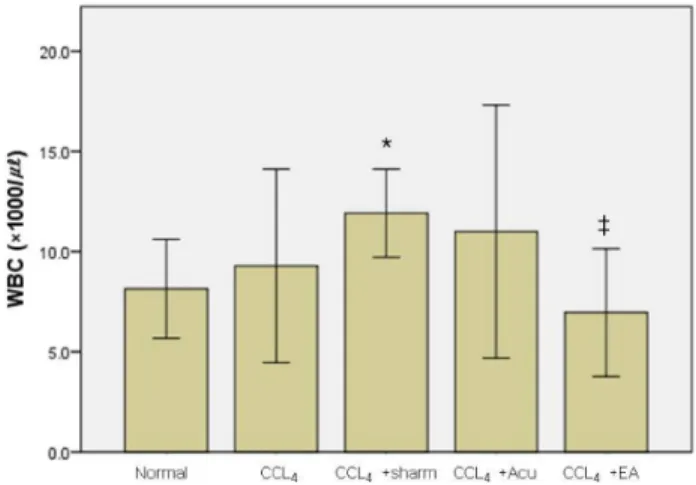
Fig. 2. Effect of EA at ST36 on WBC count in blood of CCl4- intoxicated rats.
Values represent means±SD of 5 rats in each group. Normal : Normal SD rats, CCl4 : CCl4-intoxicated SD rats, CCl4 +Sham:
CCl4-intoxication and 2 Hz EA at sham point in left gluteal region, CCl4 +Acu : CCl4-intoxication and needle retention at left ST36, CCl4 +EA : CCl4-intoxication and 2 Hz EA at left ST36, *p<
0.05 compared to normal group, ‡p<0.05 compared to CCl4 + Sham group.
리 또는 비혈위에 약 2∼3 mm 깊이로 자입하였다.
족삼리전침군은 0.5×1 cm2의 패드를 좌측 해계(ST41) 상응 부 위에 부착한 후, 저주파 치료기(PG-6, Suzuki iryoki, Japan)의 한쪽 극을 족삼리(ST36)에 자입된 침의 끝에 연결하고 다른 한쪽 극을 패드에 연결하여 2 Hz에서 근육의 수축이 육안으로 확인되는 정도(약 6∼7 mA)로 강도를 조절하여 15분간 자극을 가하였다.
전침자극은 CCI4 투여 기간 동안 격일로 오후에 시행하였다. 비혈 위대조군은 좌측 둔부에 같은 방법으로 전침자극을 가하였고, 족삼 리 자침군은 좌측 족삼리에 자침 후 전침자극을 가하지 않고 15분 간 유침하였다.
5) 결과 분석
(1) 간비중: 실험 종료 후, 실험동물의 몸무게와 간 무게를 측정 하여 아래와 같이 전체 몸에서 차지하는 간의 비중을 확인 하였다.
liver index= 간 무게(g)
× 100 실험동물 체중(g)
(2) 혈액학적 분석: Rat는 실험 종료 24시간 후 ethyl ether를 이용해 마취한 후 심장 채혈 법으로 채혈하였다. 채혈한 혈액은 (주)Biotoxtech(오송. 한국)에 의뢰하여 hematology 분석과 blood chemistry 분석 결과를 얻었다.
(3) 조직학적 분석: 혈액을 완전히 제거한 후 간의 일부분을 절단 하여 10% 포르말린에 고정 시키고, OCT(optimal cutting tempe- rature) compound에 embed한 후, cryotome을 이용하여 8 μm section으로 절편하여 HE(Hematoxylin and eosin)염색과 MT
(Masson’s Trichrome) 염색을 실시하였다.
(4) 통계분석: 결과는 평균±표준편차로 나타내었다. SPSS 통계 프로그램(18.0)의 Kruskal-Wallis test를 사용하여 유의성을 검증 하였고, 개별 군간 비교는 Mann-Whitney U test를 사용하였다.
신뢰도 95%이상(p<0.05)일 때 유의성이 있는 것으로 판정하였다.
결 과
1. 간비중
몸무게에 대한 간무게의 비를 계산한 결과 CCI4군, CCI4 +sham 군 및 CCI4 +Acu군에서 normal군에 비하여 간비중이 유의하게 증가하였으며, CCI4 +EA군의 간비중은 CCI4군 및 CCI4 +sham 군에 비하여 유의하게 감소하였다(Fig. 1).
2. Hematology
실험동물의 whole blood로부터 white blood cell(WBC)의 양 과, WBC 중 lymphocyte, neutrophils, monocyte의 백분율, he- moglobin의 농도를 측정하였다.
1) WBC: 실험동물의 whole blood에서 WBC의 양을 측정한 결 과, CCI4 +sham군에서 normal군에 비하여 유의하게 증가하였으 며 CCI4 +EA군에서 CCI4 +sham군에 비하여 유의하게 감소하였
Fig. 6. Effect of EA at ST36 on the level of hemoglobin in blood of CCl4-intoxicated rats.
Values represent means±SD of 5 rats in each group. Normal : Normal SD rats, CCl4 : CCl4-intoxicated SD rats, CCl4 +Sham : CCl4-intoxication and 2 Hz EA at sham point in left gluteal region, CCl4 +Acu : CCl4-intoxication and needle retention at left ST36, CCl4 +EA: CCl4-intoxication and 2 Hz EA at left ST36. **p<
0.01 compared to normal group, †p<0.05 compared to CCl4
group, ‡‡p<0.01 compared to CCl4 +Sham group, #p<0.05 compared to CCl4 +Acu group.
Fig. 4. Effect of EA at ST36 on the percentage of neutrophils in blood WBC of CCl4-intoxicated rats.
Values represent means±SD of 5 rats in each group. Normal : Normal SD rats, CCl4 : CCl4-intoxicated SD rats, CCl4 +Sham : CCl4-intoxication and 2 Hz EA at sham point in left gluteal region, CCl4 +Acu : CCl4-intoxication and needle retention at left ST36, CCl4 +EA : CCl4-intoxication and 2 Hz EA at left ST36. **p<
0.01 compared to normal group, ††p<0.01, †p<0.05 compared to CCl4 group, ‡‡p<0.01, ‡p<0.05 compared to CCl4 +Sham group.
Fig. 3. Effect of EA at ST36 on the percentage of lymphocytes in blood WBC of CCl4-intoxicated rats.
Values represent means±SD of 5 rats in each group. Normal : Normal SD rats, CCl4 : CCl4-intoxicated SD rats, CCl4 +Sham : CCl4-intoxication and 2 Hz EA at sham point in left gluteal region, CCl4 +Acu : CCl4-intoxication and needle retention at left ST36, CCl4 +EA : CCl4-intoxication and 2 Hz EA at left ST36. **p<
0.01 compared to normal group, ‡‡p<0.01, ‡p<0.05 compared to CCl4 +Sham group.
Fig. 5. Effect of EA at ST36 on the percentage of monocytes in blood WBC of CCl4-intoxicated rats.
Values represent means±SD of 5 rats in each group. Normal SD rats, CCl4 : CCl4-intoxicated SD rats, CCl4 +Sham : CCl4-intoxi- cation and 2 Hz EA at sham point in left gluteal region, CCl4 +Acu : CCl4-intoxication and needle retention at left ST36, CCl4 +EA : CCl4-intoxication and 2 Hz EA at left ST36. **p< 0.01 compared to normal group, †p<0.05 compared to CCl4 group, ‡p<
0.05 compared to CCl4 +Sham group.
다(Fig. 2).
2) Lymphocytes: 실험동물의 whole blood에서 WBC 중 lym- phocyte의 비율을 측정한 결과, CCI4군 및 CCI4 +sham군의 WBC 중 lymphocyte 비율이 normal군에 비하여 유의하게 감소하 였으며, CCI4 +Acu군 및 CCI4 +EA군의 lymphocyte 비율은
CCI4 +sham군에 비하여 유의하게 증가하였다(Fig. 3).
3) Neutrophils: 실험동물의 whole blood에서 WBC 중 neu- trophil의 비율을 측정한 결과, CCI4군 및 CCI4 +sham군의 WBC 중 neutrophil 비율이 normal군에 비하여 유의하게 증가하였으며, CCI4 +Acu군 및 CCI4 +EA군의 lymphocyte 비율은 CCI4군 및
Fig. 7. Effect of EA at ST36 on the level of serum ALT in CCl4 - intoxicated rats.
Values represent means±SD of 5 rats in each group. Normal : Normal SD rats, CCl4 : CCl4-intoxicated SD rats, CCl4 +Sham : CCl4-intoxication and 2 Hz EA at sham point in left gluteal region, CCl4 +Acu : CCl4-intoxication and needle retention at left ST36, CCl4 +EA : CCl4-intoxication and 2 Hz EA at left ST36. **p<
0.01 compared to normal group, ††p<0.01 compared to CCl4
group, ‡‡p<0.01 compared to CCl4 +Sham group.
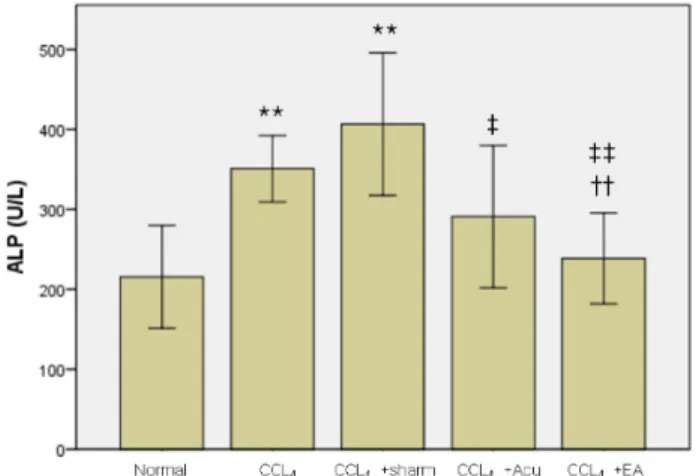
Fig. 9. Effect of EA at ST36 on the level of serum ALP in CCl4- intoxicated rats.
Values represent means±SD of 5 rats in each group. Normal : Normal SD rats, CCl4 : CCl4-intoxicated SD rats, CCl4 +Sham : CCl4-intoxication and 2 Hz EA at sham point in left gluteal region, CCl4 +Acu : CCl4-intoxication and needle retention at left ST36, CCl4 +EA : CCl4-intoxication and 2 Hz EA at left ST36, **p<
0.01 compared to normal group, ††p<0.01 compared to CCl4
group, ‡‡p<0.01, ‡p<0.05 compared to CCl4 +Sham group.
Fig. 8. Effect of EA at ST36 on the level of serum AST in CCl4 - intoxicated rats.
Values represent means±SD of 5 rats in each group. Normal : Normal SD rats, CCl4 : CCl4-intoxicated SD rats, CCl4 +Sham : CCl4-intoxication and 2 Hz EA at sham point in left gluteal region, CCl4 +Acu : CCl4-intoxication and needle retention at left ST36, CCl4 +EA : CCl4-intoxication and 2 Hz EA at left ST36, **p<0.01,
*p<0.05 compared to normal group, †p<0.05 compared to CCl4
group, ‡‡p<0.01 compared to CCl4 +Sham group.
CCI4 +sham군에 비하여 유의하게 감소하였다(Fig. 4).
4) Monocytes: 실험동물의 whole blood에서 WBC 중 mono- cyte의 비율을 측정한 결과, CCI4 +sham군의 WBC 중 monocyte 비율이 normal군에 비하여 유의하게 증가하였으며, CCI4 +Acu군 및 CCI4 +EA군의 monocyte 비율은 CCI4 +sham군에 비하여 유의하게 감소하였다(Fig. 5).
5) Hemoglobin: 실험동물의 whole blood에서 hemoglobin의 농도를 측정한 결과, CCI4군, CCI4 +sham군 및 CCI4 +Acu군의 hemoglobin의 농도는 normal군에 비하여 유의하게 감소하였으 며, CCI4 +EA군의 hemoglobin의 농도는 CCI4군, CCI4 +sham 군 및 CCI4 +Acu군에 비하여 유의하게 증가하였다(Fig. 6).
3. Blood chemistry 분석
각 실험동물의 혈액으로부터 분리한 혈청에서 alanine transa- minase(ALT), aspartate transaminase(AST), alkaline phospha- tase(ALP)의 농도를 확인하였다.
1) ALT: 실험동물의 혈청 ALT 농도를 측정한 결과, CCI4군 및 CCI4 +sham군에서 normal군에 비하여 혈청 ALT 농도가 유의하 게 증가하였으며, CCI4 +Acu군 및 CCI4 +EA군의 혈청 ALT 농도 는 CCI4군 및 CCI4 +sham군에 비하여 유의하게 감소하였다(Fig. 7).
2) AST: 실험동물의 혈청 AST 농도를 측정한 결과, CCI4군, CCI4 +sham군, CCI4 +Acu군 및 CCI4 +EA군의 혈청 AST 농도 가 normal군에 비하여 유의하게 증가하였으며, CCI4 +Acu군 및
CCI4 +EA군의 혈청 AST 농도는 CCI4군 및 CCI4 +sham군에 비하여 유의하게 감소하였다(Fig. 8).
3) ALP: 실험동물의 혈청 ALP 농도를 측정한 결과, CCI4군 및 CCI4 +sham군의 혈청 ALP 농도가 normal군에 비하여 유의하게 증가하였다. CCI4 +Acu군의 혈청 ALP 농도는 CCI4 +sham군에
Fig. 11. Masson's Trichrome stain of liver tissue.
Normal: Normal SD rats, CCl4 : CCl4- intoxicated SD rats, CCl4 +Sham : CCl4-intoxication and 2 Hz EA at sham point in left gluteal region, CCl4 +Acu : CCl4-intoxication and needle retention at left ST36, CCl4
+EA : CCl4-intoxication and 2 Hz EA at left ST36.
Fig. 10. Hematoxylin and Eosin stain of liver tissue.
Normal : Normal SD rats, CCl4 : CCl4- intoxicated SD rats, CCl4 +Sham : CCl4-intoxication and 2 Hz EA at sham point in left gluteal region, CCl4 +Acu : CCl4-intoxication and needle retention at left ST36, CCl4
+EA : CCl4-intoxication and 2 Hz EA at left ST36.
비하여 유의하게 감소하였고, CCI4 +EA군의 혈청 ALP 농도는 CCI4군 및 CCI4 +sham군에 비하여 유의하게 감소하였다(Fig. 9).
4. 조직학적 분석
1) Hematoxylin and Eosin stain : 각 실험군에서 간 조직을 적출하여 H&E 염색법으로 염색하였다. normal군에 비해 CCI4군 의 간 조직에서 간세포의 괴사 및 간조직의 조밀도 저하를 확인하 였다. CCI4 +EA군에서는 간세포의 괴사가 적어 간조직이 normal 군과 유사하게 유지되었다(Fig. 10).
2) Masson’s Trichrome stain: 각 실험군의 간 조직을 적출하여 M&T 염색법으로 염색하였다. normal군에 비해 CCI4군에서 세포 간질이 증가하고 세포들간의 구조가 문란해진 것을 관찰하였다.
CCI4 +EA군에서는 세포간질의 축적이 감소하였으며, 간조직의 구
조가 단정하여 normal군과 유사하게 유지되었다(Fig. 11).
고 찰
간은 인체의 모든 대사와 해독의 중심 기관이며, 외부로부터 유 입되는 독성물질 또는 약물 대사에 중요한 역할을 하는 장기이
다28,29). 화학약품의 중독, 세균의 감염, 종양 혹은 저산소 등으로
간세포가 손상받게 되면 간조직은 괴사 등 여러 가지 병변을 유발 한다30,31).
통계청 조사에 따르면 2013년 현재 암에 의한 사망률이 28.3%
로 가장 높았고, 그 중에서도 간암은 10만명 당 22.6명으로 폐암에 이어 두 번째로 높게 조사되었다32).
사염화탄소(CCI4)는 유지, 고무 등의 용제에 이용되는 xenobi- otics의 하나로 간의 단백질 합성과 글리코켄 저장량을 저하시키고 aspartate aminotrasferase(AST) 및 alanine aminotransferase (ALT)의 이탈을 일으키며22), cytochriome p450에 의하여 CCI3
free radical이 생성되어 세망내피계(endoplasmic reciculum)에서 불포화지방산을 공격하여 지질과산화가 일어나므로 세포막과 간효 소에 손상을 일으키고, 미토콘드리아의 작용이 저하되어 간세포괴 사에 이르게 하여 간의 지방변성, 괴사, 섬유화를 유발시켜 간 손상 실험에 광범위하게 사용되고 있다23,24). 본 연구에서는 CCI4를 이용 하여 rat에 간손상을 유발하였다.
족삼리는 扶正培元, 益氣養血, 建脾補虛의 효능이 있어 虛證 치 료에 다용되고 있다33). 아울러, 많은 연구에서 족삼리의 면역증강 효능이 보고되고 있다10-17).
전침은 혈위에 자침하여 감응이 있은 후에 침병에 전류를 통하 여 해당 경혈 및 경락을 자극하는 방법으로, 기계적 자극과 전기적 자극을 결합시킨 치료법이다. 이러한 전침요법은 지속적인 운침을 대체할 수 있으며, 인력을 절약하고 비교적 객관적으로 자극량을 조절할 뿐 아니라 어느 일점에 자극을 집중시킬 수 있는 장점이
있다33-35). 전침자극의 매개변수 즉, 전침의 파형, 주파수, 전압, 통
전시간 등에 따라 다른 치료효과가 있는 것으로 알려져 있으며, 고 빈도 주파수는 진통, 진경작용이 있고, 저빈도 주파수는 흥분작용 이 있어 마비질환에 사용되고 있다21). 또한, 전침자극은 시상하부 신경핵들에서 가장 높은 뇌 대사 활성 변화를 보이므로 내부 장기 기능의 항상성 조절과 자율성 조절에 영향을 미칠 수 있다고 보고 되었다36).
본 실험에서는 扶正培元의 효능이 있는 족삼리에 대한 저주파 전침자극이 간손상에 미치는 영향을 알아보기 위하여, rat에 주 2회의 CCI4 복강투여와 주 3회의 족삼리에 2 Hz의 저빈도 전침자극을 10주간 시행하고, 간비중, 혈중 면역세포와 간 효소 수치 분석, 조 직학적 분석을 수행하였다.
CCI4에 의한 간손상 모델에서 간세포의 손상에 의해 면역반응이 활성화되어 백혈구 수가 전체적으로 증가한다고 하였다37). 본 연구 에서 혈중 WBC의 양을 측정한 결과, CCI4 +sham군에서 normal 군에 비하여 유의하게 증가하였으며 CCI4 +EA군에서는 CCI4 + sham군에 비하여 유의하게 감소하였다(Fig. 2).
WBC 중 lymphocytes의 비율은 CCI4 투여에 의해 유의하게 감 소하였으며, 족삼리 자침과 전침에 의해 유의하게 증가하였다(Fig. 3).
반면, WBC 중 neutrophils의 비율은 CCI4 투여에 의해 유의하 게 증가하였으며, 족삼리 자침과 전침에 의해 유의하게 감소하였다 (Fig. 4).
WBC 중 monocytes의 비율은 CCI4 +sham군에서 normal군 에 비하여 유의하게 증가하였으며, CCI4 +Acu군과 CCI4 +EA군 에서 CCI4 +sham군에 비하여 유의하게 감소하였다(Fig. 5).
이러한 일련의 지표들은 CCI4 투여에 의한 면역반응의 활성화와 염증반응이 족삼리 전침에 의해 정상화되는 경향을 보여주는 것으 로 사료된다.
체중에 대한 간무게, 즉 간비중의 증가는 CCI4에 의해 만성화된 간손상의 경우 간경화로 진행되는 일종의 지표 활용된다36). 본 실 험에서 CCI4 투여에 의해 증가한 간비중은 족삼리 전침에 의해 유 의하게 감소하였다(Fig. 1).
간세포의 손상에 따라 간장의 기능이 저하되면 적혈구의 생산과 분해에 영향을 받아 적혈구와 헤모글로빈의 양이 감소하게 된다38). 본 연구에서 혈중 hemoglobin의 농도는 CCI4 투여에 의해 유의하 게 감소하였으며, 족삼리 전침에 의해 유의하게 증가하였다(Fig. 6).
또한, 간세포 손상을 검사하기 위하여 임상적으로 흔히 AST, ALT, ALP와 같은 효소의 활성도를 검사하는데39) 본 실험에서 혈청 ALT, AST, ALP의 농도는 CCI4 투여에 의해 유의하게 증가하였으 며, 족삼리 자침과 전침에 의해 유의하게 감소하였다(Fig. 7∼9).
조직학적 검사에서도 CCI4 투여에 의한 간조직의 손상이 족삼리 전침에 의해 현저히 감소된 것을 확인하였다(Fig. 10, 11).
이러한 결과는 족삼리 전침자극이 CCI4 투여에 의해 손상된 간 기능을 회복시키고 간조직의 손상을 억제하였음을 보여주는 것으 로 사료된다.
본 실험에서 CCI4 +Acu군과 CCI4 +EA군의 결과를 비교할 때, 대개의 항목에서 두 군 모두 유의한 결과를 나타내었으나 CCI4
+EA군에서 CCI4 +Acu군에 비하여 더 높은 간손상 억제와 간보 호 효능을 나타내었다.
따라서 족삼리에 전기적 자극을 가함으로써 CCI4로 유발된 흰쥐 의 만성 간손상에 대한 면역활성 및 간기능 회복과 간조직 보호 효과가 더욱 강화될 수 있을 것으로 보이며, 향후 주파수 및 유침시 간 등에 대한 추가적인 연구가 필요할 것으로 사료된다.
결 론
족삼리 전침자극이 CCI4로 유발된 흰쥐의 간손상에 미치는 영향 을 관찰한 결과 다음과 같은 결론을 얻었다.
1. CCI4 +EA군에서 CCI4 +sham군에 비하여 간비중, 혈중 WBC 양, WBC 중 neutrophil 비율과 monocyte 비율, 혈청 ALT, AST, ALP의 농도가 유의하게 감소하였고, WBC 중 lymphocytes
비율, 혈중 hemoglobin 양은 유의하게 증가하였다.
2. CCI4 +Acu군에서 CCI4 +sham군에 비하여 WBC 중 lym- phocytes 비율이 유의하게 증가하였고, neutrophil 비율 및 monocyte 비율, 혈청 ALT, AST의 농도는 유의하게 감소하였다.
3. CCI4 +EA군은 CCI4 +Acu군에 비하여 혈중 hemoglobin 양이 유의하게 증가하였다.
이상의 결과, 족삼리 전침자극은 CCI4 투여에 의해 유발된 흰쥐 의 만성 간손상에 대해 면역활성과 간기능을 회복시키고 간손상을 억제하는 효과를 나타내는 것으로 사료되며, 여기에는 족삼리 자침 과 전기 자극의 상승효과가 작용한 것으로 추정된다.
References
1. Liver System Internal Medicine Compilation Committee of Korean Oriental Medical Colleges. Liver System Internal Medi- cine. Seoul : Oriental Medicine Institute. 2001 ; 14-15.
2. Plaa G. Toxic response of the liver. In: Amdur MO, Doull J, Klaassen CD. Casarett and Doull's toxicology the basic science of poisons. 4th ed. NY : Pergamon Press. 1991 ; 334-53.
3. Gershwin ME, Vierling JM, Manns MP. Liver Immunology:
Principles and Practice. Totowa, N.J: Humana Press. 2007 ; 1.
4. Winau F, Quack C, Darmoise A, Kaufmann SHE. Starring stellate cells in liver immunology. Current Opinion in Immunology, 2008 ; 20(1) : 68–74.
5. liver System Internal Medicine Compilation Committee of Korean Oriental Medical Colleges. Liver System Internal Medi- cine. Seoul : Oriental Medicine Institute. 1992 ; 23-5, 254-71.
6. Gershwin ME, Vierling JM, Manns MP. Liver Immunology:
Principles and Practice. Totowa, N.J: Humana Press. 2007 ; 45.
7. Kim G, Seo JI. drug metabolism and Drug-induced Hepatotoxi- city pathogenesis. Medical Postgraduates. 2009 ; 37(4) : 191.
8. The Acupuncture Compilation Committee. The Acupuncture and Moxibustion(Sang). Seoul : JipMoonDang. 1998 ; 382-384.
9. Meridian & Acupoint Compilation Committee of Korean Oriental Medical Colleges. Detail of meridians & acupoints (volumeⅠ) : a guidebook for college students. Daejeon : Jong- RyeoNaMu. 2012 ; 213-30.
10. Choi GS, Oh SD, Han JB, Lee GS, Park JH, Bae HS, et al. Effects of Moxibustion to Zusanli(ST36) on Alteration of Natural Killer
cell Activity in rat spleen. Korean Journal of Oriental Physiology
& Pathology. 2002 ; 16(2) : 233-238.
11. Kung YY, Chen FP, Hwang SJ. The different immunomodulation of indirect moxibustion on normal subjects and patients with systemic lupus erythematosus. Am J Chin Med. 2006 ; 34(1) : 47-56.
12. Takayama Y, Itoi M, Hamahashi T, Tsukamoto N, Mori K, Morishita D, et al. Moxibustion activates host defense against herpes simplex virus type I through augmentation of cytokine production. Microbiol Immunol. 2010 ; 54(9) : 551-7.
13. Wei ZM, Zhunag QL, Effect of Acupuncture at ST36 on leukope- nia and on immunologic functions, Shanghai Journal of Acupuncture and Moxibustion, 1996 ; 15(6) : 12.
14. Wu B. Effect of acupuncture on the regulation of cell-mediated immunity in the patients with malignant tumors. Zhen Ci Yan Jiu. 1995 ; 20(3) : 67-71.
15. Hong YS, Hwang WJ, Kim Ks, Lee HS, Kim JS, Na CS. The effect of acupuncture at ST-36(足三里) and LI-4(合谷) on serotonin immunoreactive cells of the rat gastrointestinal tract. The Acupuncture. 1999 ; 16(3) : 379.
16. Kim JS, Kims YS, Nam SS. The Mechanism of Immunomodu- latory Effect by Electro-acupuncture in 2,4-Dinitrophenylated Keyhole Limpet Protein Immunized Mice. The Acupuncture.
2005 ; 22(3) : 23.
17. Kim JC, Lee EY, Seo IB, Koo ST, Choi SM, Kime EH. Effects of Low Frequency Electro-Acupuncture (ST36) on the Adjuvant- Induced Arthritis in Rats. The Acupuncture. 2006 ; 23(6) : 207-219.
18. The Acupuncture Compilation Committee. The Acupuncture and Moxibustion(Ha). Seoul : JipMoonDang. 2001 ; 1170, 1173, 1447-51.
19. Lee JK. Theory and Clinic of Electroacupuncture. Seoul : Seo- WonDang. 1993 ; 14-7.
20. Zhang WT, Jin Z, Cui GH, Zhang KL, Zhang L, Zeng YW, et al.
Relations between brain network activation and analgesic ef- fect induced by low vs. high frequency electrical acupoint stim- ulation in different subjects: a functional magnetic resonance imaging study. Brain Research. 2003 ; 982(2) : 168-178.
21. Park SY, Ahn SG. lumbar intervertebral disc herniation in ado- lescents and adults. The Acupuncture. 1995 ; 12(1) : 273-280.
22. Illana EC. Cordyceps sinensis, a fungi used in the Chinese tradi- tional medicine. Rev Iberoam Micol. 2007 ; 24(4) : 259-262.
23. Wang PY, Kaneko T, Wang Y, and Sato A. Acarbose alone or in combination with ethanol potentiates the hepatotoxicity of carbon tetrachloride and acetaminophen in rats. Hepatology.
1999 ; 29(1) : 161-5.
24. Groot HD, Noll T. The crucial role of low steady state oxygen partial pressures in haloalkane free-radical-mediated lipid per- oxidation: Possible implications in haloalkane liver injury.
Biochem Pharmacol. 1986 ; 35(1) : 15-19.
25. Hong SK, Lee HI. A Study on Effects of acupuncture Applied in Left and Right Posterior Limbs on Liver Damage. The journal of Jehan Oriental Medical Academy. 1998 ; 3(1) : 123-136.
26. Liu HJ, Hsu SF, Hsieh CC, Ho TY, Hsieh CL, Tsai CC, Lin JG. The effectiveness of Tsu-San-Li(St-36) and Tai-Chung(Li-3) acu- points for treatment of acute liver damage in rats, Am J Chin Med. 2001 ; 29(2) : 221-6.
27. Youn DH, Na CS. Hepatoprotective effects of Electro-Acupunc- ture at Taechung (LR3) and Yangji (TE4) on experimental Liver injury in rats. Korean Journal of Acupuncture. 2006 ; 23(2) : 167-176.
28. The Korean Association of Internal Medicine. Harrison’s Princi- ples of Internal Medicine. Seoul : MIP Publishing Co. 2006 ; 1970-1.
29. Koh JI, Koh EB, Kim JH, Kim HD, Park BL, Park YS, et al. Human physiology. Seoul. TamGuDang. 1993 ; 525-6.
30. Kim JJ, Kim BU. Wu HK, Kim DH. Liver System Oriental Internal Medicine. Seoul : JipMoonDang. 1986 ; 27-36.
31. Na CS, Honh S, Kim HC. Effects of Moschus, Bovis Calculus, Ursi
Fel Aqua-acupuncture on Liver Damage. Journal of Korean Medicine. 1996 ; 17(2) : 251-263.
32. Kim JJ, Kim BU. Wu HK, Kim DH. Liver System Oriental Internal Medicine. Seoul : JipMoonDang. 1986 ; 27-36.
33. Lee JK. Theory and Clinic of Electroacupuncture. Seoul : SeoWonDang. 1993 ; 14-7.
34. The Acupuncture Compilation Committee. The Acupuncture and Moxibustion(Ha). Seoul : JipMoonDang. 2001 ; 1170, 1173, 1447-51.
35. Sohn SS, Nam SS, Lee JD, Choi DY, Ahn BC, Park DS, Lee YH, Choi YT. Effect of stimulation - duration of high frequency elec- troacupuncture on the neuronal activities in the spinal cord and brainstem using Fos immunohistochemical technique. The Acupuncture. 1998 ; 15(2) : 17-28.
36. Sohn YJ, Won R, Jung HS, Kim YS, Park YB, Sohn NW. 2-DG Autoradiographic Imaging of Brain Activity Patterns by Electroacupuncture Stimulation in Awake Rats. The Acupun- cture. 2001 ; 18(3) : 56-68.
37. Cho JH, Sin JS, Kim EJ, Shin SH, Jang JY, Shin KS, et al. Protective Effect of Lycii fructus Extract against Hepatotoxicity induced by Carbon Tetrachloride. The Korean Journal of Laboratory Animal Science. 2004 ; 20(2) : 187-93.
38. Yao HW, Li J, Chen JQ, Xu SY. Inhibitory effect of leflunomide on hepatic fibrosis induced by CCI4 in rats. Acta Pharmacol Sin.
2004 ; 25(7) : 915-920.
39. Chenoweth MB, Hake CL. The Smaller Halogenated Aliphatic Hydrocarbons. Annual Review of Pharmacology. 1962 ; 2(1) : 363-398.