The Effectiveness of Arbuscular Mycorrhizal Fungi (AMF) Inoculation on the Growth of Lettuce
Chi-Do Wee, Jun-Xi Li, Hong-Lim Kim1, and Bo-Kyoon Sohn*
Department of Agrucultural Chemistry, Sunchon National University, Suncheon 540-742, Korea
1Namhae Sub-Station, National Institute of Horticultural & Herbal Science, Rural Development Administration, Namhae 668-812, Korea
To evaluate the effectiveness of AMF on the growth of horticultural crops, we compared mycorrhizal and non-mycorrhizal plants, lettuce (Lactuca sativa L.), that were inoculated with AMF propagules. As compared to the AMF- seedlings, in AMF+ seedlings at 3 weeks after sowing, the number of leaves increased 9%, leaf fresh weight increased 59%, leaf area increased 58%, and leaf length and width increased 21–22%, and chlorophyll content increased 2%. Furthermore, at 9 weeks after sowing, compared to the AMF- plants, in lettuce plants inoculated with AMF at the sowing and transplanting stages, the number of leaves increased 21% and 18%, leaf fresh weight increased 51% and 41%, root fresh weight increased 56% and 47%, and chlorophyll content increased 18% and 19%, respectively. Further this experiment indicated that the growth responses of lettuce plants inoculated with AMF during transplanting were similar to those inoculated with AMF during sowing. The results imply that the AMF infection timepoint is not important. The P content in the leaves of lettuce plants inoculated with AMF during transplanting was significantly higher (217%) than that of leaves from lettuce plants not inoculated with AMF. In contrast, the P content of the leaves of lettuce plants inoculated with AMF during the sowing stage was similar to that of leaves of control lettuce plants. In this experiment, P and chlorophyll content in AMF+ lettuce plants were higher than in AMF- plants, indicating that the photosynthetic rate was improved with AMF inoculation.
Key words: Arbuscular mycorrhizal fungi (AMF), Lettuce (Lactuca sativa L.)
Received : August 2. 2010 Accepted : August 11. 2010
*Corresponding author : Phone: +82617503292 E-mail: [email protected]
Introduction
Arbuscular mycorrhizal fungi (AMF) are ubiquitous components of most ecosystems worldwide. They are an important determinant of soil quality because they affect host plant physiology and soil ecology interactions and contribute to soil structure (Abbott and Robson, 1984;
Koide and Mosse, 2004; Rillig, 2004; van der Heijden et al., 2006; Rillig and Mummey, 2006; Bouwmeester et al., 2007). Symbiotic AMF is the most widespread mycorrhizae associated with plants roots and is found with approximately 80–90% of land plants in both natural and agricultural ecosystems (Bouwmeester et al., 2007). In general, AMF forms mutualistic associations with the roots of the majority of higher plants, including major production crop species and pasture plant species (Sohn et al., 2003;
Koide and Mosse, 2004; Bouwmeester et al., 2007).
AMF inoculation is also known to have a tremendously beneficial effect on plant growth by enhancing nutrient and water uptake (Davies et al., 1993), inducing changes in root morphology (Smith and Read, 1997), improving photosynthesis and transpiration (Yano-Melo et al., 1999), improving soil structure and soil aggregate stability (Rillig, 2004; Rillig and Mummey, 2006; van der Heijden et al., 2006; Cho, 2009), and providing protection to colonized roots against pathogens (Abdalla and Abdel-Fattah, 2000).
Lactuca serriola L., wild lettuce, is an annual species native to disturbed habitats in the summer-dry Mediterranean basin (Ryder and Whitaker, 1976). It is a close relative of cultivated lettuce, Lactuca sativa L., and is probably its wild ancestor (Kesseli et al., 1991). Wild lettuce is being used in a marker-assisted breeding program to increase the rooting depth of cultivated lettuce, a shallow-rooted crop with high nitrogen (N) and water demands (Jackson, 1995).
Cultivated lettuce is known to be responsive to mycorrhizal colonization, which can increase root length by 80% (Azcon
ea al., 1996, Azcon ea al., 1998) and contribute to increased P and N uptake (Azcon et al., 1992; Happer, 1983).
The objectives of our study were to evaluate the growth of mycorrhizal and non-mycorrhizal plants, lettuce (L.
sativa L.), in terms of differences in all growth responses, including chlorophyll content, and investigate AMF colonization rates and types, spore densities, uptake of phosphorus (P).
Materials and method
Preparation of planting material and growth conditions Seeds of lettuce (L. sativa L.) were obtained from Koregon Seed Company, Anseong, Korea, and sown in a tray (66 mW × 0.25 mH) filled with a pasteurized medium of cocopeat : peatmoss : zeolite : perlite : vermiculite (65–
70:8–12:6–8:4–6:8–10, w/w). Plantlets were grown under greenhouse conditions and natural illumination for 3 weeks and watered with tap water as needed in Sunchon National University, Shucheon city, Chonnam Province, South Korea.
Then, the lettuce seedlings inoculated with AMF were transplanted into pots and grown without any additional application of fertilizer or spraying of pesticides during experiments.
The soil was a sandy loam with the following chemical properties: pH of approximately 5.95–6.04, 0.32-0.40 ds m-1 EC, 261–302 mg kg-1 available P2O5, 3.23–3.31 g kg-1 O.M., 13.87–14.31 cmol kg-1 CEC, 1.62–2.29 cmol kg-1 K, 6.79–7.48 cmol kg-1 Ca, 2.34–2.61 cmol kg-1 Mg, and 1.02–
1.13 cmol kg-1 Na.
Inoculation with AMF To obtain the AMF inoculum, Sudan grass inoculated with isolated Glomus sp. was grown in pots for 6 months. The AMF propagules collected were a mixture of colonized Sudan grass roots, hyphae, soil, and spores. Spore densities in the propagules were determined as described earlier, and the propagules contained approximately 30 spores per gram of mixture.
To examine the effects of AMF on the growth of lettuce seedlings in the pot, the roots of lettuce seedlings inoculated with approximately 25 AMF spores and 93 AMF spores per seed at the sowing stage and transplanting stage, respectively, were examined.
Growth responses of lettuce Lettuce was inoculated with AMF propagules at the time of sowing and transplanting, and growth characteristics, includingthe fresh weight of
shoots, number of leaves, leaf area, leaf length, leaf width, root fresh weight, root length, root total length, and chlorophyll content, were determined at 3 and 6 weeks for 10 plants, using the method previously described by Sohn et al. (2003). The leaf area and root total length of individual leaves was measured by using a digital WinRhizo® assay system (Regent Instruments Inc.) after scanning the plants.
The chlorophyll content of fully expanded lettuce leaves was measured using an in situ SPAD-502 chlorophyll meter (Minolta Co. Ltd., Japan). Actual chlorophyll content Y (mg/100 cm2) was calculated by substituting the SPAD reading for X in the standard formula Y = 0.0996X - 0.152 (Watanabe et al., 1994).
Plant mineral nutrient analysis For chemical analysis, plant samples were finely ground after drying at 65°C for 48 h. A 0.5 g sample was placed in a 100-ml flask with 10 ml of concentrated H2SO4. Next, 0.5 ml H2O2 was added to the sample every 10 min for 90 min (total: 4.5 ml). After cooling, the solution was filtered through a Whatman No.
6 filter into 100-ml flasks. The P concentrations were determined at 470 nm by using a spectro-photometer (SHMADZU UV-2550, Japan), as previously described by Jones et al. (1991). The ascorbic acid content of mature lettuce leaves was measured using the 2, 6-dichlorophenol indiphenol method.
AMF spore population AMF spores were collected from the rhizosphere soil of each potted host plant, using the wet-sieving method (An et al., 1990). The rhizosphere soil was placed in sieves with 45–500-um pores and washed vigorously with cold tap water. The spores remained on the sieve along with larger soil particles. These large soil particles were removed by placing the sample in 50%
glycerol and centrifuging at 5000 rpm for 5 min. The cleaned spore preparation was counted and examined under a microscope (Olympus SZX12, Japan).
Colonization rates and types Soil cores (25 mm in diameter) were taken from the soil surface (0–200 mm depth). Sampling from replicate pots was randomized. Fine roots (<1 mm in diameter) from these cores were fixed in formalin acetic acid (FAA) solution (13 ml formalin + 5 ml acetic acid + ethyl alcohol) and cut into 1-cm-thick segments.
Mycorrhizal colonization was assessed according to the method of Phillips and Hayman (1970). The colonization of host plant roots was assayed by using a modified method originally described by Brundrett et al. (1984).
Table 1. Growth characteristics of AMF+ and AMF- lettuce seedlings at 3 weeks after sowing.
Treatment No. of leaves (ea plant-1)
Leaf length (mm)
Leaf width (mm)
Leaf area (cm2 plant-1)
Leaf fresh weight (g plant-1)
Root length (mm)
Root total length (cm)
Chlorophyll content (mg 100cm-2)
AMF- 7.11 60.8 33.7 132.2 0.85 20.2 190.5 19.5
AMF+(IAS) 7.78** 73.8** 41.1** 208.3** 1.35** 20.6ns 207.2ns 20.0ns Means were presented. And each value was compared with Student’s t-test, and determined from 3 independent replicates (n = 15). For each parameter, the data presented in each line are followed by; the significance level was set at **P<0.01,
*P<0.05, and ns non- significant (IAS=inoculation at sowing).
A B
Fig. 1. Comparison of AMF+ (B) and AMF- (A) lettuce seedlings at 3 weeks after sowing.
Fig. 2. Leaf numbers of AMF+ and AMF- lettuce plants at 6 weeks after sowing (Means were presented. And each value was compared with least significant difference (LSD), and determined from 3 independent replicates (n = 15). The data presented in each line are followed by; the significance level was set at *P<0.05, IAS=inoculation at sowing, IAT=inoculation at transplanting).
The mycorrhizal root segments were washed with water and placed in 20-ml vials containing 10% KOH solution.
The vials with root samples were incubated for 30 min at 90°C. After incubation, mycorrhizal roots were washed with water and dyed with 0.05% trypan blue (lactic acid : grycerol : distilled water = 1 : 2 : 2) and maintained at 50°C overnight. Next, the stained roots were examined for mycorrhizal infection under an Olympus BX50 transmitted- light bright field microscope (Olympus, Japan). The percentage of root colonization was determined by dividing the number of colonized roots by the total number of roots examined.
Statistical analysis The experimental data were analyzed using analysis of variance (ANOVA) in the SAS software program, version 6.08 (SAS Institute, 1990). The average of 3 independent experiments using 15 plants was used in our calculations. Probabilities of significance were used to test significance of data, and the least significant difference (LSD) was calculated at a significance level of P < 0.05 to compare means.
Results and discussion
Growth responses of lettuce The effects of AMF inoculation on the growth responses of lettuce at 3, 6, and 9 weeks after sowing are presented in Table 1, Figs. 1, 2 and 3, and Table 2, respectively. Including the number of leaves, leaf fresh weight, leaf area, leaf length and width, root length, and chlorophyll content, all growth characteristics were significantly enhanced in AMF+ seedlings as compared with in AMF- seedlings.
In the early stages of growth of lettuce seedlings, compared to the AMF- seedlings, in AMF+ seedlings at 3 weeks after sowing, the number of leaves increased 9%, leaf fresh weight increased 59%, leaf area increased 58%, and leaf length and width increased 21–22% (significant), and chlorophyll content increased 2% (not significant).
Lettuce (L. sativa L.) is known to be a short-duration crop with high water and nutrient demands in its early stages of growth. In this experiment, the lettuce seedlings inoculated with AMF propagules exhibited enhanced growth and development, including leaf numbers, length, width, and fresh weight (Table 1 and Fig. 1).
As shown in Fig. 2, at 6 weeks after sowing, compared to the AMF- plants, the leaf numbers of lettuce plants inoculated with AMF at the sowing stage increased 10.8%
and at transplanting stage increased 12.4% (significant).
Fig. 3. Chlorophyll content of AMF+ and AMF- lettuce leaves at 6 weeks after sowing (Means were presented. And each value was compared with least significant difference (LSD), and determined from 3 independent replicates (n = 15). The data presented in each line are followed by; the significance level was set at *P<0.05, IAS=inoculation at sowing, IAT=inoculation at transplanting).
Fig. 4. P2O5 levels in the leaves of AMF+ and AMF- lettuce plants at 9 weeks after sowing (Means were presented.
And each value was compared with least significant difference (LSD), and determined from 3 independent replicates. The data presented in each line are followed by; the significance level was set at *P<0.05, IAS=inoculation at sowing, IAT=inoculation at transplanting).
Table 2. Growth characteristics of AMF+ and AMF- lettuce plants at 9 weeks after sowing.
Treatment No. of leaves (ea plant-1)
Leaf fresh weight (g plant-1)
Root fresh weight (g plant-1)
Root total lenth (cm)
Chlorophyll contents (mg 100cm-2)
AMF- 25.3 97.4 25.3 8073.0 1.67
AMF+(IAS) 30.8* 147.4* 39.5* 9146.4 1.97*
AMF+(IAT) 29.8* 137.3* 37.1* 9436.4* 1.99*
LSD 0.05 3.552 17.045 6.392 1345.5 0.1765
Means were presented. And each value was compared with least significant difference (LSD), and determined from 3 independent replicates (n = 15). For each parameter, the data presented in each line are followed by; the significance level was set at
*P<0.05, (IAS=inoculation at sowing, IAT=inoculation at transplanting).
At 6 weeks after sowing, the chlorophyll content of leaves of AMF+ lettuce plants at the sowing stage was found to be 3.29 mg 100 cm-2 and the chlorophyll content of leaves of AMF+ lettuce plants at the transplanting stage was 3.34 mg 100 cm-2. However, the chlorophyll content of leaves of AMF- lettuce plants was 3.21 mg 100 cm-2 (Fig. 3). These results imply that the chlorophyll content of AMF+(IAS) plants and AMF+(IAT) plants were 2.5%
and 4.0% higher than that of AMF- plants, respectively, although the differences were not significant.
At 9 weeks after sowing, compared to the AMF- plants, in lettuce plants inoculated with AMF at the sowing stage and transplanting stage, the number of leaves increased 21% and 18%, leaf fresh weight increased 51% and 41%, root fresh weight increased 56% and 47%, and chlorophyll content increased 18% and 19%, respectively (Table 2).
In general, it has been reported that early infection with AMF is important for the growth and yield of mycorrhizal plants, especially short-duration crops (Koide and Mosse, 2004; Brouwmemeester et al., 2007; Cho et al., 2009). To
determine the influences of the infection timepoint, we performed AMF inoculation at sowing and transplanting stages. This study indicated that the growth responses of lettuce plants inoculated with AMF at the transplanting stage were similar to those of lettuce plants inoculated with AMF at the sowing stage. Thus, the results imply that the AMF infection timepoint is not important.
Plant mineral nutrient analysis The levels of P2O5 and ascorbic acid in the leaves of AMF+ and AMF- lettuce plants at 9 weeks after sowing are presented in Figs. 4 and 5.
The P content in lettuce leaves of AMF+ plants at the transplanting stage was significantly (217%) higher than that of AMF-plants, and the P content of AMF+ plants at the sowing stage was similar to that of the control.
AMF inoculation is known to improve the uptake of P by plantsfrom P-deficient soil by scavenging a larger volume of soil through extensive hyphae (Ortas et al., 2002; Cho et al., 2009).
The ascorbic acid level in the leaves of AMF+ lettuce
Fig. 5. Ascorbic acid levels in the leaves of AMF+ and AMF- lettuce plants at 9 weeks after sowing (Means were presented. And each value was compared with least significant difference (LSD), and determined from 3 independent replicates. The data presented in each line are followed by; the significance level was set at *P<0.05, IAS=inoculation at sowing, IAT=inoculation at transplanting).
Table 3. AMF spore densities in the mycorrhizosphere of AMF+ and AMF- lettuce plants at 3 weeks and 9 weeks after sowing.
Treatment Spore density (spores 30g-1 fresh soil)
3 WAS AMF- 28.0 ± 5.0
AMF+(IAS) 94.0 ± 13.1 *
9 WAS
AMF- 79.3 ± 10.6
AMF+(IAS) 233.7 ± 32.0 *
AMF+(IAT) 219.0 ± 12.3 *
Means were ± SE presented. And each value was compared with least significant difference (LSD), and determined from 3 independent replicates. The data presented in each line are followed by; the significance level was set at *P<0.05 (IAS=inoculation at sowing, IAT=inoculation at transplanting, WAS=weeks after sowing).
plants at the transplanting stage was a little higher than that in the leaves of AMF- lettuce plants; however, the difference was not significant. Further, the ascorbic acid level in the leaves of AMF+ lettuce plants at the sowing stage was similar to that in the leaves of the control.
In this study, the P level and chlorophyll content of AMF+ lettuce plants were higher than those of AMF- plants (Figs. 4 and 5), indicating that the photosynthetic rate was improved with AMF inoculation. Amelioration of the rate of photosynthesis and higher P levels in leaves as a result of AMF inoculation have also been reported by other studies (Jonson, 1984; Olsen et al., 1996; Olsen et al., 1999).
The higher level of P in AMF+ plants as compared with in AMF- plants of similar size may affect photosynthesis because photosynthesis is known to be positively influenced by P levels. Furthermore, since the formation of mycorrhizae
often leads to increases in the leaf area ratio and leaf hydration, the effect of mycorrhizae on leaf morphology is also probably partly caused by the enhanced P nutrition (Jakobsen et al., 1991).
AMF spore population An objective of this experiment was to determine if lettuce plants inoculated with AMF were colonized. Therefore, we investigated the spore densities in the rhizosphere of lettuce and colonization rates of lettuce roots. Table 3 presents the AMF spore densities in the mycorrhizosphere of AMF+ and AMF- lettuce plants at 3 and 9 weeks after sowing.
At 3 weeks after lettuce was sown, the AMF spore density per 30 g mycorrhizosphere for seedlings inoculated with AMF was 28.0 and that for seedlings not inoculated with AMF was 94.0. At 9 weeks after sowing, this value for plants inoculated with AMF at the sowing and transplanting stages was 233.7 and 219.0, respectively, while that of non-mycorrhizal plants was 79.3.
These results imply that spore densities in the AMF+
rhizosphere were 3 times those in the AMF- rhizosphere in the early stages. Moreover, at 9 weeks after sowing, compared to the AMF spore density in the AMF- mycorrhizosphere, that in the mycorrhizosphere inoculated at the sowing sand transplanting stages was found to be 276–295% higher. However, the spore densities in lettuce rhizosphere with AMF inoculation at the sowing stage and transplanting stage were examined similar AMF multiplication rate at the last stage significantly, Thus, the spores in the mycorrhizosphere of lettuce plants inoculated with AMF at the sowing stage multiplied rapidly in the early stages and multiplied less rapidly subsequently. The present results demonstrate that the growth responses of lettuce plants inoculated with AMF at the transplanting stage were similar to those inoculated at the sowing stage, implying that the AMF infection timepoint is not important.
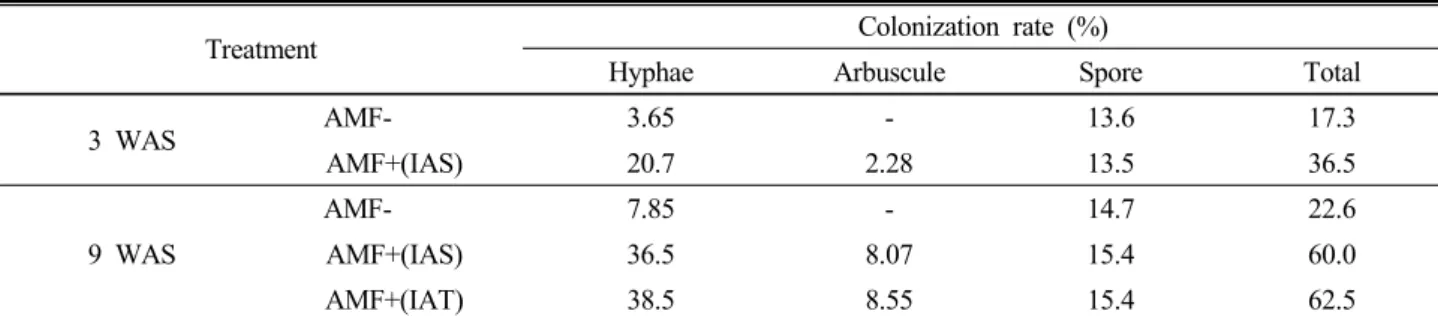
Table 4. AMF colonization rates in the roots of AMF+ and AMF- lettuce plants at 3 and 9 weeks after sowing.
Treatment Colonization rate (%)
Hyphae Arbuscule Spore Total
3 WAS AMF- 3.65 - 13.6 17.3
AMF+(IAS) 20.7 2.28 13.5 36.5
9 WAS
AMF- 7.85 - 14.7 22.6
AMF+(IAS) 36.5 8.07 15.4 60.0
AMF+(IAT) 38.5 8.55 15.4 62.5
(IAS=inoculation at sowing, IAT=inoculation at transplanting, WAS=weeks after sowing).
S H
S
Fig. 6. Morphological characteristics of the mycorrhizal association in the roots of lettuce seedlings grown in trays at 3 weeks after sowing (Scale bar=10um. S=spore, H=hyphae).
V
S S
IH
EH
A
Fig. 7. Morphological characteristics of the mycorrhizal association in the roots of lettuce seedlings grown in pots at 9 weeks after sowing (Scale bar=10um. S=spore, V=vesicle, A=arbuscule, IH=internal hyphae, EH=external hyphae).
Colonization rates and types The percentage of colonization with AMF in lettuce roots examined 2 times after sowing and the morphological characteristics of the mycorrhizal association in the roots of lettuce seedlings grown in trays and pots are presented in Table 4 and Figs.
6 and 7.
The colonization of lettuce roots by AMF developed rapidly in the early stages after AMF inoculation; the colonization rate of AMF+(IAS) plants at 3 weeks after sowing and that of AMF+(IAT) plants at 6 weeks after
transplanting were investigated and found to be 36.55%
and 62.52%, respectively. However in subsequent stages, mycorrhizae developed less rapidly, the colonization rate of AMF+(IAS) plants at 9 weeks after sowing was 60.06%
and that of AMF- plants at 3 and 9 weeks after sowing was 17.34% and 22.62%, respectively.
As shown in Figs. 6 and 7, the types of AMF colonization of the roots of lettuce plants grown in trays at 3 weeks after sowing had morphological characteristics such as spores and hyphae and those grown in pots at 9 weeks after sowing
had well-developed vesicles, arbuscules, and external and internal hyphae the spores were also increased in the lettuce roots.
Acknowledgement
This study was supported by The Technology Development Program for Agricultural and Forestry. Ministry for Food, Agriculture, Forestry and Fisheries, Republic of Korea.
References
Abbott, L.K. and A.D. Robson. 1984. The effect of VA mycorrhizae on plant growth. In: Powell, C.L., D.J.
Bagyaraj. (Eds.), VA mycorrhiza. CRC Press, Boca Raton, pp. 113-130.
Abdalla, M.E. and G.M. Abdel-Fattah. 2000. Influence of the endomycorrhizal fungus Glomus mosseae on the development of peanut pod root disease in Egypt. Mycorrhiza 10:29-35.
An, Z.Q., J.W. Hendrix, D.E. Hershman, and G.T. Henson.
1990. Evaluation of the most probable number (MPN) and wet-sieving methods for determining soil-borne populations of endogonaceous mycorrhizal fungi. Mycologia 82:576-581.
Azocon, R., L.L. Hendley, and C.M. Schrimgeour. 1998.
The δ15 N of lettuce and barley are affected by AM status and external concentration of N. New Phytol.
138:19-26.
Azocon, R., M. Gomez, and R. Tobar. 1992. Effects of nitrogen source on growth, nutrition, photosynthetic rate and nitrogen metabolism of mycorrhizal and P-fertilized plants of Lactuca sativa L. New Phytol. 121:227-234.
Azocon, R., M. Gomez, and R. Tobar. 1996. Physiological and nutritional responses by Lactuca sativa L. to nitrogen sources mycorrhizal fungi under drought condition. Biol.
Fert. Soils 22:156-161.
Bouwmeester, H.J., C. Roux, J.A. Lopez-Raez, and G.
Becard. 2007. Rhizosphere communication of plants, parasitic plants and AM fungi. Trends Plant Sci. 12:224-230.
Brundrett, M.C., Y. Piche, R.L. and Peterson. 1984. A new method for observing the morphology vesicular-arbuscular mycorrhizae. Can. J. Bot. 62:2128-2134.
Cho, E.J., D.J. Lee, C.D. Wee, H.L. Kim, Y.H. Cheong, J.S. Cho, and B.K. Sohn. 2009. Effects of AMF inoculation on soil structure in mycorrhizosphere. Sci. Hort. 122:633-183.
Davies Jr. F.T., J.R. Potter, and R.G. Linderman. 1993.
Drought resistance of mycorrhizal pepper plants independent of leaf P concentration response in gas exchange and water relations. Physiol. Plant 87:45-53.
Happer, C.M. 1983. The effect of nitrate and phosphate on the vesicular-arbuscular mycorrhizal infection of lettuce.
New Phytol. 9:389-399.
Jackson, L.E. 1995. Root architecture in cultivated and wild lettuce (Lactuca spp.). Plant Cell Environ. 18:885-895.
Jacobsen, I. 1991. Carbon metabolism in Mycorrhiza. In:
Burrock, H. and J. Mosser. Academic Press (Eds.) Methods in Microbiology 23:149-180.
Jones, J.B., B. Wolf, and H.A. Mills. 1991. Plant Analysis Handbook. Micro-Macro Publishing, pp. 195-203.
Jonson, C.R. 1984. Phosphorus nutrition on mycorrhizal colonization photosynthesis, growth and nutrient composition of Citrus aurantium. Plant and Soil 80:35-42.
Kesseli, R.V., O. Ochoa, and R.W. Michelmore. 1991. Origin of Lactuca sativa (lettuce). Genome 34:430-436.
Koide, R.T. and B. Mosse. 2004. A history of research on arbuscular mycorrhiza. Mycorrhiza 14:145-163.
Olsen, J.K., J.K. Schaefer, and M.N. Hunter. 1996. Response of capsicum (Capsicum annuum L.), sweet corn (Zea mays L.) and tomato (Lycopersicon esculantum Mill.) to inoculation with vesicular arbuscular mycorrhizae. Aust J. Agric. Res.
47:651-671.
Olsen, J.K., J.K. Schaefer, and M.N. Hunter. 1999. Effects of mycorrhizae, established from an existing intact hyphal network, on the growth response of capsicum (Capsicum annuum L.) and tomato (Lycopersicon esculantum Mill.) to five rates of applied phosphorus. Aust J. Agric. Res.
50:223-237.
Olsen, J.K., J.K. Schaefer, and M.N. Hunter. 1999. Effects of a network of mycorrhizae on capsicum (Capsicum annuum L.) grown in the field with five rates of applied phosphorus.
Aust J. Agric. Res. 50:239-252.
Ortas, I., D. Ortakci, Z. Kaya, A. Cinar, and N. Onelge. 2002.
Mycorrhizal dependency of sour orange in relation to phosphorus and zinc nutrition. J. Plant Nutr. 25:1263-1279.
Phillips, J.M. and D.S. Hayman. 1970. Improved procedures for clearing roots and staining parasitic and vesicular arbuscular mycorrhizal fungi for rapid assessment of infection. Trans. Br. Mycol. Soc. 55:158-161.
Rillig, M.C. 2004. Arbuscular mycorrhizae, glomalin, and soil aggregation. Can. J. Soil Sci. 84:355-363.
Rillig, M.C. and D.L. Mummey. 2006. .Mycorrhizas and soil structure. New Phytol. 171:41-53.
Ryder, E.J. and T.W. Whitaker. 1976. Lettuce. In: Simmonds, N.W. (Eds.), Evolution of Crop Plants. Longman, London, pp. 39-41.
SAS Institute. 1990. SAS User Guide, Version 6.08. SAS Institute Inc., SAS Circle, Box 8000, Cary, NC, 27515- 800010.
Smith, S.E. and D.J. Read. 1997. Mycorrhizal Symbiosis.
Academic Press, London, p. 605.
Sohn, B.K., K.Y. Kim, S.J. Chung, W.S. Kim, S.M. Park, J.K. Kang, Y.S. Rim, J.S. Cho, T.H. Kim, and J.H. Lee.
2003. Effect of the different timing of AMF inoculation on plant growth and flower quality of chrysanthemum. Sci.
Hort. 98:173-183.
van der Heijden, M.G., R. Streitwolf-Engel, R. Riedl, S.
Siegrist, A. Neudecker, K. Ineichen, T. Boller, A. Wiemken, and I.R. Sanders. 2006. The mycorrhizal contribution to plant productivity, plant nutrition and soil structure in experimental grassland. New Phytol. 172:739-752.
상추에 대한 Arbuscular 균근균(AMF) 접종원 처리 효과
위치도·리준시·김홍림1·손보균*
순천대학교 대학원 농화학과, 1농촌진흥청 국립원예특작과학원 남해출장소
AMF 접종원 처리가 원예작물의 생육에 미치는 효과를 구명하기 위하여 상추 (Lactuca sativa L.)에 파종단계와 이식단계 에서 수단그라스를 기주식물로 증식한 g 당 30개의 포자와 AMF가 감염된 뿌리, 균사 및 토양이 혼합된 접종원을 처리한 후 이식 전후에 걸쳐 작물의 생장반응과 수량성을 비교 검토하였으며, AMF 포자밀도와 감염률 및 감염양상을 조사하였고, 작물의 무기양분의 흡수양태를 분석하였다.
상추의 파종단계에서 AMF 접종원을 처리한 후 생육반응을 조사한 결과, 파종 후 3주가 경과한 초기에서 AMF 접종원 처 리구의 상추는 대조구보다 엽수는 9%, 엽의 생체중은 59%, 엽면적은 58% 및 엽장과 엽폭은 21-22%가 증가하였으며 엽록 소함량은 2%가 향상되었다. 파종 후 9주가 경과하여서는 파종단계와 이식단계에서의 AMF 접종원 처리구는 대조구에 비해 엽수는 21%와 18%, 엽의 생체중은 51%와 41%, 근체중은 56%와 47%가 각각 증가하였으며 엽록소함량은 18%와 19%가 향 상된 것으로 조사되었다.
상추 엽의 P 함량을 분석한 결과 이식단계에서 AMF 접종원 처리구가 대조구보다 217%가 증가된 P 함량을 보임으로서 P 의 흡수이용이 증진되었고 상추의 생육에 영향을 미친 것으로 판단된다. 상추 근권토양의 AMF 포자밀도는 상추의 생육초 기에 AMF 접종원 처리구가 대조구의 3배를 상회하는 높은 수준으로 나타났고, 9주가 경과하였을 때는 276-295%가 증가 된 것으로 조사되었다. AMF 감염률 또한 대조구에 비해 크게 향상된 것으로 조사되었고 생육 후기에는 낭상체와 균사가 치밀하게 발달됨으로서 AMF 의존도가 높음을 확인하였다.
Watanabe, Y., F. Uchiyama, and K. Yoshida. 1994. Compositional changes in spinach (Spinacia oleracea L.) grown in the summer and in the fall. J. Jpn. Soc. Hortic. Sci. 62:889-895.
Yano-Melo, A.M., L.C. Maia, O.J. Saggin, J.M. Lima-Filho, and N.F. Melo. 1999. Effect of arbuscular mycorrhizal fungi on the acclimatization of micropropagated banana plantlets. Mycorrhiza 9:119-123.