Condurango ( Gonolobus condurango ) Extract Activates Fas Receptor and Depolarizes Mitochondrial Membrane Potential to Induce ROS-dependent Apoptosis in Cancer Cells in vitro
-CE-treatment on HeLa: a ROS-dependent mechanism-
Abstract
Objectives: Condurango (Gonolobus condurango) ex- tract is used by complementary and alternative med- icine (CAM) practitioners as a traditional medicine, including homeopathy, mainly for the treatment of syphilis. Condurango bark extract is also known to re- duce tumor volume, but the underlying molecular mechanisms still remain unclear.
Methods: Using a cervical cancer cell line (HeLa) as our model, the molecular events behind condurango ex- tract’s (CE’s) anticancer effect were investigated by us- ing flow cytometry, immunoblotting and reverse tran- scriptase-polymerase chain reaction (RT-PCR). Other included cell types were prostate cancer cells (PC3), transformed liver cells (WRL-68), and peripheral blood mononuclear cells (PBMCs).
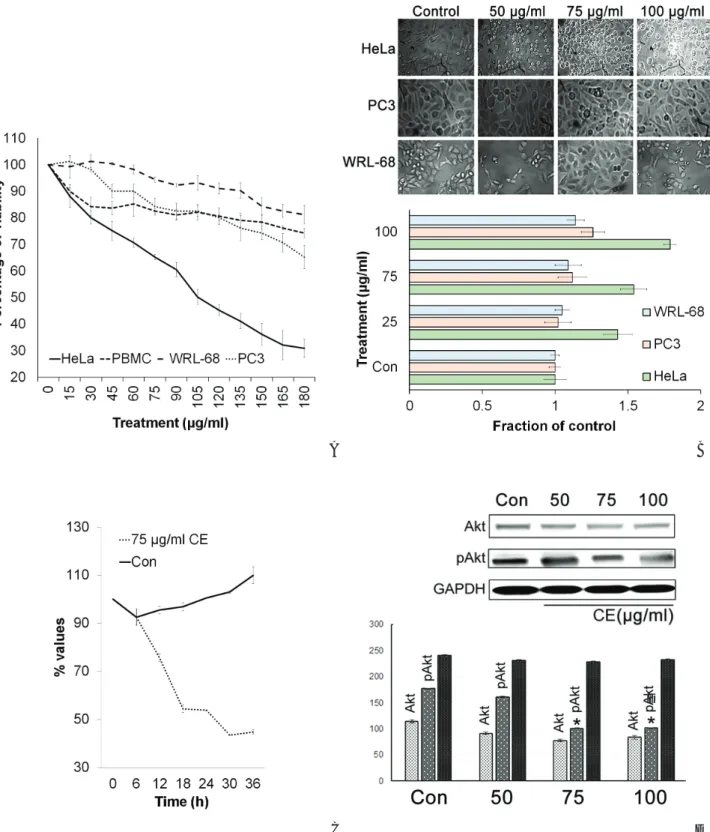
Results: Condurango extract (CE) was found to be cyto- toxic against target cells, and this was significantly de- activated in the presence of N-acetyl cysteine (NAC), a scavenger of reactive oxygen species (ROS), suggesting
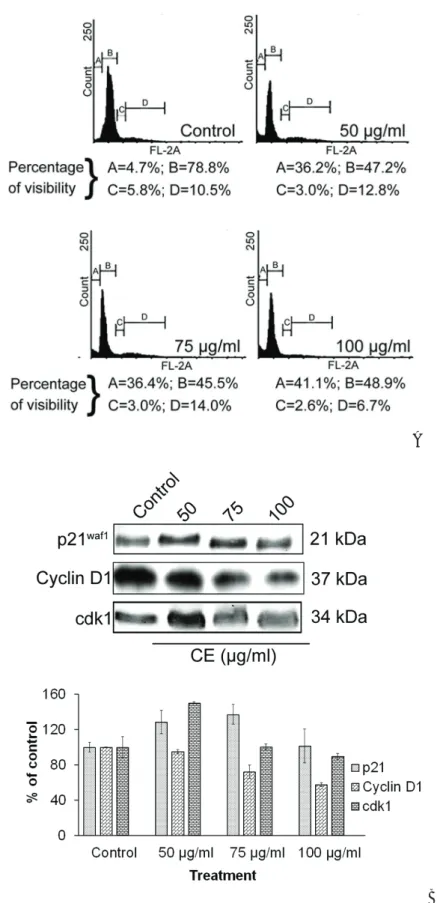
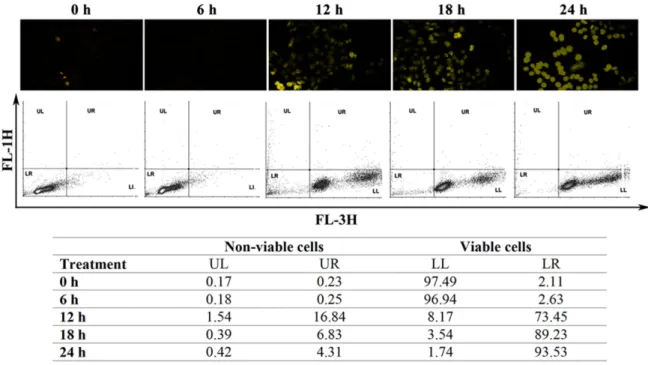
that its action could be mediated through ROS gener- ation. CE caused an increase in the HeLa cell popula- tion containing deoxyribonucleic acid (DNA) damage at the G zero/Growth 1 (G0/G1) stage. Further, CE in- creased the tumor necrosis factor alpha (TNF-α) and the fas receptor (FasR) levels both at the ribonucleic acid (RNA) and the protein levels, indicating that CE might have a cytotoxic mechanism of action. CE also triggered a sharp decrease in the expression of nucle- ar factor kappa-light-chain-enhancer of activated B cells (NF-κB ) both at the RNA and the protein levels, a possible route to attenuation of B-cell lymphoma 2 (Bcl-2), and caused an opening of the mitochondrial membrane’s permeability transition (MPT) pores, thus enhancing caspase activities.
Conclusion: Overall, our results suggest possible pathways for CE mediated cytotoxicity in model can- cer cells.
1. Introduction
The incidences of different types of cancer are rapidly increasing throughout the world, despite the advance- ments that are being made in various forms of therapy and the use of newer drugs [1]. To date, chemotherapy and radiation therapy have been the most common approaches used in cancer therapy. These approaches
Original article
Key Words
apoptosis, condurango extract, cytotoxicity, G0/G1 ar- rest, reactive oxygen species
This is an Open-Access article distributed under the terms of the Creative Commons Attribution Non-Commercial License (http://creativecommons.org/licenses/by-nc/3.0/) which permits unrestricted noncommercial use, distribution, and reproduction in any medium, provided the original work is properly cited.
This paper meets the requirements of KS X ISO 9706, ISO 9706-1994 and ANSI/NISO Z39.48-1992 (Permanence of Paper).
*