37
서 론
국내외적으로 축산식품 관련 안전사고 발생현황을 보면 유럽 광우병 파동(2001), 미국산 쇠고기 리스테리아균 오염 사건(2001), 벨기에 축산물 다이옥신 오염사건(1999), 쇠고 기 병원성 대장균 O157:H7 오염사건(미국, 1997), 호주산 쇠 고기 엔도설판 오염사건(1998) 등 식품안전사고가 대형화 추세에 있으며, 국내에서는 분유에서의 사카자키균 및 이 물질 검출사건(2007)으로 분유 폐기에 따른 경제적 손실과 국내 유제품에 대한 불신을 초래하여 외국의 유제품 수입 증가로 낙농가 및 유업체에 경제적 타격을 주어 국민의 관 심은 식품안전에 초점이 맞추어지고 있다.
그러나 인위적이 아니라 자연발생적으로 생성되는 첨가 물에 대한 기준이 마련되어 있지 않아, 국내에서는 포르말 린이 함유된 번데기 통조림 사건(1998)으로 자연 상태의 어
류와 야채 등에서 상당량의 포르말린이 검출된다는 것을 간과한 결과, 통조림 제조업체 대부분 중소업체로 20~30개 가 부도를 맞아 선의의 업체가 피해를 받은 바 있다.
식품첨가물 중 안식향산의 경우 1991년 미국산 건포도 에서, 1994년 호주산 포도주에서 검출되어 통상문제를 비 롯하여 쌍화차, 케첩, 카레 등 안식향산의 사용이 허용되지 않은 식품에서 안식향산이 검출되어 적부 판정의 문제가 야기된 경우가 종종 있어 왔다.
안식향산과 같은 저분자량의 카르복시산들은 대사과정 중 쉽게 생성될 수 있는 물질들로서, 실제로 식품 원료에 자연적으로 함유되어 있거나, 식품가공공정 특히 발효과정 중에 미생물에 의한 대사산물로 생성되는 것으로 알려지고 있으며, Choi 등(2008)은 한국인의 식이를 통한 보존료의 일일추정섭취량과 안전성평가에서 치즈, 버터에서 안식향 산이 검출되었다는 보고가 있다.
본 논문은 현행 기준인 불검출을 적용하는 경우, 식품첨가 물로 첨가하지 않았음에도 미량 검출되어 부적합 판정을 받는 사례가 생길 수 있어 여러 가지 행정상, 통상상의 문제를 해
천연유래 안식향산과 유제품: 총설
임 상 동*․김 기 성 한국식품연구원
Natural Benzoic Acid and Dairy Products: A Review
Sang-Dong Lim* and Kee-Sung Kim Korea Food Research Institute
Abstract
Benzoic acid is widely used in the food industry as a preservative in acidic foods, owing to its antimicrobial activity against various bacteria, yeasts, and fungi. Benzoic acid occurs naturally in different foods such as fruits, vegetables, spices, and nuts as well as in milk and dairy products. Lactic acid bacteria convert hippuric acid, which is naturally present in milk, to benzoic acid; therefore, the latter could also be considered as a natural component of milk and milk products.
Benzoic acid is also produced during the ripening of cheese by the propionic acid fermentation process that follows lactic acid fermentation. This paper, we provide basic information regarding the systematic control of natural benzoic acid levels in raw materials, processing intermediates, and final products of animal origin.
Keywords: benzoic acid, lactic acid bacteria, fermentation, dairy product
* Corresponding author: Sang-Dong Lim, Korea Food Research Institute, Seongnam 463-746, Korea. Tel: +82-31-780-9082, Fax: +82-31-780-9160, E-mail: [email protected]
결하기 위한 축산식품관리 정책의 기초자료를 제공하고자 한다.
본 론
1. 안식향산의 자연계 분포
1) 환경수준
Table 1. Benzoic acid content of food (mg/kg) Food Content of benzoic acid
Milk Traces-6
Yoghurt 12~40
Cheese Traces-40
Fruits(excluding vaccinium species) Traces-14 Potatoes, beans, cereals Traces-0.2
Soya flour, nuts 1.2~11
Source: Sieber et al.(1989)
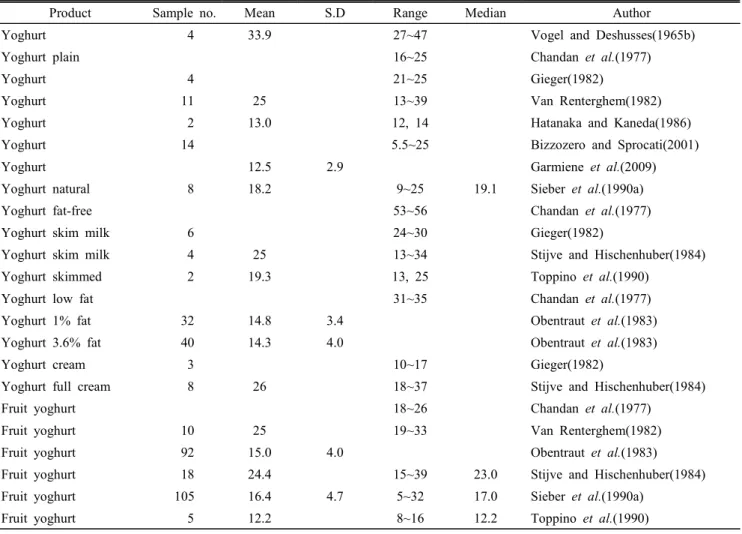
Table 2. Benzoic acid content of some yoghurt and fruit yoghurt (mg/kg)
Product Sample no. Mean S.D Range Median Author
Yoghurt 4 33.9 27~47 Vogel and Deshusses(1965b)
Yoghurt plain 16~25 Chandan et al.(1977)
Yoghurt 4 21~25 Gieger(1982)
Yoghurt 11 25 13~39 Van Renterghem(1982)
Yoghurt 2 13.0 12, 14 Hatanaka and Kaneda(1986)
Yoghurt 14 5.5~25 Bizzozero and Sprocati(2001)
Yoghurt 12.5 2.9 Garmiene et al.(2009)
Yoghurt natural 8 18.2 9~25 19.1 Sieber et al.(1990a)
Yoghurt fat-free 53~56 Chandan et al.(1977)
Yoghurt skim milk 6 24~30 Gieger(1982)
Yoghurt skim milk 4 25 13~34 Stijve and Hischenhuber(1984)
Yoghurt skimmed 2 19.3 13, 25 Toppino et al.(1990)
Yoghurt low fat 31~35 Chandan et al.(1977)
Yoghurt 1% fat 32 14.8 3.4 Obentraut et al.(1983)
Yoghurt 3.6% fat 40 14.3 4.0 Obentraut et al.(1983)
Yoghurt cream 3 10~17 Gieger(1982)
Yoghurt full cream 8 26 18~37 Stijve and Hischenhuber(1984)
Fruit yoghurt 18~26 Chandan et al.(1977)
Fruit yoghurt 10 25 19~33 Van Renterghem(1982)
Fruit yoghurt 92 15.0 4.0 Obentraut et al.(1983)
Fruit yoghurt 18 24.4 15~39 23.0 Stijve and Hischenhuber(1984)
Fruit yoghurt 105 16.4 4.7 5~32 17.0 Sieber et al.(1990a)
Fruit yoghurt 5 12.2 8~16 12.2 Toppino et al.(1990)
Source: Sieber et al.(1995)
Benzoic acid는 많은 동식물에서 유리 및 결합형태로 자 연적으로 발생하는 대사산물이다(Hegnauer, 1992). 평가할 만한 양은 gum benzoin(안식향, 약 20%)과 다수의 베리(약 0.05%)에서 발견(Budavari et al., 1996)되어 왔고, 많은 생 물에서 발견되기 때문에 benzoic acid는 식품에 자연적으로 존재한다(Sieber et al., 1989, 1990a,b).
2) 사람 노출
사람에게 benzoic acid나 sodium benzoate의 노출 주경로 는 항균제로 첨가되거나, 자연적으로 생긴 물질을 함유한 식품을 통해서이다. 필리핀산 식품의 sodium benzoate의 농 도는 20~2,000 이상 mg/L이며, 일본산 제품은 50~200 mg/L 이다(Villanueva et al., 1994). 영국산 오렌지 음료는 sodium benzoate의 농도가 54~100 mg/L(평균 76.7 mg/L, n=6)이라 고 하였다(Freedman, 1977).
일반적으로 실제 섭취량은 소비되는 식품의 개인선택과 나라별 허용값에 따라 좌우된다. 일부 섭취량 추정이 발표
되었는데, 가공식품으로부터 benzoic acid의 평균 일일 섭 취량은 0.02~0.2 mg/체중 kg(50~70 kg인 사람)에 해당되며, 10.9 mg/사람(Toyoda et al., 1983a)과 1.4 mg/사람(Toyoda et al., 1983b; Yomota et al., 1988)이라고 보고되었다.
이 연구를 통해 분석된 3,319개 식품에서 benzoic acid의 농도는 불검출~2,100 mg/식품 kg이었고(Toyoda et al., 1983a), 최대값은 염장 생선(n=7, 평균 754 mg/kg)에서 발견되었다.
영국산 122개 식품 중 65개에서 benzoic acid가 검출되었 고, 가장 높은 농도는 소스(평균 388 mg/kg, n=20, 범위 71~
948 mg/kg), 환원당 쨈(평균 216 mg/kg, n=4, 범위 <20~333 mg/kg), 비알콜음료(평균 162 mg/kg, n=20, 범위 55~251 mg/kg), 및 반건조 생선(평균 653 mg/kg, n=1)에서 발견되 었다. 검출된 benzoic acid의 농도는 평균 이상 소비하는 성 인일지라도 5 mg 이하/체중 kg/일이다(UK MAFF, 1995).
FAO/WHO 식품첨가물 전문가위원회는 9개 국가(호주, 중국, 핀란드, 프랑스, 일본, 뉴질랜드, 스페인, 영국, 미국) 에서 제공한 정보를 통해 benzoic acid의 섭취량을 평가하 였다(WHO, 1999). 나라마다 먹는 게 다르기 때문에 benzoate 섭취량은 다르게 예상된다. Benzoate 섭취량에 기여하는 식 품으로는 호주, 뉴질랜드, 프랑스, 영국 및 미국에서 소프트 음료(탄산, 물 베이스, 가공음료)이며, 핀란드에선 40%가 소프트 음료에서다. 간장은 중국에서 benzoate의 주요 공급
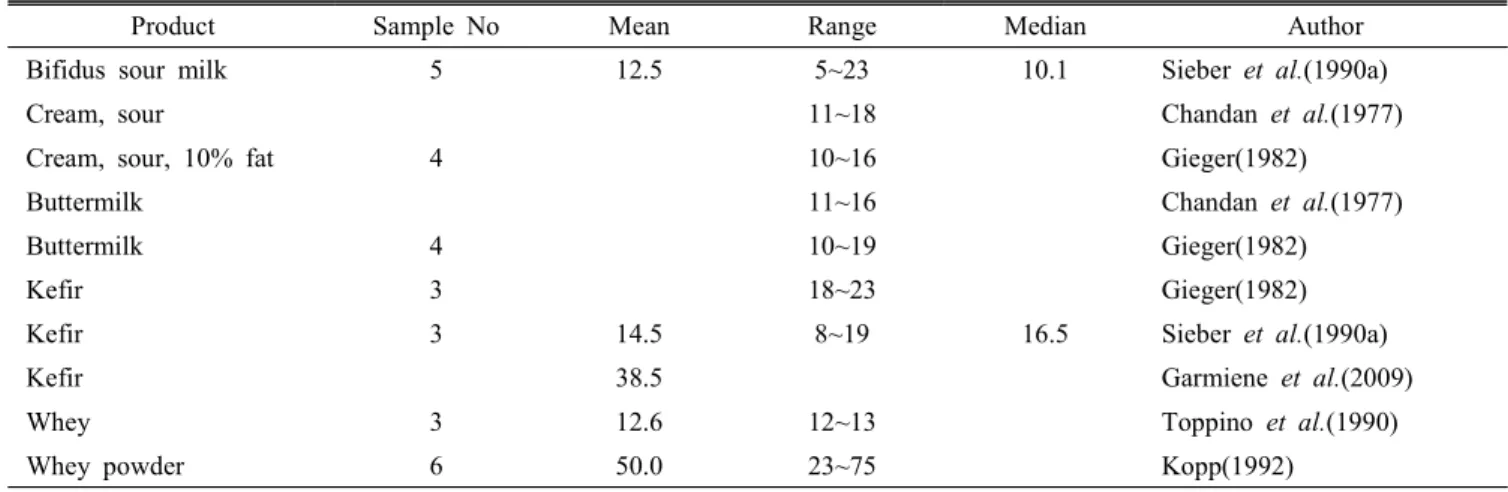
Table 3. Benzoic acid content of some other fermented dairy products (mg/kg)
Product Sample No Mean Range Median Author
Bifidus sour milk 5 12.5 5~23 10.1 Sieber et al.(1990a)
Cream, sour 11~18 Chandan et al.(1977)
Cream, sour, 10% fat 4 10~16 Gieger(1982)
Buttermilk 11~16 Chandan et al.(1977)
Buttermilk 4 10~19 Gieger(1982)
Kefir 3 18~23 Gieger(1982)
Kefir 3 14.5 8~19 16.5 Sieber et al.(1990a)
Kefir 38.5 Garmiene et al.(2009)
Whey 3 12.6 12~13 Toppino et al.(1990)
Whey powder 6 50.0 23~75 Kopp(1992)
Source: Sieber et al.(1995)
Fig. 1. Stoichiometric(reversible) conversion of hippuric acid (Pi=phosphate, Gly=glycine)
원이며, 일본에서도 2번째를 차지한다.
2. 유제품에서의 benzoic acid 함량
1) 우유 및 분유에서의 benzoic acid 발생
Ping 등(2009)은 중국 광조우에서 소비되는 우유에서 benzoic acid를 측정하였는데, 살균유(n=24), UHT유(UHT, n=45), 분 유(n=31) 및 조제분유(n=42) 총 142시료를 diode array detector (DAD)/HPLC로 분석한 결과, benzoic acid가 109개(76.8%)에 서 검출되었고, 0.51~111 mg/kg이었다고 하였다. Benzoic acid 에 대한 LOD는 살균유와 UHT유에서 0.2 mg/kg, 분유와 조제 분유에서 2 mg/kg이었으며, spiked sample의 평균 회수율은 액상유에서 99.5±3.1%, 분유에서 98.5±4.3%이었다. 이와 같 이 benzoic acid의 함량 차이는 원유의 품질, 가공기술 및 저 장조건의 차이에 영향을 받기 때문이라고 하였다.
2) 발효유제품에서의 benzoic acid 발생
요구르트, 과일요구르트, 비피더스균과 케휘어가 들어 있는 sour milk 등 발효유는 대부분 평균 20 mg/kg이며, 50 mg/kg(0.41 mmol/kg)까지 함유하고 있지만 우유는 단지 몇 mg/kg에 불과하다(Vogel and Deshusses, 1965; Nagayama et al., 1986). Nishimoto 등(1968, 1969)에 따르면 젖산균은
우유에 자연적으로 존재하는 hippuric acid를 benzoic acid 로 전환(Hatanaka and Kaneda, 1986)하여 우유 및 유제품의 천연 성분으로 간주될 수 있다(Fig. 1).
Wolfschoon-Pombo와 Klostermeyer(1981)은 저녁우유에서 최 대 hippuric acid 62.4 mg/kg(0.35 mmol/kg)를 발견하였는데, 이는 화학양론적 전환에 따라 최대 benzoic acid 농도가 0.35 mmol/kg으로 계산될 수 있다. Tschager 등(1993)에 따르면 hippuric acid 함량이 최대 113 mg/우유 L라고 하였다. 이외에도 Lacto- coccus lactis, Escherichia coli와 Pseudomonas fluorescens는 우 유에서 benzoic acid를 합성할 수 있다(Sajko et al., 1984).
Urbiene과 Leskauskaite(2006)에 따르면 상업적 젖산균으 로 우유의 발효 중 benzoic acid의 변화를 조사한 결과, 발효 유의 benzoic acid 함량은 14~23 mg/kg이라고 하였으며, 원
Table 4. Benzoic acid content of fermented milk (n=3)
Company Range
(mg/kg) Type Content(mg/kg)
During shelf-life Final day shelf-life
A 14.8~16.5 Plain 15.65±1.17 -
B ND Plain ND -
C 7.1~7.7 Plain 7.47±0.32 7.80±0.41
D 7.8~8.1 Strawberry 7.93±0.15 7.49±0.24
E 7.1~9.7 Cherry 8.01±0.14 -
F 4.3~9.7 Apple 8.18±2.20 -
Plain 5.46±0.40 5.82±0.11
Source: Lim et al.(2013)
Table 5. Benzoic acid content of Fresh cheeses and various Quargs (mg/kg)
Product Sample no. Mean S.D Range Median Author
Fresh cheese 3 5~8 Gieger(1982)
Fresh cheese 82 26 ~68 Van Renterghem and Wales(1987)
Fresh cheese 5 8 1~17 3.0 Sieber et al.(1990a)
Cottage cheese 4 9~18 Chandan et al.(1977)
Cottage cheese 6 9 6 2~18 Takeba et al.(1990)
Quarg, skim 4 17~29 Gieger(1982)
Quarg, skim 18 39.1 2.5 Obentraut et al.(1983)
Quarg, skim 3 24.1 23~25 24.0 Sieber et al.(1990a)
Quarg 48.5 6.2 Garmiene et al.(2009)
Quarg, 20% fat dry matter 9 23.9 2.2 Obentraut et al.(1983)
Quarg, 40% fat dry matter 2 11, 13 Gieger(1982)
Quarg, 40% fat dry matter 12 14.0 2.9 Obentraut et al.(1983)
Quarg, cream 3 9.9 6~13 11.0 Sieber et al.(1990a)
Quarg, sour milk 7 39.4 31~48 Anonymous(1988)
Quarg with fruit 11 16.0 10~25 15.3 Sieber et al.(1990a)
Source: Sieber et al.(1995)
유와 발효유를 비교하였을 때 benzoic acid 함량이 5.1배 높 았다고 하였다. Benzoic acid는 우유 발효 3~6시간(log phase) 중에 가장 많이 형성되었고, 상업적 젖산균 스타터의 종류 에 영향을 받아 Lactobacillus acidophilus를 함유한 La-5 스 타터로 발효된 우유에서 가장 많이 검출되었으며, 저장기 간 중 감소하는 것으로 나타났다고 하였다.
국내에서는 Lim 등(2013)이 업체별 발효유의 안식향산 함량을 분석한 결과(Table 4), 업체에 따라 함량 차이를 보 이나 0~16.5 mg/kg의 수준이었으며, 5~7일의 간격으로 유 통기한 중 함량 변화를 분석한 결과, 제품 및 업체에 관계 없이 큰 차이를 보이지 않았다고 하였다.
3) 치즈에서의 benzoic acid 발생
Benzoic acid는 생치즈, quarg 및 여러 치즈에도 존재한 다(Table 5~7). 일부 치즈를 제외하고 50 mg/kg의 역가이다.
Toppino 등(1990)에 따르면 고 농도의 benzoic acid가 Provolone
Table 6. Benzoic acid content of various type of cheese (mg/kg)
Cheese Sample no Mean S.D. Range Median Author
Cheese 24 9.7 2~41 6.1 Kurisaki et al.(1973)
Cheese 11 trace~35 Chandan et al.(1977)
Cheese -70 Overstrom et al.(1972)
Cheese 7 11.3 4~24 11.5 Nagayama et al.(1986)
Cheese 3 17.7 12~22 Anonymous(1988)
Cheese 2 98,118 Anonymous(1989)
Cheese 71 <10~200 Muller(1989)
Cheese 75 10.4 0~52 8.8 Toppino et al.(1990)
Provolone 8 96.4 8~341 73 Toppino et al.(1990)
Cheese 36 5.9 0~22 Takeba et al.(1990)
Cheese 59 5.7 1~20 Takeba et al.(1991)
Cheese 7 10.9 <2~18 10.8 Kopp(1992)
Whey cheese 44 45.1 18~111 41.0 Svensen(1974)
Cheese non-smear-ripened
Centre 16 5.8 0~20 3.5 Sieber et al.(1990a)
Rind 16 6.3 0~19 3.5 Sieber et al.(1990a)
Centre 5 16.5 12~25 12.9 Kopp(1992)
Rind 4 15.9 5~41 9.1 Kopp(1992)
Cheese-smear-ripened
Centre 84 27.7 0~174 15.0 Sieber et al.(1990a)
Rind 84 61.8 0~622 18.5 Sieber et al.(1990a)
Centre 4 36.6 9~66 28.9 Kopp(1992)
Rind 4 86.2 8~285 56.4 Kopp(1992)
Source: Sieber et al.(1995)
Table 7. Benzoic acid content of various types of processed cheese (mg/kg)
Processed cheese Sample no. Mean S.D Range Author
Without ingredients
Austrian 22 9.4 4.3 4~17 Luf and Brandl(1986)
Imported
24 9.2 4.4 5~19 Luf and Brandl(1986)
19 11.5 0~29 Sieber et al.(1990a)
17 8 3 4~13 Takeba et al.(1990)
10 6 0~21 Toppino et al.(1990)
With ingredients
Austrian 11 10.1 4.4 7~22 Luf and Brandl(1986)
Imported 8 13.1 4.9 8~24 Luf and Brandl(1986)
10 11.8 0~20 Sieber et al.(1990a)
치즈에서 검출되었는데, kg당 60 mg benzoic acid와 동등 한 benzoyl peroxide로 허용(Toppino et al., 1987b)되었으며, benzoic acid의 농도는 숙성 중 변하지 않은 채로 남아있다
(Toppino et al., 1987a). Benzoic acid는 젖산 케이신(13.3 mg/kg), 젖산 케이신 유청(15.0 mg/kg)과 젖산 케이신 유청 단백 농축분말(50.4 mg/kg)에서 발견되지만, 황산 및 렌넷 케이신에서는 발견되지 않았다(Richardson and Gray, 1981).
비 smear 숙성치즈는 신선발효유 제품과 비교했을 때 benzoic acid가 비교적 낮은 농도로 함유되는 반면, Bundner mountain 치즈와 같은 smear 숙성치즈의 껍질과 중심부에서 유의성 있게 높은 농도로 발견되었다.
국내에서는 Lim 등(2013)에 따르면 업체별 치즈의 안식 향산 함량을 분석한 결과(Table 8), 국내 유통치즈의 경우 연성치즈가 0~4.2 mg/kg, 연성가공치즈가 0~20.8 mg/kg의 수준을 보였다. 모짜렐라 치즈가 원료인 연성가공치즈의 경 우 0~16.36 mg/kg으로 업체에 따라 큰 차이를 보였고, 오랜 시간 발효 및 숙성에 의해 제조되는 체다 치즈는 14.08~20.75 mg/kg, 고다 치즈는 5.95 mg/kg이었으며, 국내 유통치즈의 안식향산 검출율은 66.66%라고 하였다. 또한, 수입치즈의 경우 연성치즈는 0~15.5 mg/kg, 반경성치즈는 0~20.20 mg/kg
Table 8. Benzoic acid determination of domestic and imported cheese
Item Cheese type Range(mg/kg) Product Content(mg/kg) Detection rate(%)
Domestic cheese
(n=9)
Soft cheese
(n=3) 0~4.2
Mozzarella 4.19±0.67
66.66
Camenbert ND
Brie ND
Soft processed cheese(n=6)
14.1~20.8 Cheddar 20.75±4.37
Cheddar 14.08±0.65
0~16.4
Mozzarella ND
Mozzarella 5.09±0.86
Mozzarella 16.36±1.92
5.7~6.2 Gouda 5.95±0.38
Imported cheese (n=13)
Soft cheese (n=3)
0~15.5 Camembert1 ND
69.23
Camembert2 15.45±1.38
0 Gorgonzola(Piccante) ND
Semi hard cheese
(n=8)
9.1~9.8 Cheddar 9.62±0.45
6.0~7.9 Gouda 7.09±1.01
6.3~7.3 Emmental 6.92±0.56
12.6~13.1 Feta 12.89±0.25
13.4~16.4 Blue 14.86±1.51
17.9~20.2 Gruyere 19.15±1.13
0 Bule d`auvergne ND
4.7~15.6 Edam 10.15±7.65
Fresh cheese
(n=1) 0 Mascarpone ND
ND: not detected Source: Lim et al.(2013)
의 함량을 보였고, 페타 치즈(12.89 mg/kg), 블루 치즈(14.86 mg/kg), 그루이어 치즈(19.15 mg/kg)가 높은 함량을 보였으 며, 생치즈에서는 검출되지 않았다. 수입치즈의 안식향산 검출율은 69.23%로 국내 치즈(66.66%)보다 높은 수준으로 나타났다고 하였다.
3. 유제품의 안식향산 일일 허용섭취량
소비자의 benzoate 국가평균추정섭취량은 일본 0.18 mg/
체중 kg/일부터 미국 2.3 mg/체중 kg/일까지의 범위이다.
고 소비자 benzoate의 추정섭취량은 국가규격의 식품첨가 물 수준에 기초하여 미국에선 7.3 mg/체중 kg/일이고, 중국 은 14 mg/체중 kg/일이다. 한편, 네덜란드에서는 16~18세 청소년의 평균 총 일일섭취량이 34 mg이고, 최대 66 mg(van Dokkum et al., 1982)이라고 하였고, 핀란드에서는 사람당, 일일 당 40 mg을 소비한다고 추정하였다(Penttila et al., 1988).
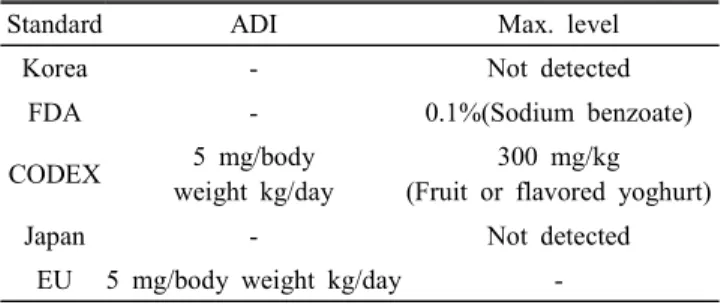
EU 규정에 따르면 benzoic acid의 일일 허용섭취량(ADI)은 5 mg/체중 kg/일 또는 성인 70 kg의 경우 350 mg에 해당되
Table 9. Acceptable dairy intake(ADI) and standard of benzoic acid in dairy product
Standard ADI Max. level
Korea - Not detected
FDA - 0.1%(Sodium benzoate)
CODEX 5 mg/body
weight kg/day
300 mg/kg (Fruit or flavored yoghurt)
Japan - Not detected
EU 5 mg/body weight kg/day -
며, FAO/WHO가 평가한 일일 허용섭취량(ADI) 역시 동일 하게 5 mg/체중 kg으로 정하고 있다. 국내에서는 Choi 등 (2008)이 한국인의 식이를 통한 보존료의 일일 추정섭취량 과 안전성 평가에서 안식향산류 215.34 μg/kg․bw/day, 파 라옥시안식향산에스터류 5.01 μg/kg․bw/day로 산출되었 으며, ADI 대비 각각 4.3, 0.1%로 섭취 수준은 안전한 것으 로 평가되었다. 유제품 중의 안식향산에 대한 허용기준(Table 9)을 보면 FDA가 안식향산나트륨으로서 0.1% 이하이고, CODEX 는 과일 또는 Flavored 요구르트에 한하여 인식향산, 안식 향산나트륨, 안식향산칼륨, 안식향산칼슘 포함 300 mg 이 하/kg를 설정하고 있는 반면, 국내식품첨가물공전, 일본 후 생성 규격에는 규격이 설정되어 있지 않다. Lim 등(2013) 에 따르면 국내 유통 중인 발효유는 0~16.5 mg/kg, 치즈 중 자연치즈는 0~16.36 mg/kg, 가공치즈는 5.95~20.8 mg/kg의 안식향산이 검출되었다. 안식향산이 생성되는 발효유 및 치즈의 농도는 최대농도로 하였을 때 각각 16.5 mg/kg과 20.8 mg/
kg이었고, 안식향산 추정 일일섭취량은 각각 9.43 μg/kg․
bw/day과 2.29 μg/kg․bw/day로 FAO/WHO가 평가한 일일 허용섭취량(ADI) 5 mg/kg 대비 0.23%로 섭취수준은 매우 안전한 것으로 평가되었다고 하였다.
결 론
국내외적으로 축산식품 관련 안전사고가 대형화 추세에 있음에 따라 국민의 관심은 식품안전에 초점이 맞추어지고 있다. 안식향산은 식중독 및 식품부패와 관련 있는 여러 박 테리아, 효모 및 곰팡이에 대한 항균활성이 있기 때문에 산 성식품에서 보존제로 식품업체에서 널리 사용되고 있다.
안식향산은 과일, 야채, 양념류와 견과류와 같은 식품에서, 또한 낮은 농도로 우유 특히 유제품에서도 자연적으로 발 생한다고 보고되고 있고, 실제로 식품 원료에 자연적으로 함유되어 있거나 식품가공공정 특히 발효과정 중에 미생물 에 의한 대사산물로 생성되기도 한다. 젖산균은 우유에 자 연적으로 존재하는 hippuric acid를 benzoic acid로 전환함
으로써 우유 및 유제품의 천연 성분으로 함유되어 있다.
EU 규정 및 CODEX에 따르면 benzoic acid의 일일 허용섭 취량(ADI)은 5 mg/체중 kg/일을 정하고 있다. 그러나 우리 나라에서는 안식향산에 대한 일일 허용섭취량과 인위적이 아니라 자연발생적으로 생성되는 안식향산에 대한 허용기 준이 마련되어 있지 않아, 선의의 업체가 피해를 받지 않도 록 조속히 설정할 필요가 있다.
감사의 글
본 연구는 2012년도 농림수산검역검사본부 수의과학기 술개발 용역연구사업의 연구비 지원(VRIS Z-1541764-2012- 12-01)에 의해 수행되었습니다.
참고문헌
1. Anon. 1988. Jahresbericht 1988. Milchwirtschaftliche Un- tersuchungs- und Versuchsanstalt, Kempten. pp. 17, 59.
2. Anon. 1989. Jahresbericht 1989. Milchwirtschaftliche Un- tersuchungs- und Versuchsanstalt, Kempten. p. 17.
3. Bizzozero, N. and Sprocati, G. 2001. Chemical charac- teristics of yoghurt samples from the market. Industrie Alimentari 40(399):7-10.
4. Budavari, S., O'Neil, M. J., Smith, A., Heckelman, P. E., and Kinneary J. F. 1996. The Merck index - an encyclopedia of chemicals, drugs, and biologicals, 12th ed. Whitehouse Station, NJ, Merck & Co., Inc. p. 183.
5. Chandan, B. C., Gordon, J. F., and Morrison, A. 1977.
Natural benzoate content of dairy products. Milchwissenschaft 32:534-537.
6. Choi, S. H., Lee, J. Y., Park, E. Y., Won, J., Hong, K. H., Moon, G. I., Kim, M. S. and Hong, J. W. 2008. Assess- ment of estimated daily intakes of preservatives in the Korean population. Korean J. Food Sci. Technol. 40(5):
503-509.
7. Freedman, B. J. 1977. Asthma induced by sulphur dioxide, benzoate and tartrazine contained in orange drinks. Clinical Allergy 7:407-415.
8. Garmiene, G., Miliauskiene, I., Saikauskiene, V. and Jasutiene, I. 2009. In : Food Chem. and Technol. (LT) 42(1):96-106.
9. Gieger, U. 1982. Benzoesäure in Sauermilcherzeugnissen und Frischkäse. HPLC -Analyse von Benzoesäure, Sorbin- säure und PHB-Estern in Lebensmitteln. Lebensmittelchem.
gerichtl. Chem. 36:109-110.
10. Hatanaka, H. and Kaneda, Y. 1986. Rapid and simultaneous analysis of hippuric and benzoic acids in fermented milk or raw milk by high performanace liquid chromatography.
J. Food Hyg. Soc. Japan 27:81-86.
11. Hegnauer, R. 1992. Benzoesäure. In: Hegnauer R, ed.
Chemotaxonomie der Pflanzen. Basel, Birkhäuser Verlag.
12. Kopp, G. 1992. Benzoesäure und Sorbinsaure in Milcho- ridukten. Bericht, Milchwirt-schaftliche Untersuchungs- und Versuchanstalt Kempten. pp. 1-34.
13. Kurisaki, J., Sasago, K., Tsugo, T. and Yamauchi, K.
1973. Formation of benzoic acid in cheese. J. Food Hyg. Soc. Japan 14:25-30.
14. Lim, S. D., Park, M. S., Kim, K. S. and Yoo, M. Y.
2013. Evaluation of benzoic acid level of fermented dairy products during fermentation. Korean J. Food Sci.
An. 33:640-645.
15. Luf, W. and Brandl, E. 1986. Der originäre Gehalt an Benzoesäure in Schmelzkäse. Oest. Milchwirtsch. 41:
43-46 (Wiss.Beilage 4).
16. Müller, U. 1989. Jahresbericht 1988. Kantonales Labo- ratorium, Bern, Switzerland. pp. 34-37.
17. Nagayama, T., Nishijima, M., Yasuda, K., Staito, K., Kamimura, H., Ibe, A., Ushiyama, H., Naoi, Y. and Nishima, T. 1986. Benzoic acid in agricultural food products and processed foods. J. Food Hyg. Soc. Japan 27:316-325.
18. Nishimoto, T., Uyeta, M., Taue, S. and Takebayashi, I.
1968. Bacterial formation of benzoic acid in milk. J.
Food Hyg. Soc. Japan 9:58-59.
19. Nishimoto, T., Uyeta, M. and Taue, S. 1969. Precursor of benzoic acid in fermented milk. J. Food Hyg. Soc.
Japan 10:410-413.
20. Obentraut, S., Binder, E. and Brandl, E. 1983. Benzo- esäure in fermentierten Milchprodukten. Wien. tierärztl.
Mschr. 70:276-282.
21. Överstrom, H., Reigo, J. and Borgström, S. 1972. Preliminary study concerning formation of benzoic acid in cheese.
Milchwissenschaft 27:705-707.
22. Penttilä, P. -L., Salminen, S. and Niemi, E. 1988. Estimation of the intake of food additives in Finland. Z. Lebensm.
Unters. Forsch. 186:11-15.
23. Ping, Q., Hong, H., Xiaoyan, L. and Donghao, L. 2009.
Assessment of benzoic acid levels in milk in China.
Food Control 20(4):414-418.
24. Sajko, W., Kisza, J. and Niedziecki, J. 1984. Benzoic acid in raw milk. Zesz. Nauk. Akad. Roln. Techn.
Olsztynie, Technol. Zywnosci. 19:61-68.
25. Sieber, R., Bütikofer, U., Bosset, J. O. and Rüegg, M.
1989. Benzoesäure als natürlicher Bestandteil von Leben- smitteln-eine Übersicht. Mitt. Geb. Lebensm. Hyg. 80:
345-362.
26. Sieber, R., Bütikofer, U., Baumann, H. and Bosset, J. O.
1990a. Über das Vorkommen der Benzoesäure in Sauermil- chprodukten und Käse. Mitt. Geb. Lebensm. Hyg. 81:
484-493.
27. Sieber, R., Bütikofer, U., Baumann, E. and Bosset, J. O.
1990b. Über die Benzoesäurebildung und -verteilung während der Herstellung und Reifung von geschmierten Käsen. Mitt. Geb. Lebensm. Hyg. 81:722-730.
28. Sieber, R., Bütikofer, U., Baumann, E. and Bosset, J. O.
1995. Benzoic acid as a natural compound in cultured dairy products and cheese. Int. Dairy J. 5:227-246.
29. Stijve, T. and Hischenhuber, C. 1984. high performance liquid chromatographic determination of low levels of benzoic acid and sorbic acid in yoghurts. Dtsch. Lebensm.
Rundsch. 80:81-84.
30. Svensen, A. 1974. Hippursyre og benzoesyre i melk og forskjellige meieripridukter. Meieriposten. 63:704-707, 731-734, 761-767, 789-792.
31. Takeba, K., Umeki, F., Murakami, F., Nakama, A., Igusa, K., Maruyama, T. and Matsumoto, M. 1990. Estimation of chemical and microbiological quality of domestic cheese. Ann. Rep. Tokyo Metrop. Res. Lab. Public Health 41:95-100.
32. Takeba, K. Umeki, F., Murakami, F., Nakama, A., Igusa, K. Maruyama, T. and Matsumoto, M. 1991. Estimation of chemical and microbiological quality of imported cheese. Ann. Rep. Tokyo Metropol. Res. Lab. Publ.
Health 42:102-111.
33. Toppino, P. M., Contarini, G. and Degano, L. 1987a.
Valutazione quantitiva diformalina, acido benzoico e lisozima nel Provolone. Sci. Tecnol. Latt. Cas. 38: 538- 546.
34. Toppino, P. M., Contarini, G., Degano, L., Battistotti, B.
and Brambilla, E. 1987b. Studio delle metodiche di determinazione dell'acido benzoico nei prodotti lattiero- caseari. Sci. Tecnol. Latt. Cas. 38:397-407.
35. Toppino, P. M., Volpato, R., Amelotti, G. and Contarini, G. 1990. Determinazione quantitativa HPLC di acido sorbico e acido benzoico nei prodotti lattiero-caseari.
Sci. Technol. Latt. Cas. 41:137-152.
36. Toyoda, M., Ito, Y., Isshiki, K., Onishi, K., Kato, T., Kamikura, M., Shiroishi, Y., Harada, Y., Hukasawa, Y., Yokoyama, T., Yoneda, M. and Iwaida, M. 1983a. Daily intake of preservatives, benzoic acid, dehydroacetic acid, propionic acid and their salts, and esters of ρ- hydrobenzoic acid in Japan. Journal of the Japanese Society of Nutrition and Food Science 96:467-480.
37. Toyoda, M., Ito, Y., Isshiki, K., Onishi, K., Kato, T., Kamikura, M., Shiroishi, Y., Harada, Y., Hukasawa, Y., Yokoyama, Y., Yamamoto, Y., Fujii, M. and Iwaida, M. 1983b. Estimation of daily intake of many kinds of food additives according to the market basket studies in Japan. Journal of the Japanese Society of Nutrition and Food Science 36:489-497.
38. Tschager, E., Lang, E. C. and Kneifel, W. 1993. Einfluss von Futterung und Haltung auf Mikronährstoffe, Vitamine und Sensorik der Milch. Milchwirtsch. Berichte. 116/117:
164.
39. UK MAFF. 1995. Survey of sulphur dioxide and benzoic acid in foods and drinks. London, Ministry of Agri- culture, Fisheries and Food, Joint Food Safety and Standards Group (Food Surveillance Information Sheet.
65;http://maff.gov.uk/food/infsheet/1995/no65/65sulben.
htm).
40. Urbiene, S. and Leskauskaite, D. 2006. Formation of some organic acids during fermentation of milk. Polish J.
Food and Nutri. Sci. 15(3):277-281.
41. Van Dokkum, W., Vos, R. H., de, Cloughley, F. A., Hulshof, K. F. A. M., Dukel, F. and Wijsman, J. A.
1982. Food additives and food components in total diets in the Netherlands. Br. J. Nutr. 48:223-231.
42. Van Renterghem, R. 1982. Het naturlijke benzoezuurgehalte
van yoghurt. Belg. Arch. Soc. Geneesk. Hyg. Arbeidsgen.
Ger. Geneesk. 40:530-538.
43. Van Renterghem, R. and Wales, G. 1987. Recherche relative à la teneuen en acide sorbique et en acide benzoique et à la présence de moisissures et de evures dans le fromage frais. Rev. Agric. 40:141-147.
44. Villanueva, M. B. G., Jonai, H., Kanno, S. and Takeuchi, Y. 1994. Dietary sources and background levels of hippuric acid in urine: Comparison of Philippine and Japanese levels. Industrial Health 32:239-249.
45. Vogel, J. and Deshusses, J. 1965. Dosage polarographique de faibles quantites d'acide benzoique; application de la methode au dosage de l'acide benzoique dans lelait normal et les yoghurts. Trav. Chim. Aliment. Hyg. 56:63-67.
46. WHO. 1999. Safety evaluation of certain food additives.
Prepared by the 51st meeting of the Joint FAO/WHO Expert Committee on Food Additives (JECFA). Geneva, World Health Organization. pp. 403-414 (WHO Food Additives Series 42).
47. Wolfschoon-Pombo, A. and Klostermeyer, H. 1981. Vorko- mmen und Bestimmung von Hippursaure in der NPN- Franktion der Milch. Z. Lebensm. Unters. Forsch. 72:
269-271.
48. Yomota, C., Isshiki, K., Kato, T., Kamikura, M., Shiroishi, Y., Nishijima, M., Hayashi, H., Hikasawa, Y., Yokojama, T., Yoneda, M., Moriguchi, H., Uchiyama, H., Shiro, T.
and Ito, Y. 1988. Estimation of daily intake of 8 kinds of organic acids, 4 kinds of nucleic acids, orthophosphat, benzoic acid, glycerol monostearate, sodium alginate, sulfur dioxide, nitrate, nitrite, mannitol, sorbitol, glycerol and ammonium hydroxide from fresh foods purchased in Japan according to the market basket method. Journal of the Japanese Society of Nutrition and Food Science 41:11-16 (in Japanese).
(Received: 15 May 2014 / Accepted: 2 June 2014)