국내 재배・유통 중인 화훼의 잔류농약 모니터링
이경희 ・ 김성수 ・ 박홍열 ・ 지광용 ・ 김종걸 ・ 허건양1・ 허장현*
강원대학교 농업생명과학대학 바이오생물환경학과, 1농촌진흥청 국립원예특작과학원 원예작물부 화훼과
(2009년 12월 3일 접수, 2009년 12월 12일 수리)
Monitoring of Pesticide Residues in Floricultural Crops Collected from Floral Farms and Markets in Korea
Kyung-Hee Lee, Seong-Soo Kim, Hong-Ryeol Park, Kwang-Yong Ji, Jong-Geol Kim, Kun Yang Huh
1and Jang-Hyun Hur*
Division of Biological Environment, College of Agriculture and Life Sciences, Kangwon National University, Chuncheon, 200-701, Republic of Korea, 1Floriculture Research Division, National Institute of Horticulture and Herbal Science, Rural Development Administration, Suwon, 441-707, Republic of Korea
The present study aims to monitor pesticide residues in cut flowers collected from the farms and markets. Cut flowers used in this study included rose, lily and chrysanthemum collected from June to September, 2008. Samples were collected once from farms in Hwasung, Goyang (Gyeonggi-do), Inje (Gangwon-do) and thrice from wholesale market in Namdaemunm, Yangjae and Gangnam (Seoul). Total of 24 pesticides (12 fungicides, 11 pesticides and 1 acaricide) were detected from samples collected from farm and total of 64 pesticides (25 fungicides, 36 pesticides, 1 acaricide and 2 fungicides) were detected from samples collected from wholesale market. The highest detection frequency of pesticide from farm was for carbaryl (15%) and for boscalid, fluacrypyrin, fluquinconazole, methomyl, pyraclostrobin, trifloxystrohin (10%), with overall detection of 0.1-36.99 mg kg-1. While the highest detection frequency of pesticides from wholesale market was for carbaryl, fluquinoconazole and kresoxim-methyl (18.52%), methomyl (16.6%), and methiocarb and thiacloprid (12.96%) with overall detection amount of 0.1-56.2 mg kg-1. Higher amount of pesticides were detected in leaves than in flowers. Among the pesticides detected, detection frequency of unregistered pesticides for rose, chrysanthemum and lily was 55%, 60% and 63% collected from farms and 47%, 60% and 89% collected from markets, respectively. These pesticides require registration and further monitoring in floricultural crops.
Key words floricultural crops, pesticide residue, multi-residue analysis
Abstract*연락저자 : Tel. +82-33-257-6441, Fax. +82-33-241-6640 E-mail: [email protected]
서 론
화훼(floricultural crops)는 관상용으로 재배하는 식물을 말하며, 통계상으로 절화류, 분화류, 구근류, 화목류, 종자류, 관상수류 등 6종류로 분류하고 있다(이 등, 1997). 이 중 절 화류는 화훼 생산액의 절반 이상을 차지하고 있으며, 장미,
국화, 백합의 수출이 전체 화훼 수출액의 50% 이상을 차지하 고 있다(농림부, 2007). 화훼는 고부가가치작물로 인식되어 1985년 재배면적이 2,249 ha에서 2008년 7,073 ha로 증가 하였으며, 이 중 시설재배 면적은 581 ha에서 3,063 ha로 약 5배 이상 증가하였다. 시설재배는 작물의 생장기간을 연장시 킬 수 있고, 재배환경의 온도, 습도 등의 인위적인 조절이 가 능하여 연중 생산 및 출하가 가능한 장점을 갖고 있으나 동일 작물의 연속재배와 일정한 온・습도에 따른 병해충의 발생 및
연구보문/잔류・안전성
216
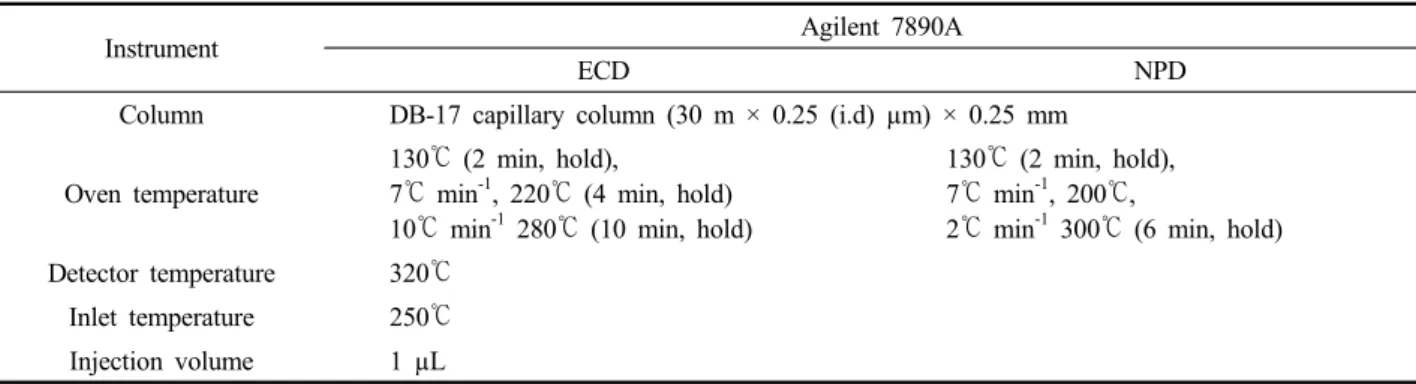
Table 1. GLC-ECD/NPD operating conditions for the analysis of pesticides
Instrument Agilent 7890A
ECD NPD
Column DB-17 capillary column (30 m × 0.25 (i.d) µm) × 0.25 mm
Oven temperature
130℃ (2 min, hold),
7℃ min
-1, 220℃ (4 min, hold) 10℃ min
-1280℃ (10 min, hold)
130℃ (2 min, hold), 7℃ min
-1, 200℃,
2℃ min
-1300℃ (6 min, hold) Detector temperature 320℃
Inlet temperature 250℃
Injection volume 1 µL
확산이 용이하여 품질 및 수량감소에 영향을 끼친다(남 등, 2001). 화훼재배지에서 발생하는 주요 병해로는 흰녹병, 흰 가루병, 뿌리혹병 등이 있으며, 주요 해충으로는 진딧물류, 점박이 응애, 온실가루이 등이 알려져 있다(임 등, 2005). 이 러한 병해충의 방제법으로 물리적, 화학적, 생물학적 방제법 이 사용되고 있으나 경제적이며, 효과가 빠른 화학적 방제에 의존하고 있는 실정이다.
농약은 농산물의 생산량 증가, 품질향상 및 유지・보존, 노 동력 절감 등에 필요한 필수농자재로 사용되고 있으며(정 등, 2000), 농약을 사용하지 않을 경우 벼에서 30%, 채소류는 20 - 70%의 감수율을 나타내며, 과수의 경우 재배가 거의 불가 능한 것으로 보고되고 있다(Takayuki, 2002; 농약공업협회, 2001). 현재 국내의 농약등록은 농약관리법에 따라 약효・약 해 시험, 인축 독성시험, 환경・생물 독성시험, 토양 및 수중 작물 잔류시험을 통해 등록되고 있다. 농약 등록시 수확 전 살포일, 살포량, 살포횟수 등의 안전사용기준을 설정하여, 농 산물 중 농약잔류량이 잔류허용기준(Maximum Residue Limit) 을 초과하지 않도록 관리하고 있으나(농촌진흥청, 2006), 국 제적으로 잔류면제 품목이나, 비식용작물에 대해서는 안전사 용기준 설정을 하지 않고 있다. 국내의 경우 비식용작물인 화 훼작물은 잔류허용기준 미설정 품목으로 분류되어 있으며, 안전사용기준 중 수확 전 살포횟수가 설정되어 있지 않은 실 정이다(농림부, 2006). 농약의 오・남용은 작물에 대한 약해발 생, 해충에 대한 저항성 발달, 수질, 대기, 토양 등의 환경오염 을 유발시킬 수 있는 가능성이 있기 때문에 지속적인 모니터 링과 관리가 필요하다. 미국, 유럽, 일본 등 선진국에서는 농 약별, 농산물별 최대잔류허용기준을 설정하고, 이를 토대로 지속적인 모니터링을 실시하여 자국의 농산물을 보호하고, 국민에게 안전한 농산물을 제공하고 있다(홍 등, 2003; 김 등, 2007). 국내에서는 1968년 처음으로 잔류농약 모니터링 을 실시한 이 후 검사 품목과 대상을 점차 확대하여 현재 399 종의 농약에 대한 잔류허용기준을 설정하여 관리하고 있다
(식품의약품안전청, 2007). 이 밖에도 매년 각 시・도 보건환경 연구원과 국립농산물품질관리원에서도 유통단계 뿐만 아니라 출하 전 농산물에 대해서도 잔류허용기준을 설정하고 모니터 링하여 잔류허용기준을 초과한 부적합 농산물에 대하여는 폐 기, 용도전환, 출하연기 등의 조치를 취하여 농산물의 안전성 을 확보하고 있다. 그러나 현재 국내・외적으로 농작물 중 잔류 농약 모니터링 연구는 식용 작물에 대해서만 이루어지고 있으 며, 비식용 작물인 화훼작물에 대한 조사는 이루어지지 않고 있어, 이에 따른 살포량 및 살포횟수 미설정으로 인해 야기될 수 있는 오・남용에 대한 연구가 전무한 실정이다. 따라서 본 연구에서는 생산・유통 중인 화훼작물의 잔류농약을 분석하여 국내 화훼류에 대한 잔류농약의 실태를 조사하고자 하였다.
재료 및 방법
분석대상 농약
분석대상 농약은 다성분 동시분석법으로 분석이 가능한 162 종을 선정하였으며, 분석기기는 GLC(ECD, NPD)와 HPLC (FLD, UVD)를 사용하였고, 분석조건은 Table 1, Table 2와 같다. 이 조건하에서 표준품의 머무름 시간을 기준으로 GLC/
ECD 분석농약을 E1(acrinathrin 외 14성분), E2(alachlor 외 15성분), E3(cyfluthrin 외 13성분), E4(butachlor 외 14성분)로, GLC/NPD 분석농약을 N1(bitertanol 외 16성 분), N2(buprofezin 외 16성분), N3(chlorpyrifos-methyl 외 14성분), N4(cyproconazole 외 9성분), HPLC 분석 농약을 H1(diethofencarb 외 15성분), H2(acetamiprid 외 9성분), H3(azinphos-methyl 외 8성분), H4(aldicarb 외 7 성분)로 분류하였고, 총 분석성분은 Table 3과 같다. 검량 선 작성 및 회수율 실험에 사용한 농약표준품은 순도 90%
이상의 Dr. Ehrenstorfer사(독일) 및 WAKO사(일본) 제품 을 사용하였다.
Table 2. HPLC-UVD/FLDoperating conditions for the anaylsis of pestcides
Instrument Agilent 1200
Column Phenomenex Luna C18 (4.6 cm × 250 mm (I.d)) × 5 mm
Detector UVD 254 nm
FLD Ex 330 nm, Em 466 nm
Mobile phase
0 - 5 min, water : acetonitrile (7:3, v/v), 1.0 mL min
-15 - 22 min, water : acetonitrile (15:85, v/v), 1.2 mL min
-122 - 30 min, water : acetonitrile (15:85, v/v), 1.2 mL min
-130 - 35 min, acetonitrile (0:100, v/v), 1.5 mL min
-1Injection volume 10 µL
Table 3. Categorized pesticide groups for multi-residue analysis in floriculture samples Analytical
Instrument List of pesticide
GLC/ECD (E1 group)
acrinathrin, bifenthrin, cypermethrin, dichlofluanid, difenoconazole, flufenoxuron, kresoxim-methyl, lufenuron, oxadiazone, procymidone, tetraconazole, tetradifon, tolylfluanid, tralomethrin, vinclozoline
GLC/ECD (E2 group)
alachlor, chlorfenapyr, chlorfluazuron, chlorothalonil, deltamethrin, endosulfan, endosulfan-sulfate, fenarimol, fenpropathrin, fenvalerate, fipronil, flutolanil, fthalide, halfenprox, nuarimol, pyridaben
GLC/ECD (E3 group)
cyfluthrin, lamda-cyhalothrin, dicofol, dithiopyr, fenoxanil, folpet, indoxacarb, iprodione, isoporthiolane, penconazole, propanil, tefluthrin, thifluzamid, trifluralin
GLC/ECD (E4 group)
butachlor, dimethenmid, etrimfos, indanofan, mefenacet, ofurace, paclobutrazole, permethrin, probenazole, prochloraz, pyridalyl, pyrimidifen, triadimefon, triflumuron, zoxamide
GLC/NPD (N1 group)
bitertanol, dichlorvos, fenthion, fosthiazate, malathion, metalaxyl, methabenzthiazuron, methidathion,
myclobutanil, phorate, phosalone, phosphamidone ,prothiofos, tebufenpyrad, terbufos, tolclofos-methyl, triazophos GLC/NPD
(N2 group)
buprofezin, cadusafos, chlorpyrifos, cyprodinil, dimethoate, edifenphos, EPN, ethoprophos, fenbuconazole, fenitrothion, metconazole, napropamide, phenthoate, profenofos, pyrazophos, tebupirimfos, terbuthylazine GLC/NPD
(N3 group)
chlorpyrifos-methyl, diazinon, fenazaquin, fludioxonil, flusilazole, hexaconazole, iprobenfos, mepronil, monilate, parathion, pendimethalin, pirimiphos-methyl, pyraclofos, tebuconazole
GLC/NPD (N4 group)
cyproconazole, dimepiperate, diniconazole, diphenamid, esprocarb, etoxazole, fenothiocarb, furathiocarb, pyriminobac-M, thiazopyr
HPLC/UVD (H1 group)
BPMC(Fenobucarb), diethofencarb, diflubenzuron, dimethylvinphos, ethiofencarb, ferimzone, imibenconazole, imidacloprid, pentoxazone, pyraclostrobin, pyributicarb, pyriproxyfen, pyroquilon, tebufenozide, teflubenzuron, thiamethoxam
HPLC/UVD (H2 group)
acetamiprid, boscalid, carbendazim, cymoxanil, dimethomorph, fenpyroximate, fluacrypyrim, pirimicarb, pyrazoxyfen, pyrimethanil
HPLC/UVD (H3 group)
azinphos-methyl, azoxystrobin, clothianidin, cyazofamid, mepanipyrim, pencycuron, thiacloprid, tricyclazole, trifloxystrobin
HPLC/FLD
(H4 group) aldicarb, carbaryl, carbofuran, fluquinconazole, isoprocarb, methiocarb, methomyl, oxamyl
시료채취 시기 및 방법
시료는 생산량과 소비량이 가장 많은 장미, 국화, 백합 3종 을 선정하였다. 생산 중인 화훼작물은 경기도 화성, 고양에서 2008년 6 - 9월 각각 1회(27점), 2008년 7월 강원도 인제의 백합재배단지에서 1회(3점) 채취하였으며, 유통 중인 화훼작 물은 2008년 6 - 9월 서울의 대형 화훼유통단지(강남 꽃 도 매상가, 남대문 대도상가, 양재동 화훼공판장)에서 3회(54점)
에 걸쳐 채취하였다. 채취한 시료는 꽃과 잎 부위로 나누어 각각 20 g씩 정칭하여 -20℃의 deep freezer에 보관하였다.
화훼 시료 분석
시료 분석은 식품공전(보건복지부, 2002) 및 국립농산물품 질관리원 시험법(국립농산물품질관리원, 2002)에 준하여 Fig.
1과 같은 과정으로 추출, 정제 및 기기분석을 수행하였다. 분
Sample (20 g)
Add acetone 100 mL, d-H2O 50 mL Homogenized (3 min., 10,000 rpm)
Vacuum filtration Add 5% NaCl soln. 50 mL
Partitioned by dichloromethane 80 + 70 mL
Dichloromethane phase
Filtering through anhyd. Na
2SO
4Evaporation Dissolved by acetone/n-hexane (2/8, v/v) 5 mL
Evaporation Redissolved by
methanol/dichlomethane (3/7, v/v) 3 mL
Purification (SPE-FL cartridge) 1. Conditioned by n-hexane 5 mL
+ acetone/n-hexane (2/8, v/v) 5 mL
2. Eluted sample by acetone/n-hexane (2/8, v/v) 2 mL + acetone/n-hexane (2/8, v/v) 5 mL
Purification (SPE-NH
2cartridge) 1. Conditioned by dichloromethane 5 mL + methanol/dichloromethane (3/7, v/v) 5 mL
2. Eluted by sample by methanol/dichloromethane (3/7, v/v) 2 mL + methanol/dichloromethane (3/7, v/v) 5 mL
Evaporation Evaporation
Redissolved by acetone 2 mL Redissolved by acetonitrile 2 mL
GC/ECD, NPD HPLC/UVD, FLD
Fig. 1. A scheme for multi-residue analysis of pesticides in the floricultural crops.
석대상 농약의 정성분석은 분석기기상에 나타나는 화훼시료 와 표준품의 retention time을 비교하였으며, 각 그룹에서 retention time이 같을 경우에는 mass spectrometer를 이용하 여 확인하였다. 본 실험에서 언급한 검출빈도는 농약의 검출 수를 시료의 수로 나누어 100을 곱한 값으로 정의하였다.
결과 및 고찰
재배 중인 화훼작물의 잔류농약 모니터링
경기도 고양시, 화성시, 강원도 인제군에서 채취한 장미, 국화, 백합 시료의 잔류농약 모니터링 결과, 총 24종(살균제 12종, 살충제 11종, 살비제 1종)이 검출되었으며, 잔류량은
0.01 mg kg-1 - 36.99 mg kg-1범위로 나타났다. 장미꽃에서는 잔류농약이 검출되지 않았으며, 잎에서 endosulfan 0.1 mg kg-1, boscalid 1.68 mg kg-1 등 총 11종의 농약이 검출되었다 (Table 4). 국화꽃에서는 carbaryl 0.01 mg kg-1, fluacrypyrim 2.16 mg kg-1 등 총 5종의 농약이 검출되었으며, 잎에서는 boscalid 7.56 mg kg-1, carbofuran 0.02 mg kg-1 수준으로 잔류하였다(Table 5). 백합꽃에서는 carbaryl 0.01 mg kg-1, carbendazim 12.77 mg kg-1 등 총 5종의 농약이 검출되었으 며, 잎에서는 carbaryl 0.01 mg kg-1, chlorothalonil 4.98 mg kg-1 등 총 4종의 농약이 검출되었다(Table 6). 작물별 검출빈도는 장미에서 endosulfan이 50%로 가장 높았으며, boscalid 외 9종의 농약이 16%의 검출빈도를 나타냈다. 국화
Table 4. Amount of pesticide residues in rose samples collected from cultivation farms
Sample Residue amount of pesticide (mg kg
-1)
Flower ND
a)Leaf
boscalid (1.68), cyhalothrin (3.39), endosulfan (0.1-7.88), endosulfan-sulfate (39.74), etoxazole (4.13), fenpropathrin (0.34),
iprodione (18.34), kresoxim-methyl (4.97), metalaxyl (6.13), pyraclofos (0.24), pyraclostrobin (36.99)
a)
ND : Not Detected.
Table 5. Amount of pesticide residues in chrysanthemum samples collected from farms
Sample Residue amount of pesticide (mg kg
-1)
Flower carbaryl (0.01), fluacrypyrim (2.16), methomyl (0.10), trifloxystrobin (1.72)
Leaf
boscalid (7.56-27.23), carbofuran (0.02), fluacrypyrim (24.39), fluquinconazole (0.19-0.55), methiocarb (0.01), methomyl (0.01-3.64), pyraclostrobin (11.79-11.85), trifloxystrobin (19.39)
Table 6. Amount of pesticide residues in lily samples collected from farms
Sample Residue amount of pesiticde (mg kg
-1)
Flower carbaryl (0.01-0.39), pencycuron (0.04), carbendazim (0.57-12.77), diethofencarb (0.26-5.83), imidacloprid (0.37-0.70)
Leaf carbaryl (0.01), chlorothalonil (4.98), fluquinconazole (0.07-0.38), vinclozolin (0.36)
Fig. 2. Number of pesticides detected in rose, chrysanthemum and lily samples collected from cultivation farm.
에서는 fluquinconazole이 50%로 가장 높았으며, boscalid, methomyl, pyraclostrobin 등이 33%로 나타났다. 백합에서 는 carbaryl이 50%로 가장 높았으며, carbendazim, dietho- fencarb, imidacloprid 등이 33%의 검출빈도를 나타냈다.
장미는 검은무늬병, 노균병, 잿빛곰팡이병, 흰가루병, 깍지 벌레류, 꽃노랑총채벌레, 담배가루이, 점박이응애, 찔레수염 진딧물에 대해 71종의 농약이 등록되어 있으며, 국화는 흰녹 병, 꽃노랑총채벌레, 대만총체벌레, 뿌리썩이선충, 아메리카 잎굴파리, 꼬마수염진딧물, 목화진딧물에 대해 총 42종, 백합
은 구근부패병, 잎마름병, 뿌리응애, 목화진딧물에 대해 총 15종의 농약이 등록되어 있다(작물보호협회, 2008). 검출된 농약과 농약사용지침서(한국작물보호협회, 2008)와 비교하 여 해당 작물에 대한 농약등록 여부를 확인하였다. 장미시료 는 검출된 농약 11종 중 55%에 해당하는 6종, 국화시료는 10종 중 60%에 해당하는 6종, 백합시료는 8건 중 63%에 해 당하는 5종의 농약이 미등록 약제로 나타났다(Fig. 2).
유통 중인 화훼작물의 잔류농약 모니터링
서울의 대형 화훼 유통단지(양재동 화훼공판장, 남대문 대 도상가, 강남 꽃 상가)에서 채취한 장미, 국화, 백합 중의 농약 잔류모니터링 결과, 총 64종(살균제 25종, 살충제 36종, 살비 제 1종, 제초제 2종)이 검출되었으며, 잔류량은 0.01 mg kg-1 - 56.20 mg kg-1범위로 나타났다. 장미꽃에서는 carbaryl 0.1 mg kg-1, pencycuron 1.06 - 0.94 mg kg-1 등 총 12종의 농 약이 검출되었으며, 잎에서는 buprofezin 0.08 - 1.91 mg kg-1, carbaryl 0.01 - 0.04 mg kg-1등 총 25종의 농약이 검출되었다 (Table 7). 국화꽃에서는 fluquinconazole 0.01 - 0.43 mg kg-1, kresoxim-methyl 0.10 - 0.68 mg kg-1 등 총 19종의 농약이 검출되었으며, 국화잎에서는 fenpropathrin 1.15 - 1.56 mg kg-1, kresoxim-methyl 0.64 mg kg-1 등 총 32종의 농약이 검출되었다 (Table 8). 검출빈도가 높은 fluquinzonazole은 quinazolintriazole
Table 7. Amount of pesticide residues in rose samples collected from floral markets
Sample Residue amount of pesticide (mg kg
-1)
Flower
azoxystrobin (0.10), carbaryl (0.01-0.02), carbofuran (0.04), clothianidin (0.02-0.05), diflubenzuron (0.14), kresoxim-methyl (0.09), methiocarb (0.01), pencycuron (1.06-1.94), pentoxazone (0.11), pyraclofos (0.03), pyrazoxyfen (0.22-0.41), thiacloprid (0.06)
Leaf
acetamiprid (1.43), bitertanol (5.94), boscalid (0.06), buprofezin (0.08-1.91), carbaryl (0.01-0.04), carbendazim (0.17), carbofuran (0.01-0.08), clothianidin (2.30), cyazofamid (3.31-5.96), dichlofluanid (11.22), diflubenzuron (17.99), endosulfan (0.07-6.91), endosulfan-sulfate (24.10-40.90), etoxazole (0.89), flufenoxuron (5.86), fluquinconazole (0.34-1.12), hexaconazole (0.68-0.91), imidacloprid (0.76), indoxacarb (5.07), kresoxim-methyl(0.06-3.12), methiocarb(0.01), methomyl (0.01), pencycuron (0.85), tetraconazole (0.30-8.03), triflumizole (1.07)
Table 8. Amount of pesticide residues in chrysanthemum samples collected from floral markets
Sample Residue amount of pesticide (mg kg
-1)
Flower
azoxystrobin (15.26), carbaryl (0.01-0.02), carbendazim (1.41), clothianidin (0.06), diethofencarb (2.95), flufenoxuron (0.88), fluquinconazole (0.10-0.43), isoprocarb (0.01), kresoxim-methyl (0.10-0.68), methiocarb (0.02-0.03), methomyl (0.01), pyraclofos (0.84), pyrazoxyfen (0.77-2.74), pyrimethanil (4.74), tetradifon (0.33),
thiacloprid (2.09-6.82), tricyclazole (0.41)
Leaf
bifenthrin (0.64), carbaryl (0.02-0.33), carbendazim (11.07), chlorfenapyr (0.93), cyazofamid (13.76), dichlorvos (6.68), diazinon (2.79), difenoconazole (0.94), diniconazole (9.54), endosulfan (5.33),
endosulfan-sulfate (4.77), EPN (9.85-53.5), fenarimol (7.03), fenpropathrin (1.15-1.56), fluquinconazole (0.21-19.10), hexaconazole (4.30), kresoxim-methyl (0.64-56.20), methiocarb (0.02-0.03), methomyl (0.40-0.80),
myclobutanil (0.35-1.04), pencycuron (12.33-39.33), phorate (1.42), procymidone (0.35), pyrazoxyfen (25.39), pyrimethanil (6.08), tebufenpyrad (8.57-11.40), tetradifon (1.93), tiacloprid (1.89-13.95), trifloxystrobin (29.25), triflumizole (21.85)
Table 9. Amount of pesticide residues in lily samples collected from floral markets
Sample Residue amount of pesticide (mg kg
-1)
Flower
azoxystrobin (0.94), boscalid (0.05), carbaryl (0.01-0.46), carbendazim (4.02), diethofencarb (4.02), ferimzone (0.35), fluquinconazole (0.04), imibenconazole (0.60), isoprocarb (0.03-0.07), kresoxim-methyl (0.01), methiocarb (0.01-0.05), methomyl (0.01-1.78), pentoxazone (0.25), pyrimethanil (0.01-0.17), pyriproxyfen (0.53), teflubenzuron (16.88), trifloxystrobin (13.26)
Leaf
acetamiprid (0.05), azoxystrobin (2.59-6.33), bifenthrin (0.08-0.18), boscalid (1.92), carbaryl (0.07-0.12), carbendazim (23.89), chlorothalonil (22.79), difenoconazole (0.39), endosulfan (0.15), fenpyroximate (0.59), fenvalerate (0.20), fluquinconazole (0.25-0.81), kresoxim-methyl (0.02-0.06), methiocarb (0.01), methomyl (0.01), procymidone (15.82), pyriproxyfen (0.98), thiacloprid (6.95)
계 살균제이며, thiacloprid는 neonicoinoid계 살충제로 침투 이행성 농약으로 작물에 어느 정도 잔효성이 있다고 알려져 있다. 국화의 가장 큰 피해를 입히는 병해로는 흰녹병, 잿빛곰팡 이병, 역병 등이 있으며, 해충으로는 잎굴파리, 총채벌레, 파밤 나방 등이 알려져 있다. 이들을 방제 하는 약제로 azoxystrobin, bitertanol, chlorothalonil, difenoconazole, acrinathrin, emamectin benzoate, imidacloprid 등이 등록되어 있지만, 실험결과 다양 한 약제들이 검출되었다(Table 8). 백합꽃에서는 isoprocarb 0.03 - 0.07 mg kg-1, methomyl 0.01 - 1.78 mg kg-1 등 총 20종의 농약이 검출되었으며, 백합잎에서는 azoxystrobin, 0.05 mg kg-1, kresoxim- methyl 0.02 - 0.06 mg kg-1 등 총 20종의 농약이 검출되었다. Methomyl은 카바메이트계
침투 이행성 살충제로 고독성 농약으로 분류되어 있으며, 고 추, 배추, 사과 등의 담배나방, 진딧물 등의 방제 약제로 등록 되어 있다(Table 9). 작물별 검출빈도는 장미에서 carbaryl, carbofuran, clothianidin, endosulfan, kresoxim-methyl 이 17%로 가장 높았으며, buprofezin 외 7종이 11%의 검출빈도 를 나타냈다. 국화에서는 fluquinconazole, thiacloprid 가 28%로 가장 높았으며, carbaryl, kresoxim-methyl, methomyl 등이 22%로 나타났다. 백합에서는 methomyl이 22%로 가 장 높았으며, carbaryl, fluquinconazole, kresoxim-methyl 이 17%로 나타났다. 검출된 농약과 농약사용지침서와 비교 하여 해당 작물에 대한 농약등록 여부를 확인하였다. 장미시 료는 검출된 농약 30종 중 47%에 해당하는 14종, 국화시료
Fig. 3. Number of pesticides detected in rose, chrysanthemum and lily samples collected from floral markets.
국내 재배・유통 중인 화훼의 잔류농약 모니터링
이경희 ・ 김성수 ・ 박홍열 ・ 지광용 ・ 김종걸 ・ 허건양1・ 허장현*
강원대학교 농업생명과학대학 바이오생물환경학과,
1농촌진흥청 국립원예특작과학원 원예작물부 화훼과
요 약
화훼작물은 주로 시설재배로 연중 생산 및 출하가 가능한 장점이 있으나 연작 및 고온・다습한 환경으로 인해 병해충 발생이
용이하고 주로 화학적 방제에 의존하고 있다. 따라서 본 연구에서는 생산・유통 중인 화훼작물 중의 잔류농약 실태를 파악하기 위하여 다성분 분석을 통한 잔류농약 모니터링을 실시하였다. 화훼작물은 생산량과 소비량이 가장 많은 장미, 국화, 백합을 대상으로 경기도 화성, 고양, 강원도 인제군 화훼재배단지에서 1회 채취하였고, 서울의 대형 화훼유통단지(남대문 도매시장, 양재 꽃 시장, 강남 꽃 시장)에서 3회 시료를 채취하여 GC/ECD, NPD, HPLC/UVD, FLD로 분석하였다. 화훼작물 중 잔류농약의 모니터링 실험결과 생산 중인 화훼작물 에서 살균제 12종, 살충제 11종, 살비제 1종 등 총 24종의 농약이 검출되었다. 검출빈도는 carbaryl 15%, boscalid, fluacrypyrim, fluquinconazole, methomyl, pyraclostrobin, trifloxystrobin 10% 순으로 나타났으며, 잔류량은 0.01 mg kg
-1~ 27.23 mg kg
-1이었다.
유통 중인 화훼작물에서는 살균제 25종, 살충제 36종, 살비제 1종, 제초제 2종 등 총 64종의 성분이 검출되었다. 검출빈도는 carbaryl, fluquinconazole, kresoxim-methyl 19%, methomyl 17%, methiocarb, thiacloprid 13% 순으로 나타났으며, 잔류량은 0.01 mg kg
-1~ 53.5 mg kg
-1을 보였다. 전반적으로 꽃보다 잎에서 잔류량이 높은 경향을 나타냈으며, 생산 중인 장미, 국화, 백합에서 각각 55%, 60%, 63%이었고, 유통 중인 장미, 국화, 백합에서 각각 47%, 60%, 89%는 해당 작물에 등록되어 있지 않은 미등록 농약인 것으로 나타났다.
따라서 화훼작물 중 지속적인 잔류농약 모니터링을 실시하여 사용가능한 농약 품목 등록의 확대 및 농약 사용에 대한 체계적인 관리와 교육이 요구되고 있다.
색인어 화훼작물, 잔류농약, 다성분농약분석
는 48종 중 60%에 해당하는 29종, 백합시료는 28건 중 89%
에 해당하는 25종의 농약이 미등록 약제로 나타났다(Fig. 5).
본 연구에서 생산・유통 중인 장미, 국화, 백합의 잔류농약 모니터링 결과 전반적으로 꽃보다 잎에서의 잔류량이 높았으 며 이는 잎의 형태의 차이, 잎 표면 털의 밀도, 잎의 두께, cuticle의 화학적 특성의 차이 때문이라고 판단된다(성 등, 2004).
본 실험 결과 국내 화훼 중 살균제, 살충제 등 다양한 농약 성분이 검출되었으며, 일부는 해당 작물에 등록되지 않은 미 등록 농약들도 다수 검출되었다. 특히 백합의 경우, 타 작물 에 비하여 등록되어 있는 농약의 수가 적어 올바른 농약 사용
을 위하여 사용가능 농약 품목 등록의 확대가 시급히 필요한 것이라 판단되었다. 아울러 미등록 농약의 사용 및 농약의 오․
남용을 방지하기 위하여 화훼 재배자에 대한 올바른 농약사 용 방법 및 농약 안전성에 대한 체계적인 교육의 필요성이 제 기되었다.