ISSN 1225-6552, eISSN 2287-7630 https://doi.org/10.7853/kjvs.2016.39.4.221
< Original Article >
Veterinary Service
Available online at http://kjves.org
*Corresponding author: Byeong-Soo Kim, Tel. +82-41-330-1523, Fax. +82-41-330-1529, E-mail. [email protected]
Effect of surgical castration treatments on blood parameters and behavioral characteristics in Korean native cattle (Hanwoo)
Byeong-Soo Kim*
Department of Companion and Laboratory Animal Science, College of Industrial Science, Kongju National University, Yesan 32439, Korea
(Received 8 November 2016; accepted 29 November 2016)
Abstract
The animal welfare issues in cattle breeding include breeding environment, elimination, and castration.
Among these, castration is unavoidable because it decreases cattle aggressiveness, improves meat quality, and enhances feed efficiency. In this study, the degree of stress associated with various methods of castration treatment was investigated for animal welfare in Hanwoo breeding. Cortisol levels dramatically increased right after castration in both the SoF and SoV groups. However, the increase in the SoF group was significantly (P<0.05) higher than that in the SoV group, and the range of decrease was also smaller. Among the behav- ioral characteristics, standing was significantly (P<0.05) higher in the SoV (374.93±21.51) and SoF (379.93±21.30) groups based on the behavioral time (min/12 hours) compared to that in the NC group (359.37±19.69). The SoF and SoV groups did not show any significant (P<0.05) difference. In terms of be- havioral frequency, the NC group demonstrated a significantly (P<0.05) high frequency of drinking, self-grooming, scratching, and rubbing, and a significantly (P<0.05) less frequency of fighting behavior. The feeding time significantly (P<0.05) decreased in the SoV and SoF groups, and their frequencies of pairwise grooming were significantly (P<0.05) less. Based on the results, the cattle experienced less stress during castration by a veterinarian than during treatment using a move-stop.
Key words : Castration, Hanwoo, Animal welfare, Blood parameters, Behavioral characteristics
INTRODUCTION
The World Organisation for Animal Health (OIE) has defined animal welfare as the state in which animals are healthy and comfortable, enjoy sufficient nutrition, are able to express their natural behavior in a safe environ- ment, and do not experience unpleasant situations such as pain, fear, or distress. However, with the produc- tivity-based approach to breeding and reproduction man- agement, and the aim of ensuring optimum nutrition ef- ficiency during feed management, prioritizing the wel- fare of animals may be difficult. As a result, in- troduction of the concepts of increasing productivity and pursuing profits to animal welfare, which considers the
psychology of social farm animals and their environ- ment, is highly difficult (Yoon and Kim, 2013). However, the enhancement of animals’ quality of life, along with continuous income growth, has a major influence on the improvement in public dietary patterns and animal prod- uct purchase. The consumer demand for environmentally friendly and safe beef is increasing (Yoon, 2008). The major issues in animal welfare for Hanwoo cattle are breeding environment, elimination, and castration. In particular, castration has been utilized for a long time to improve aggressive behaviors of cattle and enhance the quality of meat (Kiley, 1976). It decreases daily gain and growth rate, but increases fat content and the mar- ble score, which are favored by Koreans (Hart, 1980).
Nonetheless, castration has become a topic of debate worldwide in terms of its impact on animal welfare
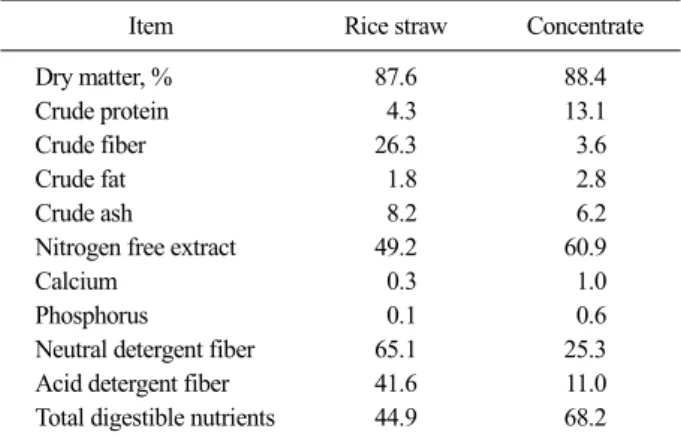
Table 1. Chemical composition of experimental diets
Item Rice straw Concentrate
Dry matter, % 87.6 88.4
Crude protein 4.3 13.1
Crude fiber 26.3 3.6
Crude fat 1.8 2.8
Crude ash 8.2 6.2
Nitrogen free extract 49.2 60.9
Calcium 0.3 1.0
Phosphorus 0.1 0.6
Neutral detergent fiber 65.1 25.3
Acid detergent fiber 41.6 11.0
Total digestible nutrients 44.9 68.2
(Moberg, 1987; Mellor, 1991). The two types of castra- tion treatment are endovascular surgery and non-surgical (bloodless) (Noordsy, 1994). There are two widely ap- plied surgical methods. First, an expert veterinarian sur- gically makes an incision into the scrotum after apply- ing local anesthesia to expose the testis. The spermatic cord, which includes the vas deferens, testicular artery, and testicular vein, is ligated, and the testis is removed.
The second method is elastic band castration; it is a bloodless castration method performed using the Burdizzo device. In Korea, however, anesthetics or seda- tives are not used. Instead, a method that goes against animal welfare principles is practiced, in which a move-stop (electronic rod) is inserted into the anus and temporary paralysis of nerves and muscles is induced for surgery. This approach causes stress to the cattle (Blackshaw, 1986). The type of stress can be verified through hematological testing, including assessments of cortisol level (Fisher et al., 1996; Fisher et al., 1997;
Fell and Shutt, 1989; Lester et al., 1991; King et al., 1991; Chase et al., 1995) together with behavioral char- acteristics testing (Wood et al., 1991; Molony and Kent, 1997). It is also possible to verify this through the amount of feed consumed and feed efficiency (Fisher et al., 1996; Fisher et al., 1997). The National Institute of Animal Science has recently implemented systems to certify livestock breeding for farm animal welfare. The systems involve the establishment of breeding plans based on animal welfare, countermeasures, analysis and measures on the OIE international standards on animal welfare. However, studies on stress testing during the Hanwoo castration treatments have so far been insufficient.
Therefore, this study investigated the stress experienced by Hanwoo cattle by comparing the blood parameters and behavioral characteristics during different methods of castration treatment.
MATERIALS AND METHODS
Test animals and study period
Nine (average weight 148.1±5.9 kg) aged 6∼7 months bred in a resource recycling breeding system were stud-
ied for analysis. Three animals each were allocated to 3 stables, and a preliminary experiment was conducted for 10 days prior to the stress adaptation. Three animals were castrated using anesthetics and sedatives by an ex- pert veterinarian (SoV group), three were castrated using a move-stop for paralysis (without anesthetics and seda- tives) by a farmer (SoF group), and the remaining three were not castrated (NC group); animals of each group were bred separately in 3 different stables (5.0×10.0 m).
The feeding experiment was performed for 15 days.
Experimental diets and feeding management For the experiment, 1.2∼1.4% of feeds and straw to the weight was provided as concentrated feeds according to the feeding management program. Feeds were pro- vided twice a day at 8 am and 5 pm. Mineral blocks and water were given ad libitum. The experimental diets were analyzed using AOAC (AOAC (2000)), and the mix ratio and chemical composition of the experimental diets are shown in Table 1.
Blood parameters
A preliminary experiment was performed on the se- lected animals for 10 days. Blood was sampled from the jugular veins at 2 hours pre-castration and 12 hours post-castration. The blood sample was placed into a va- cutainer without heparin and then kept overnight at 4oC.
Subsequently, it was centrifuged at 2000 rpm for 15 mi- nutes, and the serum was stored in a deep freezer at
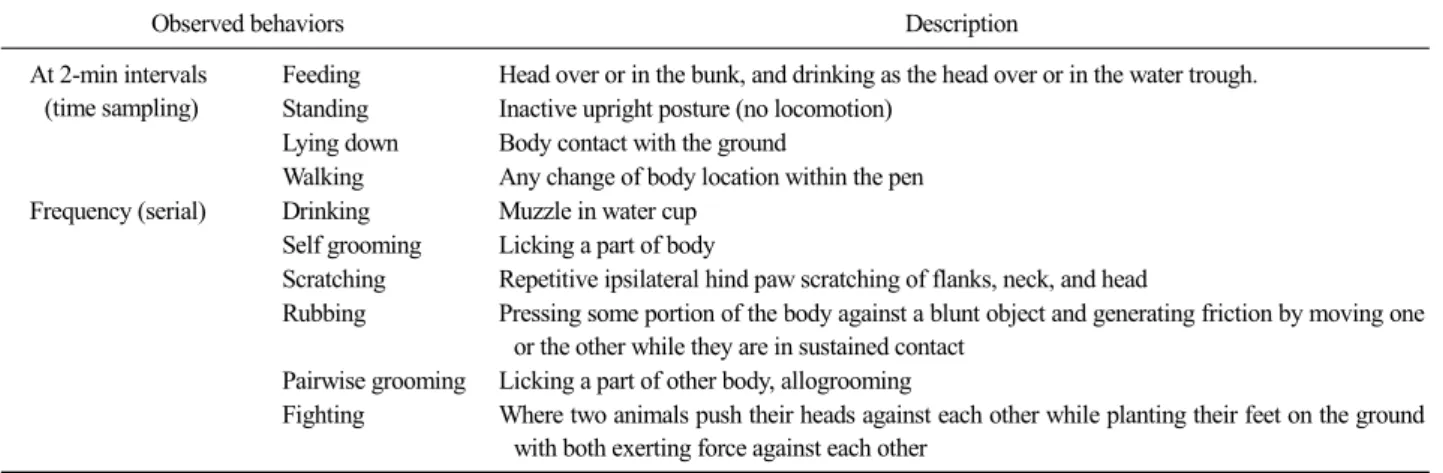
Table 2. List of behavioral classification
Observed behaviors Description
At 2-min intervals (time sampling)
Feeding Head over or in the bunk, and drinking as the head over or in the water trough.
Standing Inactive upright posture (no locomotion) Lying down Body contact with the ground
Walking Any change of body location within the pen Frequency (serial) Drinking Muzzle in water cup
Self grooming Licking a part of body
Scratching Repetitive ipsilateral hind paw scratching of flanks, neck, and head
Rubbing Pressing some portion of the body against a blunt object and generating friction by moving one or the other while they are in sustained contact
Pairwise grooming Licking a part of other body, allogrooming
Fighting Where two animals push their heads against each other while planting their feet on the ground with both exerting force against each other
−70oC. The sample for blood analysis was placed in re- agent bottles with EDTA 2Na (2 mL). The white blood cell (WBC) and red blood cell (RBC) counts and hemo- globin (HGB), albumin, and globulin levels were ana- lyzed using fresh blood samples and an automatic blood cell counter (Serono System 9000, Switzerland). The levels of the stress hormone cortisol in serum were ana- lyzed with a -counter (Cobra 5010 Quantum, Packard, USA).
Behavioral measurement
A video system (Panasonic camera Model WV-CP412 and Panasonic video cassette recorder Model 6730) was installed in each stable, and the recordings were analyzed. For the behavioral data collection from each stable, the behaviors were categorized per stable based on the method suggested by Ha et al. (2016). The day- time behaviors for 12 hours daily (7 am∼7 pm) were compared on the basis of the list of behavioral classi- fication in Table 2.
The observed behaviors were “standing” for standing straight, “lying down” for the position in which the ani- mal’s body touches the ground, “feeding” when the ani- mals bring their head into the feed box or watering trough, and “walking” when the body was moving. The following behaviors were defined as follows: “drinking”
as drinking water, “self-grooming” as grooming their own body with their tongue, “scratching” as scratching their body using their rear legs, “rubbing” as rubbing their body against a pall or object, “pairwise grooming”
as grooming the body of other animals, and “fighting”
as fighting against other animals. The behaviors were recorded each time they were expressed based on the frequency data of collection method, and the behavioral characteristics were compared and analyzed.
Statistical analysis
The scores obtained in this experiment were analyzed using the SAS package (2004). Variance analysis and t-test were conducted to investigate the significance (P<0.05) of the stables.
RESULTS AND DISCUSSION
Blood parameters
The analysis of the blood parameters (WBC, RBC, HGB, albumin, and globulin) according to the methods of castration treatment is shown in Table 3. At 12 hours post-castration, the WBC count (103/mm3) in the SoV group significantly (P<0.05) increased from 7.45±0.87 right before castration to 9.58±1.03. The WBC count in the SoF group also significantly (P<0.05) increased from 7.73±0.16 to 10.30±0.73. The RBC count (106/mm3) in the SoV group significantly (P<0.05) increased from 8.38±0.51 right before castration to 10.93±1.15. The RBC of the SoF also significantly (P<0.05) increased from 8.21±0.28 to 11.44±1.29. The levels of HGB and albumin did not demonstrate any significant (P<0.05)
Table 3. Comparison of surgical castration treatments on blood parameters
Items SoV§ SoF∥ NC**
Before castration After 12 hours Before castration After 12 hours Before castration After 12 hours
WBC* (103/mm3) 7.45±0.87 9.58±1.03 7.73±0.16 10.30±0.73 7.55±1.17 7.75±1.06
RBC† (106/mm3) 8.38±0.51 10.93±1.15 8.21±0.28 11.44±1.29 8.51±0.36 8.48±0.46
HGB‡ (g/dL) 13.21±0.76 12.99±0.82 13.44±1.19 12.98±1.41 13.47±0.49 13.26±0.48
Albumin (g/dL) 4.53±0.21 4.26±0.18 4.74±0.16 4.39±0.32 4.33±0.15 4.29±0.26
Globulin (g/dL) 2.99±0.27 2.10±0.32 3.10±0.27 1.69±0.19 3.02±0.28 2.96±0.29
Values are mean±standard deviation.
*White blood cell, †Red blood cell, ‡Hemoglobin, §Surgery by a veterinarian, ∥Surgery by a farmer, **No castration.
Fig. 1. Change in cortisol levels according to the types of castration treatment. -■- : surgery by a farmer (use of move-stop), -▲- : no cas- tration, -X- : surgery by a veterinarian.
Table 4. Effect of surgery castration treatments on behavioral characteristics in Hanwoo
Items Time (minute/12 hours)
SoV* SoF† NC‡
Feeding 49.17±2.75 48.17±2.71 51.52±4.07 Standing 374.93±21.51 379.93±21.30 359.33±19.69 Lying down 289.20±20.42 285.67±20.13 302.67±19.65 Walking 6.30±0.69 6.23±0.49 6.48±0.49 Values are mean±standard deviation.
*Surgery by a veterinarian, †Surgery by a farmer, ‡No castration.
Table 5.Effect of surgical castration treatments on behavioral characteristics in Hanwoo
Items Count (number/12 hours)
SoV* SoF† NC‡
Drinking 10.20±1.56 9.07±1.00 10.80±1.28
Self grooming 32.67±4.21 30.20±3.17 33.33±3.61 Scratching 11.13±2.06 10.20±1.97 11.47±2.47
Rubbing 9.73±1.91 8.47±1.45 10.40±2.27
Pairwise grooming 13.07±2.95 11.80±1.90 13.80±2.61 Fighting 2.20±1.11 1.87±0.88 3.13±1.41 Values are mean±standard deviation.
*Surgery by a veterinarian, †Surgery by a farmer, ‡No castration.
difference. The globulin level (g/dL) significantly (P<0.05) decreased from 2.99±0.27 right before castration to 2.10±0.32 in the SoV group, and those in the SoF group also significantly (P<0.05) decreased from 3.10±0.27 to 1.69±0.19. The cortisol level drastically in- creased right after castration in the SoF and SoV groups as shown in Fig 1. However, the level in the SoF group was significantly (P<0.05) higher than that in the SoV
group, and its range of decrease was also lower. In case of the SoV group, the level decreased 40 minutes after the surgery, and it slightly increased after 2 hours. This result is probably due to the pain experienced when the effect of anesthesia faded, and the level gradually reduced. The cortisol level in the SoF group gradually decreased, but it was still higher compared to that in the SoV group. In addition, when the cortisol level in- creased, the globulin level decreased and the WBC and RBC counts increased. The cortisol level showed a dra- matic increase right after the castration corresponding to the results reported by Ting et al. (2005). The WBC and RBC counts also slightly increased, which is similar to the results reported by Chase et al. (1995).
Behavioral measurement
The behavioral characteristics of castrated calves are shown in Tables 4 and 5. Standing was significantly (P<0.05) higher in the SoV (374.93±21.51) and SoF groups (379.93±21.30) compared to that in the NC
group (359.37±19.69) based on behavioral time (min/12 hours). The results of the SoF and SoV groups were not significantly different (P<0.05). In terms of behavioral frequency, the NC group showed significantly (P<0.05) high rates of drinking, self-grooming, scratching, and rubbing, and a significantly (P<0.05) low rate of fighting. The feeding time in the SoV and SoF groups significantly (P<0.05) decreased, and the frequency of pairwise grooming was significantly (P<0.05) low. This result was similar to that obtained by Eicher et al.
(2000), in which tail docking was performed on cattle, and the times for lying down and walking decreased, and the standing time reduced.
CONCLUSION
Enhanced quality of life, along with growth in in- comes, has had an influence on the improvement in the diet and animal product purchase. In this context, pur- chase of animal products produced based on animal welfare is also increasing, and international organ- izations including the OIE are publishing guidelines for animal welfare. In Korea, certain animal policies for farm animals were established and are in effect.
However, these policies are still in their initial phase, and studies that fit Korean conditions are not adequate.
The use of electronic move-stop without anesthetics or sedatives is preferred due to its cost and convenience.
Therefore, the present study aimed to suggest a Hanwoo breeding method based on animal welfare principles which correspond to the global trend. In this study, the differences in blood parameters and behavioral charac- teristics were analyzed to investigate the stress levels ac- cording to the different types of castration treatment.
Nine Hanwoos (male calves) aged 6∼7 months were categorized into SoV (Hanwoos which were castrated using anesthetics and sedatives by an expert veter- inarian), SoF (Hanwoos which were paralyzed in the anus area with a move-stop and castrated by a farmer), and NC (Hanwoos which were not castrated). They were allocated in different stables and fed according to the Hanwoo feeding management program. For data col- lection, blood analysis was performed at 2 hours pre-ca-
stration and 12 hours post-castration. Behavioral charac- teristics data were recorded for 15 days for analysis based on the multiple individual tracking and selective behavioral observation. At 12 hours post-castration, the results of the blood parameters showed that the WBC count (103/mm3) significantly (P<0.05) increased from 7.45±0.87 right before the castration to 9.58±1.03 in the SoV group, and that of the SoF group also significantly (P<0.05) increased from 7.73±0.16 to 10.30±0.73. The RBC count (106/mm3) of the SoV group significantly (P<0.05) increased from 8.38±0.51 right before the castration to 10.93±1.15, and that of the SoF group also significantly (P<0.05) increased from 8.21±0.28 to 11.44±1.29. The levels of HGB and albumin were not significantly (P<0.05) different. The globulin level (g/dL) significantly (P<0.05) decreased in the SoV group from 2.99±0.27 right before the castration to 2.10±0.32, and that of the SoF group also significantly (P<0.05) decreased from 3.10±0.27 to 1.69±0.19.
Cortisol level rapidly increased right before the castra- tion in the SoF and SoV groups. The SoF group showed a significantly (P<0.05) higher rate compared to the SoV group, and the decreasing range was also less. In terms of behavioral characteristics, standing was significantly (P<0.05) higher in the SoV (374.93±21.51) and SoF groups (379.93±21.30) compared to that in the NC group (359.37±19.69) based on the behavioral time (min/12 hours). No significant (P<0.05) difference was found between the SoF and SoV groups. In terms of be- havioral frequency, the NC group showed significantly (P<0.05) high rates of drinking, self grooming, scratch- ing, and rubbing. The fighting behavior was significantly (P<0.05) low. The feeding time significantly (P<0.05) decreased in both the SoV and SoF groups, and the fre- quencies of pairwise grooming and were significantly (P<0.05) low. Based on the results, we conclude that the castration by a veterinarian is less stressful than the treatment using a move-stop. The results suggest that no castration is the best welfare. However, if castration is unavoidable for commercial purposes, the best treatment is castration by a veterinarian.
ACKNOWLEDGMENTS
This study was carried out with the support of
“Cooperative Research Program for Agriculture Science
& Technology Development (Project No. PJ0099492016)”
Rural Development Administration, Republic of Korea.
REFERENCES
AAOAC. 2000. pp. 13-15. Official methods of analysis. 17th ed.
Association of Official Analytical Chemists, Washington DC.
Blackshaw JK. 1986. Objective measures of welfare in farming environments. Aust Vet J 63: 361-364.
Chase CC, Larsen RE, Randel RD, Hammond AC, Adams EL.
1995. Plasma cortisol and white blood cell responses in different breeds of bulls: A comparison of two methods of castration. J Anim Sci 73: 975-980.
Eicher SD, Morrow-Tesch JL, Albright JL, Dailey JW, Young CR, Stanker LH. 2000. Tail-docking influences on be- havioral, immunological, and endocrine responses in dai- ry heifers. J Dairy Sci 83: 1456-1462.
Fell LR, Shutt DA. 1989. Behavioural and hormonal responses to acute surgical stress in sheep. Appl Anim Behav Sci 22:
283-294.
Fisher AD, Crowe MA, Alonso de la Varga ME, Enright WJ.
1996. Effect of castration method and the provision of local anesthesia on plasma cortisol, scrotal circum- ference, growth, and feed intake of bull calves. J Anim Sci 74: 2336-2343.
Fisher AD, Crowe MA, O'Nuallain EM, Monaghan ML, Larkin JA, O'Kiely P, Enright WJ. 1997. Effects of cortisol on in vitro interferon-g production, acute-phase proteins, growth, and feed intake in a calf castration model. J Anim Sci 75: 1041-1047.
Ha JJ, Yang KY, YI JK, Oh DY. 2016. Effect of different rearing space area on growth performances, behavioral charac- teristics and blood parameters in Korean native cat- tle(Hanwoo). Journal of Agriculture & Life Science 50:
83-94.
Hart BL. 1980. Castration and behavior of beef cattle. Bovine Pract 1: 11-14.
Kiley M. 1976. A review of the advantages and disadvantages of castrating farm livestock with particular reference to be- havioural effects. Br Vet J 132: 323-331.
King BD, Cohen RDH, Guenther CL, Janzen ED. 1991. The ef- fect of age and method of castration on plasma cortisol in beef calves. Can J Anim Sci 71: 257-263.
Lester SJ, Mellor DJ, Ward RN, Holmes RJ. 1991. Cortisol re- sponses of young lambs to castration and tailing using different methods. N Z Vet J 39: 134-138.
Mellor DJ, Molony V, Robertson IS. 1991. Effects of castration on behaviour and plasma cortisol concentrations in young lambs, kids, and calves. Res Vet Sci 51: 149-154.
Moberg GP. 1987. Problems in defining stress and distress in animals. JAVMA 191: 1207-1211.
Molony V, Kent JE. 1997. Assessment of acute pain in farm ani- mals using behavioral and physiological measurements. J Anim Sci 75: 266-272.
Noordsy JL. 1994. pp. 209-217. Food Animal Surgery. 3rd ed.
Veterinary Learning Systems Co. Inc., Trenton&New Jersey.
Shutt DA, Fell LR, Connell R, Bell AK. 1988. Stress responses in lambs docked and castrated surgically or by the appli- cation of rubber rings. Aust Vet J 65: 5-7.
Ting STL, Earley B, Hughes JNL, Crowe MA. 2003. Effect of ketoprofen, lidocaine local anesthesia, and combined xy- lazine and lidocaine caudal epidural anesthesia during castration of beef cattle on stress responses, immunity, growth, and behavior. J Anim Sci 81: 1281-1293.
Wood GN, Molony V, Fleetwood-Walker SM, Hodgson JC, Mellor DJ. 1991. Effects of local anesthesia and intra- venous naloxone on the changes in behaviour and plas- ma concentrations of cortisol produced by castration and tail docking with tight rubber rings in young lambs. Res Vet Sci 51: 193-199.
Yoon CH. 2008. A study on the consumption for the Eco-friendly livestock product : with special emphasis on the con- sumer's survey in urban area. Master degree thesis, Mokpo National University, Mokpo.
Yoon HB, Kim JW. 2013. Understanding of welfare issues in dai- ry management. Journal of Agriculture & Life Sciences.
47: 157-166.