• 검색 결과가 없습니다.

A review of factors that regulate extracellular enzyme activity in wetland soils

N/A
N/A
Protected

Academic year: 2021

Share "A review of factors that regulate extracellular enzyme activity in wetland soils"

Copied!
11
0
0

로드 중.... (전체 텍스트 보기)

전체 글

(1)

총 설

A review of factors that regulate extracellular enzyme activity in wetland soils

Haryun Kim*

School of Environmental Science and Engineering, Pohang University of Science and Technology, Pohang 790-784, Republic of Korea

습지 토양 내 체외효소 활성도를 조절하는 인자에 대한 고찰

김하련*

포항공과대학교 환경공학부

(Received December 24, 2014; Accepted May 21, 2015)

ABSTRACT: Wetlands constitute a transitional zone between terrestrial and aquatic ecosystems and have unique characteristics such as frequent inundation, inflow of nutrients from terrestrial ecosystems, presence of plants adapted to grow in water, and soil that is occasionally oxygen deficient due to saturation. These characteristics and the presence of vegetation determine physical and chemical properties that affect decomposition rates of organic matter (OM). Decomposition of OM is associated with activities of various extracellular enzymes (EE) produced by bacteria and fungi. Extracellular enzymes convert macromolecules to simple compounds such as labile organic carbon (C), nitrogen (N), phosphorus (P), and sulfur (S) that can be easily taken up by microbes and plants. Therefore, the enzymatic approach is helpful to understand the decomposition rates of OM and nutrient cycling in wetland soils. This paper reviews the physical and biogeochemical factors that regulate extracellular enzyme activities (EEa) in wetland soils, including those of β- glucosidase, β- N -acetylglucosaminidase, phosphatase, arylsulfatase, and phenol oxidase that decompose organic matter and release C, N, P, and S nutrients for microbial and plant growths. Effects of pH, water table, and particle size of OM on EEa were not significantly different among sites, whereas the influence of temperature on EEa varied depending on microbial acclimation to extreme temperatures. Addition of C, N, or P affected EEa differently depending on the nutrient state, C:N ratio, limiting factors, and types of enzymes of wetland soils. Substrate quality influenced EEa more significantly than did other factors. Also, drainage of wetland and increased temperature due to global climate change can stimulate phenol oxidase activity, and anthropogenic N deposition can enhance the hydrolytic EEa; these effects increase OM decomposition rates and emissions of CO

2

and CH

4

from wetland systems. The researches on the relationship between microbial structures and EE functions, and environmental factors controlling EEa can be helpful to manipulate wetland ecosystems for treating pollutants and to monitor wetland ecosystem services.

Key words: biogeochemistry, organic matter decomposition, wetland ecosystem

*For correspondence. E-mail: [email protected];

Tel.: +82-54-279-8397; Fax: +82-54-279-8299

Wetlands cover ~6% of the land surface and are among the most productive ecosystems in the world (Mitsch and Gosselink, 1993). Wetland soils have unique characteristics such as restricted oxygen supply, accumulation of reduced compounds and humic substances, the presence of an interface between oxidized soil and floodwater, and exchange of dissolved inorganic nutrients between soil and floodwater (Reddy and

DeLaune, 2007). Especially, anaerobic conditions restrict the

supply of oxygen to microbes, thereby reducing the rate of

organic matter (OM) decomposition relative to aerobic conditions

and favoring accumulation of recalcitrant OM. As a result,

wetlands contain 14% of the world’s terrestrial carbon because

of high productivity and low OM degradation rates (Schlesinger,

1977). However, human activities such as draining wetland and

supplying nutrients to them have affected vegetation types and

microbial communities in wetland ecosystems (Zedler and

(2)

Kercher, 2004; Mentzer et al., 2006). In particular, reduced water table and increasing temperature due to global climate change could increase decomposition rates of OM, thereby increasing emission of CO

2

and CH

4

from wetland soils (Freeman et al., 2001). Thus, understanding of OM decomposition in wetland soils is important for predicting the influence of global climate change on OM degradation rates, as well as on regional nutrient cycling in wetland ecosystems.

Decomposition of OM is the conversion of complex organic molecules to simple organic or inorganic constituents. Various methods can be used to estimate decomposition rates of OM, such as analysis of CO

2

as a byproduct of decomposition, measurement of change in

13

C/

12

C ratio, and loss rates of OM (Torn et al., 2009). Analysis of EEa is widely used as an index of decomposition rate because of its ease of measurement and inexpensive cost. EEa is well correlated with loss of litter and with the amounts of soil nutrients such C, N, and P (Sinsabaugh and Linkins, 1993).

As the first step in OM degradation, the leached materials of OM are consumed directly by microbes without any further decomposition. The remaining materials are physically fragmented and decomposed by microbial enzymatic hydrolysis and catabolic activities, and fungi and bacteria secret extracellular enzymes that hydrolyze polymers to monomers. Monomers released by extracellular enzymes enter microbial catabolic processes as energy sources or structural components (Weiss et al., 1991). Therefore, because most of the OM should be hydrolyzed into monomers by extracellular enzymes before uptake by microbes, the extent of EEa can be a proxy for microbial activity and can represent the ecosystem’s capacity to decompose its OM. Also, when nutrient availability is low, microbes increase EEa to increase the supply of inorganic C, N, P, and S (Olander and Vitousek, 2000). Thus, enzyme assays have become useful techniques for monitoring microbial activity and ecosystem stability (Sinsabaughs and Moorhead, 1994).

EEa is affected by physical factors including temperature (Fenner et al., 2005a, 2006), pH (Kang and Freeman, 1999;

Williams et al., 2000), water table (Freeman et al., 1996, 1998);

chemical factors including addition of C, N, and P, substrate quality (Sinsabaugh and Linkins, 1993; Nannipieri et al., 2002);

and global climate change (Kang et al., 2001, 2005). Therefore, the purposes of this review are to research the effects of physical

and chemical properties, and climate change on EEa; and to suggest the limitation and future direction of EEa researches in wetland soils.

Physical Factors Regulating EEa in Wetland Soils

Temperature

Increased temperature can stimulate EEa because microbial activity approximately doubles with a temperature increase of 10°C (Koch et al., 2007). Thus, under low-temperature conditions such as tundra or arctic wetland soils, EEa are lower than those of temperate wetland ecosystems, so OM decomposition is retarded in cold site soils. For example, low temperature limited phosphatase activity that had a positive relationship with temperature from 2 to 15°C in fen and swamp wetlands soils (Kang and Freeman, 1999). In addition, increased temperature leads to diffusion of substrates and EE when the soil water starts to thaw in arctic peatlands, wetlands and permafrost soils; this process can accelerate OM decomposition and increase the amount of CO

2

released into the atmosphere (Davidson and Janssens, 2006).

Microbial composition can affect the responds of EEa to increasing temperature. Bacterial enzymes (e.g., cellulase, proteases, and phosphatases involved in mineralization of organic C, N, and P) may show increased EEa as temperature increases, but fungal enzymes (e.g., peroxidase and phenol oxidase involved in degradation of phenolic compounds) may show EEa that does not respond or that decreases as temperature increases because fungi are more adapted to low temperature than are bacteria (Pietlkâinen et al., 2005). Thus, the responding of EEa to increasing temperature can be more apparent in the hydrolytic enzymes than lignin decomposing enzymes.

The response of EEa to increasing temperature is also

affected by site characteristics such as temperature regime and

geographic variation, by acclimation of microbial structure and

functions under increasing temperature, and by intrinsic

relationships between temperature and substrate quality or

nutrient availability (Creeger et al., 2014). Thus, the response of

EEa to temperature change is very difficult to predict because of

the interacting effects of several factors.

(3)

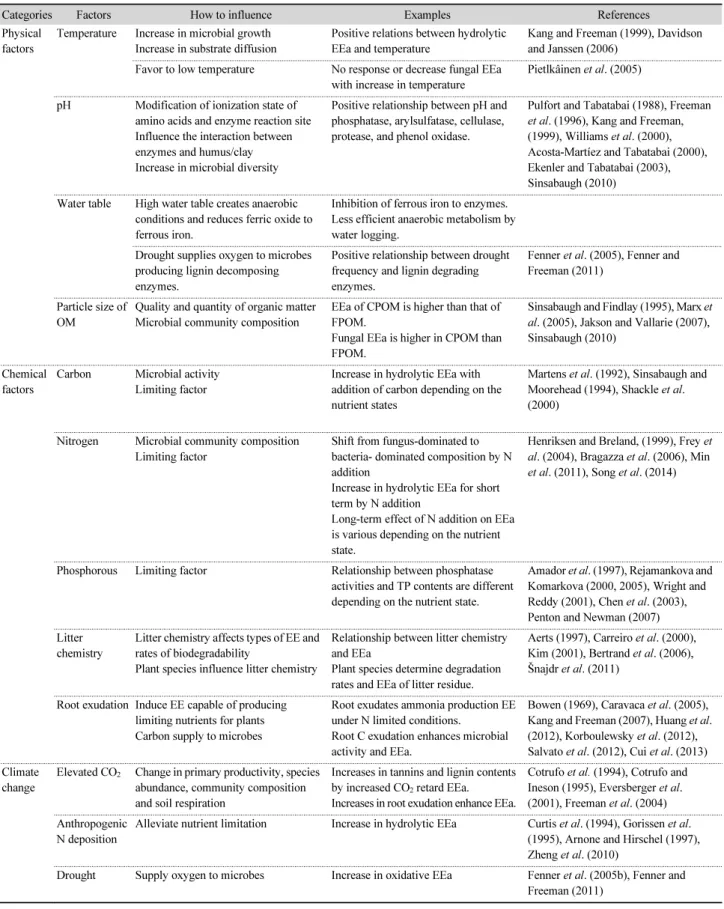
Table 1. The factors that regulate extracellular enzyme activities in wetland soils

Categories Factors How to influence Examples References

Physical factors

Temperature Increase in microbial growth Increase in substrate diffusion

Positive relations between hydrolytic EEa and temperature

Kang and Freeman (1999), Davidson and Janssen (2006)

Favor to low temperature No response or decrease fungal EEa with increase in temperature

Pietlkâinen et al. (2005)

pH Modification of ionization state of amino acids and enzyme reaction site Influence the interaction between enzymes and humus/clay Increase in microbial diversity

Positive relationship between pH and phosphatase, arylsulfatase, cellulase, protease, and phenol oxidase.

Pulfort and Tabatabai (1988), Freeman et al. (1996), Kang and Freeman, (1999), Williams et al. (2000), Acosta-Martíez and Tabatabai (2000), Ekenler and Tabatabai (2003), Sinsabaugh (2010)

Water table High water table creates anaerobic conditions and reduces ferric oxide to ferrous iron.

Inhibition of ferrous iron to enzymes.

Less efficient anaerobic metabolism by water logging.

Drought supplies oxygen to microbes producing lignin decomposing enzymes.

Positive relationship between drought frequency and lignin degrading enzymes.

Fenner et al. (2005), Fenner and Freeman (2011)

Particle size of OM

Quality and quantity of organic matter Microbial community composition

EEa of CPOM is higher than that of FPOM.

Fungal EEa is higher in CPOM than FPOM.

Sinsabaugh and Findlay (1995), Marx et al. (2005), Jakson and Vallarie (2007), Sinsabaugh (2010)

Chemical factors

Carbon Microbial activity Limiting factor

Increase in hydrolytic EEa with addition of carbon depending on the nutrient states

Martens et al. (1992), Sinsabaugh and Moorehead (1994), Shackle et al.

(2000)

Nitrogen Microbial community composition Limiting factor

Shift from fungus-dominated to bacteria- dominated composition by N addition

Increase in hydrolytic EEa for short term by N addition

Long-term effect of N addition on EEa is various depending on the nutrient state.

Henriksen and Breland, (1999), Frey et al. (2004), Bragazza et al. (2006), Min et al. (2011), Song et al. (2014)

Phosphorous Limiting factor Relationship between phosphatase activities and TP contents are different depending on the nutrient state.

Amador et al. (1997), Rejamankova and Komarkova (2000, 2005), Wright and Reddy (2001), Chen et al. (2003), Penton and Newman (2007) Litter

chemistry

Litter chemistry affects types of EE and rates of biodegradability

Plant species influence litter chemistry

Relationship between litter chemistry and EEa

Plant species determine degradation rates and EEa of litter residue.

Aerts (1997), Carreiro et al. (2000), Kim (2001), Bertrand et al. (2006), Šnajdr et al. (2011)

Root exudation Induce EE capable of producing limiting nutrients for plants Carbon supply to microbes

Root exudates ammonia production EE under N limited conditions.

Root C exudation enhances microbial activity and EEa.

Bowen (1969), Caravaca et al. (2005), Kang and Freeman (2007), Huang et al.

(2012), Korboulewsky et al. (2012), Salvato et al. (2012), Cui et al. (2013) Climate

change

Elevated CO

2

Change in primary productivity, species abundance, community composition and soil respiration

Increases in tannins and lignin contents by increased CO

2

retard EEa.

Increases in root exudation enhance EEa.

Cotrufo et al. (1994), Cotrufo and Ineson (1995), Eversberger et al.

(2001), Freeman et al. (2004) Anthropogenic

N deposition

Alleviate nutrient limitation Increase in hydrolytic EEa Curtis et al. (1994), Gorissen et al.

(1995), Arnone and Hirschel (1997), Zheng et al. (2010)

Drought Supply oxygen to microbes Increase in oxidative EEa Fenner et al. (2005b), Fenner and

Freeman (2011)

(4)

pH

Change in pH can modify the ionization state of amino acids and enzyme reaction site as well as the interaction between enzymes and humus or clay. Thus, divergence of optimal pH for EEa can inactivate enzymes, resulting in the reduction of OM decomposition rate. Atmospheric acidic deposition such as HSO

3-

, NO

3-

, and SO

42-

led to decrease in pH, and thereby reduced arylsulfatase activity in peat soils, and low pH has been considered as one of the main factors for low decomposition rates in wetland soils (Press et al., 1985). However, base cations (e.g., Ca

2+

and Mg

2+

) can attach to organic acids and reduce the precipitation and inactivation of enzymes (Wetzel, 1993).

High pH also affects EEa. In bog and fen soils, increase in pH was associated with increase in phosphatase and arylsulfatase activities (Kang and Freeman, 1999). In peatland and marsh soils (Williams et al., 2000) and global-scale soils (Singsabaugh, 2010), increase in pH was associated with increased phenol oxidase activity. High pH leads to deprotonate phenols, which reduces the redox potential and increases the solubility of phenols, increasing their potential reaction; it also increases microbial diversity, creating the diversity of the soil enzyme pool (Sinsabaugh, 2010). Lime application to increase soil pH can enhance cellulase and protease (Acosta-Martíez and Tabatabai, 2000; Ekenler and Tabatabai, 2003) activities and can increase microbial biomass in nutrient-limited soils (Aciego Pietri and Brookes, 2008).

Water table

High water table reduces oxygen content, thereby increasing anaerobic metabolism which is less efficient than aerobic metabolism, and resulting in decreased EEa (Schothorst, 1977).

Also, anaerobic conditions due to increasing water table stimulate reduction of ferric oxide to ferrous iron that is known to inhibit enzyme activities (Pulford and Tabatabai, 1988;

Freeman et al., 1990, 1996; Wetzel, 1993). Waterlogging can cause to decrease in phosphatase, arylsulfatase, β- D -glucosidase, and urease activities due to inhibition by ferrous iron (Pulford and Tabatabai, 1988; Freeman et al., 1996). A negative relation- ship between β- D -glucosidase, phosphatase and arylsulfatase activities and the water table has been observed in the northern fen and swamp soils (Freeman et al., 1996; Kang and Freeman,

1999) and in tropical peat soils (Kwon et al., 2013). Also, β- D-glucosidase and phosphatase activities of upland soils were higher than those of constructed wetlands due to higher oxygen content in upland soils (Kang et al., 1998).

Peroxidase and phenol oxidase are involved in the decomposition of the aromatic ring structure in phenolic compounds and these enzymes require oxygen when degrading lignin and humic substances. Thus, a high water table in wetland soils limited phenol oxidase activities, thereby resulting in accumulation of recalcitrant OM in wetland soils (Benner et al., 1984; Reddy and DeLaune, 2007). Accumulated phenolic compounds also inhibit other enzyme activities by formation of covalent bonds with proteins (enzyme), thereby retarding OM decomposition in wetland soils (Freeman et al., 2001). Phenol oxidase activity was lower in deeper soils than in detritus layers due to decrease in oxygen content with soil depth (Wright and Reddy, 2001), and was negatively correlated with depth of water table in peatland soils (Pind et al., 1994). Especially drought induced by global warming in northern peatlands that contain approximately 455 Pg magnitude of organic carbon content could lead to increased oxygen supply in wetland soils;

this increase could stimulate phenol oxidase activities and bacterial growth, resulting in increased OM degradation and increased the release of CO

2

to the atmosphere (Fenner et al., 2005b; Fenner and Freeman, 2011).

Particle size of OM

Hydrolytic enzyme (cellobiohydrolase, β- D -glucosidase, and

β-xylosidase) activities increased with particle size in stream

sediments (Sinsabaugh and Findlay, 1995), soils (Marx et al.,

2005), and swamp soils (Jackson and Vallarie, 2007) because

invertebrates and microorganism living on the coarse-particle

OM (CPOM) consumed more labile OM, reducing the size of

particles and remaining the recalcitrant materials in the

fine-particle OM (FPOM). Thus, FPOM had more recalcitrant

materials than CPOM. The oxidative enzyme (phenol oxidase

and peroxidase) activities also were enhanced with increase in

particle size because FPOM can limit the growth of fungal

hyphae and increase the importance of attached bacteria

(Sinsabaugh and Findlay, 1995; Sinsabaugh, 2010). Newman

and Reddy (1992) reported that alkaline phosphatase was

(5)

mainly associated with CPOM in lake sediments, indicating that that particulate-bound enzyme complex was more efficient to hydrolyze the OM than the soluble form because it was more stabilized (Rojo et al., 1990).

Chemical Factors Regulating EEa in Wetland Soils

Carbon

Organic carbon (C) is comprised of emergent macrophytes, litter, plankton biomass, OM from wastewater loading, and animal and plant remains in wetlands. Organic C is used as an electron donor to provide energy source to microbes, and this reaction drives all biogeochemical processes in wetland soils.

Thus, addition of organic C increases microbial biomass and activity, and together these changes increase overall microbial production of extracellular enzymes. Also, addition of C to wetland soil shifts C:N:P ratios of substrates, and can cause N and P to become limiting factors for microbial growth (Shackle et al., 2000). As a result, as C content increases, the microbes tend to increase their discharge of phosphatase and chitinase to remediate this limitation.

Addition of organic C greatly increased the hydrolytic enzyme activities (acid phosphatase, alkaline phosphatase, arylsulfatase, chitinase, β- D -glucosidase, dehydrogenase, ami- dase and urease) during the first few year of experiment, and coincided with an increase in bacterial biomass, but subsequent addition failed to sustain high EEa in the C amended soil (Martens et al., 1992). A plausible explanation for the failure to maintain the positive relationship between organic C and EEa is that EEa production is mainly regulated by induction or repression mechanisms, which is determined by nutrient availability in the surrounding systems. For example, if N and P are not limited in the system, microbes suppress N or P-related EE production to save energy (Sinsabaugh and Moorehead, 1994). Therefore, addition of C can increase EEa by stimulating microbial activities, but excessive C can terminate the production of enzymes when adequate nutrients are present in systems.

Nitrogen

Nitrogen is a limiting nutrient in wetland ecosystems, but

excessive N inputs can reduce rates of OM decomposition in the long term (Aber et al., 1998). N addition causes wetland communities to shift from fungus-dominated to bacteria- dominated composition (Henriksen and Breland, 1999; Frey et al., 2004). Because bacteria assimilate C significantly less efficiently than do fungi (Adu and Oades, 1978), the OM decomposition by bacterial communities might be inhibited, resulting in the accumulation of recalcitrant OM such as lignin (Holland and Coleman, 1987). In addition, lignin inhibits other enzyme activities, thereby reducing the rate of OM decomposition.

Therefore, N addition can increase decomposition rates of OM by stimulating microbial activities in the short term, but N addition can restrain the degradation of OM in the long term, due to conversion of the microbial community and to inhibition of EEa.

Chronic addition of N significantly increased hydrolytic EEa and microbial biomass under N-limited conditions because N addition alleviated the N demand (Carreiro et al., 2000;

Saiya-Cork et al., 2002). Thus, in peat bog soils that received their nutrient supply only from atmospheric deposition and were extremely nutrient-limited systems, atmospheric N deposition altered the litter chemistry and promoted enzymatic activity due to removal of N constraints on microbial metabolisms, resulting in enhanced OM decomposition and thereby increasing the amount of CO

2

released to the atmosphere and input of DOC into adjacent to river ecosystems (Bragazza et al., 2006).

However, under the nutrient saturated conditions, N input did not change or decrease EEa in a constructed wetland and marsh soils because microbes did not spend more energy to activate C, N, S or P acquiring enzymes under nutrient saturated conditions (Min et al., 2011; Song et al., 2014). Thus, the level of nutrient conditions, such as eutrophic or oligotrophic conditions will determine how the N addition influences EEa in wetland soils.

Phosphorus

Phosphatase activity is important in wetland soils for P

regeneration because up to 90% of organic P is in monoester

form. Phosphatase activity increased total P (TP) concentrations

in P-limited soils (Amador et al., 1997; Chen et al., 2003), and

served as a predictor of OM degradation in wetland ecosystems

(Newman and Reddy, 1992; Amador et al., 1997; Chen et al.,

2003). Thus, increasing P content reduced phosphatase activities

(6)

in marsh (Rejamankova and Komarkova, 2000, 2005) and the Everglades wetland soils (Wright and Reddy, 2001; Penton and Newman, 2007) because excessive external loading of P alleviated the P limitation, implying that the availability of P in the system was the main factor for regulating phosphatase activity. However, high phosphatase activities were observed under high TP conditions in wetland soils (Wang et al., 2010) and in the rhizosediment of salt marshes (Fretias et al., 2014).

This phenomenon can be explained by that high TC:TP ratio caused by extremely eutrophic condition can stimulate P mineralization, and that P demand for primary production (plant growth) could trigger the production of phosphatase.

Litter chemistry

Decomposition of plant litter is an important process to supply nutrients to wetland ecosystems. Rates of plant litter decomposition in wetland systems are determined by physico- chemical factors (e.g. temperature, pH, exogenous nutrient supply, moisture, oxygen contents, and electron acceptor availability), by microbial population and structure, and by substrate quality such as litter chemistry (Moretto et al., 2001;

Ross et al., 2002; Koukoura et al., 2003). As an indicator of litter quality, C:N, C:P, lignin:N, and N:P ratios of litter are used;

these ratios constitute indices of litter biodegradability, and each microbe releases appropriate enzymes related to the litter chemistry (Aerts, 1997; Carreiro et al., 2000; Kim, 2001). As litter is decomposed and becomes a part of soil OM, the quality of litter decreases because N-containing compounds are more biodegradable than recalcitrant materials such as lignin that are the last substances metabolized during litter degradation.

Types of plant species influence litter chemical composition because cellulose, hemicellulose, lignin and P contents in litter vary by species, tissue type, and maturity, and this composition affects biological degradation rates (Bertrand et al., 2006;

Šnajdr et al., 2011). For example, degradation rates and EEa of litter residue were significantly different between two species in boreal peat land because of a difference in litter chemistry. In addition, Straková et al. (2011) reported that the impact of litter quality on EEa overruled the direct effect of water table drawdown on aerobic microbial activity. Thus, litter chemistry can be the strongest factor for regulating EEa, and can offset other physical and chemical properties in wetland soils.

Root exudation

Tree roots generally exude glucose, sucrose, fructose, carbohydrates, amino acids and oxygen by respiration (Grayston et al., 1996). Root exudation provided carbon sources to microbes and enhanced microbial and enzyme activities around the rhizosphere in salt marsh (Caravaca et al., 2005), constructed wetland (Huang et al., 2012; Korboulewsky et al., 2012; Salvato et al., 2012; Cui et al., 2013) and peat land soils (Kang and Freeman, 2007). However, when plants experience N deficit due to seedling plant, roots exude less asparagine, glutamine, and glycogen (Bowen, 1969), and thereby stimulate production of enzyme such as aspartase and glutaminase that are related to ammonia production.

The difference in vegetation types influences the population of microorganisms and respiration rates, and affects EEa. The results from a constructed wetland demonstrated that different emergent plant species influenced DOC concentrations, microbial growth and EEa of the rhizosphere (Kong et al., 2009;

Salvato et al., 2012).

Limitation and Future Direction of EEa Research

Measurements of EEa have become an easy tool for investigating soil microbial responses in global climate change.

Studies on the effects of global climate change have revealed that increased CO

2

influenced net primary productivity, species abundances, community compositions, and soil respiration rates in terrestrial ecosystems (Curtis and Wang, 1998; Zak et al., 2000). The enhanced primary productivity due to elevated CO

2

was reported to retard the litter decomposition rate (Cotrufo et al., 1994; Cotrufo and Ineson, 1995) and reduce EEa produced by the fungal community (Zheng et al., 2010) because it can change litter chemistry of plants, such as by increasing the content of tannins and of lignin in litter detritus. However, increased primary productivity increases the amount of root exudation from rhizosphere to soils, thereby stimulating enzyme activity related to limited nutrients and further increasing the CO

2

emission from soils due to enhanced heterotrophic soil respiration (Eversberger et al., 2001; Freeman et al., 2004).

Besides increased CO

2

effect, anthropogenic N deposition that

(7)

mitigates the nutrient limitation and the water table drawdown that supplies oxygen to wetland soils can offset the negative effects of litter chemistry on EEa (Curtis et al., 1994; Gorissen et al., 1995; Arnone and Hirschel, 1997; Zheng et al., 2010).

Thus, we need to more investigate how EEa production and OM decomposition rate are regulated by global climate change in order to predict how much CO

2

is emitted from wetland soils to atmosphere and how much organic carbon is accumulated in wetland soils (Burns et al., 2013). In addition, most of EEa researches of global climate change experiment are conducted under controlled conditions and thus, the EEa responses to global climate change must be examined under in situ conditions with the investigation of potential changes in plant and soil microbial communities (Henry, 2013).

One of the promising questions in EE researches is how EEa is associated with specific taxa and microbial populations and communities (Henry, 2013). For this research, genomic technique is used to investigate which gene sequences are produced for specific enzymes in complex microbial communities (Raes et al., 2007; Wilmes and Bond, 2008). The transcriptomic tools and proteomic methods are employed to examine controls on the expression of enzyme-coding genes and to detect which organisms produce the specific enzymes (Harrington et al., 2007; Wallenstein and Weintraub, 2008; Morozova et al., 2009).

However, the genes using this research are not well conserved and have various alternated forms with the same functions (Kellner et al., 2007) and gene expression do not always guarantee the enzyme activities in situ conditions (Edwards et al., 2011). Thus, it needs to develop the multiple primers that detect a wide range of enzymes and the metagenomic approaches that do not require primers, and to consider other factors, such as enzyme persistence and turnover rate for interpreting the EEa in real environmental conditions.

Fungal ligninolytic enzymes can be used for maintaining the ecosystem services such as bioremediation, carbon sequestration and plant growth enhancement. For example, laccase and peroxidase produced from white-rot basidiomycete can be applied to degrade the persistent organic pollutants in wetland soils (Rao et al., 2014; Kües, 2015). Many EE has been used for biosensor to monitor pollution (e.g. pesticides and heavy metals), stress conditions and management practices in various ecosystems (Morel et al., 2013; Rao et al., 2014). For these

purposes, we need to know how we manipulate environments to promote specific gene expression and to enhance the microbial population and activity that generate the desired enzymes.

Summary and Conclusions

This article reviewed physical and chemical factors that affected EEa in wetland soils. Of the physical factors, the effects of pH, water table, and particle size of OM on EEa appeared to be similar among wetland soils, whereas temperature affected EEa differently depending on the acclimation of microbes to environmental conditions. The influence of C, N, and P on EEa was regulated by nutrient state, C:N ratios, limiting factors, and the types of EE in wetland soils. Specifically, in wetland soils, the quality of organic materials (substrate chemistry) was the most important of various regulators that affected EEa.

Furthermore, global climate change can shift the frequency of drought, increase temperature, and decrease water table in wetlands. Global climate change and anthropogenic N deposition can influence the oxidative EEa and hydrolytic EEa, resulting in the change of CO

2

emission from wetland soils to the atmosphere. Thus the research on the relationship between microbial structure, EE functions and environmental factors controlling EEa can be applied to manipulate wetland ecosystems for treating pollutants and to monitor wetland ecosystem services.

적 요

육상과 수계의 전이지대에 위치한 습지는 빈번한 침수, 육상

생태계로부터의 영양염류의 유입, 수계와 토양에 적절하게 적

응된 식생의 존재 및 토양 내 산소 결핍과 같은 독특한 특징을 가

지고 있다. 이러한 생지화학적 특성과 독특한 식생의 존재는 유

기물의 분해과정에 물리적 ․ 화학적 영향을 미치고 있는데, 특

히 미생물에서 생산되는 체외효소 활성도는 유기물의 분해 과

정과 관련을 맺고 있다. 체외효소는 고분자 유기물을 간단한 형

태의 유기탄소, 무기 질소, 인, 황으로 분해하여 미생물과 식물

이 용이하게 이들 영양물질을 흡수할 수 있도록 도움을 주기 때

문에, 체외효소에 대한 연구는 습지 토양 내에서의 유기물 분해

와 물질순환의 기작을 이해하는 데 필수적인 요소이다. 본 연

(8)

구는 습지 토양 내 β-glucosidase, β- N -acetylglucosaminidase, phosphatase, arylsulfatase, phenol oxidase와 같은 체외 효소 활성도에 영향을 미치는 물리적 ․ 생지화학적 요소가 무엇인 지 문헌연구를 통하여 고찰하였다. 물리적 요소로써, pH 와 유 기물의 입자 크기는 체외효소 활성도에 크게 영향을 미치지 않았으나, 온도에 대한 영향은 미생물의 극한 온도에서의 적 응성 정도에 따라 다양하게 나타났다. 화학적 요소로써, 탄소, 질소, 인의 첨가는 습지 토양의 영양상태, C:N 비율과 제한 요 소, 및 체외효소의 종류에 따라 그 영향이 다양하게 발현되었 다. 특히, 유기물의 기질 특성(Substrate quality)은 다른 어떤 요소보다도 체외효소 활성도에 큰 영향을 미치는 것으로 나타 났다. 향후 연구 과제로써는 기후 변화와 질소 침적의 증가에 따른 효소 활성도의 변화 및 분자생물학적 접근을 통한 미생 물 군집과 체외효소 기능간의 관계를 규명하는 연구가 필요하 다. 또한, 습지 토양내 체외효소 활성도를 극대화 할 수 있는 환 경을 조성함으로써, 앞으로 습지 토양이 오염물질을 제거하고 습지의 생태학적 기능을 최대화 할 수 있는 연구가 요구된다.

References

Aber, J.D., McDowell, W., Nadelhoffer, K., Magil, A., Berntson, G., Kamakea, M., McNulty, S., Currie, W., Rustad L., and Fernandez, I. 1998. Nitrogen saturation in temperate forest ecosystems: Hypotheses revisited. Bioscience 48, 921 –934.

Aciego Pietri, J.C. and Brookes, P.C. 2008. Relationship between soil pH and microbial properties in a UK arable soil. Soil Biol.

Biochem. 40, 1856 –1861.

Acosta-Martínez, V. and Tabatabai, M.A. 2000. Enzyme activities in a limed agricultural soil. Biol. Fertil. Soils 31, 85 –91.

Adu, J.K. and Oades, J.M. 1978. Utilization of organic materials in soil aggregates by bacterial and fungi. Soil Biol. Biochem. 10, 117 – 122.

Aerts, R. 1997. Climate, leaf litter chemistry and leaf litter decomposition in terrestrial ecosystems: A triangular relationship. Oikos. 439, 449.

Amador, J.A., Glucksman, A.M., Lyons, J.B., and Görres, J.H. 1997.

Spatial distribution of soil phosphatase activity within a riparian forest. Soil Sci. 162, 808 –825.

Arnone, J.A. and Hirschel, G. 1997. Does fertilizer application alter the effects of elevated CO

2

on Carex leaf litter quality and in situ decomposition in an alpine grassland? Acta Oecol. 18, 201–206.

Benner, R., Newell, S.Y., Maccubbin, A.E., and Hodson, R.E. 1984.

Relative contributions of bacteria and fungi to rates of degradation of lignocellulosic detritus in salt-marsh sediments.

Appl. Environ. Microbiol. 48, 36–40.

Bertrand, I., Chabbert, B., Kurek, B., and Recous, S. 2006. Can the

biochemical features and histology of wheat residues explain their decomposition in soil? Plant Soil 281, 291 –307.

Bowen, G.D. 1969. Nutrient status effects on loss of amides and amino acids from pine roots. Plant Soil 30, 139 –142.

Bragazza, L., Freeman, C., Jones, T., Rydin, H., Limpens, J., Fenner, N., Ellis, T., Gerdol, R., Hájek, M., Hájek, T., et al. 2006.

Atmospheric nitrogen deposition promotes carbon loss from peat bogs. Proc. Natl. Acad. Sci. USA 103, 19386 –19389.

Burns, R.G., DeForest, J.L., Marxsen, J., Sinsabaugh, R.L., Stromberger, M.E., Wallenstein, M.D., Weintraub, M.N., and Zoppini, A.

2013. Soil enzymes in a changing environment: Current knowledge and future directions. Soil Biol. Biochem. 58, 216 – 234.

Caravaca, F., Alguacil, M.M., Torres, P., and Rdldan, A. 2005. Plant type mediates rhizospheric microbial activities and soil aggregation in a semiarid Mediterranean slat marsh. Geoderma. 124, 375–

382.

Carreiro, M., Sinsabaugh, R., Repert, D., and Parkhurst, D. 2000.

Microbial enzyme shifts explain litter decay responses to simulated nitrogen deposition. Ecology 81, 2359–2365.

Chen, C.R., Condron, L.M., Davis, M.R., and Sherlock, R.R. 2003.

Seasonal changes in soil phosphorus and associated microbial properties under adjacent grassland and forest in New Zealand.

Forest Ecol. Manag. 177, 539 –557.

Cotrufo, M.F., Ineson, P., and Rowland, A.P. 1994. Decomposition of tree leaf litters grown under elevated CO

2

: Effect of litter quality.

Plant Soil 163, 121–130.

Cotrufo, M.F. and Ineson, P. 1995. Effects of enhanced atmospheric CO

2

and nutrient supply on the quality and subsequent decomposition of the fin roots of Betula pendula Roth. and Picea sitchensis (Bong.) Carr. Plant Soil 165, 1 –6.

Cregger, M.A., Sanders, N., Dunn, R.R., and Classen, A.T. 2014.

Microbial communities respond to experimental warming, but site matters. Peer J. 2, e358.

Cui, L.H., Ouyang, Y., Gu, W.J., Yang, W.Z., and Xu, Q.L. 2013.

Evaluation of nutrient removal efficiency and microbial enzyme activity in a baffled subsurface-flow constructed wetland system.

Bioresour. Technol. 146, 656–662.

Curtis, P.S., Zak, D.R., Pregitzer, K.S., and Teeri, J.A. 1994. Above and below ground response of Pooulus grandidentata to elevated atmospheric CO

2

and soil N availability. Plant Soil 165, 45 –51.

Curtis, P.S. and Wang, X. 1998. A meta-analysis of elevated CO

2

effects on woody plant mass, form and physiology. Oecologia 113, 299 –313.

Davidson, E.A. and Janssens, I.A. 2006. Temperature sensitivity of soil carbon decomposition and feedbacks to climate change. Nature 440, 165 –173.

Edwards, I.P., Zak, D.R., Kellner, H., Eisenlord, S.D., and Pregitzer, K.S. 2011. Simulated atmospheric N deposition alters fungal community composition and suppresses ligninolytic gene expression in a northern hardwood forest. PLoS One 6, e20421.

Ekenler, M. and Tabatabai, M.A. 2003. Effects of liming and tillage

(9)

systems on microbial biomass and glycosidases in soils. Biol.

Fertil. Soils 39, 51 –61.

Eversberger, D., Niklaus, P.A., and Kandeler, E. 2001. Long term CO

2

enrichment stimulates N-mineralization and enzyme activities in calcareous grassland. Soil Biol. Biochem. 35, 965 –972.

Fenner, N., Dowrick, D.J., Lock, M.A., Rafarel, C.R., and Freeman, C.

2006. A novel approach to studying the effects of temperature on soil biogeochemistry using a thermal gradient bar. Soil Use Manage. 22, 267–273.

Fenner, N., Freeman, C., and Reynolds, B. 2005a. Observation of a seasonally shifting thermal optimum in peatland carbon-cycling processes: Implications for the global carbon cycle and soil enzyme methodologies. Soil Biol. Biochem. 37, 1814 –1821.

Fenner, N., Freeman, C., and Reynolds, B. 2005b. Hydrological effects on the diversity of phenolic degrading bacteria in a peatland:

implications for carbon cycling. Soil Biol. Biochem. 37, 1277–

1287.

Fenner, N. and Freeman, C. 2011. Drought-induced carbon loss in peatlands. Nat. Geosci. 4, 895 –900.

Freeman, C., Fenner, N., Ostle, N.J., Kang, H., Dowrick, D.J., Reynolds, B., Lock, M.A., Sleep, D., Hughes, S., and Hudson, J.

2004. Export of dissolved organic carbon from peatlands under elevated carbon dioxide levels. Nature 430, 195 –198.

Freeman, C., Liska, G., Ostle, N.J., Locj, M.A., Reynolds, B., and Hudson, J. 1996. Microbial activity and enzymatic decomposition processes following peatland water table drawdown. Plant Soil 180, 121 –127.

Freeman, C., Lock, M.A., Marxsen, J., and Jones, S.E. 1990. Inhibitory effects of high molecular weight dissolved organic matter upon metabolic processes in biofilms from contrasting rivers and streams. Freshwater Biol. 24, 159 –166.

Freeman, C., Nevison, G.B., Hughes, S., Reynolds, B., and Hudson, J.

1998. Enzymic involvement in the biogeochemical responses of a Welsh peatland to a rainfall enhancement manipulation. Biol.

Fert. Soils 27, 173 –178.

Freeman, C., Ostle, N., and Kang, H. 2001. An enzymic ‘latch’ on a global carbon store. Nature 409, 149.

Freitas, J., Duarte, B., and Caçador, I. 2014. Biogeochemical drivers of phosphatase activity in salt marsh sediments. J. Sea Res.

doi:10.1016/j.seares.2014.04.002.

Frey, S.D., Knorr, M., Parrent, J.L., and Simpson, R.T. 2004. Chronic nitrogen enrichment affects the structure and function of the soil microbial community in temperature hardwood and pine forest.

Forest Ecol. Manag. 196, 159 –171.

Gorissen, A., van Ginkel, J.H., Keurentjes, J.J.B., and van Veen, J.A.

1995. Grass root decomposition in retarded when grass has been grown under elevated CO

2

. Soil Biol. Biochem. 17, 117–120.

Grayston, S.J., Vaughan, D., and Jones, D. 1996. Rhizosphere carbon flow in trees, in comparison with annual plants: the importance of root exudation and its impacts on microbial activity and nutrient availability. Appl. Soil Ecol. 5, 29 –56.

Harrington, E.D., Singh, A.H., Doerks, T., Letunic, I., Mering, C., von

Jensen, L.J., Raes, J., and Bork, P. 2007. Quantitative assessment of protein function prediction from metagenomics shotgun sequences. Proc. Natl. Acad. Sci. USA 104, 13913 –1318.

Henriksen, T.M. and Breland, T.A. 1999. Nitrogen availability effects on carbon mineralization, fungal and bacterial growth, and enzyme activities during decomposition of wheat straw in soil.

Soil Biol. Biochem. 31, 1121–1134.

Henry, H.A.L. 2013. Reprint of “Soil extracellular enzyme dynamics in a changing climate”. Soil Biol. Biochem. 56, 53–59.

Holland, E.A. and Coleman, D.C. 1987. Litter placement effects in microbial and organic matter dynamics in an agroecosystem.

Ecology 68, 425 –433.

Huang, L., Gao, X., Liu, M., Du, G., Guo, J., and Ntakirutimana, T.

2012. Correlation among soil microorganisms, soil enzyme activities, and removal rates of pollutants in three constructed wetlands purifying micro-polluted river water. Ecol. Eng. 46, 9–

106.

Jackson, C.R. and Vallaire, S.C. 2007. Microbial activity and decomposition of fine particulate organic matter in a Louisiana cypress swamp. J. N. Am. Benthol. Soc. 26, 743–753.

Kang, H. and Freeman, C. 1999. Phosphatase and arylsulphatase activities in wetland soils: annual variation and controlling factors. Soil Biol. Biochem. 31, 449 –454.

Kang, H. and Freeman, C. 2007. Interactions of marsh orchid (Dactylorhiza spp.) and soil microorganisms in relation to extracellular enzyme activities in a peat soil. Pedosphere 17, 681 – 687.

Kang, H., Freeman, C., and Ashendon, T.W. 2001. Effects of elevated CO

2

on fen peat biogeochemistry. Sci. Total Environ. 279, 45–50.

Kang, H., Freeman, C., Lee, D., and Mitch, W.J. 1998. Enzyme activities in constructed wetlands: implication for water quality amelioration. Hydrobiologia 368, 231 –235.

Kang, H., Kim, S., Fenner, N., and Freeman, C. 2005. Shifts of soil enzyme activities in wetlands exposed to elevated CO

2

. Sci. Total Environ. 337, 207 –212.

Kellner, H., Luis, P., and Buscot, F. 2007. Diversity of laccase-like multicopper oxidase genes in Morchellaceae: identification of genes potentially involved in extracellular activities related to plant litter decay. FEMS Microbiol. Ecol. 61, 153 –163.

Kim, J.G. 2001. Decomposition of plant material in a subalpine marsh.

Plant Biol. 44, 73 –80.

Koch, O., Tscherko, D., and Kandeler, E. 2007. Temperature sensitivity of microbial respiration, nitrogen mineralization, and potential soil enzyme activities in organic alpine soils. Global Biogeochem.

Cy. 21, GB4017.

Kong, L., Wang, Y.B., Zhao, L.N., and Chen, Z.H. 2009. Enzyme and root activities in surface-flow constructed wetlands. Chemosphere 76, 601 –608.

Korboulewsky, N., Wang, R.Y., and Baldy, V. 2012. Purification

processes involved in sludge treatment by a vertical flow wetland

system: focus on the role of the substrate and plants on N and P

removal. Bioresour. Technol. 105, 9 –14.

(10)

Koukoura, Z., Mamolos, A.P., and Kalburtji, K.L. 2003. Decomposition of dominant plant species litter in a semi-arid grassland. Appl.

Soil Ecol. 23, 13 –23.

Kwon, M., Haraguchi, A., and Kang, H. 2013. Long-term water regime differentiates changes in decomposition and microbial properties in tropical peat soils exposed to the short-term drought. Soil Biol.

Biochem. 60, 33–44.

Kües, U. 2015. Fungal enzymes for environmental management. Curr.

Opin. Biotechnol. 33, 268–278.

Martens, D.A., Johanson, J.B., and Frankenberger, W.T. 1992.

Production and persistence of soil enzymes with repeated addition of organic residues. Soil Sci. 153, 53 –61.

Marx, M.C., Kandeler, E., Wood, M., Wermbter, N., and Jarvis, S.C.

2005. Exploring the enzymatic landscape: distribution and kinetics of hydrolytic enzymes in soil particle-size fractions. Soil Biol. Biochem. 37, 35–48.

Mentzer, J.L., Goodman, R.M., and Balser, T.C. 2006. Microbial response over time to hydrologic and fertilization treatments in a simulated wet prairie. Plant Soil 284, 85 –100.

Min, K., Kang, H., and Lee, D. 2011. Effects of ammonium and nitrate additions on carbon mineralization in wetland soils. Soil Biol.

Biochem. 43, 2461 –2469.

Mitsch, W.J. and Gosselink, J.G. 1993. Wetlands. Von Nostrand Reinhold, New York, N.Y., USA.

Morel, M., Meux, E., Mathieu, Y., Thuillier, A., Chibani, K., Harvengt, L., Jacquot, J.P., and Gelhaye, E. 2013. Xenomic networks variability and adaptation traits in wood decay fungi. Microb.

Biotechnol. 6, 248 –263.

Moretto, A.S., Destel, R.A., and Diton, N.G. 2001. Decomposition and nutrient dynamic of leaf litter and roots palatable and unpalatable grasses in semi-arid grassland. Appl. Soil Ecol. 18, 31 –37.

Morozova, O., Hirst, M., Marra, M.A. 2009. Applications of new sequencing technologies for transcriptome analysis. Annu. Rev.

Genomics Hum. Genet. 10, 135 –151.

Nannipieri, P., Kandeler, E., and Ruggiero, R. 2002. Enzyme activities and microbiological and biochemical processes in soil, pp. 1–33.

In Burns, I.R.G. (ed.), Enzymes in the environment. Marcel Dekker, New York, N.Y., USA.

Newman, S. and Reddy, K.R. 1992. Sediment resuspension effects on alkaline phosphatase activity. Hydrobiologia 245, 75–86.

Olander, L.P. and Vitousek, P.M. 2000. Regulation of soil phosphatase and chitinase activity by N and P availability. Biochemistry 49, 175 –190.

Penton, C.R. and Newman, S. 2007. Enzyme activity responses to nutrient loading in subtropical wetlands. Biogeochemistry 84, 83 – 98.

Pietikáinen, J., Pettersson, M., and Baath, E. 2005. Comparison of temperature effects on soil respiration and bacterial and fungal growth rates. FEMS Microbiol. Ecol. 52, 49–58.

Pind, A., Freeman, C., and Lock, M.A. 1994. Enzymic degradation of phenolic materials in peatlands-measurement of phenol oxidase activity. Plant Soil 159, 227 –231.

Press, M.C., Henderson, J., and Lee, J.A. 1985. Arylsulphatase activity in peat in relation to acid deposition. Soil Biol. Biochem. 17, 99 – 103.

Pulford, I.D. and Tabatabai, M.A. 1988. Effect of waterlogging on enzyme activities in soils. Soil Biol. Biochem. 20, 215 –219.

Raes, J., Foerstner, K.U., and Bork, P. 2007. Get the most out of your metagenome: computational analysis of environmental sequence data. Curr. Opin. Microbiol. 10, 490 –498.

Rao, M.A., Scelza, R., Acevedo, F., Diez, M.C., and Gianfreda, L. 2014.

Enzymes as useful tools for environmental purposes. Chemosphere 107, 145 –162.

Reddy, K.R. and DeLaune, R.D. 2007. Biogeochemistry of wetlands:

Science and applications. Crc Press, Boca Raton, Florida, USA.

Rejamankova, E. and Komarkova, J. 2000. A function of cyanobacterial mats in phosphorus-limited tropical wetlands. Hydrobiologia 431, 135 –153.

Rejmankova, E. and Komarkova, J. 2005. Response of cyanobacterial mats to nutrient and salinity changes. Aquat. Bot. 83, 87–107.

Rojo, M.J., Carcedo, S.G., and Mateos, M.P. 1990. Distribution and characterization of phosphatase and organic phosphorus in soil fractions. Soil Biol. Biochem. 22, 169 –174.

Ross, D.J., Tate, K.R., Newton, P.C., and Clark, H. 2002. Decomposability of C

3

and C

4

grass litter sampled under different concentrations of atmospheric carbon dioxide at natural CO

2

spring. Plant Soil 240, 275 –286.

Saiya-Cork, K.R., Sinsabaugh, R.L., and Zak, D.R. 2002. The effects of long term nitrogen deposition on extracellular enzyme activity in an Acer saccharum forest soil. Soil Biol. Biochem. 34, 1309 – 1315.

Salvato, M., Borin, M., Doni, S., Macci, C., Ceccanti, B., Marinari, S., and Masciandaro, G. 2012. Wetland plants, microorganisms and enzymatic activities interrelations in treating N polluted water.

Ecol. Eng. 47, 36 –43.

Schlesinger, W.H. 1977. Carbon balance in terrestrial detritus. Annu.

Rev. Ecol. Syst. 8, 51 –81.

Schothorst, C.J. 1977. Subsidence of low moor peat soils in the western Netherlands. Geoderma. 17, 265 –291.

Shackle, V.J., Freeman, C., and Reynolds, B. 2000. Carbon supply and the regulation of enzyme activity in constructed wetlands. Soil Biol. Biochem. 32, 1935–1940.

Sinsabaugh, R. 2010. Pehnol oxidase, peroxidase and organic matter dynamics of soil. Soil Biol. Biochem. 42, 391 –404.

Sinsabaugh, R.L. and Findlay, S. 1995. Microbial production, enzyme activity and carbon turnover in surface sediments of the Hudson River Estuary. Microb. Ecol. 30, 127 –141.

Sinsabaugh, R.L. and Linkins, A.E. 1993. Statistical modeling of litter decomposition from integrated cellulase activity. Ecology 74, 1594 –1597.

Sinsabaugh, R.L. and Moorhead, D.L. 1994. Resource allocation to extracellular enzyme production: a model for nitrogen and phosphorus control of litter decomposition. Soil Biol. Biochem.

26, 1305 –1311.

(11)

Šnajdr, J., Cajthaml, T., Valášková, V., Merhautová, V., Petránková, M., Spetz, P., and Baldrian, P. 2011. Transformation of Quercus petraea litter: Successive changes in litter chemistry are reflected in differential enzyme activity and changes in the microbial community composition. FEMS Microbiol. Ecol. 75, 291 –303.

Song, Y., Song, C., Tao, B., Wang, J., Zhu, X., and Wang, X. 2014.

Short-term responses of soil enzyme activities and carbon mineralization to added nitrogen and litter in a freshwater marsh of Northeast China. Eur. J. Soil Biol. 61, 72–79.

Straková, P., Niemi, R.M., Freeman, C., Peltoniemi, K., Toberman, H., Heiskanen, I., Fritze, H., and Laiho, R. 2011. Litter type affects the activity of aerobic decomposers in a boreal peatland more than site nutrient and water table regimes. Biogeosciences 8, 2741 –2755.

Torn, M.S., Swanston, C.W., Castanha, C., and Trumbore, S.E. 2009.

Storage and turnover of organic matter in soil, pp. 219–272. In Senesi, N., Xing, B., and Huang, P.M. (ed.), Biophysico- chemical processes involving natural nonliving organic matter in environmental systems. John Wiley & Sons, Hoboken, New Jersey, USA.

Wallenstein, M.D. and Weintraub, M.N. 2008. Emerging tools for measuring and modeling the in situ activity of soil extracellular enzymes. Soil Biol. Biochem. 40, 2098 –2106.

Wang, L., Yin, C., Wang, W., and Shan, B. 2010. Phosphatase activity along soil C and P gradients in a reed-dominated wetland of North

China. Wetland 30, 649 –655.

Weiss, M.S.U., Abele, J., Weckesser, W., Schiltz, W.E., and Schulz, G.E. 1991. Molecular architecture and electrostatic properties of a bacterial porin. Science 254, 1627 –1630.

Wetzel, R.G. 1993. Humic compounds from wetlands: complexation, inactivation, and reactivation of surface-bound and extracellular enzymes. Verh Intern. Verein. Limnol. 25, 122–128.

Williams, C.J., Shingara, E.A., and Yavitt, J.B. 2000. Phenol oxidase activity in peatlands in New York State: Response to summer drought and peat type. Wetlands 20, 416 –421.

Wilmes, P. and Bond, P.L. 2008. The dynamic genetic repertoire of microbial communities. FEMS Microbiol. Rev. 33, 109 –132.

Wright, A.L. and Reddy, K.R. 2001. Phosphorus loading effects on extracellular enzyme activity in Everglades wetland soils. Soil Sci. Soc. Am. J. 65, 588 –595.

Zak, D.R., Pregitzer, K.S., King, J.S., and Holmes, W.E. 2000. Elevated atmospheric CO

2

, fine roots and the responses of soil micro- organisms: a review and hypothesis. New Phytol. 147, 201–222.

Zedler, J.B. and Kercher, S. 2004. Causes and consequences of invasive plants in wetlands: opportunities, opportunists, and outcomes.

Crit. Rev. Plant Sci. 23, 431 –452.

Zheng, J.Q., Han, S.J., Wang, Y., Zhang, C.G., and Li, M.H. 2010.

Composition and function of microbial communities during the

early decomposition stages of foliar litter exposed to elevated

CO

2

concentrations. Eur. J. Soil Sci. 61, 914 –925.

수치

Table 1. The factors that regulate extracellular enzyme activities in wetland soils

참조

관련 문서

“The economic order of the Republic of Korea shall be based on a respect for the freedom and creative initiative of individuals in economic affairs.” The State may only

In this study, it is shows that the stream of CO 2 is more effective in the reduction of unreacted TEGDMA and the increase of surface microhardness than that of N 2

In conclusion, it can be seen that the performance of male gymnastics athlete influences the factors of personal characteristics, the interaction of

In order to evaluate an organization from the safety viewpoint, it is necessary to identify the organizational factors in a systematic fashion.. In this

Performance shaping factors (PSFs) are factors that influence human performance in human reliability analysis (HRA) [1,2]. Typical examples of PSFs

• Essentially consists of a number of valves to regulate flow and isolate the tree from the well, and monitor the

Bone morphogenetic proteins (BMPs) are the most important family of growth factors for bone regeneration and possess a wide array of biological activities,

In order to extract the factors of brand personality, prior literature review in the fields of consumer behavior theory and psychology was performed. The