http://e-nrp.org
Comparison of body image perception, nutrition knowledge, dietary attitudes, and dietary habits between Korean and Mongolian college students
Zolzaya Erdenebileg, So Hyun Park and Kyung Ja Chang
§Department of Food and Nutrition, Inha University, 100 Inha-ro, Nam-gu, Incheon 22212, Korea
BACKGROUND/OBJECTIVES: College students are in transition from adolescence to adulthood, and it has been reported that they show poor dietary habits. This study was conducted to compare body image perception, nutrition knowledge, dietary attitudes, dietary habits, and health-related lifestyles between Korean college students (KCS) and Mongolian college students (MCS).
SUBJECTS/METHODS: Subjects were 314 KCS and 280 MCS. The data includes results of self-administered questionnaires; statistical analysis was performed using the SPSS 23.0 program.
RESULTS: With regards to body image perception, KCS perceived themselves to be fatter on current body image than ideal body image compared to MCS; 64.0% of KCS and 34.6% of MCS desired to be thinner. Total score of nutrition knowledge in KCS (17.0) was significantly higher compared to MCS (8.4) (P < 0.001), but total score of dietary attitudes in KCS (27.0) was significantly lower compared to MCS (31.2) (P < 0.001). Nutrition knowledge had a significantly positive correlation with dietary attitudes in MCS (P < 0.01). Meal consumption among male and female subjects was 2 and 3 times, respectively, in order in KCS, and 3 and 2 times, respectively, in order in MCS (P < 0.001). Rate of skipping breakfast in both genders was significantly higher in KCS than in MCS (male: P < 0.05, female: P < 0.001). In health-related lifestyles, KCS had a significantly higher rate in frequency of alcohol drinking (P < 0.001), exercise (P < 0.01), and mobile phone usage (P < 0.001), compared to MCS.
CONCLUSIONS: This study suggests that development of nutrition education program which is effective and proper is required to improve healthy dietary habits among college students of both countries. Essential contents should include acquirement of nutrition knowledge and a motivation for its application to actual life for KCS, and improvement of healthy dietary habits for MCS.
Nutrition Research and Practice 2018;12(2):149-159; https://doi.org/10.4162/nrp.2018.12.2.149; pISSN 1976-1457 eISSN 2005-6168
Keywords: Body image, dietary behavior, Korea, Mongolia, nutrition knowledge
INTRODUCTION
*The time of college students is an important and unique developmental stage for the establishment of health-related behavioral patterns since it is the transition phase from adolescence to adulthood, and increasing independence and autonomy [1]. However, college students may experience poor dietary habits. It has been reported that unhealthy dietary habits, such as irregular eating and skipping breakfast, were more frequent than those observed in high school students due to the increased time away from home and lack of ability and time to cook [2,3]. Health-related problems related to economic independence and sociocultural changes of college students are known to occur; these include an increase consumption of instant/processed foods and alcohol, low consumption of vegetables, fruits, and dairy products, and increasingly sedentary
lifestyles [4,5].
The concept of 'Freshman 15' has emerged in the United States, which refers to approximately 15 pounds (6.8 kg) of weight gained during the first year of college due to changes in diverse foods and lifestyles [6]. Those changes have been associated with increased prevalence of obesity, dyslipidemia, and cardiovascular diseases in college students [7]. In addition, dietary patterns of college students are changing with westerni- zation which can cause important long-term health implications, and they have a greater impact in developing countries than in developed countries [8].
China (including Hong Kong and Macao), Japan, Korea, Mongolia, North Korea, and Taiwan are countries located in Northeast Asia. Of these, Korea and Mongolia are historically, geographically, and anthropologically close countries. Since the commencement of diplomatic relations between the two
This work was supported by grant from Inha University.
§Corresponding Author: Kyung Ja Chang, Tel. 82-32-860-8126, Fax. 82-32-862-8120, Email. [email protected] Received: December 29, 2017, Revised: February 19, 2018, Accepted: February 20, 2018
This is an Open Access article distributed under the terms of the Creative Commons Attribution Non-Commercial License (http://creativecommons.org/licenses/by-nc/3.0/) which permits unrestricted non-commercial use, distribution, and reproduction in any medium, provided the original work is properly cited.
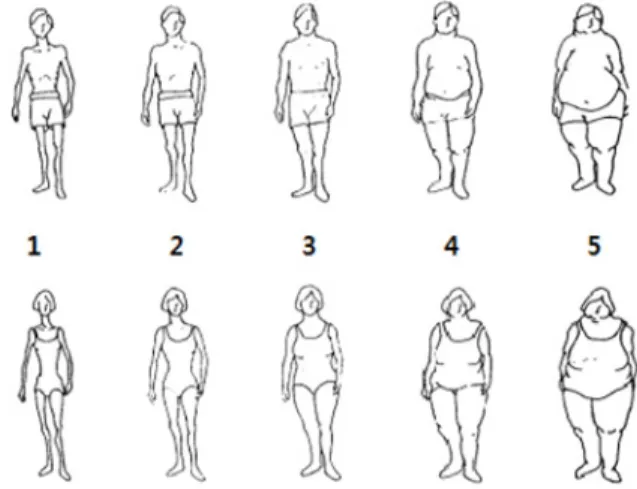
Fig. 1. Scale for assessing the body image
countries in 1990, diplomatic exchanges are in existence in terms of sociocultural aspects. Especially, due to the influence of the "Korean Wave", a wide distribution and exchange of Korean food products have been implemented [9]. Despite similar cultural characteristics, there is a difference in economic and nutrition levels between Korea and Mongolia. Major inter- national organizations such as the United Nations, Organization for Economic Cooperation and Development, and International Monetary Fund classified Korea as a developed country, but Mongolia is classified as a developing country [10,11]. In order to promote the health of children and adolescents, the School Meal Act was enacted in Korea in 1981. However, in Mongolia snacks for lunch of school children is currently served, and school meals have been piloted by food and nutrition non-governmental organization 'WITH' of Korea with Mongolian Ministry of Education and Culture since 2006 [12]. Although it is therefore necessary to understand the dietary patterns of the two countries, so far no comparative studies have been conducted on the dietary lifestyles. Korea has continuously studied implica- tions of nutrition on youth and college students, and previous comparative studies have been conducted with respect to the dietary life in China, Japan, and Taiwan, among the Northeast Asian countries [13-15]. Apart from the absent comparative studies on dietary life between Korean and Mongolian college students, studies on the nutrition for Mongolian people are also insufficient.
Therefore, this study was conducted to compare body image perception, nutrition knowledge, dietary attitudes, dietary habits, and health-related lifestyles between Korean and Mongolian college students. Based on the results of this study, we aimed to assess the level of nutrition knowledge, and understand the dietary attitudes, dietary habits, and health- related lifestyles between Korean and Mongolian college students. We propose that our results will be the basic data for the improvement of nutrition education and nutrition management for a desirable dietary life and health of Northeast Asian college students.
SUBJECTS AND METHODS
SubjectsThe subjects of this cross-sectional study were college students in Incheon, Korea, and Ulaanbaatar, Mongolia. A survey, using an anonymous self-administered questionnaire, was conducted from April to July 2017. Totally, 320 Korean college students (KCS) and 320 Mongolian college students (MCS) were given consent forms to confirm their participation in this study. For data analysis, 314 KCS and 280 MCS questionnaires were used.
Questionnaires of incomplete data, pregnant students, vegetarians, and students doing a fasting cure were excluded from the final analysis. This study was approved by the institutional review board of Inha University, Korea (No. 170220-5A).
Study contents and procedure
The questionnaire for this study was based on previous studies [16,17]; it was first written in Korean and then translated to Mongolian. The preliminary survey was conducted for 15 KCS and 15 MCS; consequently, MCS proposed using easy-to- understand language, and KCS requested removal of duplicate
entries. The final questionnaire was comprised of five major sections regarding body image perception, nutrition knowledge, dietary attitudes, dietary habits, and health-related lifestyles (total 50 questions).
General characteristics of subjects included gender, age, residential type, and monthly pocket money. Anthropometric data were presented as self-reported height and body weight, and the body mass index (BMI) was calculated as body weight in kg divided by height in meters squared (BMI = kg/m
2). Accor- ding to the 2000 Asia-Pacific Region Criteria adopted by the Korean Society for the Study of Obesity [18], body weight status of subjects was classified based on the calculated BMI value, as follows: underweight (BMI < 18.5), normal weight (BMI 18.5-22.9), overweight (BMI 23.0-24.9), and obesity (BMI ≥ 25).
Items related to body image perception were presented as self-reported current body image (CBI), ideal body image (IBI), and desirable body image (DBI). In general, the assessment of body image perception was based on 9 figures (ranging from 1 (most thin) to 9 (most obese)) by the Stunkard’s body image assessment scale [19] and by body image assessment scale of the Ambrosi-Randić N1's study [20] (where plus-minus two from 7 figures ranging was the most appropriate). The body image assessment scale of this study was classified into 5 categories:
1 thinnest, 2 thin, 3 normal, 4 fat, and 5 fattest (Fig. 1), wherein we selected 5 figures of the Stunkard’s nine figures. As per a method used in previous studies [21], the difference between CBI and IBI was calculated as a discrepancy of body image satisfaction (CBI-IBI), and a difference between IBI and DBI was calculated as a discrepancy of body image value (IBI-DBI).
Experience of nutrition education and sources of nutrition information were evaluated by two factors items. Level of nutrition knowledge was assessed based on 20 items regarding general health-related nutrition knowledge. Each item was answered with “right”, “wrong”, and “do not know”; calculations were scored as 1 point for the correct answer and 0 points for the wrong answer and unknowingness. The total score was the summated score of correct responses out of 20 nutrition knowledge questions. The Cronbach's coefficient of nutrition knowledge was 0.741 at KCS and 0.612 at MCS.
Dietary attitudes were assessed for 10 items regarding the
attitudes toward food intake for health. The items were
Variables KCS (n = 314) MCS (n = 280)
Gender Male 164 (52.2)2) 98 (35.0)
Female 150 (47.8) 182 (65.0)
Age (yrs) 22.5 ± 2.23) 22.1 ± 4.3
Residential type Own house (with family or relative’s house) 165 (52.5) 215 (76.8)
Dormitory 32 (10.2) 21 (7.5)
Boarding house 114 (36.3) 43 (15.4)
Others 3 (1.0) 1 (0.4)
Monthly pocket money1) (1,000 won) < 100 29 (9.2) 118 (42.1)
100-< 200 31 (9.9) 93 (33.2)
200-< 300 49 (15.6) 48 (17.1)
300-< 400 92 (29.3) 14 (5.0)
≥ 400 113 (36.0) 7 (2.5)
KCS, Korean college students; MCS, Mongolian college students.
1)Based on the exchange rate as of 2017, 1 Korean won was 2.1 Mongolian Tugriks
2)n (%)
3)Mean ± SD
Table 1. General characteristics of subjects by country
Variables Male (n = 262) Female (n = 332)
KCS (n = 164) MCS (n = 98) χ2/t3) KCS (n = 150) MCS (n = 182) χ2/t3)
Height (cm) 175.0 ± 5.31) 172.1 ± 6.3 3.856*** 161.0 ± 5.0 162.9 ± 6.1 -3.022**
Body weight (kg) 72.3 ± 11.5 67.6 ± 9.9 3.569*** 53.7 ± 6.8 56.4 ± 8.1 -3.158**
Body mass index (kg/m2) 23.6 ± 3.5 22.8 ± 3.0 1.927 20.7 ± 2.1 21.2 ± 2.9 -1.961
Underweight (< 18.5) 6 (3.7)2) 6 (6.1)
4.295
21 (14.0) 28 (15.4)
9.349*
Normal (18.5-22.9) 71 (43.3) 51 (52.0) 112 (74.7) 111 (61.0)
Overweight (23-24.9) 45 (27.4) 25 (25.5) 11 (7.3) 26 (14.3)
Obesity (≥ 25) 42 (25.6) 16 (16.3) 6 (4.0) 17 (9.3)
KCS, Korean college students; MCS, Mongolian college students.
1)Mean ± SD
2)n (%)
3)P-values were analyzed by Student t-test or chi-square test; *P< 0.05, **P< 0.01, ***P< 0.001 Table 2. Anthropometric data of subjects by gender and country
measured using a Likert 5-point scale, and each item was scored as 1 point "strongly disagree", 2 points "disagree", 3 points
"so-so", 4 points "agree", and 5 points "strongly agree". After reverse coding of negatively worded 3 and 8 items, a total score of dietary attitudes was measured as the summated score of each item out of 50 points; a higher score indicated better dietary attitudes. The Cronbach's coefficient of dietary attitudes was 0.709 at KCS and 0.627 at MCS.
Dietary habits were assessed using 8 items, including frequency of meal per day and breakfast per week, regularity and size of a meal, frequency and type of eating out and meal purchasing, and self-recognized problems of dietary habits. All items consisted of a closed-ended question and were selected for the most appropriate response as per their dietary habit status from categories by subjects.
Health-related lifestyles were assessed for 7 items, including frequency of alcohol drinking, number of cigarettes smoked, frequency of exercise, watching TV, using computer, mobile phone usage, and sleeping time. Especially, the frequency of exercise was determined by the number of exercises performed periodically.
Statistical analysis
Data on 314 KCS and 280 MCS were analyzed using SPSS 23.0 (SPSS Inc., IBM corp., NY, USA). Frequency and percentage,
or mean and standard deviation for each survey item were calculated using descriptive statistics. The chi-square test or Student t-test was performed for verifying the significance of all data differences between KCS and MCS. However, nutrition knowledge was compared between KCS and MCS using a non-parametric Mann-Whitney U test because data was non- normal distribution; KCS showed that P < 0.001 at Kolmogorov- Smirnov and Shapiro-Wilk, and -2.580 at skewness [22].
Correlations between total score of nutrition knowledge and dietary attitudes were determined using non-parametric Spearman's rank correlation coefficient for KCS since data was non-normal distribution, and Pearson's correlation coefficient for MCS. The level of all statistical significance was set at P <
0.05.
RESULTS
General characteristics of subjects by country
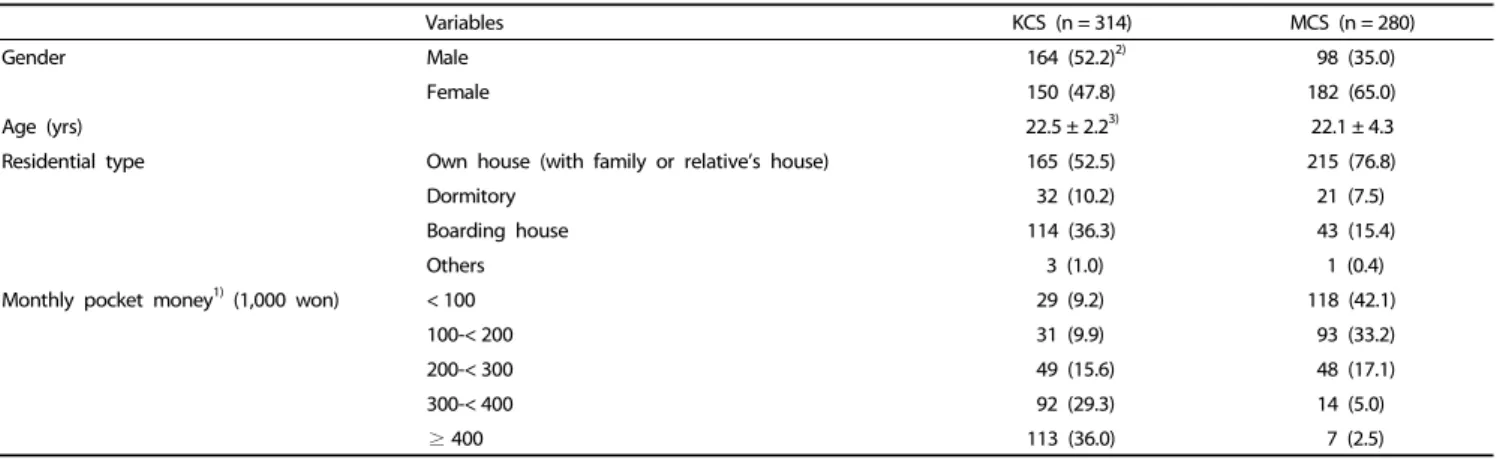
General characteristics of subjects are shown in Table 1. The proportions of male and female subjects were 52.2% and 47.8%
in KCS, and 35.0% and 65.0% in MCS, respectively. The average age of KCS was 22.5 years and that of MCS was 22.1 years.
With regards to residence, maximum subjects resided at their
own house (with family or relative’s house) in both countries
(52.5% of KCS and 76.8% of MCS), and 46.5% of KCS and 22.9%
Variables Male (n = 262) Female (n = 332)
KCS (n = 164) MCS (n = 98) χ2/t5) KCS (n = 150) MCS (n = 182) χ2/t5)
Current body image (CBI) 2.7 ± 1.03) 2.4 ± 0.7 2.804** 2.6 ± 0.7 2.2 ± 0.7 5.084***
Ideal body image (IBI) 2.5 ± 0.5 2.4 ± 0.5 1.870 1.9 ± 0.4 1.9 ± 0.4 -0.437
Desirable body image (DBI) 2.6 ± 0.5 2.3 ± 0.5 4.489*** 2.2 ± 0.4 2.1 ± 0.4 2.766**
CBI-IBI1)
-2 5 (3.0)4) 2 (2.0)
16.934**
0 (0.0) 0 (0.0)
29.115***
-1 45 (27.5) 24 (24.5) 11 (7.3) 20 (11.0)
0 45 (27.5) 50 (51.0) 43 (28.7) 99 (54.4)
1 54 (32.9) 17 (17.3) 82 (54.7) 56 (30.8)
2 15 (9.1) 5 (5.0) 14 (9.3) 7 (3.8)
IBI-DBI2)
-2 0 (0.0) 0 (0.0)
12.653**
1 (0.7) 2 (1.1)
10.097*
-1 17 (10.4) 6 (6.1) 40 (26.7) 26 (14.3)
0 143 (87.2) 79 (80.6) 109 (72.7) 151 (83.0)
1 4 (2.4) 13 (13.3) 0 (0.0) 3 (1.6)
KCS, Korean college students; MCS, Mongolian college students.
1)Values of the current body image minus the ideal body image were discrepancy of body image satisfaction
2)Values of the ideal body image minus the desirable body image were discrepancy of body image value
3)Mean ± SD; possible score was 1 (thinnest) to 5 (fattest)
4)n (%)
5)P-values were analyzed by Student t-test or chi-square test; *P< 0.05, **P< 0.01, ***P< 0.001 Table 3. Body image perception of subjects by gender and country
Variables KCS (n = 314) MCS (n = 280) χ2 2)
Experience of nutrition education Yes 263 (83.8)1) 144 (51.4) 71.719***
No 51 (16.2) 136 (48.6)
Sources of nutrition information (Multiple responses)
Internet 94 (31.4) 155 (55.8)
-
TV and radio 39 (13.0) 66 (23.7)
Magazine 15 (5.0) 67 (24.1)
Doctor and nutritionist 39 (13.0) 18 (6.5)
Parents 27 (9.0) 50 (18.0)
Friends 14 (4.7) 37 (13.3)
Class 141 (47.2) 23 (8.3)
Others 6 (2.0) 7 (2.5)
KCS, Korean college students; MCS, Mongolian college students
1)n (%)
2)P vales were analyzed by chi-square; ***P< 0.001
Table 4. Experience of nutrition education and sources of nutrition information of subjects by country
of MCS lived in dormitory and boarding house. Monthly pocket money of 65.3% in KCS and 7.5% in MCS was over 300,000 won. The prices in Korea and Mongolia are similar, but it is known that salaries in Korea are about 10 times higher than those in Mongolia; 1,352,230 won in Korea and 108,000 won in Mongolia in the case of monthly minimum wage in 2017 [23], so we considered that the monthly pocket money for college students in the two countries was different.
Anthropometric data of subjects by gender and country
The differences in anthropometric data between KCS and MCS by gender are shown in Table 2. The average height and body weight of male subjects was 175.0 cm and 72.3 kg in KCS, and 172.1 cm and 67.6 kg in MCS (P < 0.001), respectively.
In female subjects, the average height and body weight was 161.0 cm and 53.7 kg in KCS, and 162.9 cm and 56.4 kg in the MCS (P < 0.01), respectively. The average BMI of subjects by gender showed no significant difference between both countries.
In female subjects, the body weight status based on BMI value
showed a significant difference in 11.3% of KCS and 23.6% of MCS, for subjects who were overweight or more (P < 0.05).
Body image perception of subjects by gender and country
As shown in Table 3, the average score of CBI in KCS and MCS was 2.7 and 2.4 in male subjects (P < 0.01), and 2.6 and 2.2 in female subjects (P < 0.001), respectively. The average IBI score in KCS and MCS was 2.5 and 2.4 in male subjects, and 1.9 and 1.9 in female subjects, respectively, without a significant difference. The average DBI score in KCS and MCS was 2.6 and 2.3 in male subjects (P < 0.001), and 2.2 and 2.1 in female subjects (P < 0.01), respectively.
As for a discrepancy of body image satisfaction (CBI-IBI),
27.5% of KCS and 51.0% of MCS in male subjects were satisfied
with their CBI, and 42.0% of KCS and 22.3% of MCS wanted
to have a thinner body image (P < 0.01). In female subjects,
28.7% of KCS and 54.4% of MCS were satisfied with their CBI,
and 64.0% of KCS and 34.6% of MCS wanted to have a thinner
body image (P < 0.001). As for a discrepancy of body image
Variables KCS (n = 314) MCS (n = 280) U2)
Highly nutritious foods are high in calorie 0.9 ± 0.31) 0.4 ± 0.5 21,640.000***
Vegetables, fruits, and seaweeds are good source of dietary fiber 0.9 ± 0.2 0.5 ± 0.5 26,524.000***
Consuming a lot of fruits is not related to weight gain 0.9 ± 0.3 0.3 ± 0.4 13,790.000***
If you eat lunch and dinner, skipping breakfast will not affect your health 1.0 ± 0.2 0.7 ± 0.5 33,288.000***
The amount of nutrients needed in body is same, regardless of age and gender 1.0 ± 0.2 0.5 ± 0.5 23,537.000***
Constipation does not affect the health 0.9 ± 0.3 0.8 ± 0.4 37,968.000***
Beef fat raises blood cholesterol more than soybean oil 0.6 ± 0.5 0.4 ± 0.5 36,552.000***
Because most foods do not naturally contain salt, it is good to add some salt when cooking or eating 0.7 ± 0.5 0.4 ± 0.5 32,216.000***
Desirable weight loss is reducing 3 kg a week 0.8 ± 0.4 0.6 ± 0.5 33,707.000***
Eating less is better than doing exercise for weight loss 0.8 ± 0.4 0.0 ± 0.2 10,144.000***
Iron deficiency can cause anemia 1.0 ± 0.2 0.6 ± 0.5 29,346.000***
Osteoporosis can be prevented with adequate calcium intake 0.9 ± 0.3 0.8 ± 0.4 40,157.000**
Algae help to stimulate brain activity 0.8 ± 0.4 0.2 ± 0.4 16,967.000***
Sun exposure for about 15 minutes daily is enough to meet daily vitamin D requirements 0.8 ± 0.4 0.4 ± 0.5 25,373.000***
Foods with too much protein give burden on kidney 0.9 ± 0.3 0.1 ± 0.3 9,252.000***
Dietary fiber promotes intestinal activity 0.9 ± 0.3 0.6 ± 0.5 29,108.000***
Essential amino acids are not synthesized in the body and it must be taken through meals 0.7 ± 0.5 0.7 ± 0.5 43,148.000
Excessive sugar will accumulate as fat in the body 0.8 ± 0.4 0.2 ± 0.4 15,728.000***
For prevention of hypertension and cardiovascular diseases, restriction of sodium intake is needed 0.9 ± 0.3 0.2 ± 0.4 11,388.000***
Carbohydrates and fats provide same amounts of calories 0.8 ± 0.4 0.0 ± 0.2 11,616.000***
Total score 17.0 ± 2.8 8.4 ± 3.0 1,814.500***
KCS, Korean college students; MCS, Mongolian college students
1)Mean ± SD, 1 point for correct answer or zero for incorrect answer
2)P-values were analyzed by Mann-Whitney U test; **P< 0.01, ***P< 0.001 Table 5. Nutrition knowledge of subjects by country
Variables KCS (n = 314) MCS (n = 280) t2)
I try to eat foods for health even if I don’t like 3.2 ± 1.01) 3.4 ± 1.0 -2.087**
I try to eat healthy functional foods and dietary supplements 2.8 ± 1.2 3.1 ± 0.9 -2.990**
It is not necessary to fix my dietary habits because I am satisfied with it (reverse coding) 3.1 ± 1.1 2.7 ± 0.9 5.450***
I try to consider food combination 2.6 ± 1.0 3.0 ± 0.9 -5.272***
I try to eat fresh fruits instead of snack or dessert 3.0 ± 1.1 3.1 ± 1.0 -1.185
I try to not eat oily foods 2.5 ± 0.9 3.3 ± 1.0 -9.934***
I try to avoid eating out 2.3 ± 0.9 3.1 ± 0.9 -10.304***
I try to eat my favorite foods than nutritious foods (reverse coding) 2.3 ± 0.9 2.9 ± 1.0 -8.557***
I try to choose foods after checking the nutrition label 2.3 ± 1.1 3.2 ± 1.0 -11.047***
I try to use my nutrition knowledge in actual life 3.0 ± 1.0 3.4 ± 0.9 -5.357***
Total score 27.0 ± 5.4 31.2 ± 4.5 -10.048***
KCS, Korean college students; MCS, Mongolian college students
1)Mean ± SD, 5-point Likert scales ranging from 1 (strongly disagree) to 5 (strongly agree)
2)P-values were analyzed by Student t-test; **P< 0.01, ***P< 0.001 Table 6. Dietary attitudes of subjects by country
value (IBI-DBI), 10.4% of KCS and 6.1% of MCS in male subjects (P < 0.01) and 27.4% of KCS and 15.4% of MCS in female subjects (P < 0.05) were perceived that DBI was fatter than IBI, respectively. Male and female subjects with same IBI and DBI were 87.2% of KCS and 72.7% MCS and 80.6% of KCS and 83.0%
of MCS, respectively, and with most subjects being in agreement with IBI and CBI.
Nutrition knowledge of subjects by country
As presented in Table 4, 83.8% of KCS and 51.4% of MCS had experience of nutrition education (P < 0.001). Analyzing multiple responses regarding sources of nutrition information revealed 47.2% from a school class, 31.4% from internet, and 13.0% from TV/radio in order in KCS and 55.8% from internet,
24.1% from magazine, and 23.7% from TV/radio in order in MCS.
As shown in Table 5, the average total score of nutrition knowledge (out of 20.0 points) in KCS (17.0 points) was significantly different and was twice as high compared to MCS (8.4 points, P < 0.001). For all questions, except for the question
“Essential amino acids are not synthesized in the body and it must be taken through meals”, the rate of correct answers was significantly higher for KCS compared to MCS.
Dietary attitudes of subjects by country
The average total score of dietary attitudes (out of 50 points) in KCS (27.0 points) was significantly lower compared to MCS (31.2 points, P < 0.001) (Table 6).
Within KCS, the highest dietary attitudes score was achieved
Variables Nutrition knowledge Dietary attitudes
Nutrition knowledge 1 0.333**2)
Dietary attitudes 0.0061) 1
Correlations for Korean college students below; Mongolian college student above
1)Value was Spearman’s rank correlation coefficient
2)Value was Pearson’s correlation coefficient, **P< 0.01
Table 7. Correlation coefficient between nutrition knowledge and dietary attitudes by country
Variables Male (n = 262) Female (n = 332)
KCS (n = 164) MCS (n = 98) χ2 2) KCS (n = 150) MCS (n = 182) χ2 Frequency of meal
(times / day) ≥ 4 2 (1.2)1) 15 (15.3) 34.276*** 1 (1.3) 24 (13.2) 45.467***
3 71 (43.3) 49 (50.0) 52 (34.7) 91 (50.0)
2 91 (55.5) 30 (30.6) 94 (62.7) 54 (29.7)
1 0 (0.0) 4 (4.1) 2 (1.3) 13 (7.1)
Frequency of breakfast (times / week)
Everyday 36 (22.0) 19 (19.4) 9.683* 20 (13.3) 54 (29.7) 32.850***
5-6 16 (9.8) 13 (13.3) 15 (10.0) 22 (12.1)
3-4 26 (15.9) 27 (27.6) 28 (18.7) 52 (28.6)
1-2 58 (35.4) 32 (32.7) 50 (33.3) 40 (22.0)
None 28 (17.1) 7 (7.1) 37 (24.7) 14 (7.7)
Regularity of meals Very regular 13 (7.9) 1 (1.0) 20.056*** 6 (4.0) 3 (1.6) 7.995
Regular 55 (33.5) 16 (16.3) 37 (24.7) 29 (15.9)
So-so 54 (32.9) 44 (44.9) 62 (41.3) 77 (42.3)
Irregular 37 (22.6) 36 (36.7) 36 (24.0) 63 (34.6)
Very irregular 5 (3.0) 1 (1.0) 9 (6.0) 10 (5.5)
Size of meal Small 7 (4.3) 1 (1.0) 5.172 2 (1.3) 14 (7.7) 7.448*
Medium 95 (57.9) 48 (49.0) 103 (68.7) 113 (62.1)
Large 62 (37.8) 49 (50.0) 45 (30.0) 55 (30.2)
Frequency of eating out and meal purchasing
≥ 2 times / day 14 (8.5) 2 (2.0) 9.660 18 (12.0) 4 (2.2) 34.062***
1 time / day 32 (19.5) 13 (13.3) 16 (10.7) 19 (10.4)
4-6 times /week 32 (19.5) 27 (27.6) 44 (29.3) 33 (18.1)
1-3 times / week 71 (42.7) 42 (42.9) 64 (42.7) 84 (46.2)
1time / month 13 (7.9) 9 (9.2) 7 (4.7) 32 (17.6)
Almost no 3 (1.8) 5 (5.1) 1 (0.7) 10 (5.5)
Type of eating out and
purchasing meals Korean food 83 (50.6) 7 (7.1) 125.671*** 76 (50.7) 34 (18.7) 119.026***
Chinese food 8 (4.9) 3 (3.1) 2 (1.3) 7 (3.8)
Japanese food 15 (9.1) 2 (2.0) 16 (10.7) 5 (2.7)
Western food 20 (12.2) 9 (9.2) 17 (11.3) 14 (7.7)
Mongolian food 2 (1.2) 54 (55.1) 0 (0.0) 88 (48.4)
Chicken and pizza 32 (19.5) 23 (23.5) 31 (20.7) 34 (18.7)
Street food 4 (2.4) 0 (0.0) 8 (5.3) 0 (0.0)
Frequency of snacking (including late-night snack)
≥ 3 times / day 5 (3.0) 4 (4.1) 2.838*** 4 (2.7) 8 (4.4) 2.157
1-2 times / day 44 (26.8) 25 (25.5) 64 (42.7) 73 (40.1)
4-6 times / week 26 (15.9) 9 (9.2) 30 (20.0) 31 (17.0)
2-3 times / week 46 (28.0) 30 (30.6) 37 (24.7) 45 (24.7)
Almost no 43 (26.2) 30 (30.6) 15 (10.0) 25 (13.7)
Self-recognized problem of dietary habits
Skipping meals 14 (8.5) 12 (12.2) 23.440** 5 (3.3) 14 (7.7) 76.637***
Irregular meals 45 (27.4) 51 (52.0) 25 (16.7) 98 (53.8)
Binge eating 52 (31.7) 18 (18.4) 48 (32.0) 21 (11.5)
Intake of instant, processed foods 31 (18.9) 6 (6.1) 55 (36.7) 24 (13.2)
Imbalanced diet 6 (3.7) 5 (5.1) 9 (6.0) 4 (2.2)
Nothing 11 (6.7) 4 (4.1) 4 (2.7) 15 (8.2)
Etc. 5 (3.0) 2 (2.0) 4 (2.7) 6 (3.3)
KCS, Korean college students; MCS, Mongolian college students.
1)n (%)
2)P-values were analyzed by chi-square test; *P< 0.05, **P< 0.01, ***P< 0.001 Table 8. Dietary habits of subjects by country
for "I try to eat foods for health even if I don’t like" (3.2 points), and factors with the lowest score included "I try to avoid eating out", "I try to eat rather my favorite foods than nutritious foods", and "I try to choose foods after checking the nutrition label"
(all 2.3 points). For MCS, the highest dietary attitude score was
for "I try to eat foods for health even if I don’t like" and "I
try to use my nutrition knowledge in actual life" (3.4 points),
Variables Male (n = 262) Female (n = 332)
KCS (n = 164) MCS (n = 98) χ2 2) KCS (n = 150) MCS (n = 182) χ2 Frequency of alcohol drinking ≥ 1 times / week 78 (47.6)1) 2 (2.0) 97.273*** 67 (44.7) 0 (0.0) 173.383***
1-2 times / month 48 (29.3) 14 (14.3) 40 (26.7) 7 (3.8)
< 1 time / month 22 (13.4) 40 (40.8) 22 (14.7) 51 (28.0)
Not drinking 16 (9.8) 42 (42.9) 21 (14.0) 124 (68.1)
Number of cigarettes smoked
(cigarettes / day) > 10 14 (8.5) 8 (8.2) 13.763** 1 (0.7) 0 (0.0) 11.404*
6-10 20 (12.2) 4 (4.1) 0 (0.0) 1 (0.5)
1-5 5 (3.0) 13 (13.3) 0 (0.0) 11 (6.0)
Not smoking 125 (76.2) 73 (74.5) 149 (99.3) 170 (93.4)
Frequency of exercise Everyday 16 (9.8) 4 (4.1) 33.481*** 11 (7.3) 12 (6.6) 16.271**
5-6 times / week 25 (15.2) 3 (3.1) 4 (2.7) 8 (4.4)
3-4 times / week 53 (32.3) 17 (17.3) 40 (26.7) 25 (13.7)
1-2 times / week 40 (24.4) 31 (31.6) 39 (26.0) 34 (18.7)
1-2 times / month 7 (4.3) 16 (16.3) 10 (6.7) 16 (8.8)
Not exercise 23 (14.0) 27 (27.6) 46 (30.7) 87 (47.8)
Watching TV (hours / day) ≥ 3 0 (0.0) 13 (13.3) 59.727*** 3 (2.0) 25 (13.7) 16.912**
2-3 6 (3.7) 21 (21.4) 20 (13.3) 29 (15.9)
1-2 51 (31.1) 38 (38.8) 55 (36.7) 63 (34.6)
< 1 107 (65.2) 26 (26.5) 72 (48.0) 65 (35.7)
Using computer (hours / day) ≥ 7 5 (3.0) 7 (7.1) 8.301 4 (2.7) 9 (4.9) 12.832*
5-7 10 (6.1) 10 (10.2) 5 (3.3) 11 (6.0)
3-5 35 (21.3) 28 (28.6) 22 (14.7) 33 (18.1)
1-3 79 (48.2) 41 (41.8) 53 (35.3) 82 (45.1)
< 1 35 (21.3) 12 (12.2) 66 (44.0) 47 (25.8)
Mobile phone usage (hours / day) ≥ 4 25 (15.2) 17 (17.3) 20.806*** 37 (24.7) 51 (28.0) 47.045***
3-4 42 (25.6) 12 (12.2) 50 (33.3) 22 (12.1)
2-3 59 (36.0) 23 (23.5) 46 (30.7) 39 (21.4)
1-2 37 (22.6) 42 (42.9) 17 (11.3) 51 (28.0)
< 1 1 (0.6) 4 (4.1) 0 (0.0) 19 (10.4)
Sleeping time (hours / day) ≥ 8 5 (3.0) 16 (16.3) 39.325*** 8 (5.3) 13 (7.1) 8.601
7-8 47 (28.7) 52 (53.1) 45 (30.0) 68 (37.4)
6-7 68 (41.5) 19 (19.4) 58 (38.7) 57 (31.3)
5-6 41 (25.0) 10 (10.2) 30 (20.0) 23 (12.6)
< 5 3 (1.8) 1 (1.0) 9 (6.0) 21 (11.5)
KCS, Korean college students; MCS, Mongolian college students.
1)n (%)
2)P-values were analyzed by chi-square test; *P< 0.05, **P< 0.01, ***P< 0.001 Table 9. Health-related lifestyles of subjects by country
whereas the lowest score was for "It is not necessary to fix my dietary habits because I am satisfied with it" (2.7 points).
Correlation between nutrition knowledge and dietary attitudes
As shown in Table 7, KCS showed a positive correlation but not significant. Whereas MCS showed a significantly positive correlation between nutrition knowledge and dietary attitudes, and the higher the level of nutrition knowledge, higher was the dietary attitudes (P < 0.01).
Dietary habits of subjects by country
Table 8 presents dietary habits of subjects by gender and country. Daily meals were consumed 2 times by 55.5% and 3 times by 43.3% in male KCS, and 3 times by 50.0% and 2 times by 30.6% in MCS (P < 0.001). Those of female subjects were 2 times for 62.7% and 3 times for 34.7% in KCS, and 3 times for 50.0% and 2 times for 29.7% in MCS (P < 0.001). Rate of skipping
breakfast for KCS was significantly higher compared to MCS in both genders; male subjects: 17.1% of KCS and 7.1% of MCS (P < 0.05), female subjects: 24.7% of KCS and 7.7% of MCS (P
< 0.001). Regularity of meals was significantly more desirable
in 41.4% of male KCS compared to 17.3% of male MCS (P <
0.001); however, there was no significant difference between female subjects.
Frequency of eating out and purchasing meals was not significantly different for male subjects; however, for female subjects, 52.0% of KCS consumed outside meals more than 4 times a week and was significantly higher compared to 30.7%
of MCS (P < 0.001). Considering the cuisine preferred when
eating out and purchasing meals, more than 50% of subjects
in both countries showed a preference for food of their own
countries, and the second highest preference was for chicken
and pizza. However, 18.7% of female MCS preferred Korean food
for the second time as the same ranking as chicken and pizza.
The self-recognized problems of dietary habits differed significantly by gender and country. Data for male subjects reported 31.7% binge eating and 27.4% irregularity of meals in KCS, and 52.0% irregularity of meals and 18.4% binge eating in MCS (P < 0.01). Female subjects reported 36.7% intake of instant/processed food and 32.0% binge eating in KCS, and 53.8% for irregular meals and 13.2% intake of instant/processed food in MCS (P < 0.001).
Health-related lifestyles of subjects by country
Table 9 presents health-related lifestyles of subjects by gender and country. Frequency of drinking alcohol “more than once a week” was significantly different, being 47.6% and 2.0% in male KCS and MCS, and 44.7% and 2.0% in female KCS and MCS, respectively (P < 0.001). Smokers among male subjects were 23.7% of KCS and 25.6% of MCS. Of these, 12.2% of KCS smoked 6-10 cigarettes a day, and 13.3% of MCS smoked 1-5 cigarettes a day, which showed a significant difference in the amount of smoking (P < 0.01). Among female subjects, KCS (0.7%) showed a significantly lower smoking rate than MCS (6.5%) (P < 0.05). Frequency of exercising more than 3 times a week in KCS (57.3% of males and 36.0% of females) was significantly higher compared to MCS (24.5% of males and 24.7% of females) (P < 0.001 in male subjects and P < 0.01 in female subjects).
Subjects who watched TV for more than 2 hours a day were 3.7% of KCS and 34.7% of MCS in males, and 15.3% of KCS and 29.6% of MCS in females (P < 0.001). Subjects with mobile phone usage exceeding 3 hours a day were 40.8% of KCS and 29.5% of MCS in males, and 58.0% of KCS and 40.1% of MCS in females (P < 0.001).
DISCUSSION
The transitioning from adolescence to adulthood of college students can result in the development of unhealthy and poor diet and lifestyles due to various extra-curricular activities. Thus, it is imperative to recognize the importance of desirable dietary habits and lifestyles during this period. This study investigated the body image perceptions, nutrition knowledge, dietary attitudes, dietary habits, and health-related lifestyles of college students of Korea and Mongolia, both countries located in Northeast Asia, and all results were compared by gender and country.
Regarding body image perception for male subjects in Korea and female subjects in both countries, CBI was fatter than IBI and suggesting that they wanted to be thinner than their CBI.
The differences between IBI and CBI in KCS by gender were significantly greater than in MCS. In male subjects, distribution of differences in CBI and IBI were considered due to the fact that overweight or more according to BMI was higher in KCS than in MCS. Although the distribution of overweight or more of female KCS was significantly lower compared to MCS, only 28.7% of KCS and 54.4% of MCS recognized their CBI as IBI, whereas 64.0% of KCS and 34.6% of MCS desired to be thinner.
KCS perceived their CBI to be fatter than IBI, compared to MCS perception, and it is called the discrepancy of body image satisfaction. This study showed similar results as previous
studies [24,25] in which reported that Koreans preferred a skinny body image compared to other countries in Northeast Asia such as China and Japan. As for weight gain of Korean and Chinese college students during three years of college time, it was reported that Korean college students’ weight gain (3.9 kg) were significantly lower compared to Chinese college students (7.0 kg) because of the importance of appearance and confidence in Korean college students [26]. The influence of mass media was an important factor in shaping attitudes toward appearance [27], and females were reported to be more affected than males [28]. The "Korean pop Idol" culture is predominant among Northeast Asian countries, but the appearance and slim figure of the "Girl Group" has been the coveted thin body for young people in Korea [29]. For these reasons, it is considered that discrepancy degree of body image satisfaction in female subjects was higher compared to male subjects and those of KCS in female subjects was higher compared to MCS.
The average total score of nutrition knowledge (17.0 and 8.4 points, respectively; P < 0.001) as well as experience of nutrition education (83.8% and 51.4%, respectively; P < 0.001) were significantly higher in KCS compared to MCS. This could be attributed to the fact that since 47.2% of KCS and 8.3% of MCS participated in nutrition classes at school by trained specialists such as nutrition teacher, their experience of nutrition education from professionals had inculcated a higher level of nutrition knowledge than MCS. Mongolian adolescents who had experience of health education (2008) were reported to be only 34.1% [30], and the Nutrition Education Center was opened and operated in Mongolian health center in 2011 by Koreans for chronic disease prevention and health-nutrition education of Mongolian [31]. Similar to this study, Shuchen et al. [32] reported that 58.1%
of KCS had an accurate answer rate of nutrition knowledge than 44.5% of Chinese college students. In Korea, the Korea National Health and Nutrition Examination Survey are conducted every year, and national nutrition status is monitored and reported to the public. The School Meal Act was enacted in 1981, nutrition teachers have been assigned schools to focus on the healthcare of the teenagers since 2007 [33]. However, the STEPS Survey has not been conducted in Mongolia since 2013 [34], and the opportunity to impart nutrition knowledge about healthy dietary habits was lesser than Korea since school meals were not being provided. Since MCS received most of the nutrition information through mass media, dysfunction could occur if the information was not accurate and objective, since information obtained through mass media tends to be uncritically accepted or is believed to be accurate [35].
Overall, the average total score of dietary attitudes in KCS (27.0 points) was significantly lower compared to MCS (31.2 points, P < 0.001). A previous study [32] also reported that Korean college students had significantly higher nutrition knowledge, but lower dietary attitudes compared to Chinese college students.
In the case of surveyed and assessed the dietary attitudes using
the Likert 5-scale, but this had a disadvantage of the frame
of reference of responses of individuals [36]. The higher the
level of nutrition knowledge, the higher is the motivation and
desire to improve dietary habits [37]; therefore, evaluation
criteria for dietary attitudes can be higher. In other words, MCS
may evaluate dietary attitudes ineptly compared to KCS, who
had high nutrition knowledge due to the nutrition education level and cultural differences.
Considering daily meal consumption, male and female subjects consumed 2 and 3 times meal, respectively, in KCS, and 3 and 2 times meal, respectively, in MCS, with a significant difference between the two countries by gender (P < 0.001).
Also, skipping breakfast was more common among KCS than MCS. Son et al. [38] reported that Korean girls (17.5 points) had more nutrition knowledge than Chinese girls (16.3 points), but the rate of applying the nutrition knowledge to dietary habits in Korean girls (3.12 points) was lower than Chinese girls (3.74 points), shown similar results to results of this study. A previous study on the dietary habits of Korean and Japanese female college students [39] had reported that KCS had significantly lower frequency of breakfast and daily meals than Japanese college students. According to the previous report that residential type among college students may affect frequency of meals [40], so it may be considered that KCS who lived in dormitory and boarding house had a lower frequency of meals compared to MCS.
Assessing factors of eating out and meal purchasing revealed that subjects mostly preferred food of their own countries. The second most-preferred food for female subjects in MCS was Korean food, which was influenced by the knowledge of Korean food gained from Korean dramas broadcast in Mongolia [29].
Although meat is commonly eaten in Mongolia on daily basis, subjects reported that they enjoyed experimenting with unique tastes and eating various dishes and recipes of Korean food [41].
Frequency of alcohol drinking in KCS was significantly higher compared to MCS for both genders. A previous study [42]
compared alcohol drinking behaviors among college students in Korea, China, the Philippines, and Vietnam; 36.5% of male Korean students and 15.4% of female Korean students had the highest alcohol drinking rate (more than 10 cups). College students had a significantly higher rate of drinking when they resided in dormitories (odds ratio: male 2.09, female 1.99) or boarding houses (odds ratio: male 2.25, female 2.37) than when they lived with parents. In Korea, since there are numerous 24 hours convenience stores and bars are operated until late, it is very easy to purchases alcohol than in Mongolia [43]. Also, since KCS had a higher rate of living in dormitories and boarding houses, this sociocultural difference was one of the reasons for higher alcohol consumption in Koreans than in Mongolians. Contrarily, smoking in KCS was significantly lower compared to MCS. Regarding results of two studies, it was found that in 2015, 39.3% of male and 5.5% of female adults smoked in Korea, and in 2013, 49.1% of male and 5.3% of female adults were smokers in Mongolia [44,45]. The mortality rate of cardio- vascular disease due to smoking was 104 deaths per 100,000 population in Korea, and 500 deaths per 100,000 population in Mongolia [46]. Therefore, it is essential that college students are periodically provided education on healthy lifestyles such as no alcohol drinking and no smoking.
The rate of female subjects who exercise more than 3 times a week in KCS (36.7%) was significantly higher compared to MCS (24.7%). Kim and Sawano (2010) reported that the rate of exercising more than three times a week in Korean female college students (35.7%) was higher compared to Japanese
female college students (8.2%), and more than 50% of Korean female college students said they did exercise for weight control [47]. It was considered that female KCS had a better habit of exercising than other countries in Northeast Asia for IBI.
Considering computer and mobile phone usage, the frequency of all these devices in KCS was significantly higher compared to MCS. Recently, 85% of the Korean population and 78% of the Mongolian population were reported to be using smartphones [48,49]. It is therefore considered necessary to develop an application program that can impart knowledge on improved nutrition information and healthcare for college students in each country, since it is more likely for people to conduct a searching or social network using a smartphone.
In summary, KCS had greater discrepancy in degree of body image satisfaction than MCS. Total score of nutrition knowledge in KCS was significantly higher compared to MCS, but a total score of dietary attitudes in KCS was significantly lower compared to MCS. In MCS, nutrition knowledge had a significant positive correlation with dietary attitudes. KCS showed unhealthier dietary habits and lifestyles than MCS, such as higher frequency of skipping breakfast and alcohol drinking. The limitations of this study include disparity in understanding and answering the questionnaire due to socio, food and cultural differences based on their nationality, and difficulty in generalizing the results since this study was conducted targeting college students in restricted areas of Incheon, Korea, and Ulaanbaatar, Mongolia.
Finally, limitations in general characteristics such as gender, residential type and monthly pocket money may be related to family composition and socioeconomic status, and differences in urbanization between Korean and Mongolia. Despite these limitations, this study was the first study to compare body image perception, nutrition knowledge, dietary attitudes, dietary habits, and health-related lifestyles between KCS and MCS, and we could identify the diversities between the two countries for the above considered factors.
Therefore, KCS need nutrition education interventions that motivate them to apply their acquired nutrition knowledge to their lives, to improve their healthy dietary habits with desirable dietary attitudes. MCS need systematic education by developing professional nutrition education programs to improve the level of nutrition knowledge. It is also necessary to develop diverse and effective education methods that will help college students to manage their nutrition and health, by exploiting the highly used forum of social media.
CONFLICT OF INTEREST
The authors declare no potential conflicts of interests.
ORCID
Kyung Ja Chang: http://orcid.org/0000-0001-6717-664X So Hyun Park: http://orcid.org/0000-0001-5552-8919 Zolzaya Erdenebileg: http://orcid.org/0000-0001-8488-6774 REFERENCES
1. Nelson MC, Story M, Larson NI, Neumark-Sztainer D, Lytle LA.
Emerging adulthood and college-aged youth: an overlooked age for weight-related behavior change. Obesity (Silver Spring) 2008;16:2205-11.
2. Poobalan AS, Aucott LS, Clarke A, Smith WC. Diet behaviour among young people in transition to adulthood (18-25 year olds): a mixed method study. Health Psychol Behav Med 2014;2:909-28.
3. Hilger J, Loerbroks A, Diehl K. Eating behaviour of university students in Germany: dietary intake, barriers to healthy eating and changes in eating behaviour since the time of matriculation.
Appetite 2017;109:100-7.
4. Beaudry KM, Thomas AM, Falk B, Ward WE, Josse AR. Identifying changes in body weight, composition and dietary intake during first-year university. FASEB J 2017;31:957.27.
5. Laska MN, Larson NI, Neumark-Sztainer D, Story M. Dietary patterns and home food availability during emerging adulthood: do they differ by living situation? Public Health Nutr 2010;13:222-8.
6. Brown C. The information trail of the ‘Freshman 15’--a systematic review of a health myth within the research and popular literature.
Health Info Libr J 2008;25:1-12.
7. Chapman CD, Nilsson VC, Thune HÅ, Cedernaes J, Le Grevès M, Hogenkamp PS, Benedict C, Schiöth HB. Watching TV and food intake: the role of content. PLoS One 2014;9:e100602.
8. Pingali P. Westernization of Asian diets and the transformation of food systems: implications for research and policy. Food Policy 2006;32:281-98.
9. Lee JY. Korea-Mongolia economic cooperation: achievements and strategic challenges. Mong Stud 2015;42:187-216.
10. Embassy of the Republic of Korea in Mongolia. Mongolian press articles (10.10) [Internet]. Ulaanbaatar: Embassy of the Republic of Korea in Mongolia; 2017 [cited 2018 February 5]. Available from:
http://overseas.mofa.go.kr/mn-ko/brd/m_374/view.do?seq=133148 6&srchFr=&srchTo=&srchWord=&srchTp=&multi_itm_seq=0&itm_se q_1=0&itm_seq_2=0&company_cd=&company_nm=&page=5.
11. namu. wiki. Developed country [Internet]. Asunción: namu.wiki; 2016 [cited 2018 February 8]. Available from: https://namu.wiki/w/%EC%
84%A0%EC%A7%84%EA%B5%AD#fn-10.
12. Wholistic Interest Through Health (KR). School lunch project in Mongolia [Internet]. Seoul: Wholistic Interest Through Health; 2013 [cited 2018 February 5]. Available from: http://www.iwith.or.kr/busin ess_02.html.
13. Joo EJ, Park ES. Comparison study of dietary behavior, nutrition knowledge, and body weight perception of female high school students in Jeonju, Korea and Jinan, China. Korean J Hum Ecol 2016;25:121-35.
14. Park JK, Nam YJ, Choi KM. A comparison of satisfaction for actual body and perceived body between Korean and Japanese female college students. J Korean Soc Clothing Text 2004;28:758-66.
15. Kim MY, Choi EJ, Abe S, Jjang CY, Yoon JH. Comparison of nutrient criteria of school lunch programs in Korea, Japan, and Taiwan. 2015 Spring Conference the East Asian Society of Dietary Life; 2015 May 9; Seoul, Korea. Seoul: The East Asian Society of Dietary Life; 2015.
P. 195.
16. Jang SH. An investigation into dietary habit and food preference by university student's nutrition knowledge [master's thesis]. Seoul:
Konkuk University; 2010.
17. Jo HJ. A study of drinking behaviors according to diet and nutritional knowledge of university students [master's thesis].
Gimhae: Inje University; 2011.
18. World Health Organization Western Pacific Region; International Association for the Study of Obesity; International Obesity Task Force. The Asia-Pacific Perspective: Redefining Obesity and Its treatment. Sydney: Health Communications Australia Pty Limited;
2000.
19. Stunkard A. Old and new scales for the assessment of body image.
Percept Mot Skills 2000;90:930.
20. Ambrosi-Randić N, Pokrajac-Bulian A, Takšić V. Nine, seven, five, or three: how many figures do we need for assessing body image?
Percept Mot Skills 2005;100:488-92.
21. Hyun H, Lee H, Ro Y, Gray HL, Song K. Body image, weight management behavior, nutritional knowledge and dietary habits in high school boys in Korea and China. Asia Pac J Clin Nutr 2017;26:923-30.
22. Curran PJ, West SG, Finch JF. The robustness of test statistics to nonnormality and specification error in confirmatory factor analysis.
Psychol Methods 1996;1:16-29.
23. The Korean Labor Economic Association. Study on Strengthening Cooperation in Employment Labor Sector between Korea and Mongolia. Sejong: Ministry of Employment and Labor; 2017.
24. Gim WS, Kim JS. Body-related values and body-esteem in East Asian women: a cross-national study focusing on Korean, Chinese, and Japanese college students. Korean Psychol Soc Issues 2007;13:
113-34.
25. Song L, An NY, Ryu HK. A comparative study of dietary and weight control behavior of female college students in Korea and China.
Korean J Community Living Sci 2015;26:761-74.
26. Lee Y, Sun L. The study of perception in body somatotype and dietary behaviors: the comparative study between Korean and Chinese college students. Korean J Community Nutr 2013;18:25-44.
27. Lee SG, Koh AR. Formation models of body image, self-esteem, and clothing attitudes as related to pubertal physical growth. J Korean Soc Clothing Text 2005;29:438-48.
28. Jang HS, Kim TR. The effect of mass media on body perception and state esteem of body image. Stud Korean Youth 2006;17:57-83.
29. Shin YH, Lee HW, Jeon SH, Lee MJ, Kim SH, Kim S, Kim HG, Shin KM. Korean Cultural Wave in East Asia. Yongin: Jeonyewon; 2006.
30. Yoon CH. Analysis of health status and health behavior among school children in Mongolia [master's thesis]. Seoul: Yonsei University; 2009.
31. Wholistic Interest Through Health (KR). Sung Keun Haigu State Health Center 'Nutrition Education Center' handover ceremony [Internet]. Seoul: Wholistic Interest Through Health; 2014 [cited 2018 February 5]. Available from: http://www.iwith.or.kr/community _02.html?actobj=news&acttype=VIEWINFO&bbs_code=news&bbs_
key=79859397795173_538c648a45802.
32. Shuchen G, Kim H, Kim M. A cross-cultural investigation of nutrition knowledge, dietary behaviors, and checking behaviors of food and nutrition labels between Korean and Chinese university students.
J East Asian Soc Diet Life 2015;25:942-51.
33. Yang SG. Analysis of School Meal Program in Korea in OECD Countries. Seoul: Korean Educational Development Institute; 2010.
34. Minister of Health and Sports (MN). Third national STEPS Survey on the prevalence of noncommunicable disease and injury risk factors-2013 [Internet]. Ulaanbaatar: Minister of Health And Sports;
2013 [cited 2017 December 10]. Available from: http://www.who.
int/chp/steps/Mongolia_2013_STEPS_Report.pdf?ua=1.
35. Campo S, Mastin T. Placing the burden on the individual: overweight
and obesity in African American and mainstream women's magazines. Health Commun 2007;22:229-40.
36. Babbie ER. The Basics of Social Research. Boston (MA): Cengage Learning; 2007.
37. Park YS, Lee JW, Seo JS, Lee BK, Lee HS, Lee SK. Nutrition Education
& Counseling. 5th ed. Paju: Kyomunsa; 2013.
38. Son S, Ro Y, Hyun H, Lee H, Song K. A comparative study on dietary behavior, nutritional knowledge and life stress between Korean and Chinese female high school students. Nutr Res Pract 2014;8:205-12.
39. Sakamaki R, Amamoto R, Mochida Y, Shinfuku N, Toyama K. A comparative study of food habits and body shape perception of university students in Japan and Korea. Nutr J 2005;4:31.
40. Choi SH. Effects of self esteem, dietary self-efficacy and life stress on dietary behavior of female nursing students. J Korea Acad Ind Coop Soc 2017;18:366-74.
41. Korea Foundation for International Culture Exchange. Korean food culture spreading to Mongolia [Internet]. Seoul: Korea Foundation for International Culture Exchange; 2017 [cited 2017 December 7].
Available from: http://kofice.or.kr/c30correspondent/c30_corresp ondent_02_view.asp?seq=14879.
42. Lum C, Corliss HL, Mays VM, Cochran SD, Lui CK. Differences in the drinking behaviors of Chinese, Filipino, Korean, and Vietnamese college students. J Stud Alcohol Drugs 2009;70:568-74.
43. YTN (KR). People who drinks alcohol are being problem more than alcohol consumption [Internet]. Seoul: YTN; 2017 [cited 2017 December 7]. Available from: http://www.ytn.co.kr/_ln/0102_20170 5291657474174.
44. HuffingtonPostKorea. Korean male smoking rate tops 30% for the first time [Internet]. Seoul: HuffingtonPostKorea; 2016 [cited 2018 December 7]. Available from: http://www.huffingtonpost.kr/2016/
05/10/story_n_9878846.html.
45. Embassy of the Republic of Korea in Mongolia. Tobacco production in Mongolia, smoking rates and key regulations [Internet].
Ulaanbaatar: Embassy of the Republic of Korea in Mongolia; 2015 [cited 2017 December 7]. Available from: http://overseas.mofa.go.
kr/mn-ko/brd/m_378/view.do?seq=1156735&srchFr=&srchTo=&srch Word=&srchTp=&multi_itm_seq=0&itm_seq_1=0&itm_seq_2=0&co mpany_cd=&company_nm=&page=13.
46. Oranisation for Economic Co-operation and Development; World Health Organization. Health at a Glance: Asia/Pacific 2014: Measuring Progress towards Universal Health Coverage. Paris: OECD Publishing;
2014.
47. Kim MO, Sawano K. Comparison of Korean and Japanese female college students' obesity recognition and life style. J Korean Soc Food Sci Nutr 2010;39:699-708.
48. Amarsanaa N. Mongolian telecommunication equipment market growth [Internet]. Seoul: KOTRA; 2017 [cited 2017 December 10].
Available from: https://news.kotra.or.kr/user/globalBbs/kotranews/
4/globalBbsDataView.do?setIdx=243&dataIdx=161646.
49. Yonhapnews (KR). The world's smartphone penetration surpassed the first 50% ... Korea 85% [Internet]. Seoul: Yonhapnews; 2017 [cited 2017 December 10]. Available from: http://www.yonhapnews.
co.kr/bulletin/2017/02/08/0200000000AKR20170208052100017.HT ML.