https://doi.org/10.14734/PN.2019.30.3.126 pISSN 2508-4887•eISSN 2508-4895
Ji Su Seong, MD1, Soo Hyun Oh, MD1, Se Jin Lee, MD1,2, Jee Yoon Park, MD1, Kyung Joon Oh, MD, PhD1, Joon-Seok Hong, MD, PhD1
1Department of Obstetrics and Gynecology, Seoul National University Bundang Hospital, Seongnam;
2Department of Obstetrics and Gynecology, Kangwon National University Hospital, School of Medicine, Kangwon National University, Chuncheon, Korea
Objective: The aim of this study was to determine the association of respiratory morbidity and as
sisted ventilation rates in late preterm births after premature rupture of membranes (PROM).
Methods: This retrospective cohort study included 584 consecutive women admitting due to PROM and delivered between 34+0 and 36+6 weeks of gestation at Seoul National University Bundang Hospital from August 2008 to July 2018. Multifetal pregnancies and intrauterine fetal demise were excluded. Primary outcome included the use of assisted ventilation and neonatal respiratory compli
cations and a multivariable analysis was also performed.
Results: 1) The proportions of neonates receiving assisted ventilation were significantly decreased as the gestational age at delivery advanced (Ptrend <0.05 for all) in late preterm births after PROM. 2) The incidences of respiratory distress syndrome were 14%, 7%, and 3% for preterm births in the 34th, 35th, and 36th week of gestation (Ptrend=0.007), respectively. 3) The gestational age at delivery was associated with the rates of positive pressure ventilation immediately after birth, neonatal intensive care unit (NICU) admission, minor assisted ventilators in preterm births with PROM after 34 weeks of gestation when analyzed by multivariate logistic regression. 4) The interval from PROM to delivery was independently associated with the rate of NICU admission (odds ratio, 1.04; 95% confidence in
terval, 1.011.06).
Conclusion: Although late preterm births seem to be less severe than earlier gestation, gestational age at delivery is still an important factor for neonatal respiratory complications and for the use of assisted ventilation, even when the pregnancy is complicated with PROM.
Key Words: Premature birth, Fetal membranes, Premature rupture, Respiratory distress syndrome, newborn
Introduction
Preterm birth before 37 weeks has been an obstetrical challenge for a long time. Among preterm births, late preterm babies who were born after 34 weeks have been thought to pre
sent with relatively better outcomes than those delivered earlier because sufficient maturation of the fetal lung is known to be accomplished around 34 weeks of gestation.14 However, physicians experience neonatal morbidities, especially from respiratory complications, more commonly than expected in clinical practice.
A current systemic metaanalysis reviewed the morbidities of late preterm births and showed that there was a higher risk for respiratory morbidities such as respiratory distress syndrome (RDS), congenital pneumonia, pneumothorax, persistent pulmonary hypertension, Received: 10 February 2019
Revised: 23 April 2019 Accepted: 14 May 2019 Correspondence to Jee Yoon Park, MD
Department of Obstetrics and Gynecology, Seoul National University Bundang Hospital, 82 Gumiro 173beongil, Bundanggu, Seongnam 13620, Korea
Tel: +82317877266 Fax: +82317874054 E-mail: [email protected]
Copyright© 2019 by The Korean Society of Perinatology
This is an Open Access article distributed under the terms of the Creative Com
mons Attribution NonCommercial License (http://creativecommons.org/
license/bync/4.0/), which permits unrestricted noncommercial use, distribution, and reproduction in any
The Association of Respiratory Morbidity
and Assisted Ventilation Rates in Late
Preterm Births after Premature Rupture of
Membranes: A Retrospective Cohort Study
in a Tertiary Center
et al.6 reported that the incidence of hypoglycemia, jaundice, feeding difficulties and temperature instability was increased in late preterm infants compared to term infants. Several studies reported that infants born in the late preterm period are more likely to develop longterm complications including neuropsy
chiatric developmental delay and poor fetal growth.711
Therefore, the prolongation of pregnancy should be the definite goal for patients with a risk of preterm birth in the late preterm period. For certain fetal or maternal indications, the indicated delivery is considered, and many guidelines recommend the optimal timing of delivery in several circumstances. In especially late preterm period, patients and their family members expect their babies would have less problems than early preterm babies, however in clinical circumstances, late preterm babies frequ
ently experience respiratory difficulties. The rates of specific respiratory complications or ventilator supports are not sufficient to explain or counsel to patients.
Premature rupture of membranes (PROM) is one of the major threats of preterm birth.12 It complicates 15% of all pregnanc
ies1315 and is highly associated with both perinatal and maternal morbidity and mortality.1618 Traditionally intended delivery beyond 34 weeks of gestation has been considered for patients presented with PROM.1,19 It is evident from the recommendation of guidelines that being exposed to the condition of ruptured membranes has been known to be highly associated with the risk of intraamniotic infection, chorioamnionitis, umbilical cord compression and adverse neonatal morbidities such as early onset sepsis.2022
However, a recent review by Cochrane revealed that planned delivery in PROM patients prior to 37 weeks was not associated with improved neonatal morbidity or reduced perinatal mortality.23 In addition, van der Ham et al.24,25 reported on randomized trials showing that immediate intended delivery did not reduce the risk of neonatal sepsis (relative risk, 0.66; 95% confidence interval [CI], 0.301.5), and other neonatal outcomes were not different compared to those who underwent expectant manage ment. The above study suggested that expectant management could be ad vocated in late preterm PROM if signs of infection did not de
velop.25
The aim of this study was to determine the incidence of neo
natal respiratory morbidities and the use of assisted ventilation utilities according to the gestational age at delivery and the latency
from rupture to delivery in late preterm births after PROM.
Methods
1. Study design
A retrospective study was performed on consecutive women who had delivered between 34+0 weeks and 36+6 weeks at Seoul National University Bundang Hospital from August 2008 to July 2018. Among them, the pregnancies who were administered for a diagnosis of preterm PROM were identified. Multifetal preg
nancies and intrauterine fetal demise were excluded. The study protocol was approved by the Institutional Review Board (IRB) of Seoul National University Bundang Hospital (IRB No. E1705
396103).
2. The outcomes of the pregnancies and neonates
Data including maternal and neonatal outcomes were collected.
Maternal characteristics included age, parity, use of any tocoly
tics, use of progesterone for prevention of preterm birth before PROM, antenatal steroid administration, use of intravenous oxy
tocin, the mode of delivery, and gestational age at the diagnosis of ruptured membranes and at delivery. Placental pathologic reports were collected to evaluate the presence of histologic chorioamnionitis and funisitis.
Basic information on the newborns such as birthweight, sex, Apgar scores, the presence of meconium, and major anomalies were collected. The outcome variables were the rate of neonatal intensive care unit (NICU) admission, the use of assisted ventila tion, and respiratory morbidities including RDS, bronchopulmo nary dysplasia (BPD), frequent apnea, transient tachypnea, and pneumothorax. Composite respiratory morbidity was defin ed as the presence of treatment for at least one of above respiratory presentations or diseases.
The definition of RDS was the presence of all of the following:
clinical signs of respiratory distress, supplemental oxygen re
quirement (FiO2 >0.2), NICU admission for further respiratory support, diagnostic radiographic findings of reticular patterns and air bronchograms. Transient tachypnea was diagnosed when tachypnea had resolved in less than 72 hours with a normal radio graphy or showed increased perihilar interstitial markings in the infantogram.
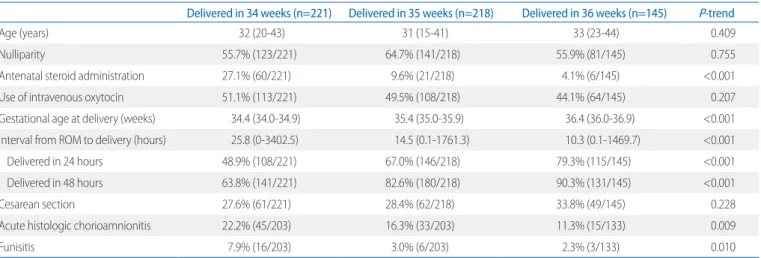
tational age at delivery. As the gestational age of delivery was earlier, the use of tocolytics to prolong pregnancy was higher.
Tocolytics are not recommended to be used after 34 weeks of gestation. There were statistically significant trends in the dif
ferences of the rate of antenatal steroid administration and the interval from the rupture of membranes to the delivery (Ptrend
<0.05). Because the study population included patients from 2008 and steroid administration had not been routinely performed before the change of recommendation which currently suggests the administration of steroids to stimulate fetal lung maturation even to late preterm births, the proportions of steroid administ
ration were not as high as the current data. The pathologic findings such as acute histologic chorioamnionitis and funisitis tend ed to be found in decreased incidence as the gestational age of delivery advanced (both Ptrend <0.05).
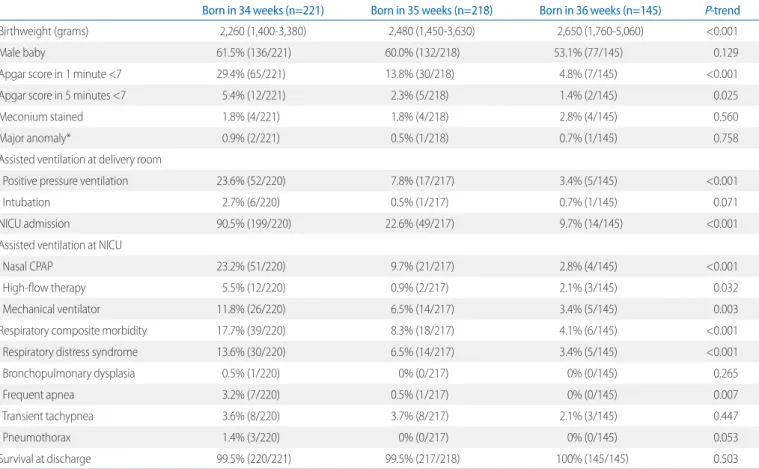
Table 2 reveals the neonatal outcomes according to the ges
tational age at delivery. As the gestational age at delivery ad
vanced, the rates of low Apgar scores in 1 and 5 minutes de
creased significantly. Assisted ventilation with positive pressure ventilation was performed in 23.6% (52/220) of the neonates born between 34+0 and 34+6 weeks while the rates remarkably decreased in neonates born after the 35 and 36 weeks (7.8%
[17/217] and 3.4% [5/145], respectively, Ptrend <0.001). The intubation procedure was done in 8 neonates: six in the 34week
group and one in the 35 and 36weekgroup each.
The rate of administration was over 90% in the 34week
group, and it decreased below 10% when the gestational age The use of positive pressure ventilation through a facial mask
and the application of an intubation procedure immediately after delivery were identified. The assisted ventilation utilities were divided into three modalities: nasal continuous positive airway pressure (CPAP), highflow therapy, and mechanical ventilator through intubation. The management on ventilatory support was decided by neonatologists.
3. Statistical analysis
Continuous variables were compared using the MannWhitney U test; proportions were compared using the Fisher’s exact test.
The JonckheereTerpstra test for continuous variables and a linearbylinear association for categorical variables were used when the data were analyzed according to trend as the gesta
tional age at delivery changed. Multivariate logistic regression was used to determine factors associated with neonatal respira
tory complications and with the use of assisted ventilation utilit ies adjusting for confounding variables that could affect the outcomes. A Pvalue <0.05 was considered statistically signifi
cant. The analysis was done with SPSS, version 22 (IBM SPSS Inc., Armonk, NY, USA).
Results
A total of 584 women met the inclusion criteria. Table 1 shows the baseline characteristics of the patients according to the ges
Table 1. Clinical Characteristics and Pregnancy Outcomes of the Study Population according to Gestational Age at Delivery
Delivered in 34 weeks (n=221) Delivered in 35 weeks (n=218) Delivered in 36 weeks (n=145) P-trend
Age (years) 32 (2043) 31 (1541) 33 (2344) 0.409
Nulliparity 55.7% (123/221) 64.7% (141/218) 55.9% (81/145) 0.755
Antenatal steroid administration 27.1% (60/221) 9.6% (21/218) 4.1% (6/145) <0.001
Use of intravenous oxytocin 51.1% (113/221) 49.5% (108/218) 44.1% (64/145) 0.207
Gestational age at delivery (weeks) 34.4 (34.034.9) 35.4 (35.035.9) 36.4 (36.036.9) <0.001
Interval from ROM to delivery (hours) 25.8 (03402.5) 14.5 (0.11761.3) 10.3 (0.11469.7) <0.001
Delivered in 24 hours 48.9% (108/221) 67.0% (146/218) 79.3% (115/145) <0.001
Delivered in 48 hours 63.8% (141/221) 82.6% (180/218) 90.3% (131/145) <0.001
Cesarean section 27.6% (61/221) 28.4% (62/218) 33.8% (49/145) 0.228
Acute histologic chorioamnionitis 22.2% (45/203) 16.3% (33/203) 11.3% (15/133) 0.009
Funisitis 7.9% (16/203) 3.0% (6/203) 2.3% (3/133) 0.010
Values are expressed as median (range) for continuous variables and percentage for categorical variables. Ptrend was analyzed by JonckheereTerpstra test for continuous variables and a linearbylinear association for categorical variables.
Abbreviation: ROM, rupture of membranes.
at delivery reached over 36 weeks (Ptrend <0.001). Assisted ventilation including nasal CPAP, highflow therapy, and me
chanical ventilator after admission to NICU was all significantly decreased as the gestational age at delivery advanced (Ptrend
< 0.05 for all). The incidences of RDS were 13.6% (30/220), 6.5%
(14/217), and 3.4% (5/145) for 34, 35, and 36weekgroup, respectively (Ptrend <0.001). The rates of apnea decreased to 3.2% (7/220), 0.5% (1/217), and none for the 34, 35, and 36
weekgroup, respectively (Ptrend =0.007). There were no sig
nificant trends or differences in BPD, transient tachypnea, and pneumothorax among the groups.
Since the recommendation of various guidelines suggest de
livery when PROM is diagnosed after 34 weeks of gestation, a subgroup analysis was done only in patients who had been admi
nistered after 34 weeks. To determine the association between the interval from the rupture of membranes to the delivery and
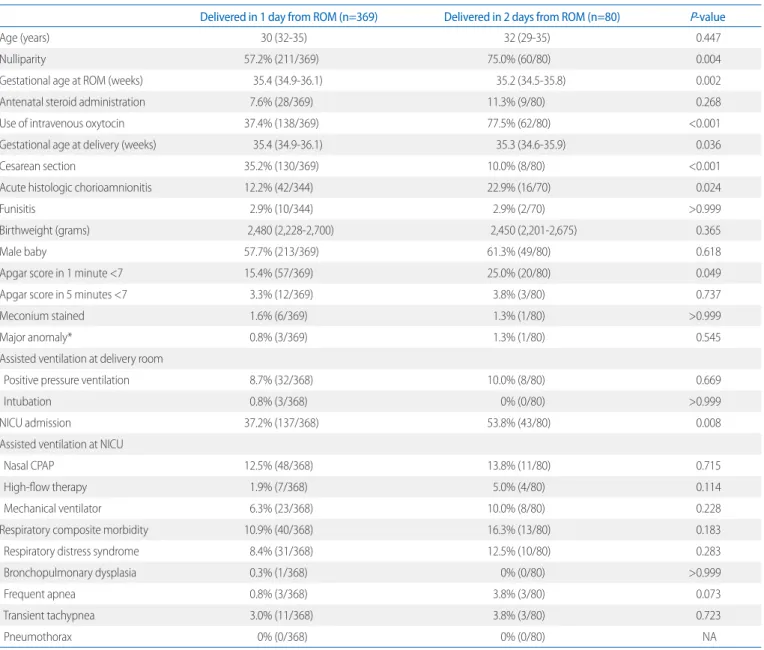
the clinical outcomes, a comparison was done between the patients who had delivered on the day of PROM and those who had delivered within 48 hours for discrete reasons such as com
pletion of steroid administration or individual planning of ex
pectancy decided by physicians (Table 3). The median values of gestational age at PROM were all 35 weeks; however, the difference between the two groups were statistically significant (P=0.002). The use of intravenous oxytocin increased (37.4%
[138/369] vs. 77.5% [62/80], P<0.001), and the rate of cesarean section decreased (35.2% [130/369] vs. 10.0% [8/80], P<0.001) in the group who had delivered within 24 hours compared to the group who delivered within 48 hours from PROM.
In the neonatal outcomes, the group who delivered later had higher rates of a low Apgar score in 1 minute (25.0% [20/80] vs.
15.4% [57/369], P=0.049) and NICU admission (53.8% [43/80]
vs. 37.2% [137/368], P=0.008) than the group who delivered in
Table 2. Neonatal Outcomes of the Study Population according to Gestational Age at Delivery
Born in 34 weeks (n=221) Born in 35 weeks (n=218) Born in 36 weeks (n=145) P-trend
Birthweight (grams) 2,260 (1,4003,380) 2,480 (1,4503,630) 2,650 (1,7605,060) <0.001
Male baby 61.5% (136/221) 60.0% (132/218) 53.1% (77/145) 0.129
Apgar score in 1 minute <7 29.4% (65/221) 13.8% (30/218) 4.8% (7/145) <0.001
Apgar score in 5 minutes <7 5.4% (12/221) 2.3% (5/218) 1.4% (2/145) 0.025
Meconium stained 1.8% (4/221) 1.8% (4/218) 2.8% (4/145) 0.560
Major anomaly* 0.9% (2/221) 0.5% (1/218) 0.7% (1/145) 0.758
Assisted ventilation at delivery room
Positive pressure ventilation 23.6% (52/220) 7.8% (17/217) 3.4% (5/145) <0.001
Intubation 2.7% (6/220) 0.5% (1/217) 0.7% (1/145) 0.071
NICU admission 90.5% (199/220) 22.6% (49/217) 9.7% (14/145) <0.001
Assisted ventilation at NICU
Nasal CPAP 23.2% (51/220) 9.7% (21/217) 2.8% (4/145) <0.001
Highflow therapy 5.5% (12/220) 0.9% (2/217) 2.1% (3/145) 0.032
Mechanical ventilator 11.8% (26/220) 6.5% (14/217) 3.4% (5/145) 0.003
Respiratory composite morbidity 17.7% (39/220) 8.3% (18/217) 4.1% (6/145) <0.001
Respiratory distress syndrome 13.6% (30/220) 6.5% (14/217) 3.4% (5/145) <0.001
Bronchopulmonary dysplasia 0.5% (1/220) 0% (0/217) 0% (0/145) 0.265
Frequent apnea 3.2% (7/220) 0.5% (1/217) 0% (0/145) 0.007
Transient tachypnea 3.6% (8/220) 3.7% (8/217) 2.1% (3/145) 0.447
Pneumothorax 1.4% (3/220) 0% (0/217) 0% (0/145) 0.053
Survival at discharge 99.5% (220/221) 99.5% (217/218) 100% (145/145) 0.503
Values are expressed as median (interquartile range) for continuous variables and percentage for categorical variables. Ptrend was analyzed by JonckheereTerpstra test for continuous variables and a linearbylinear association for categorical variables.
Abbreviations: NICU, neonatal intensive care unit; CPAP, continuous positive airway pressure.
*Major anomalies include three gastrointestinal anomalies (duodenal atresia, small bowel obstruction, and gastroschisis) and one heart anomaly (coarctation of aorta).
1 day. Other variables including assisted ventilation and respira
tory morbidities were comparable between the two groups.
Multivariate logistic regression analysis was done to evaluate the association of risk factors for each adverse neonatal out
come (Table 4). Advanced gestational age at delivery was inde
pendently associated with the decreased odds ratio (OR) for the rates of positive pressure ventilation immediately after birth, NICU admission, minor assisted ventilators such as nasal CPAP and/or highflow therapy, and composite respiratory morbidity.
As the interval from the rupture of membranes to the delivery increased, admission to the NICU was slightly increased (OR, 1.04; 95% CI, 0.1.011.06). The antenatal steroid administration was associated with decreased rates of mechanical ventilator use (OR, 0.32; 95% CI, 0.120.91) and with the rates of composite respiratory morbidity (OR, 0.39; 95% CI, 0.170.91).
Table 3. Obstetric and Neonatal Outcomes Compared according to the Interval from the ROM to the Delivery in Patients Who were Admitted for Premature ROM after 34 Weeks of Gestation
Delivered in 1 day from ROM (n=369) Delivered in 2 days from ROM (n=80) P-value
Age (years) 30 (3235) 32 (2935) 0.447
Nulliparity 57.2% (211/369) 75.0% (60/80) 0.004
Gestational age at ROM (weeks) 35.4 (34.936.1) 35.2 (34.535.8) 0.002
Antenatal steroid administration 7.6% (28/369) 11.3% (9/80) 0.268
Use of intravenous oxytocin 37.4% (138/369) 77.5% (62/80) <0.001
Gestational age at delivery (weeks) 35.4 (34.936.1) 35.3 (34.635.9) 0.036
Cesarean section 35.2% (130/369) 10.0% (8/80) <0.001
Acute histologic chorioamnionitis 12.2% (42/344) 22.9% (16/70) 0.024
Funisitis 2.9% (10/344) 2.9% (2/70) >0.999
Birthweight (grams) 2,480 (2,2282,700) 2,450 (2,2012,675) 0.365
Male baby 57.7% (213/369) 61.3% (49/80) 0.618
Apgar score in 1 minute <7 15.4% (57/369) 25.0% (20/80) 0.049
Apgar score in 5 minutes <7 3.3% (12/369) 3.8% (3/80) 0.737
Meconium stained 1.6% (6/369) 1.3% (1/80) >0.999
Major anomaly* 0.8% (3/369) 1.3% (1/80) 0.545
Assisted ventilation at delivery room
Positive pressure ventilation 8.7% (32/368) 10.0% (8/80) 0.669
Intubation 0.8% (3/368) 0% (0/80) >0.999
NICU admission 37.2% (137/368) 53.8% (43/80) 0.008
Assisted ventilation at NICU
Nasal CPAP 12.5% (48/368) 13.8% (11/80) 0.715
Highflow therapy 1.9% (7/368) 5.0% (4/80) 0.114
Mechanical ventilator 6.3% (23/368) 10.0% (8/80) 0.228
Respiratory composite morbidity 10.9% (40/368) 16.3% (13/80) 0.183
Respiratory distress syndrome 8.4% (31/368) 12.5% (10/80) 0.283
Bronchopulmonary dysplasia 0.3% (1/368) 0% (0/80) >0.999
Frequent apnea 0.8% (3/368) 3.8% (3/80) 0.073
Transient tachypnea 3.0% (11/368) 3.8% (3/80) 0.723
Pneumothorax 0% (0/368) 0% (0/80) NA
Values are expressed as median (range) for continuous variables and percentage for categorical variables.
Abbreviations: ROM, rupture of membranes; NICU, neonatal intensive care unit; CPAP, continuous positive airway pressure; NA, not available.
*Major anomalies include three gastrointestinal anomalies (duodenal atresia, small bowel obstruction, and gastroschisis) and one heart anomaly (coarctation of aorta).
Discussion
1. Principle findings of the study
1) The proportions of neonates who had received assisted ven tilation including nasal CPAP, highflow therapy, and mecha
nical ventilator were all significantly decreased as the gestational
age at delivery advanced (Ptrend <0.05 for all) in late preterm births after PROM. 2) The incidences of RDS were 14%, 7%, and 3% for preterm births in the 34th, 35th, and 36th week of gesta
tion (Ptrend =0.007). 3) The gestational age at delivery was as
sociated with the rates of positive pressure ventilation immediate ly after birth, NICU admission, minor assisted ventilators such as nasal CPAP and/or highflow therapy, and compo site respiratory morbidity in preterm births with PROM after 34 weeks of gestation when analyzed by multivariate logistic regres sion. 4) The interval from PROM to delivery was independently associated with the rate of NICU admission (OR, 1.04; 95% CI, 1.011.06).
2. Concerns about optimal timing of delivery in the late preterm period after PROM
A survey once reported about 70% of physicians prefer to proceed to delivery when a patient presents with PROM after 34 weeks of gestation.26 Late preterm neonates have been con
sidered sufficiently mature to be treated similarly to term infants.
While many of these infants have shown positive outcomes, evi
dence suggesting significant maturation occurs during the last weeks of gestation has been reported and supports the consi derable risk of adverse outcomes in neonates born before 37 weeks of gestation.27,28
Most patients and their family members want to prolong preg
nancy until the term period. Physicians suggest proceeding to delivery for preterm PROM patients in the late preterm period with an explanation of the complications such as chorioamnionitis and the reassurance of better morbidity than those in earlier ges
tation. However, if the neonates are admitted to the NICU and receive assisted ventilation, patients tend to be suspicious about the decision to delivery.
This study revealed, even in the late preterm period, gestational age at birth is a critical factor for neonatal morbidities and as
sisted ventilation use in preterm births complicated with PROM.
A number of guidelines recommend not to prolong pregnancy after 34 weeks of gestation in patients with PROM to avoid the development of chorioamnionitis and further neonatal compli
cations such as earlyonset sepsis. However, this study demon
strated relatively high rates of assisted ventilation use and neo
natal respiratory problems including major and minor ones. This result carefully suggests that expectant management rather than indicated delivery for late preterm patients with PROM Table 4. The Association between the Latency from the ROM to the
Delivery and the Neonatal Respiratory Complications or Ventilator Use in Patients Who were Admitted for Premature ROM after 34 Weeks of Gestation and Delivered in Two Days
OR (95% CI) P-value PPV immediately after delivery
Interval from ROM to delivery (hours) 1.01 (0.981.04) 0.660 Gestational age at delivery 0.49 (0.300.80) 0.004 Antenatal corticosteroids 0.70 (0.242.02) 0.509 Acute histologic chorioamnionitis 0.95 (0.372.47) 0.918
Cesarean section 1.62 (0.753.49) 0.217
NICU admission
Interval from ROM to delivery (hours) 1.04 (1.011.06) 0.004 Gestational age at delivery 0.11 (0.070.17) <0.001 Antenatal corticosteroids 0.39 (0.151.00) 0.051 Acute histologic chorioamnionitis 1.00 (0.492.03) 0.994
Cesarean section 2.04 (1.153.62) 0.015
Nasal CPAP and/or highflow therapy
Interval from ROM to delivery (hours) 1.02 (1.001.05) 0.104 Gestational age at delivery 0.38 (0.250.58) <0.001 Antenatal corticosteroids 0.47 (0.201.11) 0.085 Acute histologic chorioamnionitis 1.73 (0.704.24) 0.234
Cesarean section 1.65 (0.863.19) 0.132
Use of mechanical ventilator
Interval from ROM to delivery (hours) 1.03 (1.001.06) 0.091 Gestational age at delivery 0.66 (0.401.09) 0.106 Antenatal corticosteroids 0.32 (0.120.91) 0.032 Acute histologic chorioamnionitis 7.40 (0.9557.76) 0.056
Cesarean section 1.59 (0.693.69) 0.279
Composite respiratory morbidity
Interval from ROM to delivery (hours) 1.02 (1.001.05) 0.081 Gestational age at delivery 0.45 (0.290.69) <0.001 Antenatal corticosteroids 0.39 (0.170.91) 0.030 Acute histologic chorioamnionitis 2.44 (0.886.80) 0.088
Cesarean section 1.32 (0.672.62) 0.428
Abbreviations: ROM, rupture of membranes; OR, odds ratio; CI, confidence inter
val; PPV, positive pressure ventilation; NICU, neonatal intensive care unit; CPAP, continuous positive airway pressure.
would decrease the chance of respiratory complications if close monitoring for signs of chorioamnionitis such as fever is com
bined with it.
Indeed, current studies have challenged the traditional recom
mendations with reporting better or similar outcomes for expec
tant management in late preterm PROM patients when compared with indicated delivery immediately after 34 weeks of gestation.
van der Ham et al.,25 demonstrated that the induction of labor did not reduce the risk of neonatal sepsis after PROM. The trial advocated expectant management with the identification of a highrisk subgroup for infection in later preterm PROM because it could potentially decrease neonatal complications from pre
maturity and the costs for the intensive care of neonates.29 There are a few studies showing the adverse outcomes of expectant management in later preterm PROM patients. Nayot et al.,3 reported no clear benefit of expectant management com
pared to elective induction of delivery in patients who had pre
sented PROM after 34 weeks of gestation. Moreover, they dem
onstrated a significant increase in the incidence of necrotizing enterocolitis and longer admission days in the expectant mana
gement group than in the indicated delivery group.
3. The detailed information for counseling patients who pre sent with PROM in late preterm and have a pending delivery The rates of receiving positive pressure ventilator immediately after delivery were 24%, 8%, and 3% in neonates born in the 34, 35, and 36week, respectively. The proportion of intubation at the delivery room was about 3% in preterm births in the 34th week and decreased to under 1% in the 35th and 36th week of gestation. The rates of relatively noninvasive assisted ventila
tion such as nasal CPAP and/or highflow therapy were 23%
and 6% for neonates born in the 34th week. Both the rates de
creased below 10% and 1% when the gestational age at delivery advanced to 35 and 36 weeks of gestation. The mechanical ven
tilator use was 12%, 7%, and 3% for the 34th, 35th, and 36th week, respectively.
The rates of respiratory morbidity decreased when born in the 34th, 35th, and 36th week (18%, 8%, and 4%, respectively). The incidences of RDS, one of the most serious neonatal respiratory complications, decreased by about half (from 14% to 7%) when compared between the 34th and 35th week of gestation. Apnea is a rather minor respiratory complication; nevertheless, close
monitoring is likely needed when presented. The known inci
dence of apnea is 47% for late preterm and less than 12% in term neonates.3032 Our study showed that the rates of fre quent apnea were 3%, 1%, and 0% for neonates born in the 34th, 35th, and 36th week, respectively.
4. Strengths and limitations
The inevitable limitation of this study is its retrospective na
ture; however, the study population is relatively wellpurified and restricted to a single tertiary center. All the studies done to identify neonatal respiratory outcomes in late preterm births with PROM were designed with the inclusion criteria focusing on maternal status. Therefore, adjusting for various factors was necessary. This study was done with only babies who were born in the late preterm period, meaning the outcomes were analyzed in late preterm neonates themselves, not in all the babies from mothers who presented with PROM. The proportions of each assisted ventilator care or respiratory morbidities including minor problems such as apnea will be a beneficial information for clini
cians who need to counsel with patients since those data are lack in late preterm babies.
Pasquier et al.,33 reported similar results with our research on late preterm PROM patients. Those authors concluded that adverse neonatal outcomes were inversely related to gesta
tional age at the time of PROM; however, the inclusion criteria for the study population were PROM cases from 24 weeks of gestation.33 Another study showed a higher rate of chorioamni
onitis and neonatal sepsis in patients who had received expectant management compared to those with indicated delivery with pro
longation of the latency period.34 The gestational age of PROM in this study was from 32 to 34 weeks of gestation.
Although late preterm births seem to be less severe than that of earlier gestation, gestational age at delivery is still an impor
tant factor for neonatal respiratory complications and for the use of assisted ventilation, even when the pregnancy is complicated with PROM.
References
1) Sentilhes L, Sénat MV, Ancel PY, Azria E, Benoist G, Blanc J, et al. Preven
tion of spontaneous preterm birth: guidelines for clinical practice from the French College of Gynaecologists and Obstetricians (CNGOF). Eur J
Obstet Gynecol Reprod Biol 2017;210:21724.
2) Chan E, Quigley MA. School performance at age 7 years in late preterm and early term birth: a cohort study. Arch Dis Child Fetal Neonatal Ed 2014;99:F4517.
3) Nayot D, Penava D, Da Silva O, Richardson BS, de Vrijer B. Neonatal out
comes are associated with latency after preterm premature rupture of membranes. J Perinatol 2012;32:9707.
4) Moster D, Lie RT, Markestad T. Longterm medical and social consequ
ences of preterm birth. N Engl J Med 2008;359:26273.
5) Teune MJ, Bakhuizen S, Gyamfi Bannerman C, Opmeer BC, van Kaam AH, van Wassenaer AG, et al. A systematic review of severe morbidity in infants born late preterm. Am J Obstet Gynecol 2011;205:374.e19.
6) Wang ML, Dorer DJ, Fleming MP, Catlin EA. Clinical outcomes of near
term infants. Pediatrics 2004;114:3726.
7) Rogers CE, Lenze SN, Luby JL. Late preterm birth, maternal depression, and risk of preschool psychiatric disorders. J Am Acad Child Adolesc Psychiatry 2013;52:30918.
8) Woythaler MA, McCormick MC, Smith VC. Late preterm infants have worse 24month neurodevelopmental outcomes than term infants.
Pediatrics 2011;127:e6229.
9) Mathews TJ, MacDorman MF. Infant mortality statistics from the 2006 period linked birth/infant death data set. Natl Vital Stat Rep 2010;58:1
31.
10) Morse SB, Zheng H, Tang Y, Roth J. Early schoolage outcomes of late preterm infants. Pediatrics 2009;123:e6229.
11) Santos IS, Matijasevich A, Domingues MR, Barros AJ, Victora CG, Barros FC. Late preterm birth is a risk factor for growth faltering in early child
hood: a cohort study. BMC Pediatr 2009;9:71.
12) Goldenberg RL, Rouse DJ. Prevention of premature birth. N Engl J Med 1998;339:31320.
13) Mercer BM, Goldenberg RL, Meis PJ, Moawad AH, Shellhaas C, Das A, et al. The preterm prediction study: prediction of preterm premature rupture of membranes through clinical findings and ancillary testing.
The National Institute of Child Health and Human Development Ma
ternalFetal Medicine Units Network. Am J Obstet Gynecol 2000;183:
73845.
14) Cox SM, Williams ML, Leveno KJ. The natural history of preterm ruptured membranes: what to expect of expectant management. Obstet Gynecol 1988;71:55862.
15) Gibbs RS, Blanco JD. Premature rupture of the membranes. Obstet Gynecol 1982;60:6719.
16) Mercer BM. Preterm premature rupture of the membranes. Obstet Gynecol 2003;101:17893.
17) Furman B, ShohamVardi I, Bashiri A, Erez O, Mazor M. Clinical significance and outcome of preterm prelabor rupture of membranes: population
based study. Eur J Obstet Gynecol Reprod Biol 2000;92:20916.
18) Goldenberg RL, Nelson KG, Davis RO, Koski J. Delay in delivery: influence of gestational age and the duration of delay on perinatal outcome.
Obstet Gynecol 1984;64:4804.
19) Kuba K, Bernstein PS. ACOG practice bulletin no. 188: prelabor rupture of membranes. Obstet Gynecol 2018;131:11634.
20) Packard RE, Mackeen AD. Labor induction in the patient with preterm premature rupture of membranes. Semin Perinatol 2015;39:495500.
21) Mackeen AD, SeibelSeamon J, Muhammad J, Baxter JK, Berghella V.
Tocolytics for preterm premature rupture of membranes. Cochrane Database Syst Rev 2014;(2):CD007062.
22) Naef RW 3rd, Allbert JR, Ross EL, Weber BM, Martin RW, Morrison JC.
Premature rupture of membranes at 34 to 37 weeks' gestation: aggres
sive versus conservative management. Am J Obstet Gynecol 1998;178 (1 Pt 1):12630.
23) Buchanan SL, Crowther CA, Levett KM, Middleton P, Morris J. Planned early birth versus expectant management for women with preterm prelabour rupture of membranes prior to 37 weeks' gestation for im
proving pregnancy outcome. Cochrane Database Syst Rev 2010;(3):
CD004735.
24) van der Ham DP, van der Heyden JL, Opmeer BC, Mulder AL, Moonen RM, van Beek JH, et al. Management of latepreterm premature rupture of membranes: the PPROMEXIL2 trial. Am J Obstet Gynecol 2012;207:
276.e110.
25) van der Ham DP, Vijgen SM, Nijhuis JG, van Beek JJ, Opmeer BC, Mulder AL, et al. Induction of labor versus expectant management in women with preterm prelabor rupture of membranes between 34 and 37 weeks:
a randomized controlled trial. PLoS Med 2012;9:e1001208.
26) Aliaga S, Price W, McCaffrey M, Ivester T, Boggess K, TollesonRinehart S.
Practice variation in latepreterm deliveries: a physician survey. J Perina
tol 2013;33:34751.
27) Pike KC, Lucas JS. Respiratory consequences of late preterm birth. Pae
diatr Respir Rev 2015;16:1828.
28) Boyle EM, Poulsen G, Field DJ, Kurinczuk JJ, Wolke D, Alfirevic Z, et al.
Effects of gestational age at birth on health outcomes at 3 and 5 years of age: population based cohort study. BMJ 2012;344:e896.
29) van der Ham DP, van Kuijk S, Opmeer BC, Willekes C, van Beek JJ, Mulder AL, et al. Can neonatal sepsis be predicted in late preterm premature rupture of membranes? Development of a prediction model. Eur J Obstet Gynecol Reprod Biol 2014;176:905.
30) Hunt CE. Ontogeny of autonomic regulation in late preterm infants born at 3437 weeks postmenstrual age. Semin Perinatol 2006;30:736.
31) Arnon S, Dolfin T, Litmanovitz I, Regev R, Bauer S, Fejgin M. Preterm la
bour at 3436 weeks of gestation: should it be arrested? Paediatr Perinat Epidemiol 2001;15:2526.
32) HendersonSmart DJ, Pettigrew AG, Campbell DJ. Clinical apnea and brainstem neural function in preterm infants. N Engl J Med 1983;308:
3537.
33) Pasquier JC, Picaud JC, Rabilloud M, Claris O, Ecochard R, Moret S, et al.
Neonatal outcomes after elective delivery management of preterm premature rupture of the membranes before 34 weeks' gestation (DO
MINOS study). Eur J Obstet Gynecol Reprod Biol 2009;143:1823.
34) Tsafrir Z, Margolis G, Cohen Y, Cohen A, Laskov I, Levin I, et al. Conserva
tive management of preterm premature rupture of membranes beyond 32 weeks' gestation: is it worthwhile? J Obstet Gynaecol 2015;35:585
90.