Duty Cycle Research for Energy Consumption Efficiency under the IoT Wireless Environment
Eun-Ju Woo
*, Yu-Sung Moon
*, Ung-Se Choi
**, Jung-Won Kim
*★Abstract
In this paper, we propose a method to reduce the amount of current through the Timing Control of the duty cycle and the Report Attribute Control at the MAC Layer in consideration of the Sleep Mode under the IoT wireless environment. The use of a duty cycle is an effective way to reduce energy consumption on wireless sensor networks where the node is placed in sleep mode periodically. In particular, we studied how to control power efficiency through duty rate in Short Transition Time and ACK Time processing while satisfying radio channel limitation criterion. When comparing before and after the improvement considering the delay time constraint, we validated the correlation of the electrical current reduction.
Key words: duty cycle, energy efficiency, IoT, wireless network, MAC, PHY
* JIANGXI HOLITECH KOREA BRANCH
** Dept. of Electronics Engineering, Korea Polytechnic University
★ Corresponding author
E-mail:[email protected], Tel:+82-2-783-8322
※ Acknowledgment
Manuscript received Nov. 1, 2018; revised Dec. 13, 2018; accepted Dec. 14, 2018.
This is an Open-Access article distributed under the terms of the Creative Commons Attribution Non-Commercial License (http://creativecommons.org/licenses/by-nc/3.0) which permits unrestricted non-commercial use, distribution, and reproduction in any medium, provided the original work is properly cited.
Ⅰ. Introduction
The new generation’s IoT products will be eco-friendly products. It is expected to use Radio Frequency technology instead of space- constrained infrared technology to enable very low power consumption, high interactivity, and transmission and reception throughout the home.
Under IoT wireless environment, power consumption should be minimized as much as possible. [1], [2]
Properly adjusting the duty cycle is efficient to energy reduction. Because application throughput is a dominant factor in determining the duty cycle in data transfer, it can be analyzed independently of other factors.
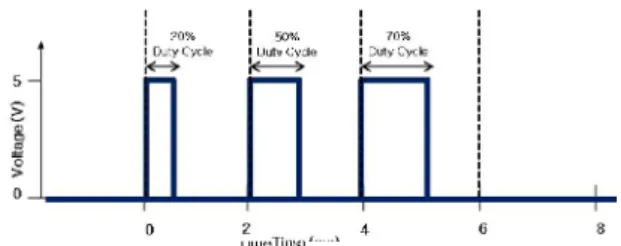
Fig. 1. Change in duty cycle for energy efficiency.
Fig. 1. shows the period change of the receiving node for Report Attribute Level optimization. For reach to the real time, when the method of supplying power only to the time when the actual sensor needs to be operated and cutting off the power for the remaining time is used, the power actually consumed reduces. [3]
The ZigBee device uses a duty cycle to provide stable low power communication in the ISSN:1226-7244 (Print)
ISSN:2288-243X (Online) j.inst.Korean.electr.electron.eng.Vol.22,No.4,1210∼1213,December 2018
논문번호 18-04-51 http://dx.doi.org/10.7471/ikeee.2018.22.4.1210
325
(1210)
326 j.inst.Korean.electr.electron.eng.Vol.22,No.4,1210∼1213,December 2018
wireless space. That is, the period has the same meaning as in Equation (1) below and ‘Long Data Frame’ means the sum of ‘Preamble Time’
and ‘Time Packet’. The longer the packet data transmission and reception time, the greater the current loss is unavoidable.
Duty cycle changes occur during typical packet transmission and reception. [4]
(1)
For example, if Total Time is applied within a period of 100 ms, about 12 long data frames can be transmitted. Therefore, since the transmission data frame and the duty cycle are correlated as shown in Equation 1, the energy consumption of the battery can be reduced by changing the period.
Ⅱ. Experiment
1. Network scenario for the experiment
The time of the Report Attribute optimizes the software protocol through current level control.
And it has the same rules as the MAC transmission method, IEEE 802.15.4, which is the next step of the PHY procedure. [5], [6]
The scenario for the experiment calculates the energy for one of the device nodes of the network. Assume that there is only one important task when transmitting sensor data.
Fig. 2. Standard transmission scenario about MAC.
In Fig. 2, the duty cycle directly contributes time t_period. The maximum frame consists of Synchronization Header with 133 bytes and PHY
Header, and they construct PHY Service Data Unit. [7]
Packet delay is applied to one node, and t_period includes Packet ACK and CSMA / CA processing transmission time. t_period is a processing time from the point of reception of the ACK to the time of resuming transmission / reception processing of another data frame. The ACK is a processing time from the point when the frame is received until the point when it is ready to transmit another data frame. [8]
2. Software design for the experiment
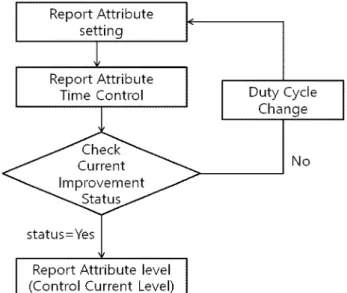
Fig. 3 shows the Report Attribute setting process related to the current consumption rate according to changing the duty cycle. [9]
Fig. 3. Report Attribute setting process.
After the power is turned on, the algorithm of Report Attribute setting process is applied sequentially at the beginning. After transmitting the packet after the initial wake-up occurs and considering the waiting time for ACK reception, the duty cycle is expressed as Equation (2). [10]
max ∇ ∇