• SCAP-Tech Consulting(Apkujung-ro 11 Gil 17, Kangnam-ku, Seoul, 06000, Republic of Korea)
1 충북대학교 임산공학과(Departments of Forest Product & Engineering, College of Agriculture, Life & Environment Sciences, Chungbuk National University, Cheongju, Chungbuk 28644, Republic of Korea)
2 한국건설생활환경시험연구원(Korea Conformity Laboratories, Gasandigital 1 ro 199, Geumcheon-gu, Seoul, 08503, Republic of Korea)
† 교신저자(Corresponding Author): E-mail: [email protected]
위생용지 부드러움의 객관적 평가 방법 개발 및 표준화
고영찬
†·박종문
1·문병근
2접수일(2015년 9월 14일), 수정일(2015년 10월 14일), 채택일(2015년 10월 16일)
Development of an Objective Softness Evaluation Method and Its Standardization for Hygiene Paper
Young Chan Ko
†, Jong-Moon Park
1and Byoung-Geun Moon
2Received September 14, 2015; Received in revised form October 14, 2015; Accepted October 16, 2015
ABSTRACT
Softness is considered one of the most important attributes of hygiene paper such as tis- sue and towel. Being subjective in nature, however, softness attribute has been generally believed to be impossible to evaluate using objective methods. Hallmark in his pioneer- ing work proposed that tissue subjective softness should be mainly consisted of the bulk softness component and surface softness component. The bulk softness component can be determined by tensile stiffness; the surface softness component by surface tester. The surface friction turns out far more important than the surface roughness in determining the surface softness component. It cannot be too much emphasized that both results of the tensile stiffness and the surface friction should depend on measuring conditions such as an instrument used, sample sizes (e.g., basis weight, length, and width) and operat- ing conditions of the instrument (e.g., gauge length, cross-head speed, size of stylus, and its scanning speed). This indicates that a direct comparison of the test results would be impossible or misleading unless they have been tested under the identical conditions.
This may explain why the standard objective test method for tissue softness has not been available at present.
Keywords: Softness, hygiene paper, test method, stress-strain curves, load-elongation curves, bulk softness, tensile stiffness, WABY factor, Kawabata system, KES surface tester, surface roughness, surface friction
http://dx.doi.org/10.7584/ktappi.2015.47.5.080
Printed in Korea
1. 서 론
제지 산업은 크게 인쇄용지, 산업용지와 위생용지(hy- giene paper)를 생산한다. 위생용지 제품의 예로는 미용 화장지, 두루마리 화장지, 페이퍼 타월, 내프킨 등을 들 수 있다. 이들은 경우에 따라 일회용 소비자 제품으로 분 류하기도 한다. 위생용지 같은 소비자 제품의 특성은 그 성능 평가를 사용자에 의하여 주관적으로 한다는 점이 다. 화장지의 경우, 소비자가 중요시하는 성능은 부드러 움(softness), 강도, 물 흡수성(absorbency)인데, 그 평 가 결과가 평가하는 사람이나 평가하는 방법에 따라 차 이가 있을 수 있으며, 심지어 그 결과가 정반대로 나오는 것도 볼 수 있다. 특히 화장지의 부드러움은 위에서 언 급한 3가지 기능 중, 가장 중요시 하는 항목인데, 유감스 럽게도, 소비자에 따라 평가 기준이 가장 큰 편차를 보 인다. 따라서 화장지의 부드러움 평가를 위한 표준 실험 법이 국내는 물론 해외에도 존재하지 않는 것은 그다지 놀라운 일이 아니라고 생각된다. 화장지의 기존의 객관 적 부드러움 평가 방법에 대한 자세한 보고가 Ramasu- bramanian에 의하여 발표되었다.
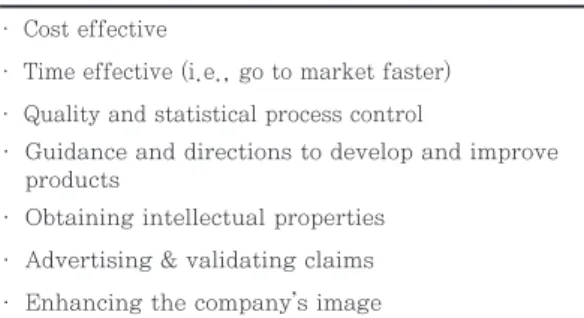
1)그러나, 아직도 화장 지의 부드러움을 객관적으로 평가하는 것은 근본적으로 불가능하다라는 의견이 주류를 이루고 있다. 그럼에도 불구하고, 위생용지 제품 산업에서 객관적 평가 방법 개 발을 완전히 포기하지 않는 이유는 일단 개발에 성공하 면, Table 1에서 볼 수 있는 것처럼, 얻을 수 있는 혜택 이 엄청나게 크기 때문이다.
화장지의 객관적 부드러움 평가 방법에 관한 선구적인 연구는 스웨덴의 Hallmark에 의하여 이루어졌다. 1980 년초 Hallmark는 화장지의 주관적 부드러움(subjective softness)은 벌크 부드러움(bulk softness)과 표면 부드 러움(surface softness)의 두 요소로 구성되어 있는데,
전자는 인장강도 측정기를 사용하여 측정할 수 있으며, 후자는 표면 거칠음도를 잴 수 있는 기기를 사용하여 측 정할 수 있다고 발표하였다.
2)Hallmark의 발표 이후, 그의 이론의 유효성이 입증되어 왔으며, 이제 부드러움 의 객관적 측정방법을 개발하는 것은 더 이상 불가능한 것이 아니며, 한 걸음 더 나아가 이를 표준화하는 것도 가능하다고 할 수 있는 데까지 도달하였다고 판단된다.
이 논문의 목적은 현재까지 문헌에 나타난 부드러움 측 정 방법들을 토대로, 이를 체계적으로 융합시킨 후, 이 를 기초로 화장지의 객관적 부드러움 평가 방법을 표준 화시켜 화장지 산업의 발전에 기여하는 데 있다.
2. 부드러움에 관련된 측정방법
2.1 Hallmark의 부드러움 모델
Hallmark는 벌크 부드러움은 tensile stiffness에 반 비례하는데, tensile stiffness는 응력-변형률 곡선에서 구한 영률(Young’s modulus)에 시료 두께를 곱한 것으 로 정의하였다. 즉,
Eq. 1에서, 영률은 인장강도 측정기를 이용하여 구한 응력-변형률 곡선의 초기 기울기이며, mN/(cm×%)의 단위를 갖는다.
한편 표면 거칠음도는 stylus를 사용하여 표면의 거칠 기(roughness)로부터 계산할 수 있으며, 거칠음도가 증 가할수록 표면 부드러움이 감소함을 발견하였다. Hall- mark가 개발한 부드러움 모델을 실제로 응용하는 데 있 어서는 다음과 같은 제약이 따른다. 첫 번째로 화장지 는 범용 종이 제품인 인쇄용지나 상자 등과 달라, 응력- 변형률 곡선이 비선형(non-linear)이기 때문에, 그 초 기의 기울기인 영률을 계산하기가 매우 까다롭다는 점 이다. 두 번째로는 응력-변형률 곡선을 구하려면, 샘플 의 두께를 정확히 측정하여야 하는 데, 화장지같이 밀도 가 낮고, 표면이 거친 시료는 그 두께를 정확히 측정하 는 것 자체가 매우 어렵다는 점이다. 더구나 화장지의 두께는 그 측정방법에 따라 그 측정 결과가 상당히 달라 질 수 있기 때문이다. 세 번째로는 표면 거칠음도 측정 을 위해, 상업화된 기기가 아니라, 개별 회사가 개발하 Tensile stiffness = Young’s modulus × sample thickness [1]
· Cost effective
· Time effective (i.e., go to market faster)
· Quality and statistical process control
· Guidance and directions to develop and improve products
· Obtaining intellectual properties
· Advertising & validating claims
· Enhancing the company’s image
Table 1. Benefits of objective test methods
여 자체적으로 사용했다는 점이다. 따라서 그 신뢰도를 검증하기가 거의 불가능하다는 점이다.
2.2 Procter & Gamble (P&G) 부드러움 모델
P&G는 위에서 언급한 Hallmark의 모델이 가지고 있 는 문제점을 상당히 해결한 부드러움 모델을 제안하였
다.
3,4)첫 째로 tensile stiffness를 계산하기 위해서는,
응력-변형률 곡선을 구한 후, 이로부터 영률을 구하는 대신, 두께를 측정할 필요가 없는, 하중-변형률 곡선에 서 직접 계산할 수 있다는 점을 주목하였다. 한편, 화장 지는 하중-변형률 곡선이 비선형임으로 초기 기울기를 정하기가 매우 까다롭기 때문에, 그 대안으로, Fig. 1에 서 보여 주는 것처럼, 원점과 하중, 20 g
f/cm를 지나는 기울기 A로 tensile stiffness를 계산하였다.
화장지의 경우, tensile stiffness와 강도는 흔히 정비 례 관계를 보여준다. 이는 벌크 부드러움과 강도는 반비 례함을 의미한다. P&G는 이 둘의 관계를 하나로 통합하 여, WABY factor를 다음과 같이 정의하였다.
여기서, A는 원점과 20 g
f/cm를 지나는 기울기이며 단 위가 g
f/(cm×%)이며 L
max는 시료가 파괴되는 최대 하 중 g
f/cm이다. Eq. 2에서 WABY factor는 단위가 없는 것에 주목할 필요가 있다. Eq. 2에서 A값이 낮을수록, 벌크 부드러움은 증가하고, L
max가 높을수록 강도는 증 가하는 것을 알 수 있다. 결과적으로, 부드럽고 강도가 높은 시료일수록 위에서 정의한 WABY factor는 그 값 이 작아지는 것을 알 수 있다.
P&G의 발표 이후, 벌크 부드러움 평가를 위하여 tensile stiffness를 측정하는 방법은 다른 곳에서도 채택되어 왔 다. 전에 James-River였던 Georgia-Pacific(G-P) 회사 는 화장지의 tensile stiffness 측정을 위하여, 하중-변 형률 곡선을 사용하였는데, 단지 P&G 방법과 다른 점은 폭 1 cm 샘플 대신, 폭 1 inch 즉 2.54 cm를 사용하여, 원점과 50 g
f/inch를 지나는 기울기를 사용하였다는 것 이다. 이 값은 P&G의 20 g
f에 상응하는 값으로, 이 둘은 실제적으로 동일한 수치를 사용함을 알 수 있다.
5-7)그러 나, 여기서 주의할 점은 하중-변형률 곡선은 샘플 크기, 평량, 시료의 폭과 길이와 cross-head 속도 같은 측정 하는 방법에 따라 그 결과가 달라질 수 있다는 점이다.
예를 들면 너비 2.54 cm를 이용한 샘플이 너비 1 cm 를 사용한 샘플에 비해, 하중-변형률 곡선이 2.54배로 대응하지 않는다라는 점이다. 이와 마찬가지로 하중-변 형률 곡선도 샘플 무게에 선형적인 관계를 가지지 않는 다는 점이다. 따라서 이들의 결과를 단순히 비교하는 것 은 상당한 위험이 수반된다.
두 번째로 표면 거칠음도 측정을 위하여, 일본의 Kato 사가 개발한 KES system 중의 하나인 모델 KES-FB4 를 사용하였다. 원래 KES system은 Kawabata가 의류 나 부직포의 감촉(handfeel)을 측정하기 위하여 개발된 것으로, 이 기기는 표면 거칠음도 뿐만 아니라 표면 마찰 계수 (surface friction)도 잴 수 있는 기능을 가진다.
5,8,9)이와 같이 P&G는 Hallmark의 부드러움 평가 방법이 갖고 있는 문제점을 상당히 개선하였다. 첫 번째로 벌크 부드러움 평가를 위한 tensile stiffness를 정하기 위하 여, 응력-변형률 곡선 대신 하중-변형률 곡선을 사용하 여, 응력 계산하기 위한 두께를 잴 필요를 없앤다.
2.3 Kato사의 KES-SE
이 무렵 일본의 Kato사는 화장지 표면 부드러움 측정에 적합한 KES-SE라는 모델을 개발하였다. 이는 원래 모델 FB-4보다 훨씬 간단하고, 경제적이면서도, 화장지 제품 에 특별히 사용하기 편리하게 개조되었다.10) Fig. 2는 새 로 나온 Kawabata KE-SE와 평균 마찰계수(MIU)와 이 로부터 편차인 MMD(mean deviation from the mean) 를 구하는 방법을 보여 주고 있다. Georgia-Pacific은 이 신형 KES-SE tester모델을 사용하여 tissue의 부드러 움 측정을 위해, 표면 거칠음도와 표면 마찰을 측정하였는 데, 표면 거칠음도를 평가하는 데 있어, surface friction
Fig. 1. P&G load-elongation curve and WABY
factor.
WABY factor = A/L
max[2]
component 측정만으로 충분하다고 발표하였다.6,7,10,11)
Kimberly-Clark은 세계 여러 나라에서 판매 중인 화 장지를 수집한 후, panelists를 통하여 이들의 주관적 평 가 데이터를 구한 후, 이와 높은 상관관계를 갖는 객관적 평가 모델을 회귀분석 방법을 사용하여 개발하였다. 이 모델도 tensile stiffness와 surface friction의 MMD가 중요한 변수이다. 따라서, 이 모델도 이미 언급한 G-P 의 모델과 내용면에서 크게 다를 것은 없으나, 이들의 실 험 조건, 예를 들어 샘플 크기 및 측정조건이 서로 다르 므로, 사용하는 데이터에 따라 regression model도 달 라질 수 있음을 유의할 필요가 있다.12)